Under the hashtag #StopCuttingTrees and within the Facebook group “Your Trees, Egypt,” which identifies itself as a group advocating for the preservation of trees and stopping their repeated massacres, thousands of Egyptians have documented the cutting down of trees in various streets and governorates across the republic, especially in May and June.
Although tree cutting in the streets of Egypt, particularly in Cairo and Giza, has been recurring since 2014 under the pretext of road expansion and urban development, there has been a surge in cutting activities over the past weeks with no known reason and without clarification from the responsible authorities about the reasons for the cutting or where the resulting wood goes.
The tree-cutting campaign coincided with a severe heatwave where temperatures in the shade exceeded 45 degrees Celsius. The continuous cutting of trees left the streets without shaded areas to mitigate the intense heat.
According to the Global Forest Watch, Egypt lost about five million and sixty thousand square meters of green spaces and tree cover between 2013 and 2023, representing a 0.33% decrease in tree cover since 2000, equivalent to 121 kilotons of carbon dioxide emissions, driven by urban development, desertification, and the removal of tree cover and green spaces for industrial and commercial production.
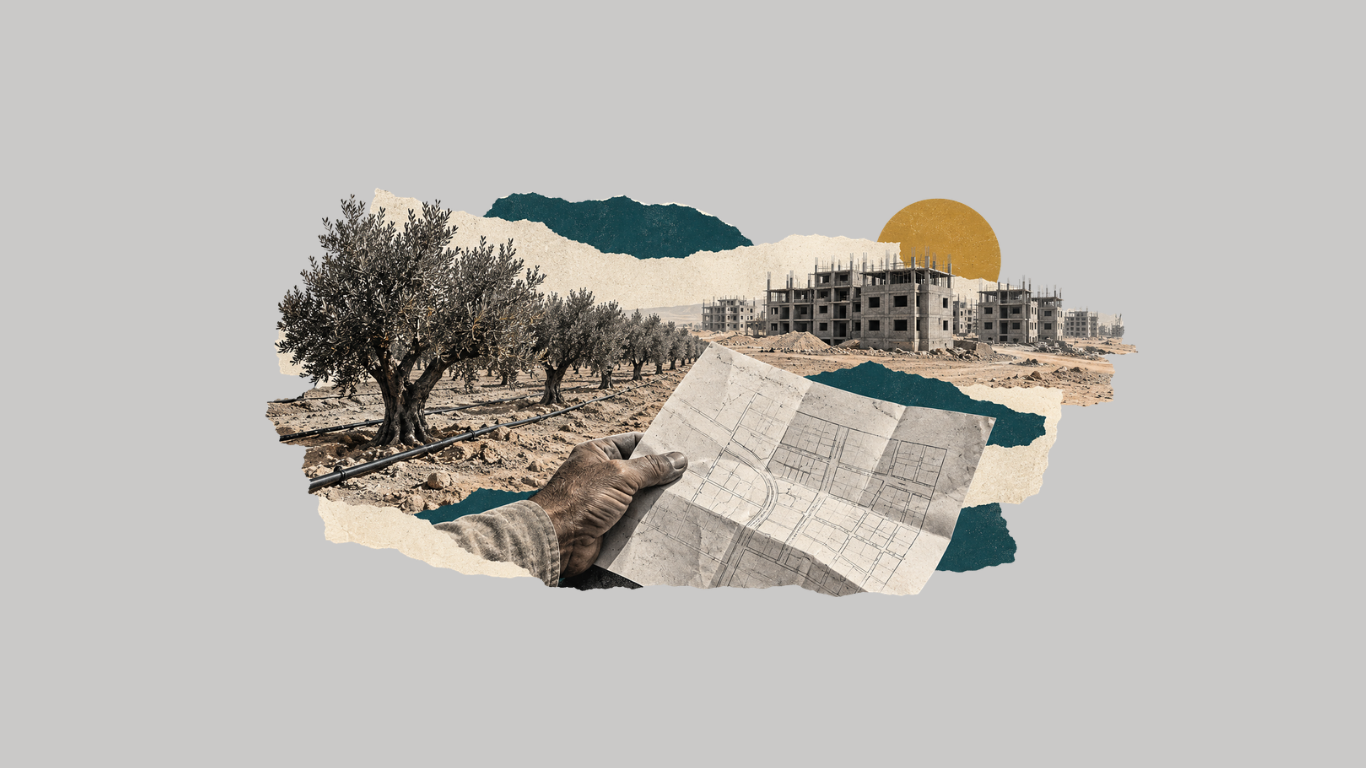
Urban development between 2013 and 2023 contributed to the removal and cutting of approximately one million six hundred and sixty thousand square meters of trees and green spaces, about 33% of the total lost trees and green spaces during the same period.


Unequal Distribution of Green Spaces
The continuous tree cutting has led to a decline in the number of trees per person, according to the “Lest the Green Disappears” report published in November 2022 by the Egyptian Initiative for Personal Rights. The report stated that the per capita share of trees in Egypt has dropped to one tree, the lowest ratio compared to North African countries, and the per capita share of green spaces has decreased to only 17 cm, while the World Health Organization recommends a per capita share of nine square meters of green spaces.
The study “Quantity and Distribution of Public Green Spaces in Cairo, Egypt,” published in the Journal of Engineering and Applied Sciences in 2022, found that Cairo faces not only a decline in green spaces but also an unequal distribution.
According to the study, “In 2020, 22 out of 37 districts, where 66% of the population lives, had a per capita share of green spaces less than 0.50 square meters. The lowest share in this category is 0.01 square meters in Mataria, and the highest share is 0.46 square meters in Abdin.”
It found that only five districts had a per capita share exceeding three square meters, including West Cairo with 10.04 square meters, Maadi with 5.27 square meters, Al-Nozha with five square meters, and Heliopolis with 3.52 square meters. The central Cairo area, particularly the location of Al-Azhar Park, has a relatively low population, contributing to its position among the highest categories in terms of per capita green spaces in Cairo, with 3.22 square meters per person.
Despite Egypt launching the “Get Ready for Green” initiative under its 2030 strategy to raise environmental awareness, preserve protected areas, and highlight the importance of afforestation, the initiative has not yet shown any impact. Researcher Sanaa El Sherif, who holds a master’s degree in environmental management, pointed out that Egypt’s 2050 vision includes increasing the per capita green space to 15 square meters and adjusting the average per capita green space in 2020 to one square meter. However, the average per capita in 2020 was around 0.74 square meters, while it was three meters in 2012.
El Sherif mentioned that the state does not consider afforestation when launching road expansion and urban development projects. Additionally, new communities and cities extending to the desert borders of Cairo are being promoted as “green, sustainable, and healthy” areas. The problem lies in these cities targeting 2% of Greater Cairo’s population, who are likely to live in neighborhoods covered by 92% green spaces.
The researcher calls this “green creeping,” a strategy to reduce green infrastructure from the city center to its outskirts, leaving communities in the heart of Cairo with limited access. This unequal distribution exacerbates urban inequalities and environmental disparities.
Legal Violation
Cutting down trees and destroying green spaces is a violation of the Egyptian Constitution. Article (45) states: “The state shall protect its seas, shores, lakes, waterways, and natural reserves. It is prohibited to encroach upon them, pollute them, or use them in a way that contradicts their nature. Every citizen has the right to enjoy them. The state shall protect and develop green spaces in urban areas, preserve plant, animal, and fish resources, and protect those that are threatened with extinction or danger. All of this shall be done as regulated by law.”
Article (46) also affirms citizens’ right to live in a healthy environment: “Everyone has the right to a sound, healthy environment, and its protection is a national duty. The state shall take the necessary measures to preserve it and prevent harm to it. The state shall also ensure the rational use of natural resources to achieve sustainable development and guarantee the rights of future generations.”
The Environmental Law No. 4 of 1994, in Article (27), mandates: “In every district and village, an area of no less than one thousand square meters of state-owned land shall be allocated for establishing a nursery for producing trees, and the products of these nurseries shall be made available to individuals and entities at cost price. The administrative bodies to which these nurseries belong shall provide the necessary guidance on planting and caring for these trees. The Environmental Affairs Agency shall contribute to funding the establishment of these nurseries.”
Article (28) prohibits the destruction of plants: “It is prohibited, by any means, to cut, destroy, possess, transport, import, export, or trade in plants, in whole or in part, or any derivatives or products thereof, or to engage in activities that could destroy their natural habitats or alter their physical properties or habitats.”
Tree Cutting Increases Temperatures
Ali Qutb, a climate professor at Zagazig University and former vice president of the Egyptian Meteorological Authority, explains the relationship between tree cutting, the removal of green spaces, and the increased feeling of heat. He says that trees, green spaces, and forests produce oxygen and contribute to breathing and life processes. Therefore, cutting trees and green spaces generally reduces oxygen levels, and the proportion of carbon dioxide, one of the main greenhouse gases, increases.
Qutb told Zawia3 that carbon dioxide traps heat close to the earth’s surface, contributing to higher temperatures. He stressed that cutting trees not only increases the feeling of heat but also raises actual temperatures.
He pointed out that lower oxygen levels in the atmosphere make breathing difficult and contribute to the prevalence of many diseases, calling on state agencies to stop cutting trees. He said, “Cutting trees is a disaster; they produce oxygen and reduce carbon dioxide, which causes global warming.”
In the same context, researcher Sanaa El Sherif told Zawia3 that the high population density in Cairo and limited green spaces make it vulnerable to climate change.
She added that the lack of green spaces leads to poor air quality, air pollution, traffic congestion, inefficient waste management, and biodiversity loss, further degrading the quality of life.
According to the Food and Agriculture Organization (FAO) of the United Nations, trees in urban areas have several benefits, including cooling the air by 2 to 8 degrees Celsius and absorbing up to 150 kg of carbon dioxide annually, reducing the impacts of the climate crisis.
Regarding mental and physical health, large trees are good filters for urban pollutants and fine particles. Spending time near trees improves physical and mental health by increasing energy levels, speeding recovery, and lowering blood pressure and stress.
Properly planted trees around buildings can reduce air conditioning use by 30% and decrease energy consumption for heating by 20-50%. Landscapes, especially trees, can increase property values by up to 20%.

Healthy Environment
Ibrahim El Milegi, a consultant at Helwan Fever Hospital, told us: “An environment without trees is unhealthy,” confirming a rise in cases of lung fibrosis, pulmonary allergies, and respiratory allergies among children and non-smokers.
El Milegi attributed the increase in these diseases to the lack of green spaces, explaining that trees and green spaces absorb carbon dioxide and produce oxygen, the most crucial element for breathing and human survival. The heart and lungs rely on oxygen, and its presence in the atmosphere indicates high air quality.
In cases of decreased oxygen levels and increased carbon monoxide and carbon dioxide, prolonged inhalation leads to poisoning, with children and the elderly being the most affected. The incidence of asthma rises among them, according to the Helwan Fever Hospital consultant.
He pointed out that many children now require nebulizer and oxygen therapy throughout their lives. The lack of oxygen and declining air quality cause fatigue and affect the cellular structure of the body and heart health.
El Milegi concluded: “We are not against road development and expansion, but after completion, trees and green spaces should be replanted. When there is a tree under the house, it provides its residents with oxygen.”
Researcher Sanaa El Sherif believes that instead of focusing on increasing the number of trees, there should be a priority approach to planting suitable trees that adapt to the local environment, such as those requiring minimal irrigation, and planting them densely in various locations to maximize environmental benefits.
The Egyptian government has consistently cut down trees from public roads to increase asphalt space, especially in the past four years, losing many green spaces for road expansion. Additionally, the canal lining project has become a primary justification for cutting all trees along the sides of canals in rural areas.
According to government statements in 2019, the tree cutting operations are being carried out as part of the state’s general policies, and those who object to the decision will be legally questioned. This highlights the authorities’ intent to eliminate trees, while temperatures are soaring, and power outages are frequent, leaving citizens to endure both the climate and electricity crises.