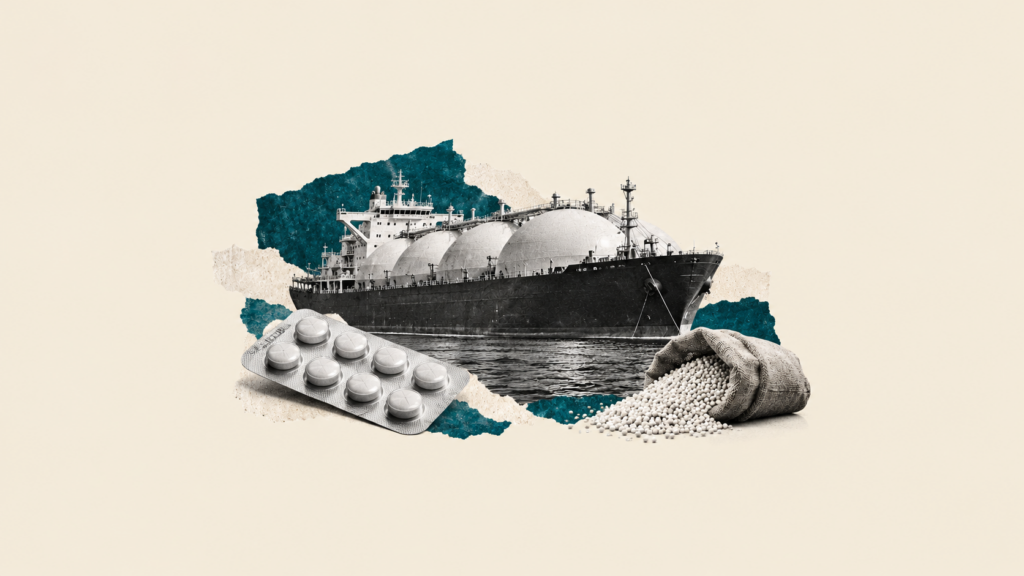

Egyptian imports rose by 31.13% to $11.97 billion in July 2026, compared with $9.13 billion in the same month a year earlier. Natural gas led the commodities whose imports increased, rising by around 88.5%, followed by medicines and pharmaceutical preparations at 40.7%.
The value of gas imports during the first seven months of this year reached approximately $7.69 billion, an increase of 76.1% from about $4.36 billion in the corresponding period last year.
Egypt’s natural gas imports jumped to record levels in fiscal year 2025/2026, reaching approximately 945 billion cubic feet, compared with 625 billion cubic feet in 2024/2025, an increase of 51%. Alongside 634 billion cubic feet imported through onshore and offshore LNG regasification units, Egypt imported around 311 billion cubic feet from Israel.
Liquefied natural gas (LNG) imports reached approximately 10.52 million tonnes during the first nine months of 2026, an increase of 85%. They totalled around 4.26 million tonnes in the third quarter, an increase of 27.5% from the second quarter and approximately 29% from the corresponding period last year, when they stood at about 3.30 million tonnes.
During the third quarter of this year, the United States accounted for the largest volume of LNG imported by Egypt, at 3.87 million tonnes. Mauritania followed with around 150,000 tonnes, then Trinidad and Tobago with 140,000 tonnes and Norway with 70,000 tonnes. In August 2026, Egypt received around 40,000 tonnes of LNG from Mexico.
Estimates by the US company S&P Global Energy indicate that Egypt’s LNG imports will reach approximately 11.1 million tonnes in 2026, an increase of nearly 26% over the previous year, amid continued high demand from the electricity and industrial sectors.
Egypt’s domestic natural gas production currently stands at around 3.6 to 3.8 billion cubic feet a day, down from the first half of 2026, when it totalled approximately 19.5 billion cubic metres, averaging about 3.7 to 3.8 billion cubic feet a day. This represents a marked decline compared with output in 2025, which totalled around 42.2 to 42.3 billion cubic metres, equivalent to a daily average of 4.09 billion cubic feet, and in 2024, when Egypt produced around 49.4 billion cubic metres of gas. Production has fallen by 40% from its 2021 level of approximately 70.4 billion cubic metres.
To bridge the gap between domestic production and consumption, which currently exceeds 6.2 billion cubic feet a day, equivalent to around 2.2 trillion cubic feet a year, the country relies on LNG cargoes. The electricity sector accounts for 58% to 60% of consumption. US LNG leads these supplies, having accounted for 90% of imports in 2025, at approximately 8.15 million tonnes.
The Petroleum Ministry’s spot contracts also included 48 gas cargoes in the final quarter of 2025, costing around $2.7 billion, and the receipt of approximately 42 cargoes in the final quarter of 2026, to supply around 2 billion to 2.2 billion cubic feet a day.
Between October 2025 and January 2026, the Egyptian government signed several natural gas import agreements as domestic production fell to around 4.2 billion cubic feet a day. These were part of government efforts to bolster domestic output and reverse the sector’s decline since 2022, with the aim of reaching 6.6 billion cubic feet a day by 2027.
In February last year, Egypt signed a $3 billion agreement with Shell and TotalEnergies to supply around 60 LNG cargoes during 2025. The agreement was subsequently expanded to cover up to 160 cargoes during 2025 and 2026 to secure electricity supplies.
In August 2025, Tel Aviv concluded the largest gas deal in its history with Cairo, worth $35 billion, to export around 130 billion cubic metres of natural gas through 2040. Egypt’s Ministry of Petroleum and Mineral Resources plans to increase imports of Israeli gas by 25% in November 2026, bringing them to 1.25 billion cubic feet a day.
In October 2025, Egypt signed two commercial agreements with Cyprus to transport gas from the Cypriot Cronos field to Egypt for liquefaction at the Idku and Damietta plants before re-export.
In January this year, Egypt signed a memorandum of understanding with Qatar to strengthen cooperation in LNG sales and imports, including the supply of up to 24 LNG cargoes to Ain Sokhna and Damietta ports during summer 2026, from June to September. The agreement aims to meet summer energy demand for electricity generation, particularly after Egypt’s LNG imports rose by 188% to 7.8 million tonnes during the first 11 months of 2025.
Mohamed Saad El-Din, chairman of the Petroleum and Mining Chamber at the Federation of Egyptian Industries, attributes the rise in Egypt’s natural gas imports to falling domestic production alongside higher summer consumption, which increased reliance on imported gas to meet market needs.
He tells Zawia3: “Egypt’s natural gas production has declined from around 7 billion cubic feet a day to approximately 3.8 billion cubic feet, while consumption stands at around 6.2 billion cubic feet a day under normal conditions and rises to approximately 7 billion cubic feet during peak periods.”
He links the increase in gas imports during this year’s summer to the government’s commitment not to implement electricity load-shedding, which required additional gas to operate power stations and allow the summer to pass without recurring daily power cuts.
He confirms that Egypt used four LNG regasification vessels, which convert imported LNG back into gas and inject it into the domestic network. He considers the rise in imports a natural consequence of lower domestic production and higher consumption.
Despite the record rise in natural gas imports, fertiliser exports fell sharply in July, declining by 47.1% year on year. This resulted from temporary pressure that led to gas supplies being reduced to some major fertiliser factories during peak summer energy consumption.
Crude oil exports also fell by 39.0%, followed by refined sugar at 18.5%. Egypt’s exports of medicines and pharmaceutical preparations declined by 17.9%.
The trade deficit
Egypt’s trade deficit reached $8.04 billion in July 2026, compared with $5.22 billion in the same month of 2025, an increase of 53.95%, according to the monthly foreign trade bulletin for July, issued by the Central Agency for Public Mobilization and Statistics (CAPMAS) this October.
Imports rose to $11.97 billion in July 2026 from $9.13 billion in the same month a year earlier. Egyptian exports increased by 0.58% to $3.93 billion in July 2026, compared with $3.90 billion in the corresponding month of 2025.
Political economy professor Karim El-Omda links the increased value of Egypt’s natural gas imports in July 2026 compared with the same month a year earlier to higher gas prices and rising domestic consumption, particularly in summer, when electricity demand increases, alongside gas prices being higher than last year.
He tells Zawia3: “The decline in fertiliser exports resulted from directing a larger share of production to the domestic market. I expect gas imports to fall during autumn and winter as electricity consumption declines.”
He notes that geopolitical developments have also affected the gas market. The interruption of Israeli gas supplies to Egypt during military escalation in the region contributed to greater reliance on imported LNG cargoes, most of which came from the United States, amid interrupted or declining LNG exports from some Gulf countries.
He stresses that exchange-rate movements significantly affect the import bill and domestic prices. Traders and importers, he says, usually pass on increases in the dollar’s cost to commodity prices quickly, sometimes by more than the exchange-rate increase itself, as a hedge against further cost rises.
Why have fertiliser exports declined?
Fertiliser exports reached approximately $2.3 billion in 2021 before jumping to more than $3.38 billion in 2022, the highest level during the period. This was driven by rising global prices following the Russia-Ukraine war and increased European demand for Egyptian fertilisers. In 2023, however, exports declined to around $2.6 billion as global prices fell and factories were affected by fluctuating gas supplies.
The value of exports stabilised at around $2.4 billion to $2.5 billion in 2024, amid continued pressure on domestic energy supplies and rising gas consumption by power stations during summer. Exports returned to growth in 2025, recording approximately $2.803 billion, while the chemical industries and fertilisers sector’s total exports reached around $9.4 billion.
During the first seven months of 2026, Egypt’s total fertiliser exports reached approximately $1.93 billion, recording modest growth of 11.8% compared with $1.73 billion in the corresponding period of 2025.
Fertiliser exports nevertheless declined during this year’s summer, falling by 47.1% in July compared with the same month in 2025, as gas supplies to fertiliser plants were reduced in some summer months. Growth in phosphate fertiliser exports helped offset part of the decline in nitrogen-based products, benefiting from Egypt’s phosphate rock reserves, estimated at more than 3 billion tonnes.
MOPCO, Abu Qir Fertilizers and KIMA Aswan lead fertiliser production in Egypt. Around 70% to 80% of MOPCO’s output is estimated to be destined for export. Abu Qir directs around 48% to 50% of its production to foreign markets. KIMA produces around 520,000 tonnes of urea annually and 265 to 800 tonnes of ammonium nitrate daily, directing its output to the domestic market and exports to Asia, Africa, Europe and South America.
Egypt exports fertilisers to European markets, particularly France, Italy, Spain and Greece, as well as the United States and countries in Asia, Latin America and Africa. Production is divided between the domestic and foreign markets: companies must supply domestic quotas at subsidised prices, while the remainder is exported to generate dollar revenues.
In this context, Mohamed Saad El-Din, chairman of the Petroleum and Mining Chamber at the Federation of Egyptian Industries, stresses that fertiliser factories depend heavily on natural gas in production. The rise in industrial gas prices during 2026 compared with 2025 has increased production costs, affecting Egyptian companies’ ability to compete in foreign markets.
He argues that this year’s problem was not a shortage of gas supplied to fertiliser plants, but higher gas prices for factories. Prices rose from approximately $5 to levels of $7, $10 and $11, increasing fertiliser production costs, reducing competitiveness abroad and making exports economically unviable at certain times.
The chamber’s chairman expects Egypt’s fertiliser exports to European and African markets to improve during the final quarter of 2026 as fertiliser factories return to better operating rates. He anticipates that exports will benefit from improved production and energy conditions.
He says: “Fertiliser exports tend to rise during winter, while domestic fertiliser consumption increases in summer, because winter crops such as wheat, clover and beans require smaller quantities of fertiliser than summer crops, particularly rice.”
Despite disruption to regional shipping caused by regional and geopolitical tensions affecting supply chains through the Strait of Hormuz and Bab el-Mandeb, Saad El-Din believes Egypt has an opportunity to increase fertiliser exports in the coming period. This could offset part of the decline seen over the previous two months, amid a shortage of global fertiliser, gas and energy supplies from the Gulf.
He stresses that disruption in the Strait of Hormuz affects more than the oil market, extending to products such as fertilisers and natural gas. Interrupted or disrupted exports from producing countries in the region create a gap in the global market that Egyptian producers could exploit if they have the necessary production capacity and competitiveness.
Medicine imports rise as exports fall
Egypt faces continuing pressure to maintain the flow of chemical and organic raw materials needed by local factories to manufacture essential medicines and prevent drug shortages from worsening. It also imports medicines, preparations and pharmaceutical production inputs that are not manufactured locally.
According to CAPMAS, Egyptian imports of medicines and pharmaceutical preparations increased by 40.7% in July 2026 compared with the same period in 2025. Their exports, by contrast, recorded a slight decline of around 17.9% in July this year compared with the corresponding period a year earlier.
From January to October 2025, Egypt’s imports of medicines and pharmaceutical preparations fell by 18.5% to $2.42 billion, compared with $2.97 billion during the same period of 2024. Their import value declined by approximately 42.5% in October 2025 to $238.6 million, compared with $415.5 million in October 2024.
During the first ten months of 2025, Egypt’s imports of medical and surgical instruments and equipment fell by 2.7% to $318.1 million, compared with $327.2 million.
Egypt’s total imports of pharmaceutical products and preparations fell to around $2.94 billion in 2025 from approximately $3.605 billion in 2024, a decrease of nearly 15.3%, according to data from the United Nations’ UN Comtrade database through the World Bank’s WITS platform. Domestic production covered around 93% of the Egyptian medicine market’s total needs, with approximately 17,000 registered pharmaceutical preparations and domestic sales reaching EGP 307 billion by the end of 2025.
Domestic production covers around 91% of the market’s needs for finished pharmaceutical preparations, while specialised medicines account for approximately 9% of needs met through imports. Egyptian consumption exceeds around 4 billion medicine packs annually. The market’s sales value exceeded EGP 422 billion, compared with approximately EGP 309 billion in the preceding year.
Medical and pharmaceutical product exports, meanwhile, rose from around $950 million to $1.3 billion, with a target of reaching $1.6 billion. Finished pharmaceutical preparations accounted for the largest share, at $578.3 million, compared with $486 million previously, while cosmetics and medical supplies exports totalled around $307.2 million. Saudi Arabia, Sudan and Iraq are among the leading destinations for Egyptian products, alongside expanding exports to African markets.
Despite high self-sufficiency in finished medicines, the industry still relies heavily on imported active pharmaceutical ingredients, particularly from India and China.
To reduce this dependence, the Egyptian Drug Authority aims to localise production of 50 active ingredients representing around 78% of the import bill for raw materials used in human medicines. Localisation efforts have so far helped register and circulate more than 171 active ingredients locally, achieving cumulative import-bill savings of approximately $749.5 million.
The higher value of medicine and pharmaceutical preparation imports does not necessarily reflect an increase in imported units. Karim Karam, who oversees the medicines portfolio at the Egyptian Center for the Right to Medicine, attributes it
largely to the sharp rise in the dollar’s exchange rate and supply-chain costs, which he estimates are now around 100% above their previous levels.
He explains that pharmaceutical companies, faced with the possibility of raw-material shortages seen in earlier periods, must build stocks sufficient for three or four months in anticipation of further crises. Egypt’s pharmaceutical industry, he notes, imports approximately 95% of its raw materials and production inputs, as well as other materials such as packaging and inks.
Karam attributes declining medicine exports to supply and demand, the quantities available locally and whether production can meet domestic needs before some is directed abroad. He also points to the impact of regional and geopolitical disruption on export volumes.
He tells Zawia3: “Egypt aims to raise pharmaceutical exports to around $950 million, roughly double the figure recorded last year, but this requires overcoming the consequences of disruption around Egypt and in international supply chains.”
He stresses that geopolitical developments directly affect Egypt’s pharmaceutical industry because of its heavy dependence on raw materials from China and India and the increase in shipping costs from $100 to around $500 per tonne.
He explains that Egyptian pharmaceutical exports to Africa have risen from around $60 million five years ago to approximately $450 million today, with Egypt targeting $950 million. Karam argues, however, that this remains below exports from smaller countries such as Jordan, which exports approximately $3 billion in medicines annually.
He adds that rising fuel and energy prices and workers’ wages increase production costs and put pressure on pharmaceutical companies, ultimately affecting consumers’ purchasing power and medicine prices. He considers the solution to be localising the manufacture of pharmaceutical raw materials and reducing dependence on foreign production inputs. Egypt already produces some substances, such as acetylsalicylic acid, aspirin and paracetamol, he notes, but still imports most other raw materials.
He calls for restructuring and developing local pharmaceutical-packaging companies and directing graduates of schools specialising in pharmaceutical and technological industries towards these fields, helping build a domestic industrial base capable of producing pharmaceutical manufacturing inputs.
Mahfouz Ramzy, head of the pharmaceutical industry committee at the Pharmacists’ Syndicate, links the higher value of medicine and pharmaceutical preparation imports to annual growth in domestic medicine sales and geopolitical disruption in the Middle East. That disruption has affected supply chains and increased shipping and production costs for overseas factories, raising the cost of imported products.
The committee’s head does not view the rising import bill separately from the need to develop Egyptian pharmaceutical exports. Egypt has manufacturing capabilities that could increase exports to several times their current levels, he says, but this requires a long-term strategy to develop domestic products and improve Egyptian factories’ competitiveness abroad.
He stresses, however, that higher import values do not necessarily mean increased quantities of imported medicines. Targeted therapies, oncology and immunological medicines, and dietary supplements increase the import bill, he notes.
Ramzy rules out raw-material shortages as the cause of declining pharmaceutical exports. In his view, the decline is linked to intense foreign competition and the effect of reference prices for Egyptian medicines on their marketing prospects abroad: attempts to export the same medicine pack at a higher price than in the domestic market may face objections from importers.
He tells Zawia3: “Several local companies concentrating on the same medicines creates competition among Egyptian factories to export similar products, while the industry needs to expand into specialised medicines and high-technology products, allowing it to enter new markets and generate greater added value.”
He points to African markets as an important opportunity for Egyptian medicines, noting that the continent comprises around 54 countries with approximately 1.3 billion people, while Nigeria alone has around 270 million to 280 million inhabitants. Capitalising on this requires overcoming competition from other countries that have strengthened their presence in Africa, as well as ensuring reliable local agents and mechanisms for collecting payments owed to exporting companies.
He notes that Decision No. 480 of 2026 on medicine pricing includes a mechanism to encourage domestic manufacturing. An importer can be required to lower a product’s price by 20% if three domestic companies can manufacture a high-technology product and meet the Egyptian market’s needs. This could reduce reliance on imports if the necessary domestic manufacturing capacity is available.
He stresses that reducing the import bill and increasing exports must be pursued in parallel. He cautions against expecting large export increases over a short period, since building foreign markets and strengthening competitiveness require time, investment and sustained institutional effort.
To strengthen Egyptian medicines’ presence abroad, Ramzy proposes an electronic platform run by the Egyptian Drug Authority listing domestic pharmaceutical products, company details and contact information. This would enable foreign agents and importers to identify available products and communicate directly with manufacturers.
He also calls for conferences and exhibitions introducing Egyptian medicines, organised jointly by Egyptian chambers of commerce and their counterparts in African countries, to expand contracting and export opportunities.
He proposes establishing an Arab-African medicines agency headquartered in Egypt to facilitate mutual recognition of medicine registrations among participating countries. The Egyptian Drug Authority is already working to ease registration procedures in several African countries, he notes, through cooperation protocols intended to shorten the time required for Egyptian products to enter those markets.
Ultimately, foreign trade indicators for 2026 reveal interconnected pressures on Egypt’s economy: rising gas and medicine import bills have coincided with declining fertiliser and pharmaceutical exports and a widening trade deficit.
While falling gas production and rising electricity demand have increased reliance on imports, energy and supply-chain costs have affected domestic industries’ ability to compete and export.
Addressing this imbalance appears to require more than reducing imports. It calls for increasing domestic energy and industrial-input production, localising pharmaceutical raw materials and improving gas-use efficiency, allowing sectors such as fertilisers and medicines to become sustainable sources of foreign currency rather than drains on it. The success of these approaches remains tied to government policies’ ability to balance domestic market needs with stronger export capacity.