As Egypt Forum 2026 concluded with government targets, an academic’s Facebook post stirred debate over the value of dialogue within the forum. He described his participation as disappointing, amid criticism that the event lacked a clear agenda and mechanisms ensuring experts could take part, and arguments that achievements should be measured not by conferences but by their impact on citizens and their purchasing power.
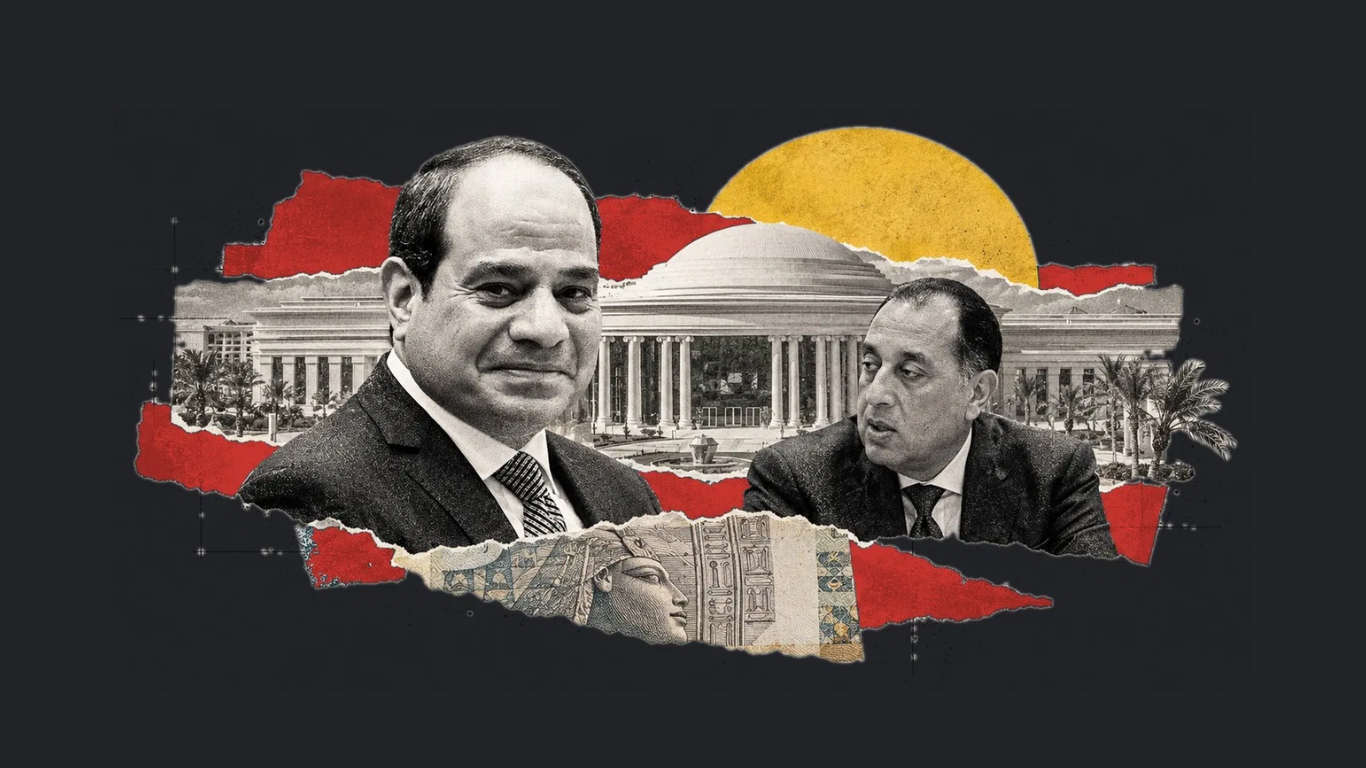
Hours before President Abdel Fattah al-Sisi decided to hold Egypt Forum annually, a Facebook post by Dr Amgad Omara, former dean of the Faculty of Commerce at Menoufia University, was puncturing the aura built around the event, which ran from 19 to 24 October 2026 at the St. Regis Hotel in the New Administrative Capital. Egypt’s Grand Mufti, Nazir Ayyad, had described the forum as an accounting of achievements and a space for dialogue among different intellectual currents, reviewing what had been accomplished in recent years and identifying strengths and weaknesses to produce proposals that would help continue the development process.
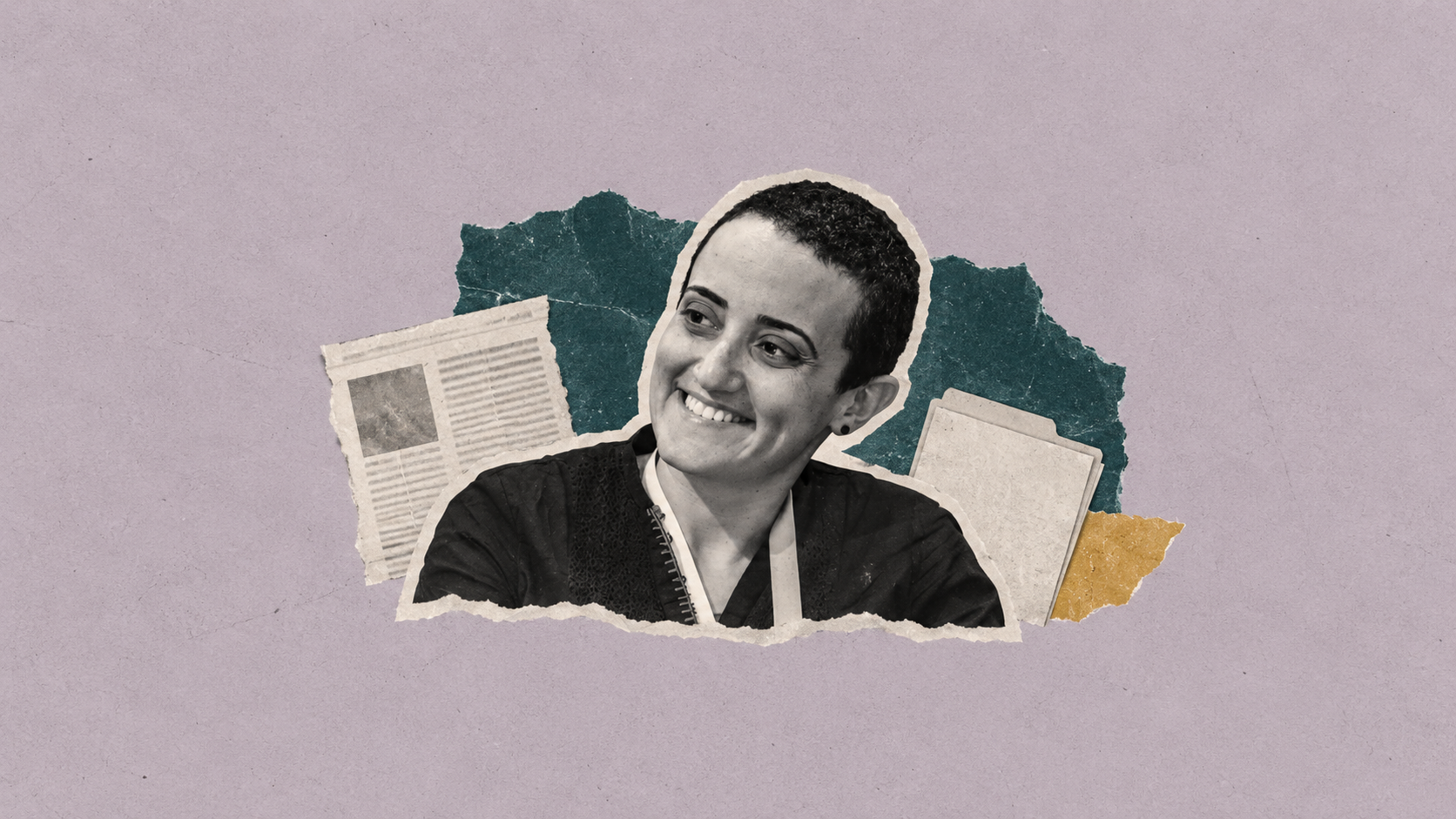
Omara described his participation in the Egypt Forum 2026 roundtable on increasing foreign-currency resources and managing state debt as a disappointing experience, despite the importance and sensitivity of the subject amid current economic conditions.
In his post, he said he had set aside EGP 1,000 from his monthly pension, which does not exceed EGP 5,000, to accept the presidential invitation, despite the distance from his home and other circumstances he declined to disclose.
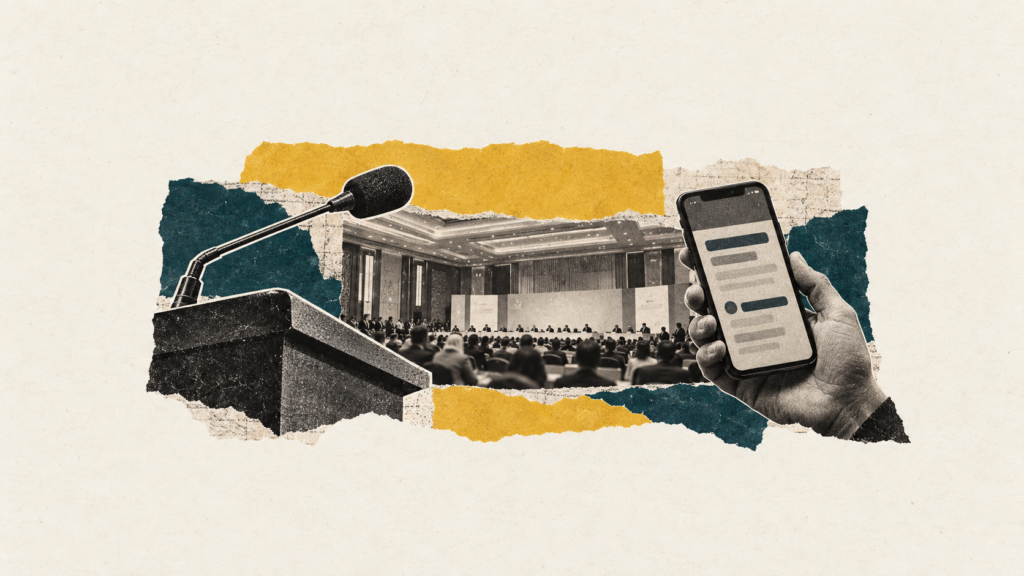
Omara criticised the session’s delay of more than an hour and a half without an announcement. He said the arrangement of the hall divided attendees into two separate circles: the first seated ministers and officials in luxurious, comfortable seats, while the second placed unofficial guests in cramped, uncomfortable seats, with strong lighting impeding eye contact among those seated. He also noted the absence of Sisi and Madbouly from the session despite its importance, while several ministers and officials attended, including the ministers responsible for the economy, the central bank governor, the aviation and tourism ministers, and the president’s political affairs adviser.
He criticised the way the discussion was managed, saying that, in his account, the broadcaster moderating the session directed prearranged, prepared questions to ministers and officials for approximately two and a half hours, without providing genuine space for an exchange of views or new ideas for confronting the economic crisis. He added that attendees were given only one minute at the end of the session, before one woman in the audience made a general statement lasting 30 seconds, after which the moderator announced the session’s conclusion without allowing any further questions or comments.
Omara considered that this approach marginalised non-official attendees and treated them, in his words, as mere decoration to complete the scene. It disregarded the fact that they included specialists and academics with scientific knowledge and experience in the subject under discussion, and that some had less need to hear officials’ conventional proposals than to participate in discussing innovative solutions to the crisis. He said the experience left him feeling that he had demeaned himself, his knowledge and his specialism, noting that he held a doctorate in the field covered by the session. He believed the forum was not worth attending and instead called for repentance and seeking forgiveness for what he described as diminishing the value of himself and his knowledge.
Omara linked his experience to subsequent remarks by President Sisi, which he said made clear to him that the forum had been held to please the government and console its members, against the backdrop of what the president described as ministers’ distress and anger over public criticism. Omara concluded sarcastically that his attendance had not been in vain: it was part of a scene intended to please the government and console ministers, whom he mockingly called “infallible”, rather than make the forum a genuine space for dialogue on the foreign-currency and debt crisis and for hearing specialists’ views on addressing it. In his post, Omara described invitees as having come to serve merely as “decoration”, or “extras, in cinematic terms”, an audience summoned to complete the formalities of the session and present a particular image.
Omara described unofficial attendees as having come merely to serve as “decoration” or “extras, in cinematic terms”, referring to what he saw as the marginalisation of their role in the session. Meanwhile, the announced attendance figures reveal the difficulty of turning such meetings into actual dialogue. Approximately 9,000 citizens attended the forum’s sessions, selected from 61,329 people who had applied through its official website, according to the Cabinet Media Centre. This raises a question about the nature of participation: how can a session with so many invitees accommodate genuine discussion? Consequently, according to Omara, attendees’ opportunity to ask questions was limited to one minute, with officials allotted extended speaking time while public participation was reduced to a fleeting opportunity.
During his participation in the fourth day of Egypt Forum 2026, President Abdel Fattah al-Sisi said the event aimed to raise the government’s morale and explain the economic challenges facing the state. He urged the public to stand by the government and understand the cost of projects and their sources of funding. He said the forum was intended not only for discussions among experts and specialists but also to address citizens directly, arguing that building an informed public opinion required presenting facts and challenges, rather than merely providing organised information without explaining its implications.
A Post Outshines a Forum!
Economist Dr Abdel Nabi Abdel Mottaleb describes the forum’s organisation as closer to a “festival and carnival” than to an academic forum for exchanging ideas and discussing problems. He tells Zawia3 that Egypt has internationally recognised experts and professionals in economics, education, medicine and business. A selected group could have been invited to discuss existing challenges, with online participation and discussions broadcast widely across the country. Abdel Mottaleb links the widespread circulation of Omara’s post to public dissatisfaction with the forum. He says the public found in its criticism an opportunity to express the street’s perspective, which gave the post greater reach than the issues addressed by the forum. In his assessment, this response reflects a feeling among sections of the public that the forum “did not represent them”.
Among those attending the session criticised by Dr Amgad Omara was MP Mohamed Fouad, who tells Zawia3 that the claim that interventions during the session had been prepared and agreed in advance is incorrect. He says he raised what he had come to discuss without the moderator or organisers having prior knowledge of the substance of his intervention, nor did the minister who responded to it. Fouad also says Omara’s account consists of personal impressions and assessments he has the right to express, without their requiring a response.
The MP adds that Egypt Forum 2026 roundtables are organised and managed by identifying discussion participants in advance, as is stated in the invitations. Unlike sessions held in a theatre-style format, they do not allow questions from the rest of the audience. Fouad believes this arrangement does not diminish the standing of invitees, who included former ministers, officials, faculty deans, university professors and public figures. He considers that the hall’s arrangement, with a speakers’ table surrounded by three rows of seats, is consistent with meetings of this kind.
Social media users discussed Omara’s post, commenting that Egypt Forum 2026 was a perfunctory occasion. Essam Lala, a former adviser to the minister of local development, wrote on Facebook that genuine national dialogue should provide space to listen to experts and citizens and benefit from their ideas, rather than become an occasion to please officials or showcase achievements. Lala said marginalising differing views and wasting expertise hindered reform, that respecting citizens began with respecting their intelligence, and that improving performance required measuring, reviewing and correcting results, not merely justifying them. He also pointed to Omara’s statement in his post that his monthly pension did not exceed EGP 5,000, questioning the level of pension received by a former dean at an Egyptian university. Meanwhile, writer Ismail Hosni reacted to Omara’s account on Facebook: “Good heavens… what a disaster… what a dreadful mess.”
Amid the indignation sparked by Omara’s post, a content creator who calls himself a political analyst, Mohamed Salah, known for his unqualified support for the state, wrote a Facebook post defending the forum’s organisation against Omara’s criticism. He argued that an invitation to the forum represented recognition whose value should be appreciated, describing attendance as an honour valued only by “people of good breeding”, in his words. Salah’s defence went beyond justifying the arrangements to declaring the invitation itself priceless: “This honour cannot be measured in money,” he said, adding: “You shouldn’t say it cost me a lot to attend. You shouldn’t say it was a long journey. Why? This confers value on you and honours you personally.” The content creator went beyond the question of honour to impose a moral standard requiring Omara to appreciate the invitation and be grateful for it, rather than object to his experience: “For these words to come from a professor and former faculty dean, honestly, it’s shameful. It’s shameful for a distinguished scholar to calculate things this way, speak this way and complain this way. I am truly embarrassed for him that this is his understanding of a great honour such as attending a presidential forum!”
Forum Outcomes Amid Unfulfilled Commitments
At the conclusion of Egypt Forum 2026 on 24 October, attended by President Sisi, Prime Minister Mostafa Madbouly announced that the government aimed to raise the minimum wage from EGP 8,000 to EGP 15,000 by 2029/2030. He also announced a gradual plan to increase teachers’ incomes, targeting a minimum income of EGP 15,000 within two years, and to improve the incomes of university faculty members and their assistants. He announced a national programme to develop 600 technical schools in partnership with the private sector, an increase in the number of Egyptian-Japanese schools from 103 to 500 within three years, and a government target to complete and operate 27 national non-profit and technological universities before the end of 2030.
Government targets announced by Madbouly included providing one million housing units over four years through investments of approximately EGP 1 trillion, alongside expanding social and alternative housing in the governorates. EGP 42 billion would be allocated over three years to improve local roads. Madbouly’s speech also announced an increase in wheat self-sufficiency, alongside indicative procurement prices of approximately EGP 2,650 per ardeb of wheat and EGP 2,000–2,300 per tonne of sugar beet. Before Madbouly’s decision, the price of an ardeb of wheat had reached EGP 2,500, after being raised from EGP 2,350 at the beginning of April 2026. The new increase therefore amounts to EGP 150 per ardeb.
Economist Dr Abdel Nabi Abdel Mottaleb says Egypt Forum 2026 did not deliver what participants and the public had hoped for. He considers that, according to President Sisi’s remarks, its primary purpose was to raise the government’s morale and showcase its achievements to public opinion, rather than produce outcomes. He tells Zawia3 that the forum lacked a defined agenda, work schedule, committees and clear questions that discussions were expected to answer. He adds that the sessions included the government presenting certain ideas and achievements, but believes the session on the national development programme was the one most deserving of scrutiny and analysis.
Sisi had stated: “I organised Egypt Forum to raise the government’s morale, and I need the entire population to stand by us,” during the session “Egypt’s Energy Journey: National Achievements and Future Prospects”, on the forum’s fourth day, 22 October. Describing the government’s frustration with criticism, Sisi said: “The government had reached a point where it was very upset and was saying it wanted to leave.”
At the forum’s conclusion, Madbouly announced targets to lower inflation from 13.3% to a range of 5%–7%, reduce unemployment from 5.8% to 5.5%, and increase tax revenue as a share of GDP from 13% to 15%, under the National Programme for Economic Transformation for 2027–2030. He also granted users of coded electricity meters installed before 2024 who had not applied for reconciliation a six-month period to regularise their status, with a 30% reduction for applicants during that period.
“Give Me Two Years” Became Twelve: What State Figures Say Before Egypt Forum 2026 Does
For his part, economist Ahmed Khozeim criticises what he describes as superficial celebrations of achievements. He argues that economic performance should be assessed by its impact on citizens’ lives, including the pound’s value, purchasing power, income levels, the ability to meet needs, and the preservation of the middle class. He tells Zawia3 that achievements are not measured by conferences and statements but by what people experience on the ground. Khozeim points to the rising public-debt burden, saying debt interest puts pressure on public spending and contributes to the persistence of the deficit and higher fees. He also criticises continuing inflation, describing the contraction of the middle class as an indication of faltering economic policies.
At the forum’s conclusion, Madbouly announced a target to increase economic growth to 6.8% by 2029/2030, compared with 5.1% currently, raise total investment as a share of GDP from 12.7% to 20%, and increase the private sector’s share of investment from 57.7% to 67%. He also announced a target to establish at least five billion-dollar companies over the next five years, provide one million high-income jobs by supporting entrepreneurship and economic activities he described as promising, and create 200,000 jobs in outsourcing and telecommunications by 2030.
Economist Ahmed Khozeim links the sale of state assets to the failure of the debt burden to decline, suggesting this may indicate debts are being replaced with others carrying higher interest rates. He also warns of the risks of hot money, which he tells Zawia3 currently exceeds USD 45 billion in debt instruments, considering it a potential source of pressure on currency stability. He criticises the increased issuance of money without a corresponding rise in production, holding this responsible for the pound’s declining value. He also says celebrations of achievements have no value unless the results of economic policies are reflected in citizens’ circumstances and livelihoods.
Egypt Forum 2026 cannot be judged by the number of sessions or the scale of its promises. These will remain targets unless accompanied by clear mechanisms for implementation and accountability. Although President Sisi announced that the forum would be held annually, the test of the next edition will not be the breadth of its platform for dialogue, but how much of the previous edition’s commitments have been fulfilled, and whether people with expertise and differing views will find a genuine space to participate, rather than merely seats in a hall.