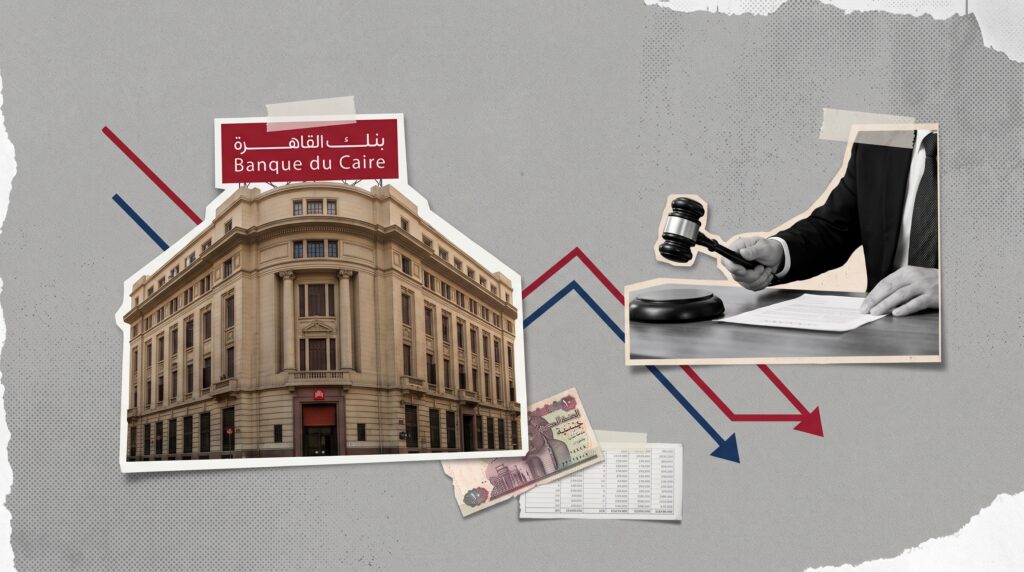

On Monday, 2 November, the Egyptian government announced the start of trading in Banque du Caire shares on the Egyptian Exchange, following a public offering and private placement covering 45% of the bank’s capital. The sale raised approximately EGP 36.37 billion, making it the largest offering by value in the history of Egypt’s capital market. At EGP 5.30 per share, it valued the bank as a whole at approximately EGP 80.8 billion.
The state sold this stake through Banque Misr, which it owns and which owns Banque du Caire. The intention-to-float announcement specified that “Banque Misr, the existing shareholder” would sell “existing shares held by it,” describing it as the “selling shareholder.” Banque du Caire issued no new shares, meaning that the proceeds go to Banque Misr rather than into Banque du Caire’s capital. Banque Misr retained a 55% stake. At the Central Bank’s exchange rate on the offering date, EGP 55.51 to the dollar according to the official bulletin, the proceeds are equivalent to approximately $655 million, and the market value of the entire bank to approximately $1.46 billion, according to Zawia3’s calculations.
The move comes approximately nine years after the provisional listing of the bank’s shares on the exchange, as part of the government’s divestment programme. The state says the programme aims to expand private-sector participation in ownership of public assets and strengthen the capital market’s role in attracting investment. The offering process initially targeted the sale of 30% of the bank’s capital, approximately 4.575 billion shares, before the proportion was increased to 45% as investor demand grew. The shares offered were divided between qualified investors and the public, with the private placement accounting for 95% and the public offering for 5%.
An informed government source tells Zawia3 that financial pressures and the government’s growing need for cash explain the decision to offer a stake in Banque du Caire at this particular time. Sufficient financing is difficult to secure from traditional sources, while the government also seeks to meet the targets of its State Ownership Policy Document, which envisages reducing its presence in a number of economic activities and providing more room for private-sector investment.
The source explains that the government sought to attract international investors from Europe and the Gulf to the transaction, organising roadshows in European and Arab markets to introduce the offering and engage with funds and investment institutions interested in the Egyptian market. These efforts, the source notes, extend beyond marketing Banque du Caire’s offering: they aim to broaden the pool of potential investors for future offerings and secure foreign-currency inflows through the sale of stakes in state-owned assets.
According to the source, this approach extends to the wider government divestment programme. The government is preparing to announce the flotation of around six companies in December as part of its plan to divest state-owned stakes. The source named three: Misr Life Insurance, El Nasr Glass and Crystal, and the Springs and Transport Equipment Manufacturing Company, “Yayat.” The government intends to proceed with the remaining offerings according to the companies’ readiness, valuations and market conditions.
Regarding the future relationship with the International Monetary Fund, the source confirms that the government is already considering a proposal for a new IMF programme after the current one ends, although not on the scale of previous programmes. Alternatives for securing liquidity and covering financing needs and the deficit remain limited. The source links this direction to growing pressure on public finances and the rising costs and economic repercussions of the war in the region, which increase financing needs and narrow the government’s room for manoeuvre.
The source expects the government may begin taking practical steps in this direction early next year, but stresses that the matter remains under study and consultation and has not yet reached an agreement or publicly announced formal negotiations.
The government celebrates
As trading began on Monday morning, the Egyptian Exchange held an official ceremony to mark the start of trading in Banque du Caire shares on its main market. Those attending included Prime Minister Mostafa Madbouly, Central Bank Governor Hassan Abdalla, Financial Regulatory Authority Chairman Islam Azzam and Egyptian Exchange Chairman Omar Radwan, alongside executives from Banque Misr and Banque du Caire and other banking officials.
The ceremony followed the completion of an offering of 6.8625 billion shares, representing 45% of the bank’s total capital, at a final price of EGP 5.30 per share and a total value of EGP 36.37 billion. This made it the largest transaction by nominal value in Egyptian pounds in the history of the Egyptian Exchange. Banque Misr retained 55% of Banque du Caire’s capital, ensuring continued state control over its management through the principal shareholder.
During the ceremony, Madbouly described the offering as a practical implementation of the State Ownership Policy Document and proof of the government’s seriousness about completing its divestment programme and broadening corporate ownership. He said the transaction followed earlier doubts about the government’s commitment to implementing the programme. Its completion, he argued, was an important step in economic reform and evidence of the Egyptian capital market’s ability to absorb large offerings and attract domestic and foreign investment.
The prime minister noted that Banque du Caire’s implied market value exceeded EGP 80 billion, while the shares offered were worth approximately EGP 36.37 billion. He considered these indicators a reflection of the bank’s strong financial position and the resilience of Egypt’s banking sector. He affirmed that the government would continue its divestment programme to improve companies’ efficiency and competitiveness, attract more foreign investment and expand partnerships with the private sector.
Similarly, Financial Regulatory Authority Chairman Islam Azzam described the listing as an important milestone in improving the management of public assets, broadening ownership and attracting investors capable of developing those assets, as well as increasing market capitalisation and deepening the capital market. He explained that the offering procedures included reviewing the disclosures and information in the prospectus, matters relating to the share’s fair value, and compliance with the regulatory and legal requirements for listing and trading.
Azzam reviewed the bank’s financial indicators, noting that total assets stood at EGP 533 billion at the end of 2025, its loan portfolio at EGP 258 billion, customer deposits at EGP 401 billion and net profits at EGP 16.1 billion, representing annual growth of 30%. The capital adequacy ratio reached 22.06%. Officials used these indicators to emphasise the strength of the bank’s financial position and its investment appeal.
In the authority’s assessment of the transaction’s impact on the capital market, Azzam noted that Banque du Caire’s listing adds approximately EGP 80.8 billion in market capitalisation, equivalent to around 2.1% of the market value of listed companies before the listing. It also increases the diversity of sectors represented on the exchange and enhances its ability to attract investment. He stressed that the authority’s role extended beyond completing the offering procedures to protecting investors’ rights, ensuring disclosure, transparency and equal opportunity, and reviewing matters relating to the share’s fair value.
For the Central Bank, Governor Hassan Abdalla said the start of trading in Banque du Caire shares reflected confidence in both the offering and Egypt’s banking system. He described the completion of the transaction as the culmination of years of efforts involving the state, the Central Bank and Banque du Caire’s management. He thanked the parties that helped complete the deal and indicated that the coming period could bring surprises involving new offerings, without providing details.
Egyptian Exchange Chairman Omar Radwan described the listing as a new stage in the capital market’s development. He noted that the offering attracted more than half a billion dollars transferred from abroad, alongside domestic demand from institutions and individuals. The public tranche was more than 27 times subscribed, with purchase orders exceeding 9.28 billion shares. He said this demand reflected investors’ confidence in the Egyptian economy and the market’s capacity to absorb large offerings. He also discussed the exchange’s plans to develop new financial instruments and attract more retail and institutional investors, as well as regional and international investment funds.
Among the messages officials emphasised during the ceremony was the participation of international financial institutions, led by the International Finance Corporation and the European Bank for Reconstruction and Development. Each signed up as a cornerstone investor for a stake of up to 15.74% of the private placement, with investments totalling approximately $200 million, according to the announced transaction data. The Central Bank governor said their participation reflected confidence in Egypt’s banking sector, while the exchange chairman cited the volume of funds transferred from abroad as an indication of the Egyptian market’s ability to attract foreign investment.
Foreign investors were not limited to these two institutions. According to Enterprise, the prospectus disclosed four funds that committed up to $256 million: British hedge fund Helikon, approximately $100 million; Britain’s Redwheel, approximately 490.4 million shares; Mauritius-based Sustainable Capital, approximately 784.7 million shares; and the UAE’s Al Waha Investment, approximately 395 million shares. Banque du Caire CEO Hussein Abaza said foreign, regional and Gulf investment institutions participated in the offering, without naming them. The private placement was approximately six times subscribed, rising to 19.8 times when cornerstone investors’ orders were excluded.
How did the share perform in its first session?
The share rose noticeably in the opening minutes of trading, gaining approximately 4.7% to reach EGP 5.55, compared with the EGP 5.30 offering price, before surrendering much of its gains as trading continued. By the close, it settled at EGP 5.31, only 0.19% above the offering price.
Approximately 373.1 million shares changed hands for a total value approaching EGP 2 billion across around 30,100 transactions, bringing the bank’s market capitalisation to approximately EGP 81 billion. On the same day, foreign investors were net sellers of approximately EGP 138.2 million on Egypt’s stock market. The difference between subscription demand before listing and the share’s performance after trading began is therefore part of the assessment of the transaction.
The exchange had set EGP 5.30 as the reference price for the start of trading and doubled the permitted price limits for the first session to 40% in either direction, without applying temporary trading halts during that session, allowing supply and demand to determine an equilibrium price.
It also announced that the special transactions market, OPR, would open for 30 days, from 2 November to 1 December 2026, as part of a mechanism intended to protect individual investors who participated in the public offering and allow them to transact in the shares under the rules announced by the exchange.
The EGP 5.30 price, the top of the announced EGP 4.82–5.30 range, was based on a fair-value study prepared by Baker Tilly. At this price, the bank’s valuation is approximately five times its 2025 profits and approximately 1.24 times its equity of EGP 65.2 billion in June 2026, according to Zawia3’s calculations.
This means the sold stake’s share of 2025 profits alone is approximately EGP 7.2 billion annually. The sale proceeds are therefore equivalent to approximately five years of that stake’s profits, according to Zawia3’s calculations. The period falls to four and a half years if Abaza’s announced target of raising profits to EGP 18 billion by the end of 2026 is achieved. First-half results are moving in that direction: the bank reported net profit of EGP 8.6 billion, up 15% from the same period in 2025, while assets rose to EGP 552.5 billion, customer deposits to EGP 440.4 billion and its loan portfolio to EGP 280.3 billion.
What do experts say about the transaction?
Experts differ in their assessments of the economic merits of selling 45% of Banque du Caire. Some believe partial divestment from state-owned assets is compatible with their profitability, provided it is based on a clear economic valuation and an announced plan for using the proceeds. Others view the sale of a stake in a profitable banking institution as giving up a continuing source of income in exchange for temporary liquidity that does not address the economy’s fiscal and structural imbalances.
Economist Dr Mohamed Fouad believes that Banque du Caire’s profitability does not, in principle, contradict the state’s decision to divest part of its ownership, provided the decision rests on an economic assessment demonstrating that the expected return from selling exceeds the return from retaining the asset.
Speaking to Zawia3, Fouad notes that the central issue is not whether the bank is profitable or loss-making, but whether there is a clear implementation plan for the State Ownership Policy. Such a plan should specify the reasons for divestment, its timing and target value, how the proceeds will be used, and indicators for measuring its economic and financial impact.
He points out that the second edition of the State Ownership Policy Document provides for divestment proceeds to support fiscal sustainability and finance nationally prioritised investments, linking those proceeds to debt reduction and productive investment. However, he believes the document does not provide a detailed plan for allocating the proceeds, despite the government’s announcement that it completed 19 transactions between 2022 and 2025, generating actual proceeds of $5.86 billion, without a detailed explanation of how these resources were used.
Fouad therefore stresses the need to link Banque du Caire’s offering to an announced, measurable plan explaining where the proceeds will go and their expected impact on public debt and investment, alongside disclosure of the results of earlier offerings. He argues that the success of a divestment programme should be measured not by the amount raised, but by its contribution to improving the state’s financial position and strengthening sustainable economic growth.
Economic researcher Elhamy El-Merghany, by contrast, opposes the offering. He regards selling 45% of Banque du Caire as divesting a national banking asset that generates growing profits, depriving the economy of part of its future returns.
El-Merghany bases his position on the distinctive nature of banks compared with companies in other sectors. He notes that Banque du Caire was established on 8 May 1952 and has an extensive branch and ATM network, a large asset base and longstanding banking operations. According to the figures he cites, the bank’s assets exceeded EGP 483 billion at the end of 2024, while net profit rose from EGP 12.4 billion in 2024 to EGP 16.1 billion in 2025.
Speaking to Zawia3, El-Merghany questions the rationale for selling a large stake in a profitable banking institution rather than retaining it and benefiting from its annual cash flows. He warns that bringing foreign investors into the ownership structure could result in some profits being transferred abroad, reducing the returns that could otherwise benefit the state and the domestic economy.
Regarding the share valuation, El-Merghany says he prefers to leave the question of whether the price is fair to capital-market experts. His focus is instead on what he considers the loss associated with divesting a productive, profitable asset and the resulting transfer of part of its future returns to new shareholders.
He also links his opposition to the economic history of Egypt’s banking sector, arguing that the transfer of banks into public ownership was part of building economic independence and directing credit towards development projects. He believes the current divestment reopens the debate over the state’s role in banking and whether raising liquidity through asset sales takes precedence over preserving continuing sources of income, particularly as the government remains dependent on borrowing.
El-Merghany concludes that the share-sale proceeds will not provide a sustainable solution to the financial resource crisis. They will instead generate temporary liquidity that could be quickly consumed, in exchange for the state losing part of the bank’s capital and its share of future profits and dividends.
Capital-market expert Hossam Eid Mahmoud offers a different reading of the transaction, seeing it as part of the government divestment programme and State Ownership Policy Document, which seek to broaden ownership, attract domestic and foreign investment, and deepen Egypt’s capital market.
Speaking to Zawia3, Eid argues that partial divestment from profitable assets can be an economic option if it aims to provide immediate liquidity, improve management efficiency and redirect resources towards other development priorities. He notes that Banque Misr’s retention of 55% of Banque du Caire’s capital means the state remains in control and ownership has not been transferred entirely to the private sector.
On the sale price, the capital-market expert notes that the final EGP 5.30 per share placed the bank’s market value at approximately EGP 80.8 billion. He points out that pricing was based on an independent fair-value study, while subscription levels of approximately six times for the private tranche and 27 times for the public tranche reflect the scale of investor demand for the shares.
However, he notes that subscription demand alone does not establish whether the valuation is fair. Value remains linked to expectations of future growth and economic risks, as well as the possibility that internal valuations may differ from the price the market accepts.
As for the impact of new investors, Eid believes the participation of international institutions such as the EBRD and IFC could help strengthen governance, transparency and operational efficiency, as well as transfer expertise and support financing for productive sectors.
He adds that the state will give up part of the future profits and dividends associated with the stake sold, while retaining control of the bank through Banque Misr, in exchange for immediate proceeds, broader ownership and a more active capital market.
He explains that the approximately EGP 36.37 billion raised is, by its nature, a non-recurring financial resource and cannot be considered a sustainable solution to the financial resource crisis. Its real economic benefit depends on how efficiently it is deployed, the completion of structural reforms and diversification of financing sources, rather than repeated reliance on asset sales. Zawia3 traced this approach in a report on the transformation of state assets into a tool for managing debt.
Does the state benefit from selling a profitable institution?
The trajectory of Banque du Caire’s offering takes on added economic significance when compared with the evolution of its financial position during the years in which sale plans remained on hold. The bank, whose shares were provisionally listed in 2017 but did not begin trading until November 2026, saw substantial expansion in its assets, deposits and lending, alongside rising profits. The cost of delay and the return the state earned by waiting are therefore central to evaluating the transaction.
At the provisional listing in 2017, the bank’s total assets stood at approximately EGP 147.2 billion, according to published data on its financial position. They subsequently rose to EGP 183.4 billion at the end of 2019, EGP 205.3 billion in 2020, EGP 255.4 billion in 2021, EGP 322 billion in 2022, EGP 401.6 billion in 2023, EGP 483 billion in 2024, EGP 533 billion at the end of 2025 and EGP 552.5 billion at the end of June 2026, according to the bank’s announced financial results.
The bank’s assets thus grew by approximately 262% between 2017 and the end of 2025, reaching more than 3.6 times their value at the provisional listing. This increase cannot, however, be treated as equivalent real growth. It must be considered in the context of inflation, the pound’s depreciation and exchange-rate changes during the period, alongside the natural expansion of banking operations and growth in deposits and financing.
The change was not limited to assets but extended to profitability. Net profit after tax rose from approximately EGP 4 billion in 2019 to EGP 16.1 billion in 2025, more than quadrupling, according to the announced results for the two years. Customer deposits increased from EGP 151 billion at the end of 2019 to EGP 401 billion in 2025, while the loan portfolio grew from EGP 76 billion to EGP 258 billion.
The state was therefore not selling a struggling bank or an asset that had lost its capacity to generate profits, but a banking institution whose operations had expanded and financial results improved. The question remains whether delaying the offering allowed the state to maximise the asset’s value before selling it, or whether the years of waiting deprived it of proceeds that could have been deployed in other investments or obligations, particularly given the decline in the pound’s real value during that period.
How should these figures be read?
The importance of comparison becomes clearer when returning to the first sale attempt in 2008. In an auction for a 67% stake in Banque du Caire, the National Bank of Greece offered a valuation of $2.025 billion for the entire bank, equivalent to approximately $1.4 billion for the stake offered. The government cancelled the auction. Mohamed Barakat, then chairman of both Banque du Caire and Banque Misr, said the bids had not reached the price set by the valuation committee, which expected approximately $1.6 billion for the stake, equivalent to approximately $2.4 billion for the whole bank.
According to a Beltone research note cited by Enterprise, the Greek offer valued the bank at approximately 4.1 times its book value. Other bids at the time included approximately $1.3 billion from Mashreq Bank and approximately $1.2 billion from a consortium of Arab National Bank and Arab Bank Group.
Compared with the current offering, which put Banque du Caire’s total market value at approximately EGP 80.8 billion, or approximately $1.46 billion at the Central Bank’s exchange rate on the offering date, the bank’s current dollar valuation appears approximately 28% below the Greek bid rejected as too low and approximately 39% below the valuation committee’s 2008 estimate. These are nominal-dollar comparisons, without accounting for inflation in the dollar itself over 18 years. The price-to-book multiple also fell from 4.1 to approximately 1.24, according to Zawia3’s calculations.
It should be noted here that the earlier offer was for a controlling 67% stake, whereas the current transaction offers a minority stake of 45%, with Banque Misr retaining the majority. Market conditions, exchange rates, profitability indicators and book values also differ between the two periods, and the 2008 bid never became a completed transaction.
The 2020 attempt, meanwhile, aimed to raise approximately $500 million by offering a stake of between 20% and 30%, with the possibility of increasing it to 45%, according to statements by then-chairman Tarek Fayed. The bank held assets worth EGP 183.4 billion at the end of 2019, while net profits had approached EGP 4 billion. The spread of the coronavirus pandemic and disruption to global markets halted the transaction before it could be carried out.
This reveals another paradox: in 2020, the government targeted approximately $500 million for a stake of no more than 30%, implying a valuation of between $1.7 billion and $2.5 billion for the bank. It failed to complete the offering then, before returning six years later to sell 45% for EGP 36.37 billion, approximately $655 million, according to Zawia3’s calculations.
The pandemic was not the final obstacle. In 2022, the sale plan was delayed again amid disruption in emerging markets, the repercussions of the Russia-Ukraine war and declining investor appetite for Egyptian assets. The Financial Regulatory Authority extended the deadline for completing the offering procedures to March 2023, but the transaction again failed to materialise.
In March 2025, the government pursued a different route, negotiating with Emirates NBD over the acquisition of a large stake in Banque du Caire, after the Emirati bank received Central Bank of Egypt approval to conduct due diligence ahead of a possible acquisition.
Published estimates at the time put the transaction’s value at between $1 billion and $1.5 billion, depending on the sources and leaks relating to the negotiations. In May 2025, Al-Manassa reported, citing a government source, that the government had abandoned the direct sale after bids failed to exceed $1.5 billion, while it sought more than $2 billion. It turned instead to reviving the stock-market offering option.
Amid those negotiations, several lawyers filed an urgent lawsuit in March 2025 before the State Council’s Administrative Court, seeking to halt the sale procedures. The defendants named were President Abdel Fattah al-Sisi, Prime Minister Mostafa Madbouly and Central Bank Governor Hassan Abdalla.
The lawsuit emphasised Banque du Caire’s strategic importance, citing its history and role in supporting the national economy and financing development projects, making its sale “devastating news” for Egyptians. It warned of potential adverse consequences for national economic security and the independence of the banking sector, calling for transparency in the sale of major financial institutions and protection of the overriding national interest. Zawia3 had not found a published ruling in the case by the time this report was published.
Where do the proceeds go?
Banque du Caire’s journey from repeated sale attempts to an actual stock-market offering places public-asset management before a test that goes beyond the success of the subscription process. The bank’s sale fell through in 2008 over disagreement on price, its offerings were postponed in 2020 and 2022, and negotiations with a strategic investor stalled in 2025 because of differing valuations. Ultimately, 45% of its shares were sold for EGP 36.37 billion, at a dollar valuation lower than all the offers the government had previously rejected.
During the years of waiting, its asset base multiplied and profits rose, but the pound lost a substantial part of its value, and the monetary and economic conditions determining the dollar value of Egyptian assets changed. An increase in the bank’s nominal value is therefore insufficient to establish that the state achieved the best possible return. Equally, a lower dollar valuation than earlier offers is not conclusive proof of a sale below fair value.
No published disclosure specifies how the proceeds received by Banque Misr will be used: whether they will remain on its balance sheet, be transferred to the public treasury, or count towards the government divestment target that Enterprise estimated at approximately $1.5 billion for the current year, of which almost $1 billion had yet to be raised before the offering.