Hanan M. did not tell her three children that she had dropped dinner from their day. She delays breakfast until after noon instead of nine or ten in the morning, and lunch until eight in the evening, so that the children fall asleep before asking for a third meal that could cost the family an additional EGP 1,000 every month and upset her arrangements for their other obligations.
Hanan is a homemaker in her thirties and the mother of three children, the eldest fifteen and the youngest eight. She manages the household’s food, bills, private tutoring and school supplies, and treatment for any of her children who falls ill, with the EGP 6,500 (about USD 121) her husband gives her each month. Her husband, a second-grade civil servant, has earned EGP 8,250 (about USD 153) since July 2026 and keeps EGP 1,750 for transport and an inexpensive breakfast outside the home, she tells Zawia3. His latest pay rise came as the government raised the minimum wage for employees in the state administrative apparatus from EGP 7,000 to EGP 8,000, effective July. But expenses, Hanan says, have risen disproportionately.
Hanan found no alternative to dropping dinner. The amount she receives leaves her around EGP 220 to spend each day. Breakfast, consisting of fava beans, falafel and a tub of vegetable-fat cheese that lasts two days, costs an average of EGP 35 a day, or EGP 1,050 a month. Lunch, usually rice and a vegetable in tomato sauce, pasta or pulses, costs barely EGP 75 a day, or EGP 2,250 a month. EGP 3,300, half the money she receives, thus goes on everyday meals alone, without meat, poultry, milk, eggs or fruit.
Another EGP 1,000 goes on electricity and water bills and replacing the cooking-gas cylinder, whose price the government raised from EGP 225 to EGP 275 in March 2026. The family lives in a flat in a family house in Cairo’s Maasara district owned by her husband’s father. Otherwise, their burdens would include rent, which rose nationwide by 27.7% in the year ending in October 2026, according to the Central Agency for Public Mobilization and Statistics (CAPMAS). That leaves EGP 2,200, from which Hanan buys a kilogram of meat for EGP 460, enough for two lunches a month, two fish meals for EGP 400, and two meals of chicken wings for EGP 140. The family’s food spending therefore reaches EGP 4,300, around 66% of the budget, according to Zawia3’s calculations.
The remaining EGP 1,200 covers, during school holidays, cleaning products, tea and vegetable ghee, whose prices companies raised by between 5% and 8% in October, according to Al Arabiya Business. Hanan obtains oil, sugar and bread through the ration card, which provides goods worth EGP 50 a month for each of the first four registered beneficiaries and EGP 25 for each subsequent person, at subsidized prices of EGP 12.60 per kilogram of sugar and EGP 30 per 800-millilitre bottle of oil, according to November’s allocation list. She keeps to the oil and sugar allowances, but cannot do the same with bread. She collects fifteen subsidized loaves daily, the allocation for three people by Zawia3’s calculation under the official rule granting each person five loaves a day at twenty piastres a loaf. On some days she has to buy extra bread at EGP 2 a loaf, the maximum price set by the Ministry of Supply for an 80-gram unsubsidized baladi loaf, so that her children have enough to eat. She keeps a tub of cheese and another of halawa at home to make a sandwich if one of them gets hungry during the day.
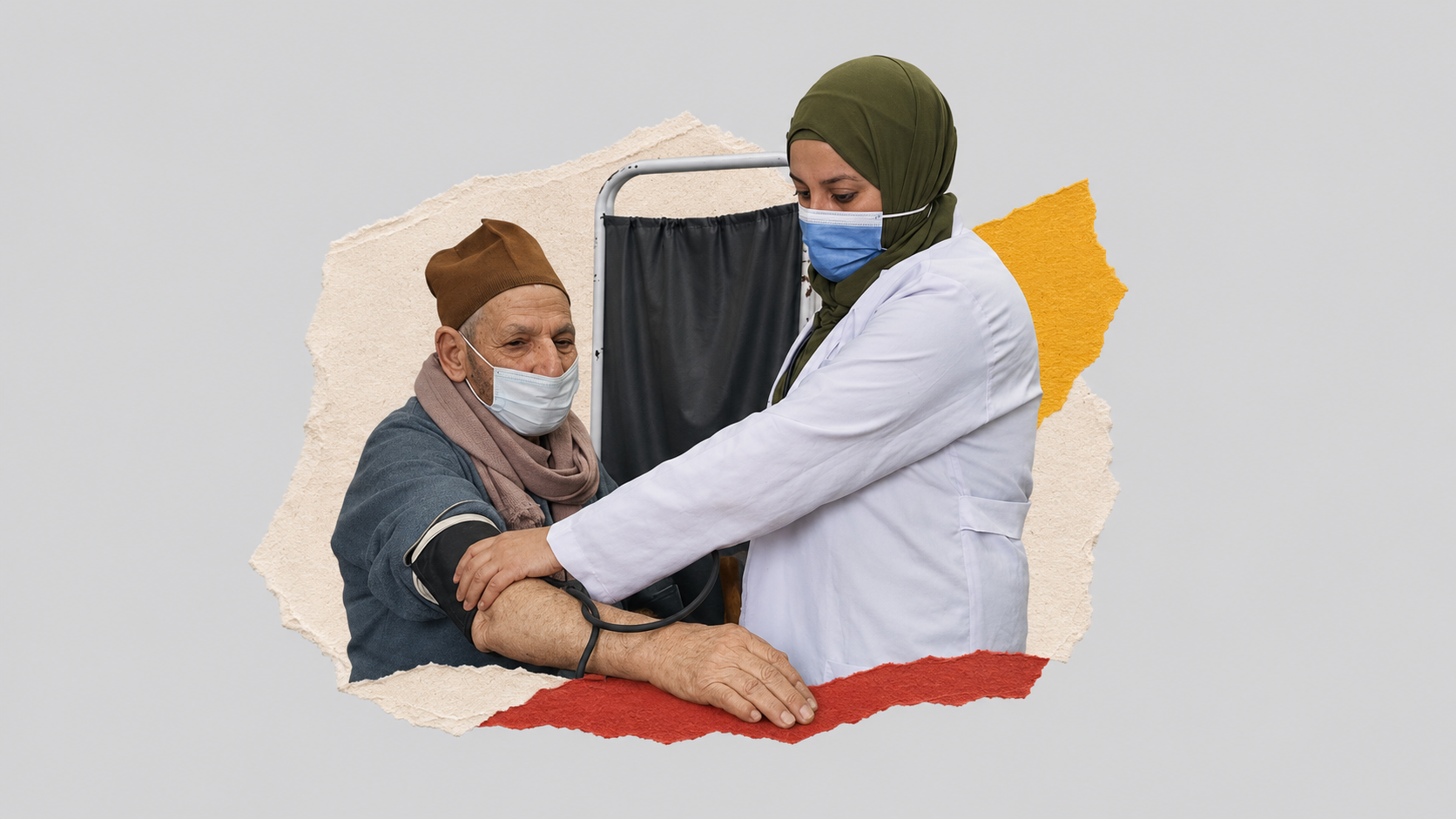
During the school term, she rearranges her list again. She takes the school meal out of the family breakfast allocation and finds money for private tutoring for her children, who attend state schools, as well as clothing and school supplies. Education prices have risen by 20% in a year, according to CAPMAS data. She sometimes falls behind on school fees, although her family is not among the categories exempted by the Ministry of Education. She constantly fears waking up one day to find one of her children running a high fever: even if she takes them to a low-cost public hospital, she cannot escape the cost of medicine.
There is no room in the family’s calculations for an emergency, and Hanan cannot put pressure on her husband, whose share of the salary barely covers his needs: EGP 50 a day for transport, in a year when transport prices rose by 22.3%, according to CAPMAS, and EGP 20 for a breakfast of fava beans and falafel. During Ramadan and holidays, the family waits for the grant his employer provides as a shopping voucher. When time permits, her husband works as a plumber’s assistant to earn a few pounds to cover what his salary cannot.
45.5 Million Egyptians Cannot Afford a Healthy Diet
Hanan’s family is not an exception. The Food and Agriculture Organization’s (FAO) 2025 data on the cost and affordability of a healthy diet show that 38.5% of Egyptians, or 45.5 million people, cannot afford the cheapest locally available foods that meet the requirements of a healthy, balanced diet. This exceeds the global average of 32.7%, or 2.69 billion people, according to The State of Food Security and Nutrition in the World 2026 report.
According to the data, the minimum cost of a healthy food basket for one person in Egypt is EGP 46.77 a day at 2025 prices. The basket comprises six groups: grains and starchy foods, fruit, vegetables, protein, milk and dairy products, and fats and oils. A family of five like Hanan’s would therefore need EGP 233.85 a day, or around EGP 7,015 a month (about USD 130), for food alone, according to Zawia3’s calculations, without education, healthcare or housing. This exceeds Hanan’s entire household budget by more than EGP 500 and her actual food spending by around EGP 2,715. The figure is calculated at 2025 prices, before annual food and beverage inflation reached 7.5% in October 2026.
The global average cost of a healthy diet is 4.28 international dollars per person per day, compared with 6.06 international dollars in Egypt. The international dollar is a hypothetical unit of measurement with the same purchasing power anywhere in the world, calculated on the basis of purchasing power parity to neutralize differences in price levels between countries. The gap therefore does not reflect the pound’s exchange rate. It means that healthy food in Egypt is more expensive, relative to the other goods and services Egyptians buy, than the global average.
A Second Price Surge in a Year of War
Asharq Bloomberg, citing industry sources, reported that food companies raised the prices of a number of their products by up to 25% during September and October 2026, in the year’s second wave of food-price increases. It covered sugar, flour, pasta, dairy products, cheese and oils. The sources attributed it to higher production costs, increases in some global raw-material prices and shipping costs resulting from regional disruptions. Delta, Fayoum, Nubaria and Canal raised the ex-factory price of a tonne of sugar from EGP 21,000 at the start of September to EGP 26,000 by its end, a 23.8% increase. Ahmed Fandy, head of the sugar manufacturing division at the Federation of Egyptian Industries, attributed the increase to domestic supply and demand and denied any connection to the Ministry of Investment and Foreign Trade’s decision to allow exports of surplus sugar beyond domestic needs until the end of 2026. Meanwhile, Egypt’s sugar exports rose by 7% in the first eight months of the year to USD 240 million, according to the Food Export Council.
The price of a tonne of “zero” flour jumped to EGP 20,000 in September from EGP 16,000 in August, a 25% increase that affects the cost of baked goods, unsubsidized baladi bread and fino rolls. Hawwa Pasta raised the price of its 400-gram pack from EGP 15 to EGP 17 (13.3%) and its kilogram pack from EGP 35 to EGP 40 (14.3%). Rodos, Obour Land, Domty and Almarai raised the prices of some cheese and dairy products by between 3% and 6% over the two months. Mohamed Hamed, chairman of Obour Land, said his company had raised some prices by only 1.5%, under pressure from input costs and imports of raw materials from New Zealand, Europe and the United States, according to Mubasher’s account of the report. Hazem El-Menoufy, a member of the Chamber of Commerce’s foodstuffs division, warned against exploiting market conditions and said any increase should correspond to an actual rise in cost components.
The increases extended to oils. The price of a tonne of crude soybean oil rose by 35.1% between early July and early November to around USD 1,426. Companies passed on increases of between 10% and 18% in bottled-oil prices to consumers during October, according to oil-factory sources who spoke to Al Arabiya Business. It attributed the pressure to the pound’s depreciation and disrupted shipping from the Black Sea, in a market that imports between 95% and 98% of its vegetable-oil needs. These increases come in a year when the US-Israeli war on Iran broke out on 28 February 2026, after which the Ministry of Petroleum raised fuel prices by between 14% and 17% on 10 March, taking a litre of diesel from EGP 17.50 to EGP 20.50.
The wave is visible in CAPMAS figures. In September alone, vegetable prices rose by 15.1% compared with August, fruit by 2.6%, and meat and poultry by 2.5%, bringing monthly inflation to 1.5%. In October, prices rose by 0.6% from September and the general consumer price index reached 296.1 points, according to CAPMAS data. The agency listed increases in the prices of bread, meat, poultry, fish, milk, cheese, eggs, oils, sugar, coffee, tea and cocoa among the causes, alongside rent, water, electricity, gas and fuel. Meat and poultry (3.2%), milk, cheese and eggs (2.5%), and cereals and bread (1.1%) led the monthly increase, while vegetables fell by 2.6% and fruit by 2.9%.
Annual inflation, however, fell in October to 12%, from 12.8% in September, while food and beverage inflation stood at 7.5%. Annual inflation measures the speed at which prices rise, not their level: a slowdown means prices are still rising, but more slowly. Year on year, fruit rose by 16.4%, vegetables by 12.9%, coffee, tea and cocoa by 9.6%, meat and poultry by 9.3%, fish by 7.4%, oils and fats by 6%, cereals and bread by 4.3%, and sugar by 1.6%, while milk, cheese and eggs fell by 0.8%. The greatest annual pressure came from outside the dinner table: actual rents rose by 27.7%, transport by 22.3%, and education by 20%.
During the same year, the dollar rose by 13.4% against the pound up to 20 November 2026, according to Trading Economics data. The dollar’s selling rate at the Central Bank of Egypt was EGP 47.12 on 18 November 2025 and EGP 53.80 on the same day in 2026, meaning the pound lost around 12% of its value against the dollar, according to Zawia3’s calculations.
A Loaf Inside a Loaf
Mohamed and Mahmoud, who own a fava-bean and falafel restaurant in Cairo’s Tebbin district, no longer finish work by noon as they once did. They now work until five in the afternoon, sometimes later. Mohamed tells Zawia3 that his restaurant, in a busy location passed by people going to and returning from work, is no longer busiest only during morning breakfast hours. The rush lasts until three in the afternoon, as customers buy a late breakfast, just as Hanan does at home, or choose to have lunch from the restaurant’s offerings, such as cheese with tomatoes, fried potatoes and moussaka. These are among the cheapest options for someone buying food outside rather than preparing it at home.
Adel, who works at a restaurant in Cairo’s Nozha 2 district specializing in popular foods such as koshari, pasta and hawawshi, says management instructed staff to serve loaves of bread with meals. This new practice followed price increases and the need to reduce portion sizes. He explains that some customers prefer to eat koshari and pasta with bread, while others put their hawawshi, meat inside bread, into another loaf or two to fill up for the same price. The restaurant therefore serves two loaves with every meal.
Every morning, Ashraf cycles with a food box to Gameat El-Dowal El-Arabiya Street in Giza governorate, where companies are clustered. His box contains French-style fino rolls, for which the Ministry of Supply set a price of EGP 2 per 50-gram roll, and tubs of vegetable-fat cheese, Turkish or roumi cheese, halawa, cream, honey and boiled eggs. He sells sandwiches to office workers for between EGP 8 and EGP 15. Ashraf tells Zawia3 that workers who cannot afford expensive meals and have grown tired of fava beans and falafel turn to him because he provides different food at an affordable price, using products he describes as “popular.”
Dr Tamer Shawky, professor of educational psychology at Ain Shams University’s Faculty of Education, says price increases resulting from the economic pressures facing the country have affected the rich, middle classes and poor alike. Each group has sought to reduce its daily spending by changing its habits. When it comes to nutrition, families now cut the quantity or quality of food and turn to lower-quality products, such as vegetable-fat cheese instead of varieties made from natural milk. Shawky tells Zawia3 that this change affects quality of life, and that moving to a lower-quality lifestyle creates psychological distress and dissatisfaction with the way of life people have been forced to adopt.
Plenty of Wheat, Little Meat
On 27 August 2026, the Agricultural Research Center revealed that average wheat consumption per Egyptian exceeds 175 kilograms a year, compared with a global average of around 80 kilograms: more than twice the world average. It considered this high consumption a challenge to efforts to increase production and narrow the gap between output and needs. Dr Mostafa Emara, the center’s official spokesperson, said achieving wheat self-sufficiency required two parallel approaches: increasing domestic production by raising yields per feddan, and rationalizing consumption and reducing losses, according to Akhbar El-Yom’s account of his remarks to the Sabah El-Balad programme. CAPMAS estimates per-capita wheat availability at 162.9 kilograms in 2024, with self-sufficiency of no more than 44.3%.
By contrast, per-capita red-meat availability was 8 kilograms in 2024, and poultry and other bird meat 15.9 kilograms, according to CAPMAS’s latest bulletin on production and availability for consumption of agricultural commodities. This means around 24 kilograms of meat of all kinds per person annually, compared with a global average of 45 kilograms for all types of meat available for consumption in 2023, according to FAO food-balance data compiled by The World Counts. Per-capita wheat availability is thus nearly seven times that of all types of meat and twenty times that of red meat, according to Zawia3’s calculations.
Mohamed Ramadan, an economic researcher at the Egyptian Initiative for Personal Rights (EIPR), tells Zawia3 that high wheat consumption is evidence of poverty and malnutrition, because wheat and its products are Egypt’s cheapest foods. “This is certainly not evidence of anything positive. No one says that people eat a lot of bread; this is evidence of their poverty.” He adds that talk of waste requires a study showing its scale and forms.
Shrinking Subsidies, Poverty Without an Official Figure
According to an analytical paper EIPR published in June 2026 on the 2026/2027 budget, subsidies have shrunk by more than half over ten years, from 21% of public expenditure in the 2016/2017 budget to around 10% in the current year’s budget. The new budget allocates EGP 178.3 billion to subsidized food commodities: EGP 142.3 billion for bread and EGP 36 billion for ration cards benefiting 60.8 million people, equivalent to around EGP 49 per beneficiary per month, according to Zawia3’s calculations.
The government is preparing to change this system. Dr Sherif Farouk, Minister of Supply and Internal Trade, announced the pilot introduction of cash subsidies in Beheira governorate from January 2027, at a meeting chaired by Prime Minister Dr Mostafa Madbouly. The prime minister stressed that strategic stocks of essential commodities should exceed six months and that the initiative to reduce commodity prices should continue. The new system provides a monetary balance on ration cards to pay for bread and goods, with no maximum number of loaves. El Watan, citing earlier remarks by the minister, reported that a loaf would cost close to EGP 1.50 under it, instead of twenty piastres today. Zawia3 has previously traced how inflation erodes the value of cash subsidies. Alongside the ration system, the Takaful and Karama programme pays cash assistance to around 4.7 million families comprising approximately 17 million people, with an annual budget of nearly EGP 54 billion. Eligibility requires the family to be below the poverty line according to a social assessment.
The latest poverty rate published by CAPMAS comes from the 2019/2020 Income and Expenditure Survey and stood at 29.7%. Ramadan, however, says the rate reached around 34% in unpublished statistics. That matches what three sources who had seen the 2021/2022 survey results told Mada Masr in August 2025: a poverty rate of 34% and extreme poverty of 5.81%, the highest level since the survey began in 1999/2000. An independent study by Dr Heba El-Laithy, professor of statistics at Cairo University and an adviser to CAPMAS, estimated that the rate had reached 35.7% in 2022/2023. Results from the latest survey, for 2023/2024, remain absent, prompting Mohamed Abdel Hafiz, deputy head of the Reform and Development Party’s parliamentary bloc, to submit a parliamentary question on 8 October 2026 demanding immediate disclosure of the latest poverty rates and the value of the adopted poverty line.
Ramadan estimates that between 19% and 20% of citizens experience food insecurity. He explains that many countries affected by poverty implement social-protection programmes targeting hunger, because poor people cannot work and escape poverty unless they have food. In economic terms, he believes hunger affects a comparable share of the workforce.
In March 2025, Dr Khaled Abdel Ghaffar, Deputy Prime Minister and Minister of Health and Population, said at the launch of the national programme to fortify subsidized baladi bread with essential nutrients that the “100 Million Healthy Lives” initiative had revealed shocking figures on malnutrition in Egypt, notably anaemia, stunting and obesity. He said 40% of Egyptians suffer from anaemia, and that malnutrition’s effects extend beyond public health to the economy and society.
“Hidden Hunger”: Calories Without Nutrients
Dr Mohamed Ibrahim Abdel Maaboud, a paediatrician and clinical nutrition specialist, tells Zawia3 that the continuous rise in prices presents Egyptian families with a real challenge in providing healthy, balanced food for all their members. The crisis is not limited to smaller amounts of food: it also entails declining quality and variety, affecting public health, particularly among children and adolescents.
Abdel Maaboud explains that Egyptians’ reliance on starchy foods such as bread and pasta is not harmful in itself, since these foods are a basic source of energy. The problem emerges when starches become the main component of most meals, while consumption of proteins, vegetables, fruit and healthy sources of fat declines. He adds that this pattern can lead to what is known as “hidden hunger”: a person obtains sufficient or excess calories without meeting their needs for vitamins, minerals and essential nutrients. This raises the risk of anaemia, especially among children and women; deficiencies of vitamins and minerals essential for immunity, growth and bone health; overweight and obesity with excessive starch intake and little physical activity; impaired blood-sugar control among people predisposed to insulin resistance or diabetes; and poor concentration and academic achievement among children.
The nutrition specialist believes healthy eating is possible on a limited budget, without relying on animal protein every day, provided meals are planned well and affordable food sources are used. These include pulses as an inexpensive source of protein, alternating between reasonably priced eggs, poultry and fish, and buying fruit and vegetables in season. Yet pulses are already on Hanan’s table, and the cheapest healthy food basket calculated by FAO is beyond the reach of 38.5% of Egyptians.
Hanan, meanwhile, knows where to cut when money is tight. She tells Zawia3 that food is the item she can squeeze and reduce its allocation, because the cost of life’s other obligations keeps rising and cannot be avoided.