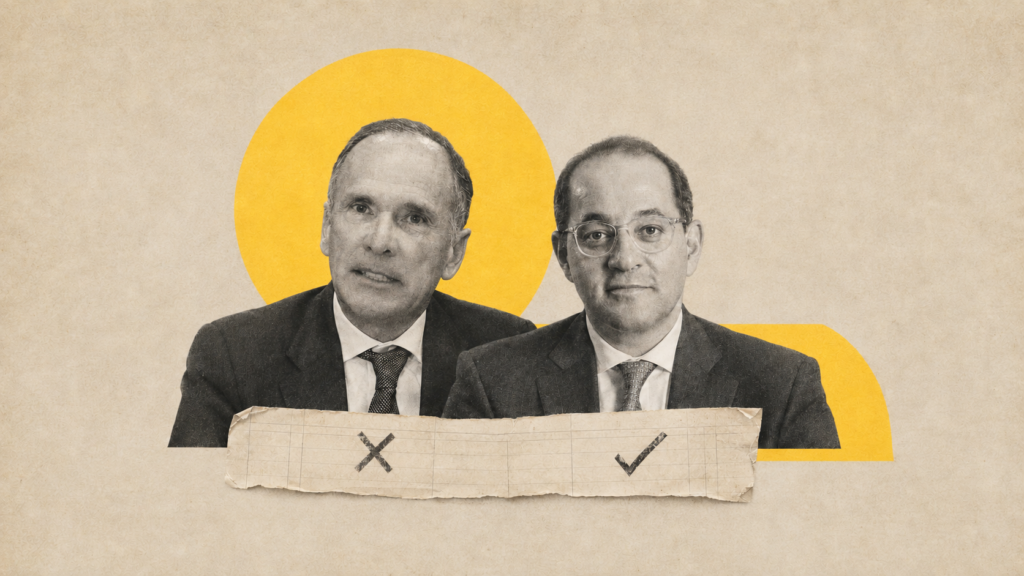
President Abdel Fattah al-Sisi issued Decree No. 448 of 2026, adding “reducing public debt” to the purposes of approximately 26,700 feddans on the Red Sea, two months after the government rejected the “Grand Swap.” Hassan Heikal responded: “Call it an exchange instead of a swap… fine.”
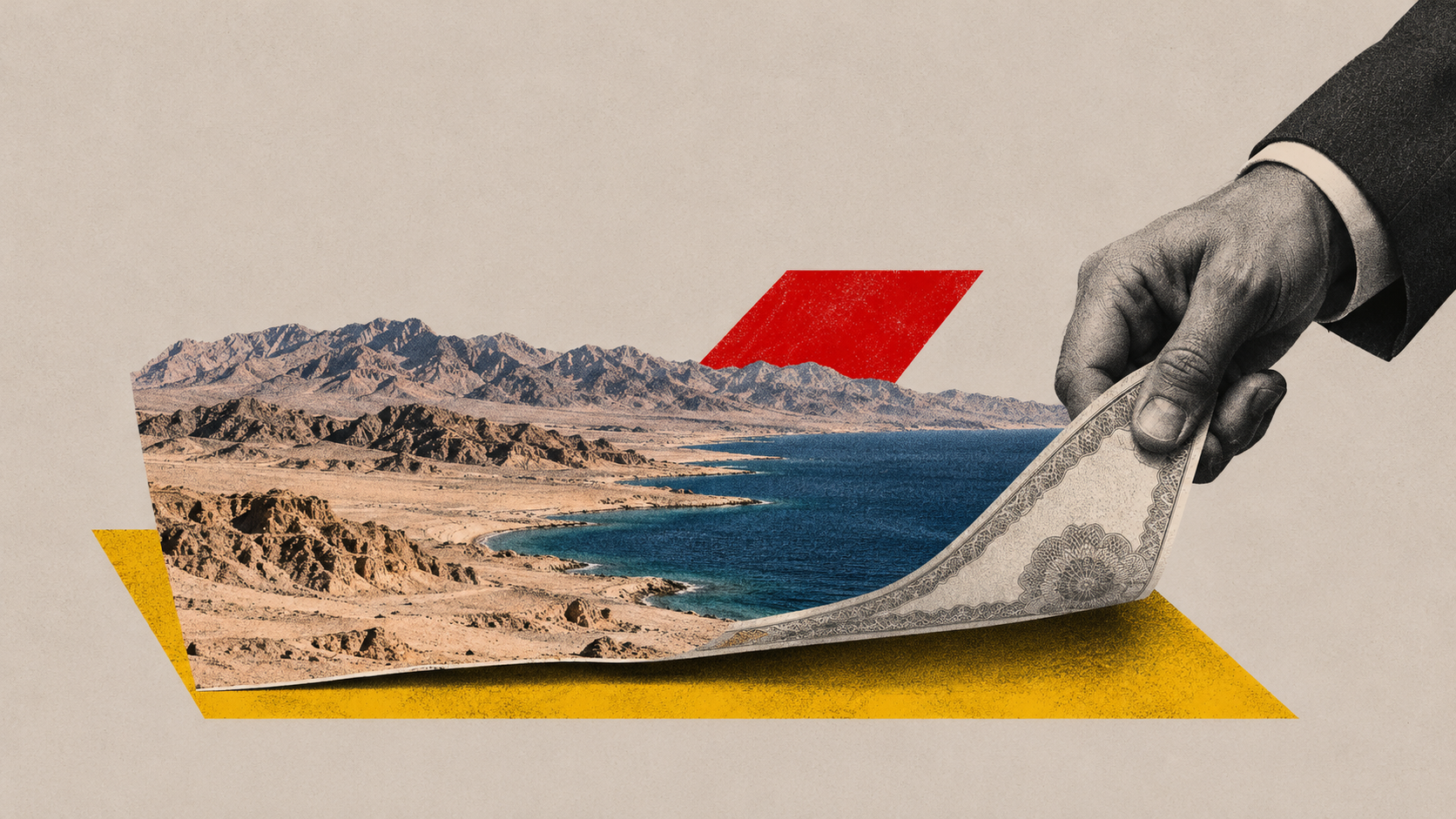
On 1 November, the Official Gazette published Decree No. 448, which amended Decree No. 222 of 2026. Decree 222, ratified on 10 June 2026, had allocated a parcel measuring 112,122,142 square metres, or approximately 26,700 feddans, solely for issuing sovereign sukuk. Around five months later, the new decree added the use of the same land to reduce the state’s public debt. The land lies between Ras Gharib and Zaafarana on the Gulf of Suez coast. The government has announced neither its estimated value nor a timetable for disposing of it.
On 9 November, businessman and investment banker Hassan Heikal, son of the late writer Mohamed Hassanein Heikal, wrote in a post on X that the government would move towards exchanging debt for assets by transferring some state assets in return for cancelling an equivalent amount of debt, in coordination with several government entities. He added that the targeted operation should amount to no less than EGP 2 trillion to EGP 3 trillion, approximately USD 37.2 billion to USD 55.8 billion at the closing exchange rate of EGP 53.80 to the dollar on 17 November 2026, whether through exchanging assets for debt or reducing indebtedness by issuing a sovereign bond. He wrote sarcastically: “Call it an exchange instead of a swap… fine,” adding: “Many people owe me an apology, and the government should thank me too.” He saw this as the available solution to the debt crisis: “There is no other solution… I said this two years ago!”
That same day, Finance Minister Ahmed Kouchouk said the government aimed to exchange part of its debt for investments and “good assets,” as he put it, and that this would ease financing burdens and direct resources towards development priorities.
This coincidence raises a question for the reader: is the government now implementing what it rejected two months earlier? Zawia3 examines the two proposals through their texts and their proponents’ statements: which debt each targets, who receives the assets, and on what scale. It also puts them to economists, parliamentarians and legal experts.
Heikal’s swap: domestic debt transferred to the Central Bank
Heikal first presented his idea on 26 December 2024, during a meeting between Prime Minister Mostafa Madbouly and a group of investors. He outlined it in his remarks without elaborating, then published it on X the following day under the name “Grand Swap.” When he reposted it in late December 2025, the proposal involved transferring domestic public debt to the Central Bank through the creation of a debt fund. Hisham Ezz Al-Arab, chief executive of Commercial International Bank, considered the idea “impossible to implement in practice” and said it would “lead to a crisis rather than a way out of one,” arguing that loading the debt onto the Central Bank effectively meant declaring bankruptcy. Economist Medhat Nafea agreed, warning against shifting the government’s crisis to the banking system. Economist Mohamed Fouad also supported that view, saying economics and management offered neither stopgap solutions nor miracles, while businessman Naguib Sawiris argued that the crisis lay in both limited revenues and the size of the debt.
On 11 January 2026, Heikal appeared on Al Kahera Wal Nas television and said the solution to the debt crisis lay in the “Grand Swap,” calling for its implementation. As he presented it on the programme, the idea involved exchanging domestic debt for assets whose ownership would pass to the Central Bank of Egypt. Heikal estimated that this debt had risen from around EGP 3 trillion several years earlier to nearly EGP 13 trillion, approximately USD 241.6 billion, and that interest amounted to EGP 250 billion a month, or EGP 3 trillion a year, approximately USD 55.8 billion. His stated aim was to reduce the budget’s interest burden to “zero” and channel hundreds of billions towards health and education.
That same January, former finance minister Youssef Boutros-Ghali described proposals to exchange sovereign debt for real estate assets or state-owned companies as “nonsense,” during an intervention on Al-Shams television’s El-Masry Effendi programme, saying that government debt originated in “depositors’ money, savings they placed in banks.” Ghali said the “Grand Swap” would not eliminate debt but transfer it from one government entity to another. He sarcastically asked which entity would accept the burden without compensation or a genuine return, arguing that transferring it to the Central Bank could ultimately lead to money printing and leave depositors and society paying for the deal. Former central bank governor Mahmoud Abul-Eyoun also objected, considering the proposal unworkable in Egypt, both practically and theoretically, because there were no previous international experiences on which to draw.
On 29 January 2026, he appeared on the El Hal Eh? podcast with political science professor Dr Rabab El Mahdi and explained his vision in detail, saying it would bring Egypt’s debt down to “zero.” He subsequently appeared repeatedly in videos he regularly posted on X and YouTube, fuelling a debate over his proposal covered by Independent Arabia.
The debate widened in late August 2026, when Heikal suggested that the Suez Canal could be among the assets used in a swap for domestic debt. Journalist and parliamentarian Mostafa Bakry said that Heikal’s idea was “shameful,” that it meant relinquishing state assets and the Suez Canal, and that “the Egyptian people will not accept it.” This prompted Alaa Mubarak, son of former president Hosni Mubarak, to say that the proposal’s author “does not understand the importance of the Suez Canal as a global passageway, a vital artery and a symbol of national sovereignty.”
On 30 August, the Cabinet issued a statement denying any “government intention or proposal” to swap state assets. It described the circulating proposal as “its author’s purely personal vision” and said swap ideas “had previously been studied,” concluding that “implementing this approach was inappropriate.” It added that the Suez Canal “is not the subject of any proposal of this kind.” The statement said the settlement of the National Media Authority’s debts to the National Investment Bank was “a response to a specific case” that could not serve as a precedent. On 26 August, Madbouly had witnessed the signing of two framework agreements to settle debts between the National Investment Bank on one side and the National Media Authority and the New Urban Communities Authority on the other, totalling EGP 98.1 billion, approximately USD 1.8 billion.
Heikal responded that same day that he was not an adviser to the prime minister and that the government itself had used the exchange model at Maspero. He proposed transferring ownership of some public companies from the Ministry of Finance to the Central Bank, saying that if Suez Canal assets were sensitive, other assets could be used instead, and that interest consumed between 60% and 70% of the budget.
On 3 September, at a press conference following the weekly Cabinet meeting, Madbouly announced the government’s rejection of the idea of swapping debt for the Suez Canal, saying the canal was a sovereign asset that “will not be touched” and could not be exchanged, mortgaged or transferred against any debt. He denied that Heikal was his adviser: “An adviser to the prime minister works full time, like adviser Hany Younis.” He explained that Heikal was one of dozens of members of government advisory committees comprising people with differing views, and that his proposals were personal contributions that did not represent the state’s position: “Everyone has the right to offer their own ideas.” Four days later, Ahmed Nagi Qamhah, editor-in-chief of Al-Siyassa Al-Dawliya magazine, wrote that “the state is not a holding company” and that the canal was a strategic asset that Article 43 of the Constitution required the state to protect. At the same time, he acknowledged that the proposal, as presented, did not involve a sale to a foreign party.
On 1 November, the day Decree 448 was published, Heikal restated his proposal in broader terms: exchanging part of domestic debt for assets transferred to the Central Bank, or issuing low-interest bonds and sukuk to which the Central Bank or commercial banks would subscribe. He said interest payable had reached approximately EGP 2.8 trillion, about USD 52 billion, out of total budget revenues of EGP 3.2 trillion, about USD 59.5 billion. He rejected asset sales as the main solution, since selling USD 10 billion in assets would cover roughly two months of interest. He said he was not advocating sales to investors outside the public sector but transfers within the state, and denied having called for the Suez Canal to be sold or mortgaged.
Three decrees concerning the same land
Decree 448 was not the first step along this path. It followed two decrees that had allocated a combined total of approximately 68,200 feddans. In June 2025, Presidential Decree No. 303 of 2025 allocated around 41,500 feddans, or 174 million square metres, in Ras Shukeir to the Ministry of Finance for “reducing public debt and issuing sovereign sukuk.” Decree 222 of 2026 then allocated a further 26,700 feddans solely for sukuk, before Decree 448 expanded its purpose to include reducing public debt without adding any new land.
In a LinkedIn post, Kouchouk said the government was preparing a strategic plan to develop the Red Sea region and the land allocated for reducing public debt, through various investment alternatives including partnerships with the private sector, usufruct arrangements, and exchanging some investments for outstanding debts. This would, he said, generate sustainable economic and development returns and new opportunities for private-sector participation in economic activity. He added that the returns from these investments were intended to improve debt indicators and create greater fiscal space for spending on human development, social protection and improved services, while continuing efforts to accelerate debt reduction and use investment returns to support that process. On 13 November, the Ministry of Finance clarified that these lands “will not necessarily become sale transactions,” that they would be managed within a state-asset management strategy, and that the debt-to-GDP ratio had fallen from 96% to 81.9% over three years, with a primary surplus of 4.9% in fiscal year 2025/2026.
Mohamed Fouad, a member of the House of Representatives’ Economic Affairs Committee, submitted a briefing request addressed to the finance minister about the implementation of decrees allocating Red Sea land for sovereign sukuk issuance and public debt reduction. He called for clarification of the legal and financial basis of these arrangements and their actual impact on state indebtedness. Fouad explained that Presidential Decree No. 303 of 2025 allocated approximately 41,500 feddans to the Ministry of Finance, followed by Decree No. 222 of 2026 allocating around 26,700 feddans for issuing sovereign sukuk, before Decree No. 448 of 2026 authorised the use of the same land to reduce public debt without allocating any new area. The request also addressed the issuance of USD 1 billion in sovereign sukuk to Kuwait Finance House in June 2025, with a yield of 7.875% and a three-year term. It called on the government to disclose the extent of this issuance’s connection to the allocated land, the nature of the usufruct rights used, how the proceeds were deployed, and compliance with Sovereign Sukuk Law No. 138 of 2021.
Swap and exchange: where they converge and diverge
The two approaches share one idea: using state-owned assets to reduce indebtedness. But, according to their proponents’ statements, they differ in three respects. Heikal specifically targets domestic debt, while the government speaks of “public debt” and exchanging investments for “outstanding debts” without identifying the creditor. Under Heikal’s proposal, assets pass to the Central Bank, from one state entity to another, and he rejects selling them to investors outside the public sector. Kouchouk’s plan, meanwhile, opens the door to the private sector, usufruct rights and creditors. As for scale, Heikal envisages no less than EGP 2 trillion to EGP 3 trillion, compared with a land parcel whose value has not been announced. Conversely, in August the government itself carried out an inter-state-entity settlement in the Maspero case, the settlement the Cabinet statement described as a specific case that could not serve as a precedent.
The closest precedents for the government’s approach are two North Coast deals. In February 2024, the UAE’s ADQ agreed under the Ras El Hekma deal to pay USD 24 billion for development rights over approximately 170 million square metres and convert USD 11 billion in Emirati deposits into investments, with Egypt retaining a 35% stake. In November 2025, Qatari Diar signed the USD 29.7 billion Alam El Roum deal to develop approximately 20 million square metres, including USD 3.5 billion in cash for the land.
Economist Dr Abdel Nabi Abdel Mottaleb tells Zawia3 that placing more than 26,000 feddans in the Red Sea region at the Ministry of Finance’s disposal to reduce indebtedness or exchange debt for assets is not an entirely new measure, because the same area had already been allocated for issuing sovereign sukuk that would contribute to debt reduction. He explains that the new decree gives the ministry broader powers to dispose of the land, by offering it for sale, dividing it into investment plots or using it to issue sukuk. He adds that this expansion could pave the way for deals similar to Ras El Hekma by making land available to investors or relinquishing it in exchange for settling debts owed to particular entities or countries, noting that this model could be more feasible with states than with the International Monetary Fund.
Abdel Mottaleb believes that using this land could offer an opportunity to attract foreign direct investment, since the return is not limited to the land’s sale value but extends to projects that could be established on it in tourism, urban development, industry, logistics zones and transit-trade hubs. He links the success of this approach to the state’s ability to select investors, monitor their activities and exercise effective oversight, through partnerships with the invested capital or cooperation with Egyptian partners experienced in developing these areas. He notes that one scenario under consideration involves allocating areas of Red Sea land to countries with dollar deposits in Egypt in return for relinquishing those deposits. He also points to the possibility of broadening the benefits by offering land to Egyptians and Egyptians working abroad in return for payment in dollars.
Banking expert Hany Aboul Fotouh considers the striking feature of the decree to be the direct link between deploying a large real estate asset and the objective of reducing public debt, in an attempt to diversify financing instruments and benefit from the economic value of state-owned assets rather than relying exclusively on conventional borrowing. He tells Zawia3 that there is a fundamental difference between deploying state assets efficiently and consuming their value in exchange for temporary liquidity. Using land for projects that generate sustained economic returns and bring about an actual reduction in indebtedness constitutes more efficient management of state assets.
Recurring debt and non-renewable assets
Mohamed Fouad, the economist and member of parliament, rejects the public debate’s preoccupation with the details and mechanisms of debt swaps before diagnosing the root of the problem. He argues that Egypt faces not merely rising debt but a dual structural imbalance: a weak capacity to generate revenues and the absence of integrated management of general government debt. He tells Zawia3 that exchanging assets for debt may offer the state temporary breathing space, but does not address the causes that accumulated the debt. He warns against allowing the use of state assets to become a permanent substitute for fiscal reform: “We are consuming the stock of wealth to improve liquidity, while the flows that produce debt remain unchanged!” In his view, the problem is not using assets once, but being forced to use them every time: the state cannot indefinitely repay recurring debts with non-renewable assets.
Fouad does not reject asset sales categorically. He considers that divesting an asset to repay expensive debt may improve the state’s financial position if the cost of that debt exceeds the asset’s expected future return. But he mocks the government’s responses to the crisis, describing them as “touch-ups to an incomplete picture” and “buying time.” He argues that talking about reducing “budget-sector debt” rather than addressing “general government debt,” and focusing on reducing indebtedness rather than growing revenues, means the state continues to circle around the crisis instead of confronting its roots: “As long as we are talking about working to reduce debt rather than growing revenues, we are not speaking seriously.”
The distinction Fouad makes concerns the scope of measurement. “Budget-sector debt,” on which the Ministry of Finance bases its figures, is the narrowest measure of debt, excluding the Central Bank and the state’s economic authorities, whereas “general government debt” includes entities such as the petroleum authority. Budget-sector debt stood at EGP 17.85 trillion, approximately USD 331.8 billion, at the end of March 2026, including EGP 4.17 trillion, approximately USD 77.5 billion, owed externally.
Data from the Central Bank of Egypt show that the external debt stock rose from USD 161.23 billion at the end of June 2025 to approximately USD 163.91 billion at the end of December 2025, then to about USD 164.78 billion at the end of March 2026. This was an increase of USD 865.3 million in the third quarter of fiscal year 2025/2026 and USD 3.55 billion over nine months. Egypt’s external debt principal and interest payments during the first three quarters of the fiscal year totalled around USD 28.3 billion, including USD 22.3 billion in principal, representing approximately 78.8% of total payments, and USD 5.99 billion in interest. Non-rescheduled bilateral loans rose to USD 22.64 billion, including USD 14.97 billion from Paris Club countries and USD 7.68 billion from other countries.
External debt continued rising to USD 166.45 billion at the end of June 2026. Repayments due between July 2026 and June 2027 amount to approximately USD 60.9 billion, comprising USD 53.83 billion in loan principal and around USD 7.1 billion in interest, according to the World Bank. These maturities are spread across four quarters: USD 19.4 billion between July and September 2026, USD 17.3 billion between October and December 2026, USD 11.7 billion between January and March 2027, and USD 12.5 billion between April and June 2027. They include approximately USD 19.1 billion in deposits and currency liabilities owed by the Central Bank, most of which are held by Gulf countries.
Border land: sale or usufruct?
Abdel Mottaleb warns that the border location of the areas allocated by the latest Red Sea decree, and their proximity to conflict zones, raise considerations concerning Egyptian national security. He says land allocations must follow safeguards that prevent harm to the state’s strategic and economic interests.
In a poem written during his exile in Spain following the outbreak of the First World War, the Egyptian poet Ahmed Shawqi wrote: “Is the grove forbidden to its own nightingales, yet permitted to birds of every kind?” More than a century later, economics and political science professor Dr Alia El Mahdi raises a similar question in economic terms. She tells Zawia3 that this mechanism could open the door to foreigners owning Egyptian assets that belong to the people: “Will Egyptians own any of that land?” She believes making land available should not be considered investment in any form, and that expanding its sale represents, in her view, a national security risk. She regards selling state land, under any name, as an infringement on future generations’ rights: “What will we leave our children and grandchildren if we sell all the prime land?”
From a different position, objecting not to the use of land but to the manner of its disposal, lawyer Khaled Ali called in a Facebook post for the government and the Ministry of Finance to reconsider how they would use the Red Sea land allocated for public debt reduction. He warned against selling it or transferring ownership, describing it as a strategic state asset and a right of future generations. He called for offering it under medium- and long-term usufruct arrangements while the state retained full ownership, and for tying allocations to specific investment projects based on economic and environmental feasibility studies and binding timetables for implementation and operation. Ali proposed legal safeguards to prevent usufruct rights from becoming a means of disposing of land ownership, including prohibiting sale or transfer to third parties, avoiding automatic contract renewals, and withdrawing usufruct rights when contractual conditions were breached. He also called for publicly announced competitive auctions and tenders, oversight of contracts, disclosure of their value and returns, and directing proceeds towards specific objectives that genuinely reduce indebtedness. He said land sales might generate one-off proceeds, whereas properly regulated usufruct could provide sustained returns, productive investment and jobs while the asset remained state-owned.
On 14 November, Heikal responded in a post on X to Khaled Ali’s criticism of proposals to sell state land, describing the proposal as “a wonderful thing,” in his words, because it would attract investment, create jobs and develop infrastructure, as well as create new tourist destinations generating regular dollar revenues for the state.
Aboul Fotouh warns that limiting land use to obtaining new financing, without an adequate economic return or a genuine reduction in state obligations, means changing the financing instrument without addressing the root of the debt problem, which he considers one of the Egyptian economy’s foremost challenges for years. He says this approach’s success requires a fair and transparent valuation of assets and a clear statement of how their disposal affects the size of public debt and the cost of servicing it, while ensuring their future economic value is preserved. In his view, the real measure of this policy’s success is the actual reduction in public debt burdens without depleting state assets.