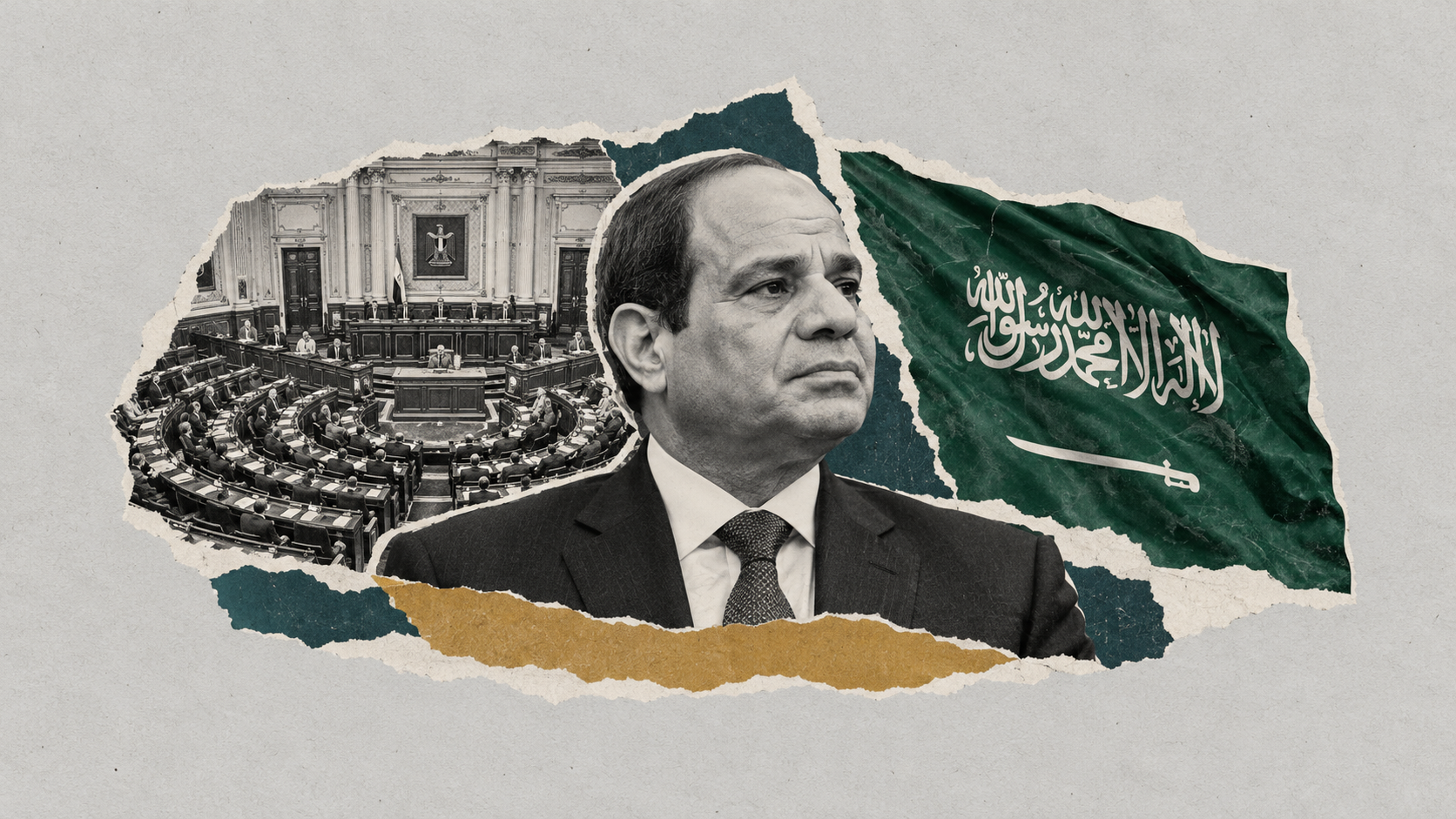

Statements by Egyptian businessman and banker Hassan Heikal on swapping state assets, including the Suez Canal, in exchange for settling debts, which became known in the media as the “Grand Swap”, sparked a wide wave of controversy and political and economic warnings to the government against implementing such proposals to get rid of the burden of debt, while political forces considered that the proposal represents a direct threat to Egyptian sovereignty.
Heikal said on Saturday that the state had managed to zero out Maspero’s debt through a debt-for-assets swap, mostly land, with the debt of the National Media Authority transferred to the National Investment Bank. Under the settlement, Maspero became free of debt, allowing it to direct its resources towards developing its programmes and content, while the National Investment Bank obtained assets equivalent to the value of its arrears owed by Maspero.
In a post on the “X” platform, Heikal considered that the settlement mechanism could be generalised to the level of domestic public debt, proposing to replace the parties to the operation in the Maspero case with the state and the Central Bank, so that the state’s ownership in public companies, or other assets such as the Suez Canal, would be used to settle part of the domestic debt.
This is not the first time Heikal has announced his proposal. Last January, he spoke during a lecture at Cairo University about what became known in the media as the “Grand Swap”. His idea is based on creating a fund in which state assets are pooled, then using them to swap domestic debts after transferring them to the Central Bank, on the grounds that the rise in domestic debt represents, in his view, one of the obstacles to directing state resources to development sectors.
Heikal believes that reducing domestic public debt through this mechanism could widen the margin of government spending, particularly on services such as universal health insurance and education, allowing citizens to feel the returns of economic reform directly.
The proposal coincides with a rising bill of loans and interest, as Egypt’s total external debt reached about $164.776 billion at the end of the third quarter of fiscal year 2025/2026, according to reports issued by the Central Bank of Egypt, while domestic debt rose to EGP 11.057 trillion at the end of June 2025, an increase of 3.5% compared with about EGP 10.685 trillion in the previous quarter, according to the latest data published on the website of the Ministry of Planning, Economic Development and International Cooperation.
Recommended reading: Ten years with the IMF raised Egypt’s debt from $46 billion to $164 billion
The Government Disowns It
As the controversy over the proposal escalated, and hours after it was announced, the government issued an explanatory statement on Sunday morning, stressing that what had been circulated on this matter reflects “a purely personal vision” of the proposal’s author, and does not represent a policy or vision adopted by the state.
The Cabinet explained that ideas relating to swapping some public assets in exchange for domestic debt had previously been studied by the relevant authorities, as part of examining alternatives for managing and reducing public debt and the cost of servicing it, but the assessment concluded that applying this vision was not appropriate, and it was therefore not included among the policies or mechanisms the government adopts to manage debt.
It indicated that transferring assets and debts between state bodies does not, in itself, lead to a reduction in total liabilities at the level of the state, considering that addressing public debt requires dealing with its structure, the cost of servicing it and domestic liquidity, in addition to taking into account its repercussions on monetary and fiscal policy, and maintaining the efficiency of public asset management and maximising its returns sustainably.
The Cabinet stressed categorically that the Suez Canal is not on the table in any vision of this kind, and that there are no government intentions to swap it, mortgage it or transfer its ownership in exchange for debts, as it is a strategic public utility linked to national security and Egyptian sovereignty, in addition to its importance to the national economy and the movement of global trade.
Regarding the settlement of the National Media Authority’s debts to the National Investment Bank, the Cabinet explained that this operation represents a financial and institutional treatment of a specific case, in accordance with the legal and financial conditions and the nature of the assets and liabilities between the two bodies, and cannot be considered a general model for managing the state’s public debt.
The government affirmed that its plan to reduce debt is based on a set of measures, including improving public finance indicators and achieving sustainable primary surpluses, increasing state resources and raising spending efficiency, in addition to extending debt maturities and reducing the cost of servicing it, and maximising the return on state-owned assets through the State Ownership Policy, the offerings programmes and partnership with the private sector.
At the same time, the Cabinet affirmed that the field remains open for experts and public figures to put forward their economic visions and ideas, while stressing the need to distinguish between these individual proposals and the official policies and positions of the state, which are announced by the competent government bodies through their official channels.
For his part, Heikal responded to the Cabinet statement, affirming via the “X” platform that he is “not an adviser to the Prime Minister”, and holding on to the essence of the proposal he had previously put forward, considering that dealing with economic challenges requires “different and unconventional” solutions. He stressed that “continuing to put forward the same solutions without achieving tangible results cannot lead to real change”.
Heikal explained that the government had previously applied this approach in the Maspero file, saying: “The government applied the swap in Maspero, so saying that it is not feasible, I’m not sure about that, because it has actually been applied.”
He also addressed his proposal on transferring ownership of some public company assets from the Ministry of Finance to the Central Bank, explaining that he calls for transferring ownership of some stakes in public companies to the Central Bank, as the body entrusted with the monetary reserve, the banking system and deposits.
After the wave of rejection widened, Heikal backed down on Sunday from including the Suez Canal specifically in his proposal, explaining that if there is sensitivity towards assets linked to the Canal, other holdings and assets could be resorted to, while holding on to the essence of the swap idea.
Recommended reading: $11 billion left in a single month: what the Iran war revealed about the Egyptian economy
“Intellectual Bankruptcy”
Dr Khaled El-Shafei, an economic expert and head of the Capital Centre for Economic Studies and Research, describes the proposal as “intellectual bankruptcy”, considering that it does not offer a real remedy for the imbalances of the general budget or the debt crisis, whether domestic or external.
El-Shafei tells Zawia3 in exclusive statements that the idea, simply put, is based on disposing of an asset to pay off an existing debt, likening this to a person who owes a debt to the bank and resorts to mortgaging his house or selling a plot of land or a car he owns to pay off the debt, stressing that this logic does not represent a sustainable solution to the problem of public debt, but rather shifts the crisis from financial liabilities to state-owned assets.
He also questions the feasibility of resorting to this option when there are countries whose debts exceed the size of their GDP many times over, saying that addressing high debt does not necessarily mean mortgaging state assets to pay off liabilities. He cites the Suez Canal, asking about the feasibility of mortgaging a strategic shipping lane through which about 10–15% of global trade passes, and whether it would be possible to guarantee the repercussions and future obligations arising from such a measure.
El-Shafei warns that treating the Suez Canal as an asset that can be used to settle debts raises, in addition to economic considerations, concerns relating to Egyptian sovereignty over it, noting that the Canal represents a strategic asset of the state, and that turning it into a tool for paying off debt could open the door to risks whose repercussions cannot be guaranteed in the future.
In his interpretation of the Cabinet statement, El-Shafei believes that the government needed to clarify its position so that Heikal’s proposal would not be understood as an official state policy, explaining that the government’s affirmation that the proposal represents a personal point of view aims to separate the opinions of figures or advisers associated with it from the government’s official position, and to prevent confusion among public opinion about who stands behind the proposal.
He also points out that the government’s denial does not necessarily mean that it has adopted an economic assessment of the proposal so much as it represents a clarification of its responsibility for it, stressing that the existence of an economic opinion held by a public figure or official does not automatically make it a government policy or an official position of the state.
Since the beginning of this year, the government has been saying that it has an integrated path to reduce public debt and cut the cost of servicing it, to between 71% and 73% by the end of the current fiscal year (2026–2027), which began last June, supported by the stabilisation of the budget deficit in the medium term.
The government programme relies on a set of financial and economic tools, which include achieving sustainable primary surpluses, that is, state revenues exceeding its expenditures before calculating debt interest, in addition to increasing state resources and raising the efficiency of public spending, and extending debt maturities and reducing the cost of borrowing, thereby reducing the annual pressures resulting from debt service.
The government also relies on maximising the return on state-owned assets through restructuring and managing these assets, the government offerings programme and partnership with the private sector, which is known as “government exit or the sale of assets”. Fiscal policy also aims to improve the debt-to-GDP ratio gradually by controlling the spending path and increasing revenues and economic growth. However, the effectiveness of these tools remains linked to the government’s ability to achieve sustainable primary surpluses, reduce the cost of borrowing and increase revenues from real sources, rather than relying on accounting settlements or transferring debt between state institutions.
The government is supposed to repay $6.3 billion of external debt during the current year, including $2.9 billion in Eurobonds and $3.4 billion in external loans, according to the Ministry of Finance’s “Annual Borrowing Strategy” document.
Here a fundamental difference emerges between actually reducing debt and reducing its ratio to GDP: the debt ratio may decline if output grows faster than debt, without this meaning a decrease in the nominal value of the debt. Likewise, using some state assets in financial settlements may ease the liabilities of a specific government body, but it does not necessarily mean a decrease in the state’s total liabilities unless it is accompanied by real financial flows or an actual reduction in the debt owed by the government.
A Flagrant Violation of the Constitution
Talaat Khalil, a political leader in the Conservative Party and former member of the House of Representatives, described the proposal as “unconstitutional”, and indeed as a flagrant violation of the Egyptian Constitution, which stipulates in its Article (43) the state’s commitment to protecting, developing and preserving the Suez Canal as an international waterway owned by it, stressing that the constitutional text provides special protection for the Canal, and that it should not be treated as an ordinary asset that can be used in financial settlements.
Khalil tells Zawia3 that the Cabinet “did well” by issuing its statement to clarify its position on the proposal to swap state assets for debt, but he believes there is a point that requires clarification, namely that the author of the proposal is not merely a “public figure” but an adviser to the Prime Minister, as he put it, which Heikal has denied, and he calls for not floating what he described as “trial balloons and testing the waters” on issues relating to the state’s strategic assets.
Khalil stresses that the Suez Canal is “absolutely not to be approached” in the framework of any arrangements relating to debt, considering that proposing to mortgage it or use it in settling debts represents, from an economic, political and security standpoint, an extremely dangerous matter.
He says that the Canal is “a public utility and an international shipping lane owned by the Egyptian people, and therefore it is not permissible, in his estimation, to include it in any formula for swapping debts or transferring its ownership to the Central Bank”, pointing out that the Canal’s revenues go to the state’s public treasury, and therefore treating it as an asset that can be mortgaged or swapped to pay off debt raises major economic and sovereign risks.
He notes that he previously took part in the discussions on drafting the constitutional text on protecting the Suez Canal, explaining that he had called at the time for including a constitutional text specific to the Canal, similar to the text on protecting the River Nile, which ended up being included in Article 43 of the Constitution.
Khalil also explains that the Suez Canal Authority law allows the Authority to develop the facility, develop its resources and enter into partnerships within the limits of the law, considering that creating new financial frameworks for the Canal, such as special funds, should not turn into a means of separating its resources from the public treasury or using them for other purposes. He describes the proposal to use the Suez Canal in settling debts as “extremely serious recklessness”, considering that the matter is not limited to its economic risks, but extends to national security and Egyptian sovereignty, given the strategic nature of the Canal.
Khalil affirms that addressing the public debt crisis must be done through clear economic and fiscal policies, not by giving away the state’s strategic assets, warning that any dealing with the Suez Canal as a tool for paying off debts represents, in his view, a line that must not be crossed.
Recommended reading: Accelerating divestment of assets under the pressure of financing and international reforms
Will the Government Resort to the Proposal in the Future?
Dr Karim El-Omda, a professor of political economy, explains in exclusive statements to Zawia3 that Hassan Heikal’s proposal on swapping state assets for domestic debt has been put forward before, but lacks applicability, considering that the proposal involves a confusion between the nature of financial transactions within state institutions and the management of the assets and resources of an entire state.
El-Omda says that there is a fundamental difference between settling a debt between two companies, or between a company and a ministry, or between two government bodies, and dealing with the debt of the Egyptian state as a whole, saying that “Egypt is a state”, and therefore its assets cannot be dealt with in the same way in which debts are settled between separate entities.
He points out that the unexploited assets the proposal talks about ultimately remain the property of the people, even when they are owned by government companies or entities, and therefore “they may not be given away as a result of the mistakes of current or previous governments”, as he put it.
El-Omda also criticises the idea of transferring ownership of state assets to the Central Bank in exchange for settling the debt, explaining that the nature of the Central Bank and its powers do not include managing or owning state assets in this way. He says that the role of the Central Bank is primarily linked to monetary policy, managing the monetary reserve, the exchange rate, issuing currency and supervising the banking system, not owning state assets or using them to settle public debt.
Regarding relying on the settlement of the National Media Authority’s debts to the National Investment Bank as a model that can be generalised, El-Omda believes that what happened in the Maspero case remains a limited measure linked to specific financial and institutional circumstances, and could happen in the framework of partial settlements between government bodies or between companies and authorities affiliated with the state, but it is not suitable as a basis for managing public debt on a wide scale.
He adds that “expanding” the application of this vision cannot be implemented in practice, and could lead to imbalances in managing the economy and state assets, pointing to the absence of clear international experiences that can be relied upon to prove the success of such a model at the level of the state as a whole.
In his assessment of the debt problem in Egypt, El-Omda believes that focusing on domestic debt alone ignores the problem with the greatest impact on the Egyptian economy, namely external debt. He said that the rise in domestic debt does indeed have negative repercussions, but it can be dealt with through economic and financial tools, while external debt represents greater pressure on the economy, especially given the high cost of servicing it and its impact on foreign currency resources and the exchange rate of the pound.
The professor of political economy considers that a large part of the economic crises Egypt faces is linked to the burden of external debt and the decline in the value of the pound against the dollar, stressing that addressing domestic debt remains important, but does not on its own address the core of the pressures the Egyptian economy suffers from.
Despite the government’s announcement that it had reduced the debt-to-GDP ratio by about 12% over the past two years, and the subsequent upgrade of its credit rating by “Standard & Poor’s” last October, for the first time in seven years, the burden of debt service has remained the most acute challenge, as official data indicate that debt service accounts for about 50% of total public expenditure, and about 72% of total revenues in 2024/2025, which are among the highest ratios among peer countries.
The controversy over the “Grand Swap” reveals a dilemma broader than the dispute over a specific economic proposal: how can Egypt reduce its accumulated debts without turning its strategic assets into a tool for paying off obligations that arose primarily from prolonged financial and economic imbalances?
While the government sees that the path runs through primary surpluses, controlling spending, extending debt maturities, reducing the cost of servicing it and maximising asset returns, the experts who spoke to Zawia3 believe that using assets to pay off debts does not address the roots of the crisis, but may shift it from the debt column to the column of losing assets that generate future returns.