

The Ministry of Health and Population announced the results of the 2026 residency allocation round for resident doctors on 30 July 2026. The round revealed imbalances that angered young doctors on compulsory assignment, particularly the 2023 graduating class covered by the round, because of the high rate of “exhausted preferences” among applicants, including holders of academic degrees and high total scores.
The Ministry of Health had issued an administrative decision cancelling the December 2025 residency round and merging it with the May 2026 round into a single main round for 2026, with the declared aim of unifying the electronic coordination procedures and gathering the ministry’s reserve and specialist needs into a single outlet.
But after the doctors had waited for more than two years, parliamentary moves emerged over the delay in announcing the December 2025 residency round, and the Medical Syndicate also wrote to the Minister of Health urging the swift announcement of the result of the main 2026 residency round for doctors, after it had seen an unprecedented delay.
The head of the Medical Syndicate, Dr Osama Abdel Hay, tells Zawia3 that the responses regarding the reasons for the delay came in the framework of “the existence of problems related to the academic calculation”.
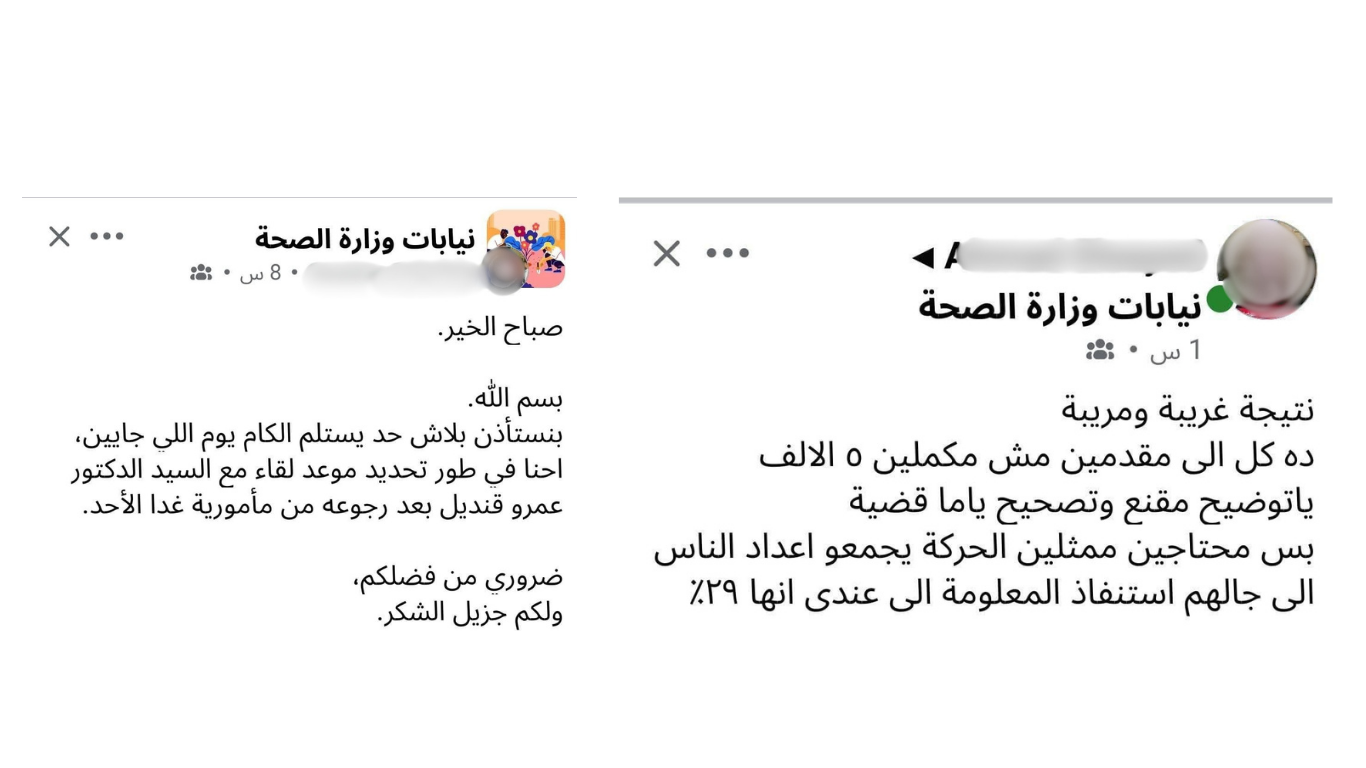
On 4 August 2026, the medical sector witnessed a clear crisis, after the rate of “exhausted preferences” reached about 30% of all applicants, and 1,400 doctors were left without a medical specialty or a training body, an unprecedented rate compared with the historical rates of exhausted preferences in previous rounds, which usually ranged between only 6% and 8%. Nor was the exhaustion crisis limited to holders of average total scores; it also reached doctors with high total scores ranging between 85% and 91%.
According to statistics and documents obtained by Zawia3, the map of demand for medical specialties changed between September 2022 and December 2024, with the total needs of the main round alone rising from 15,300 residency posts to 37,500, in addition to another 37,500 for the second round and 2,300 for “the Teaching” category.
Those data show that the needs for family medicine rose from 1,863 residency posts in September 2022 to 5,003 posts in December 2024, while the needs for intensive care increased from 948 to 2,396 posts, and for anaesthesia from 1,068 to 2,101 posts over the same period.
Abdel Rahman Ashraf, one of the doctors affected by the residency and assignment round crisis, says that the doctors were surprised by the merging of the 2025 fellowship round and the May 2026 round and by the postponement of the round’s announcement by about 8 or 9 months beyond its usual date, noting that the latest round covered about 4,900 doctors, of whom about 1,400 were subjected to “exhausted preferences” and did not obtain any of the preferences they had applied for.
Ashraf explains to Zawia3 that the crisis is not only about the number of doctors who did not obtain specialties, but extends to the way the round was managed and the absence of the data customarily announced every year, foremost among them the minimum file, which shows the numbers admitted to each specialty and hospital and the minimum score for admission.
He adds that the doctors were also surprised that some applicants had obtained places that were not included among their preferences, while others obtained places at the bottom of their preferences, at a time when the detailed data that would allow doctors to review the round’s results transparently were not announced.
He points out that hospitals announced their actual needs for doctors, but the numbers announced in the round, according to his statement, are far lower than the needs announced in the departments and hospitals.
The rapporteur of the Youth Committee of the General Medical Syndicate, Dr Ahmed El-Sayed, says that the appearance of “exhausted preferences” in residency rounds is in itself a normal matter, but what raises questions, according to him, is its appearance among doctors with high total scores in places and specialties that had not previously filled their needs.
He explains to Zawia3 that the matter requires an official clarification showing how the needs were calculated and how the preferences were ranked, especially as there are cases whose holders believe that their total score qualifies them for certain specialties, while their results ended in “exhausted preferences”.
El-Sayed describes the delay in announcing the 2026 residency round as “unprecedented” compared with what doctors were used to in previous rounds, noting that delay has become, in his view, a recurring feature in the management of assignment and residency rounds in the recent period.
Hospitals complain of a shortage of medical staff
Amr El-Minyawi, one of the doctors affected by the 2026 residency round, says that hospitals have a great need for doctors, while sufficient numbers of residency posts for those hospitals were not included in the round.
He explains to Zawia3 that some hospitals have actually announced their need for doctors, and some have even concluded contracts to fill their needs, asking why residency posts at them were not made available to the doctors applying in the round, and claiming that Bulaq hospital announced its need for doctors without those needs being reflected in the 2026 residency round.
Abdel Rahman Ashraf also claims that the head of the urology and andrology surgery department at Al-Ahrar Hospital in Zagazig personally informed him that the department needed 7 doctors, while the round included only a single seat for the specialty for 2026, according to his claim, even though the required places had not been filled in previous rounds.
Ashraf explains: the problem is clearly visible in vital specialties such as “general internal medicine”, and he claims that Sharqia Governorate, with its districts and hospitals, obtained only 25 doctors in the specialty of general internal medicine in the latest round, compared with about 250 doctors in the previous 2024 class. He also claims that Zagazig University hospitals alone obtained 28 doctors to fill their needs.
He states that the decline in the numbers admitted to some specialties puts additional pressure on doctors in hospitals, amid shortages in some departments, while other doctors remain without a specialty despite meeting the conditions and having applied throughout the prescribed period.
Likewise, Mohamed El-Mezayen, one of those affected by the 2026 doctors’ residency round, claims that Al-Obour Health Insurance Hospital has 7 residents specialising in gastroenterology, including two doctors who hold the fellowship, while only one resident was included in the 2026 round, according to what he tells Zawia3.
Meanwhile, Abdel Rahman Ashraf claims that the ophthalmology and dermatology specialties were not made available to doctors at all in the latest round, considering that closing particular specialties to an entire class requires a clear explanation, especially given the announced needs of some departments.
Pay, Emigration and the Constitution: Why Was a Doctors’ Representative Questioned?
Young doctors rule out good faith
Abdel Rahman Ashraf says that some voices, in good faith, say that what is happening in the current crisis may be a way of steering doctors to fill shortages in specialties such as family medicine and emergency medicine, but he claims that only about 45 doctors obtained the family medicine specialty and about 20 doctors the emergency specialty, out of a total of about 4,900 doctors covered by the round.
Ashraf states that the doctors’ demand is the announcement of the round’s detailed data, including the hospitals’ needs, the numbers of seats and the minimum scores for admission, so that the soundness of the coordination process can be verified and the bases on which the results were built can be known.
He states that the continuation of the current situation may affect the medical training system and the ability of hospitals to fill their needs for doctors, warning that the lack of clarity in the residency and specialty round may push more doctors to consider emigrating in search of more stable training and work opportunities.
For his part, Mahmoud Ali, one of the affected doctors, says that the result of the residency round is raising questions among doctors, particularly regarding the declaration of “exhausted preferences” in places that had not exhausted their needs during previous rounds, according to his claim.
He adds to Zawia3 that some places had not filled their needs during the last 3 years, according to his claim, despite several rounds having passed, before they appeared in the results of the current round as exhausted places, considering that this calls for an official clarification from the ministry.
Meanwhile, Yasser El-Gafary, a doctor affected by the 2026 doctors’ residency round, says that the result of the round came out, in his view, in an unexpected way compared with the ranking of the places applied for in previous rounds.
He explains to Zawia3 that the difference between his total score and the minimum score for the places he was targeting was no less than about 3% in every previous round, but he was surprised when his result appeared as “exhausted preferences”.
He adds that doctors also need to know the minimum scores for admission to the specialties and places that were included in the round, so that they can interpret the exhaustion results and compare them with the doctors’ total scores and the ranking of their preferences.
Mahmoud Awad, one of the doctors affected by the 2026 doctors’ residency round, also says that some doctors chose places that had not been filled in previous rounds, yet they appeared in the current results in a way that raised their questions, adding that before the result was announced the doctors had demanded the disclosure of the numbers of actual needs for each specialty and place, but they did not receive a clear answer, as he tells Zawia3.
Awad calls on the Ministry of Health to explain the reasons for the results, warning that the continuation of the situation in this way may push some doctors to leave work at the ministry, saying that they need “an explanation of what is happening”.
The Medical Syndicate entrusted the response to Zawia3’s questions to the rapporteur of the Youth Committee of the General Medical Syndicate, Dr Ahmed El-Sayed, who says that the crisis of the exhausted preferences of 1,400 doctors has not so far seen any new practical steps, explaining that the Higher Assignment Committee held a meeting on 10 August 2026, but it came within the framework of periodic, routine meetings, to discuss the usual files without taking new decisions on the latest “exhausted preferences” crisis.
Some news websites had reported that this meeting might witness what they described as a “breakthrough” regarding the young doctors affected by “exhausted preferences”, but reality pointed to nothing new, according to El-Sayed.
El-Sayed adds that the solutions and scenarios put forward to deal with the crisis are still under discussion and study, through the ongoing meetings and gatherings, noting that the coming period will see further moves on this file.
He points out that the step currently awaited is the opening of the door to grievances for doctors, explaining that “the relevant authorities” are continuing to examine possible alternatives and solutions to deal with the various scenarios linked to the assignment crisis.
El-Sayed calls on young doctors to prepare a survey including the doctors’ names, total scores, preferences and results, alongside their standing in previous rounds, in preparation for determining the next steps on the basis of clear data instead of relying on undocumented figures.
In his response to Zawia3’s letter, the official spokesman for the Ministry of Health, Hossam Abdel Ghaffar, says that the ministry does not deal with the “exhaustion of doctors” decision in terms of reversing it or not reversing it. This can be taken to mean that the ministry will categorically not reverse its decision.
Zawia3 had written to the Ministry of Health for a response to its questions, summarised as follows: why were the preferences of this large number of doctors exhausted while hospitals are in actual need of various medical staff? And is there any intention to reverse the decision after the anger in medical and syndicate circles?
Abdel Ghaffar adds in his brief response that the ministry deals with the doctors’ file according to what he described as “the logic of institutional review of cases in accordance with the rules and actual needs”, noting that the ministry will also deal with the grievances and facts submitted in accordance with the regulating frameworks.
The crisis of the 2026 residency round does not stop at the 1,400 doctors who did not obtain a specialty, but extends to a larger question concerning the mechanism for distributing doctors and the transparency of the data on which the results were built, while young doctors are still waiting for the disclosure of the numbers of needs and seats and the minimum scores for admission, as they ask: how can the existence of doctors without a specialty coexist with hospitals that say they need doctors?