
“Whoever feels safe from punishment misbehaves.” This is how Dr Hind began her conversation with Zawia3 about being assaulted by some patients or their relatives. Hind is an obstetrician and gynaecologist who works at a government hospital, which she preferred not to name, and suffers from intense work pressure amid dwindling medical and pharmaceutical resources needed to do her job.
She says assaults on medical staff inside the hospital have become part of daily life, especially with the growing number of patients against weak medical resources and the limited capacity of government hospitals, so that Hind and some of her colleagues have become cases listed in a series of repeated assaults on doctors at work.
In 2022, the number of doctors registered with the General Medical Syndicate reached 380,000, of whom 125,000 work in the government. In 2023, syndicate data indicated that about 120,000 Egyptian doctors registered with it work abroad, about 67% of all doctors. According to the data, the ratio of doctors to patients locally has become 8.6 doctors per 10,000 citizens, while the World Health Organization set the ratio at 23 doctors per 10,000 citizens. This increases doctors’ scheduled working hours to about 96 hours a week, and according to Hind, “this affects the medical staff’s mental and physical health”.
This report documents the increase in physical and verbal assaults on doctors at work, as a result of the lack of necessary security measures inside hospitals, which has produced a work environment that drives doctors away, contributing to rising emigration rates in search of a safe work environment and fair salaries, and leading to a larger shortage of doctors in the government medical sector.
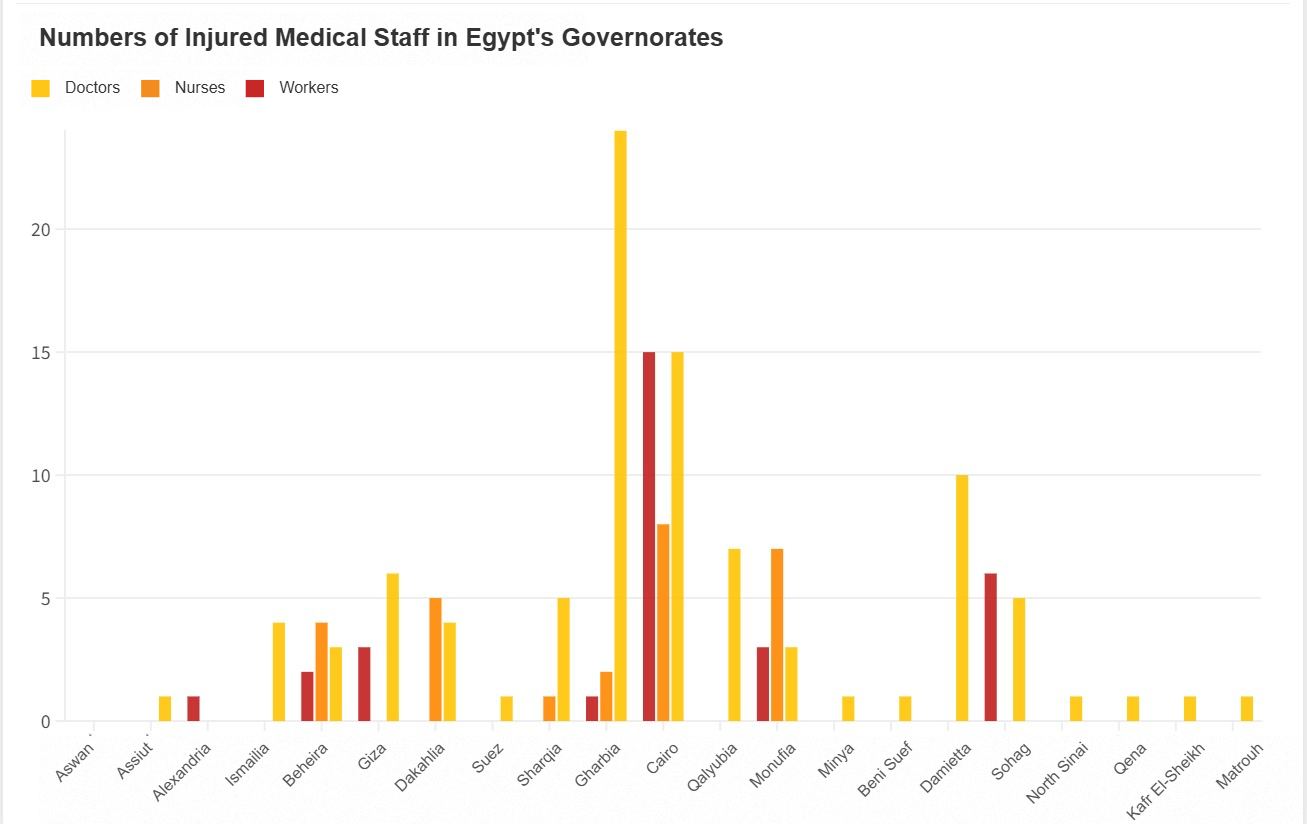
We prepared a database of 99 incidents of assault on government doctors inside hospitals from newspaper archives and doctors’ groups on social media between January 2018 and August 2023, because there are no official databases or statistics documenting assaults on doctors in Egypt.
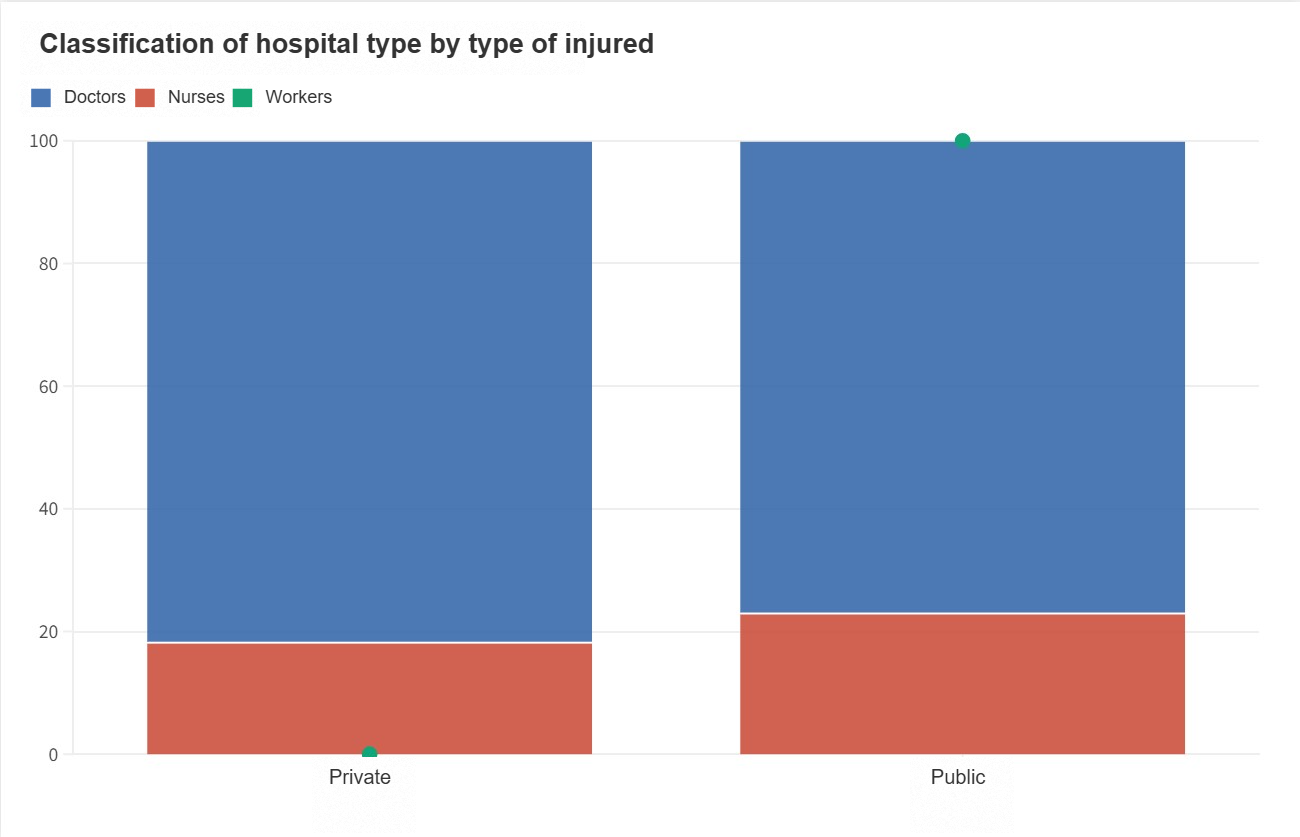
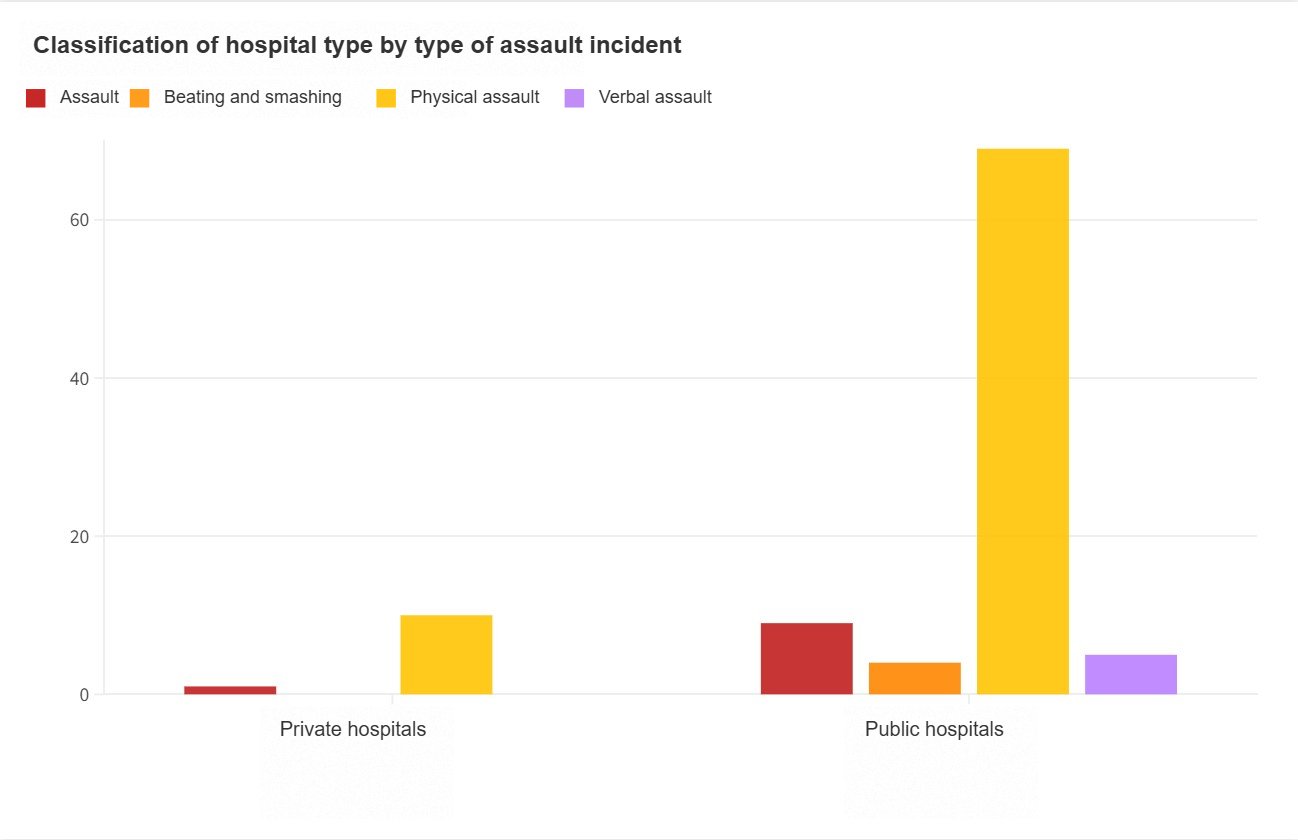
The analytical database revealed that hospitals in Gharbia and Cairo governorates, respectively, witness the highest rates of assault on medical staff, and it emerged that those most exposed to assault are doctors, followed by hospital workers and then nursing staff. The data analysis showed that government sector hospitals account for the largest share of assaults, about 83% of all assault incidents during the period monitored.
Hind says: “Doctors in Egypt are under a lot of pressure from all sides, in an unsafe work environment, which pushes many of us away from working in the government sector given the weak security and resources, working continuous hours and low salaries”.
Assaults Drive Doctors to Resign
In April 2022, the Medical Syndicate revealed figures and statistics it described as “alarming”: the first months of that year saw 934 doctors resign from government work, even though they had obtained a freelance doctor certificate from their syndicate. The syndicate said these figures require urgent and serious intervention to examine the obstacles and impediments of the health system.
The syndicate’s council expressed its dismay that the concerned authorities have not paid attention to what it described as “the growing danger of the medical sector’s problems”, attributing the sector’s deterioration to ignoring the health system’s obstacles and failing to act to confront them, foremost among them the unsafe work environment for doctors.
Dr Khaled Amin, assistant secretary-general of the General Medical Syndicate, agreed with those warnings in his conversation with Zawia3, especially after the rejection of a proposed law to toughen the penalty for assaulting doctors and to include some provisions protecting them in the medical liability law under discussion in the House of Representatives, explaining that the law alone is not enough and that the main reason for the crisis is the absence of the necessary security for medical staff and public property, namely the hospital and its contents.
He stressed the need to allocate a budget to provide the necessary security and protection for medical staff and hospitals, especially as the work environment inside hospitals has become one of the main reasons doctors resign from working in the government sector and seek to emigrate to work in neighbouring countries or European countries. He confirmed that there are no accurate statistics on the extent of the assaults doctors face, that 90% of cases are settled before legal measures are taken, and that there are other assaults in which the sub-syndicates are responsible for supporting the assaulted doctor.
The Medical Syndicate’s assistant secretary-general pointed out that the rate of doctors leaving work at the Ministry of Health and seeking to travel is increasing day by day: about 2,200 doctors resigned from hospitals affiliated with the Ministry of Health and converted their activity to freelance practice last year, an average of 6 doctors a day. He added: “Every doctor who was assaulted and could not obtain his rights resigned or turned to travelling abroad, especially with the unfair procedures for dealing with assaults”.
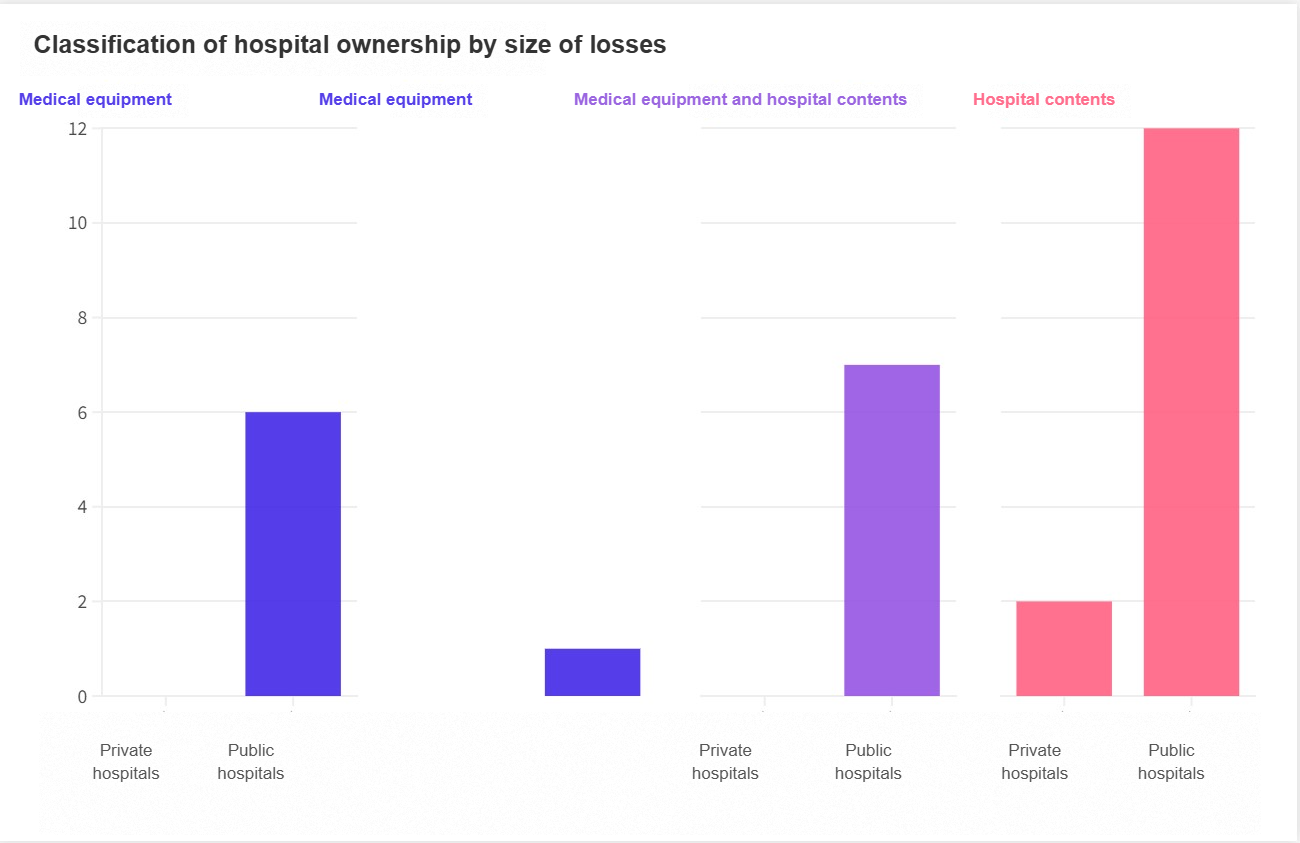
The data analysis showed that the increase in the rate of assaults on doctors inside government hospitals was accompanied by another increasing rate of hospital losses of medical equipment and contents as a result of clashes with citizens. The assault incidents show that the loss of that equipment disrupts the medical services provided at hospitals, and it is not replaced quickly.
The Medical Liability Law
Ahmed, an obstetrician and gynaecologist at a government hospital in Cairo, recounts the latest assault he was subjected to, saying: “An unconscious patient came to the hospital with her husband and some relatives. After resuscitating her and carrying out the necessary medical procedures, we decided to discharge her from the hospital, but her husband insisted on keeping her, and when we refused, he physically assaulted the medical staff”.
According to a UK workforce report on “The state of medical education and practice in the UK”, the number of Egyptian doctors emigrating to Britain rose by 202% from 2017 to 2021.
The report stated that 435 Egyptian doctors emigrated to Britain in 2017, rising to 756 the following year, then to 1,301 in 2019; in 2020 the number fell to 1,220, then rose again to 1,312 in 2021.
According to the report, Egypt ranks after Jordan and Sudan among Middle Eastern countries in doctor emigration to Britain, as the number of doctors working in the health sector in Britain rose by 17% between 2017 and 2021, to 283,663.
With rising rates of assault on medical staff and facilities in hospitals across the governorates, the need to pass the medical liability law has grown, as the solution to confronting assaults on medical teams and the fastest way to stabilise the medical system. Factors attracting doctors in Egypt must be provided, such as guaranteeing continuing medical education for every graduate and a sound work environment, which the passage of the medical liability law and tougher penalties for those who assault medical teams will support.
In this context, the deputy head of the House of Representatives’ human rights committee, Dr Ayman Abu El-Ela, told Zawia3 that the law works to provide a safe work environment for doctors and protect them, while at the same time guaranteeing the protection of patients and providing them with good health services, stressing the need to eliminate the phenomenon of repeated assaults on medical facilities and staff by toughening penalties.
Although the draft law was met with rejection by the Medical Syndicate, Abu El-Ela explained that hearing committees were recently formed with a number of different concerned entities, including the Ministry of Health, the House of Representatives and the National Council for Human Rights, and most points were agreed upon, in addition to the submission of three new proposals for the draft law, including provisions toughening the penalty for assaulting doctors to provide a healthy and attractive work environment for medical staff and reduce the rate of doctors’ emigration abroad.

Psychological Effects
Obstetrician Hind says: “After the latest assault, my psychological state deteriorated severely as a result of the tragic situation we are exposed to”, pointing out that she has sought to travel abroad to complete her studies and work, looking for a good work environment and a salary that covers her needs, as she put it.
The analysis of the database compiled revealed that physical assault on medical staff by some patients or their relatives tops the other forms of assault, namely verbal assault and assault by smashing hospital contents, during the period monitored.
For his part, Dr Mansour Khalil, director of Al-Haram Hospital, denounced the repeated assault incidents in his conversation with Zawia3, explaining that in such cases the hospital takes decisive action because it is considered an assault on an employee while performing his duties, and a police report is filed on the incident and the resulting losses are recorded, whether human or to the hospital’s property.
He stressed the importance of appreciating the great effort made inside hospitals, especially public ones, which receive hundreds of patients daily, explaining that the emergency department at Al-Haram Hospital receives about 250 patients a day, and stressing that most doctors’ resignations are linked to financial factors and the work environment.
With every incident, the haemorrhage of the state’s losses in human resources and public property increases; therefore, the doctors we met see an urgent need to speed up the issuance of the draft medical liability law, as a pressing necessity to regularise the provision of health services and control the mechanisms of dealing between providers and recipients. According to the doctors, this is a first step towards stopping the flow of Egyptian doctors abroad.