When an earthquake hits or a storm approaches, millions of Egyptians find no alarm bell guiding them to safety. Despite declared government investments in modernizing early warning and monitoring systems, recurring natural disasters expose a deep gap in climate justice: citizens in remote villages, informal settlements, and impoverished neighborhoods remain unprotected and uninformed — as though they fall outside the scope of official calculations.
This harsh reality contradicts the official discourse on planning and technological upgrades. On the ground, a different story unfolds: alerts reach some groups through media outlets or social networks, while others face storms, floods, and earthquakes with no prior warning — leading some to suffer material losses, and others to face life-threatening risks.
The National Research Institute of Astronomy and Geophysics (Helwan Observatory) is responsible for monitoring earthquakes. The state operates an early warning system linked to certain critical infrastructure. However, its limited temporal reach, weak integration with local authorities, and the absence of a direct mass alert mechanism remain among the major obstacles. As for floods and heavy rains, they are monitored by the Egyptian Meteorological Authority, the Ministry of Water Resources and Irrigation, and the Ministry of Local Development. In the agricultural sector, the Climate Change Information Center at the Ministry of Agriculture manages an early warning system and issues alerts concerning heatwaves, frost, and plant diseases.
Yet, limited information access for small farmers, a shortage of trained personnel, and the lack of a unified digital platform remain key barriers. Egypt has also implemented a health early warning system managed by the Ministry of Health in cooperation with the World Health Organization. This system uses real-time digital epidemiological surveillance to track infectious diseases. However, the weak connection between rural hospitals and the central system poses a serious challenge.
To date, there is no unified public warning system through which citizens can be alerted collectively in cases of earthquakes or floods. According to testimonies from investigation sources and participants in a survey conducted by the reporter, the state currently relies on official media bulletins or communication with local authorities. Survey respondents said they depended entirely on weather bulletins, testimonies of affected individuals shared via social media, or phone calls from acquaintances and relatives when earthquakes or floods occur in a specific area.

Who Receives the Warning?
In an effort to examine how widely early warning systems reach Egyptians, Zawia3 conducted a survey involving participants from diverse educational backgrounds and geographical regions. The results revealed a significant gap in the reception of warnings, as well as a low level of public trust in the fairness of these systems — ranging from people who have never heard a warning siren in their lives, to others who received alerts too late, after the disaster had already struck.
The survey included approximately 83 respondents from the governorates of Cairo, Giza, Qalyubia, Alexandria, Gharbia, Damietta, Dakahlia, Beni Suef, Sohag, and Marsa Matrouh. Among them, 80.2% live in urban areas, 17.3% in rural areas, and 2.5% in informal settlements.
The findings show that 86.3% of participants hold a university degree or higher, 11.3% have completed secondary education, while only 1.3% hold a preparatory certificate, and another 1.3% have no educational qualification at all. Regarding natural disasters, 46.9% of participants stated that they had experienced an earthquake or severe storm within the past five years, while 53.1% said they had not. Among those who did experience disasters, the incidents included tremors and intense sandstorms.
The survey results also point to a clear pattern of disparity in access to information, and an almost total absence of early warning systems in the most marginalized areas. Only 22.5% of respondents received prior warnings, while 77.5% received no alerts whatsoever about earthquakes or storms. The sources of warnings varied, with social media being the most common, followed by mobile phone messages and traditional media.
According to the survey, only 15 participants received alerts between less than an hour to over 24 hours before the event occurred, while 9 learned about the disaster only after it had happened. The rest of the participants received no warnings at all — neither beforehand nor afterward.
Among those who did receive alerts, only 21.7% reported that they had clear instructions on how to respond. Meanwhile, 58% said they had no instructions, 20.3% could not recall, and just 5.1% of participants believed that early warnings are distributed fairly to everyone. In contrast, 65.4% said the warnings are not distributed fairly, and 29.5% stated that they did not know.
How Ready Is the Early Warning System?
In recent years, Egypt has begun developing early warning systems across several sectors, including earthquakes, agriculture, floods, and diseases. However, the level of readiness varies from one sector to another, alongside challenges related to funding, inter-agency coordination, and data updates.
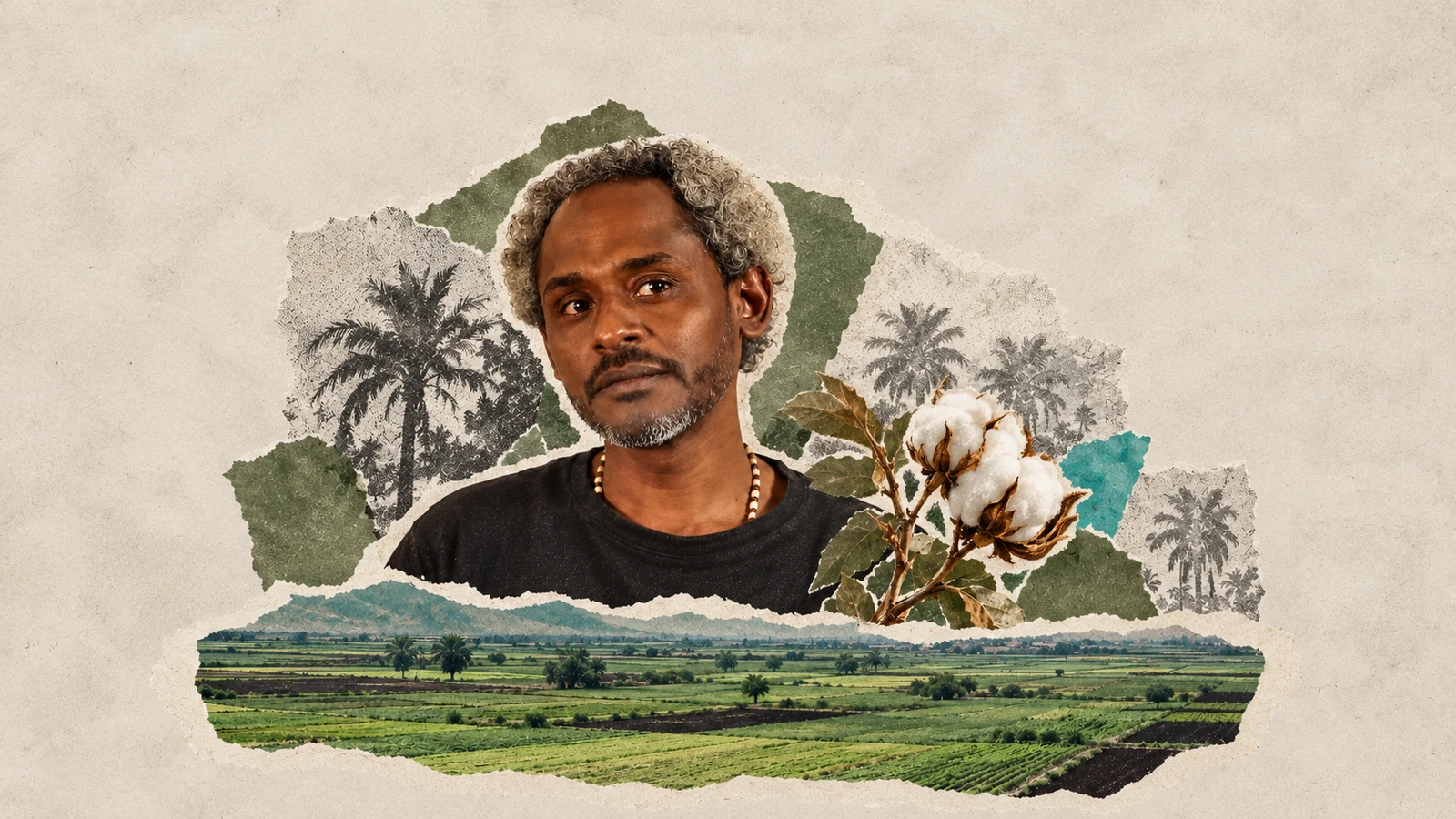
In the village of Saft El-Laban, in Minya Governorate, stands Khalaf Aziz, a farmer in his sixties, amid the land he has known since his youth — and which he has continued to cultivate for more than thirty years. With bitterness, he says:
“Since I started working in agriculture, I have never heard of anything called an early warning system. We receive no alerts regarding planting schedules or harvest seasons, not even about upcoming rain or floods.”
Khalaf confirms that there is a complete disconnect between farmers and meteorological stations, adding:
“Agricultural directorates were supposed to organize lectures, seminars, or even field schools to teach us how to deal with daily weather changes.”
In Minya Governorate, monitoring stations are limited to the Samalut and Abu Qurqas districts only, which makes the benefit of early warning systems extremely limited.
Despite this institutional absence, Khalaf points to some limited initiatives that attempted to fill the gap:
“Among the entities that helped us a little were organizations like the Evangelical Association, which organized seminars, brought in trainers, and sometimes we received SMS messages on our phones with warnings or guidance when weather conditions changed.”
Pointing to his land — now a witness to harsh climate change — Khalaf says:
“High temperatures affect the pollen grains, which weakens the crop from the very start.”
He recalls sorrowfully:
“In 1999, the entire fava bean crop was hit by blight. In 2005, dew destroyed the potato crop, causing it to rot and dwarf, and since then we have not been able to plant it again. In 2017, the cumin I planted was struck by fire blight, and I lost 50,000 pounds ($1,000) in that crop alone. The most recent was last April’s storm, which hit the wheat crop, halving its yield. I lost about 25,000 pounds ($500).”
Despite the frequency of these climate-related disasters, the absence of warnings has persisted. Khalaf confirms that he never received any prior alert before any of these incidents, saying:
“There was no warning whatsoever, no official body informed us, and no one came to assess or follow up on the damage — as if we simply don’t exist.”
He calls for a genuine activation of early warning systems at the village level, and for equipping Ministry of Agriculture staff and meteorological stations to communicate directly with farmers — especially small-scale ones — through agricultural extension officers. He also calls for engaging the media in relaying these warnings, instead of leaving farmers to face disasters alone. He concludes:
“We are the ones who pay the highest price for climate change, and with each passing year, our losses double.”
These complaints are not voiced by Khalaf alone. They are echoed by Essam Awad, an agricultural engineer and farmer, who confirms that since his retirement seven years ago, he has never heard of any early warning system, and has never received a single alert warning him of an impending flood or imminent storm — even though his farmland remains his only source of income.
“There’s nothing but the weather forecast on television… I follow it just like everyone else,” says Essam in a voice tinged with resignation and disappointment. He still vividly remembers the day in 2017 when a severe sandstorm swept through their village. He was not prepared — no one was.
The storm uprooted trees and crops, tore apart plastic greenhouses, shattered electric poles, and even caused the collapse of the Gamasa power station, plunging the village into darkness for a full week. That night, Essam lost everything he had planted on his three-and-a-half feddans of land.
“I lost between 70,000 and 80,000 pounds ($1,400–$1,600), and no one asked about us,” he says, gazing at the land that still bears the scars of that blow. Essam no longer trusts that any authority will warn him before a disaster strikes. The severe shortage of agricultural extension officers deepens his sense of isolation. As a result, he no longer expects anything from anyone and is content with following the weather report on TV, hoping the coming days will pass peacefully.
On the other hand, Dr. Mohamed Fahim, Head of the Climate Change Information Center at the Ministry of Agriculture, confirms that the government has developed a national agricultural early warning system over the past few years. The system has already been implemented in more than 20 governorates, with a focus on areas most vulnerable to climate risks such as the Delta, Upper Egypt, and western Minya.
The system monitors climate phenomena that affect agriculture, including frost, heatwaves, heavy rainfall, drought, and sandstorms.
It relies on integrated data from meteorological sources, satellite imagery (Sentinel and MODIS), and global climate models (such as ECMWF and NOAA), along with platforms from FAO and IFAD. Currently, it covers 22 governorates through an internationally funded project, with plans to expand to all governorates by 2027. The accuracy of warnings has ranged between 75% and 85% over the past three years, with significant improvement in the timeliness of alerts thanks to the development of a localized statistical model.
In his conversation with us, Fahim explains that alerts reach farmers via SMS messages, local radio stations, social media pages, and WhatsApp groups, in addition to village-based agricultural extension officers. The ministry also issues seasonal bulletins every three months containing agricultural recommendations. Compliance with these guidelines has increased, especially in areas that have previously experienced extreme climate events.
Nevertheless, the system still faces numerous challenges — most notably poor telecommunications in remote areas, lack of awareness, and limited funding and technical resources. Despite these obstacles, early warnings have helped reduce losses and guided farmers to adjust their agricultural and irrigation practices, particularly in rain-fed regions.
In an effort to improve performance, the ministry is currently working — according to Fahim — on launching a digital application for climate alerts, integrating agricultural insurance, and enhancing forecasts for diseases and pests. Farmer responses are being evaluated through field-based models, with losses having decreased by 22% in some villages of Beheira Governorate. A plan is also underway to launch an electronic system to monitor responses by 2026.
When the Ground Shakes…
According to the head of the National Research Institute of Astronomy and Geophysics, Egypt’s National Seismic Monitoring Network currently operates 85 stations across the country, with plans to expand the number to 100 in the future.
This network monitors earthquakes after they occur — not before — because predicting earthquakes with precision before they happen is still not possible globally, according to Dr. Sherif El-Haddad, Head of the Seismology Department at the National Research Institute, in an interview with Zawia3. However, a rapid response system has been developed to minimize damage. This includes measures such as the automatic shutdown of electricity at factories, halting trains using artificial intelligence software, and issuing immediate internal alerts to certain entities — though not yet to the general public.
The main center is located in Helwan, where data is collected and analyzed around the clock. In addition, there are seven regional centers that cover the rest of the country, located in: Aswan, Hurghada, Marsa Alam, El-Kharga (New Valley), New Borg El-Arab, Marsa Matrouh, and Arish. Two additional stations operate in Dabaa and at the High Dam in Aswan.
Maps produced by the institute show limited seismic activity in specific areas, including: the northern and eastern Red Sea, the Dahshur area south of Cairo, Abu Zaabal and Khanka northeast of Cairo, the northern coastline including Alexandria, Rosetta, and Damietta, and south of the High Dam in Aswan (Kalabsha area).
In his discussion with us, the Head of the Seismology Department confirms that Egypt possesses an early warning system capable of automatically interacting with sensitive infrastructure — such as cutting electricity to factories during earthquakes to prevent fires or electrical faults, or stopping train lines through AI programs to avoid accidents in the event of seismic activity.
He adds that there is another system that issues a warning in case of a tsunami before it reaches the shore, and that there is also a specialized system that monitors for cracks in dams. These dams are equipped with sensors that trigger an alert if fractures occur due to earthquakes.
He points out that earthquakes are usually sudden and fast, with effects taking place within seconds, making it difficult to alert the public quickly enough. He clarifies that the implementation of Egypt’s early warning system is based on the country’s strategic needs, noting that the greatest challenge facing the system’s application is the need to invest in and activate artificial intelligence technologies — and to implement them effectively across government institutions.
“Warning Is Not Enough: When Floods Arrive Before the Alert!”
The Ministry of Irrigation provides maps of flood paths, alongside an early warning unit within the Meteorological Authority that coordinates with governorates. It also deploys rain-monitoring devices and rapid-alert systems in areas such as the Red Sea and South Sinai. These issue advance warnings of heavy rains and floods, with lead times ranging from 48 hours to a week. Yet poor infrastructure in some governorates, delayed local response, and weak communication between monitoring systems and citizens remain among the most pressing challenges.
In this context, Dr. Abbas Sharaki, professor of geology and water resources at Cairo University, told Zawia3 that Red Sea cities such as Ras Gharib, Hurghada, Safaga, and Quseir lie directly in front of major flood paths. Likewise, all Upper Egypt cities without exception, located along the Nile Valley, face massive flood paths such as Wadi Qena, Wadi Assiut, and Wadi Hammamat. These areas may experience floods, but their timing cannot be predicted since they do not occur annually. No governorate on its own has the capacity to deal with such floods, as was evident in the Ras Gharib floods of 2016 that cut off roads at the time.
Hence, there is a pressing need for a central unit, equipped with heavy machinery and aircraft, to cover multiple governorates and respond to sudden floods. Egypt has a plan to build dams periodically in flood-prone areas as a form of preparedness, but no one can prevent floods from occurring.
Sharaki stressed the importance of regularly clearing flood paths, banning construction in those areas, and placing them under continuous local monitoring, along with creating an emergency unit dedicated to them. He explained that forecasting floods days in advance is extremely difficult, which makes year-round readiness essential.
He pointed out that the Egyptian Meteorological Authority is responsible for climate forecasting, and the state is working to support it with modern monitoring and early warning devices. Still, even meteorological agencies worldwide sometimes fail to predict or detect extreme weather events in time.
The Cairo University professor cited the United States as an example, affirming that without an early warning system, reducing the death toll from hurricanes and floods there would not have been possible. To minimize disaster losses, he stressed the need to review the safety of buildings, demolish structures at risk of collapse, and recalled the human losses caused by the relatively weak 1992 earthquake. He concluded by underlining the importance of adhering to seismic building codes in new projects and establishing specialized rescue centers to prepare for any potential disaster.
In Egypt, early warning systems for disasters vary depending on the type of disaster, the operating mechanism of each system, and the responsible authority.
Recipients of warnings fall into several categories. Government bodies include the Cabinet, central operations rooms (in cases of emergencies and natural disasters), governorates, security directorates, civil defense, and the Ministries of Local Development, Water Resources and Irrigation, and Agriculture, in addition to the Railway Authority and Cairo Metro (linked electronically to some monitoring systems in case of earthquakes), as well as certain factories and sensitive power stations (technically connected to warning systems for automatic shutdowns during earthquakes).
Scientific and technical entities include the Meteorological Authority, the National Research Institute of Astronomy and Geophysics, and the Climate Change Information Center at the Ministry of Agriculture.
Citizens, however, are not direct recipients of alerts due to the absence of a mass real-time mechanism (such as SMS or mobile phone notifications). Instead, they usually depend on official media or social media platforms to relay warnings after they are issued, according to survey participants. The same applies to entities not technically linked to warning systems, such as some factories and private facilities, as well as schools, hospitals, and places of worship in certain areas, which often do not receive alerts directly or promptly.
A System Moving Backward
Jarrah al-Qat‘ani, a man in his forties from the border governorate of Marsa Matrouh, has a different view. He has long been aware of the early warning system in his area and believes in its vital role in alerting people to climate changes and disasters. Yet he laments that its role has declined since 2011, saying: “We no longer receive warnings as we used to.”
Jarrah clearly remembers how sirens once sounded across the governorate, along with radio and television announcements warning residents about earthquakes, as in the case of the 1992 quake. Today, he says, the situation is completely different. During the floods of 2023, no prior warning was given, resulting in massive material losses.
“If there had been a warning beforehand, we could have reduced the damage,” Jarrah told us. He highlighted the decisive role played by volunteer efforts in responding to the crisis, but pointed out that residents of remote areas do not receive the same level of services as those living in urban centers.
Jarrah believes disaster preparedness should not stop at issuing warnings but must also include providing safe shelters for citizens to turn to, as well as introducing a school curriculum focused on natural disasters and effective response strategies.
For her part, Wissam Ahmed Fayala, secretary of a local administrative unit in one of the governorates overlooking both the Nile and the Mediterranean, said they regularly receive warnings from central authorities regarding the timing of seasonal storms and expected weather changes. This provides a lead time of 48 hours to a week to take preventive measures.
She explained that the governorate’s proximity to the Nile and the sea makes it more vulnerable to flood risks than others, requiring constant readiness.
“As soon as we receive the alert, we are in continuous contact with the governorate and city council around the clock,” Wissam said. Response begins immediately with clearing drainage networks, reviewing the readiness of water stations, and monitoring infrastructure capacity to minimize potential losses.
Wissam confirmed there is coordination with multiple entities, including the Ministry of Social Solidarity, the Ministry of Youth and Sports, and electricity and water companies, to ensure rapid intervention during emergencies. In some cases, local communities are involved in early response efforts, and she praised the cooperation shown by rural communities when danger is sensed.
She noted that the greatest challenge lies in sudden disasters that exceed local preparedness. She cited a cyclone that struck a village in Damietta in 2023, explaining that despite the element of surprise, authorities “succeeded in containing the situation efficiently.”
Wissam also pointed out that there is a crisis management unit operating around the clock, with representatives in every village. She considered the former governor’s provision of wireless devices to heads of cities and local units a key step in speeding up communication with the crisis room and enabling instant reporting of disasters, which improved response time and reduced delays.
Finally, despite efforts made to upgrade monitoring and early warning systems in Egypt, the reality on the ground reveals deep gaps in climate justice. Access to information still differs from one citizen to another, between city and village, and between state institutions and civil society. While some entities receive alerts instantly and can take preventive measures, millions of Egyptians in remote villages and informal settlements continue to face earthquakes, floods, and storms without warning. This gap reflects not only technical or administrative shortcomings but also a broader failure to adopt a comprehensive approach that places citizens at the core of the protection system rather than on its margins.
Saudi-Led Digital Campaign Calls for Boycott of Egyptian Products and Tourism