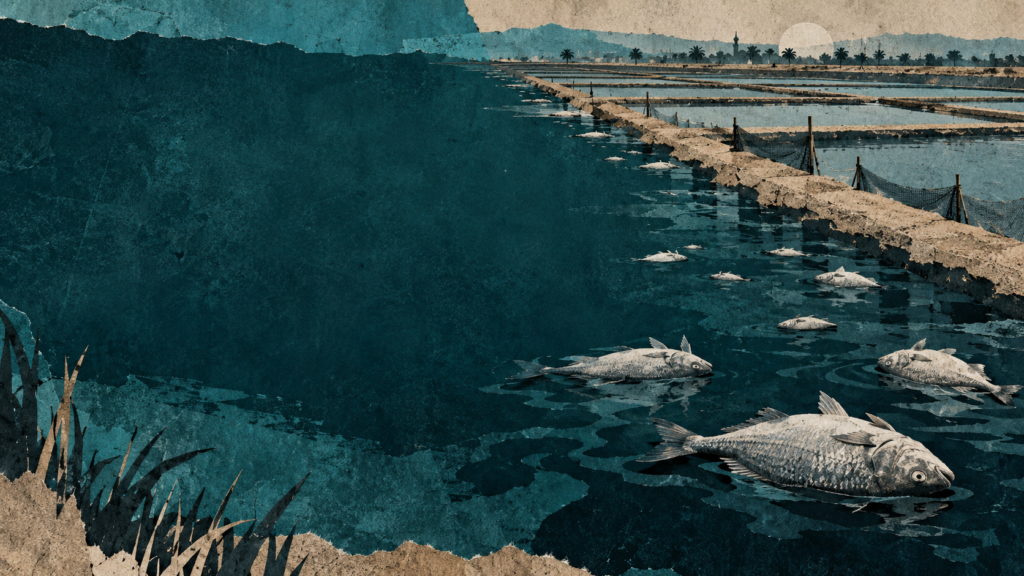
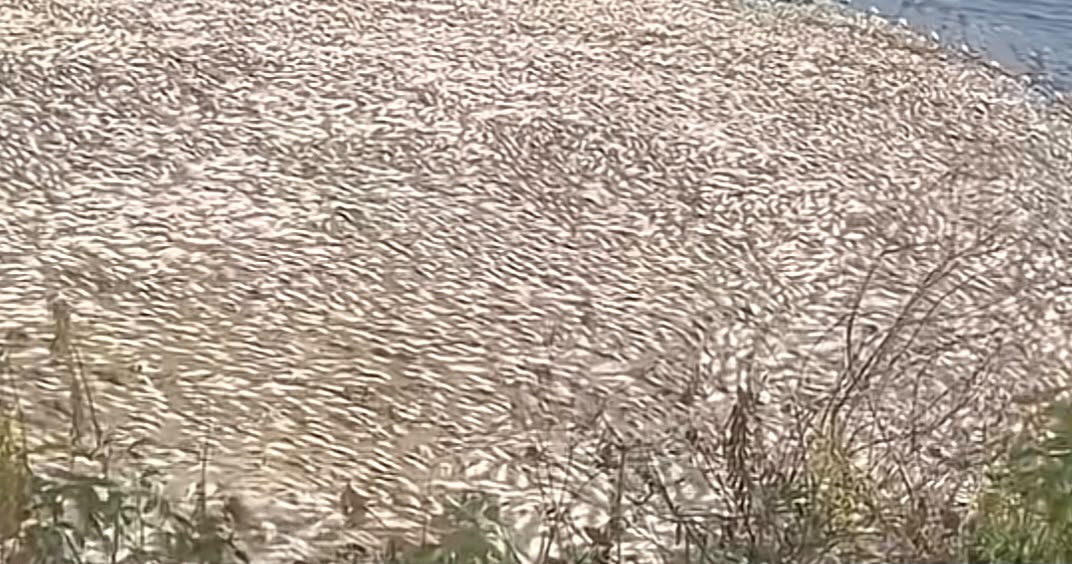
During the first half of August, fishermen and local residents observed cases of fish deaths and scarce catches in Lake Manzala, before the effects moved to the fish farms overlooking the lake about 20 days later. On 25 August, a mass die-off of fish occurred after water entered from the lake into the ponds of the fish farms located in the Shata area on the border between Damietta and Port Said, among them the farm of Ahmed Hany.
At first the water seemed normal and showed no clear change in colour or smell, but its effect on the fish was different from anything their breeders had seen in past years. Previously, the fish would give gradual signs of the water deteriorating, such as limited numbers dying and some rising to the surface of the water, in contrast to what happened in recent days, when the fish died suddenly inside the water and at the bottom of the ponds.
The losses soon reached most of the farms in the area. Ahmed Hany estimates the losses of his farm alone at about EGP 3 million, after one of his farm’s ponds suffered an almost total die-off of sea bream and meagre, and two other shrimp ponds were damaged to varying degrees, while he points out that one of the owners of a neighbouring farm lost about EGP 15 million after about 17 to 18 tonnes of fish died, and the equipment used to operate it had cost about EGP 1.2 million.
He tells Zawia3: “The farms in the area produce several types of fish, among them sea bream, sea bass, mullet, meagre and shrimp, but the extent of the damage was greatest for sea bream. In the previous season we achieved good shrimp production, in contrast to the current season, which has seen widespread losses, and farm owners are required to pay the land rents, which have reached about EGP 11,000 per feddan a year, in addition to the costs of fuel, feed, equipment and maintenance.”
The fish deaths are not the only loss for the farm owners, who face additional costs in trying to save the remaining fish, especially the cost of running oxygen-pumping equipment. Under normal conditions, Ahmed’s farm required fuel at a cost of about EGP 150,000 a month, but this doubled with the increased fuel consumption resulting from running the equipment continuously in an attempt to keep the fish alive.
Despite the intensive operation of the aeration equipment, the fish deaths continued at Ahmed’s farm, which raises questions about the oxygen-deficiency hypothesis. In mid-September, he noticed that the colour of the water coming from Lake Manzala suddenly turned white, and this continued until 16 September, before strong winds and water currents on 17 and 18 September stirred the water and returned it to its natural colour (according to his account).
“The water did not necessarily carry a pungent smell or clear signs of pollution, but it affected the fish as soon as it entered the ponds. We are waiting for official intervention by the competent authorities to test the water and announce the results of its analysis, so that we know the cause of the losses, which have extended across a wide area of the region,” he says.
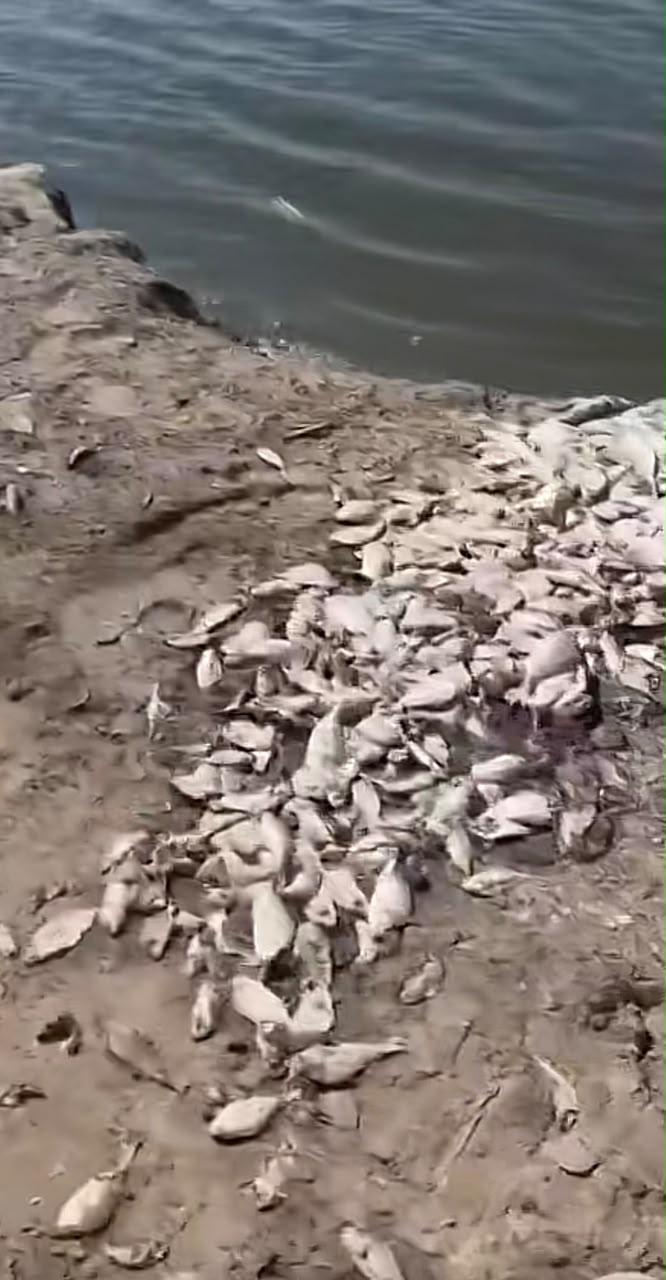
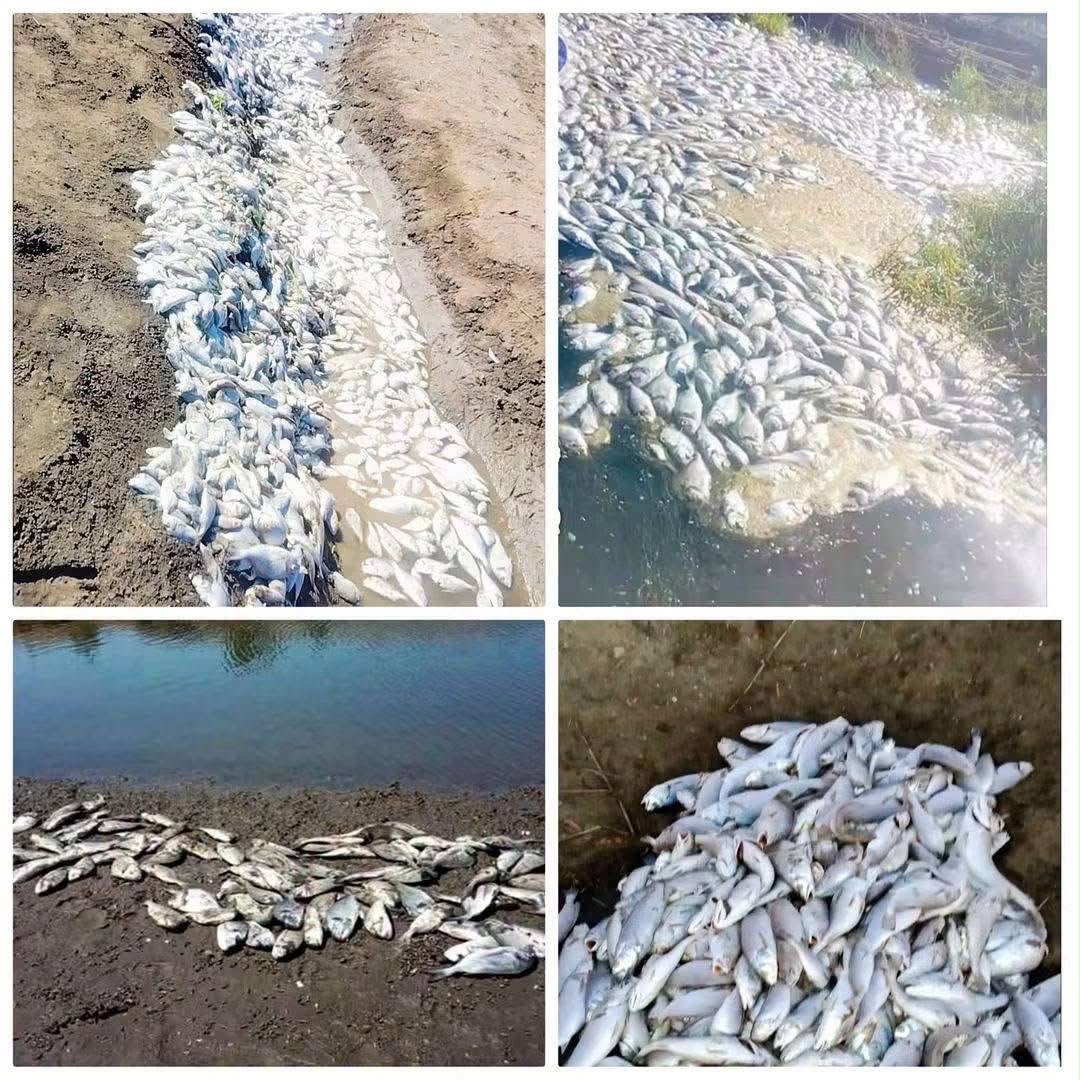
Amid the catastrophic losses, most farm owners were collecting whatever fish they could shortly after they died and selling them at low prices to be used in making salted fish, while disposing of the quantities that remained at the bottom of the ponds and floated up later after decomposing. Ahmed explains that the farms sometimes saw dozens or hundreds of fish die during July, August and September, but recently entire ponds have died within a few hours.
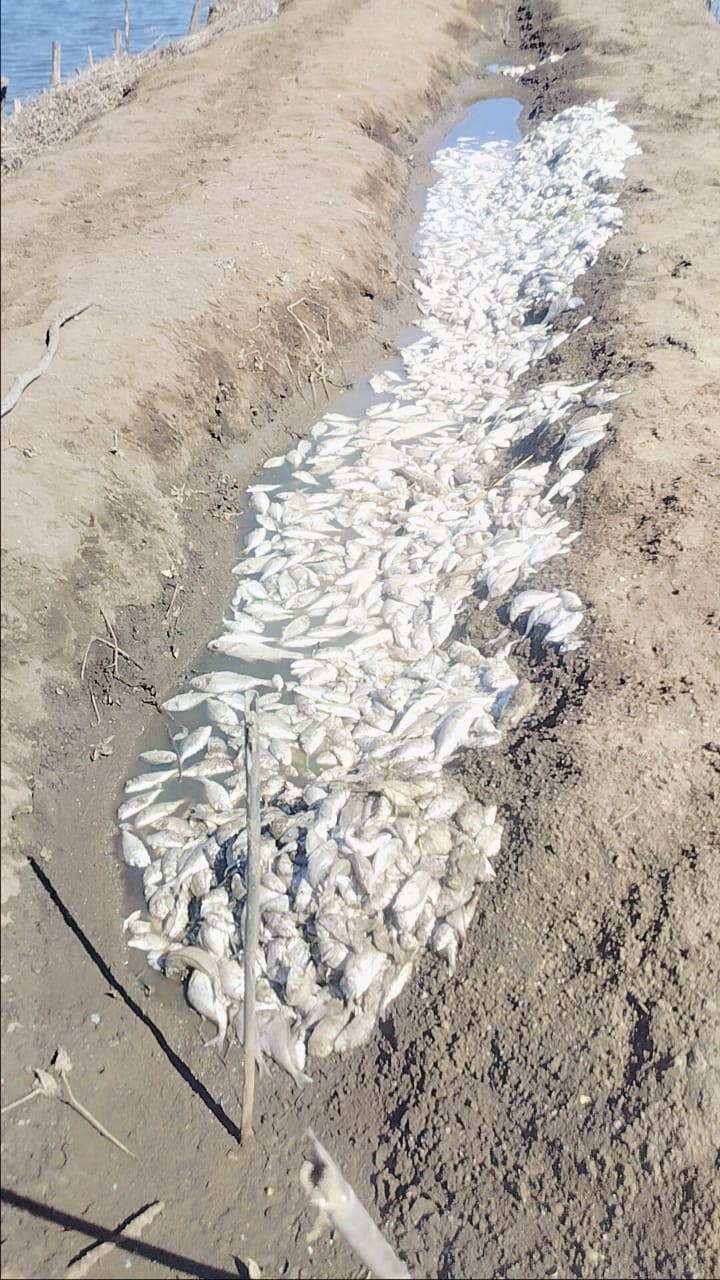
By the first week of September, Magdy El-Sayed was shocked to see the sea bream and sea bass (which he has been raising for two years at his fish farm overlooking Lake Manzala, in the area of the Diba Triangle, located west of Port Said and Damietta) rise from the bottom of the pond to the surface of the water. He believed that a lack of oxygen was the cause, so he pumped new water from the lake into the pond.
But his attempt to save the fish’s lives failed: they had already died and settled at the bottom of the pond, before they began to float on the surface of the water as evening fell. He quickly collected the dead fish from the water and placed them on the embankment, with the help of his son, fearing that leaving them in the pond would lead to a further deterioration in water quality.
The losses soon spread to the other ponds, as quantities of large shrimp, mullet and tobar died. When Magdy’s daughter went into the water with him to help him collect the dead fish, she suffered painful swelling and an allergic reaction on the parts of her skin that had touched the water, which forced her father to take her to Ezbet El-Borg Hospital, where she was given intravenous fluids and injections, and the doctors informed the family that what the girl had suffered was caused by a type of bacteria resulting from water pollution.
For more than a week, the mass die-off of tonnes of fish did not stop at his farm and at his neighbours’ farms in the Diba Triangle and the northern parts of the lake, without them receiving a convincing explanation from the authorities concerned. He recounts that he reported it to the Mostakbal Misr Agency as the body responsible for the administration and operation of Lake Manzala since late 2024 and the lessor of those fish farms, but the response he received was that he had to dispose of the dead fish so that an environmental violation would not be recorded against him.
He tells Zawia3: “The fish deaths have caused me financial losses of more than EGP 300,000, which forced me to borrow and look for other sources of income to cover the expenses of my daughter’s upcoming wedding and to pay the financial obligations connected with the farm, and about EGP 35,000, which is the value of the semi-annual instalment of the rent for the ten feddans he rents.”
He explains that the scale of the losses is not limited to the value of the dead fish, but also includes the costs of rearing, feed, fuel and rent, which has risen from about EGP 2,000 per feddan to about EGP 6,000 per feddan, in addition to extra amounts which he said include EGP 500 per feddan for the “Tahya Misr” Fund and another sum for assistance, bringing the total he pays (according to his account) to about EGP 7,000 per feddan.
Fortunately, some of the mullet, tobar and shrimp survived at Magdy’s farm, and he is working to save them throughout the day by running the pumps to increase the oxygen in the water, but this burdens him with a daily fuel cost of about EGP 800 to run two machines, in addition to the cost of feed, of which a tonne costs about EGP 28,000.
The owners of the affected fish farms, Magdy among them, recall how the water quality deteriorated and green marks appeared in the water, which they believe were algae consuming the oxygen in the water, something that can lead to the fish suffocating. But running the oxygen pumps at full capacity undermines that hypothesis, so they believe their fish died as a result of being affected by waste from a petrochemical factory, or by fresh water entering the lake carrying pollutants or harmful bacteria.
Lake Manzala lies in the north-eastern part of the Nile Delta, with an area of about 404.69 square kilometres and an average depth of 1.15 metres. It extends to cover three governorates: Port Said, Dakahlia and Damietta. It shares its eastern border with the Suez Canal, and is bounded on the west by the Damietta branch and on the north by the Mediterranean Sea.
Lake Manzala is fed by several main water sources, including: the old El-Gamil inlet, the new El-Gamil, and the El-Diba inlet (known locally as El-Saffara), as well as the El-Ratma Canal and the El-Saffara Canal. Mixed water reaches the lake, some of it salty, coming from the Damietta branch, and some of it fresh and drinkable.
Drainage water is among the most prominent sources feeding the lake, the most important being four drains: the Bahr El-Baqar drain, which is the main source of the lake’s pollution with sewage; the El-Serw drain, an agricultural drain located in Damietta Governorate; the Hadous drain, which separates the governorates of Sharqia and Dakahlia; and the Ramses drain, located in Dakahlia Governorate.
Unprecedented Death Rates
In recent years, the state has expanded the leasing of areas of Lake Manzala to fish farms, including about 4,000 feddans in the El-Gamil area, about 2,600 feddans in the “Qaar Bahr” area south of Port Said and about 1,800 feddans in the El-Khandaq area, in addition to other areas in the El-Ageeba area, which has led to a decline in the areas available for free fishing, according to El-Sayed Aslan, a fisherman from Port Said.
Every year during August and September, fishermen have been used to limited cases of fish deaths occurring as a result of high temperatures, low water levels and weak water movement, as well as the presence of limited levels of pollution. But the rate of fish deaths has risen significantly this season, and fishermen, El-Sayed among them, believe that the continued entry of water from the Bahr El-Baqar and “Silinmar” drains into the lake has increased the concentration of pollutants and degraded the aquatic environment.
He tells Zawia3: “Changes have recently been occurring in the colour of the lake’s water: it turns white when oxygen levels in it drop or the level of pollution rises, and when this condition continues for a longer period, the water turns red, which fishermen consider an indicator that the state of the water has reached a stage of severe deterioration and fish deaths.”
He stresses that fish deaths linked to deteriorating water quality are not an entirely new phenomenon in Lake Manzala, but their scale this season has been much larger than in previous years, estimating the usual annual levels of damage at about 10%, which have risen this year, in his estimate, to around 70% to 80%.
He points out that fish that die inside the farms may be sold at low prices to salted-fish factories or traders, instead of being sold at the usual price of live fish, particularly sea bream, a kilogram of which costs about EGP 300 alive, while freshly dead fish may be sold at a much lower price to be prepared and salted; he estimated the price in some cases at about EGP 50 per kilogram.
Dr Salah Moselhy, head of the Lakes and Fish Resources Protection and Development Agency, had (in media statements he made in August last year) linked the fish deaths to rising temperatures along with oxygen deficiency, recommending that breeders reduce stocking densities and cut the quantities of feed during periods of high temperatures, and announcing the organisation of veterinary convoys to monitor the condition of the fish and deal with health problems linked to heat stress.
The closure by some influential agricultural landowners of the El-Enaniya canal or drain (one of the important water channels linking the Damietta branch coming from the River Nile to Lake Manzala) with pipes and gates prevented the fresh water coming from the El-Salam Canal from reaching the lake and the farms around it, which caused a deterioration in water quality and a significant rise in the water’s salinity, according to the account of Marwan Mohamed, the owner of a fish farm overlooking the lake.
Marwan owns a 16-feddan leased fish farm comprising between 7 and 8 ponds. In recent weeks, the fish in about half of the ponds on his farm died, and one of them suffered a total loss of the sea bream, meagre and mullet in it, valued at about EGP 800,000, he tells Zawia3, explaining that the usual cases of fish deaths that occur every year cannot be compared with what happened this year.
Marwan has not seen sufficient action by the authorities concerned to verify the causes of the deaths or analyse the water, or a response commensurate with the scale of the farm owners’ losses, especially since he was part of a delegation of them that brought a batch of dead fish to the Fish Resources Authority, but, according to him, they were subjected to procedures and violation reports instead of receiving support or an explanation of the causes of the deaths.
He adds: “The rent per feddan has risen from about EGP 3,000 to EGP 13,000 this year, and farm owners who cannot pay the rents because of the fish deaths face the risk of losing the land. Even fishing in Lake Manzala has become more difficult: some fishermen have had their boats confiscated, because obtaining permits for the engines of boats and feluccas requires about EGP 25,000.”
The fish production of Lake Manzala is estimated at about 50,000 tonnes a year, contributing nearly 48% of the total production of the natural lakes in Egypt. It is also an important habitat for migratory birds, and contains multiple species of fish, such as tilapia, fish of the mullet family, bayad catfish, grass carp, shrimp and crabs.
However, for years the lake has suffered from a shrinking area as a result of erosion, dredging and soil drying, as well as water pollution caused by the discharge of wastewater, sewage, and industrial and agricultural drainage. The growth of aquatic plants, such as water hyacinth and reeds, also obstructs the movement of water inside the lake, which negatively affects its fish resources.
Development and the Change in the Lake’s Environment
This year, fish death rates at fish farms in Damietta and the Diba Triangle saw a large increase compared with what usually happens during the same period each year, with rising temperatures and falling oxygen levels in the water, which negatively affects the fish, especially with the presence of algae that consume oxygen. In the estimation of Zakaria Ragab, member of the Advisory Committee for Fish Resources representing fisheries and lakes, this is linked to chronic problems in the water channels separating the farms, which are not regularly subjected to the necessary clearing work, particularly as parts of them have been closed, which affects the movement of water.
He tells Zawia3: “Deaths occur seasonally in the lake and the farms, but this year saw a sudden mass die-off of fish that rose to the surface of the water and died at around the same time, instead of gradual deaths, not to mention the large increase in the quantities of dead fish.”
The member of the advisory committee adds that part of the fish that die for disease-related or environmental reasons is salted and sold to consumers, instead of being disposed of and not offered for human consumption, which calls for intervention and oversight.
He believes that the channels between the farms need to be widened and cleared and the movement of water through them maintained, considering that the system of circulating water between the farms represents an additional problem, since one farm may use the water and then discharge it into the same channel, for another farm to come and use it, which leads to the accumulation of pollutants and their transfer from one farm to another through the channels.
He points to breeders’ failure to comply with the scientific recommendations that call for collecting dead fish inside the farms and disposing of them by burying them in pits and placing quicklime over them, to prevent the transmission of diseases between ponds, adding that birds, cats and dogs present within the farms feed on the dead fish, and their droppings reach the ponds and other farms, and may therefore transmit infection.
He explains that the expansion in closing channels and water areas and converting most of their area into fish farms has led to a sharp decline in the areas available for free fishing, stressing that the management of the lake needs to strike a balance, and calling on the Mostakbal Misr Agency, which is responsible for the administration and operation of the lake, not to be content with collecting the rents without measures to improve the lake’s conditions or support fishermen and farm owners, and to verify the causes of the deaths.
The deterioration of water quality in Lake Manzala and the fish deaths are linked to the changes that occurred in the nature of the lake during its development project. Its water used to range between fresh and mixed, alongside wide areas of aquatic plants, such as reeds, papyrus and some submerged plants, which play a vital role in the natural treatment of the water, as they produce oxygen during photosynthesis. The beneficial bacteria present in the aquatic environment also worked to oxidise some of the substances and pollutants coming from agricultural drains and sewage, thereby limiting their accumulation, according to Dr Maaty Qishta, emeritus head of research at the Agricultural Research Center.
The emeritus researcher explains that carrying out the lake’s development works, removing the aquatic plants and opening the inlets to larger quantities of salt water led to the water’s salinity rising to more than ten times its previous levels, and consequently to the disappearance of the plants that used to carry out the natural treatment of the water. The pollutants coming from the drains thus accumulated inside the lake and ammonia levels rose, which created the conditions for the growth of microalgae that consume the oxygen in the water during the night hours, and for the fish to suffocate and die.
He tells Zawia3: “The absence of fish deaths in the low-salinity areas inside the lake or in the drains is linked to the oxidation of ammonia by types of bacteria, such as Nitrobacter and Azotobacter, whereas the environmental change that occurred in the lake caused the phenomenon of fish deaths,” describing the scale of the losses as catastrophic.
He proposes reorganising the entry of salt water into the lake by building gates to control its quantities, instead of letting it enter in large quantities, in a way that allows the proportion of fresh or less saline water inside the lake to increase, which may help the return of the aquatic plants that used to play a role in the natural treatment of the water, given that agricultural drainage water and water from the Bahr El-Baqar drain continue to flow into the lake.
Egyptian President Abdel Fattah El-Sisi had announced, in 2025, a plan to rehabilitate Lake Manzala with the aim of increasing its fish production, stressing the importance of preserving the ecosystem of the lakes. He pointed to the possibility of imposing a seasonal fishing ban on lakes Bardawil, Manzala and Nasser, to give the biological environment an opportunity to grow, directing the Water Surfaces Police and the competent authorities to commit to implementing the decisions banning fishing during the specified periods.
Previously, the Egyptian government launched the National Project for the Clearing and Development of Lake Manzala, under the supervision of the Armed Forces Engineering Authority and with the participation of the governorates of Damietta, Dakahlia and Port Said, in three phases at a total cost of EGP 960 million.
The clearing aims to turn the lake into a main source of fish resources in Egypt, by removing encroachments and waste, developing the water body, building radial channels to improve water movement, building model moorings and developing the surrounding areas, including the El-Qazaqat area and the Western Pond, to be added to the marine fishing areas, as well as building stations to treat sewage water before it is discharged into the lake, so that it can later be used in agriculture.
Earlier, the Ministry of State for Environmental Affairs implemented a project for the biological treatment of Lake Manzala, in cooperation with the Ministry of Irrigation, the Global Environment Facility and the United Nations Development Programme, during the period when Engineer Maged George held the environment portfolio. The project covered an area of 200 feddans, at a cost of $4.9 million, and aimed to treat 25,000 cubic metres of water from the Bahr El-Baqar drain every day before it was discharged into the lake, using low-cost, environmentally friendly technology.
Investigating the Causes of the Deaths
In the same context, MP Diaa El-Din Dawoud confirms that he has contacted the Environmental Affairs Agency to form scientific and research committees to examine the causes of the deaths and follow up on the crisis, revealing that the possibility that chemical substances were discharged from some factories in Port Said into Lake Manzala, which the movement of the water may have pushed towards the fish farms, causing the fish deaths, is being examined. In his view, this requires tracing the source of the pollution, the path of its spread and its direct relationship to the damage inflicted on the farms.
He tells Zawia3: “If a factory caused the pollution, and the movement of the water carried it to the farm area, leading to the fish deaths, then the factory is responsible for compensating the affected farm owners, because Article 163 of the Civil Code stipulates that every fault that causes harm to another obliges the one who committed it to pay compensation.”
Nevertheless, he stresses that the question of whether the deaths are linked to pollution from chemical factories in the Port Said area, as well as petroleum facilities in the Zohr field area, still lies within the realm of doubts and possibilities that require state agencies to carry out an investigation and a field and scientific examination to determine the source of the pollution and the path of its spread, calling for the drainage routes to be examined and the facilities that produce drainage waste to be reviewed, and for that waste to be directed to treatment plants before it reaches the sewage system or the lake.
While investigations continue into the causes of the catastrophic rates of fish deaths and no payment of compensation has been announced, the owners of the affected fish farms find themselves facing debts and the high costs of feed, fuel and rent, and the most important question remains: who will bear the cost of these losses running into millions, and restore to farm owners and fishermen their source of livelihood?