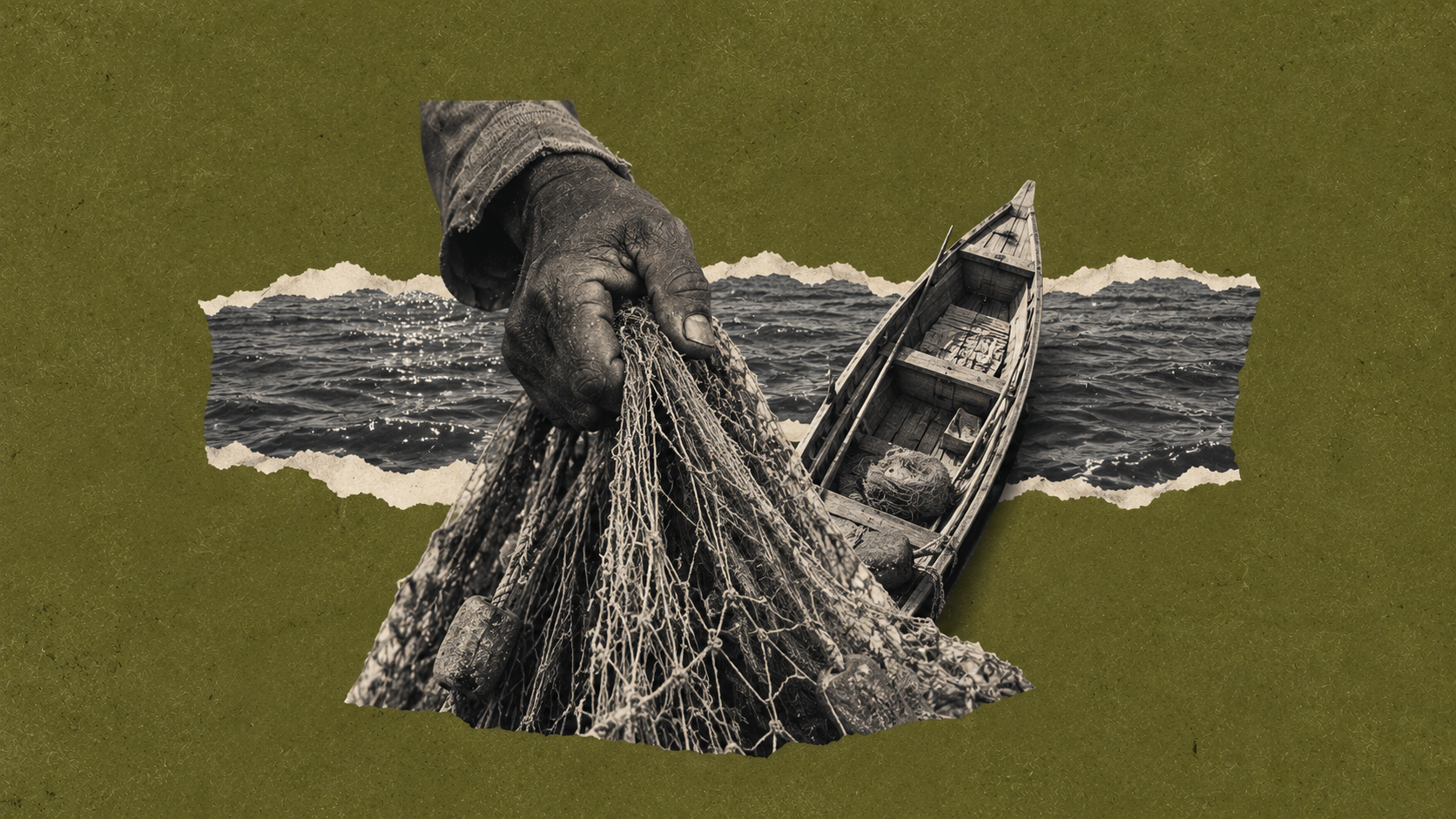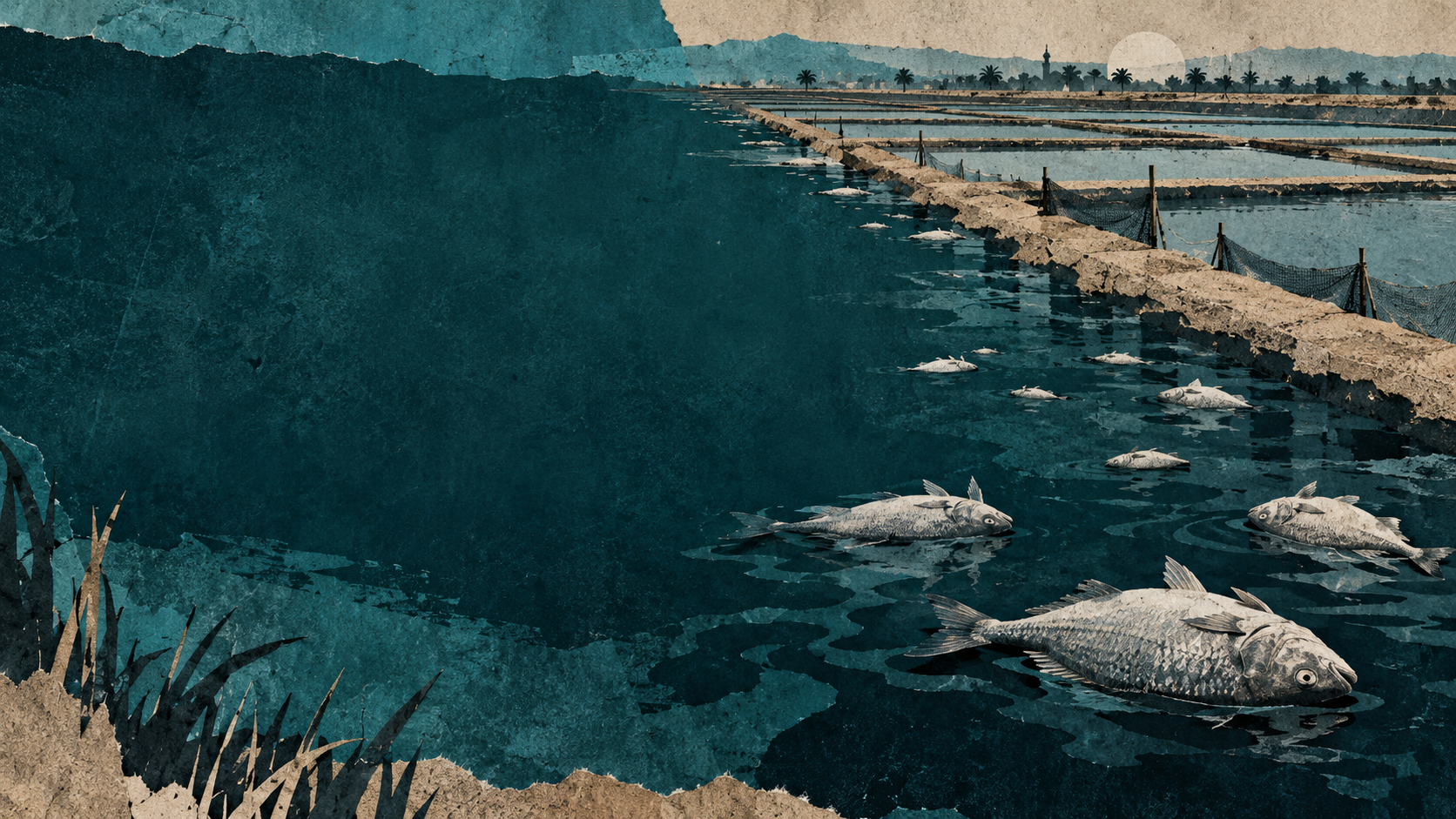


For about forty years, Mr. Aslan, a resident of Port Said, has been fishing in Lake Manzala, a craft he inherited from his father and began practicing at the age of nine. Together, they would ride the wooden boat and cast nets to catch shrimp, crabs, seabass, bass, and guftiyan (a type of mullet), which used to swarm into the lake in abundance. However, the situation changed after the lake became polluted by wastewater flowing from Bahr al-Baqr drain, which empties its waters into the lake, turning it a dark color and killing the fish coming from the Mediterranean’s inlets. Industrial wastewater from the “Siamar” chemical factory, located in the Kaboty area south of Port Said, also enters the lake with the tides, introducing toxic waters and leading to massive fish kills.
Aslan recalls that the abundance of fish allowed him to catch large quantities, keeping the bigger fish and returning the small ones to the water. But today, the large fish have nearly vanished, and he finds it difficult to catch even the small ones. He says that he used to return from fishing trips with 20 or 25 “waqqas” (a local unit equal to 1 kilogram and 250 grams), while now he barely catches five or six waqqas of small fish, each priced between 40 and 70 Egyptian pounds ($0.8 – $1.4). In some seasons, when the green tilapia is laden with roe, the price may rise to 100 or 120 Egyptian pounds ($2 – $2.4).
He says to Zawia3: “We suffer from encroachments on the lake, especially related to the Nile water lily, which we call locally ‘Bishnin’. Some people gather it and tie it with ropes near the shore because it attracts fish larvae. They let it grow under this plant cover and prevent others from fishing in those areas, claiming them as private property, depriving regular fishermen of fish. Moreover, trawlers use nets to catch very small tilapia fish, which are no bigger than a finger’s joint, to sell them as feed for trout in farms. The waterway police and the Fish Wealth Authority are supposed to intervene, but there is no oversight, and the Lake Protection Authority does not do its job as it should.”
He adds: “Lake Manzala extends across three governorates (Damietta, Dakahlia, and Port Said), but you won’t find a single policeman stopping the violators. Some seize 50 acres and use dredgers to collect mud from the lakebed and build embankments to turn them into private farms. In Al-Jamil district in Port Said, violators control most of the water surface using the water lily, and the beneficiaries are thugs and illegal fishermen.”
He points out that the Bahr al-Baqr drain’s water pushes the salty water back into the Mediterranean, preventing marine fish from entering again. Today, fishermen only find “shabar” (green and white tilapia) in small sizes. He demands a radical solution to the Bahr al-Baqr drain problem and, more importantly, effective protection for the lake to prevent violations, especially electrical fishing, which occurs in broad daylight.
Ahmed El-Feki, a resident of Al-Matariya in Dakahlia, has been fishing for over thirty years after he had to leave school, as many of the children in his area rely on fishing in Lake Manzala for their livelihoods. He recalls that after the lake was cleared, especially during 2019 and 2020, the lake saw an unprecedented improvement, with types of fish that had disappeared for years, such as shrimp, seabass, mullet, and crab, reappearing. He says that at the time, fishermen used a traditional method called “al-adamat,” and they could catch between 25 to 30 waqqas daily.
But this improvement didn’t last long, as violations and illegal fishing resumed with narrow nets used to catch larvae, and the spread of water lilies that blocked watercourses. Now, Ahmed only catches 10 to 12 waqqas a day, his livelihood has dwindled, and he can no longer find suitable fishing spots due to the expansion of leased fish farms and the imposition of tolls by those controlling the water lily traps.
He says to Zawia3: “After the violations were removed, the water surface became clean, and it should have been maintained, but unfortunately, violations returned again in the three governorates, especially in Dakahlia and Port Said. The phenomenon of ‘tahwitat’ spread, where powerful individuals build barriers of wood and nets to claim private fishing areas, plant them with water lily, and prevent independent fishermen from approaching them.”
He adds: “We, as free fishermen, were prevented from entering these areas, and if we complained to the waterway police, the other party was called, and both parties were forced to reconcile. So, complaining was ineffective. I contacted officials and sent them photos and videos documenting the violations, but the situation only worsened.”
Ahmed El-Feki holds the Lake Protection Authority, the Fish Wealth Development Authority, and the waterway police responsible for allowing the violators and influential figures to escape accountability, which has worsened the crisis. He points out that disputes over fishing areas have turned into violent conflicts, culminating in a murder between two families last year. Although the perpetrators were arrested and tried in military courts, violations continue. He calls on the President of the Republic to intervene and make a decisive decision to end these violations that threaten the future of the lake and its fishermen.
Lake Manzala is located in the northeastern part of the Nile Delta, covering an area of about 404.69 square kilometers, with an average depth of 1.15 meters. It extends across three governorates: Port Said, Dakahlia, and Damietta. It shares its eastern boundary with the Suez Canal, its western boundary with the Damietta Branch, and its northern boundary with the Mediterranean Sea. The lake includes both shallow and wide surface areas and is an important habitat for migratory birds. It contains various fish species, such as tilapia, mullet, bass, grass carp, shrimp, and crabs.
The fish production of Lake Manzala is estimated at about 50,000 tons annually, contributing to nearly 48% of the total fish production from Egypt’s natural lakes. However, it has been suffering for years from shrinking areas due to erosion, dredging, and soil drainage, as well as water pollution from the discharge of wastewater, sewage, and industrial and agricultural effluent. The growth of aquatic plants, such as water lilies and reeds, also obstructs water movement within the lake, negatively affecting its fish wealth.
In this context, on May 21, 2023, Egyptian President Abdel Fattah El-Sisi announced a plan to rehabilitate Lake Manzala to increase its fish production, stressing the importance of preserving the ecosystem of the lakes. He indicated the possibility of imposing a seasonal fishing ban on Bardawil, Manzala, and Nasser lakes to give the biological environment a chance to grow. He directed the waterway police and relevant authorities to adhere to the decisions to prevent fishing during the specified periods.


Overfishing Threatens the Lake
On his part, Mr. Zakaria Rajab, a member of the Advisory Committee for Fish Wealth regarding Egyptian fisheries and lakes, and a fisherman from Lake Manzala in Damietta, believes that the government has spent billions of Egyptian pounds on cleaning and developing the lake without consulting experts or senior fishermen, which has led to the continued spread of the Nile water lily in large parts of the lake. Additionally, the dredging process resulted in the destruction of dozens of traditional fishing practices and the removal of natural fish habitats and feeding grounds. Although the treatment of sewage and agricultural wastewater improved water quality, the lake now lacks the fish larvae and submerged aquatic plants that are the primary food for fish. He confirms that the current environment of the lake is suitable for many types of marine fish, but not for the tilapia that once inhabited it, calling for the opening of channels to allow the larvae to spread throughout the lake.
He says to Zawia3: “When they cleaned the lake and dredged parts of it, they did not consult with experienced senior fishermen or specialists from agricultural faculties, which led to the destruction of natural fish habitats. The lake contains several species of tilapia, including the green tilapia, known locally as ‘Zayli’ or ‘Orya’ tilapia, white shabar, Nile tilapia, which we call ‘Red Shabar,’ as well as ‘Ain Salem fish’ or ‘Jalili tilapia.’ However, the dredging harmed the breeding areas for these species, and the lake’s production has decreased by around 90% compared to the past. In May, a number of parliamentarians met with us to discuss the lake’s problems, and we explained to them the impact of increased salinity on fish reproduction, proposing the possibility of allowing a percentage of Nile water to flow into the lake.”
He adds: “The Nile water lily is densely spread in the southern part of the lake due to the freshwater there. We suggested solving the problem by allowing seawater to reach all parts of the lake. The Damietta–Port Said road separates the salty from the fresh water, and there are five points through which water passes via pipes. We called for these pipes to be converted into bridges, 10 meters wide and 3 meters deep, to allow the fish to pass through. Today, the lake is no longer suitable for tilapia, but it is suitable for other types of marine fish, such as the mullet family, shabar, seabass, and bass. To achieve this, we either need to open a direct path for these fish to enter from the sea, or establish hatcheries to release the larvae, which is an expensive option. It would be better to create a water passage, especially since we have the largest hatchery in southern Mediterranean Egypt, which could supply the lake with marine fish.”
Zakaria Rajab, a member of the Advisory Committee for Fish Wealth, points to the widespread illegal fishing in Lake Manzala and other fisheries across the country, with the rise of electrical fishing, which leads to the mass extermination of aquatic life, including fish eggs, due to electrical shock. He adds that some fishermen use quicklime or toxic pesticides, throwing them into the northern part of the lake where the current flows southward, and then place their nets in the south to catch the fish escaping from the toxins, while the polluted water kills everything left behind.
He explains that fishing for small-sized fish negatively impacts the lake’s production, as trawlers target fish larvae weighing between 2 and 5 grams, which are sold to feed factories, with each kilogram containing 200 to 300 fish. If these fish were left in the water for two weeks or a month, they would become suitable for human consumption. In contrast, fishermen cannot catch mature fish due to their scarcity, leading to low daily returns, amid noticeable shortcomings—according to Rajab—in the performance of the waterway police.
He says to Zawia3: “The Lake Protection Authority and the Fish Wealth Development Authority are not doing their real job; they have turned into an authority for collecting fees, and transferring the lake’s responsibility to the Future Egypt Projects Authority is just a change of names without any tangible impact on the ground.”
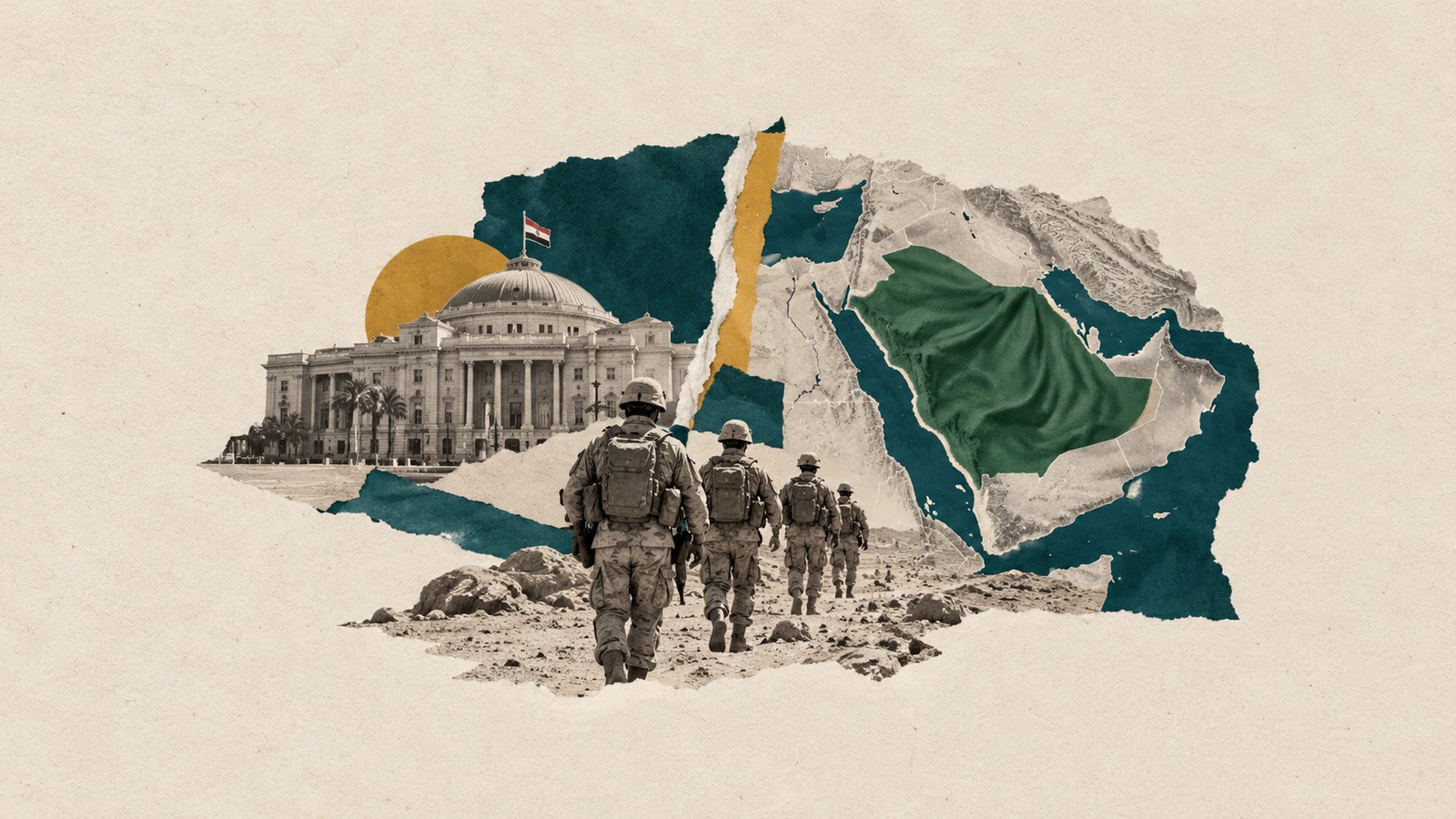
On the other hand, the Egyptian government had previously launched the national project to clean and develop Lake Manzala, under the supervision of the Engineering Authority of the Armed Forces, with the participation of the governorates of Damietta, Dakahlia, and Port Said. According to the government’s announcement, the project aims to transform the lake into a primary source of fish wealth in Egypt by removing encroachments and waste, developing the water surface, and creating radial channels to improve water flow. Additionally, the project includes the creation of model docks and the development of surrounding areas, including the Qazqat and the Western Basin, to be added to the fishing areas. The project also involves creating treatment plants for sewage water before it is discharged into the lake to be later used for agriculture.
The development and cleaning works were to be carried out in three phases, with a total cost of 960 million Egyptian pounds. The first phase includes removing reed and bulrush plants and dredging works, while the second phase focuses on uncovering the water surface, cleaning the Boughaz El-Burullus channel and lining its banks, along with digging radial channels. The third phase involves removing plant growth and dredging an area of 3,026 acres, opening five gates in the lake and dredging basins in front of the drains. The project also includes the construction of a water barrier on the northern side of the lake to separate it from neighboring villages, the development of the Western Basin and its inclusion in marine fishing activities, as well as removing all violations and encroachments.

Encroachments and Larvae Theft
Mohamed Suleiman, a blogger, environmental activist, and resident of Mansoura, holds the widespread encroachments and illegal fish farms responsible for the deterioration of Lake Manzala’s environment, especially in South Port Said and North Al-Matariya, which extend over more than 30,000 acres. He also points to encroachments south of the international road in Damietta, as well as violations in Ghita Al-Nasari, the Serou and Deba areas, considering that the road connecting Port Said to Dakahlia has contributed to the destruction of large areas of the lake and its associated ecosystem.
He says to Zawia3: “The failure of Salah Moselhi, the head of the Lake Protection Authority and Fish Wealth Development Authority, to remove encroachments and illegal farms violates the provisions of the Egyptian constitution, which prohibits altering the environmental and geographical nature of lakes. Moreover, the decision by the head of the authority in previous years to allocate 400 acres to Port Said and prohibit free fishing there has contributed to restricting the space available for fishermen. One of the most significant challenges the lake faces today is the theft of larvae and small fish by illegal networks connected to fish farms, which is depleting the lake’s fish stock.”
He explains that the Bahr al-Baqr drain remains a major source of pollution for the eastern and southern parts of the lake, since its establishment and to this day, adding that industrial pollution in the “Qar al-Bahr” area south of Port Said and untreated drainage from fish farms in the Deba area have all contributed to the lake’s environmental deterioration. He believes that ill-considered decisions by non-specialized bodies, such as allowing the discharge of sewage water from the Bahr al-Baqr drain, have led to severe pollution and the loss of high-quality fish species that were previously exported, such as the eel that was exported live to Japan before exportation ceased due to pollution.
Suleiman believes that there are entities hindering the development efforts, most notably the encroachers and fish feed factory owners, while independent fishermen, especially those from Lake Manzala, are suffering from clear neglect. He points out that most of the villages overlooking the lake do not have suitable docks and rely on dilapidated, primitive ones, asking: “How can the lake be developed without creating proper docks or harbors for fishermen?” He confirms that not a single dock has been built in the lake since Salah Moselhi assumed the head of the authority.
He adds: “Encroachments represent a direct threat to the geography of the lake and its ecosystem, which was once a natural habitat for migratory birds and various species of marine and Nile fish. These encroachments have led to a reduction in the space available for free fishing. Moreover, the Lake Protection Authority has a center for collecting larvae, which it later sells to fish farms. Due to the theft of larvae by violators, and their collection from the lakes to be stored in this center, the lake’s fish stock has decreased significantly.”
He points to the widespread use of illegal fishing methods within the lake, including electrical fishing, fishing with small nets measuring less than “Maj 19,” the “Dur” or “Tahwit” method, and larvae fishing. He calls for strict surveillance of these methods, the creation of modern docks for fishermen, and the establishment of fishing bans during breeding seasons and egg hatching periods.
Lake Manzala also faces other encroachments, including land reclamation and drainage works aimed at establishing illegal fish farms, in addition to the discharge of sewage, industrial, and agricultural wastewater. Some individuals are filling parts of the lake to dry it out and convert it into private projects, which reduces the water surface area and threatens the lake’s biodiversity.
Engineer Magdy Zaher, the executive director of Lake Manzala, revealed in media statements in November 2022 that 532,000 encroachments had been removed from Lake Manzala across its three sectors: Damietta, Dakahlia, and Port Said. This was part of President Abdel Fattah El-Sisi’s directives to enhance the efficiency of Lake Manzala, starting with cleaning and dredging operations in the first phase. In June 2023, a large security campaign was carried out in the water surface of Lake Manzala in Dakahlia governorate, resulting in the removal of various encroachments on 450 acres within the lake’s surface and handing them back to the management of Lake Manzala, affiliated with the Lake Protection Authority and Fish Wealth Development Authority. The campaign also seized 207 violating fishing boats using high speeds not allowed, and 45 machines and generators used in illegal fishing, totaling 405 illegal fishing cases, in addition to seizing 18,000 larvae units before they were disposed of.

Shrinking Area and Lake Production
Dr. Ashraf Shibl, Professor of Agricultural Economics at the Faculty of Fish Wealth at Suez University, believes that Egypt is not utilizing its natural resources optimally, especially its lakes, with Lake Manzala being one of the most important sources of fish production in the country. He emphasizes that maximizing the benefits from the lake requires regular cleaning, the removal of encroachments, and addressing the worsening pollution, in addition to halting improper fishing practices such as fishing during restricted periods and the lack of regulation in issuing licenses.
He explains that maintaining the biological stock essential for fish production requires activating laws related to fishing, controlling fishing equipment, and preventing overfishing. He points out that every fishery has a specific capacity, which must not be exceeded; for instance, if its capacity is 100 boats, issuing a license for an additional boat could cause the collapse of the marine environment. He also stresses the importance of balancing the type of boat used with the capacity of the receiving environment. For example, it is wrong to use a boat designed for the Red Sea waters in Lake Bardawil because it damages the ecosystem.
Dr. Shibl warns of the dangers of throwing fishing waste—such as old boats and scrap—into the lake’s waters, as this negatively affects its productivity and destroys the fishing tools used. He considers electrical fishing and pesticide use, in addition to industrial pollution, as major sources of pollution in Lake Manzala, alongside untreated sewage and agricultural wastewater discharge and encroachments on the water surface.
He says to Zawia3: “Lake Manzala used to produce large amounts of fish, but its production has sharply declined. Its area has decreased from 750,000 acres to about 125,000 acres due to land reclamation, drying, and illegal encroachments, turning large parts of it into private fish farms. Fish pens and random fish cages were established, and buildings were built on the internal islands, resulting in the loss of 83% of the production area, the destruction of habitats—which are the natural breeding areas for fish—and the reduction of biological breeding zones.”
He continues: “Every day, about 16 million cubic meters of polluted water are dumped into the lake, coming from the Bahr al-Baqr drain. This water contains human, industrial, and agricultural waste, which severely affects the lake’s ecosystem. The spread of water lilies and reeds consumes large amounts of oxygen, impedes fishing movement, and weakens fish production.”
Dr. Shibl confirms that these challenges have a profound economic and social impact on the fishermen. Around 40% of the fishermen have abandoned their profession, especially after 2011, due to insecurity and low returns. Despite the Ministry of Social Solidarity launching initiatives to support small fishermen, the support is difficult to obtain, and the promises of soft loans to develop boats have not been implemented. Additionally, the lake suffers from the lack of organized docks, inadequate maintenance workshops, and the absence of a free market that would allow fishermen to sell their produce freely and without obstacles.
He adds: “When we talk about cleaning, we mean cleaning the lake from all pollution sources, and adhering to regulations that limit the use of polluted water and its health impacts. The lake suffers from the accumulation of heavy metals and toxic materials resulting from drainage, in addition to the clogging of the inlets—which are the openings connecting the lake to the Mediterranean Sea—preventing water renewal and the entry of new fish species. As a result, the lake is now dominated by non-economic species that can tolerate pollution, while commercially desirable species have decreased.”
Lake Manzala is fed by several main water sources, including the old and new Boughaz Al-Jamil, Boughaz Al-Diba (locally known as Al-Safara), as well as Al-Ratma Canal and Al-Safara Canal. The lake receives a mix of water, some salty from the Damietta Branch and some fresh and drinkable. Sewage water is one of the most significant sources feeding the lake, with four main drains: Bahr al-Baqr drain, the primary source of sewage pollution; Al-Saru drain, an agricultural drain in Damietta; Haduos drain, separating Sharqiya and Dakahlia governorates; and Ramses drain, located in Dakahlia.
Dr. Ashraf Shibl points out that the lake’s management suffers from clear conflicts of responsibility, as the authorities’ jurisdictions overlap, including the Fish Wealth Development Authority, the Ministry of Water Resources and Irrigation, the Ministry of Environment, the waterway police, and the Engineering Authority of the Armed Forces. According to him, this overlap leads to a lack of coordination and prevents the lake from being exploited optimally, which contributes to the worsening pollution and encroachment problems, as each authority shirks its responsibility and blames others.

Earlier, the Ministry of State for Environmental Affairs implemented a biological treatment project for Lake Manzala, in collaboration with the Ministry of Irrigation, the Global Environment Facility, and the United Nations Development Programme, during the tenure of Engineer Magdy George as Minister of Environment. The project covered an area of 200 acres with a cost of $4.9 million and aimed to treat 25,000 cubic meters of water from Bahr al-Baqr drain daily before discharging it into the lake, using low-cost, eco-friendly technology.
The project phases included pumping the water into giant sedimentation ponds covering 70 acres to separate plankton and pollutants, then directing it to biological treatment ponds planted with native plants capable of removing 75% of the pollutants, before transferring it to fish farming ponds covering 60 acres, to produce fish suitable for human consumption.
At the time, the Ministry of Environment recommended several measures, most notably: maintaining the water surface of the lake by criminalizing land reclamation and drying works, and prohibiting the establishment of roads or economic and residential projects near the shores to limit the reduction of the water area. The ministry also recommended prohibiting and criminalizing the fishing of larvae in inlet areas, identifying priority areas—such as fish spawning and nursery areas or environmentally sensitive zones—and prohibiting any development around them. The ministry called for the formation of a joint committee that includes the Ministries of Water Resources and Irrigation, Housing, Agriculture, and Environment, along with the National Authority for Remote Sensing and Space Sciences, to develop a comprehensive plan for the rehabilitation of Lake Manzala.
Don’t miss: Egypt’s Environmental Laws Favor Industry Over Health
Parliamentary Movements
In early June, Member of Parliament Evelyn Matta, a member of the Industry Committee in the House of Representatives, submitted a request for briefing directed to the Minister of Agriculture and the Head of the Fish Wealth Authority regarding the lack of communication with the lessees of fish farms in Lake Manzala, despite their complaints about the rising salinity and the darkening of the water, which negatively affects fish growth and causes a decline in their numbers. The MP called for the request to be referred to the Agriculture Committee to discuss ways to clean the water inlets and monitor salinity, allowing lessees to raise fish and develop national food production in the lake.
She says to Zawia3: “I received complaints from fishermen and fish farm owners in Damietta regarding the deterioration of conditions in Lake Manzala. I submitted a request for briefing, but it was not discussed due to the absence of representatives from the concerned authorities. When it was re-listed two weeks ago, it was postponed again because the committee did not convene.” She adds: “My goal was to understand the developmental role of the authority; its job should not be limited to collecting rents and prosecuting lessees, even when they pay in advance. Many lessees have developed their land themselves, using dredgers and providing feed, without any significant support from the authority.”
Matta clarifies that the authority demands rent payments before lessees can harvest their production, despite weak yields due to high salinity, which impedes the growth of tilapia. When the issue was discussed, the response was that the water level was high on one side, and the Nile channel was closed on the other, which are technical matters requiring a specialist representative to respond. The MP criticizes the lack of a developmental vision among some technical staff and the failure to learn from other countries’ experiences in fish farming development.
She points out that dredging in the lake raised the water level in some areas to four meters, which damaged breeding areas and larvae zones. Furthermore, the bridges built over the openings that connect the sea to the lake, which contain twelve columns on each side, obstruct the flow of water and larvae, especially during the day, when the waterbed becomes opaque due to sand accumulation. The MP denies direct pollution from Bahr al-Baqr drain, noting that the connected sewage treatment plant is one of the largest in the Middle East and treats the water before it enters the lake.
Despite the official announcement of government efforts to clean and develop Lake Manzala and the allocated budgets for this purpose, testimonies from fishermen and fish farm owners reveal a different reality, characterized by declining fish stocks, the expansion of illegal fishing, and worsening pollution from untreated discharges, amidst the proliferation of encroachments and illegal farms, and weak institutional coordination.
Fishermen unanimously agree that the disregard for their voices in development plans, and the absence of oversight on violations, has contributed to the destruction of natural habitats that once provided livelihoods for thousands of families. The testimonies provided in this investigation reveal that saving Lake Manzala is no longer possible without clear political will and a collaborative environmental plan involving both the state and the local community, while taking into account the cumulative knowledge of the fishermen and the expertise of specialists.