
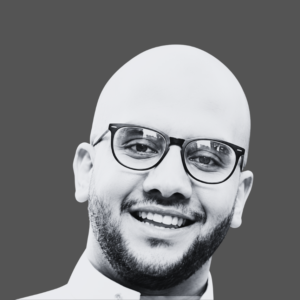
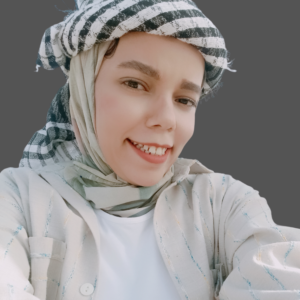
Journalist Mohamed Ashraf Abu Omeira appeared before the Supreme State Security Prosecution at ten o’clock on the evening of Saturday 3 October, six days after his disappearance, in the first appearance of any of the six journalists of the “Matsda2sh” platform before an investigating authority, and the prosecution decided to detain him for 15 days pending investigations, while his five colleagues are still missing.
Islam Salama, the lawyer for the platform’s journalists at the Egyptian Initiative for Personal Rights, tells Zawia3, speaking on Sunday morning, that he was able to attend the investigation on the basis of the request he had submitted to the prosecution to attend the investigations with the “Matsda2sh” team, and that the prosecution questioned Abu Omeira alone and charged him with three offences: joining a terrorist group, publishing and broadcasting false news and data, and using an account on a social media website, in case No. 8083 of 2026 Supreme State Security. The investigation lasted about ten continuous hours, from Saturday evening until Sunday morning, and ended with the detention decision. The Egyptian Initiative said in its statement that the prosecution detained Abu Omeira five days after his disappearance, that its questions revolved around a number of pieces of coverage published on the platform, the mechanism for choosing its topics and the purpose of publishing them, and that the defence team requested that he be taken to hospital because he suffers from chronic illnesses, so the prosecution allowed him to obtain his medication, according to what Hossam Bahgat told Mada Masr. Salama adds that the defence team is following up on the dates of the investigations with the remaining five journalists, Abdullah Qadri, Islam Barakat, Omar Helal, Mohamed Mahmoud and Mohamed Adel, in order to attend them as soon as they are set. Yet following up does not mean that anyone has informed the defence of a date or a place: as of Sunday noon, no investigation date had been set for the five, neither their families nor their lawyers knew where they were being held, and no body had acknowledged holding them, so five of the six remained effectively forcibly disappeared, even though their colleague’s appearance makes it likely that they will be brought before the same prosecution one after another.
This development comes three days after a news item published by the “Al-Masry Al-Youm” website, dated the night of Thursday 1 October, which said that the Supreme State Security Prosecution had decided to detain “6 defendants among those running the Matsda2sh page” for 15 days pending investigations and that it was continuing to question them, and added that National Security investigations stated that one of the defendants had been arrested three times before. The news item contained no case number and no list of charges, and Hossam Bahgat, director of the Egyptian Initiative, denied its accuracy after contacting the head of the Supreme State Security Prosecution directly, saying that the colleagues had not appeared before the prosecution at all as of that date. Then on Saturday, Eman Ouf, a member of the Journalists Syndicate council and rapporteur of the Freedoms Committee, said that the prosecution had denied to the Syndicate delegation that it had conducted any investigation with the six. Thus what was published on Thursday about six journalists became, three days later, a decision concerning a single journalist, on charges with which no one had been charged on the day it was published, while the other five remain outside any declared decision.
Effectively Forcibly Disappeared
Salama had told Zawia3, hours before Abu Omeira’s appearance, that there has been no declared legal track concerning the six colleagues since the moment of their arrest, and that they are “effectively forcibly disappeared” amid a complete blackout of information about their places of detention; he described what “Al-Masry Al-Youm” published as “completely untrue”, explaining: “The colleagues have not been brought before the prosecution so far, they have not undergone any investigations, and there is no case registered under a number or an official report of which we have been notified.” He says that he submitted an official request to the Public Prosecutor and the head of the Supreme State Security Prosecution, relying on the Ministry of Interior’s own statement, which acknowledged the arrest of the journalists, for an investigation into their detention beyond the legal periods set for arrest without referring them to the investigating authorities, and he stresses that “even on the assumption that they were arrested under the Anti-Terrorism Law, the law obliges the authorities to notify families and lawyers of the places of detention and to enable the defence to file formal grievances against the arrest decisions”, and that the defence team has not received any official response to its requests, while the prosecution informed it verbally that it would enable the lawyers to attend the investigation as soon as the journalists appeared, which is what happened on Saturday night with Abu Omeira alone.
On Saturday morning, four days after the disappearance, the Egyptian Initiative’s lawyers submitted a report requesting an investigation into the arrests of the six journalists, after the security forces refused to show their families the judicial warrant issued for their arrest and production, and the families of the six had sent 17 telegraph reports to the Public Prosecutor, the First Attorney General for the Supreme State Security Prosecutions and the Minister of Interior without any response, so the eighteenth report became the one that preceded the first appearance.
Sit-in
Abu Omeira’s appearance came on the same night that the Journalists Syndicate witnessed an open sit-in with the participation of dozens of journalists, in protest against the arrest of their colleagues and the failure to disclose their places of detention or bring them before the investigating authorities. Amid a heavy security presence around the Syndicate building, in plain clothes and uniform, with police cars and Interior Ministry microbuses, the journalists held a symbolic sit-in to which the “Matsda2sh” page on Facebook had called on Thursday, the day before yesterday, following the arrest of the six journalists who make up the entire team of the platform specialising in verifying Egyptian and Arab content.
The Syndicate council called an emergency meeting for next Monday to discuss the repercussions of the arrest of the six and to consider the measures and actions needed to deal with the crisis, in the presence of the head of the Journalists Syndicate, Khaled El-Balshy, and eight council members, during the sit-in, which lasted more than two hours.
El-Balshy tells Zawia3 that the Syndicate is negotiating with “the relevant bodies” over the “Matsda2sh” journalists, declining to disclose details of the ongoing moves and pointing out that the information and moves he has are limited to what is taking place within the framework of legal memoranda and negotiation, without revealing the nature of these negotiations. He adds that the places of detention of the six are still unknown despite the Ministry of Interior announcing their arrest on Thursday, and that the Syndicate’s lawyer contacted the Public Prosecution and examined its data records, and it did not emerge that any of them had been brought before it by then, which changed after midnight with Abu Omeira’s appearance.
On Saturday morning, the Syndicate had submitted two requests to the Public Prosecutor and the Supreme State Security Prosecution to clarify the truth of what the “Al-Masry Al-Youm” website published about the issuance of a decision to detain the six for 15 days without notifying it, noting the need to notify it of the date of the investigations in implementation of the guarantees set out in the Syndicate law, and to disclose the place of detention. The two requests recounted that a delegation including the two council members Mahmoud Kamel and Eman Ouf and four lawyers from the legal department went to the prosecution’s headquarters in the Fifth Settlement on Thursday morning after the Interior Ministry’s statement, submitted official requests to attend the investigations, and stayed there all day without anyone informing it that an investigation was being conducted, a report drawn up, a case number assigned or a list of charges issued.
El-Balshy explains that the legal memorandum is based on the principle that a journalist is responsible for the material he publishes, not for the entity or platform through which he works, in addition to the guarantees established by the Syndicate law to regulate the handling of journalists. He points out that the Syndicate insists on extending the scope of Syndicate protection to include journalists not registered on its roll, that it has previously intervened in similar cases to defend non-member journalists, and that Article 35 of the Syndicate law contains provisions relating to enabling training and publication before registration. The Journalists Syndicate establishment law, No. 76 of 1970, stipulates that the Syndicate council or the branch syndicate council must be notified of any complaint against any journalist relating to his journalistic work a suitable time before an investigation with him begins, and that the head of the Syndicate or the head of the branch syndicate has the right to attend the investigation in person or through a delegate.
Eman Ouf tells Zawia3 that the Syndicate began its moves to negotiate with the relevant bodies for the release of the journalists from the first moment it was informed of the incident through the colleagues’ families, and that the head of the Syndicate contacted the various relevant bodies as soon as he learned of the matter in order to work towards ending the crisis. She adds that all options are still open for discussion before the Syndicate council and the general assembly, in both the negotiation tracks and the possible escalation steps, that no one will take a unilateral decision, and that the Syndicate, its council and the general assembly are in permanent session to follow developments. She explains that the Syndicate submitted two reports on Saturday morning, one to the Public Prosecutor and the other to the human rights office at the Ministry of Interior, alongside continued contact with the relevant bodies, and that the legal unit is following the course of the expected investigation and is ready to attend it as soon as it is notified. On escalation, she says that the Syndicate is waiting to see what developments bring, that the nature of escalation steps cannot be determined before the legal position of the journalists becomes clear, and that it will reassess its options if they are brought before the prosecution and detention decisions are issued against them, which began to materialise hours later with the first detention decision.
Demands to Hold the Inciters to Account and Escalate Action
The meeting saw demands from journalists to discuss what they described as the campaigns of incitement and abuse to which the members of the “Matsda2sh” team have been subjected since their arrest, whether through posts on social media websites or press material, and some of them asked about the Syndicate’s role in taking disciplinary action against members who violate the journalistic code of honour by publishing false news, such as the “Al-Masry Al-Youm” news item.
One journalist asked about the absence of a number of Syndicate council members from the meeting, considering that the case goes beyond the six journalists and affects press freedom and the journalistic community as a whole. El-Balshy replied that some members have their own circumstances, that the Syndicate had not sent official invitations to members, but rather “participation is open”, as he put it, and that attendance is part of the union space.
Some of the women journalists taking part demanded that escalation steps be set to press for the disclosure of the colleagues’ fate and their release, especially as four days had passed since their arrest without their places of detention being known, and they put forward proposals to organise a protest stand or a sit-in inside the Syndicate’s headquarters. The discussion ended with agreement to organise a sit-in inside the Syndicate until the council’s emergency meeting on Monday, leaving the organisation of attendance times and its duration to the participants. Those present agreed unanimously that the general assembly reserves its right to take whatever decisions it sees fit if the council’s decisions do not meet its demands, including organising protest stands on the Syndicate’s steps, with Syndicate action continuing until the legal position of the six becomes clear and their places of detention are disclosed.
The protesters raised placards reading “Matsda2sh, Samsung journalism”, “Down with the journalism of instructions”, “Long live the journalists’ struggle”, “Journalism is not a crime”, “Matsda2sh” and “Freedom for journalists”, and inside the Syndicate they chanted slogans demanding the immediate release of the missing journalists, among them “Bring the six out of the cells… freedom for every prisoner”.
A chant at a journalists’ gathering at the Syndicate in solidarity with Matsda2sh.
Not a day had passed after the sit-in before the first message reached those who took part in it. On Sunday morning, journalist Rasha Azab wrote that an official summons had arrived at her family’s home yesterday to appear before the Supreme State Security Prosecution tomorrow, Monday 5 October, for questioning in case No. 8025 of 2026, a case with a different number from Abu Omeira’s case, and she commented: “The message is clear, and my response is clear”, then repeated the chants raised in the lobby hours earlier: Long live the journalists’ struggle, down with the journalism of security instructions, freedom for the detainees. Azab was among the participants in Saturday’s sit-in, and she tells Zawia3 that “Matsda2sh” is real journalism whose aim is the citizen, not security instructions, that the Journalists Syndicate is facing a broad onslaught, and that what is happening is the arrest of an entire platform’s newsroom, something unprecedented even under the worst dictatorships of the Egyptian state from the sixties until now.
The security cordon remained outside throughout the sit-in, as the police closed the roads leading to the Syndicate’s headquarters on Abdel Khaleq Tharwat Street, set up checkpoints to search passers-by and demanded that some of them show their identity cards, and Syndicate officials asked those arriving not to go out into the street or stand on the steps where they used to stand, and to limit themselves to gathering in the main lobby to avoid any friction with the forces deployed around the building.
During the meeting, those present asked about the conduct of the Minister of State for Media, Diaa Rashwan, regarding the fate of the six journalists, and neither the head of the Syndicate nor any council member commented. On 20 August, Rashwan had addressed a “venting” message to journalists and media professionals in which he put forward visions and proposals for advancing journalism to build awareness and express society’s issues, and called for opening the field to an objective media dialogue that includes opinion and counter-opinion, and for a meeting on 3 December 2026 to discuss challenges and opportunities and come out with practical recommendations for developing the media.
The Journalists Syndicate Examines the Crisis of Union Protection
After discussing the sit-in plan, the Syndicate held another session, scheduled days before the campaign, to discuss proposals to extend the umbrella of Syndicate protection to online journalism and to include those working in the profession in Syndicate membership. El-Balshy said that the Syndicate provides protection to non-member journalists, but he raised questions about how to secure funding that guarantees they receive the necessary protection and support while they work.
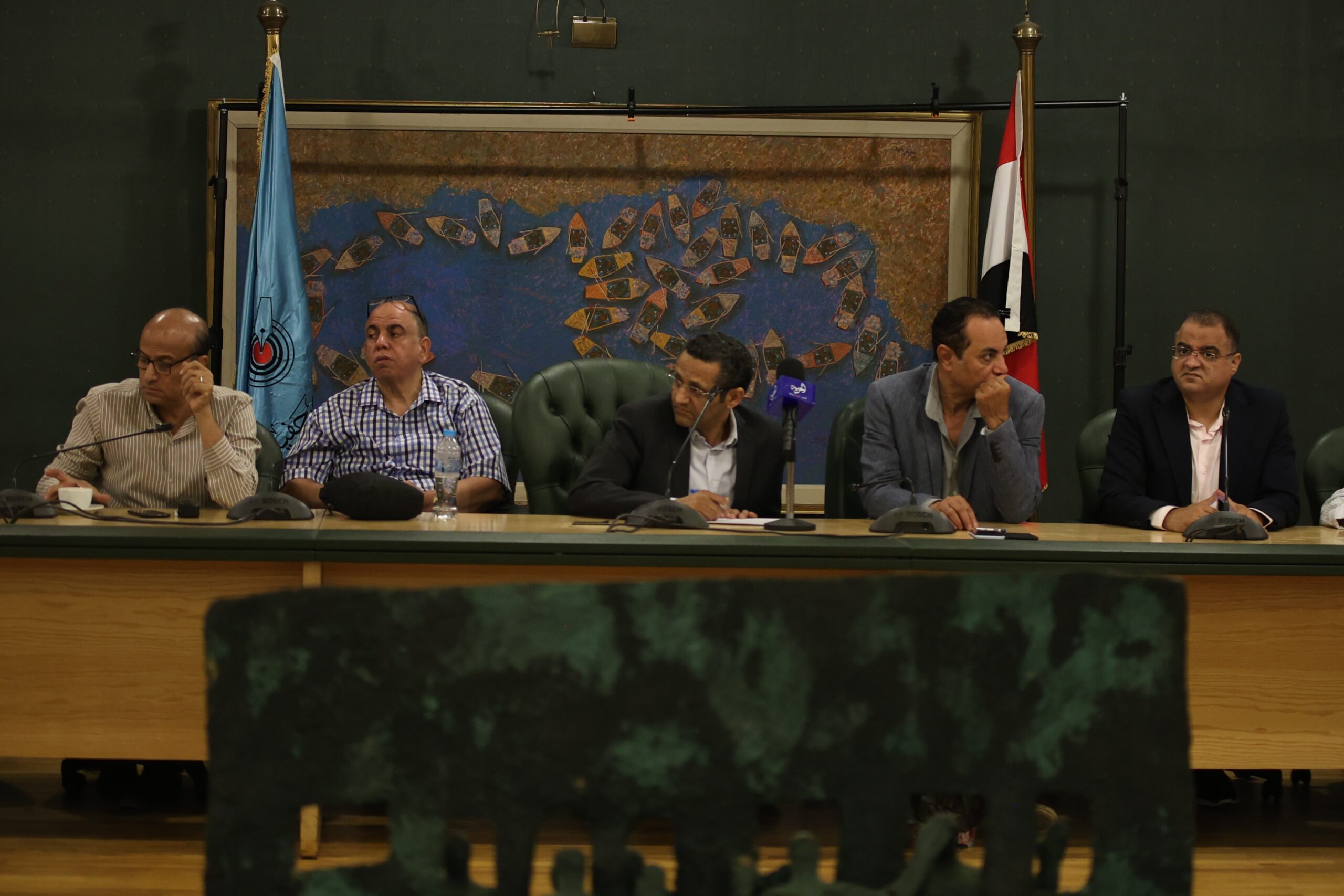
In an intervention by a participating journalist, he pointed to the context of the current scene and the insecurity journalists are going through, considering that the Syndicate faces a test of its independence and its ability to deal with the crisis, and that the discussion is not so much about the mechanisms for absorbing journalists and their joining the Syndicate as about the absence of interpretations for regularising their status. Journalist Gamal Fahmy proposed incorporating the draft amendment of the registration regulations into the core of the issue of online journalists, so as to address the situation of those whom the current registration rules prevent from joining. Another journalist said that it is necessary to form a committee including members of the Syndicate council and a number of unionised journalists to study the current law and its executive regulations and examine what can be amended or developed, so as to prevent the same problems from recurring and help the council draw up a vision to be presented to the general assembly.
This session puts its finger on the gap through which the campaign passed: of the six journalists, only one is registered with the Syndicate, and five are trainees or unregistered, which is what the Ministry of Interior’s statement itself used when it said that “one of them is registered with the Journalists Syndicate and the rest are unregistered”, as if registration is what makes journalism journalism, whereas the Syndicate, under Articles 5 and 53 of its law, defends every actual practitioner of the profession, whether registered or a trainee; Zawia3 had raised the question one day before the raids in an article about the description written in police reports against an entire generation making Egyptian journalism from outside the Syndicate’s registers.
Six Days: From the Raid to the Statement
Events began late on the evening of Monday 28 September, when security forces stormed the homes of Abu Omeira and Qadri, confiscated their electronic devices and took them to an unknown destination; the circle then widened during the dawn and daytime of Tuesday 29 September to include simultaneous raids in three governorates: Barakat in Gharbia, Helal in Port Said, and Mahmoud and Adel on a street in Cairo. By Tuesday evening, the platform’s entire team inside Egypt was in detention, deprived of contact with their families or lawyers, amid confiscations that extended to computers and phones, including belongings of members of their families, according to the documentation of the Egyptian Initiative, which said that the families went back and forth to official places of detention during the following two days without any official acknowledgement that their sons were there, which led human rights organisations to place the first hours of the arrest under the description of enforced disappearance.
On Wednesday 30 September, El-Balshy and the Syndicate council demanded, in a report to the Public Prosecutor and a complaint to the Minister of Interior, the immediate disclosure of the places of detention, enabling the six to have legal representation, and their release on the Syndicate’s guarantee with its undertaking that they would appear before any investigation, noting that at least one of them is registered on its roll and that the arrest violated Article 54 of the Constitution. As soon as the ministry’s statement was issued on the morning of Thursday 1 October, a dispute erupted over the procedures: the ministry said that it had notified the head of the Syndicate “at the time” of the arrest of the registered journalist, while Syndicate sources told the “Al-Manassa” website that the Syndicate had not received any prior or simultaneous notification, but had learned of the incident from the distress reports coming from the families and the Initiative’s lawyers.
The ministry’s statement described the platform as a page that is “unlicensed and run from abroad”, broadcasting false news and distorting facts, and as being “among the media committees of the terrorist Muslim Brotherhood group and run by the Brotherhood member who is a fugitive abroad” Abdel Rahman Shoukry Mansour, assisted by elements inside the country who prepare the material in exchange for funding from abroad, and it said that “it had been possible to legalise the procedures” and arrest six members of this committee. The statement presented no accounting documents or evidence for the funding charge, did not detail the facts attributed to each journalist, and did not mention the place of detention or the investigating body.
On the same day, the platform responded with a five-point statement titled “We are not Brotherhood, by the testimony of the security agencies”, in which it said that it is independent of any political organisation at home or abroad; that its eight-year record includes hundreds of corrections of statements and news promoted by bodies and figures aligned with the Brotherhood and by opponents abroad; that all members of its team are Egyptians residing inside Egypt; that Mansour left the country legally years ago, is not wanted in any case, and obtained from the Ministry of Interior itself a criminal record certificate free of any rulings; that three of the six had, about three years ago, undergone an examination that ended with the platform being informed that no link between them and a political group or funding had been established; and that its staff receive their salaries under journalism contracts and legal banking transactions through the Egyptian banking system. The last thing the platform published, the day before the raid, was a correction of false information about Presidential Decree No. 395 of 2026 delegating some of the powers of the President of the Republic to the Minister of Defence, and among its most recent posts, according to Al Jazeera, were a fact-check of the Foreign Minister’s statements on the numbers of refugees in Egypt and a piece on nepotism in the round of appointments to the Public Prosecution.
Tracing the platform’s course reveals that the pretext of “working without a licence” was preceded by an attempt at licensing that found no one to respond to it: following the targeting of 2023, “Matsda2sh” sought to regularise its status officially and establish a declared headquarters bringing its editors together inside Egypt, like other press institutions, and the offer was met with complete disregard by the security agencies, according to what an informed press source told the “Mada Masr” website. A Syndicate source familiar with the behind-the-scenes negotiations told the same website that the offers of regularisation, and more flexible proposals, had been put back on the table of the mediation efforts under way since the arrests, without any response, and that the negotiations revealed the agencies brandishing the charge of “belonging to the Brotherhood” as a pressure card to break the mediation track, a threat that was immediately translated into the Interior Ministry’s statement. El-Balshy responded to this same argument, according to what he told Mada Masr, when he was told that the platform is a page that did not request a licence: “But what I told you was: don’t deal with him, not arrest him.”
The Arms of Defamation
The targeting of the platform did not stop at security measures; it was accompanied by the mobilisation of the media arms regarded as aligned with the authorities. Mohamed El-Baz, editor-in-chief of the “Al-Dostour” newspaper, owned by the United Media Services company, wrote a post in which he described the platform as a “Brotherhood cell” and said that what it produces is not fact-checking but sceptical content that contributes to manufacturing rumours to undermine the stability of the state. The campaign deepened on television on Friday evening on the programme “Al-Hekaya” on “MBC Masr”, when Amr Adib hosted the writer Abdel Rahim Ali, who displayed audio recordings of unknown source and stripped of context, which he said were of Mansour and proved his link to the group, and he said that he holds about five hundred of his calls. When Adib asked about the point of raising the file as a security matter after eight years of the platform’s public work, Ali continued his discourse, describing data verification as harm to the country, and failing to confront the platform as high treason, and he said: “When the country collapses… the ones who will be held to account are the security bodies.” The picture was completed by the official Middle East News Agency and the “Al-Ahram” portal publishing personal photos of Mansour, invoking his family background and saying that his father was arrested in 2008; the haste of the state-owned portal then went so far that it wrote in another piece that the agencies had arrested six of those running the page “including Abdel Rahman Mansour, registered with the Journalists Syndicate”, thus making the man whom the Interior Ministry’s statement describes as a fugitive abroad one of those arrested inside the country.
Journalists at Saturday’s sit-in demanded that the Syndicate hold to account its members who took part in this campaign, and that it refer the “Al-Masry Al-Youm” news item to the investigation committee for violating the code of honour; this is the news item about whose source and date Zawia3 tried to ask the website’s managing editor, who did not respond, and which the website has not deleted despite the denials by the defence, the Syndicate and the prosecution.
From Congress to the European Parliament
Within days, the case went beyond its local borders. From Washington, Representatives Don Beyer and Suzan DelBene, co-chairs of the Egypt Human Rights Caucus in Congress, called for the immediate and unconditional release of the “Matsda2sh” journalists and for an end to the escalating campaign of repression against what remains of the independent media, a position that won the support of members of the Senate. In Brussels, members of the European Parliament expressed their deep concern over the pace of the arrests and the conditions of incommunicado detention, warning against depriving the detainees of their right to unconditional contact with their families and legal representatives, and calling on the Egyptian judiciary to comply with legal standards and to inform the defence and the families of the course of the case transparently and immediately.
This parliamentary movement converged with a broad civil solidarity front, as more than fifty Egyptian, regional and international human rights and press organisations signed, on 30 September, a joint appeal that considered the targeting of “Matsda2sh” a new chapter in the liquidation of the public sphere, and demanded an end to all forms of prosecution against its staff and the release of all journalists detained in connection with their work in Egypt; the number of signatories to the statement later rose to more than eighty, among them Egyptian organisations that signed from inside the country: the Egyptian Initiative for Personal Rights, the Association for Freedom of Thought and Expression, the Egyptian Front for Human Rights, the Egyptian Human Rights Forum, the El Nadeem Center and the Egyptian Commission for Rights and Freedoms. This came at the same time as successive condemnations: Human Rights Watch demanded the release of the six and described their incommunicado detention as possibly amounting to enforced disappearance; Amnesty International said that the journalists had been subjected to enforced disappearance and that what happened is a harsh blow to freedom of expression; the Committee to Protect Journalists called for their immediate release and the dropping of any charge arising solely from their work; and demands came from Reporters Without Borders, which described the incident as the first in Egypt to put an entire newsroom behind bars, and from the International Federation of Journalists, for the disclosure of the places of detention and immediate release. In the Arab circle, the Union of Journalists in Lebanon, the National Syndicate of Tunisian Journalists, the Syrian Journalists Association, the Palestinian Journalists Syndicate and the Sudanese Journalists Union signed a statement announcing their solidarity with the Egyptian Syndicate and its actions, and saying that targeting journalists affects not only those working in the sector but extends to society’s right to know.
At home, the Interior Ministry’s statement was preceded by hours by a statement signed by dozens of journalists demanding the release of the six colleagues, guarantees for their safety and disclosure of their whereabouts; some of them described the terrorism accusation as “the canned charge” pinned on everyone who works in independent journalism away from security interference, and Syndicate council member Mahmoud Kamel told Agence France-Presse that the only crime the detainees committed is doing their work of researching, analysing and uncovering facts. The Constitution Party issued a statement saying that press freedom is not a privilege granted by the authorities but an inherent constitutional right and a guarantee of society’s right to knowledge and accountability, and the Civil Democratic Movement expressed in a statement its grave concern at an unprecedented escalation that led to the detention of the entire editorial team, and announced its solidarity with the Syndicate’s position, its head’s report and the platform’s statement.
The Committee to Protect Journalists said that Egypt is holding 25 journalists, placing it among the countries with high numbers of detained journalists in the Middle East, and that it ranks second in allegations of torture and beating of journalists in prisons since 1992, after Iran and Israel, while the Egyptian Initiative estimated the number of journalists detained in connection with their work in Egypt at twenty-six after this campaign.
Deliberate Targeting, Not a Reaction
Human rights lawyer Halim Heneish tells Zawia3 that the security onslaught on the six “Matsda2sh” journalists was not a circumstantial reaction or the product of the authorities’ irritation at a particular investigative piece, but a deliberate and planned targeting aimed at “disabling the entire work machine, paralysing the production cycle and liquidating the newsroom completely, not merely the individual pursuit of a journalist who covered a particular file”. He believes that his reading of the background to the raids indicates that they are “an immediate security translation and a direct response to the content of the latest speech by the President of the Republic, Abdel Fattah El-Sisi, in which he focused on what he described as fighting rumours and casting doubt on the state’s achievements”, and that the recent measures are “an explicit declaration of war on fact-checking journalism in general in Egypt”.
Heneish adds: “The security agencies, the identity of which one of them carried out the actual arrests and took the detention decision still shrouded in secrecy, sought to manufacture a deterrent model for the entire media field; they arrested the platform’s entire staff inside Egypt within only about 48 hours, and kept them disappeared without disclosing their places of detention or bringing them before the investigating authorities, even after the Ministry of Interior’s statement was issued.” On the list of charges and the parallel campaign, he says that the ministry’s resort to the weapon of “the accusation of belonging to the Muslim Brotherhood” and the waging of a smear campaign against Mansour “reflects a repeated propaganda bankruptcy that no longer fools anyone”, and he continues: “Everyone, near and far, knows for certain that Abdel Rahman Mansour and the platform’s journalists are as far as can be from the Muslim Brotherhood. This charge has become the only, worn-out weapon that the authorities brandish to strip any independent or fact-checking journalistic work of its legitimacy and to demonise it before public opinion.”
Heneish points out that the gravity of what happened lies in the fact that it “does not target a single platform so that the case ends there, but targets the fact-checking journalism community and those working in it in Egypt as a whole, in an effort to prevent any independent examination of official data and narratives”, and he sees in the pressure campaign of recent days an utmost necessity “to send an unambiguous message to the regime and its agencies that this journalistic and human rights community has real backing and will not be left alone, and that such violations carry clear political and human rights costs and consequences”. He praises the union mobilisation in support of the colleagues, saying that he “has not witnessed solidarity of this momentum and coordination among journalists for at least four years”, and urges that this course continue and escalate as “the lever that may ease the ordeal of the detained journalists, and the bulwark and protective shield for the remaining fact-checkers and independent journalists who are still doing their work outside prison under the threat of targeting and arrest”.
From the Zambia Plane to the Entire Newsroom
“Matsda2sh” was founded in April 2018 as a platform for fact-checking and countering disinformation using open-source techniques; the late investigative journalist Mohamed Abu El-Gheit contributed to laying its first foundations alongside Abdel Rahman Mansour, one of the administrators of the “We Are All Khaled Said” page during the 25 January 2011 revolution. Its Facebook page is followed by more than a million people, while its website is blocked inside Egypt.
This was not the first confrontation with the authorities: on 19 August 2023, the security agencies raided the home of our colleague Karim Asaad in El Shorouk City and detained him for forty-eight hours, after forcing him to delete investigations by the platform that had revealed details of the smuggling network and the figures involved in the case of the private “Zambia plane”, which took off from Cairo Airport and was seized in Lusaka loaded with money, gold bars and security equipment, and he was released following pressure from the Syndicate and civil society organisations. After that incident, as mentioned above, the platform offered to regularise its status and found no one to answer.
The shift from trying to silence a particular piece of coverage, as happened with Asaad, to dismantling the entire newsroom and detaining its whole staff indicates, according to human rights and press assessments, that the security agencies have moved to the stage of a complete ban on the concept of “fact-checking” and the imposition of a comprehensive monopoly of the official narrative by criminalising information and treating independent professional verification as a threat to national security. The first official document in the case, which was born on Saturday night under Abu Omeira’s name and the number 8083, confirms this direction with its second charge: “publishing and broadcasting false news and data”, directed at a journalist whose daily job was checking false news. As for the remaining five, they are still where they have been for six days: in a place unknown to their lawyers, their Syndicate and their families, with no investigation date set for them and no body acknowledging holding them, and all that has changed in their situation is that their colleague has emerged from the same darkness into a case with a number, so the unknown they await now has a known shape: three charges and fifteen days of detention. The defence team is following their dates hour by hour, while the Syndicate council, at its emergency meeting the day after tomorrow, will consider whether the protest stays in the lobby or goes out onto the steps.