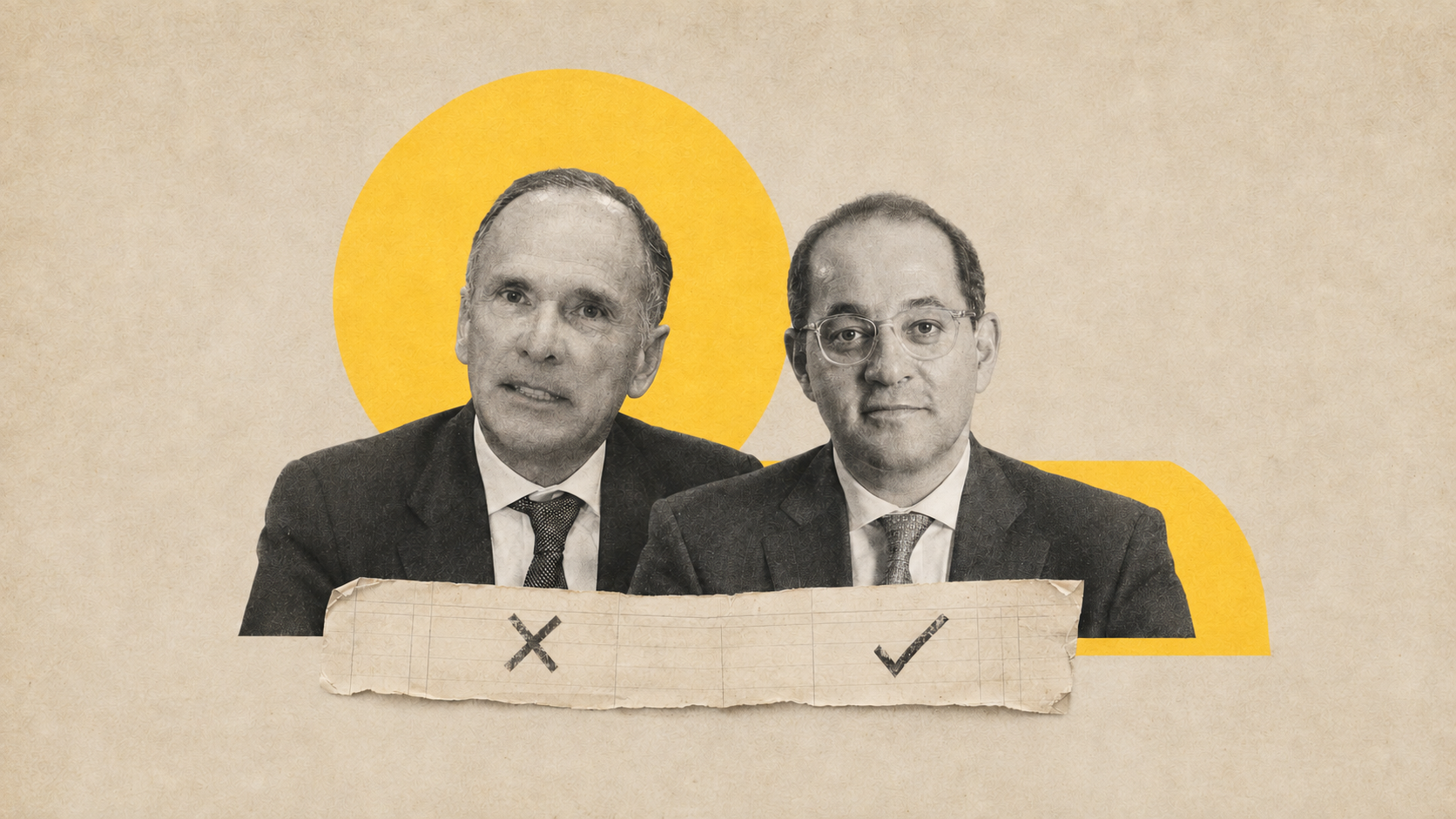
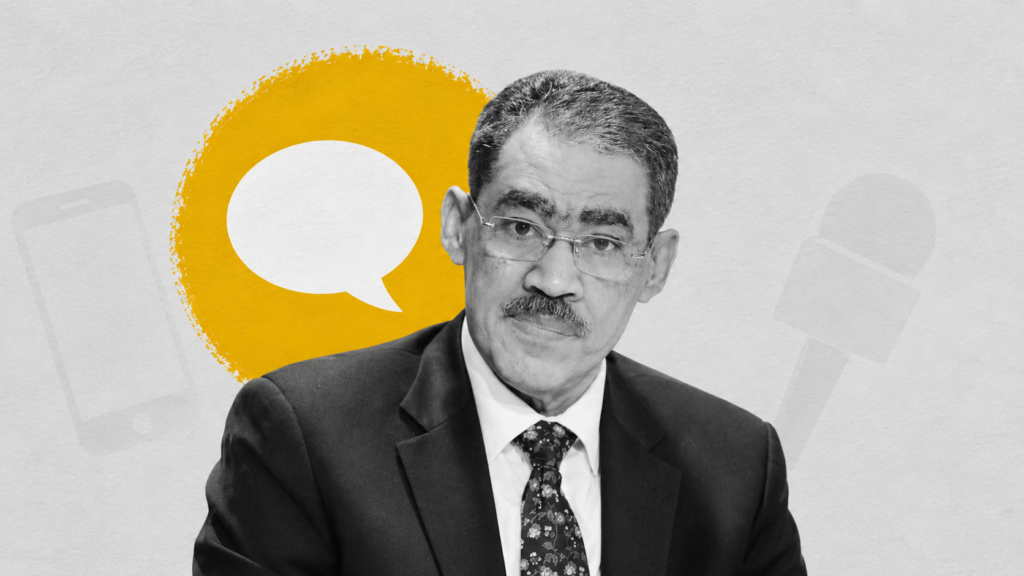
On 1 November 2026, Minister of State for Information Diaa Rashwan met with around 70 content creators and influencers for more than four hours. The meeting witnessed an argument over “paid journalism”, followed by a complaint filed by a journalist against one of the attendees with the Journalists’ Syndicate and the Supreme Council for Media Regulation.
Rashwan presented the meeting as the eighth in a series of discussions with different parts of the media sector. He described digital content as “an important part of the tools that influence public opinion”, which could be “integrated with and complementary to the role of professional media”. But journalists who spoke to Zawia3 believe the ministry has started at the wrong end: a freedom of information law has remained a promise since February, while crises over pay, prosecution and closures accumulate. Meanwhile, the ministry is turning to influencers selected according to undisclosed criteria.
More than 40 participants spoke at the meeting. Their leading demands included a clear definition of a content creator and criteria distinguishing them from the thousands of users publishing on platforms; an Egyptian umbrella body whose professional and ethical rules would be established by practitioners themselves; a regular flow of official information; protection of intellectual property rights in dealings with global platforms; easier filming in streets and public spaces and access to permits; production equipment and studios; and advanced training programmes. Participants also called for definitions of legal terms whose violation could expose content creators to prosecution, particularly “Egyptian family values”.
The term appears in Article 25 of Law No. 175 of 2018 on Combating Information Technology Crimes, which punishes “violating the family principles or values of Egyptian society” with imprisonment of six months to three years. Under this article and other provisions, the authorities pursued content creators in a crackdown during the summer of 2025. At least 29 people were arrested or referred to trial over content they published between late July and late August, including at least 19 women and a girl, according to Human Rights Watch. They included content creator Suzy al-Ordoniya. Lawyer Nehad Aboul Komsan, who attended the meeting, told Masrawy that the term “needs to be reconsidered” because it “is not based on clear, specific standards governing its application”. She said its application could vary between police, prosecutors and courts in the absence of settled principles from the Court of Cassation. She proposed coordination between the Ministry of State for Information and the Ministry of Justice to examine judgments on these charges and the proportions involving women and men. She added that she had filed around 19 complaints concerning online abuse and defamation, all of which were consolidated into a single complaint that has yet to reach court.
At the meeting’s conclusion, Rashwan announced that the ministry was preparing to hold the first forum for Egyptian content creators and influencers in early 2027. It would provide “serious” content creators with channels of communication with information sources in ministries and official bodies. He said the state was working to enact a freedom of information law to enable the production of digital content based on facts and data. He said no country had established an influencers’ syndicate, and that content creators could form an association or umbrella body to organise their work within the constitution and the law.
On 28 March 2022, the Tax Authority issued guidance on the tax treatment of content creators’ activities, covering YouTubers, bloggers and influencers, alongside a guide to e-commerce. But assessing the size of this industry remains hampered by the absence of published data on the number of content creators registered for tax, their revenues and the tax receipts associated with their activities.
One influencer who attended the meeting, and asked not to be named, tells Zawia3 that citizens who once waited for the news bulletin or read a newspaper to understand an economic or social decision now follow a doctor explaining a health decision, an economist interpreting market movements, a journalist recounting a historical issue, or a content creator discussing a social problem, in a video lasting only minutes. He adds that the state faces a reality requiring it to communicate with those who have large audiences, regulate economic activity, protect producers’ rights and develop rules of practice while preserving content independence and freedom of expression. In his view, the real test of the coming period will not be holding another forum, but whether this relationship can make content available that reaches the public and improve citizens’ access to information under the state’s umbrella. Within a few years, he believes, content creation will become an alternative to journalism in its traditional form.
Hadeer El-Mahdawy, a member of the Journalists’ Syndicate, does not deny the evolution of the media or the emergence of new ways to communicate with audiences, describing this as something that cannot be ignored. She tells Zawia3 that content creators have become important players in the media landscape, but stresses the distinction between content creation and journalism grounded in professional rules for gathering, verifying and publishing information and holding its sources accountable.
“Paid journalism” ignites the room
During the meeting, content creator Hamdy Ashour spoke of what he called “paid journalism”, accusing journalists of taking money to publish or delete news about him, and saying that he paid for this, according to journalist and content creator Girgis Fikry’s account to Masrawy. Fikry and fellow journalist and content creator Sherif Badie El-Nour objected to a blanket accusation without evidence or names, demanding that Ashour stop and apologise. Rashwan eventually intervened, rejecting the affront to journalists, and Ashour changed his wording to “some journalists”, according to Badie El-Nour’s account. The following day, Ashour published a clip of his remarks from which, Fikry said, the objections and the minister’s intervention had been removed.
Fikry announced that he had filed a complaint with the Journalists’ Syndicate. On 4 November, he then filed a complaint with the Supreme Council for Media Regulation, asking it to review Ashour’s accounts and take legal action against them under Article 19 of Law No. 180 of 2018, which applies to personal accounts with more than 5,000 followers. A source at the Ministry of State for Information told Masrawy that Ashour’s remarks “did not constitute a generalisation about all journalists”, but concerned specific practices or cases. The ministry urged media outlets to report accurately on what takes place at official meetings.
Journalists’ Syndicate head Khaled El-Balshy commented in a post on 3 November that the syndicate was “too big to be dragged into petty battles against those whose words and deeds are petty”, and would “stand by and support any colleague defending the dignity of the profession”. Magdy El-Gallad, editor-in-chief of ONA, the company that owns Masrawy, said on the programme “Khareg al-Nass” that he was not angry with content creators. His main reservation, however, was that the responsible authorities should address the media’s crises first. He said the burden of proof lay with whoever made an allegation, and that an accusation must not be generalised to all journalists, according to Masrawy.
Shaimaa Gamgoum, founder of the “Eye on Journalism” initiative, believes the reactions following the meeting and the way some participants handled it did not reflect the appreciation expected for the encounter, pointing to the remarks accusing journalism of being paid for.
The meeting brought together figures from different fields, including Reham Ayyad, lawyer Sameh Sanad, Ahmed Raafat, Islam Fawzy, Hamdy Ashour and lawyer Nehad Aboul Komsan. A ministry source told Masrawy that participants specialised in political, economic, social, cultural, scientific and technological fields, without the ministry disclosing its selection criteria.
Economist Mostafa Adel declined to attend after expressing surprise, in a post on his personal page, that he had been selected among influential figures in content creation, despite not producing video content and not having appeared on television for more than eight years.
Shaimaa Gamgoum tells Zawia3 that her objection is not to the minister meeting content creators, but to the people the ministry selected and the messages those choices convey. She describes the list of participants as “appalling”, believing that most selections did not suit the supposed purpose of the meeting, whether in the nature of their output or the standard of their discourse with the public. She adds that she does not oppose organising content creators’ work or introducing legislation to regulate practice in a chaotic field. But she criticises relying on figures who, in her assessment, produce content without a clear message or identity, or content based on insults and abuse, rather than people who offer informative and awareness-raising material, such as Ahmed El-Ghandour and Mohamed El-Saadany. Their presence, she believes, would have given the meeting a different significance. She does not necessarily hold the minister responsible for knowing every name and considers it likely that his aides prepared the guest list. But she believes the selection itself reveals the need for public, objective criteria explaining why one person was invited rather than another.
Islam Fikry, a journalist who is not registered with the Journalists’ Syndicate, agrees on the importance of reviewing priorities and selection criteria. But he believes that meeting influencers before holding a comprehensive dialogue with journalists and practitioners reveals journalists’ declining priority in the ministry’s calculations. He tells Zawia3 that journalists are the principal actors in the media sector, and that dialogue should have begun with them before expanding to bloggers and influencers. He points to the absence of names such as “Al-Daheeh”, “Al-Mokhbir Al-Eqtisadi” and “Fi Al-Hadara”, and others who provide informative content. He believes most attendees are far removed from economics, news and knowledge, focusing instead on popular personalities and generating trends, which raises questions for him about the ministry’s criteria.
Talaat Ismail, managing editor of Al-Shorouk newspaper, does not object to communicating with influencers in itself. But he believes some choices were ill-judged, bringing together people of substance, others of modest standing and names that stirred unnecessary controversy. He tells Zawia3 that influence should not be measured solely by follower counts, but by the role content plays and its capacity to affect society. Some influencers, he says, achieve a wide presence in particular areas of public interest, but may avoid serious issues or anything that might upset the bodies that invited them, for fear of attacks or criticism. In his view, genuine influence should not remain confined to areas comfortable for the organiser.
Ismail believes that the shrinking margin of freedom in traditional media contributed to this phenomenon. Print newspapers and news websites lost room to influence audiences, and content creators filled that gap. He cites the French newspaper Le Monde, whose circulation he describes as limited and whose readers he considers an elite with broader influence in society, using it to illustrate the importance of journalism’s professional and knowledge-based role compared with reach indicators alone. In fact, Le Monde leads France’s national daily newspapers in circulation, with paid circulation of 561,000 copies in December 2025, according to data from the French circulation measurement body ACPM.
A law pending since February
Rashwan took charge of the Ministry of State for Information when it was reinstated in February 2026, following a career that included heading the State Information Service from June 2017, leading the Journalists’ Syndicate for three terms (2013 to 2015 and 2019 to 2023), and serving as general coordinator of the National Dialogue from June 2022. Prime Minister Mostafa Madbouly said he would act as a link for effective communication with the media. On 16 February, Madbouly reviewed the ministry’s work plan with him to implement presidential directives concerning the media and public opinion. The directives the prime minister announced that day included establishing a system of government communication based on transparency, prompt performance, simplified messages and accurate, objective explanations of economic and social decisions, while maintaining the independence of media bodies and respecting freedom of opinion and expression.
On 22 September 2026, Rashwan met the editors-in-chief of licensed news websites. He spoke of the state’s interest in accelerating the drafting of a freedom of information law to implement constitutional provisions, and of efforts involving several ministries to develop a comprehensive framework for regulating social media through legislative and executive measures. At the meeting, editors raised the difficulties journalists face in obtaining data and doing their work, and problems with the performance of official spokespersons and media advisers. This was the same demand content creators would raise again in November: a regular flow of reliable official information.
Talaat Ismail tells Zawia3 that Egyptian journalism has come to depend heavily on official statements and remarks, rather than allowing journalists to obtain information directly and verify it. He describes this as a shift towards “government press-release journalism”. He adds that some official spokespersons merely send statements through WhatsApp groups without answering journalists’ questions, and may even remove a journalist from the group for asking follow-up questions. He believes the problem extends beyond the absence of a law governing access to information to restrictions on fieldwork, even when attempting to report or film at different institutions. Restoring journalists’ ability to access information and move freely is, he says, essential to restoring journalism’s role.
On 24 October 2026, Journalists’ Syndicate head Khaled El-Balshy said that the syndicate had drafted a freedom of information bill signed by 60 members of the House of Representatives and approved by the Media Development Committee ahead of parliamentary debate. As of the November meeting, the government’s stated position remained that it would accelerate the preparation of the law.
Hadeer El-Mahdawy tells Zawia3 that the information crisis is one of the most significant failings in the relationship between the state and sections of the press. Over recent years, she says, information has been treated as secret or as a matter of national security, with sources restricted to government statements and remarks and insufficient room for scrutiny and accountability. She adds that information or accounts contradicting government announcements may face prosecution on charges of spreading false news, and that a freedom of information law is urgently needed to enable journalists to access and verify data and perform their watchdog role.
The profession’s crises are off the agenda
El-Mahdawy holds the state responsible for a fundamental part of the crisis in independent journalism, pointing to what she describes as the nationalisation of most newspapers and websites and the shrinking space available to the independent press. She believes addressing the profession’s structural crises should have preceded the search for alternative ways to reach audiences. The minister, she says, should reorder his priorities, starting with monopoly control, restrictions, low wages, arbitrary dismissal and the absence of job security, rather than hosting influencers and presenting them as an alternative to journalism. She sees no contradiction between recognising influencers’ and content creators’ right to organise and form a syndicate representing them, as a constitutionally guaranteed right, and rejecting their treatment as a substitute for news organisations or a way to sidestep the profession’s crises.
El-Mahdawy says the orientation of some participating influencers was clear, recalling an earlier meeting with website owners that preceded the arrest of journalists from Matsda2sh by a matter of days. Rashwan had met the editors-in-chief of licensed websites on 22 September, before the Interior Ministry announced in early October 2026 the arrest of six people running the platform, in the case Zawia3 has been following. El-Mahdawy believes the state remains committed to what she calls a “single voice” operating according to instructions and directives. She points to the arrest of male and female content creators whose positions do not align with the government’s approach. In her assessment, what is happening is not an expansion of media dialogue, but an attempt to close the last remaining space for free, independent and professional journalism and media.
Gamgoum takes a similar view, saying the state has spent years consolidating groups of social media influencers to convey its messages and support its policies, and that these groups began to emerge clearly around 2016. She does not, however, oppose communicating with content creators or organising their work. Rather, she questions the nature of the relationship the state wants to build with them: will it be based on content independence, or become a means of channelling government messages?
According to Rashwan, seven meetings involving around 250 officials and media leaders preceded the gathering with influencers. But Gamgoum says she still sees no clear direction towards addressing journalists’ actual crises. The issues concerning those working in the profession remain without tangible solutions, particularly the conditions of online journalists and temporary journalists, low wages, and the absence of a law guaranteeing freedom of information. She points to the crises facing news organisations and platforms such as Matsda2sh, whose entire newsroom was arrested, and Mada Masr.
On 27 October 2026, the New Cairo Misdemeanours Court ordered the closure of Mada Masr and confiscation of its equipment on charges of operating a website without a licence. It fined editor-in-chief Lina Attalah 3 million Egyptian pounds (around $55,000), which the organisation paid, and she was released after several hours in detention. The head of the Journalists’ Syndicate announced an appeal. On the same day, Attalah learned of a judgment issued in absentia in 2024 sentencing her to one year in prison on charges of spreading false news and operating a website without a licence. On 19 November, the court suspended her retrial pending a decision on a request for the judge’s recusal, to be heard by a Court of Appeal chamber on 26 November. The appeal against the closure order is scheduled for 25 November, according to The National. The website has been blocked inside Egypt since 2017.
Talaat Ismail does not believe the solution lies in excluding influencers or rejecting new media tools. Rather, it lies in greater freedom for journalists, better working conditions and support enabling print and online outlets to regain their role in providing news. He says journalists and executive officials share the goal of delivering information to the public, whether it concerns a government body’s achievements or failures. The public has the right to know that information and form its own view.