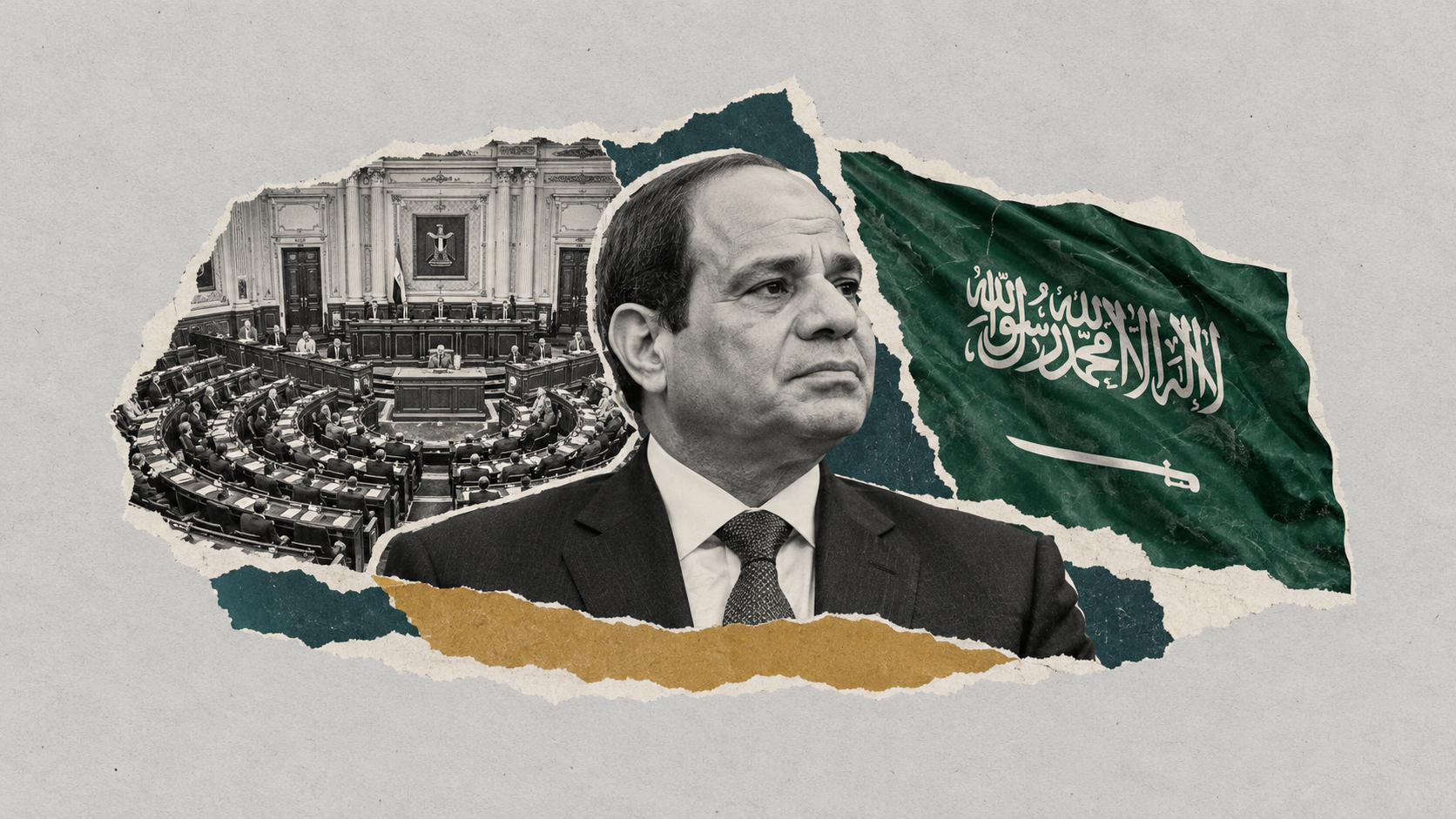
he head of the Egyptian Journalists Syndicate, Khaled Elbalshy, announced on Tuesday, October 27, 2026, that the syndicate intends to take legal action to appeal the ruling issued against Lina Attalah, editor-in-chief of Mada Masr, which imposed a fine of EGP 3 million ($62,111.80), ordered the website’s closure, and confiscated its equipment and devices, following accusations of establishing, managing, and operating a website without a license. He stressed that the course of the case, the speed of its proceedings, and what took place during the trial session raise serious questions about defense guarantees and require a review of the licensing system for news websites in Egypt.
In a statement published following the ruling, Elbalshy said he had followed the Cairo New Court of Misdemeanors session while in Suez Governorate on syndicate business, through the syndicate’s lawyer and council members Mahmoud Kamel and Eman Ouf, who went to the court to follow the case. He emphasized the syndicate’s respect for the right to litigation at all levels and its commitment to taking all available legal and syndicate measures to defend Attalah and the website.
He added that the syndicate had recorded several observations concerning the course of the case and the procedures that preceded and followed the ruling, considering what happened “a warning bell for everyone to pay attention,” and saying it contradicts repeated demands to lift restrictions on journalistic work and expand the space available to independent media.
The Ninth Circuit of the Cairo New Court of Misdemeanors, presided over by Judge Mohamed Mubarak, had issued its ruling in Case No. 11743 of 2026, Fifth Settlement Misdemeanors, registered under No. 9072 of 2026, Supreme State Security, fining Attalah EGP 3 million ($62,111.80), the maximum financial penalty stipulated for the charge against her, while ordering the closure of the website and confiscation of the equipment and devices used in its operation.
Following the ruling, the Mada Masr editor-in-chief was detained inside the courthouse. The defense team announced that the procedures for appealing and suspending enforcement of the ruling were linked to payment of the imposed fine, according to the website’s lawyer, Hassan Elazhary.
The case ended with Attalah’s conviction at the first trial session, amid objections from the defense team to the court’s refusal to grant requests for adjournment and access to case documents.
Eight Days from Summons to Ruling
Elbalshy criticized the speed of the judicial proceedings since the beginning of the case, explaining that Attalah received a summons to appear before the Supreme State Security Prosecution on October 19 and appeared before prosecutors on October 21 in an interrogation session that lasted more than six hours, before the prosecution ordered her release on bail of EGP 100,000 ($2,070.39).
The following day, October 22, the prosecution referred the Mada Masr editor-in-chief to the Court of Misdemeanors, less than 24 hours after her interrogation ended. The court scheduled October 27 to hear the case, when the ruling was issued, five days after the referral and only eight days after the initial summons.
The Journalists Syndicate head said that this speed, combined with the issues raised by Attalah’s lawyers regarding the events of the hearing and the circumstances surrounding it, “raises serious questions about whether the defense had sufficient opportunities and whether the journalist and her lawyers were able to present their arguments.” He stressed that the syndicate would include these observations in its appeal and forthcoming legal actions.
Tuesday’s hearing witnessed a dispute between the court and the defense team after the court rejected a request to adjourn the case to allow the lawyers to examine the complete case file and prepare their arguments, along with requests to submit documents and hear witnesses, according to Attalah’s lawyers.
The defense requests included access to Mada Masr’s licensing file held by the Supreme Council for Media Regulation, the original decision rejecting the license, and the document through which the council claims it notified Attalah of the rejection in October 2022, as well as summoning council officials to testify about the licensing procedures and related correspondence.
According to Mada Masr’s lawyer, Hassan Elazhary, the court rejected the defense requests and then decided to appoint another lawyer, a measure opposed by Attalah and her defense team.
The hearing also saw restrictions on the entry of several journalists, supporters, and representatives of foreign diplomatic missions, according to published journalistic accounts of the trial proceedings.
Elbalshy noted that the procedures adopted during the examination of the case and those following the ruling raise additional legal questions, stressing the need to address them seriously through the available judicial appeals.
Dispute Over Licensing and the Responsibility of the Supreme Council for Media Regulation
The Journalists Syndicate head addressed the substance of the charge against Attalah, concerning the management of a website without a license, criticizing the failure to consider the lawyers’ arguments regarding the administrative procedures adopted by the Supreme Council for Media Regulation in handling the website’s licensing applications.
He explained that the syndicate based its legal position on Articles 12 and 16 of the regulations governing the licensing procedures for news websites, which require the relevant council to notify applicants of missing information and documents so they can complete their applications, decide on applications within 90 days, and communicate decisions by registered mail with acknowledgment of receipt, thereby guaranteeing applicants the right to challenge decisions before the administrative courts.
Elbalshy considered the failure to respond to a licensing application, or to formally notify the applicant of the decision, a procedural violation affecting the applicant’s rights. He stressed that the proper legal course, according to the syndicate’s position, is to complete the administrative procedures and resort to the administrative courts to resolve the dispute, rather than criminally prosecute those responsible for the website.
On Monday, October 26, the Journalists Syndicate submitted an official memorandum to the Supreme Council for Media Regulation addressing Mada Masr’s licensing crisis and the related judicial proceedings. It demanded clarification of the legal status of the submitted licensing applications, that the institution be allowed to provide any missing documents, and that its application be resolved through an official, reasoned decision.
The licensing crisis dates back to 2018, when Mada Masr applied for a license following the issuance of Press and Media Regulation Law No. 180 of 2018, without receiving an official response, according to the website and its defense team.
The website renewed its application in 2020 following the issuance of the law’s executive regulations, before learning during judicial investigations in 2022 that a decision had been issued rejecting the licensing application without notifying it in accordance with legal procedures, prompting it to resort to the administrative courts to challenge the decision.
In June 2023, the website submitted a new application after completing information and documents requested by the Supreme Council for Media Regulation. However, its lawyer confirmed that the institution had received no response to the application by the time Attalah was referred to trial.
In May 2023, the administrative court had rejected a previous lawsuit filed by the website challenging the refusal to grant a license, while disputes concerning notification and administrative procedures continued, as part of a series of judicial proceedings against Lina Attalah and Mada Masr.
The charge is based on Article 6 of Press and Media Regulation Law No. 180 of 2018, which requires obtaining a license from the Supreme Council for Media Regulation to establish or manage websites. Article 105 sets a fine ranging from EGP 1 million ($20,703.93) to EGP 3 million ($62,111.80), and allows the court to order the website’s closure and confiscation of equipment and devices used, with the fine doubled in the event of a repeated violation.
Demands to Lift Website Blocking and Ease Licensing Requirements
Elbalshy linked the ruling against Attalah to the broader debate over the freedom to establish newspapers and websites, considering that the case is not limited to a particular media institution but extends to journalists’ right to practice their profession and society’s right to obtain information from multiple media sources.
In this context, he referred to Articles 70 and 71 of the Egyptian Constitution, which address freedom of the press and media, freedom to publish newspapers and own media outlets, and the constitutional protections guaranteed to journalistic work.
He called for the adoption of transparent and fair rules for licensing news websites, applied equally to all institutions, alongside completing licensing procedures for pending applications, ending judicial prosecutions related to operating without a license, lifting the blocking of news websites, and ending measures that obstruct their work.
He also called for easing licensing requirements in a manner consistent with the nature of digital media and opening an institutional dialogue between the Journalists Syndicate and the Supreme Council for Media Regulation concerning the rules and procedures governing the operation of websites.
He noted that the syndicate had previously submitted requests to examine licensing applications and lift the blocking of several news websites, including Al Manassa, Fikra Tany, and Egyptic, reaffirming the syndicate’s continued commitment to freedom of publication for newspapers and websites and the removal of restrictions imposed on media work.
He said the syndicate “reaffirms its commitment to defending free and diverse media,” maintaining its demands concerning freedom of publication and opening the media space to institutions operating without restrictions that hinder their mission.
International Solidarity and Previous Prosecutions of Mada Masr
The Journalists Syndicate’s position comes days after 119 human rights organizations and independent media outlets signed an urgent international appeal on October 23, including Zawia3, calling on the Egyptian authorities to halt Attalah’s trial, end the judicial proceedings against her, grant Mada Masr the license it had applied for, and stop targeting independent media institutions.
The signatories warned that referring the website’s editor-in-chief to trial represents an escalation threatening the continued existence of independent journalism in Egypt, particularly as the current case is the sixth involving the website and its staff in six years, and the first in which the charge of operating the website without a license has been referred to a misdemeanor court.
Mada Masr, which has been blocked inside Egypt since 2017, has faced a series of security and judicial measures in recent years, including a raid on its headquarters in November 2019 and the detention of several of its journalists for hours, as well as Attalah’s arrest in May 2020 while conducting a journalistic interview outside the Tora Prison Complex.
In September 2022, Attalah and three female journalists from the website were questioned over a report addressing corruption allegations linked to the Nation’s Future Party, before being released on bail.
Attalah was also summoned for questioning in other cases related to the website’s coverage, including an investigation conducted in August 2025 following the publication of a report on detainees’ conditions in Badr 3 Prison, when the prosecution charged her with publishing false news and operating a website without a license, and ordered her release on bail of EGP 30,000 ($621.12).
During the latest interrogation, held on October 21, Attalah faced two charges: operating a website without a license and publishing false news likely to disturb public peace. The questioning concerned the website’s legal status and its coverage of protests in several Egyptian prisons following the postponement of the implementation of the new Criminal Procedure Law. However, the referral decision was limited to the charge of establishing, managing, and operating a website without a license.
The Case Coincides with the Continued Detention of Matsda2sh Journalists
These developments come less than a month after the arrest of the entire team of the Matsda2sh fact-checking platform, comprising six journalists, in late September, and their detention in connection with Case No. 8083 of 2026, Supreme State Security.
Security forces arrested the team members on September 28 and 29 following raids on their homes in three governorates, before they appeared before the Supreme State Security Prosecution, where they faced charges including joining a terrorist organization, financing it, and publishing false news.
Some of the journalists reported being subjected to violations during their detention, including beatings, blindfolding, and electric shocks, according to accounts documented by human rights organizations. International press organizations have called for their release and an investigation into these allegations.
The case prompted a solidarity campaign involving media and human rights institutions, as well as a protest organized by journalists inside their syndicate’s headquarters in Cairo.
On October 19, the same day Lina Attalah received the summons from the Supreme State Security Prosecution, Mada Masr joined seven independent Arab media institutions in launching a temporary solidarity newsroom, aimed at continuing the journalistic work carried out by the Matsda2sh team during its detention.
The initiative included Saheeh Masr, Mada Masr, and Al Manassa from Egypt; Megaphone, Daraj, and Sifr from Lebanon; Nawaat from Tunisia; and Al-Jumhuriya from Syria. It focused on fact-checking information and statements issued during the Egypt 2026 Forum.
The international appeal signed by Zawia3 had linked the two cases, calling for an end to prosecutions of independent media institutions and the release of all journalists detained because of their professional work.
Elbalshy: The Ruling Sends Messages Contrary to Calls for Media Reform
At the conclusion of his statement, the Journalists Syndicate head considered that the ruling and the accompanying procedures contradict the demands presented by committees for the development of the profession, the National Dialogue, and the Media Development Committee concerning easing restrictions on journalistic work and allowing greater space for media pluralism and the independence of press institutions.
Elbalshy said that what happened “sends messages contrary to all the demands issued by the committees for the development of the profession, the National Dialogue, and the Media Development Committee,” which call for lifting restrictions on journalistic work and ensuring free and diverse media representing different segments of society, alongside a free civil society and independent institutions.
He stressed that the Journalists Syndicate would not limit its efforts to following the procedures for appealing the ruling, but would continue its legal and syndicate actions concerning freedom to establish websites and newspapers, reviewing the licensing system, and defending media institutions’ right to carry out their work under clear constitutional and legal guarantees.
Elbalshy affirmed: “We will continue the litigation process and pursue all legal and syndicate avenues to defend our colleague and society’s right, and the right of all of us, to media worthy of us.