On Thursday, 29 October 2026, the European Union called on the Egyptian authorities to “preserve and protect independent media” in a statement issued by its foreign affairs spokesperson, two days after a court ordered the closure of Mada Masr and fined its editor-in-chief, Lina Attalah, three million Egyptian pounds, and a month after the arrest of the entire editorial team of the Matsda2sh platform.
The statement, published by the European External Action Service and naming spokesperson Anouar El Anouni in its contact information, consisted of six sentences that did not contain the words “concern”, “condemnation” or “release”. It named neither Attalah nor the six imprisoned journalists. It chose to address Cairo in its own language, invoking the Association Agreement and the “Strategic and Comprehensive Partnership” signed in March 2024, Egypt’s “National Human Rights Strategy”, and the fact that “Egyptian laws recognise the right to freedom of opinion and expression”.
The statement comes as Egypt awaits the final €1.5 billion tranche of a €4 billion European loan whose terms require Cairo to take “concrete and credible steps” towards democracy, the rule of law and respect for human rights. The European Commission said in July that Egypt had fulfilled this condition, even though an internal Commission document, disclosed by Al-Manassa, identified the “detention of journalists” and restrictions on media freedom among the continuing “challenges”.
What the Statement Said, and What It Did Not
The 29 October statement begins with two events: “On 28 and 29 September, the editorial team of Matsda2sh was arrested and its members remain in detention. On 27 October, the editor-in-chief and co-founder of the independent Egyptian media organisation Mada Masr was convicted, leading to its closure.” It then adds: “Freedom of expression is a fundamental right for both the European Union and Egypt. Our Association Agreement and our Strategic and Comprehensive Partnership include a shared commitment to the universal values of democracy, the rule of law and respect for human rights and fundamental freedoms. Egypt’s National Human Rights Strategy seeks to promote a culture of pluralism and diversity of opinions and viewpoints. Egyptian laws recognise the right to freedom of opinion and expression, which is a fundamental right.” It concludes: “In this light, preserving and protecting independent media is essential.”
The statement does not call for the release of the Matsda2sh journalists, the overturning of the verdict or the reopening of the website. It does not comment on the defence’s account of the hearing or the allegations of torture that some detainees reported to the prosecution. Nor does it express “concern”, the word the EU itself used seven years earlier over a less severe incident involving the same outlet.
On 24 November 2019, when security forces raided Mada Masr’s office and detained journalists for several hours before releasing them, the EU spokesperson issued a statement the same day saying that “the continuing restrictions on civil liberties, including restrictions on freedom of expression and assembly and the erosion of media freedom in Egypt, are a cause for concern”, and that journalists should be able to do their work “without fear of harassment, in line with the Egyptian Constitution and Egypt’s international obligations”. Between the two statements, the outlet went from a raid lasting hours to closure by court order, while European language shifted from “erosion” and “concern” to reminders of Egyptian provisions. The latest statement came two days after the verdict and 31 days after the arrest of the Matsda2sh team.
Thirty Days: From Matsda2sh to Mada Masr’s Closure
The first event mentioned in the statement began on the evening of Monday, 28 September 2026, when security forces raided the homes of journalists Mohamed Ashraf Abu Omeira and Abdallah Qadry. The following day, they arrested Islam Barakat at his home in Gharbia, Omar Helal at his home in Port Said, and Mohamed Mahmoud and Mohamed Adel on a Cairo street, according to the Committee to Protect Journalists. The entire editorial team working inside Egypt was thus in detention. Bassam Khawaja, deputy Middle East and North Africa director at Human Rights Watch, said that “dismantling an entire newsroom within hours without warning or reason sends a chilling message to every journalist working in Egypt”, according to the organisation’s 2 October statement.
No official body acknowledged the six journalists’ detention for around 60 hours, until the Interior Ministry published a statement on 1 October describing the platform as an “unlicensed” page run from abroad and linking it and its founder, Abdelrahman Mansour, to the Muslim Brotherhood. Mansour denied this, telling the Committee to Protect Journalists: “We have no affiliation with the Muslim Brotherhood, and the authorities know that. In 2023, our former colleague Karim Asaad was arrested after we published a major investigation. The authorities investigated the same allegations, and he was released within 36 hours.” Sara Al Qudah, the committee’s regional director, said that “the arrest and apparent disappearance of six journalists from a single newsroom is a serious escalation in Egypt’s crackdown on the independent press”, and that “the international community must not look away” from what is happening. The six then appeared before the Supreme State Security Prosecution in Case No. 8083 of 2026, on charges of joining and financing a terrorist group and spreading false news. Some told prosecutors that they had been tortured through restraint, blindfolding, beating and electric shocks and forced to record confessions, as Zawia3 documented in issue 24 of its Deleted Lines newsletter. Prosecutors extended their detention for 15 days on 13 October, then for another 15 days on 27 October, the day of the verdict against Attalah, according to a Cairo24 report.
On 19 October, Mada Masr joined seven Egyptian and Arab media organisations in launching a solidarity newsroom under the slogan “Until They Return, Verification Continues”, to fact-check announcements at the Egypt Forum 2026 in the absence of the Matsda2sh team. Hours after the announcement, Attalah received a summons for questioning before the Supreme State Security Prosecution in Case No. 9072 of 2026. On 21 October, prosecutors questioned her for more than six hours about the outlet’s coverage of a wave of prison protests following the postponement of the Criminal Procedure Law’s implementation, and about the legal status of its licence. They charged her with running an unlicensed website and spreading false news, then released her on bail of EGP 100,000, approximately $1,780. That same day, President Abdel Fattah al-Sisi said at the Egypt Forum that the Egyptian government “listens, discusses and accepts any criticism”, as Amnesty International noted.
On 22 October, prosecutors referred Attalah to a misdemeanour court in Case No. 11743 of 2026, Fifth Settlement Misdemeanours, solely on the licensing charge, and set the first hearing for five days later, as Zawia3 reported. Days before the hearing, Zawia3 joined 118 organisations and media outlets in signing a global appeal calling for an end to the prosecution.
One Hearing and the Maximum Penalty
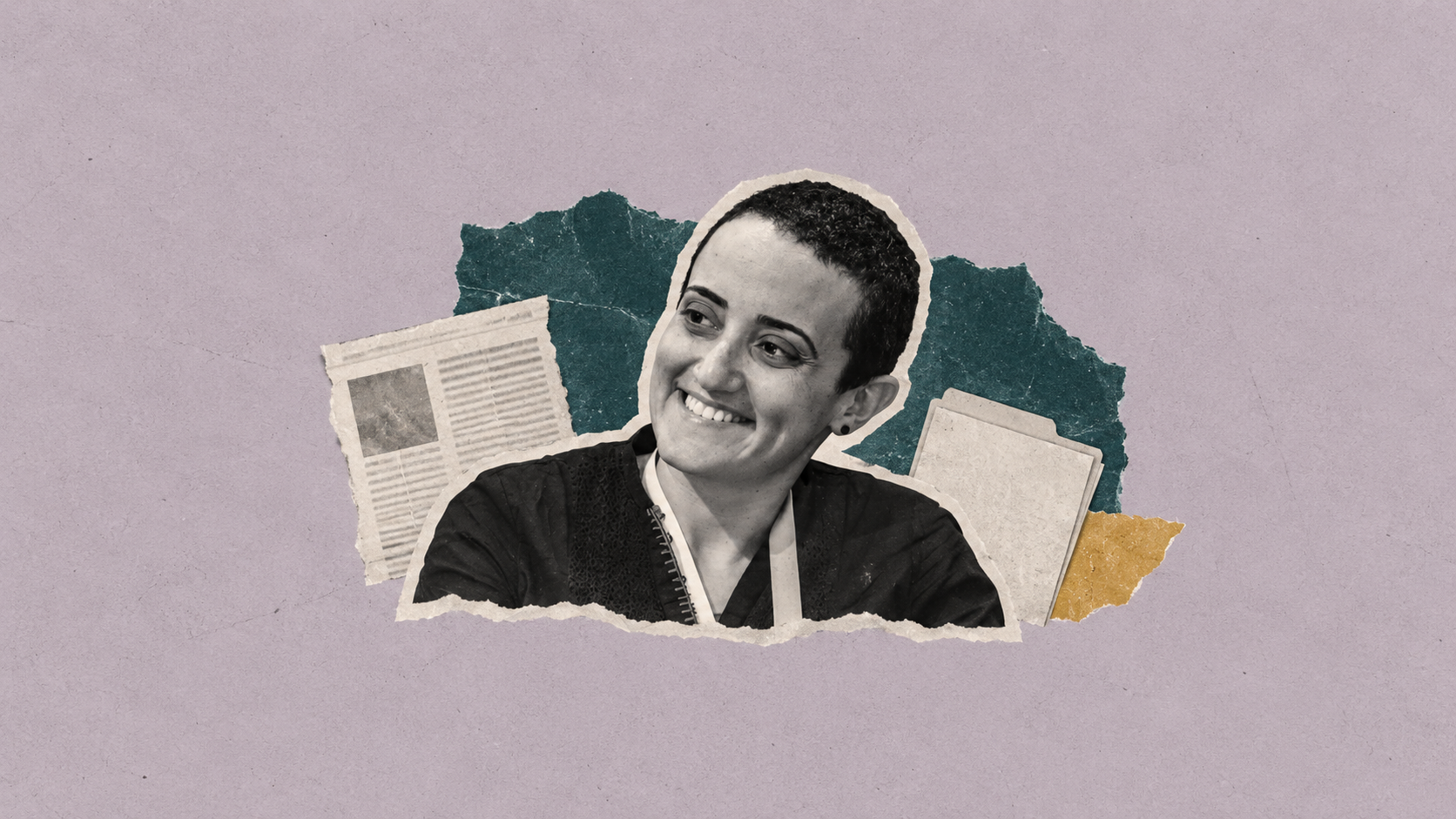
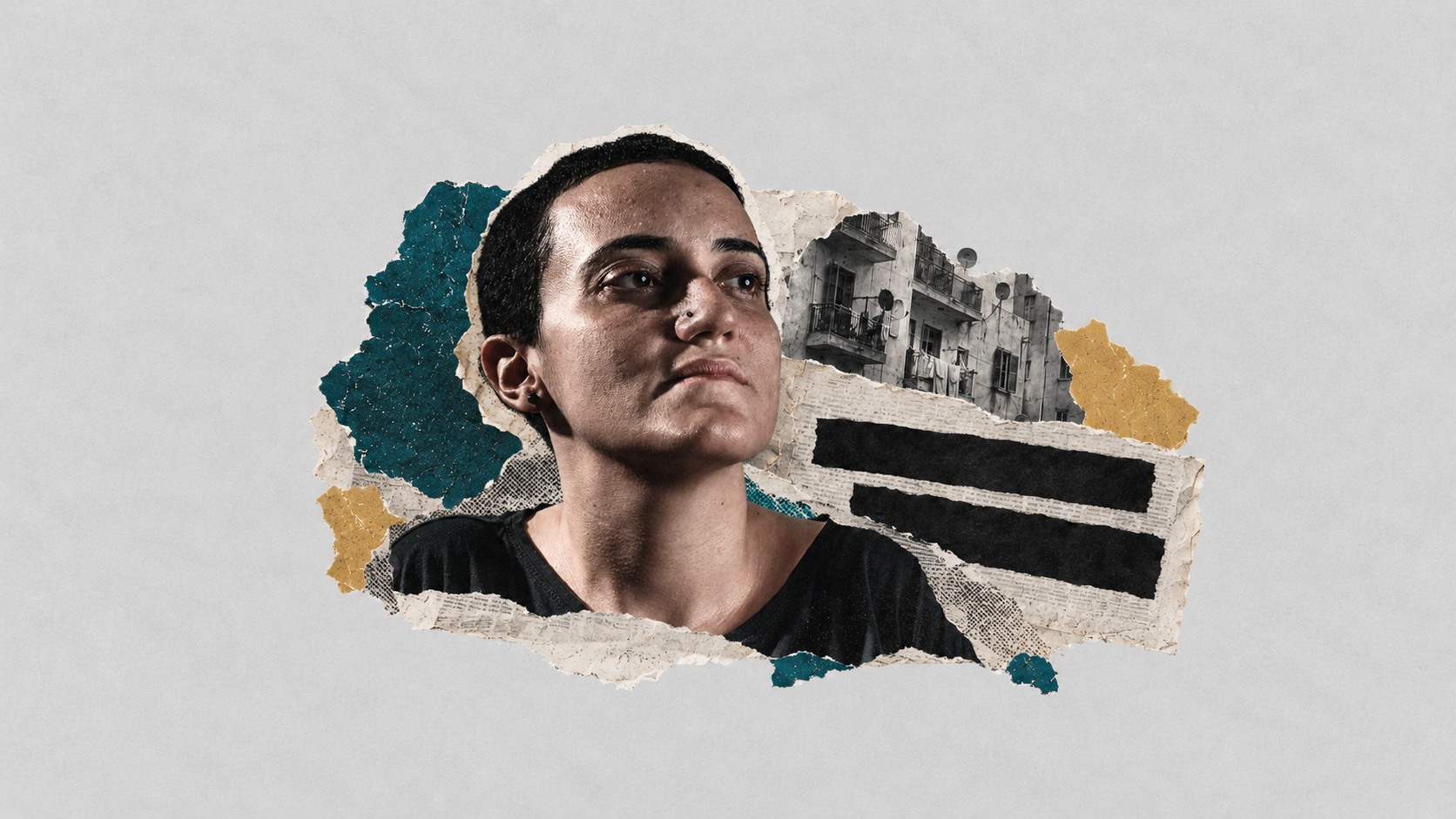
On Tuesday, 27 October, the Ninth Circuit of the New Cairo Misdemeanour Court, presided over by Judge Mohamed Mubarak, fined Attalah EGP 3 million, approximately $53,400 at the exchange rate on the day of the verdict, around EGP 56.2 to the dollar, according to Al-Mal. It also ordered Mada Masr’s closure and the confiscation of its equipment and devices. This was the maximum penalty for the charge, as Zawia3 documented that day.
Hossam Bahgat, executive director of the Egyptian Initiative for Personal Rights, who attended the hearing, recounted that the court adjourned after the defence insisted on sufficient time to examine the case documents. The judge then ordered everyone except Attalah and her lawyers out of the courtroom, which filled with officers and plainclothes guards, including a National Security officer. When the hearing resumed, the presiding judge rejected all procedural submissions, including requests to add documents and hear witnesses, and asked the defence to plead its case. The lawyers refused to do so before their requests were addressed. The judge then summoned a lawyer unknown to the defence team and announced his appointment, despite the presence of eight lawyers and Attalah’s own objection. He refused to record her objection in the hearing minutes, then personally recorded the requests of the appointed lawyer, who had not spoken, and read out the verdict amid protests from the defence. After the verdict, security personnel surrounded Attalah and carried her out of the courtroom.
Attalah was detained for seven hours until the outlet paid the fine. During the procedures for her release, she learned of a 2024 judgment delivered in absentia sentencing her to one year in prison for spreading false news and running an unlicensed website, of which she had been unaware. Her defence lodged an opposition to that judgment, to be heard on 11 November, according to Al-Modon. In an editorial published hours after the verdict, Mada Masr said it had entered the court “with a measure of faith in the law and the justice system”, but “what we found in court left none of that faith intact”. Its legal team intends to appeal the verdict.
Legally, closure does not mean blocking Egyptian readers’ access to the website, which has already been blocked inside the country since May 2017. It means that continuing to publish after the verdict exposes the organisation to Article 105 of the Press and Media Regulation Law, which doubles both the minimum and maximum fines for a repeat offence, bringing the range to EGP 2 million to EGP 6 million, approximately $35,600 to $106,800.
A Licence Requested Since 2018 That Never Arrives
Human Rights Watch recalls that Egypt is obliged, under the International Covenant on Civil and Political Rights and the African Charter on Human and Peoples’ Rights, to respect press freedom. It also notes that the UN Human Rights Committee has concluded that governments may not prohibit a website or information dissemination system from publishing material solely because it may criticise the government. This covenant is part of the “international obligations” cited in the EU’s 2019 statement but absent from its 2026 statement.
The verdict is based on Article 6 of Law No. 180 of 2018, which requires a licence from the Supreme Council for Media Regulation to establish or manage websites. Mada Masr applied for a licence in 2018 and received no response, then applied again after the implementing regulations were issued in 2020 and again received no response. It only learned that its application had been rejected in 2022, during questioning to which Attalah had been summoned. The outlet brought an administrative court case that was rejected in May 2023, then submitted a new application in June 2023 after providing documents the council said were missing. That application remains pending, according to Human Rights Watch and the outlet’s lawyer, Hassan al-Azhary.
Bassam Khawaja said that “imposing registration requirements and then ignoring Mada Masr’s repeated good-faith attempts to meet them is a blatant attempt” to silence the outlet. The organisation said that arbitrarily rejecting licence applications, or leaving them unanswered and keeping organisations in legal limbo, violates international human rights law. Yasmine Ahmed, Amnesty International’s senior regional impact director, said that “shutting down a media outlet can in no way be a proportionate response to operating without a government permit”, and that international standards are clear that registration systems “must not be used as a tool for prior censorship or to pick which media outlets governments like and which they want to silence”, according to the organisation’s statement on the day of the verdict.
While Mada Masr’s application remained pending, the council was granting licences to other websites. On 20 April 2026 alone, it approved licences for ten websites and applications, according to Youm7. At the time of writing, the Supreme Council for Media Regulation had issued no comment on the verdict or the status of the outlet’s application.
A €7.4 Billion Partnership and One Political Condition
To understand the language chosen by the European statement, it is necessary to return to 17 March 2024, when European Commission President Ursula von der Leyen and President Sisi signed the “Strategic and Comprehensive Partnership” declaration in Cairo. It rests on six pillars: political relations, economic stability, trade and investment, migration and mobility, security, and people and human capital. The partnership is backed by a €7.4 billion financial package for 2024–2027, comprising €5 billion in loans through two macro-financial assistance operations, €1.8 billion in investments and €600 million in grants, including €200 million for migration management, according to the European Commission.
The first loan, of €1 billion, was disbursed in December 2024. The second, of €4 billion with a 35-year repayment term, was approved by the European Parliament in June 2025 by 386 votes to 132, with 49 abstentions, according to the European Parliament. The Commission was tasked with annually assessing the steps taken “to strengthen democratic mechanisms, the rule of law and the protection of human rights”. Rapporteur Céline Imart, of the European People’s Party, said that supporting Egypt “serves the EU’s interests in an unstable region”. On 22 October 2025, Brussels hosted the first EU–Egypt summit, at which the loan’s memorandum of understanding was presented. Von der Leyen said that “the partnership between the EU and Egypt is stronger than ever”.
The Commission disbursed the loan’s first tranche, €1 billion, in January 2026, saying that Egypt had “fulfilled all the required conditions” and taken “concrete and credible steps towards respecting effective democratic mechanisms, including a multi-party parliamentary system, upholding the rule of law and guaranteeing respect for human rights”. After meeting Sisi on the sidelines of the G7 summit on 16 June, von der Leyen announced on X that “€1.5 billion this month” would be disbursed “to support Egypt’s reform agenda”. The second tranche was in fact disbursed on 24 July, according to Eunews. A third tranche of €1.5 billion remained, expected to be disbursed “in the coming months”.
Around six weeks before the second tranche was disbursed, the 11th Egypt–EU Association Council met in Luxembourg on 15 June 2026, jointly chaired by Foreign Minister Badr Abdelatty and EU High Representative Kaja Kallas. In their joint statement, the two sides renewed “their commitment to strengthening democracy, the rule of law, human rights and fundamental freedoms”, and agreed that civil society is “an important contributor and actor” in implementing the partnership, according to Masrawy. This is the same formulation to which the 29 October statement returned: a “shared” commitment of which the partner is reminded.
What the Commission Writes but Does Not Announce
In August, Al-Manassa published an investigation by journalist Bisan Kassab into an unpublished briefing document entitled “Macro-Financial Assistance to the Arab Republic of Egypt: Disbursement of the Second Tranche”, which the Commission sent to the European Parliament and the Council in July 2026 to assess Egypt’s compliance with the conditions. Unlike the public statement that referred to the fulfilment of “all conditions”, the document said that Egypt faces “major challenges” regarding democracy, the rule of law, respect for human rights and accountability, and that arbitrary detention, poor detention conditions, the absence of unannounced monitoring visits, torture, enforced disappearance and pressure on human rights defenders “persist”. The document recorded restrictions on civil society, freedom of expression and media freedom, referring to two petitions submitted by the Journalists Syndicate for the release of 17 detained journalists, 15 of whom had exceeded the legal limits of pretrial detention. It estimated that between 5,000 and 10,000 refugees and asylum seekers, mostly Sudanese and Syrians, were detained in campaigns during the first quarter of 2026.
A similar document sent by the Commission when disbursing the first tranche in January had merely referred, according to the Cairo Institute for Human Rights Studies, to Egypt’s engagement with the EU and the United Nations on human rights and “ongoing work” on legislative reforms, without citing a single tangible improvement on the ground. It concluded that “effective implementation beyond declarations of intent or legislative processes is needed”.
After the second tranche was disbursed, 13 human rights organisations called on the EU to explain its reasons for the payment, in a statement published by the Cairo Institute for Human Rights Studies on 30 July. They said it was “once again bypassing its own rules and providing a financial lifeline to an authoritarian government responsible for systematic repression”. They noted that 15 Egyptian, regional and international organisations had concluded in June that Egypt had made “no tangible progress” on the political condition since the partnership was launched in 2024, and that conditions had deteriorated. The statement noted that Commissioner for the Mediterranean Dubravka Šuica wrote, the day after von der Leyen’s announcement, that “advancing reforms remains central to our financial support”, and that “partnerships work best when cooperation and human rights go hand in hand”.
Why Does Brussels Need Cairo?
European discourse presents Egypt as a partner in four areas: energy security, migration management, regional stability and the balance of power in the Middle East after the Gaza war, according to Eunews. The 2024 package includes €200 million earmarked for migration management, and the Commission announced at the October 2025 summit that projects in this area were being put into operation. This financing comes as Cairo faces between $60 billion and $70 billion in external debt obligations during 2026, as Zawia3 reported in March.
This equation makes the third tranche, €1.5 billion, the only instrument of pressure tied to a written political condition. The loan decision obliges the Commission to assess compliance with that condition before each disbursement. Yet the 29 October statement did not link the verdict against Attalah to the assessment of the next tranche and made no mention of the loan at all.
Egypt in International Indices
Egypt ranks 169th out of 180 countries in Reporters Without Borders’ 2026 World Press Freedom Index and remains among the world’s ten largest jailers of journalists. At least 25 journalists were behind bars by late October, according to the Committee to Protect Journalists, as reported by Al-Monitor. The authorities block more than 600 websites without court orders, including Mada Masr, Al-Manassa and Zawia3.
The prosecution is not confined to Mada Masr and Matsda2sh. On 5 October, the Supreme State Security Prosecution summoned journalist Rasha Azab, a participant in the Journalists Syndicate’s solidarity sit-in for the Matsda2sh team, over a post criticising the Interior Ministry. It brought terrorism-related charges against her before releasing her on bail of EGP 10,000, approximately $180. In September 2025, journalist Ismail Alexandrani was detained over Facebook posts and faced charges including “spreading false news” and “belonging to a terrorist group”. In 2026, writer and activist Ahmed Douma was tried and imprisoned on a charge of “spreading false news” over an article and a post about detention conditions, according to Human Rights Watch.
The Journalists Syndicate, of which Abdallah Qadry alone among the six is a member, fought to defend them all. Its board unanimously decided to submit a complaint to the Public Prosecutor regarding reports that they had suffered physical abuse and been forced to make recordings “contrary to the truth”, while establishing the invalidity of any confessions obtained under duress. It called for their release under the syndicate’s guarantee and said that journalists “are not responsible for verifying the sources of funding of the institution for which they work”, according to Masrawy. The syndicate subsequently faced what more than 130 organisations described as a “coordinated smear campaign”, according to Al-Quds Al-Arabi.
Organisations Respond: “A Dark Day for Independent Journalism”
In Amnesty International’s statement on the day of the verdict, Yasmine Ahmed said the decision was “a devastating blow to media freedom in Egypt and a dark day for independent journalism”, and that the authorities were sending “a clear and harsh message: critical, independent journalism will not be tolerated”. She described the verdict as “the culmination of years of relentless harassment and unjust proceedings aimed at shutting down one of the country’s last independent media voices”. She called for the verdict to be overturned immediately and for an end to the outlet’s forced closure. She added that the speed with which the investigation and trial were scheduled, and the judge’s refusal to adjourn the hearing to give the defence adequate time, “raise serious concerns about fair trial guarantees”.
On 28 October, more than 100 organisations, including Zawia3, issued a joint statement published by the Tahrir Institute for Middle East Policy, condemning the verdict “in the strongest terms” and describing the campaign against independent media as “unprecedented”. It called for independent institutions to be granted licences without discrimination, an end to the use of licensing rules to criminalise journalism, an end to the intimidation of journalists and their syndicate, and the immediate and unconditional release of 25 detained journalists. The statement detailed what it described as serious violations of trial guarantees, including preventing journalists from attending important parts of the hearing.
Zawia3 sent six questions to the EU foreign affairs spokesperson: Does the EU consider the conviction of Mada Masr’s editor-in-chief and the outlet’s closure compatible with Egypt’s commitments under the Association Agreement and the Strategic and Comprehensive Partnership? Does it call for the release of the six Matsda2sh journalists, and has it raised their allegations of torture with the Egyptian authorities? Why did the 2026 statement omit the expression of concern contained in the 2019 statement? Will these developments be taken into account when assessing the political condition before disbursing the loan’s third tranche, and when is that disbursement expected? Will the Commission publish its assessments of Egypt’s compliance with the political condition for the January and July 2026 tranches? Did the EU delegation in Cairo attend or request to attend Attalah’s trial hearings, including the 11 November hearing? No response had been received by publication time. Zawia3 will update this article as soon as one is received.
Neither Egypt’s Foreign Ministry nor its State Information Service had commented on the European statement at the time of writing, and the Egyptian authorities had not publicly commented on the verdict, according to Al-Monitor.
What Awaits Mada Masr and the Matsda2sh Team?
Attalah faces two upcoming court proceedings: the opposition to the 2024 judgment sentencing her in absentia to one year in prison, set for 11 November, and the appeal against the 27 October verdict that her defence intends to lodge. The six Matsda2sh journalists remain in pretrial detention in Case No. 8083 of 2026, following a second extension on 27 October, without the prosecution announcing the outcome of any investigation into the torture complaints they filed.
In Brussels, the loan’s third tranche awaits a new assessment of Egypt’s compliance with the “political condition”. The 29 October statement came 31 days after the Matsda2sh team’s arrest and confined itself to reminding Cairo of its own laws and strategy, and that “preserving and protecting independent media is essential”, on a day when one of the most prominent of those outlets was closed by court order.