

Investigation by Eman Adel
“Look for a Muslim witness; this witness is Christian and his testimony is not permissible”, a sentence said by a judge at the Egyptian family court in Alexandria governorate about Soliman Shafik, an Egyptian Christian citizen who had come as a witness in an inheritance case. The sentence struck Shafik “like a thunderbolt”, and he left the courtroom “broken”, to give the lawyers and their clients a chance to bring a Muslim witness as quickly as possible, even from any café next to the court.
Soliman Shafik’s case is not an isolated one; rather, Christians in Egypt in general constantly have their testimony rejected in family courts because of their religion, in complete violation of the constitution and the international conventions Egypt has signed, which entrenches among most Christians the feeling that they are “second-class citizens”.
Shafik has not forgotten the moment his testimony was rejected in court, and it may have affected him negatively more than others, because he is essentially a researcher on minority affairs and knows well the danger of negative discrimination against citizens. Since the 1980s, Shafik has been conducting research and studies on the conditions of religious minorities, not only in Egypt but in other Arab countries such as Lebanon and South Sudan.
(Video) Soliman Shafik: Discrimination against Christians is not only in testimony
Shafik says:
“For the first time in my life I felt I was a second-class citizen. Maybe after months I understood the situation, but it remains negative discrimination”.
After this incident, Soliman Shafik decided to work on a study on the discrimination Egypt’s Christians face, and to support the role of the human rights organisations opposing it, in order to stop and confront it. According to Shafik, Egypt’s Christians face discrimination not only inside the courts but also in universities and in various professions, such as gynaecology, the judiciary and others.
Prevailing Interpretations and Powerless Laws
Although sharia courts were abolished in Egypt in 1955, Islamic sharia is still the main source of legislation in most Egyptian laws; therefore, Egyptian judges in family courts rely on Islamic jurisprudential opinions that block Christians’ testimony in Muslims’ personal status cases, according to the meaning of the jurists’ interpretations, which on their face prohibit accepting the testimony of non-Muslims against Muslims.
Sheikh Mohamed Abdullah Nasr, one of Al-Azhar’s scholars, says a jurist’s fatwa is not binding on the state, even if the state’s laws follow Islamic sharia. Sheikh Abdullah Nasr explains this by saying that Imam Abu Hanifa, author of the fatwa that the testimony of a non-Muslim against a Muslim is not permissible, belonged to the school of opinion and the use of reason; that is, his views may be taken or rejected.
Sheikh Nasr says: “The Quran did not make religion a condition for accepting testimony, and a Muslim may not be upright. Whoever turns jurists’ interpretations into religion threatens society and legislation alike, and some judges’ reliance on outdated interpretations will afflict society with schizophrenia, because the Egyptian constitution made citizens equal on the basis of citizenship, not on the basis of religion”.

Sheikh Nasr then asks: “Why is a Christian treated as a citizen obliged to fight in wartime, but when it comes to testimony in court he is considered a second-class citizen? Some opinions in the Sunni school do not accept the testimony of a Shia; the idea is abhorrent, and dividing people on a religious basis destroys any state”.
According to a study titled “The History of Litigation in Egypt”, sharia courts were established in the Ottoman era and heard all civil, commercial and criminal disputes, as well as personal status matters. In 1856, the “local judicial councils” were established, followed by the “Mixed Courts” in 1875, whose work was derived from French laws until 1883. After that, regulations were set for the national courts, which took many of the sharia courts’ powers, so that the sharia courts’ jurisdiction was limited to personal status.
Sharia courts were abolished completely under the law unifying the judicial bodies, issued in 1955, and their jurisdiction moved to the ordinary courts, which began hearing personal status cases in accordance with the provisions of Islamic sharia, and whose judges graduate from faculties of sharia and law.
Judge Counsellor Essam Refaat, former vice president of the State Council and head of the Adala Group for Legal Services, said he personally witnessed the opinions of fellow judges who reject Christians’ testimony in court, relying on an incorrect rule, namely “a non-Muslim may not have guardianship over a Muslim”, which is one of the most dangerous phenomena in Egypt’s personal status courts.
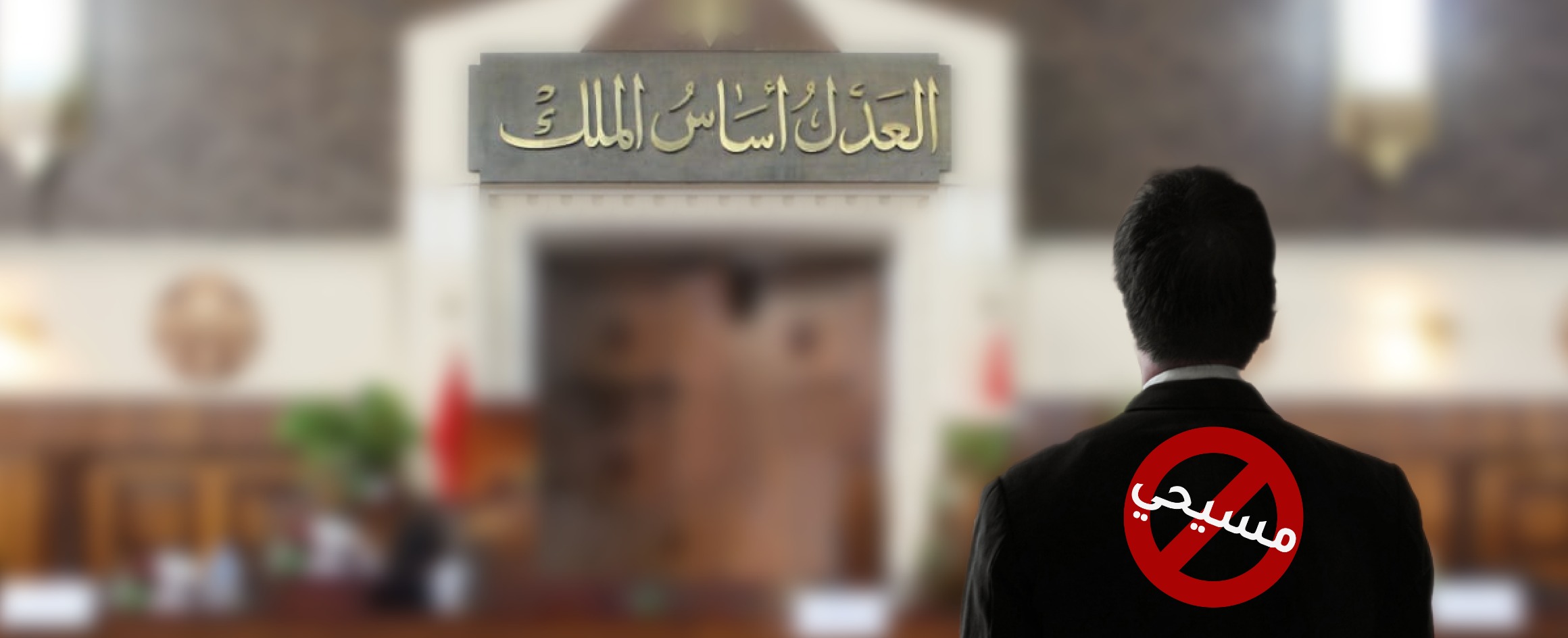
Judge Essam Refaat stresses that rejecting Christians’ testimony has complex consequences, because this conduct violates the texts of the constitution and the law and the settled principles of Islamic sharia; such actions undermine social peace, disturb public order and squander the concept of “the state of citizenship and the rule of law”, as he put it.

Article 110 of the Code of Criminal ProcedureThe investigating judge hears the testimony of the witnesses whom the litigants request to be heard, unless he sees no benefit in hearing them The judge thus commits a legal and constitutional violation if he refuses to hear witnesses because of their religion and not for any other reason, according to Refaat. |
Judge Refaat stresses that the rule “a non-Muslim may not have guardianship over a Muslim” corrupts society: if it were applied, Minister Boutros Ghali would not be able to refer an employee accused of negligence to legal affairs, because “a Christian has no guardianship over a Muslim”, and the courts would drop all the cases of corruption, murder, drugs and prostitution in which Christian police officers took part, because police reports are a form of testimony.
Ten Per Cent of Egyptians Are Exposed to Religious Discrimination in Court
According to Pope Tawadros, Pope of Alexandria and Patriarch of the See of Saint Mark, the number of Christians in Egypt in 2018 was about 15 million Christians. According to the International Religious Freedom Report for 2022, issued by the US State Department (Office of International Religious Freedom), the US government estimates Egypt’s population at 107.8 million (mid-2022 estimate). Most experts and media sources in Egypt estimate Sunni Muslims at about 90 per cent and Christians at ten per cent.
According to the 2022 religious freedom report issued by the US Embassy in Egypt, nearly 90 per cent of Egyptian Christians belong to the Coptic Orthodox Church, while the other Christian denominations combined make up less than two per cent of the population. These include the Anglican/Episcopal, Armenian Apostolic, Catholic (Armenian, Chaldean, Melkite, Maronite, Latin and Syriac) and Orthodox (Greek and Syriac) churches.
According to international reports monitoring the situation of Copts in Egypt, including reports by Human Rights Watch, Christians face negative discrimination, including restrictions on building churches and threats to their personal safety through attacks on Christian villages and families and churches, as well as discrimination in “granting opportunities”, whether in playing football or in obtaining certain jobs, in the judiciary or in ministries and their leadership.
|
Article 53 of the Egyptian Constitution states that: “Citizens are equal before the law, and they are equal in rights, freedoms and public duties; there is no discrimination between them on the basis of religion, belief, sex, origin, race, colour, language, disability, social level, political or geographical affiliation, or for any other reason”. But Article 2 of the constitution creates loopholes for judges, through which they rule according to jurisprudential opinions that entrench some forms of discrimination. The article states that “Islam is the religion of the state, Arabic is its official language, and the principles of Islamic sharia are the principal source of legislation”. |
Lawyer Yasser Saad has witnessed many cases of Christians’ testimony being rejected in Muslims’ cases before the family courts in the Shubra area, which has a large Christian population and more than ten major churches. As a lawyer, Saad was a party to and a witness of two cases at the “Zananiri Court” in the Rod El-Farag district of Shubra, Cairo: the first in 2007 and the second in 2014, both concerning testimony about inheritance.
Speaking about one of the two cases, Yasser Saad says: “While the court session was considering a lawsuit at the Zananiri Court, we were surprised that the judge refused to consider it because one of the witnesses was Christian. We tried to persuade him amicably that refusing to hear the Christian’s testimony was illegal and that there are no articles in the constitution providing for that, but he held to his position until the end and asked the plaintiffs to find a substitute Muslim witness as soon as possible”.
In both cases, Saad offered the clients to file a complaint against the judge for violating the constitution, but they refused, fearing it would cause “confusion”, given the sensitivity of complaining about the rejection of their testimony and their sense of discrimination.
Inheritance declarations, the legal term for inheritance cases in Egypt, are based mainly on witness testimony; therefore, not accepting a Christian’s testimony in such cases not only harms his rights as a citizen, but also disrupts people’s interests and puts them in hardship because the heirs cannot obtain their financial entitlements, whether from government bodies or private ones such as private banks, private hospitals and others, according to Saad.
Breaking the Law on the Bench
According to lawyer Yasser Saad, there is nothing in Egypt’s Law of Evidence in Civil and Commercial Matters No. 25 of 1968 confirming the rejection of a Christian’s testimony in cases relating to Muslims in Egypt. According to Article 86: “The witness must swear an oath to tell the truth and nothing but the truth, otherwise his testimony is void, and the oath shall be taken according to the procedures specific to his religion if he so requests”, which is an explicit recognition of accepting testimony and oaths from non-Muslims. Article 82 also states that: “A witness may not be challenged even if he is a relative or an in-law of one of the litigants, unless he is incapable of discernment”.
According to Saad, nothing prevents a Christian’s testimony, but some judges hold to the Hanafi school, the basis of Egyptian legislation, which holds that witnesses must be two “upright men”, and for Abu Hanifa the upright witness must be a Muslim; some judges see the attribute of “uprightness” as meaning the witness must necessarily be a Muslim.
Saad explains that under Judicial Authority Law No. 46 of 1972, a complaint can be filed against any judge with the Judicial Inspection Department if he breaches the law, but the problem is that the procedures are financially costly, and not all clients with cases are prepared to waste years in court on a side case against the judge, delaying their original case and their financial interests.

The Church Ignores the Discrimination
The investigation’s reporter tried to reach other cases of Christians whose testimony had been rejected, but she always ran into their reply: “We’ll ask Father first”, meaning they first needed to consult the church; the matter would end with them disappearing without cooperating with her to recount the discrimination they had faced.
Most Christians in Egypt are afraid to talk about sensitive issues like this, but according to lawyer Yasser Saad, the church deliberately ignores this subject despite its importance and its impact on peaceful coexistence between religions in Egypt.
To get the church’s point of view, the investigation’s reporter contacted Father Moussa Ibrahim, spokesperson for the Coptic Orthodox Church in Egypt, and asked him for an appointment to respond to the testimonies she had obtained. At first she contacted him via WhatsApp, and he sent her his email address to learn more about what the investigation covers; but after that he did not reply to the email he received. The reporter then sent him an official letter from “ARIJ” to meet him or to provide us with answers to the questions raised by the investigation, but we had not received a reply as of the date this investigation was published.
Patrick George, an Egyptian researcher formerly at the Egyptian Initiative for Personal Rights and currently a researcher at the University of Bologna in Italy, commented on the church’s failure to respond to our letter, saying: “It is better to take the church out of this dispute and limit its role to religious affairs. We Christians are Egyptian citizens, and we must obtain our rights through the courts like all citizens. This phenomenon can be stopped judicially if a Christian files a lawsuit against this type of discrimination, but we are not making enough effort to recover our rights”.
(Video) Makarios Lahzi: I have grown used to facing discrimination
Makarios Lahzi, a Christian lawyer from Sohag, had his testimony rejected in Cairo inside a Ministry of Justice office, where he was attending a friend’s civil marriage contract at the office for marriages to foreigners. While he was at the ministry’s headquarters, a Muslim citizen asked him to witness his marriage to a foreign woman. Makarios handed the office employee his identity card, and as soon as the employee saw the religion field, he returned the card and asked for another, Muslim witness.
Makarios says: “What was striking, after my testimony was rejected, was the reaction of the foreign bride, who showed signs of displeasure and shock and asked whether, if her Christian brother had come to witness her marriage to a Muslim, his testimony would have been rejected. She also asked whether this was really a civil marriage office”.
Makarios felt the clear discrimination and described it saying: “Overall there is a hurtful feeling, but I have grown used to facing discrimination as a Christian in Egypt, so I dealt with the matter professionally and got past the situation. But the idea remained in my mind that a Christian in Egypt is less than a Muslim and not a full citizen, and this undoubtedly creates big problems for the idea of citizenship”.
Makarios Lahzi witnessed another case of discrimination against a Christian witness, when he was representing a client from the Shubra area, which has a large Christian population. The client brought two witnesses from among her neighbours, and as soon as the judge learned the identity of the two witnesses he decided to postpone the case. After the two witnesses left, the judge told the lawyer: “The witnesses have to be Muslims”. Makarios was then forced to bring two other, Muslim witnesses.
Makarios concluded that the judge resorted to applying Islamic sharia, relying on Law No. 1 of 2000, in its third article, which states: “In matters for which there is no text in the accompanying law or the laws in force, we resort to the most authoritative opinions in the school of Imam Abu Hanifa”.
Makarios says changing the situation is not easy, but it requires putting a clear text in the law permitting a Christian’s testimony, so that judges do not resort to Islamic sharia. He explains that for this to happen, there must be a lawsuit in court filed by a witness whose testimony was rejected, through which it could be referred to the Supreme Constitutional Court to amend the law.
The Difficulty of Proving That a Judge Rejected a Christian’s Testimony
The Egyptian Initiative for Personal Rights regularly documents incidents of discrimination, whether on the basis of gender or religion, and has issued several important studies on the subject. The investigation’s reporter contacted lawyer Hoda Nasrallah, a researcher at the Egyptian Initiative for Personal Rights, who confirmed the existence of a fatwa issued by Dar Al-Ifta and published on its official page stating that one of the conditions for a witness against a Muslim is that he also be a Muslim, and that there are many cases in which the judge rejects a Christian’s testimony on this basis. But the initiative has been unable to file a lawsuit against “the unconstitutionality of this approach”, because the judge’s rejection usually comes orally and is not recorded in the session minutes; the judge rules to postpone the case without stating in the official records the reason relating to the rejection of the Christian’s testimony.
Lawyer Hoda Nasrallah says: “In 2014, a Muslim woman was subjected to beating, domestic violence and many abuses, so she went to court to obtain a divorce for harm. The witnesses to the violence against her were her neighbours in the same building. The woman brought the witnesses and was surprised that the judge rejected their testimony because they were Christians”.
(Video) Hoda Nasrallah: There is not a single lawsuit against a judge who rejected a Christian’s testimony
The Egyptian Initiative for Personal Rights has documented cases of Christians’ testimony being rejected in Muslims’ cases, including an incident in June 2021, when the testimony of Egyptian Christian citizen Hany Riad was rejected in a Muslim’s inheritance declaration.
In 2017, the initiative documented the court’s rejection of a Christian citizen’s testimony in the inheritance declaration of the mother of Mahmoud Ezzat El-Alayli, a Muslim citizen.
But lawyer Hoda Nasrallah also stresses that the absence of a lawsuit before the courts against the rejection of a Christian’s testimony because of religion prevents the matter from being considered before the Supreme Constitutional Court: “So far there is not a single lawsuit against a judge who rejected a Christian’s testimony, and therefore I cannot challenge the rejection of testimony, and the Egyptian Initiative has no standing to file a lawsuit like this”.
(Video) Patrick George: The Copts’ sense of discrimination is hard to overcome
For his part, Patrick George, currently a researcher at the University of Bologna in Italy, says that while working at the Egyptian Initiative for Personal Rights in 2019, he received oral complaints from Copts whose testimony had been rejected in court because of their religion, ranging from seven to eight cases a month from various areas of Egypt.
George adds that most of the complaints came from Copts living outside Cairo: “The further we move from the capital, the more widespread the phenomena of discrimination against Christians. These Copts’ sense of negative discrimination is hard to overcome. We, lawyers, journalists and politicians, have fallen short in acting to stop this phenomenon; we have left judges to their personal whims inside the courts, so that they practise discrimination against the right of citizenship”.
Patrick George was arrested in 2020 over an article he had published on the “Daraj” website documenting incidents of discrimination against Christians in Egypt. Among the issues he discussed in the article was the rejection of Christians’ testimony in Muslims’ cases. Patrick believes political and judicial support is important if we want to stop this phenomenon, so that whoever objects to it is not described as stirring up sectarian strife.
Breaching International Treaties
The existence of this type of discrimination against Christians, in the non-acceptance of their testimony, constitutes a breach of the international conventions and commitments Egypt has concluded.
|
Egypt signed the International Covenant on Civil and Political Rights under Presidential Decree No. 536 of 1981, and the Covenant states in its second article that “Each State Party to the present Covenant undertakes to respect the rights recognised therein and to ensure these rights to all individuals within its territory and subject to its jurisdiction, without any distinction on account of race, colour, sex, language, religion, political or other opinion, national or social origin, property, birth or other reasons”. It also states that “Each State Party to the present Covenant undertakes, where its existing legislative or other measures do not actually provide for the realisation of the rights recognised in the present Covenant, to take such legislative or other measures as may be necessary for this realisation, and to ensure an effective remedy for any person whose rights or freedoms recognised in the present Covenant are violated, even if the violation was committed by persons acting in an official capacity”. |
Accordingly, signing this “International Covenant” obliges the state to ensure that every such complainant has a competent judicial, administrative or legislative authority, or any other authority provided for by the state’s legal system, to rule on the rights he claims were violated, that he has the possibilities of judicial remedy, and that the competent authorities enforce the rulings issued in favour of complainants.
|
Egypt also signed the 1981 African Charter on Human and Peoples’ Rights under Presidential Decree No. 77 of 1984, and Article 2 of this Charter states that “Every person shall enjoy the rights and freedoms recognised and guaranteed in this Charter without discrimination, especially if the discrimination is based on racism, race, colour, sex, language, religion, political or any other opinion, national or social origin, fortune, birth or any other status”. Egypt also signed the Arab Charter on Human Rights of 2004, which states in its third article that “Each State Party to the present Charter undertakes to ensure to every person subject to its jurisdiction the right to enjoy the rights and freedoms set forth in this Charter, without distinction on grounds of race, colour, sex, language, religious belief, opinion, thought, national or social origin, wealth, birth or physical or mental disability. The States Parties to this Charter shall also take the necessary measures to guarantee effective equality in the enjoyment of all the rights and freedoms set forth in it, in a manner that ensures protection against all forms of discrimination”. |
Despite all the legal guarantees and international treaties Egypt has signed, Christians face daily discrimination in courtrooms before the “bench of justice”, which turns a blind eye to applying the principle of “citizenship and equality”, leaving Soliman Shafik and other Copts to find themselves “second-class citizens”.
This investigation was produced with the support of ARIJ.