
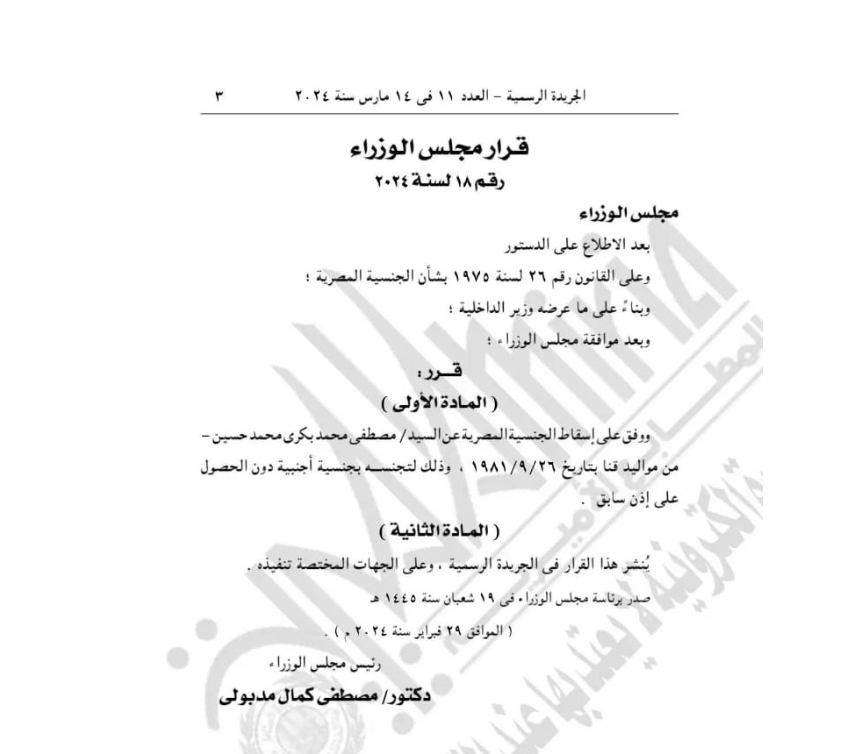
In March of this year, Mostafa Mohamed Bakry (an Egyptian, born in 1981 in Qena Governorate, southern Egypt) was shocked by Cabinet Decision No. (18) of 2024, which revoked his Egyptian citizenship. According to the decision published in the Official Gazette (Issue 11) on March 14, the move was justified by his acquisition of foreign nationality without obtaining permission from the Egyptian government.
In 2017, the Egyptian Parliament approved amendments to the citizenship revocation law, stipulating that citizenship could be withdrawn from those who acquired it through fraud or false statements, those convicted by final court rulings of joining any group, association, organization, gang, or entity aiming to undermine the public order, or disrupt the state’s social, economic, or political systems by force or unlawful means. It also applied to those convicted of crimes harmful to national security domestically or abroad, those who served in foreign armies without permission, or worked with foreign governments at war with Egypt.
These amendments sparked widespread anger among political and public circles. The Bread and Freedom Party — still under formation — issued a statement rejecting the changes, describing them as “an act that amounts to a criminal offense.” The statement said: “We view this amendment as part of the systematic measures taken by the regime to suppress its opponents and close the public sphere. Citizenship represents identity, and stripping it away equates to erasing a person’s existence. A person stripped of citizenship loses all identification papers, political and civil rights, and economic and social rights, and their passport becomes invalid. Moreover, their children would be born stateless and without rights.”
The statement further argued that the amendments were unconstitutional and violated Article 6 of the 2014 Constitution, which states: “Citizenship is a right for anyone born to an Egyptian father or mother.” It emphasized that the Constitution only authorized the legislature to regulate acquired citizenship (naturalization), not original citizenship. Instead of improving the citizenship law, the authorities have moved to amend it in a way that deprives people of their rights. “These amendments grant administrative bodies the authority to strip citizenship based on vague and broad criteria,” the statement continued, “which the Supreme Constitutional Court has repeatedly ruled unconstitutional, especially considering that crimes like terrorism, murder, and treason already have defined penalties under the law.”
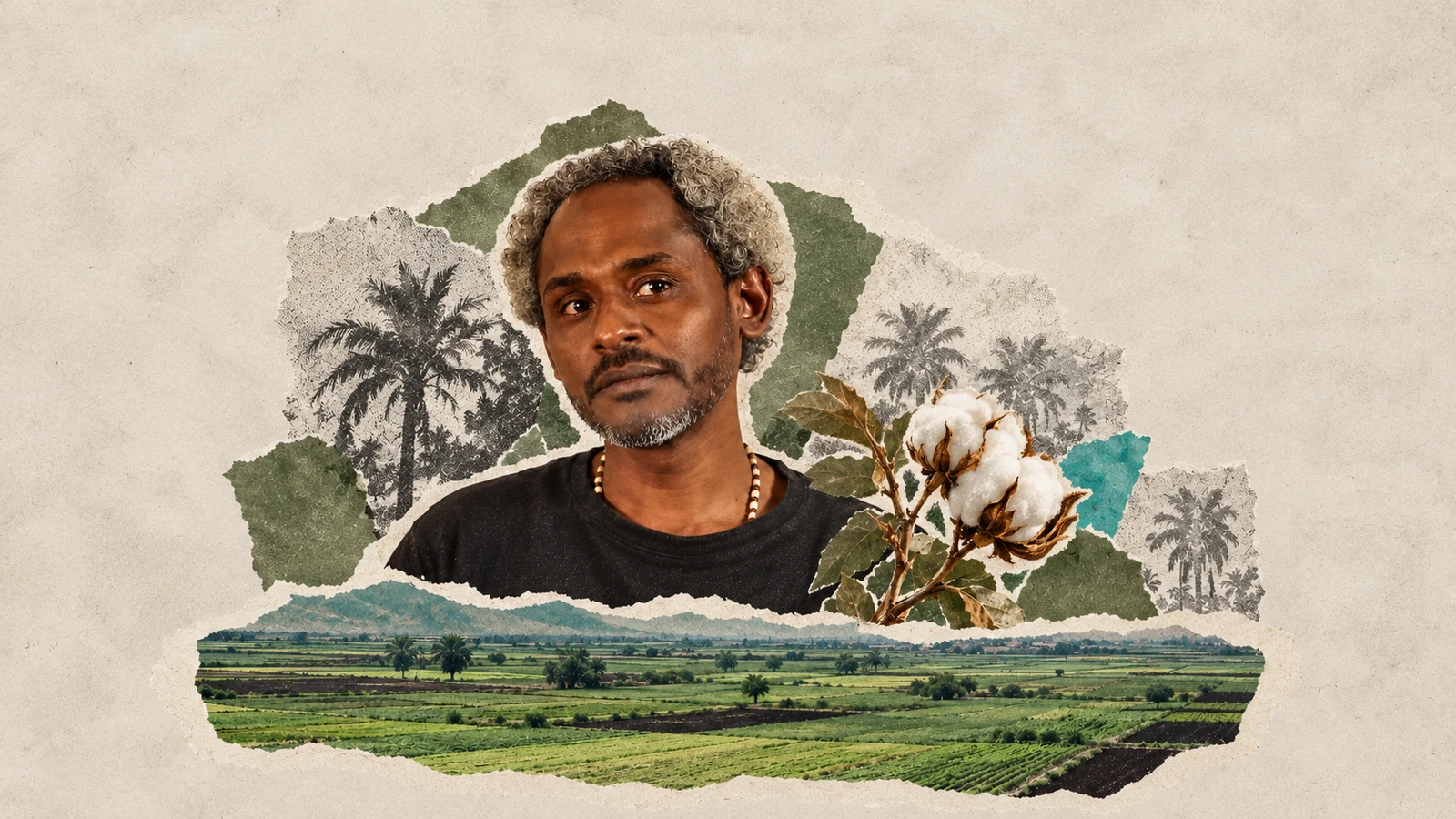
Bakry was born in the village of Armant in Qena Governorate in 1981. After completing his education with a commercial diploma, he worked in the tourism sector. Some years later, he married a French woman working in the same company, and together they decided to move permanently to Paris in 2004 to seek better job opportunities, where Bakry also continued his university education in law.
In 2007, he obtained French citizenship. Until a few months before the January 25 Revolution in 2011, Bakry had no political interests. However, according to him, the revolution rekindled his hope in political participation, leading him to join groups of Egyptians abroad who decided to support the revolution and its aftermath. That moment was his starting point.
He says: “We formed a group called the ‘Youth of Egypt Association,’ through which we organized daily demonstrations in Paris during the 18 days of the revolution. In 2012, we participated, like many others, in protests demanding the departure of the military council from power in Cairo, as we believed they would steal the revolution from us.” He noted that the group continued to be active during the Muslim Brotherhood’s rule, which brought former President Mohamed Morsi to power, but during that period, internal divisions emerged as different ideologies surfaced — some aligning with the Islamic current, others with the left or the authorities.
Bakry recounts his efforts and those of his group during the formation of the Committee of Fifty, tasked with drafting Egypt’s constitution, which was established by Decree No. 570 of 2013. He says: “We contacted them to demand that Egyptians abroad be represented in the Egyptian Parliament and be granted the right to vote, as is the case in many countries, including Tunisia.” Indeed, the committee responded, and eight seats in Parliament were allocated to Egyptians abroad from that time.
He adds: “I never expected that my political activism would lead to persecution and the stripping of my Egyptian citizenship one day, especially since I was merely exercising my constitutional and natural right to align with the opposition. In 2014, I was responsible for the campaign of opposition presidential candidate Hamdeen Sabahi in France, and I worked hard to gather votes for him. In 2015, I attempted to run for one of the Parliament seats allocated to Egyptians abroad, but I was unsuccessful. I later boycotted the 2020 elections due to the arrest of several politicians and young party members in what became known as the Hope Case.”

The “Hope Case” and Beyond
The “Hope Case” dates back to June 2019, when security forces arrested a number of political activists, journalists, and human rights defenders over their discussions to establish a civilian electoral coalition. The coalition was intended to include political parties, movements, and independent figures to contest the parliamentary elections scheduled for November of that year. The State Security Prosecution charged them with “joining a terrorist group to achieve its aims” and “publishing and broadcasting false news via social media to incite unrest and attempt to overthrow the regime,” in addition to accusing some of financing and supplying the terrorist organization.
Bakry resumes his account, adding: “In 2018, I met Ambassador Maasoum Marzouk, who was intending to run for the presidency at that time. However, the authorities’ practices forced him to withdraw, especially after systematic harassment led many potential candidates, such as human rights lawyer Khaled Ali, politician Mohamed Anwar El-Sadat, and military officer Ahmed Konsowa, to either retreat or withdraw.”
The harassment and violations practiced by the Egyptian authorities during the 2018 election cycle provoked widespread anger. Colonel Ahmed Konsowa, after announcing his presidential bid, was promptly tried and sentenced to six years in prison. Mohamed Anwar El-Sadat withdrew, citing the restrictive electoral timetable and emphasizing that “the matter was much bigger than just collecting signatures or preparing proxies.” Meanwhile, Khaled Ali pulled out, asserting that the opportunity to transform the elections into a new beginning had vanished. Ambassador Maasoum Marzouk was prosecuted on charges of “participating with a terrorist group to achieve its aims,” “receiving terrorist-related funding,” and “conspiring to commit a terrorist crime,” after he called for a referendum on whether the political system in Egypt should continue.
Bakry continues: “Naturally, following the arrest of Ambassador Marzouk, we contacted the European Union and formed a pressure group abroad to force Cairo to release him and other political detainees, especially since he was on the verge of founding the ‘Democratic People’s Party.’ However, the experiment was aborted before it could even start.” He points out that his focus on the Grand Ethiopian Renaissance Dam (GERD) and Egypt’s water crisis also caused problems for the authorities, as he co-founded the “Egyptians Abroad Front for the Defense of the Nile,” which lobbied France and the European Union to intervene and push for suitable solutions to the dam crisis that, if completed, would severely endanger Egypt’s water security.
Between 2020 and 2022, Bakry and his group worked extensively on the GERD issue, which — according to him — led to a break-in at his home in Paris in 2022, allegedly by Egyptian security agents. They stole his laptop and French passport. Refusing to back down, he filed a case in French courts accusing the Egyptian authorities of surveillance and theft. However, this case reportedly angered the authorities.
When Bakry traveled back to Egypt in October 2022, he was detained at Cairo International Airport for five days and interrogated on charges of “tarnishing Egypt’s image abroad” due to his role in founding the Nile Defense Front. He was subsequently deported back to France.
He says: “The security forces bargained with me, offering to allow me to re-enter Egypt and not revoke my citizenship if I dropped the lawsuit. So, I agreed and withdrew the case. Nevertheless, I was banned from entering Egypt again last December when I attempted to return to run for the presidency — asserting my right as a citizen, even if the elections committee were to reject my papers on the grounds that I hold foreign nationality.”
Bakry recounts: “I was stopped at Marsa Alam Airport and deported the following day from Hurghada International Airport,” adding bitterly, “I have been permanently barred from entering my homeland.”
He later discovered in February that a decision had been issued to strip him of his Egyptian citizenship, despite his withdrawal of the lawsuit under previous pressure. He comments: “The decision is arbitrary and vindictive, clearly due to my affiliation with the opposition abroad. I am currently living through the worst days of my life. I cannot imagine myself without my Egyptian identity — it is my right.”
Bakry firmly believes that one of the main reasons behind the revocation of his nationality was the work he and his group did compiling lists of Jewish/Israeli individuals of Egyptian origin who had started contacting the Egyptian government or pursuing legal action to reclaim property they abandoned after the Free Officers Movement in the 1950s, or to purchase land and properties in Sinai. “We handed these lists to military intelligence officials in Paris, and just weeks later, my citizenship was revoked,” he concludes.
Revoking Citizenship as a Tool of Intimidation
Amr Hamzawy, Professor of Political Science and Development Studies, argues that the wording of the amendments to the Citizenship Revocation Law is “elastic” and grants the authorities unchecked discretion to charge Egyptians with vague, nebulous offenses that result in the stripping of their citizenship. He adds: “According to the 2014 Constitution and the international conventions signed by successive Egyptian governments, citizenship is a fundamental right that cannot be revoked by the unilateral will of rulers, even if legally or judicially framed. Thus, the Egyptian Cabinet’s violation of the Constitution and international treaties by passing these amendments implicates it in breaching the constitutional and legal foundations that safeguard citizens’ rights and freedoms.”
Commenting further, human rights lawyer Ali Ayoub explains that Article (10) of Law No. 26 of 1975 addresses cases like Bakry’s. It states: “No Egyptian may acquire a foreign nationality except after obtaining a permit issued by a decision of the Minister of Interior; otherwise, they shall still be regarded as Egyptian in all respects, unless the Council of Ministers decides to revoke their citizenship according to the provisions of Article (19) of the law. Upon acquiring a foreign nationality with permission, the person shall lose Egyptian nationality.”
He continues: “The legislator in the old law emphasized that acquiring a foreign nationality without the Egyptian government’s (i.e., Ministry of Interior’s) permission does not strip a person of their Egyptian nationality. They remain Egyptian despite holding another nationality, potentially resulting in dual citizenship. In application of this, the Administrative Court ruled that an Egyptian’s naturalization with British citizenship does not revoke their Egyptian nationality if they did not obtain permission for such naturalization. The Council of Ministers, however, retains the authority to impose a penalty by revoking Egyptian nationality in such cases, and it has exercised this authority on several occasions. Ideally, the individual should request permission before acquiring foreign citizenship; if requested afterward, the Egyptian nationality is only lost from the date permission is granted.”
Meanwhile, in his comments to Zawia3, human rights lawyer Mamdouh Gamal criticizes the article concerning revocation of Egyptian citizenship on the grounds of “harming state security from abroad.” He describes it as a “vague” and poorly defined article, noting that although the law outlines conditions for revoking citizenship, these conditions violate the Egyptian Constitution—particularly Article 6 of the 2014 Constitution, which enshrines nationality as an inalienable right.
Gamal argues that the amendments to the Citizenship Law are selective and have been used more against political opponents than to genuinely serve the nation’s higher interests. Commenting specifically on the decision to revoke Bakry’s citizenship, he states: “According to the 1975 law, the decision is technically legal, but its application clearly reflects bad faith by the authorities, given that others who have obtained foreign nationalities have not had their Egyptian citizenship revoked.” He emphasizes that Bakry has the right to appeal the decision before the State Council at any time and demand the restoration of his nationality.