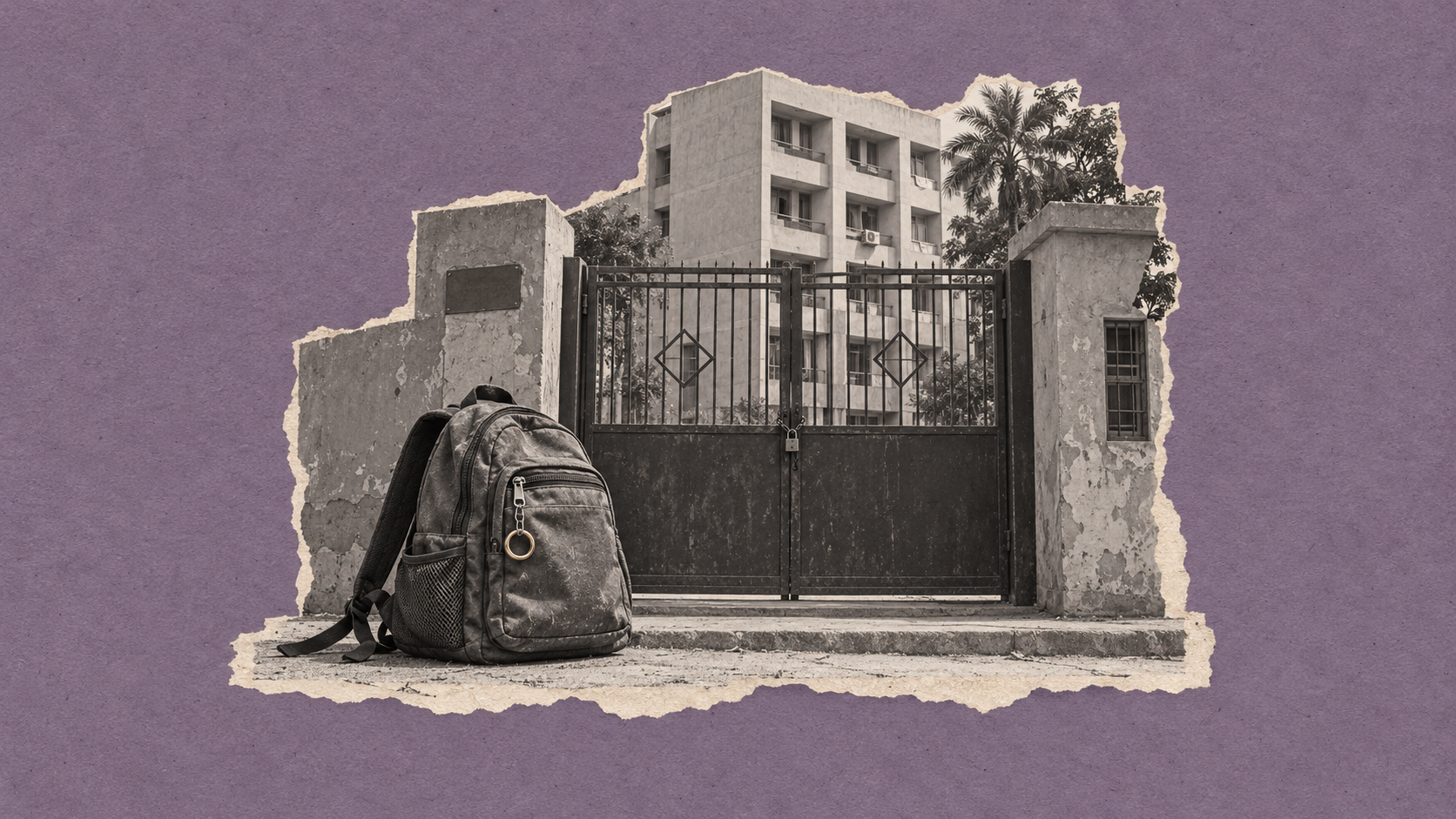

A wave of controversy has erupted in recent days following the announcement by the Minister of Education and Technical Education, Mohamed Abdel Latif, regarding the details of the new 2025 high school system. This system is part of a plan to redesign the scientific and knowledge content for high school grades and distribute it more evenly. According to the minister, the goal, as stated during the conference held last Wednesday, is to reduce the burden on students.
The decisions announced by the Minister of Education concern the new amendments to the high school stage, which will be implemented starting from the next academic year, 2024/2025. For the first year of high school, students will study six core subjects, including Arabic, History, First Foreign Language, Philosophy and Logic, Integrated Sciences, and Mathematics, instead of ten subjects in the previous year. Additionally, the second foreign language will become a pass/fail subject only, not included in the overall grade. For the first time, an Integrated Sciences curriculum will be introduced, replacing the separate Chemistry and Physics courses, along with a redesign of the Geography curriculum, which will no longer be studied in the first year but will become a specialized subject for the arts stream in the following year.
As for the second year of high school, after the amendments, students will study six subjects instead of eight. They will be divided into two streams: the Science stream, which will include Arabic, First Foreign Language, Biology, Physics, Chemistry, and Mathematics, and the Arts stream, which will study Arabic, First Foreign Language, Geography, History, Psychology, and Mathematics. The second foreign language remains a pass/fail subject, not included in the overall grade. In the third year of high school, under the new system, students will study five subjects instead of seven, divided into three streams: the Science stream, which will study Arabic, First Foreign Language, Biology, Physics, and Chemistry; the Math stream, which will study Arabic, First Foreign Language, Mathematics, Chemistry, and Physics; and the Arts stream, which will study Arabic, First Foreign Language, History, Geography, and Statistics. The second foreign language will continue to be a pass/fail subject without affecting the overall grade.

Continuous Changes
In the 1990s, the high school system underwent a modification by introducing elective subjects and advanced-level courses. In 1994, the high school certificate began to rely on the results of exams taken in the second and third years of high school. Students were also given the opportunity to retake the same subject exam multiple times to achieve a higher score, a system known as “Improvement.”
This system enabled some students to achieve a total score exceeding 100%. However, the system did not last long and was later abolished, despite the continuation of the two-year high school system and the division into science and arts streams. In 2012, another modification reduced the system to just one year, focusing on the third year of high school.
Under President Abdel Fattah el-Sisi, the high school system witnessed a significant transformation with the implementation of the “Bubble Sheet” system in 2021. Technology was integrated into the educational process through the use of tablets and the adoption of electronic grading for answer sheets. The “Open Book” system was also introduced in exams, where students were given a booklet containing the essential concepts for each subject before the exam began.
This system was further developed this year, with changes to the question format to include 15% essay questions, while 85% of the questions remain in the multiple-choice “Bubble Sheet” format. These adjustments aim to improve the quality of assessment, providing students with opportunities for critical thinking and written expression alongside their multiple-choice skills, as repeatedly stated by education officials.
With the rise of the new minister to the position of Minister of Education and Technical Education, he surprised citizens a few weeks after assuming office by announcing a new high school system for all three grades, starting from the next academic year. So, how did students and teachers perceive these decisions?
Nady Sheltout, a French language teacher for eight years, residing in Giza, expressed his dissatisfaction with the ministry’s recent decision to remove French as a core subject in the preparatory stage, turning it into an optional activity. He points out that this decision not only marginalizes the importance of the French language for students but also negatively impacts the future of teachers who rely on teaching this subject as a primary source of income.
He explains that this decision also forewarns a decline in students’ future proficiency in foreign languages. Moreover, the decision does not consider the difficult circumstances faced by over 100,000 teachers and their families, who depend solely on teaching French as their only source of income (we searched for an official source to confirm the number of French teachers in Egypt, but we could not find it).
According to the French Embassy in Egypt, the number of schools that follow a French-based educational system in Egypt was around 13 schools in 2016, while the number of bilingual schools that teach French from kindergarten to high school was about 50 schools. In 2021, the Cabinet announced the introduction of French as a second foreign language in public schools, with around 13,000 teachers and supervisors of French in public schools being trained, following a partnership with the French Development Agency signed in 2020. This meant that French would be taught from earlier educational stages instead of just in high school and some preparatory schools.
In his message to the ministry and officials, “Sheltout” urges them not to neglect the French language due to its significant importance in communication and culture. He also calls for reconsidering this decision, which could lead to an educational and social disaster. He wonders, “What will teachers who don’t have other professions do? How will they secure their families’ needs? We only work during the school term and don’t have other professions or alternative sources of income.”
The Ministry of Education mentioned statistics for the 2023 academic year, which include students, schools, classrooms, and teaching staff members, indicating that there are 25,494,232 students, 958,753 teachers, and 60,254 schools, with a total of 551,815 classrooms.
Students Object, Teachers are Angry
Hosna Hamed Salama, a third-year high school student in the arts stream from Banha city in Qalyubia Governorate, expresses her dissatisfaction with the ministry’s recent decision to eliminate some core subjects in high school, including French, Philosophy, and Psychology. She notes that this step represents a severe blow to students who strive to develop themselves in fields beyond English and directly impacts their academic future.
She points out that she started her lessons only two weeks ago and feels greatly disappointed by the cancellation of French as a core subject, considering that learning languages other than English is crucial, especially since these languages open vast opportunities for students in faculties like Alsun and Archaeology. She adds, “Cancelling French is not a wise decision; it is an easy and enjoyable language and represents a valuable addition to our skills.”
Regarding the cancellation of Philosophy and Psychology, Hosna says, “This decision was the most disappointing for me. I deeply love these subjects – I mean French, Philosophy, and Psychology – and they greatly contributed to developing my thinking and perspective on things. The decision has negatively affected us, as well as the teachers who lost part of their work.”
Commenting on the situation, Mohsen Farag, Head of the Curriculum Department at the Faculty of Education, Ain Shams University, says that the recent decisions announced by the Minister of Education regarding the high school system need careful study and gradual implementation, noting that these decisions are not magic solutions that can be applied immediately without side effects.
He explains to Zawia Thalitha that there are positive aspects to these decisions, especially in light of the crisis that education is currently facing. However, there are some matters that require time and further study before they can be implemented, particularly with the start of the new academic year.
Regarding the cancellation of subjects taught in foreign languages, Farag points out that this decision may significantly impact faculties such as Alsun, Arts, and Education, which include language programs. He confirms that the impact of this decision will extend to the admission coordination in these faculties, as it is expected that the acceptance rates in them will decrease, especially in departments that rely on the second language.
He adds that foreign languages are of great importance and cannot be eliminated without considering their impact on various sciences. He expresses concern that the sudden development of curricula could lead to confusion in the educational process.
According to 2023 statistics related to secondary education, the number of secondary school teachers reached 128.9 thousand (96.2 thousand in general secondary education, 32.7 thousand in Al-Azhar secondary education), teaching 2.5 million students (2.1 million in general secondary education, 402.2 thousand in Al-Azhar secondary education) during the 2022/2023 academic year. The average number of students per teacher was 22 in general education. On the governorate level, Giza Governorate had the highest number, with 31 students per teacher, while New Valley Governorate had the lowest, with 6 students per teacher. Similarly, Giza had the highest number, with 40 students per teacher, while North Sinai had the lowest, with 7 students per teacher.
Abdullah Al-Samman Khair, a 27-year-old geology teacher from Suez Governorate, expresses his frustration with the ministry’s recent decision to remove geology as a subject included in the high school grade average. He explains that this decision will lead students to neglect the subject, which is fundamental in many university specializations.
He asserts in his conversation with us, “A decision of this seriousness should not be made suddenly; there should have been preparation for it, so that teachers could adapt to it and plan for their future. You cannot suddenly cut off the livelihood of teachers who have spent their lives in this work. This decision will significantly affect a large segment of the population, leaving many without work.”
He continues, “Removing geology from the grade calculation means that students will focus only on the subjects that directly affect their final grade, which will lead to a decline in their understanding of geology.” He points out that “this decision will create a significant gap between students’ level in high school and university requirements, as geology is an essential part of many specializations.”
Ahmed Shehata, a French language teacher from Banha city, Qalyubia Governorate, also expresses his dissatisfaction with this decision. He says, “The decisions of the Minister of Education are poorly thought out and were surprising to many teachers, as he tries to address several issues, such as overcrowded classrooms and a shortage of teachers, but with unrealistic decisions.” He questions, “What will happen to graduates of the faculties of Arts and Alsun, and what about all those who studied the language? What will happen to their hopes of being appointed and finding job opportunities?”
On the other hand, Hagar Naji, a third-year high school science student, expresses her happiness with the reduction in the number of subjects in high school, noting that it is a positive step in terms of reducing the burden on students, as it may reduce the number of private lessons required.
Hagar criticizes the reduction of the total score from 410 to just 320, pointing out that this will make mistakes in exams more impactful on achieving her dream of enrolling in her desired college. She says, “The margin for error will be greater, and this could lead to losing the dream due to a few lost points.”
Hagar also expresses her concern about the lack of clarity regarding the new curriculum, noting that there have been rumors that the chemistry course will be limited to organic chemistry only, and that new parts might be added to the Arabic language course. She says, “Students now feel lost, fearing to start studying parts of the curriculum that may be added or removed, without a clear vision of what awaits them,” pointing out that second foreign languages, such as Italian, were easy subjects where students could achieve high grades that positively affected their overall score.
Education: A Means to Produce Employees
Writer and political thinker Ammar Ali Hassan asserts that the Cairo authorities treat education as merely a means of producing employees needed by the labor market, pointing out that education is not just about preparing individuals to work in technical fields such as medicine and engineering, or in administrative jobs such as accounting, law, and the judiciary. It is also a means of understanding the world, civilization, and coexistence.
He adds, in his statements to “Zawia Thalitha,” that education plays a crucial role in forming an individual’s awareness of their rights and duties, which drives them to participate actively in politics. However, the current authority ignores other dimensions of education, focusing solely on producing “machines” to work or be exported to the external labor market, without caring about developing the Egyptian individual intellectually, morally, scientifically, and psychologically.
He points out that the elimination of humanities reflects this misunderstanding of the role of education. He expresses surprise at the decision, especially since studies have shown that most extremists are graduates of technical colleges. He confirms that he was one of those who advocated for the introduction of humanities, especially philosophy, for students of technical colleges. However, what happened was the exact opposite, as the teaching of philosophy, history, geography, psychology, economics, and sociology in high school was reduced.
Hassan explains that this trend will negatively impact university education in the future, pointing out that humanities preceded natural sciences by at least a century and that the visions of thinkers and the imaginations of novelists and poets are what science paves the way to translate into reality through experiments. He also warns that reducing or eliminating humanities weakens the ability of the Egyptian individual to compete against artificial intelligence in the coming years, emphasizing that humans are distinguished by their intellectual, moral, emotional, and spiritual richness, which are the aspects that set humans apart from machines.
Ammar Ali Hassan concludes his remarks by stressing the importance of humanities, pointing out that recent studies in the West talk about the complementarity of sciences and interdisciplinary studies, which analyze phenomena using various sciences, including humanities. He emphasizes that reducing these sciences will not save government expenses but will diminish the character of the Egyptian person, especially since the bulk of the state’s budget comes from taxes, and Egyptians have the right to receive a good education in return for what they pay in taxes.
Mohamed Abdel Aziz, Professor of Science and Education at Ain Shams University and an educational expert, condemns the recent decisions taken by the Ministry of Education regarding high school, asserting that these decisions do not fully align with the goal of developing education but rather aim to address some issues, such as the shortage of teachers.
He expresses concern that these decisions may not be the optimal solution for the accumulated problems in the education system, such as overcrowded classrooms and the shortage of teachers.
Abdel Aziz points out that there are many issues and challenges that require in-depth study and comprehensive solutions before declaring that there is genuine progress in the educational system, noting the need to present these decisions to the House of Representatives, as the legislative body, for adequate discussion and appropriate decision-making. He emphasized that there is no harm in waiting for another year to address the topic from all its aspects in a way that serves the interests of students and the educational system as a whole.
Regarding the decisions to reduce the curriculum, Abdel Aziz notes that easing the burden on third-year high school students will positively impact families, as it will reduce the need for private lessons.
As for the decision to cancel the geology subject, Abdel Aziz believes that this decision is in the interest of both the student and the parent. It helps reduce the burden of private lessons, on the one hand, and on the other, he points out that the geology curriculum can be integrated into other related subjects, making it more relevant within the educational framework. He notes that students who wish to study geology in depth will have the opportunity to do so when they join specialized science faculties.
Parliamentary Moves
In response to the appeals of teachers and some parents, MP Freddy El-Bayadi, Deputy Chairman of the Egyptian Social Democratic Party, submitted a parliamentary question addressed to the Prime Minister and the Minister of Education.
The MP said, “We were surprised that the Minister of Education announced a new system involving significant, radical changes to the study and exam system in high school. Is it reasonable for the minister to make all these changes without explaining the reasons or consulting experts? And for the minister to decide on all these changes, which directly affect our sons and daughters and a large segment of Egyptian families, without any dialogue with the Education Committee in the Egyptian Parliament?”
The MP demanded that the minister stop implementing any of these changes, urgently respond to these questions, and seek a genuine societal and parliamentary dialogue with the Education Committee, transparently and clearly announcing the names of the experts who approved these amendments and their viewpoints.
Students and experts agree that the decisions regarding the changes to the high school system over the three years were not well studied, and the minister did not allow himself or his assistants to study the impact of these decisions on students or teachers. This was evident in teachers’ demands that the minister should have consulted with professors and experts to discuss such crucial decisions. They also believe that these decisions should have been presented to Parliament for discussion, and some emphasized the importance of teaching languages to students, citing the global openness and the need for communication that necessitates proficiency in more than one language. They called for a reconsideration of the decision to exclude the second language from the overall grade and cautioned against rushing to make more decisions that might disrupt the educational system, in addition to discussing the restoration of teachers’ dignity.
Students believe that there is an urgent need for the Ministry of Education to present a comprehensive and clear vision to the public, including students, teachers, parents, and everyone, about the importance and benefits of issuing these decisions. They point out that such crucial decisions are likely to affect students’ mental well-being and their educational plans. This contrasts with a situation where the Ministry of Education would have indicated that changes would be made to the high school system and that there would be time to discuss and possibly approve them, which did not happen, but must be considered in future decisions. Meanwhile, experts and politicians we spoke with believe that the recent steps are merely decisions aimed at diminishing the new generations’ knowledge, especially since they are related to subjects that encourage students to embrace values of citizenship and patriotism.