At a time when under-five mortality worldwide has fallen to a historic low, according to a United Nations report, dropping to 4.9 million in 2022 from about five million children around the world who died before reaching the age of five in 2021, the same rates have risen markedly in Egypt. The latest data issued by the Central Agency for Public Mobilization and Statistics in 2023 showed a significant rise in mortality rates for children under five and infants under one year during 2021 and 2022.
Meanwhile, the fertility rate fell from 3.5 births per woman to 2.76 births, and in contrast the number of births in Egypt fell in 2023 to 2,044,000, a decrease of 149,000 births compared with 2022, according to the Ministry of Health and Population’s database of births and deaths.
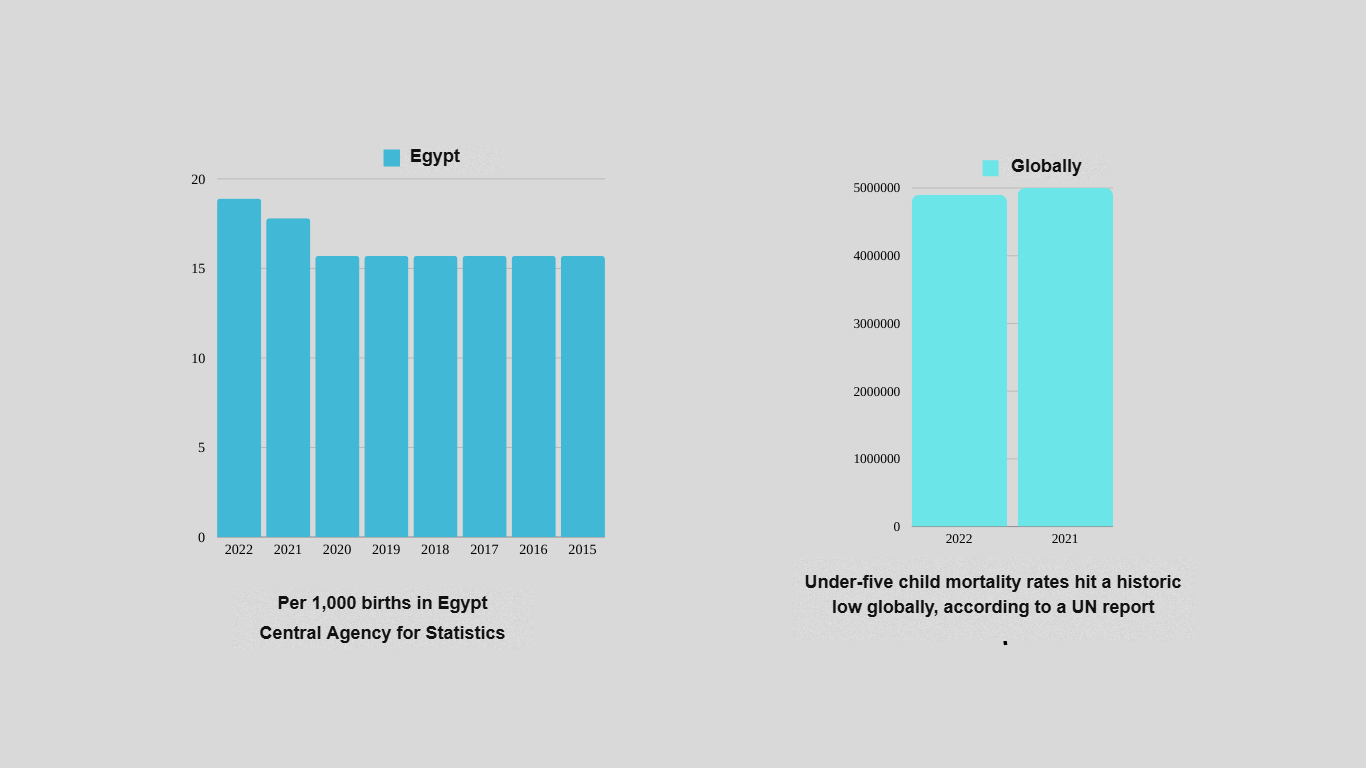
According to CAPMAS indicators, the infant mortality rate (under one year) rose in 2021 to 17.8 deaths per thousand live births, instead of 15.7 in the years from 2015 to 2020. The rate rose again in 2022 to 18.9 deaths per thousand births, with the mortality rate among male infants reaching 20.50, compared with 17.1 among females. Under-five mortality also increased in 2021 to 21.8 deaths per thousand live births, instead of 20.4 in 2019 and 2020, before jumping again in 2022 to 22.7 deaths per thousand, with the rate among boys under five reaching 24.6, compared with 20.7 among girls.
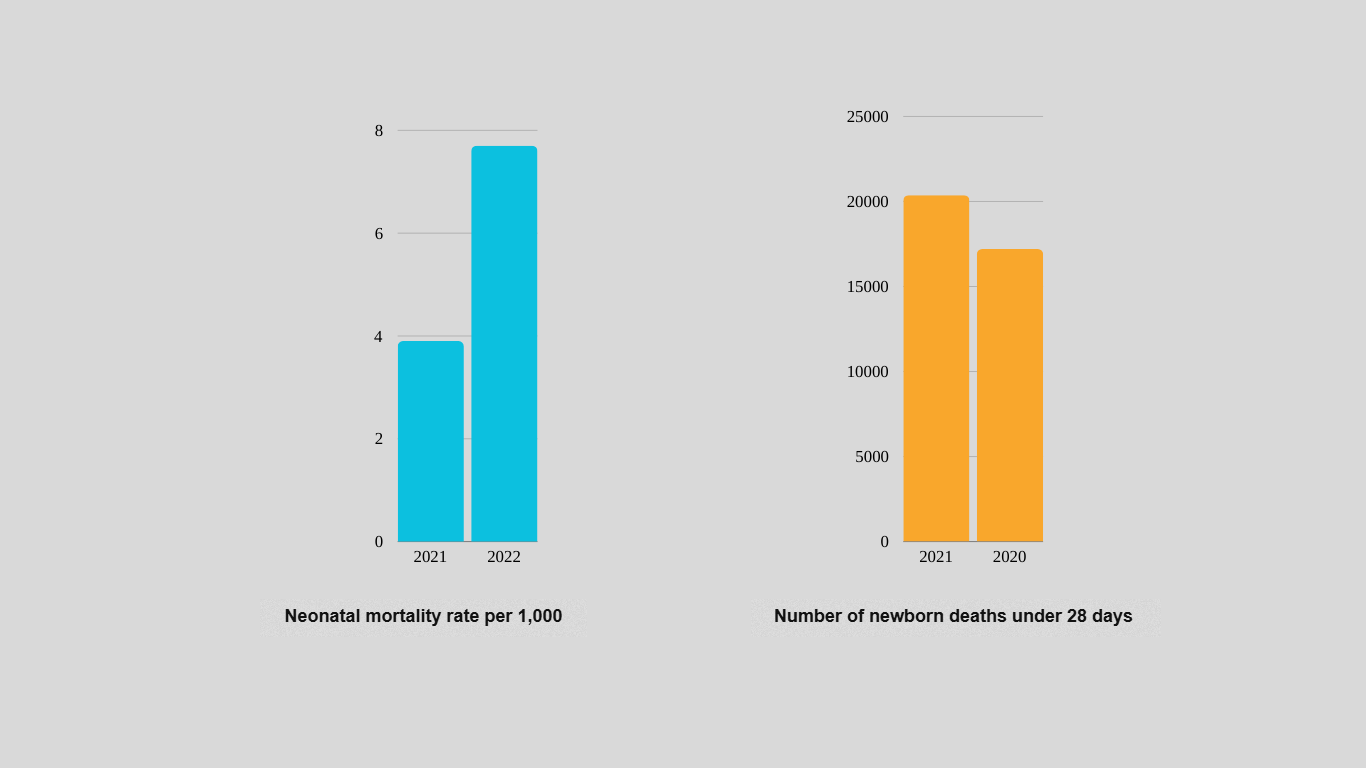
According to the analytical report of the annual bulletin, the number of deaths of newborns under 28 days old reached 20,372 in 2021, compared with 17,203 in 2020, an increase of 18.4%, and the neonatal mortality rate reached 9.3 per 1,000 live births, compared with 7.7 per 1,000 live births in 2020. The number of infant deaths reached 38,897 in 2021, compared with 35,197 in 2020, an increase of 10.5%, at a mortality rate of 17.8 per 1,000 live births compared with 15.7 per 1,000 live births in 2020, while the number of under-five deaths reached 47,716 in 2021, compared with 44,300 in 2020, an increase of 7.7%, at a rate of 21.8 deaths per 1,000 live births compared with 19.8 deaths per 1,000 in 2020.
Causes of Child Deaths
Nagwa El-Shafei, deputy head of the Egyptian Medical Syndicate and a member of the Senate, explains to Zawia3 that the causes of child deaths in Egypt differ by age group. Most deaths of newborns up to one month old are due to birth asphyxia, severe respiratory distress, sepsis and some cases of premature birth, in addition to congenital defects. She adds that bronchial and respiratory infections and gastroenteritis with dehydration are among the main causes of child deaths in Egypt in the first five years, in addition to weakness of some body systems, bleeding disorders and congenital defects, pointing out that mortality rates are higher in cities than in the countryside because of environmental pollution and high population density, which increase the risk of children catching infections and pollutants.
In 2021, deaths of infants under one year were attributed to diseases of the circulatory system (28.5%), other respiratory diseases (16.3%) and pneumonia (11%), according to the statistics agency’s “analytical report of the annual bulletin” in 2022. Infant mortality rates are higher in urban areas, at 18.9 per thousand births compared with 12.5 in rural areas, with Cairo ranking first among Egypt’s governorates in infant mortality at 23.7 deaths per thousand births, and Alexandria second at 23.1. Under-five children in urban areas, however, are less likely to die than their peers in rural areas, as their mortality rate rises in rural areas to 24.3 per thousand births compared with 20 per thousand in urban areas.
MP Ayman Abul-Ela, a consultant in gastroenterology and hepatology and a member of the House of Representatives’ General Committee and Health Affairs Committee, believes that the precautionary measures that accompanied the spread of the coronavirus pandemic over a year and a half weakened bodies’ resistance to chest microbes and bacteria, leading to an absence of antibodies that could be passed on from mother to child, so that child deaths increased as a result of weak immunity and resistance, especially as chest infections are among the main causes of child deaths in Egypt in general. He told Zawia3 that it is a global phenomenon that has raised deaths by between 1% and 2%, adding that malnutrition is one of the reasons behind it.
The United Nations Children’s Fund attributes under-five deaths worldwide to causes including premature birth, birth complications, pneumonia, diarrhoea and malaria. UNICEF considers malnutrition the cause of two thirds of child deaths worldwide, and says Egypt is among 36 countries where 90% of the global malnutrition burden is concentrated, which includes undernutrition (wasting, stunting and underweight), vitamin or mineral deficiencies, overweight and obesity, adding that anaemia (a lack of red blood cells) affects 27.2% of children under five. The Egyptian Food Bank had revealed that the rate of stunting among children under five in Egypt was about 13%, while wasting and underweight among children stood at 8% and 6% respectively, and the anaemia rate among children under five reached 43%.
The prevalence of undernourishment in Egypt had stabilised at 4.9% during 2012-2016, but rose again before the flotation of the pound to about 5.4% during 2018-2020, and according to World Bank data it reached 7.0% of the population in 2021.
The MP blames population growth for the rise in child deaths, because of its impact on the health system’s capacity, considering that health services in urban areas are relatively better than in rural areas.
COVID-19
Nagwa El-Shafei attributes the rise in child mortality in Egypt in 2021 and 2022 to the spread of the coronavirus pandemic, saying that most infections among children were treated as pneumonia or gastroenteritis, and that with hospitals overcrowded with patients, PCR swabs were not performed on children showing some symptoms of the disease unless one or both parents had COVID-19, so most of them did not receive the COVID-19 treatment protocol. She rejected claims that the virus does not kill children, saying they were based on the assumption that children’s lymphatic system has a high capacity to resist viruses, and that these claims are not based on rigorous scientific studies.
A study published in the specialised journal The Lancet Child and Adolescent Health in 2020 confirmed that COVID-19 deaths among children are very rare, occurring in less than 1% of cases; only four of the 582 infected children included in the study died, they were over 10 years old, and two of them had health problems.
The United Nations Children’s Fund (UNICEF) revealed that 0.4% of the 4.4 million COVID-19 deaths worldwide were people under 20, numbering more than 17,400, 47% of whom were children aged 0 to 9, adding that the evidence so far does not point to an increase in deaths of children and young people linked to the COVID-19 pandemic in 2020 and 2021, and that some deaths may result from interruptions to services such as immunisation and disruption of life-saving interventions.
According to the Middle East Council on Global Affairs, about 263,000 deaths in Egypt in 2020 and 2021 were linked to the novel coronavirus pandemic, equivalent to 12 times the official number of pandemic deaths, 24,802.
Mohamed Hassan Khalil, a health systems expert and head of the Committee for the Defence of the Right to Health, a Cairo-based popular committee that set out health-related demands, considers the coronavirus the likely cause of the rise in deaths of children and pregnant mothers, and in mortality in Egypt in general, in 2021 and 2022. He considers that what the government promotes as a decline in population growth and fertility rates is incorrect, given the rise in deaths, and notes that population growth spikes occur around the world in times of war and revolution and are linked to social anxiety, which is what happened in Egypt from 2011, when growth reached 2.50%, but the rate began to fall from 2015, returning to its normal levels of between 1.6% and 1.8%, then fell to 1.4% during the two years of the coronavirus pandemic, adding that the official figures for coronavirus deaths are illogical.
The health systems expert links undeclared coronavirus infections with the fact that diseases of the circulatory system, followed by diseases of the respiratory system, are the most prominent causes of death for infants under one year, as revealed by the analytical report of the annual bulletin, explaining that the virus causes respiratory infections and that the clots it causes were classified under circulatory system diseases. He ruled out congenital defects being the main cause because they are rare, accounting for eight per thousand.
Commenting, Ayman Sabae, health researcher at the Egyptian Initiative for Personal Rights, believes that the rise in child mortality from 2020 to 2022 needs in-depth study to determine its causes, but links those deaths to the shortage of health services during the pandemic and hospitals overcrowded with coronavirus patients, which harmed health services on the one hand and led some patients to avoid hospitals for fear of infection on the other. He ruled out that the rise resulted from infection with the virus itself, since child deaths from coronavirus infection worldwide are extremely rare.
According to the United Nations Children’s Fund (UNICEF), 68% of countries reported some disruption to child health checks and immunisation services during the coronavirus pandemic, 63% of countries reported disruptions to antenatal checks and 59% to postnatal care.
Population Density and Pollution
Eid El-Attar, consultant in paediatrics and neonatology and assistant professor at the Faculty of Medicine, Taibah University, stresses that gastroenteritis is a main cause of child deaths in Egypt, and that respiratory diseases and pneumonia are the second cause, considering that the rise in deaths from 2020 to 2022 is linked in one way or another to the pandemic, whether through infection or because hospitals overcrowded with patients harmed the provision of health services to other patients, in addition to very high summer temperatures and power cuts, which make children vulnerable to heat stress and dehydration and may lead to death.
El-Attar considers that high population density in cities and their pollution make them fertile ground for transmitting infectious diseases and epidemics, which has led to more child deaths in urban areas than in rural areas. He denied that the medicine shortage crisis is one of the causes of child deaths, given the availability of alternatives containing the same active ingredient, pointing to rare cases of death resulting from allergies to particular drug compounds and active ingredients.
Egypt’s overall inhabited population density reaches 1,394 people per square kilometre, rising considerably in the major governorates, to 50,259 people per square kilometre in Cairo and about 3,091 people per square kilometre in Alexandria, according to the Central Agency for Public Mobilization and Statistics.
Egypt ranked 27th out of 117 countries on the air pollution index in 2021, and the annual reading for the density of fine, hazardous airborne particulate matter, known as PM2.5, reached about 29.1 micrograms per cubic metre of air, according to IQAir data.
Poverty and Government Spending on Health
The rise in child mortality contradicts the state’s announced efforts in child healthcare. According to a report by the Supreme Standing Committee for Human Rights in 2020, total financial allocations for child health in the state budget amounted to EGP 4.3 billion, and programmes included early detection of obesity, stunting and anaemia among school students, early eye screening and screening for other diseases affecting children, within the presidential initiative 100 Million Healthy Lives launched in 2019, which targeted screening 11.5 million students in more than 22,000 schools. The total number of children screened under the initiative to treat malnutrition among schoolchildren reached 9,231,323, or 70% of the target, and the total number of newborns screened under the initiative for early detection and treatment of hearing impairment and loss in newborns reached 1,429,239.
Former Finance Minister Mohamed Maait had announced a 24.9% increase in allocations for the health sector in the new 2024/2025 budget, to about EGP 496 billion, compared with EGP 397 billion in the 2023/2024 fiscal year. Despite this increase, health sector allocations do not exceed 1.2% of GDP, in violation of Article 18 of the Constitution, which commits the state to allocating government spending on health of no less than 3% of gross national product.
While Ayman Sabae, the health researcher at the Egyptian Initiative for Personal Rights, believes that the health repercussions of the economic crisis and food price inflation will not show their impact on children’s health until several years later, denying any link to the rise in deaths, health systems expert Khalil, head of the Committee for the Defence of the Right to Health, does not separate child deaths from economic and social conditions, reflected in the poverty rate rising to 32.5%, a rate likely to increase. He points out that poor and underdeveloped societies have higher mortality rates as a result of malnutrition, low immunity and infectious diseases, adding that Egypt is still better than the global average for infant and maternal mortality, that the rise in its mortality rates came from levels that were low compared with other countries, and that the global decline in child mortality started from very high levels.
Whether the coronavirus pandemic is responsible for the marked rise in child mortality in Egypt, or the effects of malnutrition caused by rising poverty, amid the economic crisis and rising inflation, have cast a shadow on children’s health and immunity and contributed to deaths, along with other factors cited by specialists, most notably high population density in cities, pollution and rising temperatures, the rates revealed by CAPMAS data are worrying indicators that require in-depth study to understand their causes, as they relate to the population’s health, the effectiveness of health systems and policies, low social and economic development, and achieving the global Sustainable Development Goals.