
In today's brief:
The Attorney General and the review of pretrial detainee files, a man held since February over posts, the information law awaited since the 2014 constitution, and one formula repeated in statements on arrests of content creators.
In state and society: accounts of the Ring Road fire and the tanker committee, compensation through donations, money from two funds going to the National Service Projects Organization, the end of the IMF programme, short-term borrowing, the private sector target, and an old restoration order in Alexandria. Regionally: Kuwait and Iran, Sudanese detainees, Eritrea and the Red Sea, and Libya.
Review of "all" pretrial detainee files: the Attorney General's statement without figures
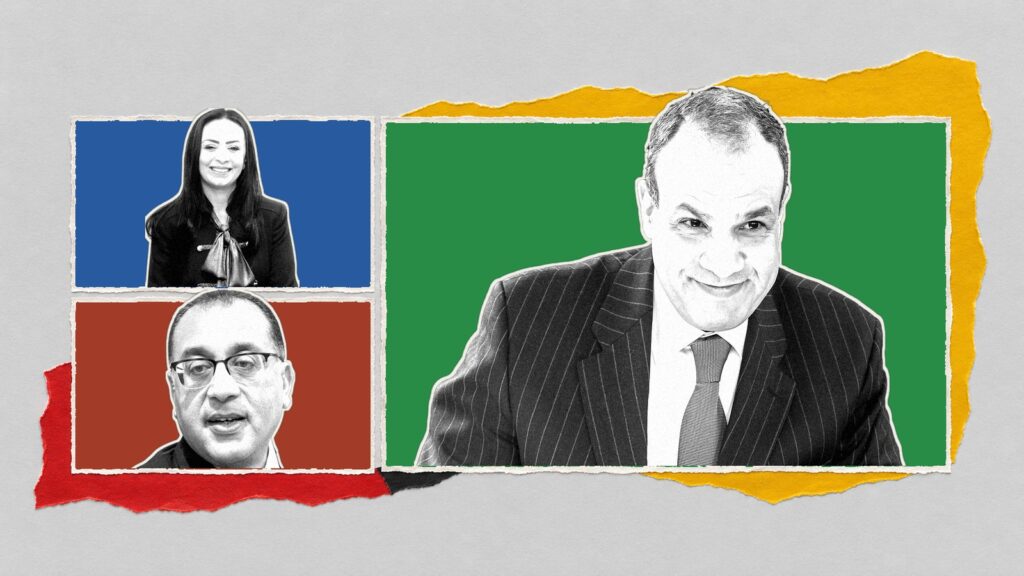
Foreign Minister Badr Abdelatty chaired yesterday, Thursday 26 November, the eighth ministerial meeting of the Supreme Standing Committee for Human Rights, attended by Attorney General Counsellor Mohamed Shawky Ayad, Justice Minister Mahmoud Helmy El-Sherif, Social Solidarity Minister Maya Morsy and Parliamentary Affairs Minister Hani Hanna Azer. The Attorney General reviewed the role of the Public Prosecution “through reviewing the files of all pretrial detainees and intensifying periodic inspection visits” to correction and rehabilitation centres and detention centres. Abdelatty said the second National Human Rights Strategy for 2027 to 2031 is close to adoption and launch “in the coming period”, according to the ministry’s statement.
The statement did not mention the number of pretrial detainees, the number of files reviewed, the number of people released, the period the review covers, the launch date of the new strategy, or what was achieved of the targets of the first strategy, which expires in 2026.
The first strategy had listed among its challenges “the need to set the necessary framework for the controls, justifications and durations of pretrial detention”, and set among its target outcomes “strengthening the guarantees” related to it. On 21 August 2024, President Abdel Fattah El-Sisi directed “reducing the maximum limits of pretrial detention periods” so that it does not “turn into a punishment”. The new Criminal Procedure Law No. 174 of 2025 includes a guarantee that the case papers be presented to the Attorney General “periodically” whenever three months of a defendant’s pretrial detention have passed, but the House of Representatives approved on 30 September postponing the law’s entry into force to “1 October 2027”.
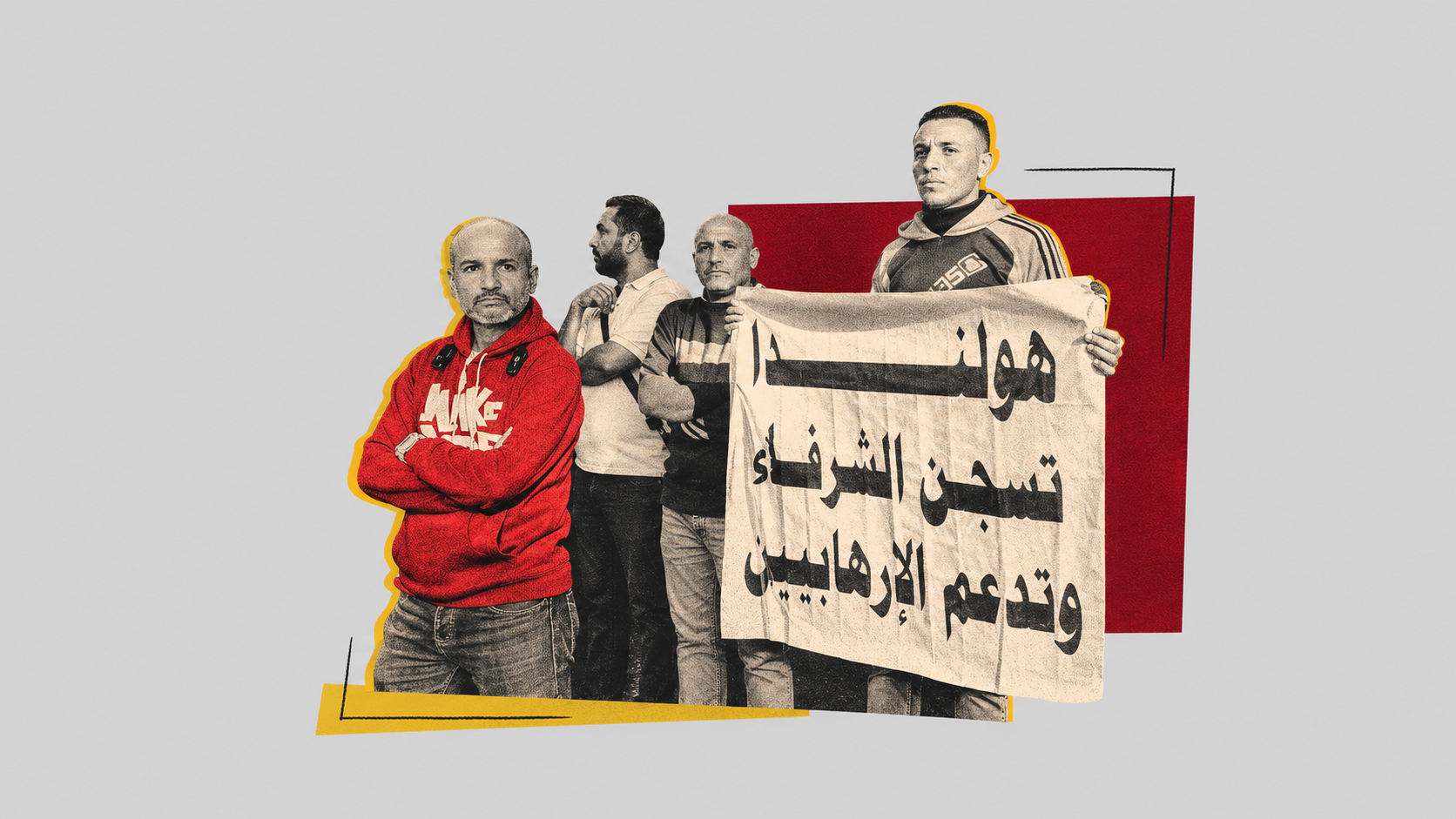
Two days before the meeting, the Supreme State Security Prosecution renewed the detention of the six “Matsada2sh” journalists for 15 days, and the Egyptian Initiative for Personal Rights said the torture complaints “have not been investigated by the prosecution until now”, as covered in the 25 November brief. On 15 November, the Initiative said Abdallah Ramadan was added to a sixth case during 11 years of detention, despite a release order issued in August. The Egyptian Front for Human Rights had assessed the committee’s work on 24 September under the title “A lot of public relations with an absence of institutional reform”.
Mustafa Ahmed: nine months of pretrial detention over posts, and his lawyer says he "lives on painkillers"
Lawyer Mokhtar Mounir said his client Mustafa Ahmed has been held in pretrial detention since 26 February 2026 in case No. 945 of 2026, on charges of spreading false news and joining a banned group, and that he suffers from bleeding and a skin rash “and lives on painkillers”, and that requests to treat him at his own expense have gone unanswered. The lawyer said his client “did nothing but express his opinion on his personal page”, and that he is “the only one still detained until now in the case”.
The Association for Freedom of Thought and Expression documented his arrest at dawn on 26 February and his detention for two days in an unknown place, said he is suspected of having bladder cancer, that it submitted a petition on 9 April to the Attorney General about the failure to provide him with medical care in the Tenth of Ramadan correction and rehabilitation centre, demanding his release, and said the prison administration blocked medicine his family brought, and that the Second Terrorism Circuit of the Cairo Criminal Court later renewed his detention for 45 days. On the other hand, the prosecution told the defence that the prison’s medical reports show no illness, according to the report that carried the lawyer’s account.
This is not his first case: he was detained in case No. 621 of 2018, and a decision was issued in March 2020 releasing him and cancelling the precautionary measures, then arrested in April 2024 in case No. 1277 of 2024 after a solidarity protest in front of the Journalists Syndicate, and released the same month. The lawyer’s account came on the same day the Attorney General spoke of “reviewing the files of all pretrial detainees”.
Freedom of information law: "current efforts to prepare" a law whose draft the president recommended referring to parliament in 2023
Minister of State for Media Diaa Rashwan received yesterday a delegation from the National Council for Human Rights headed by Ambassador Ahmed Ehab Gamal El-Din, including the council’s deputy chair Mohamed Anwar Sadat and members Gamal El-Keshky, Ezzat Ibrahim, Mohamed Osman and Vivian Murad. The minister praised, according to the statement, the council’s memo on the basic guarantees for legislating the right to access information, stressing that “some of what was stated in this memo is a useful addition in preparing the draft law”, within “the current efforts to prepare a freedom of information law” implementing Article 68 of the constitution.
The statement did not set a date for sending the draft to the cabinet or parliament, did not say what was adopted from the memo and what was not, nor whether the draft will be put to public discussion before it is approved.
On 7 June 2026, Rashwan himself announced, according to what was published, the government’s intention to submit an integrated draft law on freedom of information as a law complementary to the constitution. Three years earlier, in June 2023, President Abdel Fattah El-Sisi recommended referring the freedom of information draft prepared by the Supreme Council for Media Regulation to the House of Representatives, according to a statement by the Egyptian Initiative for Personal Rights on 26 June 2023.
Article 68 of the 2014 constitution states that “information, data, statistics and official documents are the property of the people”, and that the law regulates the rules for obtaining them “and grievances against refusal to provide them”, and sets “the penalty for withholding information”. The meeting comes while the “Matsada2sh” fact-checking team is detained, five of whom the Egyptian Initiative said the prosecution confronted with six reports that “all included the sources of information”.
"To increase views": one formula in statements on arrests of content creators
It was announced today that the General Administration for the Protection of Morals arrested a female content creator, whose name was not given, in the Masr El Gedida police station district, over videos it said contained “obscene language” and contradicted “societal values”, and said she confessed to posting them to increase views and make profits. In North Sinai, the arrest of a student in the Third Al-Arish police district was announced today, because he climbed a pole in a square and fixed a plastic statue on it on 23 November, and filmed and posted it “to increase viewing rates and make financial profits”.
Neither report mentioned the legal article, the prosecution’s decision, the platform on which the videos were posted, or the text of the content at issue.
The same formula was repeated in earlier statements: on 25 November, the arrest was announced of a female content creator over “indecent” content, and of a woman in the First Montaza police district in Alexandria, “to increase viewing rates and make financial profits”. On 16 November, a female TikTok content creator was arrested in Nasr City “with the aim of begging her followers, increasing viewing rates and making financial profits”. On 25 September, a female content creator was arrested in Karmouz in Alexandria over dance videos, with the same motive.
Ring Road fire: two accounts of the crash within 24 hours, and a committee to "study" tanker timings
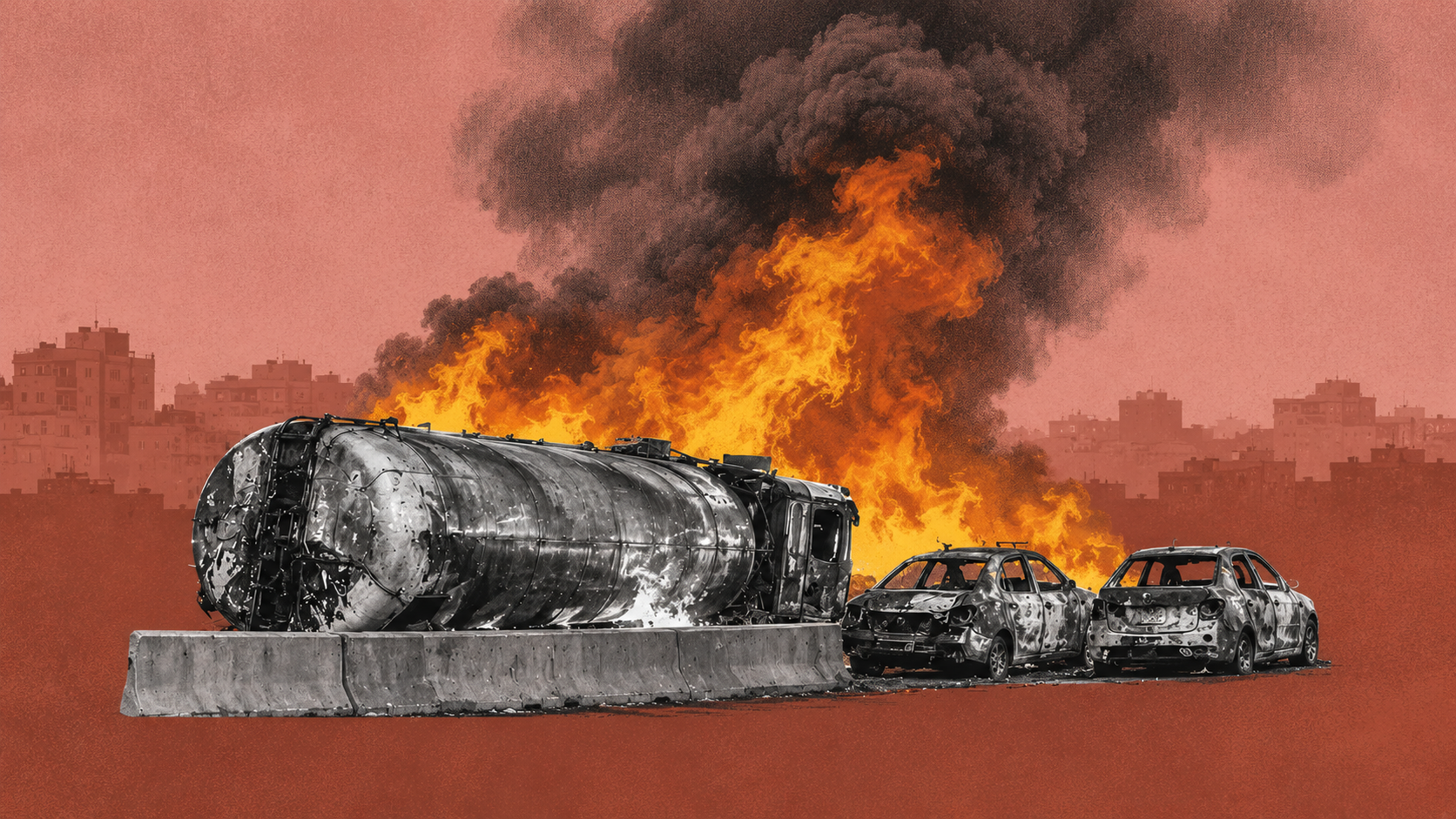
The Ministry of Interior published yesterday evening a clip from a surveillance camera, and said the driver of a “black Hyundai Avante” tried to overtake the petroleum tanker from the right, so the front left of his car hit the rear right of the tanker, then he veered left, hit a microbus, overturned on the concrete barrier and fire broke out.
The Interior Ministry’s account differs from the prosecution’s statement yesterday, which described the car veering to the far right of the road, not the left, and said one of the tanker’s tyres burst at the moment of the collision, so it hit the barrier, overturned and fuel leaked, which was not in the ministry’s statement. The prosecution ordered the detention of the car’s driver, aged 21, for four days pending investigation, and referred him to the Forensic Medicine Authority to determine whether he had taken drugs, and the result has not been announced. The prosecution’s and the Interior Ministry’s statements did not name the company that owns the tanker or the charges brought.
Counsellor Mohamed Adel, the cabinet spokesman, said yesterday evening that the prime minister tasked the ministers of interior and petroleum with forming a committee “to examine and study the matter”, including “reviewing the times available for the movement of these vehicles”, and that fuel tankers are “exempt” from the ban on travel on the Ring Road because restricting their movement “may lead to a problem in providing fuel”. He said the petroleum sector’s fleet comprises 3,330 tankers that made 1,462,000 trips last year. He did not announce the committee’s members or a deadline for its work. Hassan Nasr, head of the petroleum products division, said that “no official decision has been issued restricting the movement of petroleum transport vehicles to specific hours”.
Prime Ministerial Decree No. 1721 of 2018 bans the movement of heavy transport vehicles “with a load of 4 tons or more” on the Ring Road, and it took effect on 15 September 2018 from 6 am until midnight, while the cabinet spokesman spoke yesterday of “the ban period set at six hours”. Yesterday’s brief had stated that the ban covers loads exceeding 5 tons; what is correct according to the decree is “4 tons or more”. In the Sohag train collision in March 2021, the Attorney General ordered the formation of an engineering committee to examine the trains, signals and tracks before any responsibility was announced, and the prosecution announced its findings on 11 April, 16 days later.
The official toll remains 31 dead and 26 injured according to the Health Ministry. Today, the family of young man Kirollos Adeeb Helmy, from Toukh in Qalyubia, announced his death after his body was found.
Compensation: about EGP 230 million in donations, and a promise to disclose "every pound" without a date
Counsellor Mohamed Adel, the cabinet spokesman, said yesterday evening that total contributions and pledges had reached “nearly EGP 230 million” ($4.2 million), from businessmen, civil society organisations, the Central Bank and the insurance sector. Today, the cabinet announced two new donations worth EGP 25 million ($455,000): 15 million from Youssef Mansour, and 10 million from Hussein El-Nowais, chairman of AMEA Power. Prime Minister Mostafa Madbouly said that “what we are witnessing now proves that the whole state is present in supporting our people in hardships”.
Social Solidarity Minister Maya Morsy replied to a post by actor Salah Abdallah asking about the fate of the donations, writing: “We bear before God delivering support to the families of the deceased and the victims”, and “God will hold us accountable for the trust”. The ministry announced a press conference to announce the names of the donors, “the ways every pound is spent” and “what each beneficiary will receive by name”, to be held in the coming period without setting a date. Madbouly had said yesterday that the president tasked the government with counting the losses of those affected “and compensating them fully”, without mentioning an amount or a source of funding.
The official statements did not include the breakdown of the 230 million by donor, nor each family’s share. MP Mohamed Fouad Zaghloul, assistant to the chairman of the Al-Wa’y Party, called for a clear compensation mechanism separate from donation campaigns, and said “the citizen who lost his life is not a number in a statement”.
On 10 November, Social Solidarity Ministry Undersecretary Ahmed Abdel Rahman said before the House Transport Committee that the legal entitlement for the family of a person killed in the Ayat train collision is EGP 50,000 ($911) if he was a head of household, and 25,000 for others, and that the minister intends to double it. In August 2022, Madbouly announced payment of EGP 100,000 to the family of each victim of the Abu Sefein church fire, and in March 2021 he announced doubling compensation for deaths in the Sohag train collision to EGP 100,000. The Unified Insurance Law No. 155 of 2024 sets the amount of compulsory vehicle insurance at “one hundred thousand pounds in cases of death”.
About EGP 2.5 billion from "Tahya Misr" and the Martyrs' Fund to the National Service Projects Organization
The House of Representatives will discuss at its sessions on 30 November and 1 December a government bill on “the reversion of certain amounts to the National Service Projects Organization”, which transfers “one time only” money from the accounts of the “Tahya Misr” and “Martyrs’ Honour” funds to the organization affiliated with the armed forces, “with the aim of supporting the establishment of the industrial service complex for prosthetic devices”. The report on the agenda did not mention the amount.
According to the bill’s text published on 21 November, each fund transfers EGP 1,249,952,923 ($22.8 million), in addition to the equivalent of $6,569,000 in pounds, that is about EGP 2.5 billion and $13.1 million from the two funds together, with the transfer exempted from the provisions of the two funds’ laws, and paid before the end of fiscal year 2026/2027. The Plan and Budget Committee approved the bill on 23 November. Neither the published bill text nor the report on the committee’s approval mentioned the complex’s total cost, the reason for choosing the organization, or the effect of the transfer on the Martyrs’ Fund beneficiaries.
On 20 September 2022, President Abdel Fattah El-Sisi directed “starting the establishment of an integrated industrial complex to localise the production of artificial limbs and prosthetic devices for people with special abilities”. On 26 January 2026, the president followed up on the project in a meeting with the prime minister attended by the head of the technical committee, Major General Dr. Mohamed Metwally, and the head of the Martyrs’ Honour Fund, without mentioning the National Service Projects Organization.
The “Tahya Misr” Fund, under Law 84 of 2015 as amended in 2021, is audited by a private accounting firm chosen by the board of trustees, whose report is submitted to the President of the Republic, and the Central Auditing Organization prepares an annual report on performance indicators. On 21 October 2026, a government bill was published to amend the law of the Martyrs’ Honour Fund, placing it “under the patronage and care of the President of the Republic”.
IMF: the programme ends 15 December, and Maait describes resorting to it as "an exception"
Mohamed Maait, Executive Director at the International Monetary Fund representing the Arab group and the Maldives and former finance minister, said on the programme “Saet Iqtisad” yesterday that the current programme with the Fund ends on 15 December, that “resorting to the International Monetary Fund is not a general rule, but rather an exception imposed by certain economic circumstances”, and that the number of countries with programmes with the Fund “is less than 50 countries out of a total of 191″. On subsidies, he said in-kind subsidies “may be more vulnerable to corrupt practices compared to cash subsidies”, and that the shift “requires careful study”.
The 18 November agreement on the final review was at staff level and still needs the Executive Board’s approval, and would make available, if approved, about $1.5 billion from the Extended Fund Facility and up to $800 million from the Resilience and Sustainability Facility, bringing total disbursements to about $9.6 billion.
On 4 June 2026, Prime Minister Mostafa Madbouly said the government “does not see at the present time a need” for a new programme, and on 25 November he said the 2027 to 2030 programme will be national “without entering into a partnership with international institutions”. In the same interview, Maait recalled that after its first programme ended in 2019 Egypt prepared for a technical programme “without requesting additional financing”, before the coronavirus pandemic imposed “a different economic reality”, which was followed by a new arrangement worth $5.2 billion in June 2020.
On the shift to cash subsidies, Madbouly said on 29 August 2024 that Egypt could start it in the fiscal year beginning in July 2025. On 4 November 2026, Supply Minister Sherif Farouk said the ministry is “ready to start the pilot in Beheira governorate at the beginning of next year”.
EGP 425 billion for 62 days: "Treasury instruments" near three times the first issue
The Central Bank of Egypt, on behalf of the Ministry of Finance, accepted yesterday bids worth EGP 425 billion ($7.7 billion) in a tender of 62-day “Treasury instruments” maturing on 27 January 2027, from four bids all of which were accepted, at a yield of 20.83%, a margin of 0.33% above the mid-corridor rate. On the same day, the bank accepted EGP 87.2 billion ($1.6 billion) in the 182-day and 364-day Treasury bill tenders, less than the EGP 95 billion target, at weighted average yields of 25.736% and 26.351% respectively, while other reports gave 25.799% and 26.45%.
The statements did not mention the reason for resorting to this volume of two-month borrowing. The first issue of these instruments, on 16 July 2026, was worth EGP 150 billion ($2.7 billion) for 63 days, at a margin of 0.30% above the mid-corridor rate.
In May 2026, it was reported, citing a government document, that the Ministry of Finance aims to double bond issuance to EGP 2.5 trillion in fiscal year 2026/2027 and cut Treasury bills by about 60% to EGP 916 billion, and Finance Minister Ahmed Kouchouk was cited as aiming to “raise the average life of the debt to about 5 years”. According to what Kouchouk announced in April, interest in the 2026/2027 budget amounts to about EGP 2.419 trillion ($44 billion), that is “about 46.7% of total expenditure”.
Private sector: a 67% target, and two different figures for the current share within six weeks
Planning and Economic Development Minister Ahmed Rostom said in an interview with Bloomberg in London, according to a ministry statement today, that the government aims to “raise the private sector’s share of total investment to 67%” during the next four years, against “60% currently”, that foreign direct investment reached $18 billion last fiscal year, with a target of about $22 billion or more in the next fiscal year, and that Suez Canal revenues are “about $4 billion” currently, with hope of their return to between $8 and $9 billion a year.
The statement did not set a date for the recovery of the canal’s revenues, nor the period the 60% figure refers to.
On 13 October 2026, Rostom himself said the government aims to raise the private sector’s share of investment to 67% “by 2030”, “compared to 57.7% in fiscal year 2025/2026, and 43.1% in fiscal year 2023/2024”.
Falaki in Alexandria: 46 families evacuated, and a 2021 restoration order not implemented
Forty-six families were evacuated at dawn today from two buildings in the Falaki area of Montaza district in Alexandria, after a building of ground floor and eight storeys tilted and parts of its facade fell, and the neighbouring “Nour Al-Sabah” tower of ground floor and 14 storeys was damaged, and two elderly people were moved by ambulance. The building is located at the intersection of Oqba Ibn Nafi and Al-Salam streets. The governorate said the building “has restoration order No. (27) of 2021 issued for it”, which was not implemented, and Governor Eng. Ayman Attia directed “taking all urgent measures”, and the formation of a committee from the Faculty of Engineering to inspect neighbouring buildings, and utilities to the tilted building were cut off “in preparation for the engineering committee’s decision”. Reports said alternative apartments were provided to residents until the inspection ends.
The governorate’s statement said “the necessary legal measures had already been taken regarding the violation”, without mentioning the reason the restoration order went unimplemented since 2021, or the body responsible for following it up.
In Attarin, the Administrative Prosecution revealed on 24 November that a building that partly collapsed, killing a woman and her two daughters, had a “total restoration” order issued for it that was not implemented, as covered in the 25 November brief. On 14 November, the governor said the governorate deals with tilted and dilapidated buildings “with all decisiveness and speed”. On 16 October 2025, Madbouly directed that “Alexandria governorate be placed among the priority governorates” in the file of buildings at risk of collapse.
Kuwait: an Egyptian condemnation without a perpetrator, and Kuwait names Iran
Egypt condemned yesterday evening “the attacks that targeted vital sites” in Kuwait with drones that “resulted in casualties and injuries”, and the Foreign Ministry said that “the security of Kuwait and the Arab Gulf states is an integral part of Egyptian national security”. The statement did not name the perpetrator of the attack, nor mention the number of victims or their nationalities.
Colonel (Staff) Saud Abdulaziz Al-Atwan, spokesman for the Kuwaiti Ministry of Defence, had said that “the sinful Iranian aggression targeted one of the vital sites”, and the ministry announced 4 injured: a Kuwaiti, two Italians and a Pakistani, then Italy confirmed the death of the two Italians, technicians at Rheinmetall Italia. On the other hand, Iranian armed forces spokesman Abolfazl Shekarchi denied “categorically” that an Iranian attack took place, and Iranian Foreign Minister Abbas Araghchi said the accusations are “baseless”.
In earlier statements this year, Egypt named Iran: on 10 June 2026 it condemned “the Iranian attacks” on Jordan, Bahrain and Kuwait, on 28 June it condemned “the Iranian aggressions that targeted the State of Kuwait and the Kingdom of Bahrain”, and on 2 September it condemned “the Iranian attacks with missiles and drones”. Before Kuwait announced the attack, Foreign Minister Badr Abdelatty discussed by phone with his Kuwaiti counterpart Sheikh Jarrah Jaber Al-Ahmad Al-Sabah the danger of “the region sliding again into military escalation”. On 6 November, Abdelatty held a call with Araghchi, the second within days, to contain regional tension.
Sudanese detainees: "consider positively" in Cairo, and "deportation" in Khartoum
Mohamed Wadaa, head of Sudan’s Free Voluntary Return Committee, said today that the committee is ready to implement President Abdel Fattah El-Sisi’s directive “to deport detained Sudanese to their homeland, to complete their trials there”, in coordination with the Sudanese embassy in Cairo, including “those sentenced to fines among the debtors”, according to the Sudan News Agency.
This wording differs from the Egyptian presidency’s statement on 24 November, in which spokesman Ambassador Mohamed El-Shenawy said the president directed considering “positively” “the conditions of Sudanese prisoners and detainees in Egypt”, and studying “their completion of the duration of their sentences inside Sudan, in accordance with the regulating rules and laws”, as covered in the 25 November brief. The Egyptian statement speaks of “sentences”, while the Sudanese statement speaks of “trials” and “deportation”. Neither side mentioned the number of detainees or a timetable.
Yesterday, Central Bank of Egypt Governor Hassan Abdalla and Central Bank of Sudan Governor Amna Mirghani Hassan Al-Tom signed a memorandum of understanding in the New Administrative Capital covering trade payment settlement, anti-money laundering, digital payments and opening bank branches, and trade between the two countries reached $1.87 billion in the first half of 2026 according to the same report.
Eritrea at the Egyptian Foreign Ministry: a warning against "sea access by force" without naming Ethiopia
The Foreign Ministry organised yesterday a meeting in which Eritrean Foreign Minister Osman Saleh briefed ambassadors and representatives of European missions in Cairo on developments in the Horn of Africa and the Red Sea, attended by Ambassador Mohamed Karim Sherif, Assistant Foreign Minister for African Affairs. Saleh stressed “the impermissibility of violating the UN Charter and threatening to obtain sea access by force in a way that infringes on the sovereignty of states”, and said Eritrea addressed the Security Council “regarding the policies and escalations carried out by some parties in the region”. A day earlier, Abdelatty received Saleh, and affirmed “Egypt’s full support for Eritrea’s sovereignty, unity and territorial integrity”.
The statement did not name “some parties”, nor mention the date of Eritrea’s letter to the Security Council or the European missions that attended.
On 15 October 2026, Abdelatty said, answering a question about Ethiopia, that “it is not possible to accept, under any name or circumstance, any military access for a landlocked state to the Red Sea”, and that “the Ethiopian side” is the one rejecting proposals for commercial access. On 4 October, the declaration of the quadrilateral Alamein summit of Egypt, Sudan, Eritrea and Somalia stated that “the governance of the Red Sea is the exclusive responsibility of the littoral states”. On 5 October, Ethiopian Prime Minister Abiy Ahmed said at the start of his second term: “We will work tirelessly to ensure Ethiopia obtains access to the sea”, and Addis Ababa said it seeks this through negotiation.
Libya: Ukraine says it did not target Libya, and Egyptians of unknown fate from a boat that sank on 5 November
Ukrainian Foreign Minister Andrii Sybiha wrote yesterday that “none of Ukraine’s actions were directed against Libya or the Libyan people”, after a call with his Libyan counterpart Al-Taher Al-Baour, and Kyiv had announced on Monday 23 November its responsibility for the operation in Benghazi port. Egypt had expressed on 22 November, before the Ukrainian announcement, its condemnation “of all acts that would undermine the security and stability of Libya”, without naming a perpetrator, as covered in yesterday’s brief.
In another file, the Foreign Ministry said on 24 November that an irregular migration boat sank off the coast of Benghazi “on 5 November 2026”, carrying “about 27 Egyptian citizens, most of them from Qalyubia governorate”, that “7 citizens were rescued”, and that the consulate is in contact to repatriate the bodies of three who were identified, and Haddad El-Gohary, Assistant Foreign Minister for Consular Affairs and Egyptians Abroad, met a number of the victims’ families.
The ministry’s statement did not mention the fate of the rest, who number about 17 according to the difference between the figures it contains, nor the boat’s departure point.
Photos: Foreign Minister Badr Abdelatty, photo by Raimond Spekking via Wikimedia Commons (licence); Social Solidarity Minister Maya Morsy, photo by Yassminaa12 via Wikimedia Commons (licence); Prime Minister Mostafa Madbouly, photo by Christophe Licoppe via Wikimedia Commons (licence).