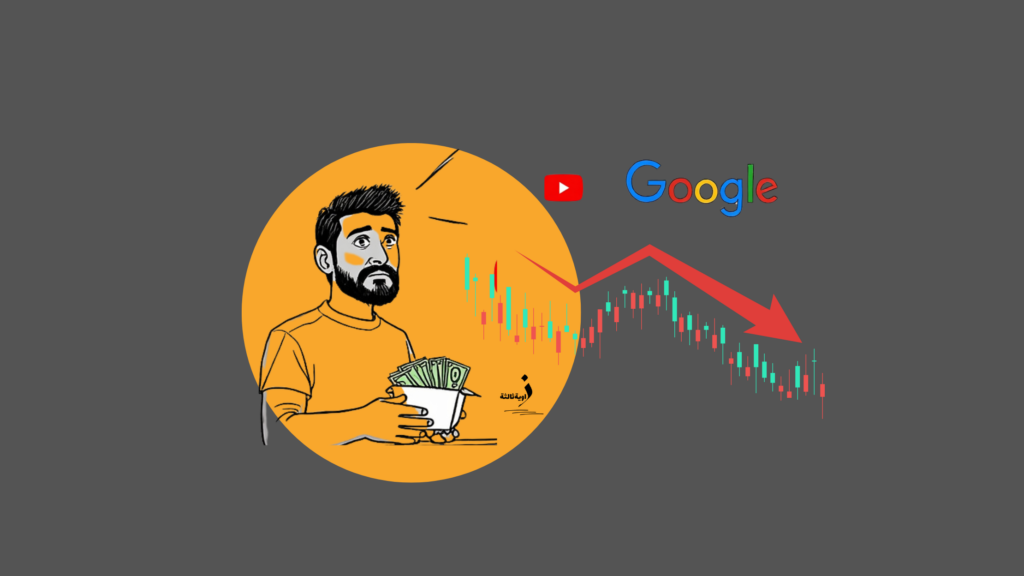

Mohamed Ramadan, a content creator, created a YouTube channel seven years ago, after leaving his office job in Amman, Jordan, where he was earning about EGP 15,000, and returning to Egypt. But after his return he did not succeed in finding a job with a salary suitable for him as a family breadwinner responsible for a wife and two children, as the monthly salary of the jobs available to him did not exceed about EGP 4,000, which prompted him to look for a way to bring in financial returns through video content creation. He thought of establishing a news channel and began following the heated events at the international level, especially news of Russia and the United States of America.
Over time, his followers increased day after day, and because he graduated from Dar Al-Ulum College, he speaks Arabic fluently, which helped attract an Arab audience from various Arab countries such as Algeria, Morocco, Syria, Palestine and Iraq, until the number of his followers reached about 200,000 subscribers, and he devoted 8 pm every day to posting a new video.
Ramadan’s economic situation stabilised after he began earning profits from the videos he broadcasts on his channel, which achieve no fewer than 50,000 views per video, and his earnings reached, at various times, about EGP 48,000 a month, depending on his followers’ interaction with his content.
As he describes it, he trained at length in explaining the news and acquired technical skills that enable him to publish his videos with improved visuals, so that he became completely self-reliant. This pushed him to settle in Egypt and not think of travelling abroad again, as what he earns provided him and his family with an alternative to the low-paid jobs offered to him. The situation was ideal until Google decided to pay bloggers’ financial returns in the local currency.
Ramadan says the decision bothered him, especially as he had been saving part of the financial returns he obtains from YouTube as cash savings in foreign currency. He adds: “Now I am thinking of other ways to save my earnings by freezing them in the form of gold and then in real estate.”
At the beginning of last October, Google’s management notified its content-creator users in Egypt of a change in the currency of their financial returns from the US dollar to the Egyptian pound. Google also explained that earnings will arrive in the local currency starting from 1 May next year, as part of a comprehensive plan to pay all bloggers’ earnings around the world in each country’s local currency.
“We will no longer pay in US dollars”: in this way Google informed content creators who use the YouTube platform or Ad Manager, and “AdSense” users, as all those who benefit financially from these windows will receive their returns in pounds rather than dollars.
Google’s decision sparked wide concern and controversy on social media, and many considered it a harsh decision, especially as it deprives content creators of saving dollars as a store of value, in light of the fluctuation and price instability the Egyptian pound suffers from and its inability to hold up against the dollar throughout the past period.
On the other hand, some “AdSense” users believe that the decision will cause them losses if the views and advertisements displayed on their content are calculated in Egyptian pounds, which will lead to a decline in their total earnings from Google. Many also went on to consider the decision’s impact on the interests of the Egyptian economy, as dollar remittances from abroad to content creators have long been considered one of the new sources of national income.
The Difficulty of Saving Dollars
Adel Amer, professor of public law and international economics and head of the Egyptians Centre for Studies and Research, believes that Google’s decision to change the currency of users’ returns on the “AdSense/YouTube” platforms to the Egyptian pound will negatively affect the Egyptian economy, especially as Egyptians’ earnings have become a source of foreign currency. He adds, speaking to Zawia3: “The conversion is a general decision confirming that the company has made sure that paying in local currencies serves its interest; it means the company conducted its own economic studies and found that it benefits from dealing in pounds.”
The local adaptation of YouTube, as one of Google’s platforms, began in Egypt at the beginning of 2011, and ten years later, specifically in April 2021, Egypt became one of the countries that use the platform the most worldwide, ranking 15th in the list of countries viewing the most videos published on it, with 40.5 million visitors. YouTube was founded in 2005 by three PayPal employees, and its ownership then passed to Google in 2006.
According to Rajeh Marketing and Programming, the number of YouTube users in Egypt reached 44.70 million since the beginning of 2024, and the reach of YouTube ads in the same period was about 39.4% of Egypt’s total population in 2022. Compared with the number of internet users in Egypt, estimated at 82.1 million, YouTube ads alone reached 54.5% of all users this year, with reach divided between 83.9% of females, while the share of males reached by YouTube ads was 61.1%, across different user age groups.
Content Creation in Egypt
Content creation has turned into a popular and profitable trade, especially with the emergence of the coronavirus pandemic, which turned the eyes of thousands of Egyptian users who lost their jobs because of precautionary measures, namely lockdowns and bans on gatherings, in addition to office and field work turning into home-based work, amid talk of the soaring profits earned by content creators, the “YouTubers”.
According to “Social Blade“, which calculates bloggers’ earnings on social media and digital platforms, the channel of Ahmed Hassan and Zeinab ranked sixth in the list of channels achieving the highest annual earnings, amounting to USD 17 million, followed in seventh place by the Nasser Hekaya channel, which earns more than USD 9 million a year, while the annual earnings of the Hamdy and Wafaa channel reached about USD 4 million.
Google’s YouTube earnings do not stop at content creators; many art celebrities also reap profits, led by actor Mohamed Ramadan, whose earnings reached about USD 3 million after achieving four billion views by the end of 2021, while singer Amr Diab’s annual YouTube earnings reached about USD 1.5 million after his channel exceeded a billion views. Popular singer Hassan Shakosh earned nearly USD 2 million for views and ads displayed on his channel, while singer Tamer Hosny’s earnings reached USD 1.5 million after his channel’s views reached about two billion.
The authorities did not wait long in the face of these huge profits: the Egyptian Tax Authority established an electronic unit specialising in following e-commerce activity and those working in it, including content creators and others, and imposed a direct income tax covering individuals and legal entities that make profits from content creation or from providing commercial services and activities online, in accordance with the Income Tax Law issued in 2005. This came as a result of the high figures earned by bloggers and content creators under different names such as “influencer, blogger and YouTuber”.
The tax rate due monthly from an individual on earnings of EGP 30,000 is about 2.5%, 10% if monthly earnings reach EGP 45,000, 15% if the individual’s net income reaches EGP 60,000 a month, and 22.5% if the individual’s net income reaches EGP 400,000, with the state’s tax take rising as bloggers’ and YouTubers’ content-creation earnings rise. The Egyptian Tax Authority has obliged those engaged in e-commerce activities and digital content creators to submit annual tax returns in accordance with Article 31 of the Unified Tax Procedures Law No. 206 of 2020, and the decision stipulated subjecting individuals who earn annual profits of EGP 500,000.
Rasha Abdel Aal, head of the Egyptian Tax Authority, stated that taxes worth EGP 2.1 billion were collected from content creators and digital platform owners, while total taxes from e-commerce reached about EGP 4.27 billion last year.
Google’s Decision and the Egyptian Economy
Egyptians’ returns earned from their activity on internet networks and platforms used to enter Egyptian banks in Egyptian pounds, and starting next year payment in dollars will stop. Hanan Ramsis, a capital markets expert, says that paying content creators’ earnings in pounds serves the interest of the Egyptian economy, since Google will buy the local currency from the Central Bank of Egypt and pay the equivalent value in US dollars in order to pay the bloggers’ dues.
She adds, speaking to Zawia3: “This decision represents a point of strength, not weakness. In past periods, especially after the January 2011 revolution, we tried to have Suez Canal revenues converted to Egyptian pounds rather than dollars to raise the value of the pound.”
The financial markets expert estimates that Google’s decision will contribute significantly to raising the value of the Egyptian pound within the basket of currencies, and stresses its role in ending the black market phenomenon and preventing its recurrence, since content creators contributed to the growth of this commercial phenomenon of selling currencies and benefiting from the difference between the price of foreign currency in the parallel market and its price in banks and official exchanges.
Going back to the history of the black market, a study issued by the Faculty of Politics and Economics at Beni Suef University, by researcher Hend Moussa Mohamed, shows that the Egyptian government created the parallel foreign exchange market after the Egyptian economy was exposed to a state of corruption and instability in the early 1980s, as the government allowed a kind of legitimacy for trading currencies between banks at a rate other than that set by the Central Bank.
The study points to the International Monetary Fund’s condition of reducing the official rate of the pound from EGP 1.1 to the dollar to EGP 2 to the dollar, so that the Fund would allow the completion of the restructuring agreement that took place in 1991. The Central Bank continued to reduce the official rate of the pound until the dollar reached EGP 5.8 in 2011, and the black market caused the collapse of the pound’s value against the dollar, especially in 2015 and 2016.
The study documents the effects of the decline in the exchange rate of the Egyptian pound, which led to successive increases in the prices of basic goods, resulting in higher inflation and the deterioration of the living and economic conditions of the middle-income and poor classes, while the size of the poorest segment of the population increased to 62% of Egypt’s total population. The income gap in Egypt has widened since 2016, and poverty rates in the Egyptian economy in general reached 32.5% of Egypt’s total population in 2018.
Google’s new financial system raises fears of an impact on the returns and financing needs of media outlets, especially as the notification the company sent to its users confirms that it will handle the exchange on the basis of the dollar exchange value in the previous month and not daily, “which is what should have been followed professionally, as it may do justice to those cooperating with this large international company, which did not consult its partners but took the decision on its own”. With these words, economic analyst Dr Anwar Al-Qassem comments, speaking to us, noting that Google’s financial system, scheduled to be implemented before the middle of next year, constitutes a shock for the content creation market in Egypt and other countries of the world. He also notes that the services Google provides to beneficiaries in Arab countries, including Egypt and others, represent one of Google’s most important revenues, under which national currencies may not receive any support, and the company’s decision is expected to serve its own economic interest alone.
In 2023, Google recorded revenues of USD 307 billion from its services, represented in search engine services, Google Maps, YouTube and Gmail. Google’s advertising earnings reached about USD 257.6 billion, 22% of net revenues, while YouTube revenues made up 25% of total revenues at USD 38.7 billion. The Google Cloud platform achieved a high share of revenues of 45%, at USD 65.4 billion, and Google earned 15% of total revenues from its device sales, equivalent to USD 15.7 billion. Google’s 2023 revenues exceeded its 2022 revenues by 30%.
The company’s profits from revenues from its services reached about USD 80.54 billion in the first three months of this year, with the return exceeding expectations by USD 2 billion, as revenues had been expected to reach USD 78.59 billion. The YouTube platform alone achieved revenues of USD 8.09 billion, and Google earned revenues of USD 9.57 billion from Google Cloud.
Companies’ spending on the Google Ads programme in 2024 ranges from USD 100 to USD 100,000 a month, with 44% of companies running advertising campaigns to serve their business activities, and the cost per click on each ad is USD 0.50.
Mohamed Abdel Hay, owner of the Trendat Masr website, says that Google has made many local payment methods available in Egypt to pay for sponsored ads, which vary between 30-second videos, images, clicks and others. Users can now fund their business activity through e-wallets linked to mobile phone numbers, and can also make in-app and service purchases using a Meeza card or Fawry machines.
He adds, speaking to us: “For six months I have been using Fawry to pay for sponsored ads, and all services are priced in Egyptian pounds.”
What If Google’s Earnings Matched Those of Content Creators?
Google collects the value of advertisements from advertisers before giving bloggers and content creators their share of the value of the ad that appears at the start of their videos, whether on YouTube or other blogging sites. Bloggers’ share is 58% of the ad’s financial value, while the company takes 42%. The owner of Trendat Masr believes that if the revenues of Google’s various services, including sponsored ads, monthly subscriptions, app purchases and others, were equal to the earnings of content creators and websites, Google would not need to buy Egyptian local currency because it would have an abundance thanks to these revenues, and the Egyptian economy would therefore gain nothing.
Economics professor at the Sadat Academy Ehab El-Desouky expects that after Google’s decision to pay earnings in the local Egyptian currency is applied, the price of gold in the Egyptian local market will rise with increased demand for it, attributing this to the shortage of gold supply.
He adds, speaking to us, that the increase in demand for buying gold will cause its price to exceed the dollar exchange rate, especially as Cairo has come to import gold.
Egypt’s imports of raw gold amounted to about USD 40.586 million in the first three months of this year, a decrease of 33% compared with Egypt’s gold imports last year, 2023, which amounted to USD 19.913 million, which affected the rise in the price of gold in Egyptian local markets, in addition to the rise in the price of an ounce of gold on the global gold exchange. In the period from April 2023 to April 2024, gold imports amounted to USD 1.930 billion.
Meanwhile, capital markets expert Hanan Ramsis expects real estate prices in Egypt to rise, as content creators turn to freezing their Google earnings in the form of real estate to preserve their future value, as an alternative to saving foreign currency, which may face a clear shortage after Google’s new financial system is applied.
According to the annual Market Watch report on the residential real estate sector for 2023, the number of residential projects last year reached 543 projects under construction, at a cost of USD 363 million, representing 82% of total investments and 49% of the total number of projects. The private sector accounted for 86% of the projects, distributed across 20 governorates, with Cairo and Giza governorates accounting for the largest share of investments, at 79% of real estate sector projects, while government real estate investment projects covered 13 governorates.
Content creators, digital platform owners and bloggers are waiting anxiously for the implementation of Google’s decision to pay their earnings in Egyptian pounds, with many fearing the return of the black market amid lower availability of foreign currency, and the rise in food prices that in turn contributes to the high cost of living, amid conflicting expectations after the implementation of Google’s decision to pay earnings in the local currency instead of the dollar.