Fifty-year-old Salma Zayed returned to her home in one of the villages south of Sheikh Zuweid, in north-eastern Sinai, disappointed, after failing to obtain a number of appliances and furnishings for her daughter, who is due to marry on the coming Eid al-Fitr, as shop owners refused to sell to her in instalments because of daily price rises.
Zayed says: I had already gone to the market in El-Arish, the capital of North Sinai, to buy electrical appliances and furnishings for my daughter, whose wedding has been set for the third day of Eid al-Fitr, but I was surprised that prices were several times the amount I was carrying. When I asked the seller to take the money I had as a down payment and pay the rest in instalments after the wedding, he refused, on the grounds that prices are rising daily.
Only a few days remain until her daughter’s wedding, and she fears that if the wedding is postponed her daughter will lose the chance to marry after an engagement of more than a year and a half, given her inability to buy the furnishings for her daughter’s marital home, as she describes it.
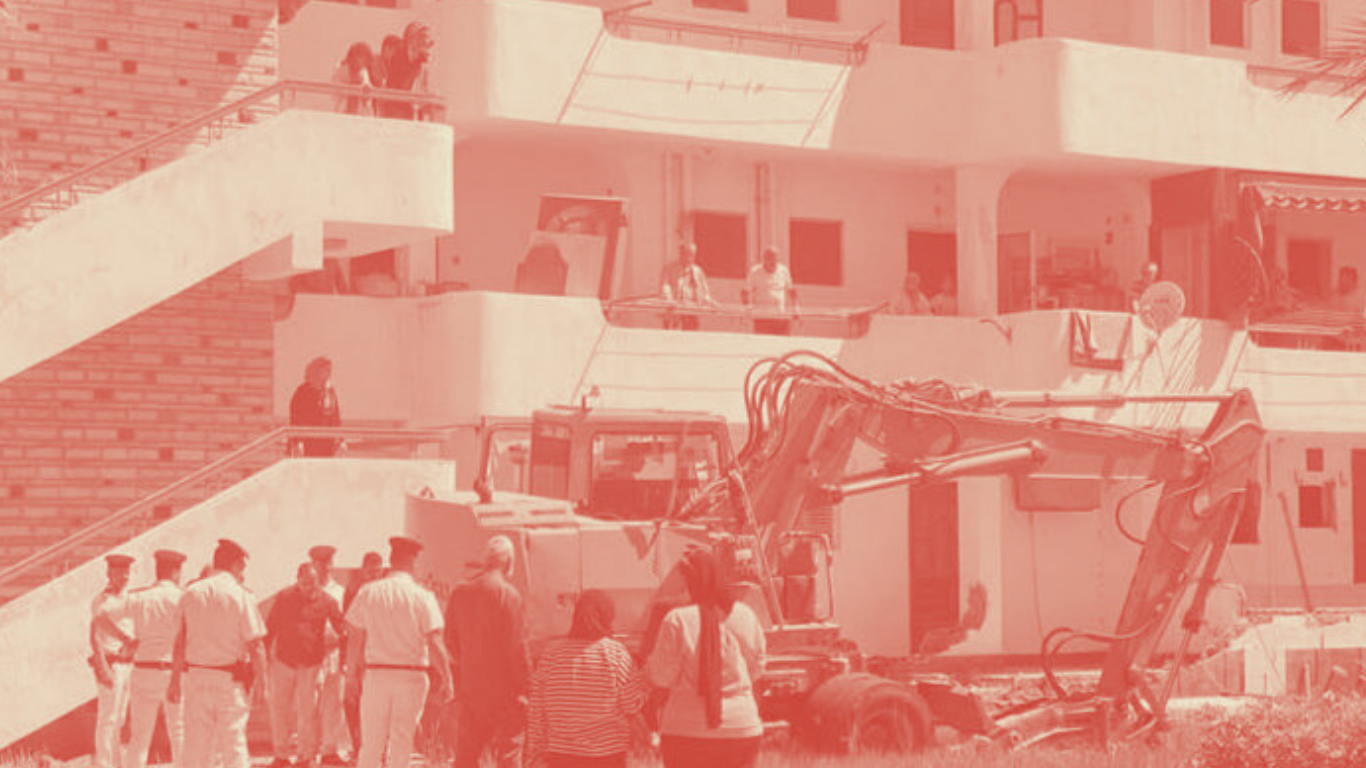
Salma’s situation is not unique in the Sinai Peninsula; it has become common among citizens, even though the region used to enjoy economic prosperity, especially in the north-eastern areas, before 2013, which saw the displacement of villagers and the bulldozing of hundreds of farms that had always provided a large and main income for the people of those areas.
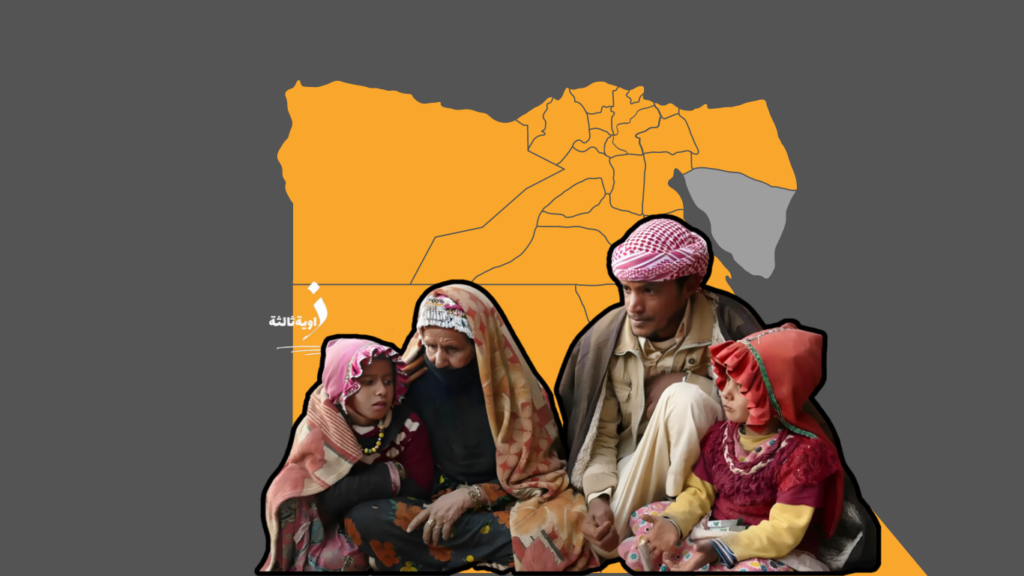
Sheikh Ibrahim El-Sawarka, a tribal figure in the south of Rafah, tells Zawia3 that the high prices that have hit the country and its people have made citizens in North Sinai, especially tribesmen, give up some of their annual customs because of poverty and the loss of the farms that are the main source of income, in addition to the scarcity and shortage of food, “after our homes and our guest houses used to be full”.
Coinciding with the deteriorating economic conditions across Egypt, a new wave of exorbitant price rises has hit North Sinai Governorate, affecting the prices of ration goods and all the basic necessities of living and construction. According to tribal sources who spoke to us, this is the result of the absence of a government plan to address the effects of the war on terrorism, ongoing since 2013, which has affected every aspect of life in the governorate.
El-Sawarka comments, noting that the difficult conditions North Sinai has lived through, and still does, have led to a decline in living standards there, as dozens of trades have been unable to continue in the labour market and thousands of Sinai residents have lost their jobs on land and at sea, under the impact of the Egyptian army’s operations and the bulldozing of factories and farms on security grounds, especially in the cities of Rafah, Sheikh Zuweid and El-Arish.
Mohamed Bekhit, who lives in the village of Abu Tawila within the Sheikh Zuweid district, points out that citizens in Sinai now think more than once before buying what they need, however small or important for the home, including ration goods, drinks, meat and medicine, given the crazy rise in prices, while no one tries to support citizens and stand by them in the face of exorbitant prices.
He adds: The economic situation in Sinai has deteriorated more than in any other region of the country, because of the terrorism that struck it for many years, causing thousands of citizens to lose their jobs and livelihoods, so that the Sinai citizen can no longer provide the bread needed to meet his family’s needs.
On the other hand, Wael El-Kashef, a food and grocery trader in El-Arish, says that the prices of ration goods have risen noticeably over the past few weeks because of the exorbitant cost of bringing them into Sinai, linked to the need for traders to obtain security permits to bring them in on the ferries and through the tunnels connecting the two banks of the Suez Canal, as goods remain for days on the roads and at the crossing points into Sinai on their way to the governorate’s cities, especially El-Arish (the capital and main commercial centre of North Sinai).
Saeed Abu Hamad, one of the major wholesale traders specialising in the wholesale of food and ration goods, tells us that the increased costs of transporting goods are borne by citizens alone, as government bodies do not intervene to ease the procedures or costs in consideration of the governorate’s particular circumstances. He notes that heads of households now face additional pressure as the prices of all types of ration goods and food their families need rise, especially meat, chicken, legumes, sugar, oil and flour, while wages remain at their low level and the local pound loses its purchasing power.
He warns that the scarcity of job opportunities in North Sinai Governorate is reflected in the weak purchasing power of all segments of citizens, whether government employees, private sector workers or the self-employed, plunging them all into an internal economic crisis from which there is no way out, and which will worsen if prices continue to rise in the coming days, amid the decline in government support for North Sinai residents compared with the period before the January 2011 revolution.
Hussein Gahama, a member of the Tarabin tribe in the El-Hasana district of central Sinai, says that the governments before the January revolution provided support to Sinai citizens through ration goods (sugar, lentils, beans and pasta) free of charge on a regular monthly basis, in addition to giving each family a free 50-kilogram “sack of flour”. The quota increased according to family size to two or three sacks, in consideration of tribesmen’s daily reliance on bread. He adds that each individual registered on the ration card used to receive a flour quota of 15 kilograms, but several months ago the Ministry of Supply reduced that quota to only 10 kilograms, causing a severe bread crisis among Sinai’s clans and tribes and the spread of flour sales on the black market at exorbitant prices that ordinary and even well-off citizens cannot afford.
Sheikh Hamid Mansour, a tribal figure in North Sinai, tells us that he met Supply Minister Ali Moselhy on behalf of the people of Sinai to demand the restoration of the flour subsidy. The minister’s response was to agree to restore five kilograms of flour for each individual on the ration card, bringing the individual quota back to 15 kilograms. But just one month later, everyone was surprised that the minister provided the agreed quotas at prices citizens cannot afford, at EGP 75 per kilo, borne by citizens on the grounds that this quota is sold at the free market price.
The Displaced and High Prices
In January last year, 2023, the return of Egyptian citizens who had been forcibly displaced began, tribesmen who had been forced to leave their villages under a decision issued by the army and supported by the Union of Sinai Tribes. But as some of them describe it, the displaced are returning to villages that do not resemble the ones they left, after destruction hit every inch of them and ruin settled in every corner, and they were surprised by the negative repercussions of high prices, without the relevant authorities taking measures or proposed solutions to address the crisis.
The ferocity of high prices has caused anger among citizens in Sinai, prompting many to write on social media, especially Facebook, to express their anger, despite the relative security calm the region has seen for several months following the extensive military operations carried out by the Egyptian army and the tribal groups supporting it in all the governorate’s cities.
Despite the joy that 70-year-old Abdel Qader Abu Arada feels at the arrival of Ramadan, he carries the burden of the Ramadan iftar feast that gathers his sons at his clan’s guest house, an annual custom uninterrupted for decades. He adds that preparations for the feast have become very costly compared with past years, because of the rise in the prices of meat and the basic materials they use in Bedouin life, above all flour for making “farashih” bread, on which they rely for their main meal, and their inability to buy ghee and oil, which are the backbone of their food.
Sheikh Saeed Abu Sabah, a figure and sheikh of the Bayadiya tribe in Bir al-Abd, north-west Sinai, says that gatherings and feasts of family and relatives in the Bir al-Abd desert are a well-established Ramadan ritual that families are keen on, especially on the first days of fasting, but high prices have affected these tables. He points out that meat prices, which have exceeded EGP 400 per kilogram in the markets, have reduced the feasts and invitations regularly held during Ramadan.
Inflation in Egypt’s cities accelerated last February for the first time after four months of declines, as a result of rising prices of some foods and services. Data from the Central Agency for Public Mobilisation and Statistics showed that annual urban consumer price inflation jumped to 35.7% in February from 29.8% in January, driven mainly by rising food and beverage prices.
As the only response to inflation and rising prices, the Egyptian government, represented by the Ministry of Supply, pumped large quantities of fresh and imported red meat and poultry into the government “Ahlan Ramadan” exhibitions in the days before Ramadan, as well as into consumer cooperative outlets, at discounts of about 30% on the free market. But they evaporated on the first day, as traders withdrew after suffering heavy losses because they were forced to sell at a discount that put prices below the wholesale price at which they had bought the goods, according to some of those we spoke to.
The “Ahlan Ramadan” exhibitions were confined to El-Arish, excluding North Sinai’s other five cities: Sheikh Zuweid, Rafah, El-Hasana, Nakhl and Bir al-Abd. This fuelled anger among citizens in those cities, who felt marginalised and ignored by not being included in the discounted exhibitions, amid the disappearance of many ration goods and rising prices of basic goods, as Nasrallah El-Riyadi, a resident of the village of Negila in the Bir al-Abd district in the west of the governorate, told us.
Ahlam Abdallah, a government employee living in Bir al-Abd, explains that high prices have forced her to give up some of the Ramadan customs and dishes she was used to: “First, I gave up buying the dried fruit and nuts I prefer, after their prices rose this year. I also gave up making the famous Ramadan drinks such as sobia, tamarind and carob, which my children and husband prefer, as these require large amounts of sugar, which I cannot get at the moment because of its high price and scarcity in Sinai’s markets”.
She continues: “The rise in meat prices made us boycott it and replace it with poultry, which is no longer cheap either, and we now rely in our diet on vegetables without meat or poultry. Sometimes we buy half a kilo of imported ‘Brazilian’ minced meat and add it to the cooked vegetables”.
No Supply Oversight
Engineer Saber Khafagy, a retiree, says that the cities of North Sinai suffer from a complete absence of supply oversight, which helps traders exploit citizens and openly sell ration goods at black market prices before the eyes of supply inspectors, who turn a blind eye to pursuing them because they receive privileges and free purchase quotas from supermarkets and bakeries. These sell a loaf weighing no more than 30 grams for two and a half pounds, leaving citizens living successive crises that leave them unable to provide their children’s daily bread, given the exorbitant prices that have affected everything.
The director of the Sinai Centre for Economic Studies, Mohamed El-Sherif, believes that the Egyptian government’s inability to monitor and engage with the Sinai market is one of the most important reasons for price rises, as the government has been unable to end some traders’ control over a significant number of basic and strategic goods, causing waves of increases in all commodity prices.
He stresses the need to activate positive oversight to curb random price increases, saying that the local market will not see any decline in prices before oversight is tightened and random pricing and the illogical increases imposed by major traders and manufacturers on goods and products are eliminated. He confirms that markets in Sinai’s cities no longer see any kind of oversight or discipline, which has led to more than one price for each product, and amid this randomness there can be no talk of any decline in prices; on the contrary, the market will see further increases in the coming period, which will double the suffering of the Sinai citizen, “whom the ogre of high prices has devoured without mercy or respite”.