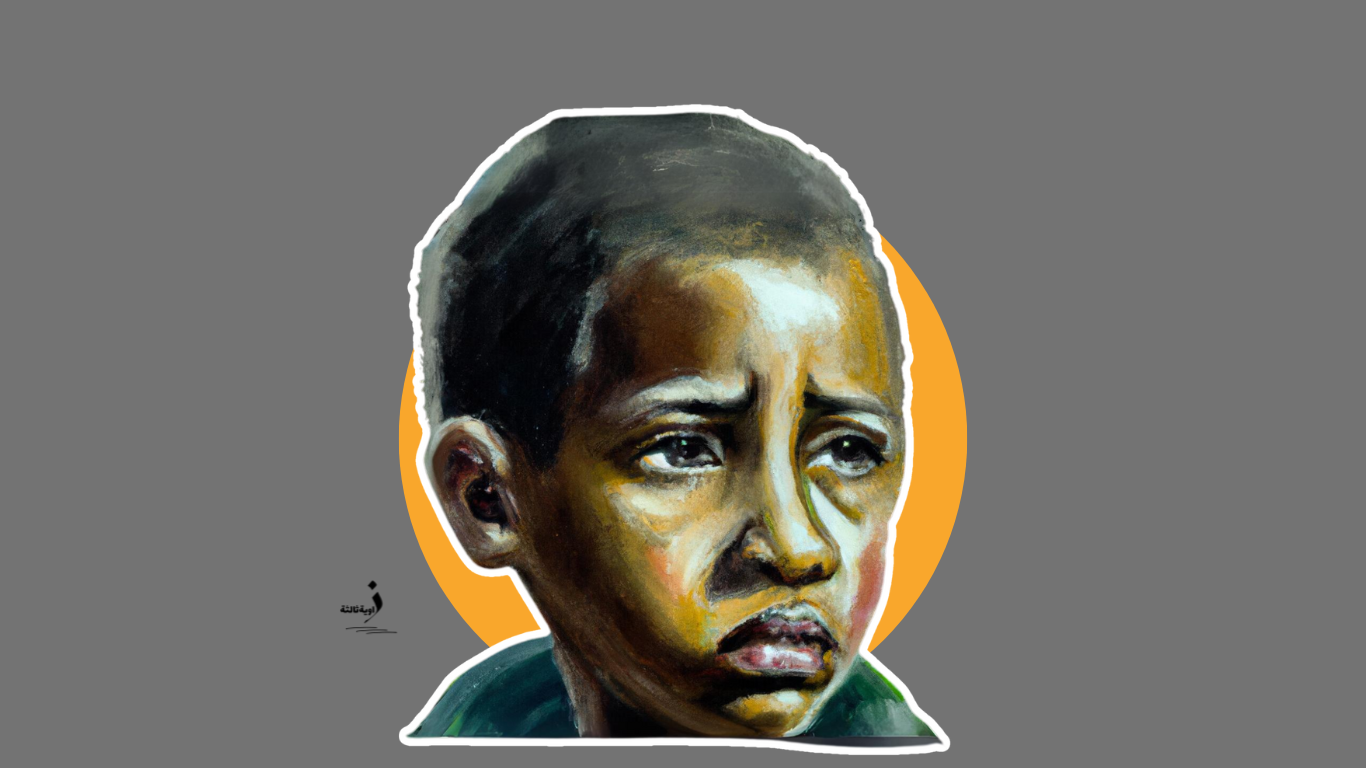

An epigraph from Amal Dunqul’s poem “Al-Ganoubi” (The Southerner), in which the poet mourns a friend who died suddenly under anaesthesia during a minor operation, the years of torment lifting from his face as he returns to childhood, sharing everything with the poet except his bitterness.
May God rest his soul. Ahmed Refaat has died. The skilful street footballer has died, died like all skilful street footballers, in a country that hates the streets and despises the skilful. He died oppressed, caught between the hammer of the sons of the powerful and the anvil of allegations, the chains of oppression, lies, fear and betrayal, and the troubles of life, and there is no power or strength except with God. He died to open the door to the squabbles of the fallen and the gored, as if history, with all its farces and tragedies, its “Shawabra”, “Dayaba” and “Daabsa”, refused to repeat itself anywhere but on the banks of our blessed river. He died to inflame the feelings of defeat we have felt since 7 October, and then died to leave us bewildered, with the question hanging: when did all this begin? And when did we start to feel detached from our first popular game?
In truth, this bewilderment that the Egyptian public feels towards what is happening to Egyptian football began long ago, perhaps even before the Port Said and Air Defence events, perhaps since the death of Al Ahly player Mohamed Abdelwahab at the hands of the doctors of Africa’s biggest club, and perhaps also since a vague feeling crept into the fans that Egyptian football no longer belongs to Egyptians. So what really happened? Why did Egyptians stop supporting their national team or watching the Egyptian league, especially after the events of 7 October? And how can Ahmed Refaat’s death be the final nail in the coffin of Egyptian football’s fan base?
Whom Do We Shoot?
Believe it or not, this situation is long-standing and deep-rooted, and Egyptian fans began boycotting everything related to the Egyptian league or the national team long ago, to the point that former Egypt national team manager Mohamed Khaled Ghoraba came out after the Djibouti match in December 2023, in the qualifiers for the next World Cup, stressing that “this continued absence of fans causes great distress to the national team’s management”, especially after head coach Rui Vitória was surprised to find the stands of Cairo Stadium completely empty. It even reached the point where Egypt’s Dar al-Ifta commented on the controversy, as former Dar al-Ifta fatwa official Ali Fakhr said that supporting the Egyptian national team is “a national duty”, and that “we will not be able to freeze our lives because of any crisis or problem we face, and interacting with society and supporting the national team is commendable and there is nothing wrong with it”.
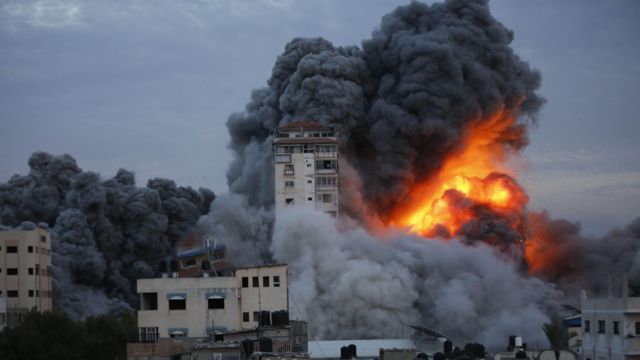
With the Palestinian cause returning to the forefront once again, the brutal Zionist aggression on the Strip, besieged since 2005, and hundreds of savage, barbaric and continuing massacres against unarmed civilians, add to that the feats of the resistance, the revival of the discourse opposing Zionist colonialism as a counterpart of European settler colonialism rather than something alien to it, the shift in the global tone towards the cause as a whole, and the Palestinian narrative prevailing over the Zionist one, many calls emerged to boycott the Egyptian national team on its African campaign last January, after fans felt that the current generation of players no longer carries the required spirit and does not represent the working classes in any way.
That is why it was necessary to disown them, especially as match ticket prices rose, so that attendance became the preserve of a special category with class privileges that the poorer classes, who are more engaged with the nation’s causes, do not have. The proof is what Egyptian TV presenter Ahmed Moussa said: his objection to, and even disapproval of, merely raising the Palestinian flag in the stands. Making matters worse were the shoddy decisions of the Egyptian Football Association and the quarrels of the two poles of Egyptian football, which have grown more grotesque over time: from the fights of Mortada Mansour and Mahmoud El-Khatib to the debates of Ahmed Afifi and Sayed Abdel Hafeez, oh my heart, do not grieve.
Why? Because the leaders of these clubs do not care about the fans, and even utterly despise the people’s choices. And let us not forget Adly El-Kaiy’s call to Al Ahly fans to buy the products of the club’s sponsors, Pepsi and Coca-Cola, to help the club financially, and in turn to help the Israeli occupation in its war of extermination against the Palestinians, as if the Palestinian cause had become something marginal.
Add to that the positions of some players, completely prostrate before this strange, disreputable spirit, and defeated before whatever a player like Mohamed Salah says or does, a player who has proven many times, with conclusive evidence, that our causes are not his causes, and that what matters to us as Arab and Muslim peoples no longer has any real value to him, and does not even enter his circle of interest in the first place.
A Civilisational Shock
The matter is bigger than Egyptian football; most fans have changed their views on everything in the world, including the concept of “patriotism”, priorities and football. Patriotism, as TV presenters have been droning on for years, no longer lies in supporting people with whom we share nothing but the national anthem before matches; it has turned into its true meaning: supporting those who carry your concerns, chant with you for your causes and stand beside you in the same trench, without grumbling, without arrogance and conceit, and also without claiming idealism or lecturing people with a so-called English “mentality” that enslaves peoples and equates the killer with the killed.
Just as the events of 7 October rekindled the flame of the Palestinian cause in the hearts of Egyptians and Arabs, they also rearranged the priorities of each of us, and all the central issues before that date turned into satellites revolving around the main cause. Consequently, “football” as a whole turned into a mere concern serving something bigger and more connected to us. So it was logical for the supportive position towards Mohamed Salah to turn into one of opposition and indifference, because he is no longer active in the causes that matter to Egyptians. All of this made the Palestinian cause a constant in all our lives, and restored balance to the region and the Arab peoples once again, after they had forgotten, or pretended to forget, for a period of time what their real causes are, and were distracted by trivial matters from what really matters.
Did the steadfastness of journalist Wael Al-Dahdouh, after his whole family was killed in the bombardment, after his colleague Samer Abu Daqqa was killed in his arms, and after he himself was targeted many times, not mean something to you?
The Funeral Procession
Well, we all know that the Egyptian league is a farce whose ending is known in advance, that appointing Hossam Hassan was a necessary evil given the shortage of dollars, and that Hajj Amer Hussein, Mr Gamal Allam and their company, all these hajjis and gentlemen, are written for us on the Preserved Tablet, and that the problem lies only in this (tablet), and that life is too short to try to change it. Even if we grow tired of this scenario, it will remain weighing on our chests, because the whole matter is up to God, because the bottom will stay crowded, because the top will stay for the people at the top, and because interests require that every year three are promoted from the bottom, the fourth of them their dog, and perhaps four are relegated without dogs. In the end, the league shield will remain reserved for its two owners, its two owners who will never be relegated.
These things were necessarily known to us; we dealt with them as fate, as a light sedative or as material for laughter and humour, and in bygone days we even took them somewhat seriously, when there were other, different and natural scenes, in which the stands were packed with fans supporting their country, when “Cairo International Stadium” was known as the “Stadium of Terror”, and fans applauded their players, not only for the African treble, but because they felt these players belonged to them and carried their causes, as many Egyptian footballers presented themselves as committed to the people’s path, and Aboutrika and the “Sympathy with Gaza” story offer many lessons.
But the matter suddenly grew to gigantic proportions: suspicions of corruption turned into blood-stained hands, and the play turned from material for laughter and entertainment into something straining society’s nerves. Amid all this came the story of Ahmed Refaat, deepening people’s wounds and turning the estrangement between this same generation and the Egyptian league into an almost permanent one.
Who killed Ahmed Refaat? We do not know, and perhaps we never will. Accordingly, the answer to the earlier questions, why have the Egyptian league and national team lost their lustre, and why did the indifference grow after Al-Aqsa Flood, is simple: because supporting them no longer makes sense, as long as the representatives of Egyptian football do not express the fans’ aspirations, as long as those fans are not allowed into the stadiums, and as long as Ahmed Refaat’s funeral passes before us in silence, as the funerals of the fans in Port Said and at the Air Defence Stadium passed, without any disclosure or accountability.