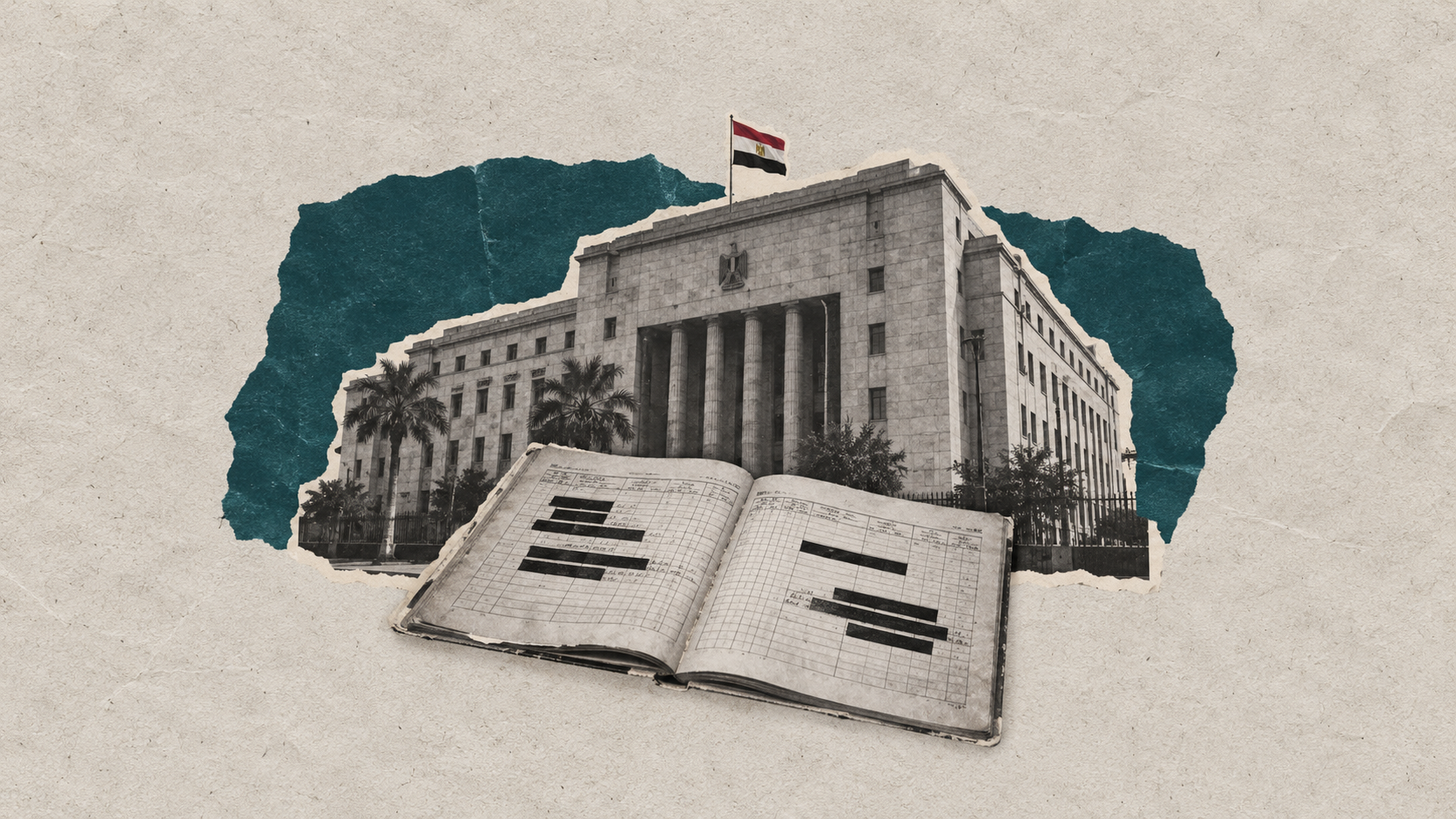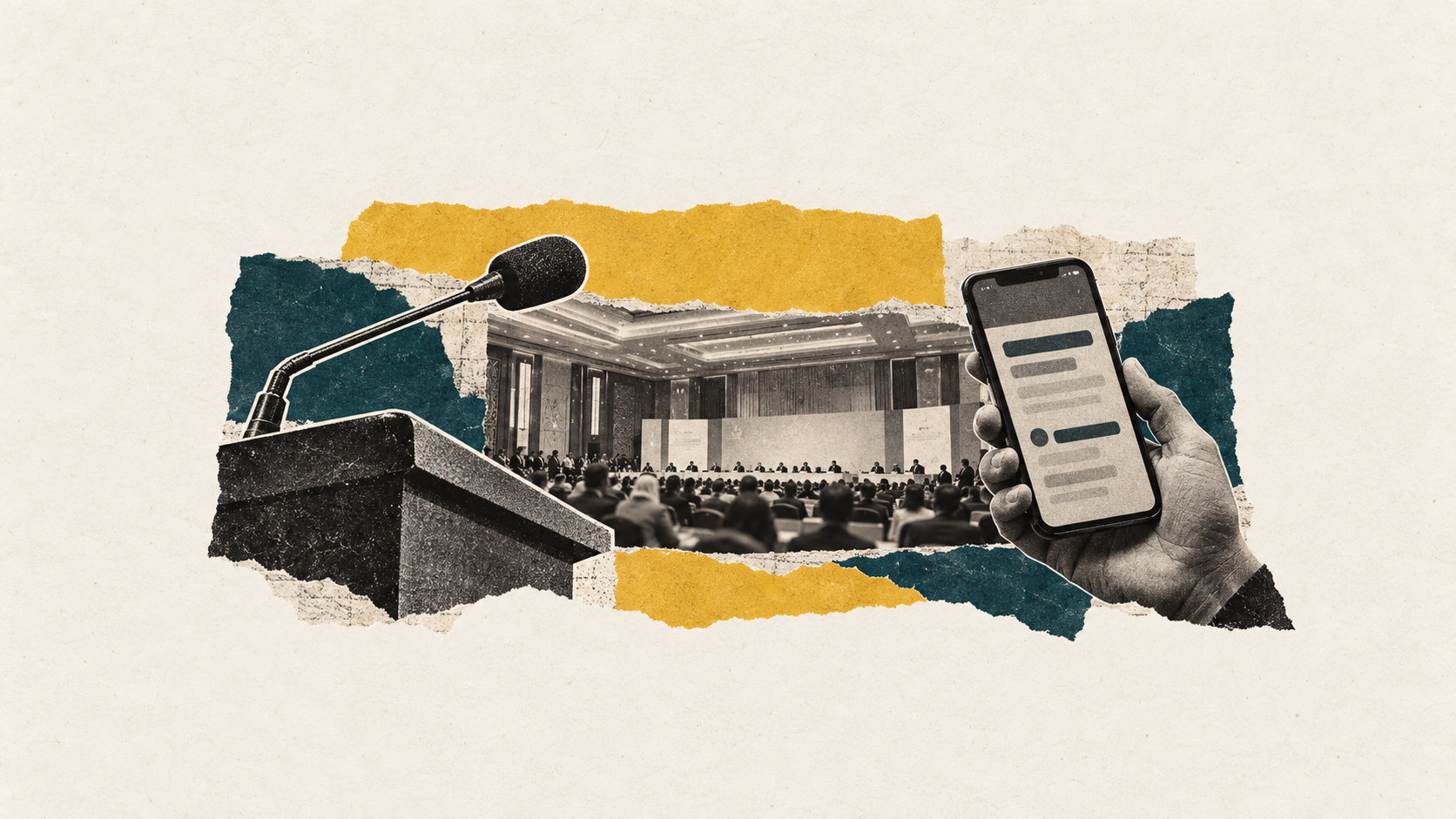

The first phase of Egypt’s parliamentary elections, held on November 10 and 11 across 14 governorates, witnessed a series of violations that reignited questions about the integrity and purpose of the electoral process. Voting coincided with recurring reports and testimonies of vote buying, organized voter steering, and the extensive use of charitable associations to mobilize support for pro-government party candidates. This unfolded alongside the sudden withdrawal of former MP Nashwa El-Deeb in protest over what she described as the absence of equal opportunities and a lack of transparency. Amid low voter turnout and the absence of basic safeguards such as voting curtains and indelible ink, the elections appeared more like a procedural formality reproducing the same political landscape than a genuine contest reflecting popular will or democratic competition.
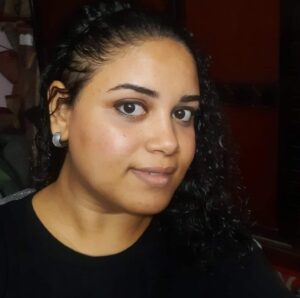
From the earliest hours of voting, the withdrawal of former MP Nashwa El-Deeb dominated the scene after she announced her exit from the race in protest over what she called “the absence of integrity and equal opportunity,” a rare move by a parliamentarian who had long positioned herself as a supporter of the “New Republic” project. While footage documenting the distribution of cash and food boxes outside polling stations circulated widely, testimonies from eyewitnesses and monitors grew regarding the near-total control of the pro-government “Mostaqbal Watan” (Nation’s Future) Party over the voting process, aided by charitable organizations that, according to numerous accounts, effectively acted as undeclared electoral arms.
According to field testimonies obtained by Zawia3 from several governorates where voting took place, the electoral process was marked by near-complete control by the ruling-party-aligned Mostaqbal Watan, both in mobilization and in managing the scene outside polling stations. Sources reported that the party relied heavily on charitable associations to mobilize voters in exchange for distributing coupons redeemable for cash amounts reaching approximately 300 pounds ($6.36), depending on the area, in addition to boxes containing food items used as a direct means of securing votes.
Zawia3 recorded, through eyewitnesses and field monitors in the governorates of Giza, Beheira, Fayoum, Luxor, and Aswan, the widespread purchase of votes outside polling stations. Payments to voters ranged between 50 pounds ($1.06) in the early hours of voting and gradually increased to 100 pounds ($2.12) and 200 pounds ($4.24), while in some areas they exceeded 300 pounds ($6.36) as polls neared closing time. Video clips published in Facebook groups documented explicit financial deals between election brokers and voters outside the stations, reinforcing the credibility of eyewitness accounts regarding the extensive use of political money during the first phase of the parliamentary elections.

Nashwa El-Deeb: A Sudden Withdrawal over the “Security Candidate”
Former MP Nashwa El-Deeb revealed to Zawia3 the reasons that drove her to withdraw from the parliamentary race just minutes before the ballot boxes opened, affirming that political money and widespread electoral violations stood behind her abrupt decision, which she took “to preserve her dignity and parliamentary record.”
El-Deeb said: “I entered the electoral battle more than once, and I was fortunate to serve in parliament for two consecutive terms (2015–2020 and 2020–2025). During this period, I was a model of a national MP dedicated to serving my people. I introduced important draft laws in the field of human rights, including the law on elderly care, a law against violence, protecting the Arabic language, and regulating domestic work. I also secured many services for the people of Imbaba, including establishing and upgrading schools and hospitals, and regularizing the contracts of thousands of workers.”
But she explained that the electoral climate from the outset indicated the absence of genuine competition, saying: “Before the nomination window opened, there was already talk about a specific candidate as the candidate of a certain entity, or the ‘security candidate,’ and another as the coalition candidate. The result was said to be predetermined in their favor. I contacted the National Council for Women and sat with Counselor Amal Ammar. I told her: I do not want support or endorsement; I only want your help to keep the district open and to protect the voice of an independent woman who came with her own strength.”
She continued: “When I went to submit my candidacy papers, I was surprised that numbers 1 and 2 had already been reserved, but I did not care because I trust the people of Imbaba who have granted me their love and confidence for 25 years. I have always been on the front lines with them. This is why I was honored in Britain as an inspiring figure for North Africa, and I was the only candidate who won from the first round in the current parliament.”
She affirmed that some candidates openly declared that “the matter was settled,” adding: “The candidate in question used to say he was the security candidate. I would respond publicly: there is no such thing as a security candidate; security protects everyone and protects our votes. We are in a New Republic based on transparency and integrity, and you are the ones who will determine your future.”
She went on: “I tried to counter the despair among people in every possible way, but I was shocked to find associations receiving instructions to distribute bags, blankets, food boxes, and to buy votes. I reported all this and sent complaints to many security officials, because the National Election Authority is responsible only for the area inside the polling stations. I sent them many WhatsApp messages, but no one responded, and no one told me they were against such actions or would intervene.”
The former MP revealed that what happened at dawn on election day sealed her decision: “Yesterday, after 3 a.m., after a meeting was held, it was announced that the candidates holding numbers one and two, those calling themselves the security candidate and the coalition candidate, would be elected by the associations that were allowed to buy votes. At that moment, I decided to protect my dignity and my record, and to spare the people of my district from a result that does not reflect their will. I announced my withdrawal to preserve my dignity as an MP, as a politician, and as a citizen.”
In this context, private sources told Zawia3 that Nashwa El-Deeb’s withdrawal followed the harassment she faced during the first hours of voting, as well as the use of certain charitable associations to mobilize votes for specific candidates, including Ehab El-Khouli, the Conservative Party candidate who appeared to voters as a figure aligned with the authorities.
According to the sources, El-Khouli relied on tools and methods similar to those used by pro-government candidates, within a complex electoral scene that placed him between partial opposition and competition in a landscape dominated by candidates close to the state. His approach contradicts the Conservative Party’s declared position of refusing any coordination with the authorities, and similar practices were not observed among the party’s other candidates except in the Imbaba district.
For his part, politician Zohdy El-Shami told Zawia3 that El-Deeb’s withdrawal falls under political, not legal, withdrawal, since it occurred after voting began, meaning her name remains on the ballot. El-Shami explained that the last legal deadline for withdrawal was October 25, when he himself withdrew in solidarity with the exclusion of his colleagues in the Socialist Popular Alliance Party, Haitham El-Hariri and Mohamed Abdel-Halim, and his name was therefore not listed on the ballot.
In the same vein, lawyer Yasser Saad told Zawia3 that El-Deeb’s withdrawal after voting began is purely political and has no legal effect since her name remains on the ballot. He noted that even in the event of a candidate’s death, they may still receive votes, and if the elections were genuinely competitive, she could have won.
Saad added that the current parliamentary elections lack transparency and real competition, pointing out that outcomes are often predetermined in “closed rooms,” whether for pro-government lists or certain controlled segments of the opposition. He emphasized that this reality is widely known and accepted, with the possible exception of Upper Egypt governorates, where wider space is left for local family rivalries.
Saad noted that Nashwa El-Deeb’s denunciation of violations may not be fully accepted or supported by the state or the regime, making the electoral battle not merely a clash between social forces and the state, but also between state institutions themselves. He stressed that the current form of elections renders them largely superficial rather than genuinely competitive. Nevertheless, Saad believes that, in theory, the former MP remains capable of winning if she were granted a fair electoral opportunity.
Violations Outside Polling Stations
The first phase of the House of Representatives elections witnessed a series of violations, according to reports issued by the central operations room of the Egyptian Social Democratic Party, consistent with eyewitness testimonies obtained by Zawia3. These observations were concentrated in several governorates, most notably Giza, Assiut, Beni Suef, Fayoum, Luxor, Aswan, and Beheira.
According to the Social Democratic Party’s operations room, violations included distributing campaign materials inside and outside polling stations, the use of political money and vote buying, directing voters to support pro-government party candidates, preventing some candidates and their representatives from entering polling stations, and failing to provide voting curtains to ensure ballot secrecy.
These violations were documented in several polling schools across the governorates, including Al-Thawra and Al-Nasr Schools in Assiut, Ahmed Orabi and Om Al-Mo’menin Schools in Giza, Maydoum Preparatory School in Beni Suef, Al-Kayman Primary School in Luxor, Kahk Bahari and Abu Bakr Al-Siddiq Schools in Fayoum, and Al-Baslaqun Preparatory School in Beheira.
In a related development, the central electoral operations campaign of the Egyptian Social Democratic Party expressed full support for candidate Mohamed Behnesy, running for the individual seat in the Bandar and Markaz Damanhour constituency in Beheira, in his legitimate demand to obtain copies of the official counting reports from subcommittees. The campaign explained that the refusal of some subcommittee heads to provide these documents, citing “lack of instructions” or “unavailable forms”, constitutes a blatant violation of transparency and undermines the integrity of the electoral process, raising questions about the commitment of relevant authorities to ensuring equal opportunity among candidates.
The party noted that these violations threaten electoral integrity and weaken public trust in the process. It called on the National Election Authority to intervene immediately to verify the reports, take legal action against violators, and ensure all candidates receive official counting records without delay or discrimination.
Similarly, the Waei Party’s operations room documented violations that mirrored those recorded by the Social Democratic Party. According to its official statement, the most prominent issues included distributing campaign materials inside and around polling stations by candidates aligned with pro-government parties, distributing food boxes and electoral bribes to influence voters, preventing some candidates and their representatives from entering polling stations and rejecting their authorization papers, directing voters to support specific candidates, the absence of indelible ink in some stations, and slow voting procedures due to staff shortages and weak organization.
The party called for urgent intervention by the National Election Authority to investigate these violations, take legal action against those responsible, and guarantee that all candidates and their representatives can perform their legitimate oversight role.
For his part, former MP Freddy El-Bayadi, running again for parliament on the Social Democratic Party ticket, told Zawia3 that the first phase of voting demonstrated once again that electoral integrity is not a slogan but a real battle requiring the joint involvement of the state and society.
El-Bayady added that the on-the-ground practices observed, such as voter directing, the use of political money, and restricting the movement of some candidates’ representatives, reflect major challenges that threaten the credibility of the electoral process if not addressed decisively. He stressed that the responsibility of the government and its institutions lies in detecting violations and penalizing offenders to ensure citizens’ confidence in the protection of their votes, emphasizing that this is not a political luxury but a national duty to uphold the people’s will.
Indelible Ink: Absent Since 2020
Several polling stations, including Subcommittee No. 66 in Damanhour at Damanhour Military Secondary School, witnessed the absence of the voting curtain used to guarantee ballot privacy. Indelible ink was also missing, according to the testimony of politician Zohdy El-Shamy, a senior figure in the Socialist Popular Alliance Party, who went to cast his ballot to verify that his name did not appear on the voter roll after his official withdrawal from the race.
El-Shamy described what he saw upon arriving at the station in a Facebook post, saying: “We always knew that elections typically consisted of a ballot box and a curtain to ensure secret voting, but what I found today was a box with no curtain, no indelible ink, and no voters either. The exposed booth directly faced the committee officials present, stripping the process of the secrecy guaranteed by the constitution and the law.”
El-Shamy emphasized that the absence of both the curtain and indelible ink is not a minor technicality but a clear violation of the principle of secret voting, raising serious questions about the extent to which some polling stations adhere to the legal rules in force. He added: “I was the only voter present when casting my ballot, and I was not allowed to photograph the ballot paper for documentation.”
The absence of indelible ink also sparked widespread debate among citizens, who questioned why it was not being used. The National Election Authority received several complaints from voters regarding the application of ink in some stations. The authority confirmed that indelible ink is never used in House of Representatives elections and that its use is restricted to presidential elections and referendums to prevent double voting, since those elections allow voters to cast ballots outside their home precincts.
Notably, indelible ink was part of the parliamentary elections that followed the January 2011 revolution. Meanwhile, the 2020 parliamentary elections were the first since the revolution to be held without ink, with the National Election Authority justifying the decision as a measure to curb the spread of COVID-19. Since then, parliamentary elections have not used indelible ink again.
In November 2011, the Egyptian government received 510,000 bottles of indelible ink and official uniforms for election supervisors ahead of the parliamentary elections held on November 28, 2011, after the International Foundation for Electoral Systems (IFES) provided these supplies under an agreement with Egypt. Cairo International Airport authorities also waived customs fees for the materials under cabinet orders, according to an official airport source.
According to a report published on the IFES website authored by Dr. Staffan Darnolf, Dr. Fernanda Buril, and Meredith Applegate, voters’ purple fingers have become a near-universal symbol of hope in transitional elections and in moves toward more democratic forms of governance. Indelible ink is used to deter electoral fraud and has been adopted by more than 90 countries to ensure that voters cannot cast more than one ballot. In some cases, the ink complements or substitutes for other anti-fraud measures such as checking voter identity or cross-referencing voter lists.
However, indelible ink is not a magic fix for fraud. Elections in Afghanistan in 2004, Nigeria in 2007, and Uganda in 2016 revealed application problems, ranging from improper use to insufficient quantities or poor ink quality, especially when expired ink was used.
Absence of Competition
Commenting on the scenes of political money, vote buying outside polling stations, and declining voter mobilization, Amr Abdelrahman, a political science lecturer, tells Zawia3 that this year’s elections are the most engineered legislative elections since 2015, pointing out that candidate selection was carried out by security agencies based on financial and political loyalty.
Abdelrahman explains that competing lists were entirely absent, and the process saw no real challenge to the National List, unlike the 2020 elections, which included some independent candidates whose list was later excluded by the National Election Authority. He added that the current elections unfolded within closed arrangements whose details were fully settled in advance, resulting in a total absence of genuine competition, despite minor internal disagreements that were quietly resolved.
He notes that the emergence of the Gabha (Front) Party on the scene did not create any real conflict or competition with pro-government parties, as a practical agreement, what he described as a “gentlemen’s agreement”, was reached to divide the seats, including both list and individual seats. This eliminated real competition among pro-government candidates, differing from the 2015 and 2020 elections, which saw limited competition for some individual seats. He also pointed out that the opposition quota was predetermined, both within lists and for individual seats.
Abdelrahman adds that this intense coordination between security agencies, pro-government parties, and opposition parties produced the most engineered parliamentary elections since 2005. It led to a significant drop in the number of candidates, roughly half the number who ran in 2020, making it the parliamentary election with the fewest candidates in two decades. He explains that this context helps account for the drop in turnout in both Cairo and Upper Egypt, as well as the rise in vote buying and group voting, given the small number of active voters and the widespread belief that election outcomes were already decided.
The political science lecturer concludes that everything observed during the voting days, from low turnout to repeated scenes of vote buying, can be interpreted in light of prior arrangements and understandings. He stresses that this election has been the most engineered since 2015, reflecting the continued consolidation of parliamentary control within a predesigned framework.
Ultimately, the first phase of the 2025 parliamentary elections shows that Egypt’s political landscape is moving toward tighter control over the electoral process, amid the absence of real competition and declining public confidence in the value of voting. The violations documented by opposition parties and eyewitnesses, from political money and voter directing to the lack of transparency and secrecy in some stations, revive fundamental questions about the meaning of political participation and the concept of the “New Republic” that official rhetoric relies upon.
El-Deeb’s withdrawal, and the practices surrounding it, also point to a deeper crisis that goes beyond the electoral process to the very structure of the public sphere, which has become closed to pluralism and accountability, confined between symbolic opposition and state-backed loyalists.
In light of this reality, analysts and observers argue that the current elections were not presented as a democratic contest but were handled as a procedural exercise aimed at renewing the institutional façade without altering its substance. As preparations continue for the second phase, major questions remain about the future of parliamentary representation in Egypt, the ability of the political process to regain public trust, and whether elections can one day reflect popular will rather than suppress it.