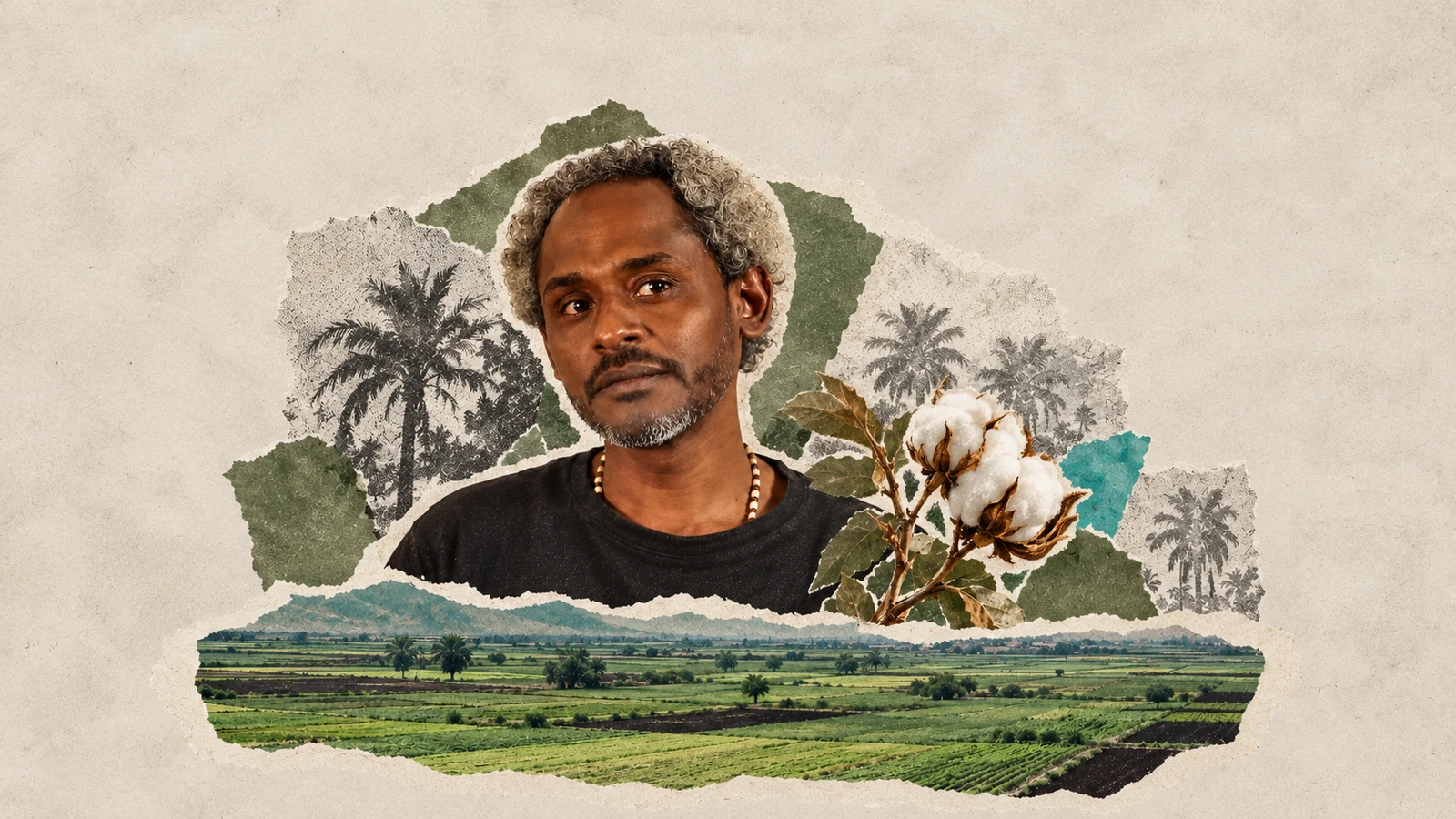


Just hours after arriving home following his release—after nearly 11 years in prison in connection with various cases—security forces re-arrested Sayed Moshagheb, one of the founders of the Zamalek supporters’ group Ultras White Knights.
The Ministry of Interior said it had uncovered the circumstances surrounding videos circulated on social media showing a number of people gathering in the Bulaq El-Dakrour area in Giza governorate, where they set off fireworks in conjunction with celebrations marking the release of an individual affiliated with a sports fan group who had previously been accused in cases related to acts of rioting.
It added, citing a security source, that on the 16th of this month, security services at the Giza Security Directorate received reports from residents about a group of people gathering in a street, accompanied by disruption to traffic and chants linked to the group, which the ministry considered to have caused a state of intimidation.
The ministry stated that six of those involved in the gathering were arrested, including the recently released individual, noting that they have criminal records and that legal measures were taken against them. It also affirmed its continued handling of what it described as unlawful acts in accordance with established legal procedures.
Three of Moshagheb’s friends, speaking to Zawia3 from outside his place of detention, confirmed that security forces arrested him approximately six hours after his release. Meanwhile, lawyer Ismail El-Rashidi denied the incident, stating that Moshagheb was well and at home, urging that the news not be circulated. When asked about reports confirming his arrest, he said: “Whoever publishes this does so at their own responsibility. Sayed is fine.”
His friends said they had received reassurances from lawyers indicating that Moshagheb had been detained due to celebrations organized by his supporters in front of his home to welcome him, which caused concern among security authorities, who quickly moved to arrest him. His lawyer reassured his family and friends that he would be released within hours after the conclusion of investigations related to unlawful assembly and blocking the road.
His friends and relatives fear that discussing his case publicly could lead to intransigence by security authorities and a failure to fulfill their promise to release him this evening or tomorrow morning. One of them said: “He spent 11 years in prison and got out by a miracle. We fear they will take him back and fabricate charges against him again. He did nothing and did not even celebrate his release. He did not spend more than three hours at home before they arrested him again without a clear reason.”
Human rights advocates criticize what they describe as “negative signals” and “misconduct” by the security authorities, which moved to arrest Moshagheb just hours after his release without any clear official charges.
For his part, human rights lawyer Negad El-Borai called on the competent authorities and the Public Prosecution to investigate the incident and clarify the reasons behind what happened, calling for the immediate release of Moshagheb and urging the National Council for Human Rights to carry out its role in this regard.
El-Borai told Zawia3: “We hope the incident is merely an unintentional mistake,” appealing to the concerned authorities to expand decisions to release more detainees to ensure their return to their families and to achieve the desired easing of tensions, not the opposite.
The human rights lawyer also urged security agencies and the Public Prosecutor to open serious investigations into certain procedural incidents, calling on the Ministry of Interior to adopt a more flexible approach and “greater tolerance” in dealing with citizens, and to avoid restrictive practices that increase tensions.
El-Borai criticized what he described as “negative signals” sent by certain security practices, particularly the release of individuals followed by their re-detention within hours, stressing that such situations leave a harmful impact and could have been avoided through simple administrative measures or advice without resorting to detention, in order to avoid projecting a more negative image of the human rights trajectory.
He also called on all parties, including those released and their families, to act with restraint and take current circumstances into account, reiterating his hope that the coming period will witness broad and comprehensive waves of releases, rather than an expansion of arrest and imprisonment measures.
At the beginning of this April, the prosecution decided to release Sayed Ali Fahim, known as “Moshagheb,” along with a number of prisoners of conscience, most notably Sherif El-Roubi and Nermeen Hussein, amid political and human rights welcome.
Security and Political Messages
For his part, human rights lawyer Halim Hanish asserts that the re-arrest of Moshagheb, just hours after his release, carries political and security messages. He adds that it lacks any sound legal basis and comes within a political context aimed at punishing public activity and sending intimidation signals to citizens.
Hanish explains to Zawia3 that any potential charges against Moshagheb related to “unlawful assembly” are substantively baseless, as the man was on his way home and was surprised by citizens waiting for him. He added: “Even if we assume there was a legal issue with the gathering, it does not legally fall under Moshagheb’s responsibility. At its core, the case is not legal but purely political.”
Hanish links what Moshagheb is facing to ongoing attempts to restrict other figures such as Ahmed Douma, arguing that the Ministry of Interior insists on continuing a policy of “silencing voices” and imposing a state of psychological siege on society. He said: “The message is clear; the authorities do not want anyone to feel joy or have hope for any positive change. It is a policy aimed at suppressing any expression of celebration of freedom.”
Hanish cites the case of activist Ahmed Douma as an example, noting that despite his avoidance of direct confrontation or sharply critical writing since his release, the pursuit of others continues. He adds that Douma was not detained due to his general or nationalist political positions, but rather because of his statements about violations inside prisons, stressing that “the re-imprisonment of Sayed Moshagheb today has no reason other than people celebrating his release. It is a clear message that no one is allowed to speak or even express happiness.”
On April 7, just hours after the release of a number of prisoners of conscience in Egypt, most notably Nermeen Hussein, Sayed Moshagheb, and Sherif El-Roubi—amid political and human rights welcome—the State Security Prosecution ordered the detention of political activist and poet Ahmed Douma for four days pending investigation in Case No. 2449 of 2026. This marks the seventh case against him since a presidential pardon was issued in August 2023.
The prosecution charged Douma with publishing false news and statements inside and outside the country that could disturb public order and incite unrest. These charges stem from social media posts and an article he published on the website Al-Araby Al-Jadeed titled “A Prison Within the State and a State Within the Prison,” according to lawyer Khaled Ali.
The Authorities Do Not Want Anyone Happy!
In his reading of the broader scene, Hanish describes these practices as “incomprehensible” and inconsistent with the current context, questioning the value of having political actors, parties, or a civil movement in the absence of even minimal guarantees of freedom of expression. He adds: “How can citizens be expected to join political parties or engage in political work in an environment where people are arrested merely for writing a post or even because their families express joy?”
The human rights lawyer underscores the absurdity of subjecting someone who has spent nearly 12 years of his life behind bars to renewed persecution, stressing that the continuation of this security approach undermines any prospects for opening the public sphere or achieving genuine human rights stability.
Moshagheb is considered one of the figures most closely associated with the history of ultras groups in Egypt. He rose to prominence in the years following the January 2011 revolution as a leader of the “White Knights” group, whose presence extended beyond stadium stands to include participation in political and social protests during that period.
Moshagheb’s name has been linked to a number of cases involving fan groups in Egypt, particularly following escalating tensions between the authorities and ultras groups. He faced charges including joining a banned group and spreading false news, in addition to earlier accusations related to acts of rioting and sports-related violence.
Among the most prominent cases against him was what became known in the media as the “Air Defense” case, connected to the events of February 2015, when a number of Zamalek supporters were killed outside the Air Defense Stadium while heading to attend a football match, in one of the deadliest incidents in the history of Egyptian stadiums.
Moshagheb remained in detention since his arrest in March 2017, while his lawyers over the years pointed to errors in calculating his sentence, calling for his release after he had completed the legally prescribed term.
The “Ultras White Knights” group had welcomed the release of Sayed Moshagheb, the historic capo of Zamalek fans, from Tenth of Ramadan Prison on April 7, coinciding with the start of procedures for his release, considering the decision a “historic moment” for the club’s supporters.
The group expressed its thanks to officials for what it described as responsiveness to the appeals of Zamalek fans regarding the issue of supporters. It also expressed appreciation to all those who contributed to securing his release, viewing it as an indication of “opening a new page” in dealing with the issue of football fans in Egypt.
In its statement, the group called for consideration of the conditions of other detained football fans across different affiliations, referring in particular to Al Ahly supporters, before concluding by affirming that Sayed Moshagheb remains the “historic capo” and one of its most prominent symbols in the stands.