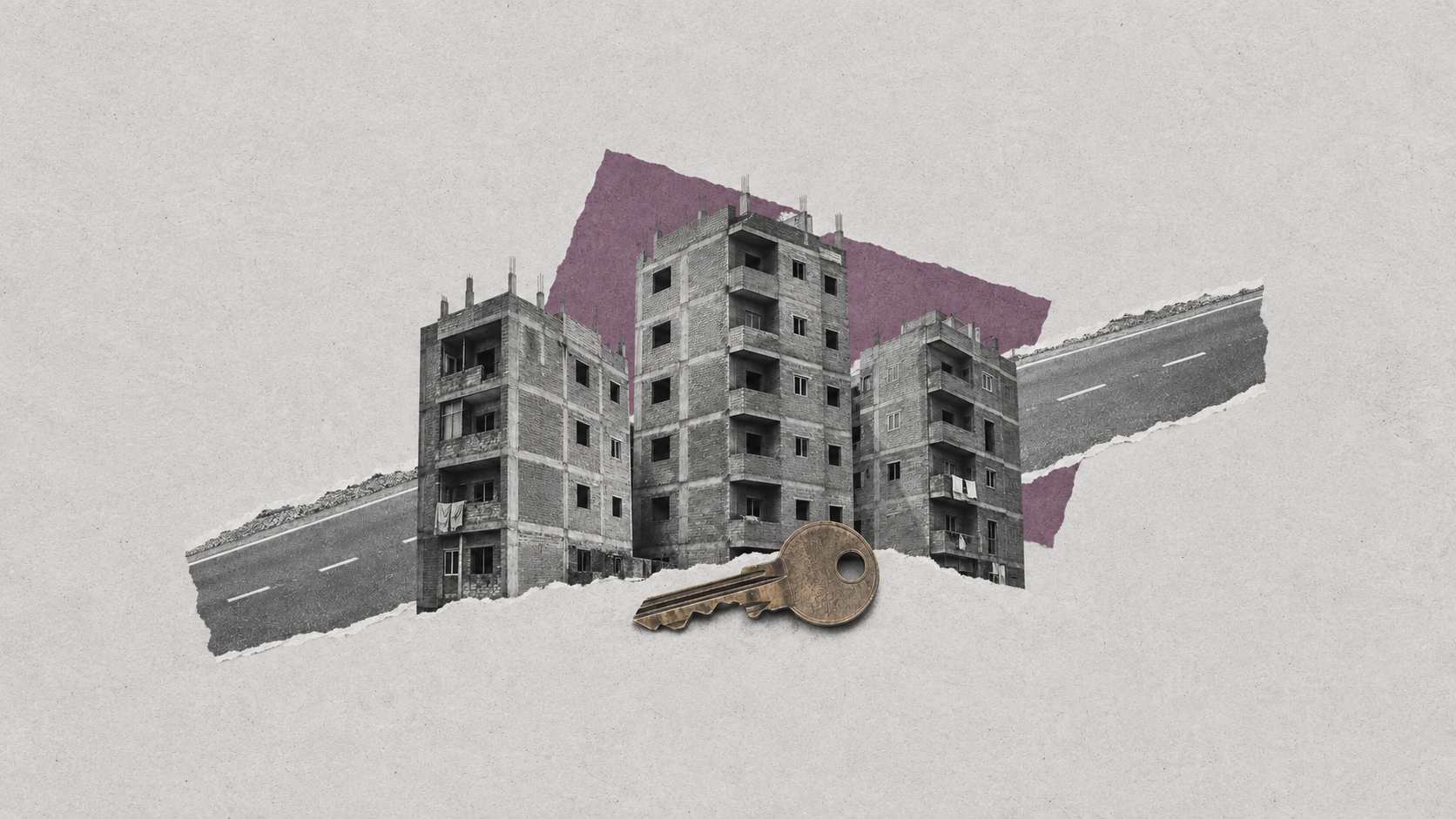


On Wednesday, July 2, during its general session chaired by Dr. Hanafi Gabali, the Egyptian Parliament approved most of the articles of the Old Rent Law project, which had been presented and defended by the government, with a single amendment to Article 8. This amendment stipulates that the original tenant cannot be evicted from the leased property until at least one year after an alternative housing unit of their choice is provided, if an agreement with the landlord is not reached during the transitional period.
According to the approved text of Article 8: “Without prejudice to the provisions of Articles (2) and (7) of this law, any tenant, or anyone to whom the lease contract has extended under Law No. 49 of 1977 and Law No. 136 of 1981, before the expiration of the term specified in the contracts according to Article (2), may apply for a residential or non-residential unit, whether for rent or purchase, from among the units available from the state. The application must be accompanied by a declaration of evacuation and delivery immediately upon the issuance of the allocation decision and receipt of the alternative unit. Priority in allocation shall be given to those most in need, including the original tenant, their spouse, and their parents, and those to whom the lease contract has extended.”
The draft law sparked a wave of controversy both inside and outside Parliament and faced explicit rejection from several parties and MPs who believed that the law threatens the social stability of a wide segment of tenants, especially in service sectors such as health and education. During the last general session, MPs from the Justice Party, the Tagammu Party, and the Egyptian Social Democratic Party announced their withdrawal from voting on the law’s provisions, protesting the passing of the law without considering their remarks.
The list of MPs who withdrew included: Diaa El-Din Dawood, Ahmed El-Sharkawy, Abdel Moneim Imam, Ahmed Farghali, Mohamed Abdel Alim Dawood, Atef Maghawri, Nabil Askar, Hani Khadr, Ahmed Bilal, Khaled El-Haddad, Marcel Samir, Youssef El-Husseini, Ihab Mansour, Maha Abdel Nasser, Ahmed Drag, Sahar Bashir Mantoq, Doaa Asi, Zeinab El-Slaimi, Salma Mourad, Alaa Essam, Sanaa El-Saeed, Riham Abdel Nabi, and Samira El-Gazzar.
Article 1 of the law, as approved without amendment, stipulates that “The provisions of this law apply to places rented for residential purposes, as well as to places rented to natural persons for non-residential purposes, in accordance with the provisions of Law Nos. 49 of 1977 and 136 of 1981, concerning the regulation of the relationship between landlords and tenants.”
As for Article 2, which has sparked wide controversy, it stipulated that “Lease contracts for places subject to the provisions of this law for residential purposes shall end after seven years from the date of its enforcement, and lease contracts for places rented to natural persons for non-residential purposes shall end after five years from the date of its enforcement, unless an agreement is reached to terminate them before that.”
The Parliament also approved Article (5) of the Old Rent Law project, which states: “Starting from the due date for the next monthly rent following the enforcement of this law, the legal rent value for places rented to natural persons for non-residential purposes will be five times the current legal rent value.” Thus, the monthly legal rent for these units rented for non-residential purposes (such as clinics, offices, and shops) will rise to five times the current value, starting from the first month due after the law is officially passed and published in the official gazette.
After the approval of these provisions and before finalizing all the articles of the law, MPs from the Justice Party, the Tagammu Party, and the Egyptian Social Democratic Party announced their withdrawal from the general session, protesting what they described as “an imbalance in the legislation and the absence of social protection for tenants.”
In a statement, the withdrawing MPs, numbering 24, said: “Based on our national and constitutional responsibility, and in fulfillment of the oath we took to protect the interests of the people and safeguard their rights, we have exerted every sincere effort since the first moment in the discussions of the draft law, whether in the specialized committees or under the dome of Parliament, in order to present fair legislation that preserves the rights of landlords without harming the rights of tenants.”
The statement added that the MPs sought to exempt the original tenant and their family from the termination of the lease, in order to preserve the minimum level of social stability, and offered several balanced alternatives and proposals. However, the government refused to engage and insisted on passing Article 2 in its current form, which the MPs considered “a deliberate disregard for social and humanitarian considerations.”
Don’t miss: Will Six Million Egyptians Be Evicted? The Hidden Dangers of Egypt’s Old Rent Law Reform

The Law Threatens Social Stability
The Old Rent Law has sparked a wide wave of anger and condemnation in recent weeks, amid warnings about its dangerous social and economic effects on millions of citizens. Several political parties and human rights organizations have called for amending the law’s provisions to ensure justice and protect families that have been settled for decades in units governed by this system.
Amid this controversy, security forces arrested lawyer Ayman Essam from Alexandria while he was on his way to attend the founding meeting of the “Old Rent Tenants Association.” Essam appeared on the evening of June 21, two days after his disappearance, before the Supreme State Security Prosecution in New Cairo.
In its session held on Monday, June 30, the Supreme State Security Prosecution decided to detain him for 15 days pending investigation in case number 4881 for the year 2025, as reported by the lawyer from the Egyptian Initiative for Personal Rights, one of his defense team members.
Essam, a lawyer and legal advisor to the Old Rent Tenants Association, had participated with several tenant representatives in community dialogue sessions organized by the Parliament to discuss the law project. He expressed his rejection of the current draft and called for the removal of the article related to the liberalization of the rental relationship after a transitional period, proposing that only an increase in rental value be made in accordance with the constitutional court’s rulings, to avoid indirectly evicting tenants.
In a later development, on July 2, the Supreme State Security Prosecution released lawyer Ayman Essam after ten days of detention.
Housing and urban policy researcher Yehya Shawkat criticizes the approval of the Old Rent Law by Parliament, describing it as “unfair to residents,” and warning that it “will lead to a new housing crisis threatening hundreds of thousands of families in the coming years.” These concerns had previously been expressed by opposition parties, human rights organizations, and independent experts.
Shawkat explains in his interview with Zawia3 that the law “overrides the Constitutional Court ruling, which approved the gradual increase of rental value without infringing on the right to stability for residents.” He adds that the current draft “proposes unrealistic solutions both socially and economically, which involve evicting and displacing tenants to alternative homes that may not suit their financial capacities or psychological needs, carrying the risk of homelessness and poverty.”
He further adds that it would have been better to reach a “win-win solution,” which directs the budget for building alternative housing to support higher rents for those unable to pay, ensuring the preservation of their homes while providing a fair payment to landlords, as many landlords themselves have called for.
Shawkat also warns of the broader impacts of the law, noting that it “will disrupt thousands of small commercial and social activities,” which will reshape the social fabric of many neighborhoods in cities, potentially leading to the “extinction of a significant portion of these small businesses that are the backbone of life in popular and old neighborhoods.”
The Old Rent Law Threatens Health Services
Although the law grants a transitional period of five years before terminating leases for non-residential units rented to natural persons, many doctors and pharmacists believe that this period is insufficient. They stress that applying the law in its current form may lead to the closure of thousands of clinics and pharmacies spread across the country, particularly in old popular and commercial areas, without providing appropriate alternatives or guarantees for the continuity of health services for citizens.
In recent weeks, the debate over the provisions of the law project has intensified, especially regarding its impact on service facilities. Health professionals have expressed concern that the expected evictions could destabilize medical centers that have been operating for decades, with long-established trust relationships with local communities who rely on them for basic healthcare services.
Dr. Osama Abdel Hai, head of the Doctors’ Syndicate and the President of the Union of Medical Professions – which includes physicians, dentists, pharmacists, and veterinarians – sent an official letter to Dr. Hanafi Gabali, Speaker of the House of Representatives, in which he fully objected to the government’s proposed Old Rent Law, particularly concerning units rented to natural persons for non-residential purposes, such as medical clinics and pharmacies.
Abdel Hai explained that Article 2 of the law, which stipulates the termination of leases five years after the law comes into effect, poses a direct threat to the stability of the healthcare sector, especially in popular areas and villages where a wide segment of citizens rely on those clinics and pharmacies for their healthcare needs.
In his letter, he pointed out that relocating a clinic or pharmacy to a new location requires long and complicated licensing procedures, in addition to being a financial and psychological burden on doctors and pharmacists, potentially leading to a loss of the trust they have built with their patients over the years.
Abdel Hai also expressed the rejection of the Doctors’ Syndicate and the Union of Medical Professions to Article 5, which stipulates increasing the rental value to five times its current value, noting that these units have already been subjected to a series of previous legal increases, unlike residential units.
He confirmed that applying this increase would inevitably lead to the closure of thousands of clinics and pharmacies, especially in rural and informal areas, or force doctors to raise consultation fees, thus burdening patients with additional costs in the face of a difficult economic situation.
In terms of the potential impact, Abdel Hai revealed that there are about 21,000 rented clinics out of a total of 99,000, and around 30,000 rented pharmacies out of 90,000 pharmacies across the country. The union also opposed Article 6, which stipulates an annual increase of 15% on the last rental value, calling for the current percentage of 10% to be maintained.
Abdel Hai concluded his letter by stressing the rejection of the law in its current form, emphasizing that the Constitutional Court ruling upon which the project is based only addressed the unconstitutionality of freezing the rental value of residential units, not the non-residential units rented to natural persons.
In this context, Dr. Mohamed Badawy, a dentist and former board member of the Dentists’ Syndicate, explains that the Old Rent Law is a very complex issue, and it cannot be viewed solely from the perspective of the low current rental value, without reviewing the terms under which the contracts were signed in the past, especially during the 1970s, 1980s, and 1990s.
Badawy clarifies in his conversation with Zawia3 that many doctors at that time paid large sums of money for “goodwill payments,” sometimes exceeding the value of purchasing a residential unit in new areas like Nasr City back then. He adds, “Opening a clinic in downtown, for example, required a goodwill payment equal to or greater than buying a full apartment in a new area, so it can be said that tenants have actually paid for the unit, while the rent was merely a symbolic amount for maintenance.”
He points out that most tenants today, especially doctors, bear the full cost of maintenance, with no contribution from the landlord, raising questions about the fairness of multiplying the rental value under these circumstances. He stresses that sudden and large rent increases will negatively affect medical services, especially in clinics in popular areas where consultation fees are kept low to match the economic capacity of citizens. He said, “The increase in rent will force doctors to raise consultation fees, which will harm patients with limited income, especially in areas that still provide services at affordable prices.”
Badawy also warns that applying eviction after five years, according to the new amendment, will threaten the stability of clinics and health facilities, noting that establishing a medical facility requires massive investments and expensive equipment, and it takes a long time to generate returns from them.
He adds that the Medical Facilities Law grants exemptions only for clinics and health facilities located in non-administrative or commercial buildings, so the loss of old contracts will expose these facilities to the risk of losing their licenses, especially in old neighborhoods where suitable properties for obtaining new licenses are scarce.
He concludes by saying, “Either the doctor accepts an exaggerated rent increase from the landlord, or they are forced to move to another location, which is extremely difficult under the new conditions and the lack of appropriate alternatives in old areas. Many medical facilities will not be able to continue or renew their licenses, and this poses a risk to the entire healthcare system.”
Don’t miss: Residents in Egypt’s Al-Omraneyya Face Evictions Without Notice or Alternatives
The Poor Pay the Price
Article 18 of the Egyptian Constitution states: “Every citizen has the right to health and integrated healthcare in accordance with quality standards. The state guarantees the preservation of public healthcare facilities that provide services to the people, supports them, works to improve their efficiency, and ensures their fair geographic spread… All health facilities, products, materials, and advertising means related to health are subject to state control. The state encourages the participation of the private and non-governmental sectors in healthcare services in accordance with the law.”
For his part, Mahmoud Fouad, Executive Director of the Egyptian Center for the Right to Medicine, believes that the Old Rent Law project represents a “time bomb” that could explode in everyone’s face, as it directly threatens social peace, particularly regarding the stability of the primary healthcare system in poor and popular areas.
Fouad says in a statement to Zawia3 that medical clinics and pharmacies in these areas are the primary refuge for low-income citizens, who rely on the proximity of the location and the trust they have built with their doctor or pharmacist. This will be completely jeopardized if the law is applied in its current form.
He clarifies that Article 2 of the law, which stipulates the termination of leases after five years for non-residential properties, will practically lead to the closure of thousands of pharmacies and small clinics. He asks, “How can we close simple pharmacies in poor neighborhoods when they are vital healthcare outlets?”
He adds that Egypt has about 88,000 pharmacies, a large proportion of which have been suffering from severe economic stagnation since 2020, due to a decline in citizens’ spending on health and medicine. “Many pharmacies can no longer cover their employees’ salaries, and some have already been forced to close,” he points out.
Fouad confirms that pharmacies in popular areas provide essential pharmaceutical services, and people who cannot afford medical consultations rely on them. “The trust between the pharmacist and the patient ensures the citizen’s right to healthcare, and if the pharmacist is forced to leave their location due to rising rents, the citizen will not find the medicine nor anyone to guide them.”
The Executive Director of the Egyptian Center for the Right to Medicine emphasizes that relocating a pharmacy or health facility is not a simple matter; it involves complex regulatory procedures. He stresses that applying the law in this way “will force many pharmacies to leave their locations, weakening citizens’ ability to access basic healthcare services.”
Fouad concludes his statement by saying: “This law, in its current form, does not only harm the owners of clinics and pharmacies, but is also a direct injustice against citizens and undermines their right to access healthcare easily and at an affordable cost. It is a real threat to the country’s health security.”
The Egyptian Parliament approved the Old Rent Law project, with only Article 8 being amended, despite warnings from professional syndicates, opposition parties, human rights organizations, and urban experts, who emphasized the need to find solutions that take into account both the landlords and tenants. The law has now reached its final stages and awaits the President’s approval to be officially enacted.
Although the government, which presented and defended the law, claims that the law seeks to achieve “balance,” the reality suggests that the scales have tipped in favor of a particular group, without providing real empowerment for the affected groups or offering suitable alternatives.