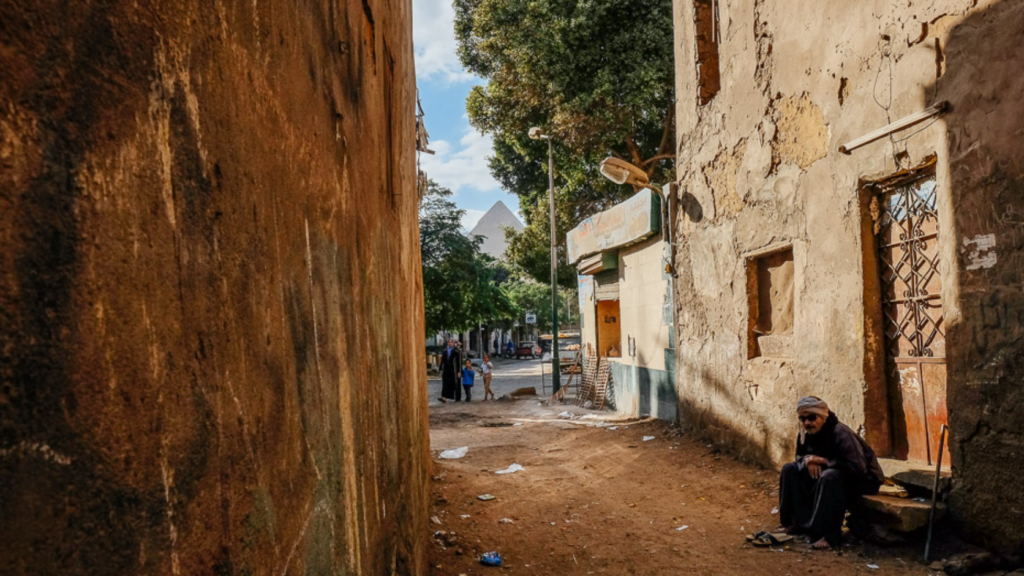
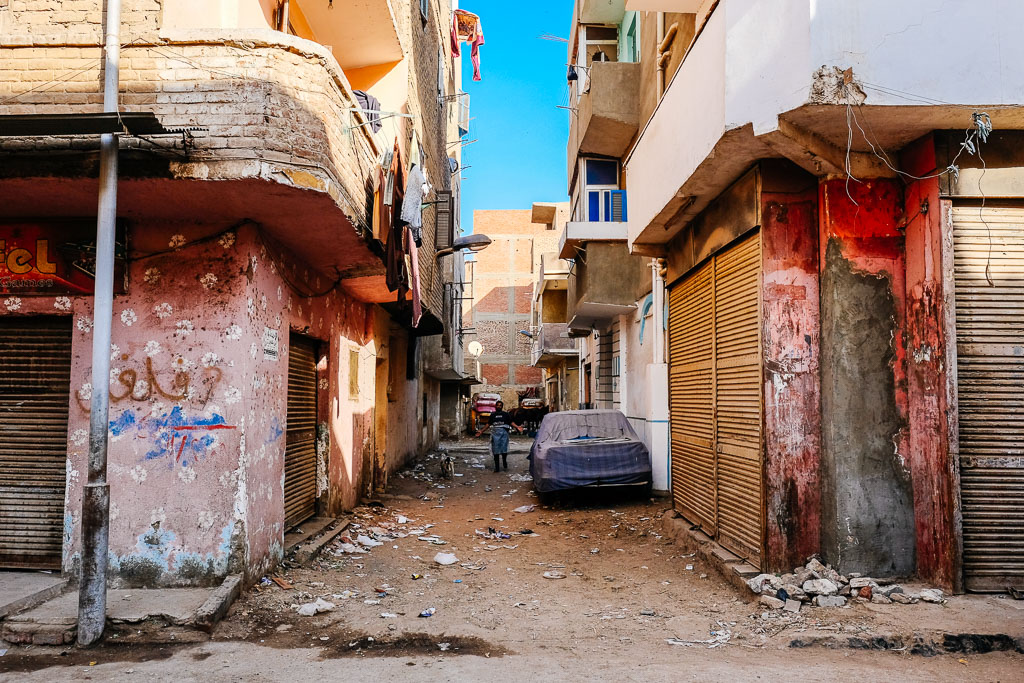
You step off the plane at Cairo International Airport, walk through the arrivals gate, and a chaos you have never heard before greets you. Cars honk for no apparent reason, porters offer services you never asked for, taxi drivers shout out improvised fares, and the air carries a mixture of tea, cigarettes, sweat, and street perfume all at once. This is not the beginning of your tourist trip. This is your first test. Egypt is not an open-air museum to be observed from an air-conditioned bus. It is a living, noisy, multilayered country that sometimes swallows its visitors before opening its doors to them.
This guide is written for those who want to enter Egypt through its front door, not its window. For those who want to understand why a shopkeeper speaks to them in a particular tone, why a young man they have never met invites them for tea, and why the entire city sometimes feels like a play in which everyone is performing a part without having read the script. For those who want to eat koshary in the place where the taxi drivers eat, not where the tour groups eat. For those who want to hear Sheikh Imam’s music where it belongs, not on YouTube. For those who want to walk in Cairo alone at night without fear, without being overcharged, and without being deceived.
What follows is not a list of monuments or a rigid itinerary. It is an attempt to build a complete picture, from the real price of a ful (fava bean) sandwich to the key Arabic phrase that opens a Bedouin home in Sinai, from the dollar’s rate on the parallel market to the ethical limits of photography in the City of the Dead, from the mountains of Saint Catherine to the derby between Ahly and Zamalek. Enter with patience, and you will leave with a different Egypt.
A Roadmap: Ten to Fifteen Days
Before diving into the details, here is a sensible trip structure. It is not a formula, just a living suggestion you can adapt to your time and mood.
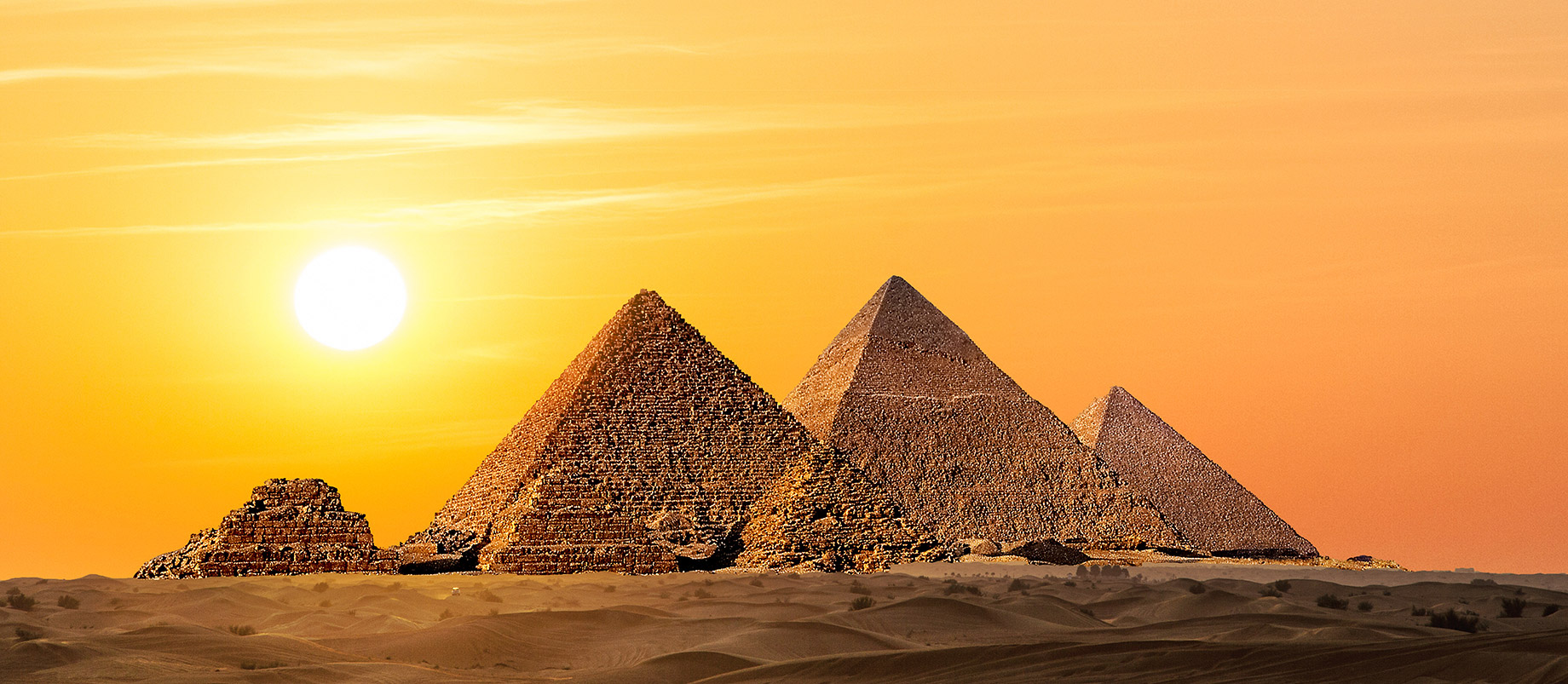
Days one and two for Fatimid and Mamluk Cairo: Al-Hussein, Al-Azhar, Khan El-Khalili, Al-Mu’izz Street, Bab Zuwayla, oriental sweets. Day three for Coptic Cairo and the Karafa cemetery district: the Religions Complex in Old Cairo, the Hanging Church, Ben Ezra Synagogue, the Mosque of Amr ibn al-As, then the shrine of Imam al-Shafi’i and the Mamluk tombs. Day four for the Pyramids and the Grand Egyptian Museum near Giza. Day five for the night train to Luxor, then two days for Luxor’s east and west banks (Karnak, Luxor Temple, Valley of the Kings, Deir el-Bahari, the Colossi of Memnon), and one day in Aswan (Philae Temple, the High Dam, Nubia, a felucca sail on the Nile). From Aswan you may push further to Abu Simbel, or return.
From Cairo you can add four days in Sinai (Sharm El-Sheikh, then Dahab which deserves three days on its own, a night ascent of Saint Catherine, the Blue Hole, Nuweiba, Taba). Or pick four days in the oases instead: Fayoum and Tunis Village and Wadi El Rayan for one day, Bahariya and the White Desert for two days, with a stay in Bedouin tents. Siwa alone deserves at least five days if you want the full experience, but its distance from Cairo (750 kilometers) makes it a separate decision.
If you come in summer, dedicate three days to Alexandria and the North Coast (Sahel). If you come in autumn or winter, Upper Egypt, Dahab, and the Western Desert open their arms to you. Add a final day in Cairo before departure, you will need it for something unexpected or simply to return to Zahrat El Bustan café and close your circle.
Fatimid and Mamluk Cairo: Five Centuries in One Kilometer
Directly opposite stands Al-Azhar Mosque, founded in 970 CE and considered the first university in the world. Enter it with a head covering for women and with complete respect, as it is not a museum but a place of active worship. You will notice Azhar students wearing white turbans, having come from forty countries to study Islamic jurisprudence and Arabic.
From there, enter Khan El-Khalili. The Khan was founded in 1382 by the Mamluk Emir Jaharkas al-Khalili. Originally it was a khan (a caravanserai for traveling merchants), then it became a market. Today it sells everything, from the authentic to the counterfeit. The key to Khan El-Khalili is knowing the difference between the tourist alley and the real one. The tourist alley begins from Al-Hussein Square, where you will find English signs and “My friend, special price for you.” The real alley begins from Al-Azhar Street going up, where you find the goldsmiths, the coppersmiths, and the sellers of shisha (waterpipes) who serve Cairo locals rather than tourists. The prices there start at a quarter of what is offered in the front alley.
Leave Khan El-Khalili north toward Al-Mu’izz Li-Din Allah Al-Fatimi Street, considered the largest open-air museum of Islamic architecture in the world. Along one kilometer, you will see the Qalawun Complex (the hospital, madrasa, and mosque from 1284), the Mosque of Sultan Barquq, the Al-Aqmar Mosque (1125), and the Ottoman Bayt Al-Suhaymi house. All are open with symbolic tickets ranging between 60 and 120 EGP for Egyptians and foreigners respectively.
Going down, you reach Bab Zuwayla, one of the three remaining gates of Fatimid Cairo (along with Bab al-Nasr and Bab al-Futuh). Climbing its two minarets gives you an unforgettable view of old Cairo. On Bab Zuwayla, the head of Tuman Bay, the last Mamluk sultan, was hung after being executed by the Ottoman Sultan Selim I in 1517.
Exit Bab Zuwayla back to Al-Mu’izz Street, or turn left to Taht El-Rabe’ and El-Ghouriya, where the Wikala of Al-Ghuri, built by Sultan Qansuh al-Ghuri in 1505, the last Mamluk sultan before the fall of the dynasty, stands. Today the Wikala is a cultural center and theater, and it hosts the Tanoura Troupe (we will return to it).
A practical note: spread all of this over two days, not one. Each building deserves at least half an hour. Al-Azhar Mosque alone needs an hour. Drink tea at Fishawi Café, which was established in 1797 and frequented by Naguib Mahfouz, who dedicated his novel Between the Two Palaces to it. Drink tea only, however, as the food here is for tourists and the prices are tripled.
Coptic Cairo: The Religions Complex
In Old Cairo, just a few stops by metro from downtown, lies a treasure many tourists know nothing about. Disembarking at Mar Girgis station on Line 1 of the metro puts you directly in front of the gate to the area.
Within an area no larger than half a square kilometer, you find:
The Hanging Church, built in the fifth century CE on the two towers of the Roman fortress of Babylon, 13 meters above ground level. Its name comes from being built atop the fortress, so it appeared to be “hanging.” It is the oldest church in Cairo and for centuries served as the seat of the Patriarch of Alexandria after his move from Alexandria.
The Church of Abu Sirga slightly below, where Coptic tradition holds that the Holy Family (Joseph, Mary, and Jesus) took refuge in the cave beneath it while fleeing the persecution of King Herod. Whether you believe the narrative or not, the place is among the deepest Christian sites in the world. Here you smell the ancient Coptic incense and see hidden icons in the side chapels.
Then Ben Ezra Synagogue, the oldest Jewish synagogue in Cairo. Its story is stranger than any legend: it was originally a Coptic church called “the Church of the Cobblers” or “the Church of Saint Michael,” which the Orthodox Church sold to the Jewish community in 882 CE for twenty thousand dinars in order to pay taxes imposed by Ahmad ibn Tulun on Christians. In 1896, the scholar Solomon Schechter discovered in a side chamber of the synagogue a collection of 200,000 documents spanning a thousand years of Jewish life in the Islamic world, later known as the Cairo Geniza. Today, 70 percent of these documents are housed at Cambridge University Library in England. The Geniza reveals trade across the Indian Ocean, marriage and divorce contracts, private letters, religious fatwas (rulings), and even an original Hebrew copy of the Book of Sirach that had been lost to the world.
Step out to the neighboring mosque: the Mosque of Amr ibn al-As, built in 642 CE and the first mosque in all of Africa. It was built immediately after the Arab conquest of Egypt, and every other mosque on the continent followed. Around this mosque arose Fustat, the first Arab capital of Egypt, before the capital moved to Al-Askar, then Al-Qata’i, then Cairo.
Four religions, fifteen hundred years, half a kilometer. This is not religious tourism. It is a lesson in how cultures lived together before modern states invented borders and identities.
The Karafa: The City Where the Living and the Dead Sleep Together
Few tourists know that Cairo contains an entire city whose residents are both alive and dead. The Karafa, or “City of the Dead,” extends beneath Mount Muqattam over thousands of acres. It holds tombs dating back twelve hundred years, from the Fatimid to the Ayyubid to the Mamluk to the Ottoman-Egyptian Muhammad Ali dynasty.
The Karafa was named after a Yemeni tribe called Banu Karafa, which lived near the cemeteries, so the area took their name. It is also known as Al-Gabbana (the desert), because the tombs were established in desert areas.
What makes the Karafa unique globally is not its historical tombs alone, although it contains the shrine of Imam al-Shafi’i (founder of the Shafi’i school of Islamic jurisprudence, died 820 CE), the tomb of Sultan Qaytbay (a testament to the peak of Mamluk architecture, 1474), the tomb of Umm Kulthum (Egypt’s most legendary singer), the tomb of Taha Hussein (the great modernist writer), and the tomb of Ahmed Shawqi (the prince of poets). What makes it unique is that nearly 179,000 Egyptians actually live among these tombs, according to the last survey conducted by the architectural researcher Galila al-Qadi in the early 1980s. Whole families live in the guard rooms next to burial chambers. They hang their laundry on lines stretched over six graves at a time, and the youngest work in occupations like gravedigging, washing the dead, and guarding tombs.
Muhammad Bassiouni, one of the gravediggers of the Karafa, says he handles two funerals a month, earning 200 EGP for each. He explains that there are about forty gravediggers in the area, each with his own space within the cemetery.
Today the Karafa faces a harsh fate. The government plans to relocate residents to public housing in the desert, but critics say few have the means to cover the $3,800 down payment or the $22 monthly rent, especially after their livelihoods, jobs in the cemetery or in nearby commercial areas, vanish along with the tombs. Bulldozers today demolish entire neighborhoods of the Karafa to open new highways, and the hand of demolition has already reached the tombs of Taqi al-Din al-Maqrizi, the historian of Cairo, and Ibn Khaldun, the founder of sociology.
Go to the Karafa in the morning with a local guide arranged in advance, preferably from the neighborhood. Do not go alone, not for fear, but because you will need someone to interpret what you see. Enter the shrine of Imam al-Shafi’i (it contains the largest wooden dome in the Islamic world), then the shrine of Qaytbay with its iwan and pentagonal dome. Drink tea with a family living in a room above a tomb, if they invite you and not the other way around. Leave a reasonable tip (50 to 100 EGP), and do not photograph anyone without permission. This is not a museum. These are people’s homes.
Sinai by Sea: Dahab and the Blue Hole
Dahab is not Sharm El-Sheikh. This is the first thing you need to understand. Dahab is a small Bedouin village that transformed in the 1980s into a destination for hippies and divers, and it has largely preserved its spirit despite its development. Sharm El-Sheikh is a city of massive hotels closed off on their private beaches, whereas Dahab is a long corniche street where you eat fish on cushions on the ground and drink tea while watching the Red Sea.
From Cairo to Dahab: a tourist bus with companies like GoBus or Blue Bus takes between seven and nine hours, or you can fly to Sharm El-Sheikh, then take a taxi for one hour and twenty minutes. The price ranges between 700 and 1,200 EGP for the bus, and the cheapest flight starts at around 1,500 EGP.
In Dahab, stay at a mid-range hotel or a Bedouin “camp” (simple accommodation starting from 200 EGP per night in the original camps). Stroll along Masbat Street, the main corniche. Eat at El Fanar, Shamandura, or any place on the corniche where you see the fish in front of you before it is cooked.
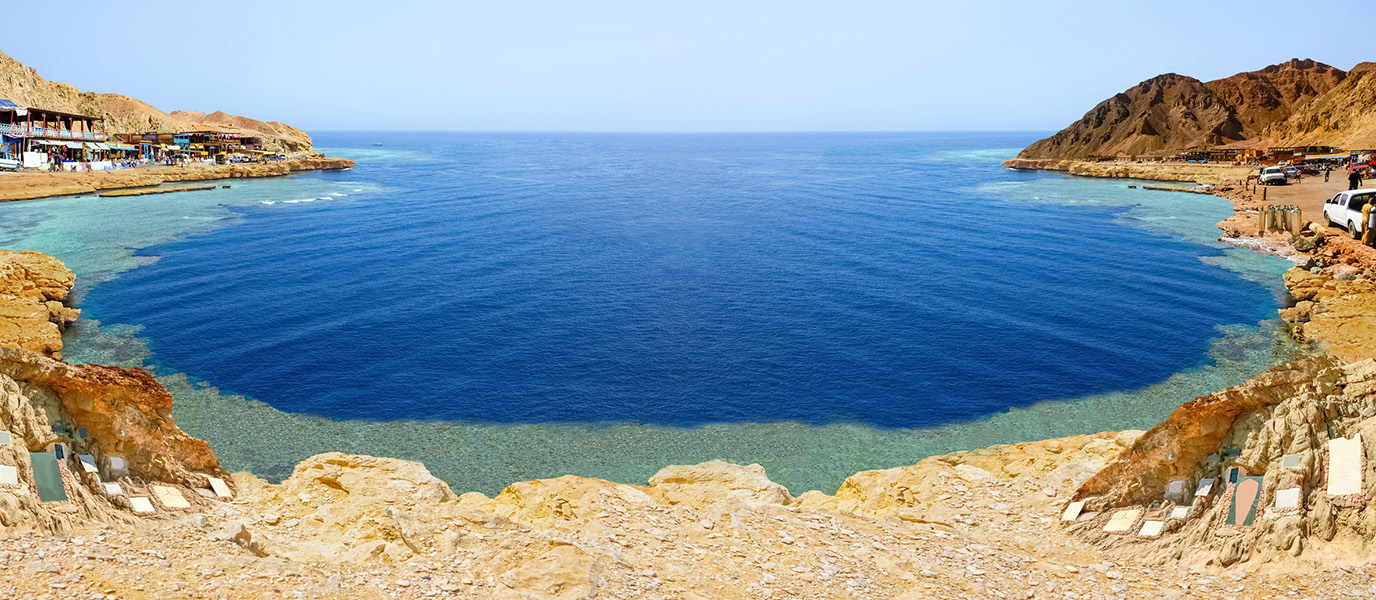
Then go to the Blue Hole, seven kilometers north of Dahab. The Blue Hole is a vertical pit in the Red Sea reaching 130 meters in depth, connected to the open sea by a tunnel called “the Arch” at 55 meters depth. Between 130 and 200 divers have died there over fifteen years, most because of attempts to cross the Arch without proper equipment. That is why divers call it “the divers’ cemetery.” Do not be alarmed: snorkeling above it is entirely safe, and you will find coral reefs exploding with color in the first six meters. A snorkeling tour from Dahab costs 250 to 400 EGP, including transport and equipment.
Other activities in Dahab: swimming with dolphins if they happen to be present (do not trust any company that guarantees you will see them, as dolphins are wild animals not zoo creatures), kitesurfing in the Gulf of Aqaba, renting a bicycle and watching the sunset from the top of Maq’ad Hill. A single night in Dahab is not enough. Dedicate at least three days to it.
Sinai by Mountain: Trails Few People Know
Here lies the treasure that most tourists miss, even most Egyptians. Sinai is not just the beaches of Sharm. It is a chain of mountains of gold, volcanic stone, and carnelian, with the highest peaks in Egypt, inhabited by Bedouin tribes who have lived there for thousands of years.
The Sinai Trail is the first long-distance hiking trail in the history of Egypt. It opened in 2015 as a 220-kilometer route taking twelve days to walk, crossing the territories of three Bedouin tribes. In 2018 it was extended to become 550 kilometers, taking 48 days to complete, and crossing the lands of all eight Bedouin tribes in South Sinai: the Tarabin, Muzeina, Jebeleya, Awlad Said, Gararsha, Sowalha, Hamada, and Alegat.
You can walk part of the trail without doing the entire 550 kilometers. Six days are enough for a wonderful partial experience. You will walk behind a Bedouin guide with one or two camels carrying water and food, sleep under the stars in a simple tent, eat the Bedouin fatir (flatbread) baked on embers, and drink tea with sage or wild basil. The ancient Bedouin code of hospitality says that if you arrive at a Bedouin village from the desert, you may stay for three days during which no one asks you who you are or why you came or where you are going. After three days, they have the right to ask.
An important point: the trail has gone through very difficult periods due to the official mistrust of the Bedouins and the desire to control a lucrative industry. The authorities have, in past periods, prohibited overnight stays in the mountain for those not accompanied by special security permits. Contact the organizers weeks before your trip and confirm the arrangements.
In mainland Egypt, the sister project exists: the Red Sea Mountain Trail. It launched in 2019 as a 170-kilometer trail taking 14 days to complete, extending through highlands far behind Hurghada, led by guides from the large Ma’aza tribe.
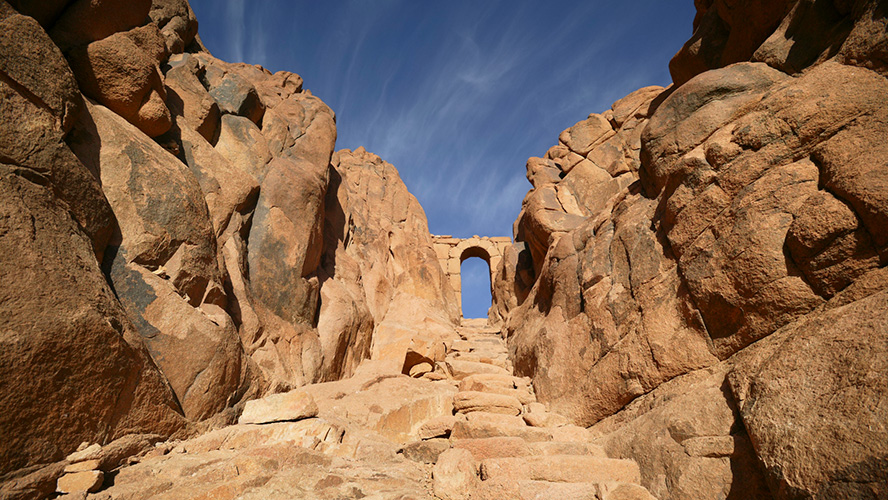
The most important solo experience in the mountains: climbing Mount Saint Catherine, the highest peak in Egypt at 2,629 meters. You will climb at night to arrive before sunrise and watch the dawn from the roof of Egypt. The climb takes four hours, and the path is rugged but clear. Also, the neighboring Mount Sinai, where religious narratives say Moses received the Ten Commandments. Do not go to either without a Bedouin guide from the Jebeleya tribe.
Other places worthy in mountain Sinai: the Colored Canyon in Nuweiba, White Canyon, Wadi Washwashi, Moses’ Springs. And far more important than any museum: Ras Mohammed Nature Reserve, one of the finest diving reserves in the world. It contains more than a thousand species of fish and coral reefs along 26 kilometers of coastline, protected by decree since 1983.
The White Desert and the Western Oases

Leave Cairo heading south by southwest, and after seven hours you will find yourself in perhaps the strangest natural landscape on the planet. The White Desert, declared a nature reserve in 2002 over an area of 3,010 square kilometers, lies 45 kilometers north of Farafra. White chalk rock formations shaped by wind erosion over millions of years resemble mushrooms, chickens, horses, and human faces. Sleeping under the stars here in a Bedouin tent is an experience no five-star hotel can match.
How to get there: safari companies from Cairo organize two- or three-day trips with prices starting at 3,000 EGP per person, including transport, accommodation, food, and a guide. Do not go alone without a Bedouin guide, as the desert does not welcome strangers.
On the way you can stop at the Black Desert, brown basaltic formations before Farafra, and at the Bahariya Oasis (the Valley of the Palms and the Gold Mummies). If you have more time, continue to Dakhla Oasis and Kharga Oasis, where Ottoman fortresses, hot sulfur springs, and palm groves give the appearance, from afar, of birds landing on the sand.
Siwa: The End of Egypt, the Beginning of Something Else
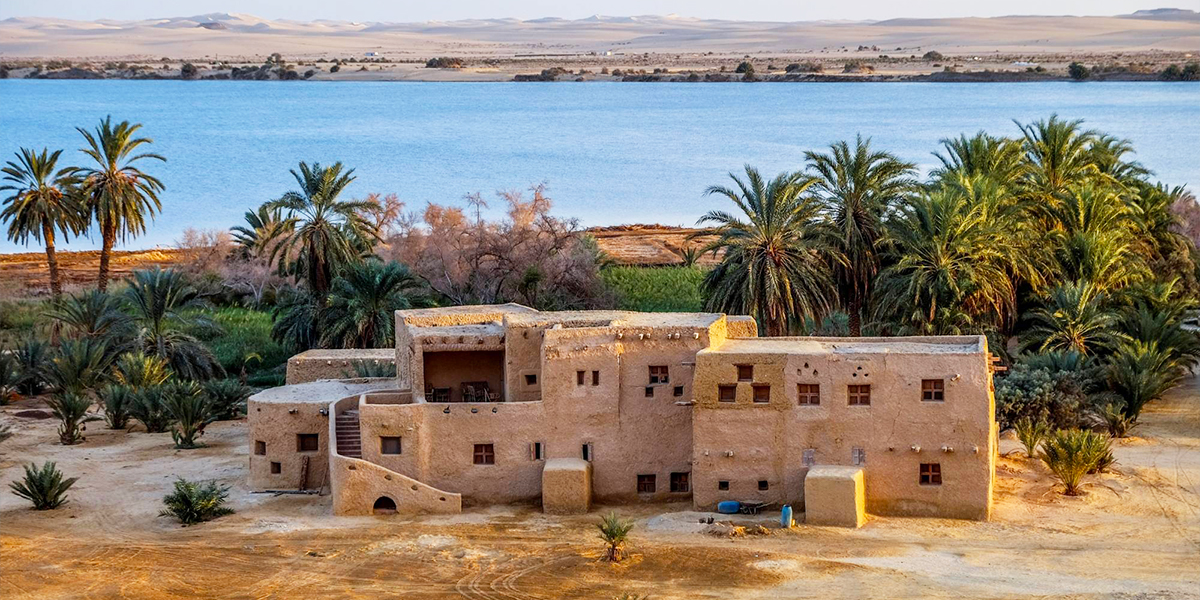
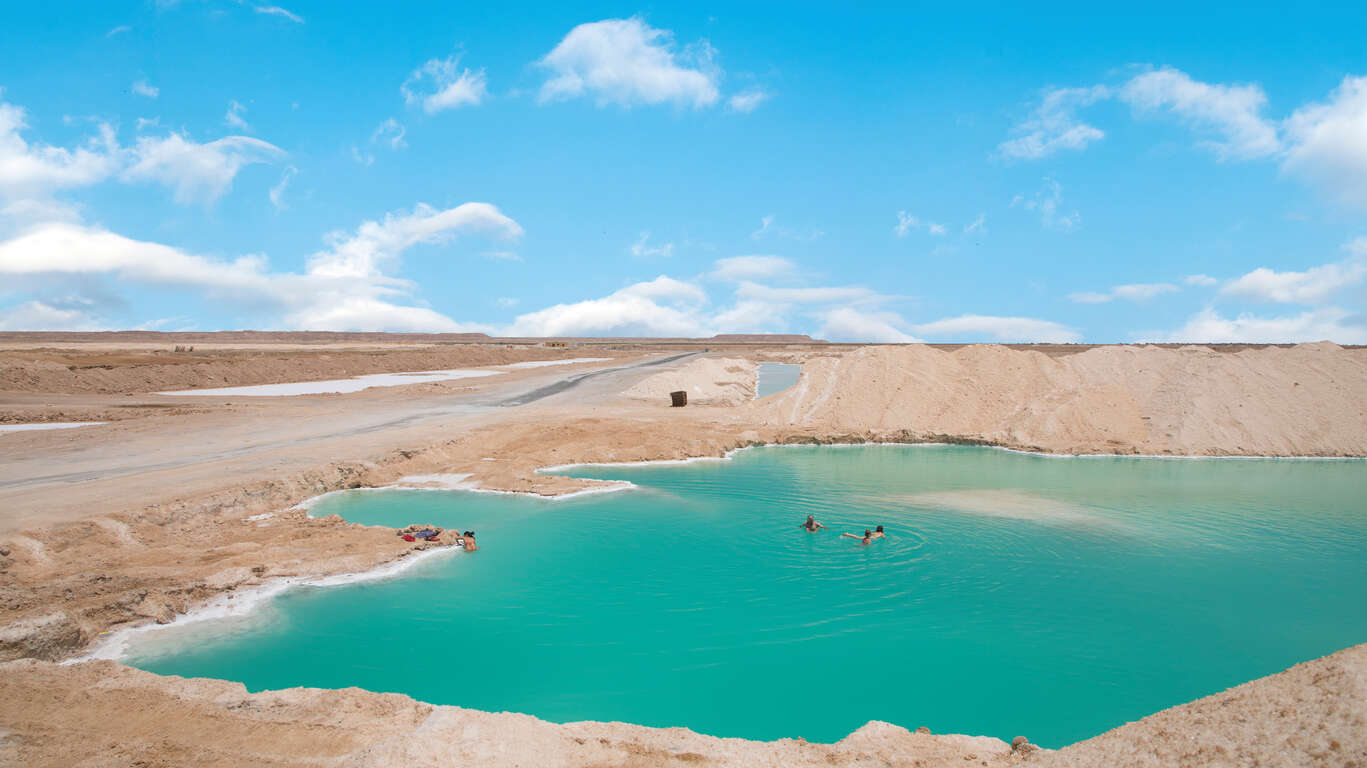
Siwa lies 750 kilometers southwest of Cairo, close to the Libyan border. Its inhabitants are Amazigh (Berber) from the Siwi tribe. They speak the Siwi Berber language alongside Arabic and are distinguished by their karshif architecture, built from salt, clay, and water.
In Siwa there is something that does not exist anywhere else in Egypt. The atmosphere is quieter, the pace slower, the people fewer. The old Shali city, the karshif citadel built since the thirteenth century, sits in the center of the oasis, parts of it melted by the rare rainfalls, giving it the appearance of a fading memory of a city. Around it lies the Temple of Amun, which Alexander the Great visited in 331 BCE to be declared “son of the god.” And around it lie floating salt lakes in which it is impossible to sink.
Go in winter (November to March). Siwa summer is brutal. Stay at least five days, as the oasis is not for those in a hurry. Drink tea with a Siwi sheikh at Café Shali, bathe in the hot springs of Cleopatra, climb Mount of the Dead which is full of Roman and Ptolemaic tombs, and watch the sunset from the dunes of the Great Sand Sea.
Fayoum: The Nearest Desert to Cairo
Fayoum is a strange place. An oasis, yet only two hours from Cairo. It contains Lake Qarun, whose name derives from Qarun mentioned in the Quran (corresponding to Korah in the Torah), and the Wadi El Rayan reserve with its artificial waterfalls, the only ones of their kind in the Egyptian desert, and the Valley of the Whales (Wadi El-Hitan), where fossils of ancient whales with legs were discovered (dating back forty million years).
Tunis Village on the shores of Lake Qarun is the real gem. Since the 1970s, when the Swiss artist Evelyne Porret established a pottery school there that attracted generations of ceramicists, the village has become one of the most beautiful in Egypt. It has rural restaurants, simple guesthouses, and pottery sold by the artists themselves. Stay at least one night at “Bayt Qibti” or “Zad El Mosafer” and enjoy the stars.
Alexandria: A Former Capital, A Different Spirit
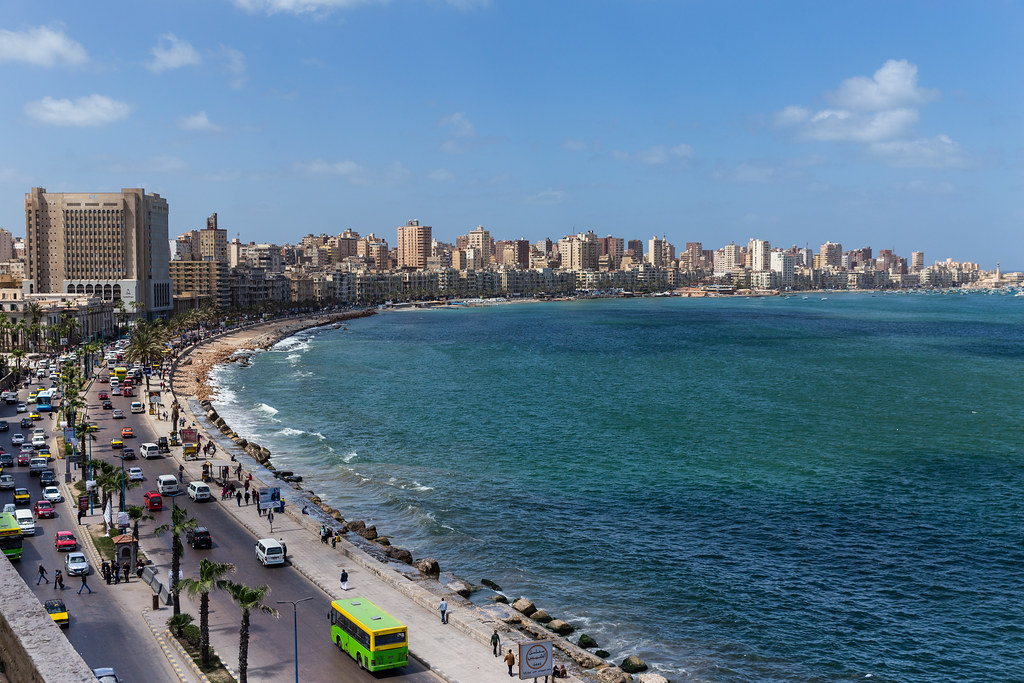
From Cairo to Alexandria is two and a half hours by VIP train, with a fare between 200 and 350 EGP. Alexandria is another city. The first thing any visitor notices is that the entire city looks out onto the sea. The Corniche extends 25 kilometers from Miami in the east to Al-Max in the west.
Start at the new Bibliotheca Alexandrina, opened in 2002 as a tribute to the ancient library that was gradually destroyed across early centuries CE. Its ticket is 70 EGP for Egyptians and 140 for foreigners, including the main reading hall, the antiquities museum, and the manuscripts museum. Then Qaitbay Citadel, which Sultan Qaitbay built in 1477 on the ruins of the Lighthouse of Alexandria, one of the seven wonders of the ancient world.

In Alexandria, eat at Mohamed Ahmed restaurant for ful and falafel, the local legend since 1957, on Shakour Pasha Street. The Alexandrian ful is different from Cairo’s. Darker, slightly spicier, served with olive oil, garlic, cumin, and red pepper. A full breakfast meal (fava beans, falafel, eggs, fries, salad, tahina, bread) costs 120 to 180 EGP and feeds two people.
Your evening in Alexandria: walk along Al-Shatby corniche at sunset. Go to Saad Zaghloul Square, drink coffee at “Délices” (founded 1922) or “Plage” (founded 1937), where Constantine Cavafy and Lawrence Durrell and the writers of the Alexandria School once sat. Then grilled fish on the sea at Al-Anfoushy, where the fishermen sell the day’s catch.
The North Coast (Sahel): The Egypt Tourists Do Not Know
Foreign tourists do not come to the North Coast. The Sahel is a purely Egyptian phenomenon, starting mid-June and ending in early September. Entire private cities of chalets on the Mediterranean Sea that open only in summer, frequented by two million Egyptians each season.
The Sahel is divided into two sections: the “Good Sahel” or Old Coast extends from kilometer 21 to before kilometer 105, starting from Sidi Krir up to Marina. And the “Wicked Sahel” or New Coast extends from kilometer 120 (the Sidi Abdel Rahman area) through Ras El-Hekma and up to the outskirts of Marsa Matrouh.
Marina El Alamein is the generational icon. Older people recall their summers there in the nineties. Today’s younger crowd heads to Marassi, Ras El Hekma, Hacienda, and Almaza Bay. Weekly concerts feature stars like Amr Diab, Tamer Hosny, and Wegz, and music festivals like El Row and Sandbox, while venues like Nineteen Twenty Five and CJC North host distinguished nights for music lovers.
The Sahel’s advantage is that you can rent a chalet for a week at the cost of two nights in a luxury hotel. How to rent? Mostly through Facebook groups (search for “إيجارات الساحل” and you will find dozens of pages), or through companies like Bayt Zaman. A family chalet with two bedrooms in Marina starts at 7,000 EGP weekly in July and reaches 25,000 EGP in Ras El-Hekma. Another benefit: a sense of how the Egyptian middle and upper class actually lives the summer, fundamentally different from the image of poverty and crowdedness that the media preserves of Egypt.
A practical note: do not go to the Sahel without a car. Distances between villages are large (half an hour between one village and another usually), and getting around without a car is nearly impossible.
Upper Egypt: Luxor, Aswan, and Nubia
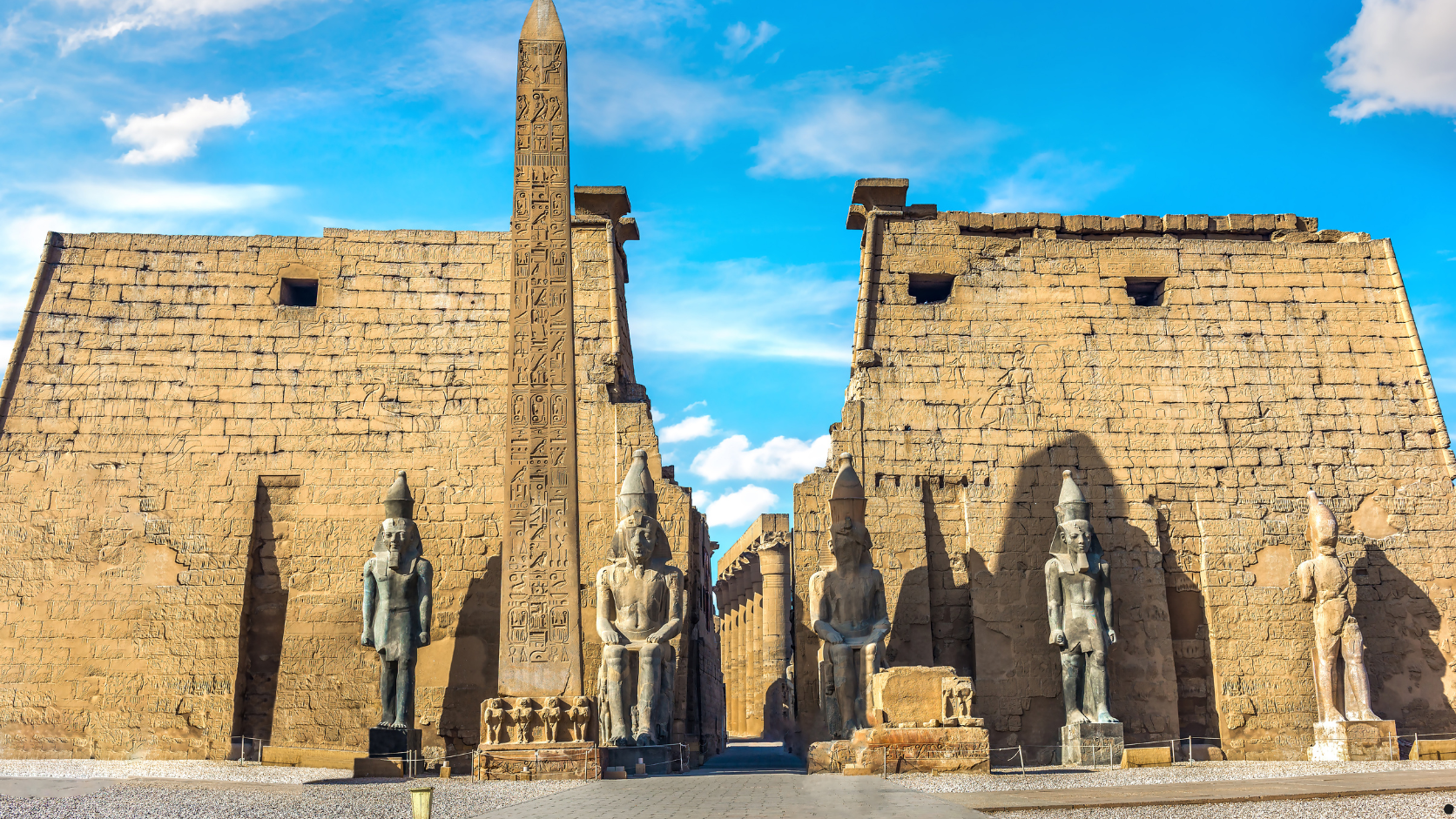
Upper Egypt (al-Sa’id) is what tourists come to Egypt for. But the difference between Upper Egypt as the tourist sees it in two days and Upper Egypt as its people know it is vast. Break that difference, even if only a little.
From Cairo to Luxor: the sleeper train moved in October 2024 from Ramses station to the new Bashtil station in Imbaba. The luxury train is booked through watania-sleepingtrains.com at a price ranging between $80 and $120 per person for the trip and the overnight stay. There is also the ordinary VIP train at a price of 150 to 400 EGP. The sleeper train is an experience not to be missed: you will wake up with the sunrise and burst into Luxor on the Nile River.
In Luxor, two essential days. The first day for the east bank: Karnak Temple, the largest religious complex in human history, built over fourteen centuries by thirty pharaohs. Then Luxor Temple, connected to Karnak by the Avenue of Sphinxes (opened to the public in its complete form in 2021).
The second day for the west bank. Here the mummies of the pharaohs sleep. Valley of the Kings (ticket 750 EGP for foreigners for three tombs), Deir el-Bahari, the temple of Hatshepsut carved into the mountain, and the Colossi of Memnon. And the most important experience: the sunrise hot air balloon, which flies above Karnak and the Valley of the Kings starting at $70 per person.
From Luxor to Aswan is four hours by train. Aswan is different. Slower, quieter, more African. The Nile here is unlike the Nile in Cairo: blue, clear, slow. In Aswan, set your program on three pillars: a felucca sail on the Nile (a sailboat takes you to Elephantine Island and the Plant Island, at a price of 300 to 500 EGP for two hours), Philae Temple which was moved stone by stone from its original island to Agilkia Island before being submerged by the High Dam, and the Nubian village on the western mountain.
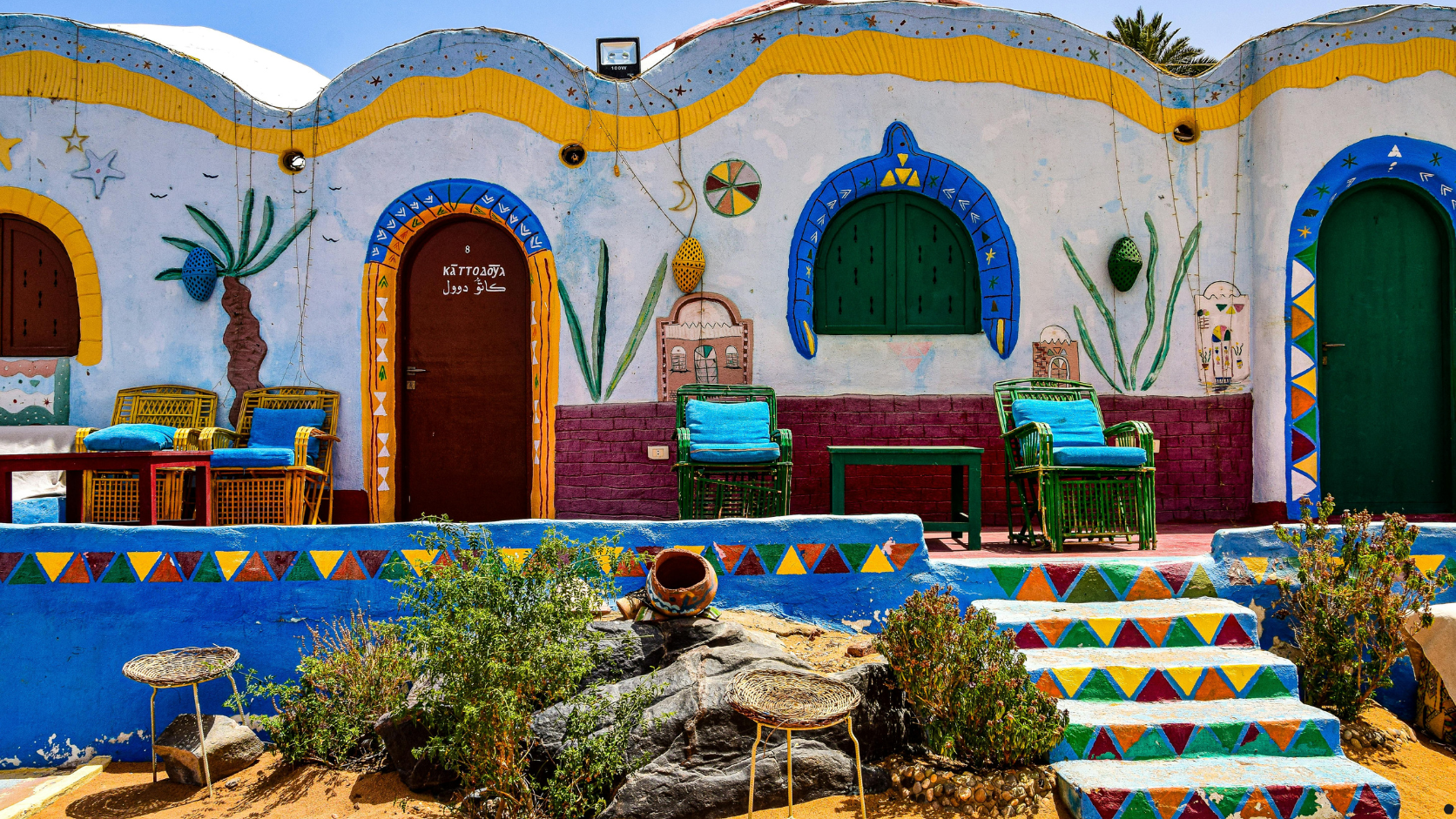

Nubia is a story with political and human dimensions. The Nubian tribes were forcibly displaced from their original villages in the 1960s after the construction of the High Dam, which submerged their Nubia and their neighborhoods. Today new generations live there in villages of brightly painted houses with camels and African faces. Stay a night in a “Nubian guesthouse” (starting from 700 EGP per night in simple huts), listen to simsimiyya and tanbura music, and taste the Nubian cuisine based on fish, dates, and chickpeas.
From Aswan you can continue to Abu Simbel (4 hours by tourist convoy), where the two temples carved into the mountain were moved stone by stone before being submerged in 1968 in an international rescue operation unparalleled by humanity.
Middle Egypt: The Forgotten Route
Between Cairo and Luxor, a large part of Egypt’s archaeological treasures lies almost neglected. No fancy hotels, no tour buses, nothing. This is exactly what makes it attractive to those seeking Egypt without tourists.
Tel el-Amarna, the capital of the monotheist pharaoh Akhenaten, built in 1346 BCE then abandoned and destroyed by his successors. Here perhaps the first monotheistic religion in history was born (the worship of Aten), and here Nefertiti lived. Today nothing remains of the city except its foundations, but the feeling of standing on land that witnessed the greatest religious revolution in ancient Egypt is something else.
The Dendera Temple in Qena, one of the most color-preserving Egyptian temples, dating back to the Ptolemaic and Roman eras (first century BCE). The ceiling of the hypostyle hall preserves an original astronomical chart with the Egyptian zodiac signs. At Dendera you will see no one except yourself and the guards.
The Temple of Seti I in Abydos (thirteenth century BCE), one of the best-decorated temples in all of Egypt. Its precise carvings are preserved as if engraved yesterday. At Abydos there is the famous list of pharaohs that helped scholars order the succession of Egyptian dynasties.
The only problem in Middle Egypt: accommodation is limited, and you will not find a good hotel outside Minya. Consider visiting as a day trip from Cairo or Luxor with a small tour company (the day costs between 1,500 and 3,000 EGP per person).
Sufi Music and Sheikh Imam: The Memory of the Street
If there is one key that opens for you Egypt’s political memory of the twentieth century, it is the music of Sheikh Imam.
Sheikh Imam Issa was born on July 2, 1918, in the village of Abu El-Numrus in Giza. He lost his sight as a child to trachoma. He met the poet Ahmed Fouad Negm in 1962, and together they began a poetic-musical duo that changed the history of Arab political song. His songs “Guevara Died,” “Build Your Palaces,” “Egypt Rise,” and “Haha’s Cow” became a popular memory for the Egyptian opposition. He was imprisoned twice, under Gamal Abdel Nasser and Anwar Sadat, and died on June 7, 1995.
Today there is a small museum dedicated to Sheikh Imam near Talaat Harb Square in downtown Cairo, open on Tuesdays and Thursdays. It preserves his oud (lute), his clothes, and his letters. Enter, drink tea with the caretakers, hear from them stories that are not written in books. Do not forget to listen to his songs on the memorial website or on YouTube before coming.
As for living Sufism, go to:
The Egyptian Tanoura Troupe at the Wikala of Al-Ghuri, established in 1988. It performs on Saturdays, Mondays, and Wednesdays at eight in the evening. Entry is symbolic (30 to 50 EGP) for those who book early. The performance consists of Sufi singing flowing to the melodies of religious festivals, followed by the spinning of the tanoura, which consists of colored skirts spinning at tremendous speed and forming shifting visual worlds. It is not a stage dance but a religious practice dating back to the rituals of the Shazli Mawlawi order.
Sheikh Yasin al-Tuhami, the greatest living Sufi munshid (religious singer) in Egypt. Azhari, from Upper Egypt, with a voice that splits the mountain. He animates hadras (Sufi gatherings) at the religious festivals of Sayyidna Hussein, Sayyida Zeinab, and Sidi Ahmed al-Badawi in Tanta. Do not buy a ticket, as the hadra is open. Go at the time of the mawlid (each mawlid has a known annual date), book a hotel months in advance, enter the gathering, and listen.
Contemporary Arts: The Real Modern Egypt
What most tourists miss is that Egypt today is teeming with a contemporary cultural scene that hides itself from the tourist cameras. Step outside the list of Pharaonic museums, and you will discover another country.
El Sawy Culturewheel (Sakia) in Zamalek, established by engineer Mohamed El Sawy in 2003 on a 5,000 square meter area beneath the 15th of May Bridge on the Nile. Sakia hosts more than 20,000 visitors monthly, with more than three events held daily, ranging from varied musical concerts (jazz, Arabic, rock) to theater, comedy performances, breathing sessions, and literary workshops. Ticket prices are reasonable (50 to 200 EGP), and the annual membership is a symbolic one EGP per year.
Zawya Cinema in downtown Cairo, the only alternative cinema in Cairo. It shows Arabic, documentary, and independent films you will not find in commercial chains. It has hosted festivals like the European Panorama. The ticket is 75 EGP.
Cairo Jazz Club in Mohandessin, the oldest place for live music in Cairo. It opened in 2001 and was, and remains, one of the most important platforms for graduating new Egyptian bands, from Fathy Salama to Wust El-Balad to Screwdriver and Sharmoofers. The usual ticket is 300 EGP including a drink. For larger nights, CJC 610 opened in Sheikh Zayed.
Makan, a center that preserves Egyptian folk musical heritage. Zar music, mawawil, Bedouin, Nubian. Regular live performances are held there at prices between 100 and 200 EGP. The Mazaher Band, performing Nubian and Upper Egyptian zar, performs here weekly.
Room Art Space in Garden City, an elegant artistic space offering weekly performances for bands like Janan and Balqis and Dukkan. El Genaina Theatre in Al-Azhar Park, an outdoor Roman amphitheater, hosts the best concerts in spring and summer, especially with the sun setting on the Saladin Citadel.
Darb 1718, a contemporary art space behind Old Cairo, hosts exhibitions, directors, and experimental musicians. The D-CAF festival of contemporary arts each spring. The Cairo International Film Festival in November, one of the oldest film festivals in Africa.
Contemporary Egyptian bands deserve research before your trip: Cairokee, Massar Egbari, Wust El-Balad, Sharmoofers, Sabrine El Najjar, Dina El Wedidi, Amir Eid, and Wled El Faqir. Attending a concert by any of them is a sociological experience that will teach you more about Egypt today than visiting ten Pharaonic temples.
Coffee and Cafés: Where You Experience Egypt Without Moving
In Egypt, a café is not a place where you drink coffee. The café is the literary, political, and social salon, the theater, and the church all in one. Every café has its personality, its near-permanent regulars, and its role in the life of the neighborhood.
In downtown Cairo, at least five cafés are worth visiting:
Zahrat El Bustan, an icon for intellectuals and politicians since the 1970s. Naguib Mahfouz, Louis Awad, Amal Dunqul, and Salah Jahin sat here. Today it remains open twenty-four hours, hosting the elders of the opposition, journalists, poets, and aspiring younger writers. A cup of tea is 25 EGP, and shisha is 60 EGP. Here you watch the real Cairo breathing, not parading.
Riche, the old French café founded in 1908. Gamal Abdel Nasser visited before the 1952 revolution (it is said he planned it here), and Naguib Mahfouz sat here daily. Today it has recovered its old Parisian style after restoration. Coffee is 80 EGP. The price is doubled, but you will find yourself in a place that does not change.
Fishawi in Khan El-Khalili, established in 1797. The oldest café in Egypt. Largely touristy today, but its wood, windows, and old mirrors still speak two centuries of Cairo’s history. Drink tea or coffee facing the walls, and do not eat food because the kitchen here is for tourists.
Al-Takeeba, a young philosophical café that emerged after the January 2011 revolution, combining oriental seating with books and political discussion.
As for Alexandria, Délices Café, Plage Café, and Atelier d’Alexandrie Café, three Greek and Italian cafés founded between 1922 and 1947. Constantine Cavafy, E. M. Forster, and Lawrence Durrell sat in them. The decor has not changed since that era.
In real popular cafés, where taxi drivers and craftsmen sit, tea is 10 to 15 EGP, Turkish coffee 20 EGP, and shisha (the Egyptian water pipe, or narghileh in classical Arabic) 50 to 80 EGP. Enter, order, sit with confidence, and do not expect luxury. The wall may be dirty and the chair worn, but the conversation around you will be about a regional issue, an old artist, or the result of an Ahly match.
A Map for the Stomach: Eating Egypt at Its Real Prices
Egyptian food has three categories: cheap popular, old popular in renowned restaurants, and modern luxury restaurants. All deserve trying, but the tourist who stays in his luxury hotel without trying the first two has missed half of Egypt.
Dishes you must try at any cost:
Koshary, the national Egyptian dish. Abu Tarek in downtown Cairo, the most famous, has been selling since 1950. The current price for 2025-2026: a small box is 30-35 EGP, a medium box is 40-50 EGP, an “Abu Tarek” box is 60 EGP, and the makhsous (special) box is 65 EGP, with sauce, hot pepper, and garlic vinegar. Competing restaurants worth visiting: Koshary Al-Tahrir downtown, Koshary Al-Iskandarani, Koshary Sayed Hanafi in Zamalek. All koshary is roughly similar, the difference being in the sauce, the daqqa (garlic), and the chili.
Ful and ta’meya (falafel), the Egyptian breakfast. The actual price for 2025-2026: a plain ful sandwich in popular restaurants costs 7 to 10 EGP, in mid-range areas between 8.5 and 10 EGP, and in upscale neighborhoods between 9 and 15 EGP. A ta’meya (falafel) sandwich is in the same range. A ful sandwich with olive oil costs 20 EGP, Alexandrian ful 19 EGP, falafel with egg 22 EGP, falafel with hummus 22 EGP at famous popular chain restaurants like “Gad”. Anyone claiming that a ful sandwich is still 3 or 4 EGP in 2026 is either dishonest or out of date. Prices have more than doubled compared to four years ago.
Mohamed Ahmed restaurant in Alexandria for ful, Al-Tabei Al-Dimyati for ful baladi (country-style fava beans), Felfela downtown since 1959 (a mix of the complete Egyptian kitchen, mid to high price range, between 200 and 500 EGP for a full meal).
Meat dishes: Andrea El Mariouteya for charcoal-grilled chicken since the 1970s (visited by Gamal Abdel Nasser, Sadat, Mubarak, and Abdel Fattah el-Sisi). Grilled chicken with rice costs 350 to 450 EGP. Hati Al-Geish in Imbaba (Egyptian-style chicken and meat shawarma), Alexandrian liver at Zizo Al-Midan, kawareh (cow feet) at Hassan, stuffed pigeon with freekeh at Bayoumi Al-Sultan on Mohamed Ali Street.
Seafood: in Alexandria go to Al-Anfoushy and Al-Max, choose the fish in front of the seller, request the cooking method, and pay by the kilo. A complete fish meal for two costs between 400 and 800 EGP (sea bass, tilapia, or sea bream), or even more if you order shrimp or calamari.
Sweets: El Abd, Al-Tessieni, and Abdel Rahim Koueider on Talaat Harb. Konafa with nuts, baklava, Umm Ali (the most important Egyptian sweet, made with milk, nuts, and raisins). A kilo of regular konafa costs 250 to 350 EGP, while the specialty kind with selected nuts reaches 600 EGP.
Juices: sugar cane juice from street carts, a purely Egyptian experience (15 to 25 EGP per cup), mango, orange, and strawberry juices in traditional juice shops. Badawi downtown for hawawshi (minced meat baked in dough).
A piece of advice: do not fear popular food. Health concerns are exaggerated if you choose places crowded with local customers. The rule: where Egyptians crowd, the food is good, and the turnover is fast so the food does not sit for hours.
Accommodation: From Bedouin to Boutique to Luxury
In Cairo, three areas are worth staying in:
Zamalek (an island in the Nile): upscale, safe, with embassies and mid-range and upscale hotels. Walking distance to downtown. Mid-range hotels 1,500 to 3,000 EGP per night (like Horus Palace), luxury starts at 5,000 EGP (Sofitel Cairo Nile El Gezirah, Four Seasons Nile Plaza).
Downtown (wast al-balad): the real heart of Cairo, containing Talaat Harb, Emad El-Din, and Kasr El-Nil. Staying here is for the enthusiastic, as the noise does not stop, but the experience is complete. Boutique hotels like Osiris on Kasr Al-Aini or Grand Hotel for 800 to 2,000 EGP. Airbnb apartments in the same range.
Maadi: quiet, with a large expat community, restaurants with English menus. For those who prefer quiet, but the distance from Cairo’s heart will cost you hours in traffic daily.
In Luxor and Aswan: Nile-side hotels from 1,500 EGP (Sonesta, Sphinx, Basma, Sefir) to luxury options (Old Cataract in Aswan, where Agatha Christie stayed and wrote Death on the Nile, from 8,000 EGP per night).
In Dahab: Bedouin camps by the sea from 200 EGP per night (in simple rooms without air conditioning), mid-range hotels 600 to 1,500 EGP, luxury starting at 2,500 EGP.
In the White Desert and Siwa: there are no luxury hotels. Stay in an eco-lodge (Adrère Amellal in Siwa from $350 per night, a luxury experience in karshif architecture without electricity), or in simple Bedouin camps, or in local guesthouses.
A practical note: book through booking.com or agoda.com for hotels, and through Airbnb for apartments. But for small places like Bedouin camps and eco-lodges, contact them directly via Facebook or WhatsApp, as the price will be 20 to 40 percent lower.
Transportation and Connectivity
Moving around in Cairo is an art. You have multiple options, all valid. None is absolutely better than the others; it depends on your circumstances and location.
The Cairo Metro, the largest metro network in Africa and the second largest in the Middle East. Three lines cover most of Cairo, with tickets at 6 EGP for short distances and 12 EGP for long ones. Fast, safe, and clean by regional standards. During peak hours it is crowded, but there are two cars dedicated to women for those who prefer. Line 1 connects Al-Marg to Helwan via downtown and Maadi. Line 2 runs from Shubra El-Kheima to El-Munib via Mohandessin, Dokki, and Giza. Line 3 runs from Attaba to Adly Mansour via Heliopolis. Line 4 is under construction.
The white taxi: the traditional taxi with a meter. The driver turns on the meter most of the time, but during peak hours or on long journeys he may negotiate a fixed price. Be honest at the start of the trip. The first kilometer is 4 EGP, then 1.5 EGP per subsequent kilometer. Driving a taxi is a hard profession; the driver is often in a long career journey since the seventies. Treat him with respect, as you would treat an employee in your company, for he is a human being trying to feed his family in an era of inflation.
Apps like Uber, Careem, and InDriver: their advantage is that the price is known in advance and the route is set. They provide reassurance to those who do not know Arabic or the area. Prices are usually roughly the same as taxis or slightly higher during peak hours. Both are valid choices; choose according to your situation. The important thing: do not assume that one is dishonest and the other is honest.
The microbus: the backbone of real Cairo transportation. A twelve-seat van that runs on a known route, with the driver shouting out the destination. You hop on and pay 5 to 15 EGP. For someone who knows what they are doing, the microbus is the fastest and cheapest option. For a foreign tourist, use it only if you know Arabic and know your destination precisely. Otherwise, stick to the metro.
Nile crossings on ferries: ferries connecting the two banks of the Nile for 10 EGP. A beautiful experience in itself.
Between cities: the railway (for Luxor, Aswan, and Alexandria), tourist buses (Sinai, the desert), and domestic flights (EgyptAir, Air Cairo, Nile Air). Domestic flight prices are reasonable with advance booking (1,200 to 2,500 EGP one way).
Communications: buy a Vodafone, Orange, or WE SIM card at the airport upon arrival. The price is 250 to 400 EGP for a SIM with a 30 GB plan that lasts two weeks. WhatsApp is essential. The Cairo Metro app for the map, and Google Maps works perfectly and displays everything in Arabic and English.
Currency, Exchange, and Tipping: The Chapter Nobody Talks About
This is the most important practical chapter in the entire guide, and the most absent from official travel books.
The Egyptian currency, the pound (EGP), has lost more than 70 percent of its value since 2022. The current official rate in banks (May 2026) is around 53 EGP per US dollar, reflecting a relative stability supported by Central Bank policies. The parallel market (black market) rate is around 55 EGP, with a difference of about 9 percent from the official rate.
What does this mean for you as a visitor?
First, never exchange at the airport. Airport exchange rates are 5 to 10 percent worse than rates in downtown. Exchange only what you need for the first day (100 to 200 dollars).
Second, the Central Bank has become strict in penalizing the parallel market. Do not risk illegal exchange, as the legal price today is close to the illegal one, and the risk is not worth it. Exchange at banks like CIB (Commercial International Bank) or the National Bank of Egypt, or at licensed exchange offices in downtown displaying a “Licensed Exchange Office” sign (such as the Dawliya office on Talaat Harb, or Al-Islam on Abdel Khaleq Tharwat).
Third, Egypt is still a cash economy. Visa cards work at major hotels, fancy restaurants, and some modern shops, but not at most ordinary places. ATMs are everywhere, but each bank has a different daily limit (usually 5,000 to 10,000 EGP per day), and they may charge fees on foreign cards ($2 to $5 per transaction). It is preferable to withdraw a large amount once a week rather than frequent small withdrawals.
Fourth, always carry small bills. “Mafeesh fakka” (“there is no change”) is a common myth in Egypt. The taxi driver and small vendor say it every day to gain the difference. Ask for change politely but firmly, and at the start keep notes of 5, 10, and 20 EGP in a separate pocket.
Fifth, tipping. This is a sensitive matter. Egypt is a country with a deeply rooted tipping culture, and tips are often an essential part of the worker’s income. The practical guide:
At restaurants: if service is not added (check the bill, usually 12 percent), leave 10 percent. If service is added, leave an additional 5 to 10 EGP for the direct waiter. For the hotel bellboy: 10 to 20 EGP per bag. For the hotel housekeeper: 10 to 20 EGP per day, leave on the pillow. For the taxi driver: not mandatory, but if he was good, round up the number or add 10 EGP. For a tour guide at a temple or shrine: 50 to 100 EGP if he gave you a real explanation. For a guide on full-day tours: 100 to 200 EGP per day. For the tour bus driver: 50 to 100 EGP at the end of the trip. For someone carrying your goods at a market: 10 to 20 EGP.
The secret: do not give excessive tips to everyone, but if someone provided you a genuine service, tip them with reasonable generosity. This is an economy on which many families depend.
Health, the Pharmacy, and Water: What Travel Agencies Do Not Tell You
Never drink tap water, even in a five-star hotel. Bottled mineral water is everywhere, a 1.5-liter bottle costing 12 to 20 EGP. Buy from a corner store, not from the hotel. Trusted brands: Nestlé, Aquafina, Hayat, Safi, Baraka.
“The pharaohs’ revenge” is a common gastrointestinal infection that affects 20 to 30 percent of tourists during the first days. Not necessarily from food hygiene, but from the difference in local bacteria. Carry with you in advance, or buy from the first pharmacy, the following medications: Antinal (anti-inflammatory) for a few pounds, Buscopan (for stomach cramps), Imodium (for stopping severe diarrhea).
Egyptian pharmacies are one of the country’s best services. Cheap and selling almost everything without a prescription (except for strong painkillers and psychiatric drugs). El Ezaby Pharmacy and Misr Pharmacies are two trusted chains with branches everywhere, open 24 hours. Ask for the drug by its scientific name (for example, paracetamol rather than Panadol), the pharmacist will understand.
The sun is brutal between May and September, especially in Upper Egypt and the desert. The white Bedouin galabiya (robe) is not decoration, but protection. Drink a liter of water every two hours under the sun. Apply SPF 50 sunscreen at minimum and reapply every three hours. Wear a hat. If you feel sudden dizziness or nausea, sit in the shade immediately and drink water with salt and sugar (oral rehydration solution ORS, available in every pharmacy for four pounds).
Mosquito-borne diseases around the Nile are not a major risk in Egypt, but mosquito bites are annoying. Use an electric mosquito repellent at night in your room, especially in Upper Egypt. Malaria was officially eradicated from Egypt in the 1990s, but caution helps.
Vaccinations: no vaccinations are mandatory for entering Egypt. The WHO recommends Hepatitis A, tetanus, and typhoid vaccinations for those staying for long periods. Yellow fever is mandatory only for those coming from certain African countries.
Swimming: Ras Mohammed reserve, Dahab, and Sharm are safe. The Nile is not for swimming (currents are strong, and it contains bilharzia parasites).
Hospitals: in an emergency, go to As-Salam International Hospital in Heliopolis or Dr. Maghraby for Eyes and Dental or Dar El Fouad in 6th of October City. Visit prices are 500 to 2,000 EGP (10 to 40 dollars).
Street Language: Magic Phrases That Change Your Experience
Every tourist learns “shukran” (thank you). Few learn what makes the difference. Here are ten phrases that, if you memorize them, will open doors no five-star hotel can open:
“Al-salaamu ‘aleikum” (السلام عليكم): the Islamic greeting, the key to every conversation. The response: “wa ‘aleikum al-salaam“.
“Izzayyak?” (إزيك) for a man / “Izzayyik?” (إزيك) for a woman: How are you? The response: “Kwayyis, al-Hamdu lillah” (Good, thank God).
“Shukran” (شكرا): Thank you. For a higher level: “Rabbena yibarik feek” (May our Lord bless you).
“Bekam?” (بكام): How much? Essential for shopping.
“Ghali awi” (غالي قوي): Very expensive. The key to bargaining.
“Ma’alesh” (معلش): “No worries” or “Sorry, never mind.” The most used word in Egyptian dialect, suitable for every occasion.
“Khalaas” (خلاص): It is over. Useful for ending any situation politely but firmly.
“Insha’Allah” (إن شاء الله): God willing. Means “perhaps” or “I do not promise you.” Do not take it as a definitive promise.
“Yalla” (يلا): Let’s go. The word of movement in all Egyptian dialect.
“Habibi / ya Hag / ya ustaaz” (حبيبي / يا حاج / يا أستاذ): Keys to friendly dealing. “Habibi” (my dear) for friends and youth, “ya Hag” (oh elder) for an older man out of respect, “ya ustaaz” (oh master/professor) for someone in a professional or intellectual position.
“Mafeesh mishkila” (مفيش مشكلة): No problem. The answer to almost everything in the Egyptian street.
One final magic phrase: “Ismaa’, ihna ashaab” (اسمع، إحنا أصحاب): “Listen, we are friends.” It melts the ice in any negotiation, especially when in doubt about an inflated price. The driver will laugh and usually lower the price.
Ten phrases memorized in ten minutes. The experience changes radically when the Egyptian discovers you are trying to communicate in his language. He may open his house to you sometimes.
Photography: What Opens Doors and What Opens a Security File
Forbidden to photograph: bridges, government buildings, the police, the army, airports (inside), embassies, prisons, and any facility with a military sign or a “no photography” sign. Taking a casual photo of a bridge over the Cairo Nile has brought many people hours of interrogation. Take this seriously: security in Egypt is on alert after years of instability.
Mahmoud al-Sinn, the art historian, was arrested in 2018 for photographing a metro station from afar. He was released after a week, but the matter was enough to disrupt his academic life for a period. Do not take risks.
Ethically (and legally in some places) forbidden: photographing veiled women without permission, photographing children without their parents’ approval, photographing the poor as if they were “folkloric photos” without consent. Always ask. The phrase “Mumkin sora?” (May I take a photo?) with a camera gesture is enough, and many will accept with joy. Others will refuse. Respect the decision.
In museums, photography is often forbidden inside tombs with professional cameras, and permitted with mobile phones in exchange for a symbolic fee (camera ticket 50 to 300 EGP depending on the site). Buy a “camera ticket” at the entrance to avoid problems. At Karnak and Valley of the Kings, the ticket is 300 EGP for foreigners.
A piece of advice: for serious photography, carry a clear camera, as the police suspect mobile phones more than visible professional cameras. Smile at the guards, explain what you are doing in your language, and do not appear to be hiding something.
Taboos: Politics and Religion, Politely
Egypt is a country where three topics are not raised in the street: present-day politics, religion in a confrontational manner, and sex. As a visitor, you are not required to suppress your opinion, but a conversation in an open café may not be the best place for it.
Politics: speak freely about ancient Egypt, about King Farouk, Nasser, Sadat if you wish, but tone down talk about the current president and state institutions. Not because every Egyptian is an enemy of the regime, but because you do not know who is sitting next to you, and because informants are everywhere. This is reality. Accept it. If you are asked about your political opinion, the best answer is: “I am a guest in your country, your opinion matters more than mine.”
Religion: Egyptians ask candidly “Ant eih?” meaning, what religion. In a deep cultural awareness, they assume every person has a religion. The answer depends on your position.
If you are a believer in an Abrahamic religion (Christian, Jewish, Muslim), mention it simply, and there will be no awkwardness. If you do not belong to a religion familiar to them (Hindu, Buddhist, Bahá’í, secular, atheist, spiritual), then the best neutral answer is: “This is a personal matter in our culture, we like to keep it private” or “We believe in goodness and respect for all people.” This is an answer that opens dialogue without forcing you to lie. No one asks you as a visitor to claim a religion that is not yours. Many Egyptians will accept your respect for the matter as a respect for your privacy.
What to avoid: mocking religions or prophets, even jokingly. This is a firm red line in Egyptian culture, even among secular intellectuals. Egypt is not Europe on this issue.
Sex: not socially acceptable in the street (public kissing is unacceptable, even between spouses). Hotels are for married couples only (joint passport requested), or only fancy hotels (often do not ask). For LGBTQ+ visitors, Egypt is not a safe country to disclose one’s identity. The law criminalizes homosexuality, and the comprehensive security campaigns in 2017 and 2020 targeted many Egyptian LGBTQ+ people. Be cautious and protect your privacy.
Egyptians: Reading Between the Lines
Egyptians are cheerful, love conversation, and generosity is deeply rooted in them, but the difficult life in a deteriorating economy has created complex layers.
When an Egyptian says “Tasharrafna, al-bayt baytak” (Pleased to meet you, the house is your house), this is mostly politeness rather than an actual invitation. Accept politely, but do not wait for a sandwich. And when he invites you to his home explicitly and genuinely, go with him in a spirit of mutual humanity. Take a simple gift (sweets, fruits, perfume for the lady).
When he tells you “five minutes,” he means half an hour. When he says “bukra” (tomorrow), he means this week. When he says “insha’Allah,” he means perhaps, or more often, no. Time in Egypt is a flexible concept.
When a vendor tells you “khaseet lak” (I gave you a discount), he means he lowered the price, but the initial price was usually double. Bargain politely, suggest a third of the first price, then meet at half. There is no insult in it, but rather an accepted social game.
When a man appears angry in the street and shouts loudly at another, in 90 percent of cases they are two friends arguing about nothing. A loud voice is not necessarily hostility.
When someone invites you for tea then tries to sell you something at the end, this is not necessarily a deception. This is how commerce works here. Drink the tea, and refuse the purchase politely if you do not want it.
The question “Mitgawwiz?” (Married?) comes within the first five minutes of any conversation, even with a stranger. Not curiosity, but social interest. Answer as you wish, and do not feel you must explain.
Hospitality. Egyptians are generous, to a degree that may make a sudden home invitation a cause for bankrupting a family for a week. Be aware. Do not eat much even if they insist, especially in simple homes. Accept what is enough for politeness, thank with sincerity, and leave a smart tip in a way that does not offend them (sweets for the family’s child, or otherwise).
Women Alone
Solo female travelers come to Egypt by the thousands, and most describe a safe but demanding experience. The reality:
Verbal harassment is common in the street, not an exception. Vulgar words, stares, sometimes following for a few steps. This is an experience many Egyptian women themselves live daily, not exclusive to foreign women. Physical harassment is less common in major cities, but it happens, especially in crowded places.
What noticeably reduces harassment: clothes that cover the shoulders and knees (not necessarily a hijab). Sunglasses. Confident movement without hesitation. Avoid direct staring at strange men. Ignore calls in the street, as responding usually makes matters worse.
In fancy hotels, restaurants, and museums, security is high. In open street areas in downtown Cairo at night, it is preferable to travel in small groups or with taxi apps.
In Upper Egypt and the desert, security is higher, but social attention is also higher, as a single woman staying is an unusual sight that will not pass unnoticed. This is not necessarily bad. Many Egyptian women who lead tourism projects in the desert (such as in the Tarabin and Jebeleya tribes in Sinai) will welcome you warmly.
Simple tips:
On the metro, use the women’s car (marked with a pink symbol on the side). At hotels, request a higher floor and a room far from the stairs. In taxis and Careem/Uber, sit in the back seat. At night, avoid poor neighborhoods and peripheral streets. At Bedouin camps in Sinai, women’s interactions are special (they enter from a special door in some places, and interaction with Bedouin men is limited).
The worst that happens to solo female travelers: verbal harassment a few times, the possibility of a price-overcharging attempt. But most of the accounts I have heard from European and American female visitors are positive overall.
Tourist Traps: What to Avoid
Every tourist country has traps. Egypt has many. The most common:
“Fake guards” at archaeological sites: a man wearing a fake employee uniform approaches you in the temple to explain “an unknown secret,” then asks for 200 to 500 EGP. Stay away from anyone not wearing an official employee uniform and a clearly displayed ID.
“Free souvenir photos”: in Khan El-Khalili and at the Pyramids, someone offers to take your photo with your camera “for free.” After the photo, he asks for a large tip. If you want a photo, ask another tourist like yourself.
“Al-baddaha” (the puller, who pulls you to a shop): a person picks you up on the street, introduces himself as a friend, takes you to “his friend the jeweler’s shop” or “his cousin’s bazaar,” then takes a commission from the shop owner on what you buy. Prices at these shops are doubled. Never go with a stranger to a shop.
Double pricing: a foreigner often pays three or four times what an Egyptian pays. This is a deeply rooted tradition. The solution: wear simple clothes, do not speak English in front of the vendor, start bargaining low.
Camels at the Pyramids: riding a camel or horse around the Pyramids is a tourist experience, but many tourists have been faced with closed gates after going up, and demands for large payments to come down. Agree on the price in advance clearly, ask the driver to write down the price, and photograph his vehicle and license. Fair price: 200 to 400 EGP for the full ride.
“Extra tickets” at museums: the museum sells one entry ticket. Any person trying to sell you a “secret extra ticket” or a “ticket to the closed sections” is lying.
Perfumes and papyrus: “Pharaonic perfumer” and “authentic papyrus” shops around the hotels often sell perfume waters mixed with oil and fake papyrus made from banana paper. If you want real papyrus, buy from Dr. Ragab Foundation officially in Cairo.
The Season and the Khamasin: The Most Important Warnings
Egypt is not one mood. The season makes the difference.
Best times to visit:
November to March: the golden period. Temperatures are mild in Cairo (15 to 22 degrees Celsius), warm and pleasant in Luxor and Aswan (25 to 30 degrees), slightly cold at night in Sinai and the desert. Everything is open and possible. This is the peak season, with hotel prices 30 to 50 percent higher.
April to May and October: reasonable heat in Cairo (28 to 35 degrees), hot in Upper Egypt. Average prices. Tourist crowds are fewer.
June to August: hot in Cairo (35 to 42 degrees), catastrophic in Luxor and Aswan (reaching 47 degrees in July and August). Most southern tourism stops. This is the North Coast season for Egyptians only. Never descend to the Valley of the Kings in July; the stones cook and the mummies will not wait for you.
September: transitional. High in Cairo, difficult in Upper Egypt. But the end of the month sees the beginning of recovery. Good prices.
A special warning: the Khamasin winds (riyah al-khamaseen) usually start in late March and last for fifty days (hence the name, khamaseen meaning “fifty”). Saharan winds loaded with dust block out the sun, make visibility variable, and cause respiratory attacks in sensitive people. Do not plan to photograph the Pyramids in April. Do not trust weather forecasts more than three days ahead. Carry an N95 mask if you suffer from asthma or allergies.
Ramadan month: a unique experience for those who understand it. The day is very quiet on the street, shops close at noon or operate at half capacity. But the Maghrib (sunset) opens a unique carnival, communal breakfast on the great table (“Mawa’id al-Rahman“), cultural activity until suhoor (the pre-dawn meal). Visit Ramadan if you want a different identity experience, but be aware: most tourist sites operate with reduced hours, and transportation is slower.
Football: The Egyptian Second Religion
Ahly and Zamalek. Remember this. Do not quickly reveal “I do not like football,” because it is unlikely you will speak with an Egyptian in your life without him asking about your allegiance to one of the two clubs.
Ahly Club was founded in 1907, the red color, the most-titled African club in the continent’s history (12 times CAF Champions League champion). Zamalek Club was founded in 1911, white, the icon of Egyptians who hate the majority. The derby between them, “the Top of the League,” is attended by sixty thousand at Cairo International Stadium and watched by thirty million in the Arab world. Cairo streets empty during the match, with no cars to be found.
Every Egyptian has his team. Every single one. The question “Ahlawi walla Zamalkawi?” comes before your name often. The smart strategy: do not choose a side, answer “Ana baheb el-kora bas mish mit’aSSeb” (I love football but I am not fanatic), and you will find yourself in an hour-long conversation about club legends and the national team. But if the Egyptian insists you choose, choose based on the place: in a popular Cairo neighborhood, Ahly is better; in some neighborhoods (Ismailia, Shubra, some Alexandria neighborhoods), Zamalek may be better, or Ismaili (“El-Daraweesh“), or El-Masry of Port Said.
A football experience in Egypt:
Go to a popular café at match time (preferably downtown or in a popular neighborhood like Shubra or Imbaba), order shisha and tea. You will not understand the game as much as you will understand the Egyptians. The shouting, the gentle curses, the football analysis that becomes politics, then economics, then philosophy. This is an hour and a half of sociological study. Pay 20 to 30 EGP for tea, 80 to 100 EGP for shisha, leave a tip for the waiter, and walk with this lingering in your mind for the rest of the week.
The African Cup of Nations or World Cup qualifications: if you are in Egypt during an important national team match, the streets close entirely. Egypt has won the African Cup seven times (the last in 2010), a golden history, but has not been to the World Cup since 1990.
An Open Ending
Egypt is a country that laughs at its own definitions. Every time you think you have understood it, you discover a new layer. The cemetery has residents, the Ptolemaic temple sits atop Fatimid burial grounds, the Mamluk sultan is buried in a shrine where today a tea vendor sells his glasses, the Sufi sheikh sings the poems of al-Hallaj to an audience that has not read a word of al-Hallaj’s heritage.
The best advice in all of the above is: do not rush. Kill the timetable. Leave one day empty each week, in which you sit at a café whose name you do not know, speak with a man whose identity does not matter to you, eat something you never imagined you would eat. These moments are Egypt.
We used to say: whoever has traveled to Egypt once, returns to it again. Perhaps he returns to seek what he missed the first time. Perhaps he returns because he could not forget the look of a sheikh in Luxor, or a fruit at a vendor in Khan El-Khalili, or the way a camel greets in Sinai. No one knows exactly.
Travel with an open heart, with change in your pocket, with a listening ear, with eyes that do not hurry. This is Egypt. May God bless its people.
Date of last review of all links and prices: May 20, 2026.