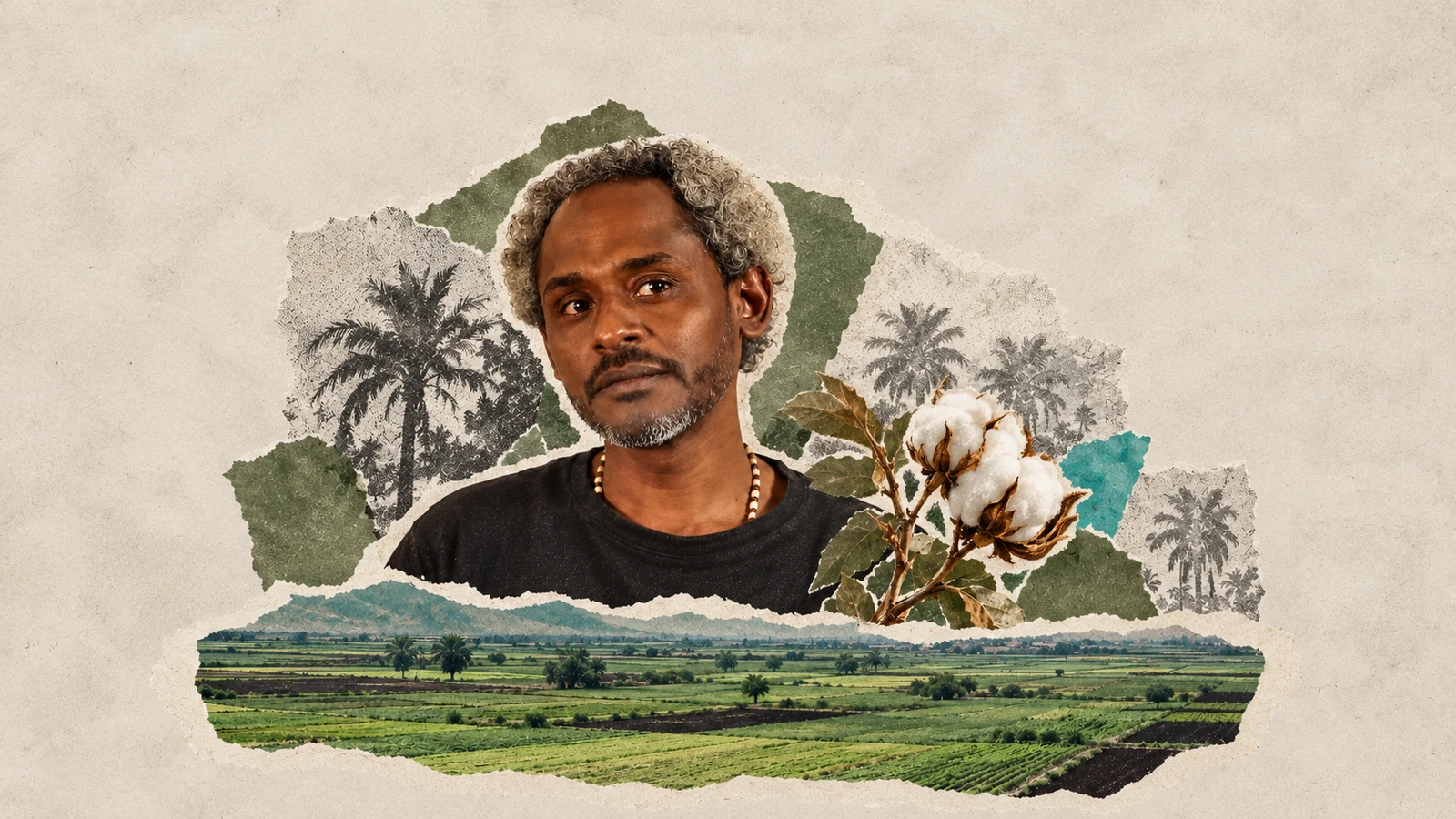

On the morning of September 24, 2023, Ahmed Tarek was riding his motorbike to work, dressed in the bright orange uniform bearing the logo of Talabat. Suddenly, a black car with no license plates appeared in front of him at high speed. He tried to swerve to avoid it, but the car struck him, hurling his body several meters across the asphalt before the driver fled the scene.
Time froze for a few seconds. His body hit the ground with force as bystanders rushed to help. Blood poured from his shattered left leg. Ahmed was taken to the hospital, where he underwent 18 surgeries costing more than 800,000 Egyptian pounds ($16,980). Yet those operations did not end his suffering—he remains permanently disabled, unable to walk or work.
Despite the company having deducted a monthly payment from his salary for five years for health insurance, it refused to take responsibility for the accident or cover his treatment costs. “The company paid me 50,000 pounds ($1,061), and I paid the rest,” Ahmed says. “The first surgery cost 68,000 pounds ($1,443)—after the discount, about 64,500 ($1,368). Then I had 18 more surgeries, and neither the company nor the office I work for has asked about me since.”

Ahmed’s suffering did not end with his physical disability; it extended to the loss of his livelihood. The company forced him out of work. “I called them many times,” he says. “They told me: do whatever you want, we have money and lawyers.”
His family was forced to drain what was left of their savings, while neighbors collected donations to cover his medical bills. “My leg was completely crushed… they wanted to amputate it,” Ahmed recalls. “My family refused, and everyone in the neighborhood gathered money to help me.”
But the shock came when he turned to the labor office to file a complaint. There, he was met with the company’s denial—claiming that he was not one of its employees at all.


This investigation uncovers a pattern of violations committed by delivery companies in Egypt against their riders, by classifying them as “independent contractors” rather than employees. This label allows companies to evade responsibility for social insurance, accident compensation, and workplace protections, while enabling them to impose harsh working conditions with no legal safeguards. The model exploits legal loopholes, reinforced by the weak oversight of regulatory authorities over these companies’ labor practices.

Talabat’s Dominance Over the Market
Talabat is one of the leading food-delivery and e-commerce companies in the Middle East and North Africa, operating in Kuwait, the UAE, Qatar, Bahrain, Oman, Egypt, Jordan, and Iraq. It tops the market in customer base, partners, and geographic reach, with over six million active customers, 65,000 active partners, cooperation with roughly 56,300 restaurants and 9,500 stores, and coverage of more than 155 categories of cuisines and products. In 2015, the German company Delivery Hero acquired Talabat.
In 2013, the number of couriers registered on Talabat’s platform in Egypt stood at around 14,000. Today, the number has risen to about 25,000 across 25 cities. The company also operates 12 grocery outlets under the Talabat name, according to televised remarks by CEO Hadier Shalaby in late 2024.
Despite its market power, the company has faced worker protests in Egypt. In April 2022, a group of couriers staged a strike in response to wage policies after the rise in the U.S. dollar. Management responded by offering temporary Ramadan bonuses: 250 pounds per week for every 45 hours of work, 400 pounds per week for 60 hours, and 600 pounds per week for 80 hours.
At the market level, a survey conducted for this investigation shows that Talabat commands the largest share of the sector’s workforce: 44 percent of couriers in the sample work for Talabat, compared to 35 percent for Mrsool, 6 percent for BreadFast, 4 percent for Mashawir, and 2 percent for MyDelivery. The remaining percentage is distributed among companies such as Bosta, Jumia Egypt, InstaShop, and Rabbit.
Workers Without Protection
Ahmed’s case is far from exceptional among delivery riders; the risks are woven into their daily routine. A survey conducted for this investigation on delivery workers’ rights in Egypt — with 130 participants — found that 63 percent had suffered a workplace injury or traffic accident while on the job, yet companies provided compensation in only 2 percent of cases. Denial of compensation for work-related injuries accounted for 36 percent of all reported violations.
In the streets of Cairo, Rami Hassan starts each morning on his motorbike, racing against app notifications and rush-hour traffic. He climbs stairs quickly to deliver orders, then runs back to his bike to start the next trip. It is a grueling routine that can stretch to 12 hours a day, for a fee that rarely exceeds 28 pounds per delivery.
Rami began working in February 2024 for Talabat through an intermediary office, after being forced to sign a 20,000-pound promissory note. He received no employment contract and no fixed salary, working instead on commission, paid per order and distance traveled. According to the survey, 80 percent of Egypt’s delivery workers lack signed contracts with companies; 77 percent are paid per order, 17 percent receive a weekly wage, and only 6 percent earn a monthly salary.
Like most of his colleagues, Rami works with no legal or insurance protection, aside from a healthcare discount card provided by Medical Group, funded through monthly deductions from his pay. But this card is no substitute for proper health insurance: 97 percent of surveyed workers confirmed that companies had not registered them with the National Organization for Social Insurance, and only 12 percent reported receiving any form of health insurance.
Rami recounts how his pay was docked after a customer accused him of taking extra money — without the company conducting any investigation. Such penalties are far from rare. Other couriers explained that companies often resort to salary deductions or reduced ratings after any complaint, even when unverified. Among them is Haitham Mohamed, a rider for BreadFast, who says he was physically and verbally assaulted by security guards at a residential compound in Third Settlement in July 2024, yet the company penalized him by deducting three days’ pay (700 pounds) following a customer complaint, without investigating the incident despite the presence of CCTV footage.
According to the survey’s findings, unjustified salary deductions constituted 54 percent of the most common violations, while 13 percent of workers reported being deprived of their wages entirely.

Rami himself had previously worked for BreadFast in January 2024 with a salary of 4,000 pounds, but says he later discovered that his social insurance was registered at only 1,700 pounds. During his treatment period, he was forced to work on his weekly rest days and denied sick leave, in violation of Article 131 of the Egyptian Labor Law, which grants workers medically approved sick leave and entitles them to wage compensation under the Social Insurance Law. His testimony aligns with accounts from other workers who were compelled to work on their days off and threatened with wage deductions if they refused.
Rami also describes the conduct of supervisors (coordinators), who, he says, force workers to purchase and deliver personal items—such as food and cigarettes—at their own expense in exchange for being assigned official delivery orders.
When he complained to management, he felt compelled to resign, fearing that the 200,000-pound promissory note he had been forced to sign upon hiring would be used against him. According to the survey, 48 percent of workers were forced to sign a promissory note or bill of exchange, 18 percent reported being directly blackmailed, and 27 percent said these threats pressured them into surrendering their rights.

Haitham shares Rami’s complaint about favoritism in the distribution of orders within the company, with certain workers consistently prioritized over others. He says that the absence of job security has become a defining feature of the sector: new riders are hired, then dismissed shortly afterward. Survey data shows that 21.5 percent of respondents experienced arbitrary dismissal.
In addition to worker testimonies, we obtained copies of the contracts and official documents that riders are required to sign before starting work at BreadFast. These documents reveal the nature of the “gig economy” in practice: riders are treated as independent service providers, not permanent employees — a classification that strips them of the protections guaranteed under Egypt’s Labor Law, including social insurance, health insurance, and paid leave.

One of the contracts states that the wage is set at 18.41 pounds per hour, to be paid within the first five days of the following month after deducting a 3 percent tax, and requires the worker to dedicate their full time to the company, use only their own motorbike, and bear full legal responsibility in the event of any accident.
The company, in turn, commits only to covering the fuel consumed during successful delivery trips. The contracts do not oblige the company to pay for maintenance, damages, or any accident-related costs. They also grant the company the right to terminate the contract immediately upon any violation or customer complaint, while the worker may end the contract only with one day’s notice. The worker is further bound by a non-compete clause preventing employment with rival companies for the entire contract duration and for one year after its termination, and by a confidentiality clause prohibiting disclosure of company information for five years.
BreadFast is a food-delivery startup founded in 2017 by Mostafa Amin, Mohamed Habib, and Abdullah Nofal, with a capital of $26 million. It began by delivering baked goods before gradually expanding into grocery delivery. As part of this expansion, the company launched Breadfast Now, a cloud-based supermarket service offering customers a variety of locally sourced products.
Violation of Labor Law
Human rights lawyer Malek Adly, head of the Egyptian Center for Economic and Social Rights, reviewed the documents and contracts that some delivery companies force their workers to sign — including those issued by BreadFast. Adly explained that these documents do not constitute employment contracts in the legal sense; rather, they are service-provision contracts that classify the worker as a “service provider,” not an employee, in an attempt to portray both parties as equals while stripping the worker of all labor rights. He described this format as “contracts of enslavement”, stressing that such documents should carry no legal weight, as they fail to comply with labor law provisions related to minimum wage, occupational safety and health, work injuries, working hours, and termination procedures.
He added that the confidentiality agreement imposed by BreadFast contains clauses that violate the law, since the power to dissolve a contract rests solely with the judiciary under Article 148 of Law No. 14 of 2025. Adly also confirmed that forcing workers to sign promissory notes constitutes a widespread form of extortion that lacks any clear legal framework. He called for direct legislative intervention to criminalize these practices and urgent reforms to protect digital delivery workers, alongside real oversight mechanisms for companies.
Adly distinguished between workers employed directly by companies and restaurants — who in some cases receive contracts and insurance — and those working through digital delivery apps, who lack any legal protection and are often forced to buy uniforms and equipment at their own expense. He noted that most couriers do not work directly with major companies but through intermediary labor-supply agencies, further deepening their legal vulnerability. He described this as one of the worst forms of employment, likening it to “human trafficking” due to the exploitation and absence of protections involved.
Although the new Labor Law No. 14 of 2025 formally extended its protections to platform workers — granting them rights equal to traditional employees, such as social protection, minimum wage, and the right to unionize — it did not come into force before early September 2025. Article 99 requires a written contract, in paper or electronic form, and allows the employment relationship to be proven by any means, including electronic or personal evidence. Yet a wide gap remains between the law and reality, owing to weak oversight by the Ministry of Manpower, whose limited number of inspectors is insufficient for the size of the labor market, according to Adly.
This legislative and regulatory vacuum leaves workers directly exposed. According to a survey conducted for this investigation, workers believe that the main reasons behind the violations they face include employers’ exploitation of their need for the job, the weakness of legal protections that should safeguard them, and their own limited awareness of their rights — all of which make them more vulnerable to abuse.
Intermediary Offices and Brokers: A Gateway to Exploitation
Some delivery companies rely on intermediary offices that register riders on their digital platforms in exchange for taking a percentage of their earnings, usually transferred to personal e-wallets, without any direct contract with the parent company or any legal communication with it. Through this arrangement, companies free themselves from all obligations toward workers, while the offices compel riders to sign promissory notes ranging from 10,000 to 50,000 pounds, and deduct the cost of uniforms, delivery boxes, and helmets from their wages. Several worker testimonies also pointed to the presence of brokers who recruit new riders with misleading promises of high income, in return for commissions for each worker added to the pay-per-order system.
Like Ahmed, Rami, and Haitham, most delivery riders in Egypt work without contracts or legal protection. The survey shows that the lack of health and social insurance accounts for 45 percent of violations, 78 percent report the absence of any legal framework protecting them, and 79 percent feel neither financial nor social security.
Workers are paid under the “batch” system, which ties their income to delivery speed and customer ratings — allowing companies to impose arbitrary deductions. Mahmoud Yousry, a Talabat courier, says he has no contract, is paid per order, and covers accident costs out of his own pocket. Zeinab Mohamed, who worked with Talabat between 2021 and 2022, earned 12 pounds per order with no insurance at all. Ahmed Gamal, who worked with Mrsool before moving to Talabat, explains that he used to pay for canceled orders from his own money, before later facing deductions and threatening messages from supervisors.
In July 2025, Mrsool couriers organized a strike in protest against wage cuts, the company’s increased commissions — sometimes reaching 100 percent — and the “credit” system, which forces riders to pay for orders upfront in cash before being reimbursed later. Worker Mohamed Bakry says: “A customer told me to pick up an order worth 1,500 pounds. I brought it, then he said he didn’t want anything. Mrsool told me: not our problem.”
No official statistics accurately estimate the number of delivery workers in Egypt. The Minister of Labor has claimed they number in the millions, while union organizers argue the real figure does not exceed 900,000, all of them counted as “irregular workers” with no insurance or protection.
Mrsool was founded in 2015 by Saudis Ayman Al-Sanad and Naif Al-Samary, and quickly became one of the most prominent delivery platforms in Egypt. By 2018, it had four million users, 150,000 couriers, and transaction volumes reaching $270 million. The company now holds about 28 percent of Egypt’s delivery market, handling 1.4 million orders a day, and its workforce is estimated at over 100,000 couriers, with plans to increase the number to one million, according to General Manager Osama Harfoush.
The controversy is not unique to Egypt. In Iraq, for example, an investigative report published by ARIJ in September 2025 uncovered similar abuses faced by delivery riders there. Just one month after publication, the Iraqi government responded with a set of reforms to regulate the sector, safeguard workers’ rights, and curb violations. The comparison reveals a stark contrast between countries that moved quickly to act — and the reality in Egypt, where delivery workers remain outside any effective protection framework.
Response of the Ministry of Labor
Despite submitting detailed questions to the Egyptian Ministry of Labor regarding the measures taken to protect delivery workers, the mechanisms for monitoring companies, and the process of receiving complaints, the ministry’s spokesperson, Abdel Wahab Khadr, responded only by referring to the “Your Safety Matters to Us” campaign launched in July 2025.
He stated that the campaign aims — in its first phase — to provide protection for delivery workers using motorcycles, bicycles, or cars, whether working through digital applications or independently. The campaign includes training, providing free protective equipment in cooperation with the private sector and civil society, and a plan for inspection and oversight beginning in the Administrative Capital and gradually expanding to other governorates, alongside a hotline and an online service for complaints and inquiries.
However, the ministry’s response did not include any details about monitoring the delivery companies themselves, the number of complaints received, or the actions taken against violators. It also did not clarify whether the ministry imposes any penalties or legal obligations to guarantee workers’ rights.
After redirecting the same questions to the spokesperson to obtain additional clarifications, no further response was received up to the date of publication.
Meanwhile, as his case against Talabat remains before the Egyptian courts, Ahmed Tarek spends his days confined to his room, leaning on his crutches, staring at a leg that can no longer support his body, burdened by anxiety over an uncertain future. Rami Hassan continues to cross Cairo each day on his motorbike, riding from one zone to another, working twelve-hour shifts under the pressure of deductions and the constant threat of accidents. Haitham Mohamed searches for a legal avenue to reclaim his rights at BreadFast, while Mohamed Bakry is forced to clean offices in the morning before beginning his second shift as a delivery rider for Mrsool, earning a wage that barely covers his basic needs.
With every new order, these riders race against time on roads fraught with danger — between the specter of accidents, the threat of arbitrary deductions, and the endless struggle for an income that fails to lift them out of poverty.
This investigation was produced through a collaborative reporting effort between Zawia3 and Arab Reporters for Investigative Journalism (ARIJ).