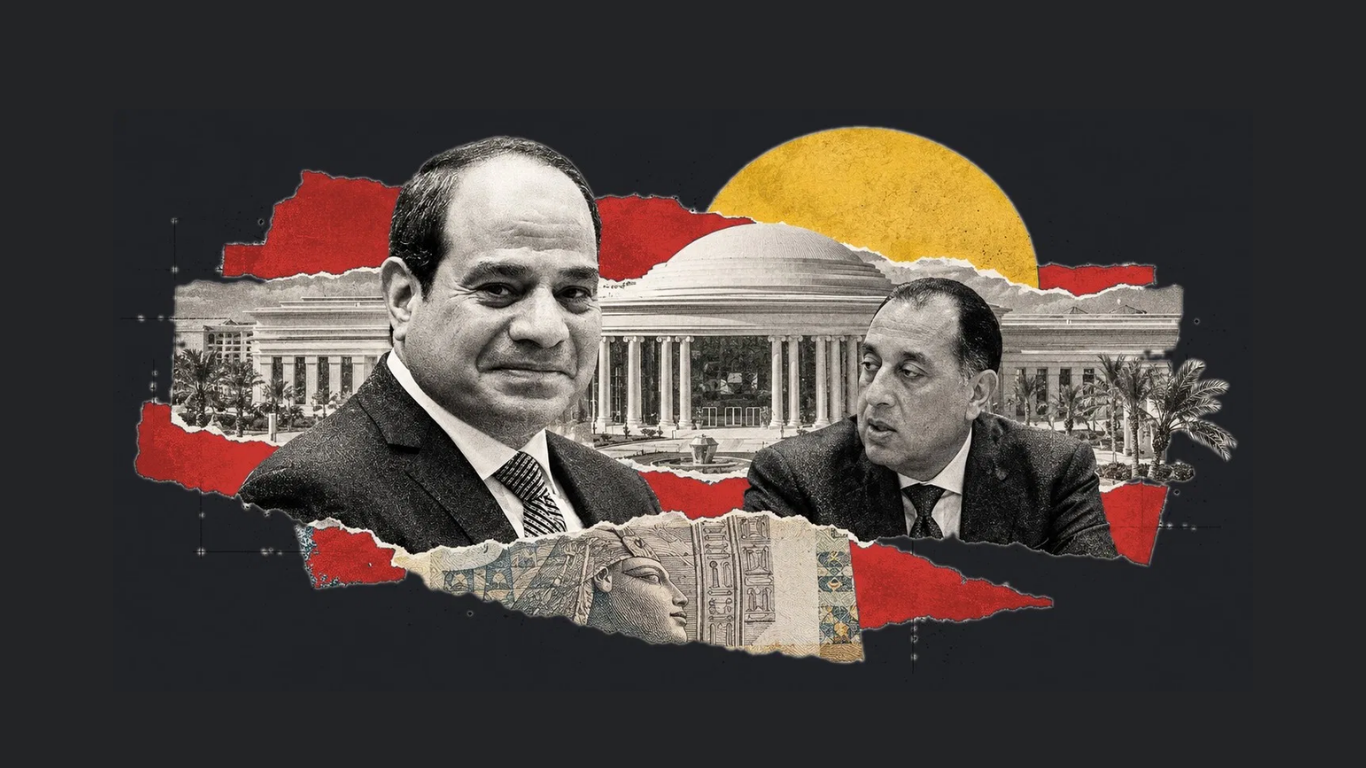


In a notable statement issued in mid-July, the International Monetary Fund (IMF) criticized the continued involvement of the military institution in Egypt’s economic activities, warning that the state’s dominance, especially the military, hinders growth and limits opportunities for jobs and investment. The report, released as part of the fourth review of the $8 billion loan program, revealed for the first time that the military owns 97 companies, 73 of which are in the industrial sector alone. The IMF considers this situation to “impede growth and prevent the creation of real private sector job opportunities.”
The IMF’s criticism came after months of delays at the request of the Egyptian government, amid increasing criticism over the slow pace of privatizing military-owned companies, especially “Wataniya Petroleum” and “Safy for Water,” despite repeated official promises to list their shares on the stock market by 2025. While the government is taking gradual steps to reassure the IMF, the report harshly describes the Egyptian economy as being “held hostage” by government control and military administration.
In March 2024, Egypt and the IMF signed an Extended Credit Facility agreement worth $8 billion, extending for 46 months, aimed at addressing the foreign currency shortage and high inflation that the country faced in 2022 and 2023. The increase in the loan value to $8 billion helped attract significant foreign investments and financing, in addition to fully liberalizing the exchange rate to support the economy and absorb external shocks. In this context, the government launched a package of reforms that included reducing energy subsidies and cutting the deficit, while the IMF required significant progress in the privatization of state-owned companies and enhancing the role of the private sector.
The IMF has so far disbursed four installments of the loan, the most recent being $1.2 billion in April 2025, with the fifth and sixth installments contingent on the IMF’s board approval after confirming that the required conditions are met. The fifth and sixth combined reviews are scheduled for the fall of 2025, after being postponed to allow Cairo more time to complete the necessary reforms. The IMF linked the completion of the reviews to achieving key goals, including the privatization of stakes in state-owned companies and tightening government lending policies from the Central Bank. Once the IMF’s Executive Board signs off on the reviews, an additional funding tranche of around $2.5 billion will be disbursed, which could ease pressure on foreign reserves and support investment inflows in the medium term.
In this context, Egyptian officials have announced that the government will list 11 state-owned companies, including two financial institutions and four military-owned companies, on the stock market in 2025 to meet IMF requirements and increase privatization proceeds.
Don’t miss: Egypt’s Army Inc.: The Rise of a Military Economy

How Do We Read the IMF’s Criticisms?
Economic researcher Mohamed Ramadan, in an exclusive statement to Zawia3, confirms that Egypt still does not have a clear or publicly announced plan for the military-affiliated companies’ exit from the civilian market, despite its commitment to this in the framework of its agreement with the International Monetary Fund (IMF).
Ramadan says: “We don’t have a publicly announced plan for the military’s exit from the market. What has been officially mentioned only concerns two companies, ‘Wataniya Petroleum’ and ‘Safy for Water.’ Over the past two years, news about the sale of these companies has been circulating—sometimes discussing their sale to a strategic investor, and other times about listing their shares in the stock market. However, neither has been listed yet, and there is no clear plan on this front.”
He adds: “The IMF insists on this condition as part of the main agreement signed with Egypt, which stipulates the integration of the private sector and the prevention of anti-competitive practices by government-owned companies, including those owned by sovereign entities such as the military. But we still do not have a publicly announced plan, and all we have are two companies that were supposed to be listed, but that has been delayed consistently.”
Ramadan continues: “No one knows the exact reason for the delay in the listing. Some attribute it to technical issues related to procedures and paperwork, while others believe the delay is due to the absence of suitable pricing offers. These explanations range between analysis and speculation, but the question remains: why has the listing not happened yet?”
Regarding the expected scenarios with the IMF, Ramadan believes that the IMF is clearly exerting pressure on this issue, but he thinks that in the end, the IMF will not tie the continuation of the program entirely to the issue of sovereign companies’ exit. He explains: “The IMF has other priorities, with monetary policy at the top, especially regarding exchange rate flexibility, which is its primary focus. Structural reforms like the exit of the state from some economic activities or the sale of assets take time to implement. It is likely that the IMF will agree with the Egyptian government to delay some of the sale steps until the financial market situation improves or better investment offers come in. There is always room for maneuver in this area.”
Regarding the expected actions from the government in the coming period, Ramadan explains: “The fifth and sixth reviews are likely to be merged into one, as there is no longer any room to separate them as was done before. I believe that the government will proceed with selling public assets as the primary option, whether through stock market offerings or direct sales to strategic investors, in addition to exiting from stakes in major companies, as happened in acquisition deals concluded in 2022 and 2023. As for the military economy file, it remains largely unclear, with no clear information about what will happen except for the planned listing of the two companies mentioned.”
On the issue of removing subsidies from petroleum products, Ramadan clarifies that this file remains tied to the inflation level. He says: “I believe that the removal of subsidies on petroleum products is likely to happen, but it’s unclear whether the government will make this decision before the end of the year or not, due to the sensitivity of the inflation situation. Inflation in Egypt is still on an unstable path, rising in one month and falling in another, which causes concern. Any further increase in fuel prices could lead to an additional inflation wave, which would negatively affect interest rates, which are still high in Egypt. We urgently need to reduce inflation rates so we can lower interest rates and improve the pace of economic activity, which can only be achieved through serious structural reforms.”
In its report, the IMF directly linked the slow implementation of the privatization program to the need for merging the upcoming reviews and delaying them. The report indicated a drop in the expected proceeds from selling government assets from $3 billion to $600 million by the end of Q4 2024 due to the slow pace of the exit. According to IMF spokesperson Julie Kozak, the failure to implement the exit policy is the reason for delaying the fifth review and merging it with the sixth. Kozak emphasized the need to deepen reforms in the public business sector, reduce the state’s role in the economy, and accelerate the pace of selling stakes in government and sovereign companies to ensure the smooth flow of the next funding tranche.
In light of these positions, the next tranche appears to be tied to achieving tangible results in privatizing companies and deepening private sector participation. The IMF’s tone has become more direct in demanding that Egypt reduce the military and defense economic presence and create an active competitive environment, which casts a shadow over the timing of the next budgetary funding disbursement.
Egypt has been on a long and complex path of economic reforms in collaboration with the IMF, with the latest chapter being the agreement signed in December 2022 to secure a $3 billion loan under the Extended Fund Facility (EFF), a program aimed at addressing economic imbalances and boosting growth led by the private sector. Although the agreement included eight periodic reviews to assess progress in implementing reforms, the program has faced noticeable delays, reflected in the delay of the first and second reviews and the merging of the third and fourth, casting a shadow over the fifth review, which came amid escalating economic pressures.
Don’t miss: Egypt’s Fifth IMF Review Sparks Controversy Over Asset Sales and Public Services
When Will the Military’s Dominance Over Egypt’s Economy End?
In an investigation published at the end of May, titled “Commercial Barracks: How the Military Became the Leading Economic Player,” Zawia3 revealed that networks of military-owned commercial and economic enterprises have dominated a majority of Egypt’s industrial, commercial, and construction sectors. The investigation highlighted the expansion of the Egyptian military’s economic empire since 2014, taking control of wide sectors and pushing out the private sector, using tax privileges and conscripted labor.
The IMF’s recent report sharply criticized the role of the military in the Egyptian economy, marking a shift in stance after years of subtle hints. The IMF criticized the military’s involvement in civilian activities such as land acquisition and private companies, stressing that this extensive control needs to be corrected.
The report pointed out that the military institution owns 97 companies operating across various sectors (73 of which are in the industrial sector), accounting for about 36% of certain civilian markets (such as marble, steel, and cement). The IMF warned that the privileges granted to these companies (tax exemptions and land facilitation) discourage private investors from competing. The report notably stated that “state control over the economy hinders growth and prevents the creation of real job opportunities for the private sector.”
Since 2014, when President Abdel Fattah El-Sisi took office, the economic influence of the Egyptian military has expanded at an unprecedented pace. The military’s investment network has stretched to include dozens of companies and projects across various civilian sectors, from construction and real estate development to food industries and logistics services.
While international institutions such as the IMF and the World Bank have repeatedly expressed concern over military involvement in the economy, both domestic and international attention is increasing regarding the impact of this presence on fair competition and sustainable development. In this investigation, Zawia3 provides a detailed analysis of this phenomenon, supported by field testimonies and statistics from credible sources.
The military’s control over vast economic sectors has created an unequal competitive environment, weakening the private sector’s ability to survive and compete—even for state-owned civilian companies. Military-owned companies enjoy exclusive privileges, including exemptions from taxes and customs duties, using conscripted labor at low costs, and preferential treatment in government project assignments.
One of the most prominent examples of this is the military’s entry into the cement industry. In 2018, it established a massive plant with a production capacity of 13 million tons annually, despite the market already facing an oversupply. This aggressive entry, according to Reuters, disrupted the market balance, causing significant losses for private companies—including foreign investors—and some companies were forced to suspend operations or leave the market.
These privileges granted to the military, combined with exemptions and exceptions, have raised increasing concern among both local and international business communities, especially with the rise in direct project assignments without open competition. Reports from the World Bank and the IMF have warned that this dominance impedes the development of the private sector and weakens its ability to create job opportunities, which negatively affects investment indicators.
According to World Bank data, private investment in Egypt over the past decade averaged around 6.3% of GDP, which is less than a fifth of the average private investment in middle-income countries. Additionally, Egypt’s ranking on the Heritage Foundation’s Economic Freedom Index dropped to 130 out of 178 countries in 2021, reflecting a stifling business environment under the weight of state and military intervention in the market.
Evaluations from the Middle East Studies Center at Harvard University suggest that the military’s expanded role has weakened economic growth momentum. Economist Isaac Diwan, in this context, says: “An economy dominated by the military is less capable of achieving sustainable growth than an economy managed by civilian elites, even if corrupt,” attributing this to the military’s monopolization of resources and deals in a manner that surpasses what occurred during the Mubarak regime’s business elites.
In this context, economist Zohdi El-Shami points out that the scale of military-affiliated economic activity in Egypt has become extensive and highly influential, despite the absence of precise figures from official sources. He says: “The state often downplays the military’s contribution to the economy, but the reality shows that there are many economic activities that have come under military control, and this has multiple consequences.”
He notes that this situation creates significant imbalance in the economy’s structure, affecting market balance and competitive fairness. He explains: “When an institution operates outside the same legal and accounting rules that apply to the private or even the public sector, it disrupts the principle of equal opportunities among economic actors and leads to entire sectors being driven out of the market.”
He adds: “The military does not execute everything itself; some projects are carried out by its companies, and some require civilian labor. But in the end, there is marginalization of the private sector, especially small businesses that have been directly harmed by the military’s entry into various fields, from selling food products to executing major projects.”
Unofficial estimates suggest that the Egyptian military controls between 25% and 40% of the Egyptian economy. The military enjoys competitive advantages that make it difficult for the private sector to compete. One of these advantages is exemptions from taxes and customs duties under laws such as Article 47 of the Income Tax Law of 2005.
Article 19 of the Customs Exemption Law states: “Exempt from customs duties according to the terms and conditions set by the executive regulations, any items imported by the Ministry of Defense and its agencies, companies and units affiliated with the Ministry of Military Production, General Intelligence, Ministry of Interior, including weapons, ammunition, equipment, vehicles for official use, medical supplies, and medicines on behalf of these agencies or for their account, all for the purposes of arming, defense, or security, and without the requirement for inspection.”
The military has executed large-scale projects in multiple sectors within infrastructure, housing, industry, agriculture, and tourism. Notable projects include the expansion of the Suez Canal (2014-2015) at a cost of $8 billion and the construction of the new administrative capital, which is managed by a military-affiliated company with a 51% ownership stake. The Engineering Authority of the Armed Forces has implemented 276 projects worth 198 billion EGP ($4 billion) by 2021, including 25 roads in Sinai spanning 1,185 kilometers. In industry, the military has established cement and marble factories and acquired significant shares in phosphate and gold production. In agriculture, the National Service Projects Organization manages agricultural projects and fish farming using conscripted labor.
Don’t miss: Liquidation of Assets: Is Egypt Selling Its Properties to Pay Off Debts?
Asset Sale Map: Hospitals at the Forefront
As part of its commitments to the International Monetary Fund (IMF), the Egyptian government announced a plan to sell four state-owned assets during the current fiscal year, valued at approximately $3.6 billion, aiming to accelerate the state’s exit from some economic sectors. This approach has sparked widespread debate, particularly regarding the potential involvement of the private sector in the management and operation of government hospitals. In June 2024, Egyptian President Abdel Fattah El-Sisi approved a law granting the private sector the right to manage and operate some public hospitals, raising concerns about the privatization of basic health services. Despite government assurances that hospitals will remain state-owned and that the goal is to improve service quality through public-private partnerships, some fear that this move will result in declining health service quality and rising treatment costs, burdening citizens, especially those from lower-income groups.
The privatization of state assets is one of the economic tools governments use to achieve specific financial goals. Asset privatization involves converting state-owned assets, such as real estate, companies, and infrastructure, into liquid cash through sales or privatization. Governments use this process to achieve various economic and financial objectives, including reducing public debt or improving economic efficiency to attract investments. For example, in Greece, the government sold some public assets as part of the financial rescue program provided by the European Union and the IMF during the debt crisis in the last decade. Similarly, India privatized many public companies, including airlines and oil refineries, in an effort to enhance financial efficiency and attract investments, according to the Financial Times.
In mid-July, the government announced as part of its work plan submitted to the Parliament a project to establish an Asset Liquidation Committee under the Ministry of Finance, with the aim of generating 20-25 billion EGP ($400-500 million) annually for the treasury from asset liquidation proceeds in the coming years. The government also intends to allocate 1% of GDP from the liquidation proceeds to the budget to reduce the debt of budgetary bodies. The committee’s formation is part of a program aimed at reducing public debt in sustainable paths, continuing to direct primary surpluses, and using part of the liquidation proceeds and the government offering program to increase budget revenues and reduce government borrowing. This is expected to reduce debt servicing costs for budgetary bodies to 42.6% of public spending by 2026/2027, according to the government’s integrated strategy to put the debt ratio on a downward path.
The Egyptian government’s marketing of its asset sale program centers on one primary goal: providing urgent dollar liquidity to support foreign currency reserves and pay short-term obligations amid a shortage of dollar inflows and rising foreign debt service burdens. Statements from the Ministry of Finance indicate that the state hopes to raise over $3 billion by 2025 through selling stakes in state-owned companies as part of the “Government Offerings Program.” However, despite the short-term importance of this step, several economists warn about the risks of liquidating strategic assets without a comprehensive vision for reinvesting the returns or ensuring continued service provision linked to these assets. Observers note that selling assets that generate annual profits for the state’s budget, such as energy companies, infrastructure, or public financial institutions, means the state will lose important tools for market regulation and the provision of sustainable resources.
On the other hand, some observers argue that the government’s reliance on asset sales to cover the current account deficit and settle debts may not be a long-term solution, but rather a temporary fix for a deeper structural crisis related to weak domestic production, declining exports, and a drop in tourism. These concerns grow when the government does not clearly announce the asset sale map, the criteria for selecting companies, or the nature of potential partners, especially with sovereign entities managing the sale files in an undisclosed manner.
While the government indicates that partnerships with Gulf investors or sovereign wealth funds aim to “attract foreign direct investment,” experts emphasize that in many cases, what is happening is merely a transfer of ownership that does not necessarily add value to the economy. In fact, it may widen the gap between the state and citizens if the process is not managed with transparency and fairness.