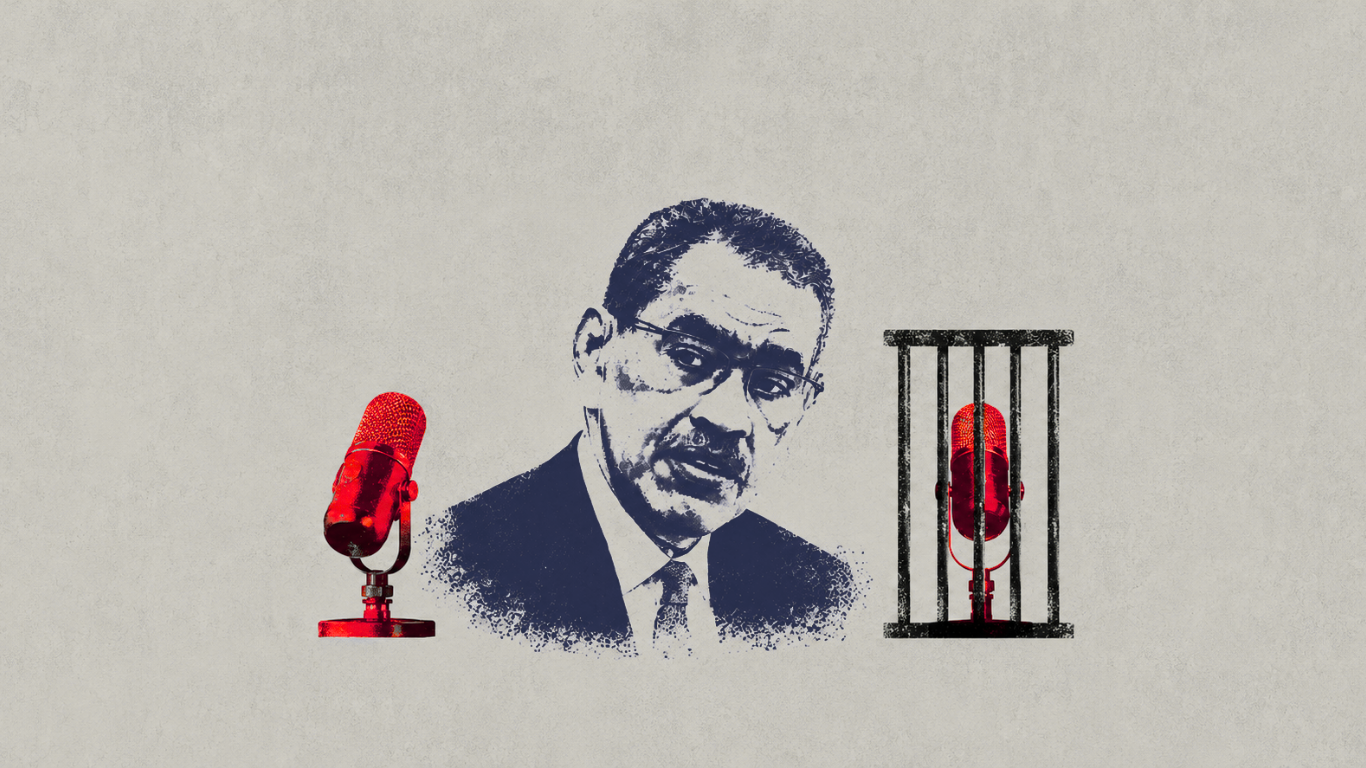


The platform Zawia3, alongside a number of international media institutions and civil society organizations, has submitted a formal request to AppLogic Networks, calling on it to provide public and documented disclosure regarding the extent of its compliance with commitments to withdraw from the Egyptian market. The request comes amid the continued blocking of independent media websites inside Egypt, including Zawia3’s website, despite the company’s announcement that it would end operations in several high human rights risk countries by December 31, 2025.
The joint letter, addressed to the company’s CEO Mark Driedger and Head of Ethics and Compliance Carol Tate, expressed deep concern over what the signatories described as the company’s failure to provide full transparency regarding its withdrawal from Egypt, and its failure to take tangible steps to address the harm suffered by media institutions whose access to audiences was restricted through the use of its technologies, including website blocking and data traffic interference.
This move comes amid the continued targeting of Zawia3’s platform, whose website was blocked inside Egypt in February 2025. A later alternative domain created to bypass technical restrictions was also blocked in an effort to ensure continued access to its journalistic content. Zawia3 thus joins hundreds of news and media websites blocked in the country, where the total number of blocked sites is estimated at no fewer than 630 to date.
AppLogic Networks had previously announced, as part of a reform package that contributed to its removal from the U.S. Department of Commerce’s entity list, its commitment to withdraw from Egypt and other non-democratic regimes in response to concerns about the misuse of its technologies, particularly Deep Packet Inspection technology, to facilitate digital violations including website blocking and user tracking.
According to technical research conducted by independent civil society organizations, including Egypt’s Masaar Foundation, in cooperation with The Citizen Lab, the company’s technologies have over the years been linked to widespread patterns of network interference and digital censorship targeting more than 100 news websites and independent media platforms critical of the Egyptian authorities.
Despite the company’s announcement of withdrawal, Egyptian authorities continue to block independent media websites, including Zawia3. This has prompted the signatories to demand clarification as to whether the company’s technologies remain in use inside the country, particularly in the absence of public information regarding the fate of the devices or technical infrastructure it had previously supplied to the Egyptian market.

The letter also noted that the company’s pledge to conduct regular consultations with civil society, including groups recommended by the U.S. Department of State, has not translated into actual dialogue with affected media institutions, foremost among them Zawia3. It pointed out that efforts by Access Now to facilitate direct communication between the company and Egyptian civil society organizations and independent media platforms were postponed for several months before being canceled at the last minute by the company, citing concerns over employee safety without offering alternative arrangements.
The letter further raised questions regarding AppLogic Networks’ commitment to donate 1 percent of its future profits to support organizations working on internet freedom and remedies for digital rights violations. To date, no disclosures or evidence have been published indicating that such support has been directed to independent media platforms harmed by the use of its technologies, including Zawia3 and the Egyptian website Al-Manassa.
The signatories emphasized that achieving transparency and accountability cannot be limited to press statements but requires verifiable practical steps. They called on the company to provide public disclosure by February 26, 2026, including documented evidence of the completion of its full withdrawal from Egypt, details regarding any remaining equipment or contractual obligations, plans for engagement with affected journalists and media institutions, and clarification of the remedies it intends to implement, including the announced financial donations.
The letter warned that the absence of such measures could be interpreted as an attempt to improve public image without effecting substantive change, thereby undermining the company’s stated commitments to protecting digital rights and freedom of expression.
AppLogic Networks, formerly known as Sandvine, is one of the leading global companies specializing in the development of internet traffic management and analytics technologies, most notably Deep Packet Inspection systems. These tools enable network operators to monitor, analyze, and control data flowing through digital infrastructure. While originally designed for purposes such as network management, service quality improvement, and cybersecurity, international technical and human rights reports have documented their use in several countries to restrict internet access, block websites, and track users, including targeting independent media platforms and critical journalistic content. In 2024, the company announced a reform package that included a commitment to withdraw from several high human rights risk environments, including Egypt, by the end of 2025. This followed its previous inclusion on the U.S. Department of Commerce’s entity list due to concerns over the misuse of its technologies in censorship practices.
On February 20, 2025, Zawia3 announced that its website had been blocked inside Egypt after detecting repeated access difficulties across multiple internet service providers. Subsequent technical investigations confirmed that the blocking was implemented using a “reset attack” technique, a mechanism that forcibly interrupts the connection to the website as soon as a user attempts to access it without directly shutting the site down, resulting in intermittent and unstable access.
According to a statement issued by Zawia3 at the time, the blocking effectively began on February 15, 2025, when users started experiencing increasing difficulty accessing the website across different networks, including Vodafone’s network, before later extending to other service providers with varying degrees of effectiveness.
In an attempt to circumvent the blocking, Zawia3 created an alternative domain. However, this domain was also blocked on February 27, 2025, confirming that the website was being deliberately targeted and prevented from reaching its readers by any available means.
Thirty-three international and regional human rights and media organizations, including McGill University and media platforms such as Daraj and Raseef22, condemned the measure, describing it as a violation of press freedom and an escalation in the censorship imposed on independent media inside Egypt.
In its statement, Zawia3 stressed that the blocking does not mark the end of its journalistic work, but rather the beginning of a broader battle centered on the right to knowledge, freedom of the press, and the independence of truth from any attempt to monopolize it.
Among the most prominent blocked news and media websites are Al-Manassa and Mada Masr, along with several other news outlets. Blocking measures have also targeted human rights organizations and non-governmental websites, such as the Egyptian Commission for Rights and Freedoms and Reporters Without Borders, in addition to websites offering circumvention tools, such as the Tor Browser and various VPN and proxy services.
The blocking of news websites has dealt a blow to the journalists working for them. As audiences were cut off from accessing these platforms, their financial resources sharply declined, whether from advertising, subscriptions, or support, forcing many to scale back operations or shut down entirely. A study issued by the Association for Freedom of Thought and Expression indicates that approximately 300 young journalists lost their jobs or faced salary cuts during the first weeks alone of the blocking wave between May and June 2017. Several independent media institutions were unable to financially withstand the situation and ceased operations altogether, closing their websites and laying off all staff. At least six independent news websites shut down completely as a result of the economic losses caused by blocking and dismissed their employees in full. For example, the independent outlets “Al-Bidaya” and “Al-Badil” were blocked in June 2017 and were unable to continue thereafter. Al-Bidaya stopped publishing entirely by December 2017, while Al-Badil announced its closure in April 2018 due to the continued blocking that prevented its content from reaching audiences. These cases and others effectively meant that dozens of journalists lost their jobs and sources of income overnight.
The impact of website blocking has not been limited to the blocked institutions and their journalists, but has extended to the entire Egyptian media sector. As independent platforms were squeezed and silenced, the overall size of the independent media labor market declined, increasing the supply of unemployed or job-seeking journalists while the number of free media institutions capable of absorbing them shrank. This period also witnessed growing media monopolization by entities aligned with the state or security bodies, reducing diversity and weakening professional competition. As a result of these combined factors—blocking, security pressures, and financial crises—the journalism sector entered a severe economic and professional crisis manifested in declining wages, disguised unemployment, and the migration of skilled professionals.
Journalist and unionist Eman Ouf previously told Zawia3 that the impact of blocking constitutes a direct economic blow to journalists and independent media institutions. When a news website is blocked, access becomes complicated, reducing engagement and viewership, which in turn affects advertising revenues. Advertising, as a primary source of funding for news websites, depends largely on viewership and interaction rates. A blocked website cannot attract advertisers, leading to revenue decline and directly affecting journalists’ salaries. As the economic situation of these institutions deteriorates, they become unable to pay wages, forcing them to lay off journalists and increasing unemployment within the profession. Freedom, she adds, is the other face of a dignified life. When independent websites are allowed to operate freely without blocking or restrictions, they can achieve a minimum level of economic stability for their staff and provide them with a decent living commensurate with rising living costs.