

For days, the city of El Fasher — capital of Sudan’s Darfur region in the west — has been witnessing an unprecedented humanitarian catastrophe following the Rapid Support Forces’ (RSF) takeover of the city, in one of the bloodiest and most complex phases of Sudan’s conflict since its outbreak in April 2023. Within just two days, on October 26 and 27, more than 2,000 unarmed civilians were killed, according to recent reports, while local and international organizations affirm that what is happening in the city amounts to war crimes and crimes against humanity — and possibly a new genocide in Darfur.
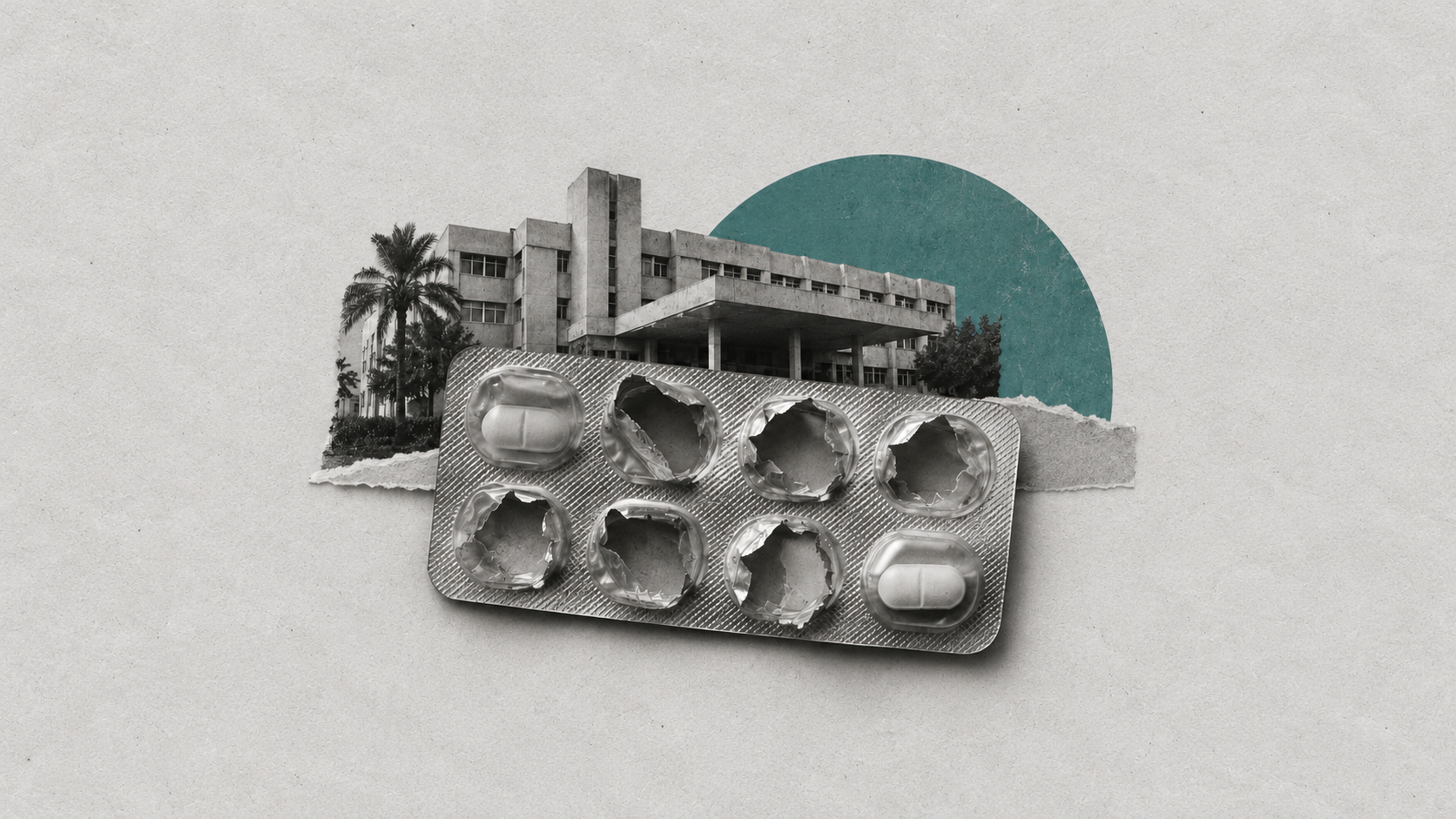
Relief organizations describe the situation in El Fasher as “critical and open to the worst.” The United Nations says the city is besieged from all directions, with all access roads cut off, while food and medical supplies are rapidly running out. The number of displaced people is estimated at around 26,000, while those who remain inside the city live in dire conditions marked by hunger, water shortages, and total blackouts of electricity and health services. Hospitals have almost ceased functioning, and medical staff are working in primitive conditions to save the wounded amid the absence of both resources and security.
In a related context, the UN High Commissioner for Refugees (UNHCR) reported that civilians fleeing the city face grave dangers while trying to reach safety, as they pass through checkpoints controlled by armed groups and are subjected to extortion, arbitrary detention, looting, and severe human rights abuses.
According to testimonies from displaced people arriving in the town of Tawila, located about 50 kilometers from El Fasher — as documented by the UNHCR — the worsening humanitarian crisis in North Darfur is taking an increasingly dangerous turn, with a growing surge of sexual violence against women and girls, and reports of horrific field executions inside the city.
The UNHCR expects further waves of displacement in the coming days, including thousands crossing into Chadian territory, where intensive preparations have begun to receive the fleeing civilians and provide them with emergency aid. The agency stressed that targeting civilians constitutes a blatant violation of international humanitarian law.
For his part, the UN High Commissioner for Human Rights warned that conditions in El Fasher have become extremely critical, noting the rising risk of ethnically motivated violations and crimes as violence intensifies and clashes expand across the region.
The International Federation of Red Cross and Red Crescent Societies (IFRC) also announced the killing of five of its volunteers in Sudan while carrying out humanitarian missions in Bara, North Kordofan State. The Federation said the five volunteers were killed on October 27 in the city of Bara while distributing food in communal kitchens known as “Takaya.” They were wearing official protective vests and carrying identity cards issued by the local branch of the Federation. Three other volunteers remain missing.
According to Al Arabiya TV, a government official said that the RSF “killed more than 700 civilians in the first hours of entering the city,” and “executed around 450 patients, wounded individuals, and medical staff inside the Saudi Hospital.” The official also noted that more than 300 cases of kidnapping had been recorded among members of wealthy families, who were then blackmailed to pay ransom for their release — or face their execution.
Meanwhile, Save the Children International documented the killing of 115 civilians, including 17 children, during the attacks on the city, confirming that children constitute nearly one-sixth of all civilian casualties in El Fasher.
For its part, the Sudanese Doctors’ Union said that RSF forces killed approximately 1,500 civilians in the city over three days. In a press statement on Wednesday, it added that “all those killed were executed while trying to flee the city to escape the clashes.” The Union clarified that “more than 14,000 civilians have been killed in El Fasher since the RSF began besieging the city in May 2024,” emphasizing that “the massacres the world is witnessing today are a continuation of what has been happening in El Fasher for more than a year and a half — where civilians have been killed through shelling, starvation, and executions under a total siege, systematic hunger, and deliberate targeting of civilian facilities, markets, and displacement camps.”
Surviving Struggles: The Housing Crisis Among Sudanese Refugees in Egypt

Field Executions Amid Media Blackout
The armed conflict in Sudan erupted in mid-April 2023 between the Sudanese Armed Forces, led by General Abdel Fattah al-Burhan, and the Rapid Support Forces (RSF), commanded by General Mohamed Hamdan Dagalo (known as Hemedti), after months of escalating tensions between the two sides following the failure of negotiations over integrating the RSF into the national army under the “Political Framework Agreement” signed in December 2022.
The agreement had brought together Sudan’s military component and a number of civilian forces, foremost among them the Forces of Freedom and Change coalition (the former ruling alliance), in an attempt to find a way out of the political crisis that followed the October 2021 coup. However, disputes over the structure of the military leadership and the timeline for integrating the RSF later ignited the most extensive war in Sudan’s modern history.
Direct clashes between the army and the RSF began in April 2023 in the capital, Khartoum, and its surroundings, before quickly spreading to the Darfur and Kordofan states and other regions.
By mid-2024, the RSF had consolidated its control over most of the Darfur region, while the Sudanese army maintained control of the eastern and northern cities and the Port Sudan area.
In recent days, as the RSF declared full control over the city of El Fasher, disturbing videos and photos circulated documenting what was happening inside the city. The footage showed horrific scenes of mass field executions carried out in front of cameras, sparking outrage and shock among those following the conflict’s developments on social media platforms.
In a statement, the joint force allied with the Sudanese army accused the RSF of committing what it described as “atrocious massacres” in El Fasher, confirming that more than 2,000 unarmed civilians — mostly women, children, and the elderly — were killed on October 26 and 27. The force added that satellite images supported its account of the widespread violations committed against civilians.
The UN High Commissioner for Refugees confirmed on Tuesday evening that it had received field reports documenting horrific executions and sexual violence targeting women and girls, perpetrated by armed groups during the recent attacks on El Fasher. The agency expressed deep concern over the surge in brutal violence since the city fell to the RSF, noting that residents are living in a state of extreme fear after more than 500 consecutive days of siege preceding the city’s total security collapse.
In the same context, the Humanitarian Research Lab at Yale University, in a report supported by satellite imagery and field videos, revealed large-scale mass killings following the RSF’s takeover of El Fasher. The report pointed to what it described as “a systematic pattern of deliberate ethnic cleansing” targeting non-Arab tribal groups, particularly the Fur, Zaghawa, and Berti communities — a continuation of the ethnic violence that plagued Darfur during earlier waves of conflict.
Likewise, the Coordination of Resistance Committees in El Fasher announced what it described as “the fall of the city” on Tuesday, October 28, declaring that “the last resisting soldier fired his final bullet at the militia inside El Fasher before falling as he was born — standing, guarding the land he loved until his last breath.”
How Has Hate Speech Against Sudanese People Affected Egyptian Nubians?
Behind the Final Moments
Saif al-Din Suleiman, editor-in-chief of the Sudazul News Network, says that since October 26, the city of El Fasher has been witnessing fierce battles — the most violent since the war began — as the Rapid Support Forces (RSF) launched a large-scale offensive using attack drones, rockets, and heavy weapons against civilians and residential neighborhoods, causing massive destruction and a high number of casualties.
Suleiman tells Zawia3 that the latest assault ended with the storming of the headquarters of the 16th Infantry Division of the Sudanese army, which was “almost empty of troops” after the army had withdrawn to other areas within the city. He notes that El Fasher had been under daily shelling for more than a year and a half, during which hundreds of projectiles rained down on civilians each day, forcing residents to dig trenches inside their homes to shelter from aerial and ground bombardment.
The Sudazul editor-in-chief adds that the RSF carried out mass executions of civilians who tried to flee, stressing that “many of these crimes were documented in videos recorded and shared by RSF members themselves.” He adds that the city is facing a full-scale humanitarian catastrophe amid communication blackouts and severe shortages of food and water.
In the same context, Sudanese journalist Nidal Ajeeb says that El Fasher has fallen completely under the control of the RSF following the withdrawal of the Sudanese army and allied joint forces. She points out that the situation inside the city is shrouded in total media blackout, as satellite communication services (Starlink) were cut off immediately after the RSF entered, making it impossible to know what is truly happening on the ground.
Speaking to Zawia3, Ajeeb says that horrific massacres were committed against civilians who remained in the city and could not escape, confirming that the videos circulating on digital platforms were filmed by RSF members themselves and document large-scale atrocities and violations.
She explains that El Fasher had been under a suffocating siege that lasted nearly 12 months before the RSF takeover, during which residents were subjected to systematic starvation. Many were forced to eat ambaz — the byproduct of oilseeds typically used as animal feed — to stay alive. She added that any attempt to smuggle food into the city was met with either killing or arrest by RSF fighters.
“Over the past few days,” she continues, “a small number of civilians managed to flee at night to the Tawila displacement camp, but many were killed while escaping or along the way. Those who reached the camp numbered about 2,000, according to field estimates, while the camp itself is suffering from severe shortages of food, medicine, and clean water amid overcrowding of nearly half a million displaced people living in extremely harsh humanitarian conditions.”
Ajeeb adds that Médecins Sans Frontières (Doctors Without Borders) announced its arrival at the Tawila camp two days ago to provide medical care to survivors from El Fasher, noting that many of them are suffering from acute psychological trauma caused by witnessing the horrors of war and massacres.
Accusations of Ethnic Cleansing and Calls for International Action
The Mandela Foundation for Rights and Democracy condemned what it described as the “systematic atrocities and violations” committed by the Rapid Support Forces (RSF) in the city of El Fasher, North Darfur. The Foundation called for urgent international action to halt the abuses and end the policy of impunity.
In a statement, the organization said that verified reports and documented testimonies from inside the city indicate that field executions have been carried out against both civilians and soldiers after their surrender, in addition to the detention of hundreds of people and the targeting of residents based on ethnic and tribal identity — a blatant violation of Common Article 3 of the Geneva Conventions, which prohibits violence against persons not directly participating in hostilities.
Sudanese journalist Nidal Ajeeb says: “We are facing a catastrophic humanitarian situation, and a peace agreement alone is not enough. What is needed now is an immediate ceasefire, the opening of safe humanitarian corridors, and a halt to all hostilities so that aid can reach civilians suffering in Darfur, Kordofan, and other regions. Sudan is experiencing a deeply complex and multilayered crisis, and there is currently no safe area anywhere in the country.”
In the same context, Sudanese human rights activist Noon Keshkoush says that the blackout of communication and internet networks in El Fasher has worsened the humanitarian crisis, making it extremely difficult to document violations or deliver aid to trapped civilians.
Keshkoush tells Zawia3 that since Monday, October 27, human rights organizations have issued urgent appeals to the international community to compel the RSF and its allied forces to respect international humanitarian law, particularly Common Article 3 of the Geneva Conventions, which obliges warring parties to protect civilians and ensure their safety.
Alongside the demand for safe corridors, the activist calls for the protection of humanitarian workers, stressing that such protection must also include volunteers working in “Takaya” (community kitchens) and emergency rooms who provide relief services to local communities.
Keshkoush concludes by emphasizing the urgent need for the RSF to allow the immediate and unrestricted entry of humanitarian aid, warning that the ongoing siege and communication blackout threaten the lives of thousands in El Fasher and its surrounding areas.
Common Article 3 of the 1949 Geneva Conventions — which Sudan has ratified — stipulates that all persons not directly participating in hostilities must be treated humanely, whether they are civilians or members of armed forces who have laid down their arms, or those rendered incapable of fighting due to sickness, wounds, detention, or any other cause.
The Convention strictly prohibits violence to life and person, including murder, torture, and cruel or degrading treatment. It also bans the taking of hostages or the passing and execution of sentences without a fair trial before a legally constituted court that guarantees essential judicial rights. The parties to a conflict are obliged to collect and care for the wounded and sick, and neutral humanitarian bodies — such as the International Committee of the Red Cross — are allowed to offer their services to assist victims.
This article represents the minimum set of rules that cannot be violated in any internal armed conflict, reaffirming that humanity is not suspended in times of war, and that respect for human dignity is an obligation upon all parties regardless of the nature of the conflict or the identities of those fighting it.
In this regard, the Sudanese Communist Party called on the international community to take immediate action to end the war, open humanitarian corridors, and conduct independent investigations into war crimes. It also demanded the imposition of political, economic, and diplomatic sanctions on those responsible for the violations, along with a ban on arms exports to the warring parties. The party further appealed to democratic forces and free peoples around the world to stand in solidarity with the Sudanese people and to turn formal statements into concrete steps to protect civilians and deliver justice for the victims.
What Does the Control of El Fasher Mean?
The conflict in Darfur is not new; it has deep historical roots dating back to 2003, when clashes erupted between the Sudanese government and rebel movements — most notably the Sudan Liberation Army (SLA) and the Justice and Equality Movement (JEM) — which attacked government positions in protest against what they described as the “political and economic marginalization” of Sudan’s western regions and the non-Arab populations of Darfur.
In response, the government armed and supported the Janjaweed militias to confront the rebellion. However, these militias committed widespread violations against civilians, leading to one of the worst humanitarian crises in Sudan’s modern history. Despite subsequent international efforts, including the establishment of the joint United Nations–African Union Mission in Darfur (UNAMID) in the mid-2010s, the conflict deepened, and peace initiatives failed to achieve any genuine breakthrough.
When the new civil war broke out between the Sudanese Armed Forces and the Rapid Support Forces (RSF) in April 2023, Darfur once again returned to the forefront, becoming one of the fiercest battlefields in the country, where patterns of ethnic violence and abuses reminiscent of those two decades earlier resurfaced.
The city holds immense strategic importance, as it forms a vital operational depth linking the states of Kordofan, Northern, and River Nile, in addition to its geographic position connecting Sudan to a wide border belt stretching into Chad, Libya, the Central African Republic, and South Sudan. Analysts believe that the RSF’s tightening grip on El Fasher increases the risk of Sudan’s geographic fragmentation and the resurgence of armed tribal conflicts that have long tormented the region.
The fall of El Fasher effectively means that the RSF now exerts near-total control over Sudan’s western corridor from Darfur to Kordofan — granting it a significant field advantage and greater ability to control the country’s western defense line and reposition its forces toward the north and center, according to Sudanese journalist Nidal Ajeeb.
Regarding the balance of military power, Ajeeb explains that El Fasher was the Sudanese army’s last stronghold in the Darfur region. With its fall, the entire region has come under RSF control, except for a few small, militarily insignificant pockets. This means that all of Darfur is now under the RSF’s authority, signaling the collapse of the army’s final bastion in western Sudan.
Discussing external actors in the conflict, the journalist confirms that the RSF receives direct support from the United Arab Emirates — a fact documented in United Nations reports.
Speaking on the city’s strategic importance, Suleiman explains that its capture “means full control over the entire Darfur region and the opening of supply routes toward Chad and Libya, allowing the RSF to strengthen its armament and sustain its forces.” He warns that “the complete fall of the city could pave the way for the militia’s advance toward Northern State and even Khartoum.”
Economically, Suleiman notes that Darfur is among Sudan’s richest regions in natural resources, containing a large share of the country’s livestock and mineral wealth. This makes control over it strategically and economically critical, as “the wars to come will be economic wars — and wars over water.”
Over the past two years, the United Arab Emirates has repeatedly faced accusations of funding and arming the RSF — a move widely believed to have fueled the armed conflict in Sudan and prolonged the war that has been raging since April 2023.
Media and human rights reports — including a May 2024 report by the UN Panel of Experts — pointed to “credible suspicions” of Abu Dhabi’s involvement in supplying the RSF with weapons and equipment through routes passing via Chad, Libya, and the Central African Republic. The reports also noted that the RSF has deployed drones and advanced missiles not previously in its arsenal, reinforcing the likelihood of foreign military support.
The Janjaweed militias — which later evolved into today’s RSF — first emerged formally during the Darfur War in 2003. They were originally Arab militias from nomadic tribes in the Darfur region who made their living herding camels and cattle.
During the rule of former President Omar al-Bashir, the government armed and supported the Janjaweed as part of its crackdown on the Darfur rebel movements that had emerged between 2002 and 2003, demanding constitutional reform and a fair redistribution of power and wealth among Sudan’s regions.
According to a report by Human Rights Watch, official documents reveal that Bashir’s leadership played a direct role in recruiting, arming, and backing these militias and their operations.
As the need for irregular militias declined, the Janjaweed were reorganized and rebranded as the Rapid Support Forces (RSF), formally incorporated as a semi-regular force within Sudan’s state security apparatus — under the command of Mohamed Hamdan Dagalo (Hemedti).