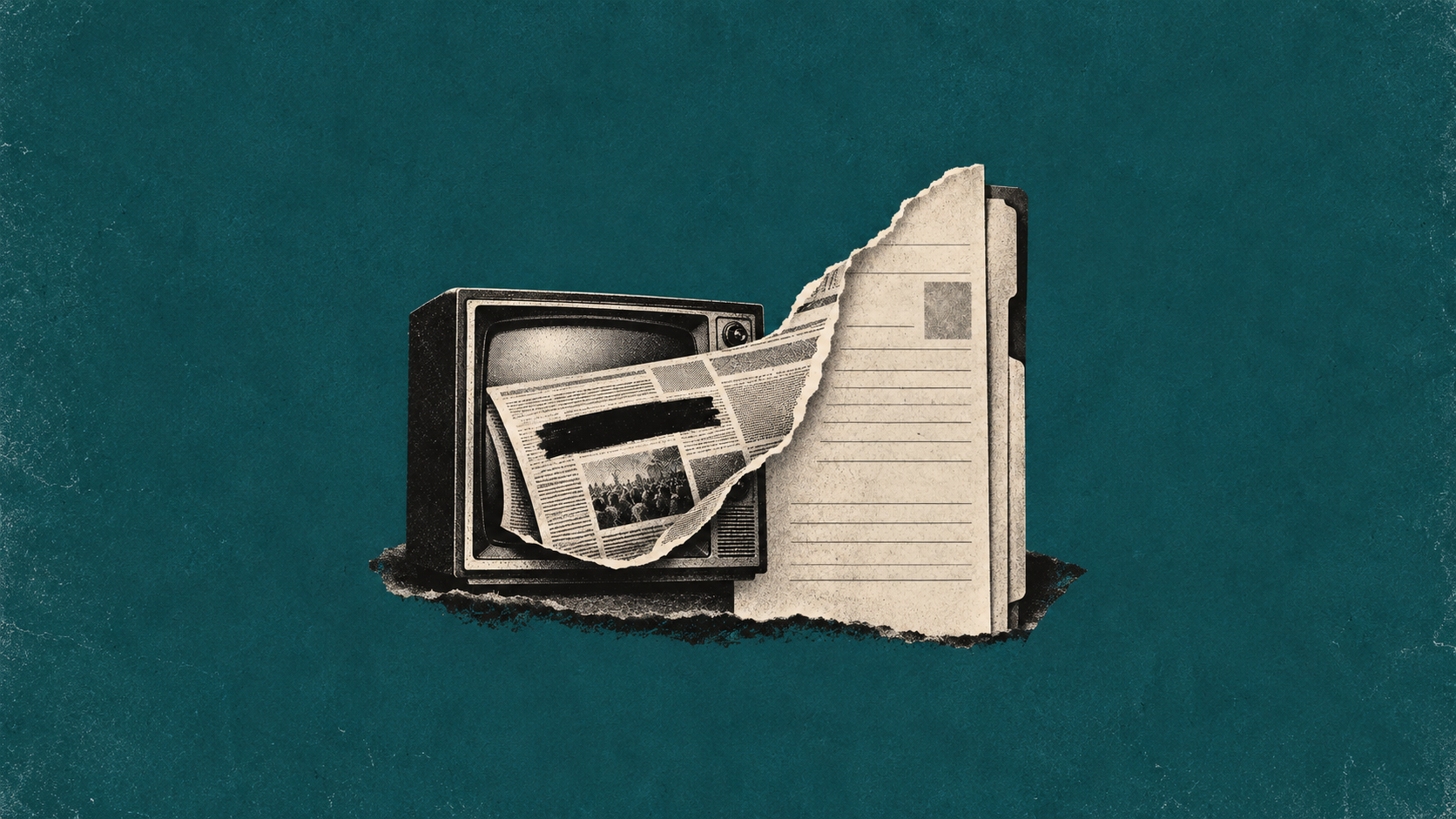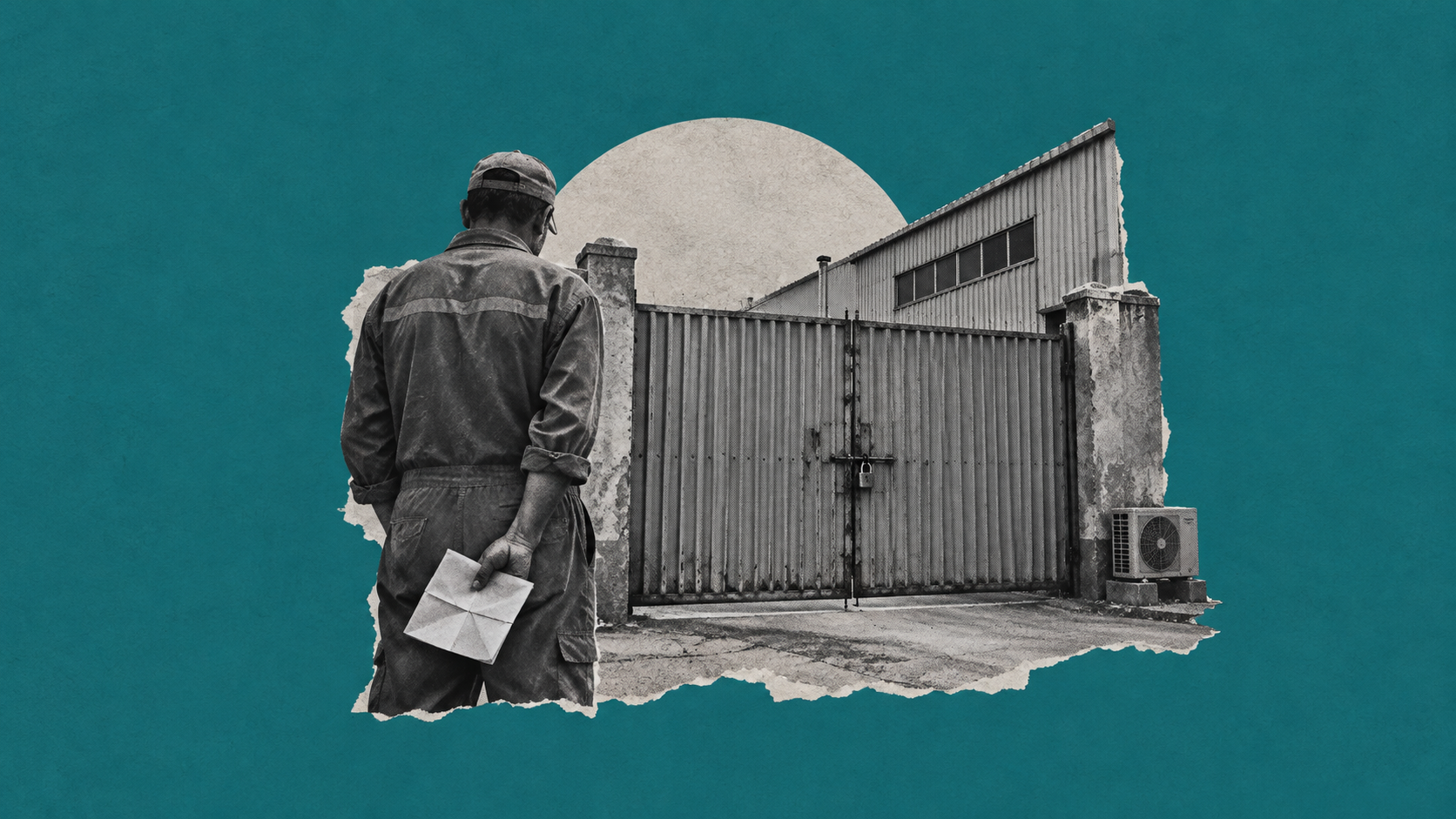


In his 2023 memoir, A Witness from Within: A Life on the Other Bank, an Egyptian police officer recalls his feelings when Vice-President Omar Suleiman announced Hosni Mubarak’s departure on 11 February 2011. He describes a sense that everything had ended, accompanied by grief, loss, tension, anger and fear of what lay ahead. A new chapter was beginning, he felt, and those watching knew nothing of its contents.
At the police station, his colleagues watched the announcement on television. Some cried; others held back tears. Some could neither identify their emotions nor find a way to express them. Others simply could not believe what they were seeing.
Those reactions reveal the relationship between a president brought down by a popular uprising against police practices and the police, Interior Ministry and security agencies on which he had depended to govern. Yet the police moved beyond that moment and sought to restore their role in maintaining public order amid a security breakdown. Detainees and convicted offenders escaped from police stations and prisons that were stormed. The account presented in this essay also attributes the opening of some facilities to instructions from Interior Ministry officials and describes weapons and ammunition falling into offenders’ hands.
Citizens who feared for their lives and property, together with the army, played a decisive part in helping the police resume their security duties.
In a brief statement broadcast on the evening of Friday, 11 February 2011, Suleiman announced that Mubarak had relinquished the presidency and entrusted the Supreme Council of the Armed Forces (SCAF) with administering the country. Suleiman had been appointed vice-president after the Friday of Anger protests.
The wording contained an evident contradiction: logically, assigning authority to the military council should have preceded the relinquishment of office, because a president who had already stepped down would no longer possess the authority to make that assignment.
In its third communiqué, issued that same day, SCAF praised Mubarak for putting the country’s highest interests first. It also honoured those killed during the protests in pursuit of their country’s freedom and security.
The council sought to balance its position between the departing president, who had chaired it by virtue of his office, and the demonstrators occupying Tahrir Square.
What lay behind the decision?
The precise circumstances of Mubarak’s departure remain unclear. Did he decide voluntarily, yield to pressure, or have a decision announced on his behalf after he had effectively been removed? Information remains limited and accounts conflict.
One interpretation advanced by some foreign observers is that the military council carried out a soft coup to prevent power passing to Mubarak’s son Gamal, then secretary of the ruling National Democratic Party’s Policies Committee. The committee, which had acquired substantial influence over political decisions, was widely viewed as the vehicle for a hereditary succession project. Yet no official statement from Mubarak, his aides or senior state and party figures confirmed that such a project existed. Public appeals, including those by the late journalist Mohamed Hassanein Heikal for Mubarak to disavow a plan Heikal considered incompatible with Egypt’s republican traditions, met with silence.
The decision to step down cannot be separated from Mubarak’s manoeuvres to remain in power, mounting public anger and growing crowds in Tahrir Square and other cities, including Alexandria and Suez. Nor can it be separated from domestic and foreign assessments of the danger, or from pressure on the military council to resolve the crisis.
Mubarak’s three speeches between the Friday of Anger and the eve of his departure show how firmly he clung to office. His tone changed from that of the pre-uprising years, but his posture continued to alternate between reassurance and displays of confidence.
Before the uprising, that confidence had often tipped into provocation. His mockery of an opposition initiative to establish a parallel parliament after the widely criticised 2010 elections was one example. His dismissive instruction to let the opposition amuse itself, delivered at the opening of parliament, captured an attitude the revolution would soon upend.
The three speeches moved between tactical manoeuvring, implicit threats of disorder and appeals for sympathy. In the first, broadcast in the early hours of 29 January, Mubarak rejected departure or substantial concessions and announced a change of government. It fell far short of protesters’ demands.
He blamed unnamed political forces for exploiting the demonstrations and their slogans, while calling for dialogue and an end to violence and disorder. He also claimed that the protests were possible because of the freedoms available under his rule, even as the authorities cut internet and communications services, isolated demonstrators and restricted Arab and international media coverage. His appointment of Suleiman as vice-president on 29 January implicitly weakened the prospect of hereditary succession, but did little to reassure the street.
In his second speech, on 1 February, Mubarak said he would not seek another term and instructed Suleiman to open talks on reform and constitutional amendments. The emotional appeal was accompanied by a warning that Egyptians faced a choice between chaos and stability.
The following day, groups attacking the Tahrir sit-in, including men on horses and camels, gave that warning a brutal resonance. The assault became known as the Battle of the Camel and sought to intimidate demonstrators and break their occupation of the square.
Mubarak’s third and final speech, delivered on the evening of 10 February, again appealed to the public, especially young people. He promised constitutional and legislative changes, discussed ending the state of emergency and presented himself as committed to dialogue and a peaceful transfer of power. At the same time, he rejected what he characterised as foreign dictation.
The speech seemed detached from a protest movement that had moved beyond those concessions and continued to demand the regime’s departure. Mubarak’s own resignation was announced the next day, although his removal did not mean the disappearance of the regime’s institutions.
Across all three speeches, Mubarak held on to the hope of remaining in office while the protesters grew more determined to remove him.
Accounts circulated in correspondence later disclosed from Hillary Clinton’s email records portrayed a revolution advancing quickly and a president who had already lost. They warned that violently suppressing the uprising would have serious consequences for US interests. These were assessments and reports conveyed to Clinton, not independently established records of every event they described.
One account portrayed conditions in Alexandria and Suez as more intense than in Cairo, arguing that the army wanted to preserve itself and avoid a bloody confrontation. It concluded that Mubarak’s departure was only a matter of time.
A message dated 2 February described the army as remaining neutral in street confrontations. It attributed violence on the regime’s behalf to groups involving former police and security officers, which it considered politically insignificant. It also warned of an approaching food crisis that would increase pressure on the military to break the political deadlock.
Correspondence dated 10 February offered an account of disagreements over Mubarak’s final speech and the conditions of his departure. Another message, dated 12 February, said Central Military Region commander Hassan al-Ruweini had warned other council members that stopping protesters from reaching the presidential palace and other government institutions would require violence on a scale that would destroy the relationship between the army and the public.
According to that account, Field Marshal Mohamed Hussein Tantawi and Chief of Staff Sami Anan then met Mubarak. A temporary compromise envisaged his moving to Sharm el-Sheikh while retaining the title of president, with Suleiman administering the country under military oversight.
The same account said Mubarak’s final speech deepened protesters’ mistrust, prompting plans to march on the palace. Reports of sympathy among junior officers and warnings from General Intelligence increased fears of bloodshed. Anan was said to have again urged Mubarak to leave, with assurances of a dignified departure and sufficient personal wealth, and Mubarak ultimately agreed.
Regardless of how much of that reported detail was accurate, events showed that political solutions were moving beyond Mubarak. SCAF’s first communiqué, issued on 10 February before his final speech, announced that it was remaining in continuous session without the president. That was a sign that he no longer fully controlled events and that the army was prepared to contemplate his departure.
The US administration, after Mubarak resisted its proposals to defuse the crisis, also moved towards accepting a transition that removed him and opened the way to an elected government, despite the risks involved in losing a longstanding strategic ally.
The regime between the state and the revolution
Mubarak’s departure illustrates the military’s role in preserving both the state and the political system. Modern armies’ stabilising role has often expanded into a claim to protect the constitution or existing order against threats to state stability and social cohesion.
Some military analysts have consequently described a form of revolution in which populations and armies combine to bring about change, especially in recently independent states where armed forces play a major part in state-building or in accelerating political transitions.
SCAF clearly helped shape Mubarak’s departure and secured the central role in the period that followed. Doing so widened its room for manoeuvre amid an uprising that was gaining momentum every day.
Military leaders understood that defending Mubarak’s continued rule would put them into direct conflict with the crowds. Anger initially directed at the police and Interior Ministry had expanded to encompass the ruling party and the president himself. To retain a place in whatever followed, the army needed to distance itself from Mubarak and his policies and take initiatives consistent with the public mood.
That calculation coexisted with assessments in parts of the security establishment that the uprising was a foreign conspiracy involving the Muslim Brotherhood, opposition groups and young activists. That explanation later gained ground as the unity displayed in Tahrir fractured and the revolution was contained.
The protesters’ resistance to the Battle of the Camel marked a turning point. It demonstrated their determination to remove Mubarak and confronted the regime’s remaining pillars with the costs of meeting the uprising through armed force.
The assault caused deaths and extensive injuries. In this reading of events, the military faced a responsibility to protect the demonstrators and prevent further clashes. Tahrir expressed a demand shared across social groups and classes, and its occupiers embodied a revolutionary force that could no longer simply be ignored.
Mubarak’s departure thus became necessary for the military council to regain control of a volatile situation, while preserving the state and the political order.
Despite Gamal Mubarak’s political ambitions, the available evidence does not conclusively establish whether there was a settled hereditary succession plan or a broader restructuring overseen by the ruling party’s Policies Committee that would have reduced the army’s political influence.
By taking power after Mubarak’s departure, the army restored its central place in determining Egypt’s future. It did so without fundamentally altering an institutional balance heavily weighted towards the presidency and executive. The executive dominated the legislature through a dependable parliamentary majority, while its relationship with the judiciary fluctuated between accommodation and tension.
The decision also illuminates the nature of civil–military relations in Egypt. The interpretation advanced here is that military leaders have sought to operate through constitutional forms while retaining a decisive role as the state’s final line of defence against internal and external threats. This perspective distinguishes their later interventions from the Free Officers’ seizure of power on 23 July 1952, which overthrew the monarchy and paved the way for the republic’s proclamation in June 1953. The nature and legitimacy of those interventions remain politically contested.
The army’s importance in sustaining rulers was visible in May 1971, when its leaders backed Anwar Sadat against rivals with positions in the Arab Socialist Union, the security apparatus and government. It was evident again after Sadat’s assassination in 1981 and the transfer of power to Mubarak amid an armed challenge associated with the Jihad organisation; during the Central Security conscripts’ mutiny in February 1986; and on 3 July 2013, when the military removed Mohamed Morsi and ended Muslim Brotherhood rule.
Like other modern armed forces, Egypt’s military closely associated itself with the idea of the state. Different political groups came to see it as the institution capable of representing and preserving the state above competing interests.
Its organisational strength, discipline and ability to act during conflict, crises and disasters reinforced that position, particularly where other modern institutions were weak. The military repeatedly presented its interventions as serving the general interest rather than that of a particular social or political group.
It also enjoyed a distinctive social base among sections of the urban civilian middle class, which viewed it as a protector of lifestyles they feared Islamist rule would threaten. Those fears became particularly visible after Mubarak’s departure.
Although SCAF relied on figures associated with the Brotherhood to advance constitutional amendments, rather than the demand for an entirely new constitution at that stage, it also benefited from urban middle-class fears of Islamist dominance. Those fears encouraged some to place their hopes in the old order and the military.
Divisions among political forces, their inability to manage disagreements within democratically elected institutions, and attempts by some to draw the army to their side against others gave it considerable room for manoeuvre during and after the transition. It used those competing demands to become the institution around which forces unable to agree on much else could still converge.