The Journalists Syndicate council, headed by syndicate head Khaled El-Balshy, approved the recommendation of the board of trustees of the Egyptian Press Awards to nominate Palestinian journalist Wael Al-Dahdouh for the “Press Freedom” award for 2024, as a symbol of the steadfastness of Palestinian journalists in the face of the Zionist aggression and the war of genocide Gaza has been subjected to since 7 October.
Al-Dahdouh’s nomination comes as a tribute to the souls of the martyrs of the Palestinian press who gave their lives to convey the truth and expose the crimes of genocide the Palestinian people have been subjected to.
Israeli occupation forces yesterday morning targeted a car carrying journalist Hamza, son of Al Jazeera correspondent Wael Al-Dahdouh, killing him in a strike in Rafah in the south of the Gaza Strip, along with his colleague, journalist Mustafa Thuraya.
It was not the first time Wael Al-Dahdouh had lost one of his children; he lost his wife, son, daughter and grandson when his home was targeted on 25 October, and Hamza has now joined the list of the family’s martyrs.
Israeli occupation forces are continuing today, Monday, their raids and shelling on several areas of the Gaza Strip, killing and injuring dozens of Palestinians, on the 94th day of the aggression on the besieged Strip.
The number of Palestinian press martyrs has reached 109 since the start of the war on Gaza on 7 October until today.

Al-Azhar Demands an End to Terror in Gaza
Al-Azhar Al-Sharif, in a statement yesterday, demanded that the international community stop the war of genocide and the terrorist practices of the occupation forces against the Palestinian people in Gaza, coinciding with the commemoration of Palestinian Martyr’s Day on 7 January.
The statement said that “Al-Azhar wonders how all these crimes of genocide can happen without anyone stopping them, as if everything happening in Gaza is no longer enough to rouse the human conscience and demand an immediate halt to the terrorist aggression, which has proven to be stripped of all religious values and human and moral norms”, renewing its call to all the honourable people of the world to unite in confronting the occupation’s crimes.
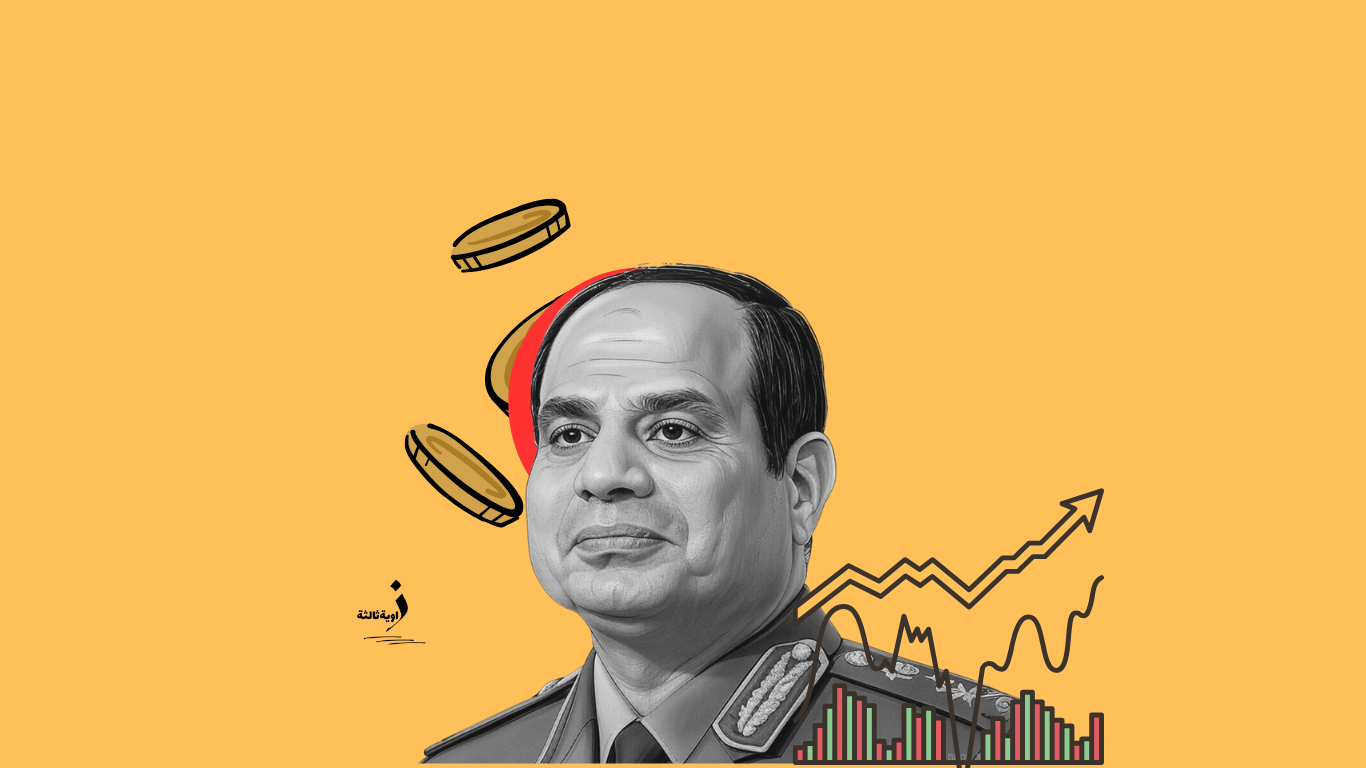
To Achieve Economic Growth of up to 8% by 2030, Egypt Prepares an Economic Directions Document
The Egyptian government presented an economic directions document setting out its plans to improve economic performance and present proposed future projects. The Cabinet’s Information and Decision Support Center announced on Sunday that it had prepared a document including the proposed strategic directions for the Egyptian economy in the coming years, and the document consists of eight strategic directions that won the support of experts. The document includes a description of the most important measures and plans to be taken in Egypt’s economic policies until 2030, and aims to set the priorities for action in the economy in general, as well as in the economic and social sectors that contribute to the state’s renaissance. Osama El-Gohary, assistant to the prime minister and head of the Information and Decision Support Center, indicated that the document includes policies that boost the economic renaissance by strengthening local production capacities and increasing the resilience of the Egyptian economy in facing challenges. These policies focus on improving the lives of millions of Egyptians, improving their living conditions and boosting levels of economic and social development throughout the country.
The document aims to achieve balanced development nationwide and strengthen Egypt’s economic role globally. It also focuses on supporting human capital and boosting the participation of women, young people and Egyptians living abroad in building the foundations of the economic renaissance during the coming presidential term.
The Egyptian prime minister’s assistant said the document aims to achieve strong, inclusive, sustainable and balanced economic growth at a rate of between 6% and 8%. It focuses more on the quality of economic growth by boosting the role of exports and investment in generating output, and on moving towards employment-supporting economic growth with the aim of providing between 7 and 8 million job opportunities during the specified period.
El-Gohary pointed out that the document includes predictable economic policies that support macroeconomic stability, with a focus on achieving price stability and fiscal discipline and ensuring the sustainability of public debt. The document also includes a programme to boost foreign currency revenues to reach $300 billion by 2030, three times current levels.
According to El-Gohary, the document is a guide to implementing strategies and plans supporting the leading economic sectors in the renaissance of the Egyptian state, and strengthens the foundations of a sustainable, competitive, knowledge-based economy. The direction focuses on supporting the role of research and development in building the state’s renaissance, accelerating the transition to the technologies of the industrial revolutions and moving towards the green economy.
El-Gohary stressed that the document seeks to preserve social gains, especially in the education and health sectors, and to improve citizens’ livelihoods to ensure a life that meets Egyptians’ aspirations, in addition to Egypt’s pioneering role in the global economy, by boosting the role of the Suez Canal and Egypt’s participation in transit trade, strengthening international partnerships and supporting the participation of young people and Egyptians abroad in building the renaissance of the Egyptian state.
Genetic and Rare Diseases Added to the Medical Emergencies Fund Law
Parliament gave final approval to adding the treatment of genetic and rare diseases to the diseases covered by the law of the Fund for Confronting Medical Emergencies and Genetic and Rare Diseases. This means the state will begin contributing to covering the costs of treating patients with genetic and rare diseases from the fund’s resources, without placing any financial burden on citizens.
The law provides for forming a scientific committee tasked with proposing protocols for treating these diseases and assessing and examining patients’ cases and approving their treatment, along with training medical cadres to fill the shortage in medical specialties for these diseases, providing technical support to the centres concerned with providing integrated care to patients, and helping these centres spread throughout the republic.
Legal Amendments Allow Foreigners to Own Desert Land
The House of Representatives, in its session last Wednesday, approved a government bill amending some articles of Law No. 143 of 1981, adopting the repeal of the two articles (11 and 12) of the Desert Land Law, which stipulated that Egyptian ownership be no less than 51% of a company’s capital and that ownership be limited to Egyptians only, so that the new law allows foreigners to own desert land with the aim of attracting investment.
The government justifies its step by saying it will help attract direct investment to Egypt, as investors will be able to obtain the land needed to practise their economic activity.
In the same context, a number of laws have regulated over past decades the issue of non-Egyptians owning real estate and land inside Egypt, most notably Law No. 230 of 1996 regulating foreigners’ ownership of real estate and vacant land, Law No. 143 of 1981 on the ownership of desert land, and Law No. 15 of 1963 banning foreigners from owning agricultural land. Under those laws, the possession by foreigners of private or corporate property in Egypt was regulated, provided that the Egyptian share of ownership in companies is 51% of the shares; they also limited ownership to a maximum of two properties for residence by the foreigner and his family, provided the property is not among those listed in archaeological sites. Those laws also banned foreigners from owning desert land and allowed only usufruct rights for the purpose of reclamation and cultivation (except for Arab nationalities, which the law allowed to own it like Egyptians).
After the January 2011 revolution, Law No. 14 of 2012 was introduced, requiring foreign investors to establish an Egyptian joint-stock company in which their share does not exceed 45% of the shares, with ownership of the remaining shares going to Egyptians, in projects related to the development of Sinai. But Presidential Decree No. 128 of 2022 exempted the areas of (Sharm El-Sheikh, Dahab and the Gulf of Aqaba) from the provisions of the law and allowed foreigners to own real estate and land under a 75-year usufruct right without being bound by the condition on the Egyptian share.
Electrical Appliance Prices Rise
Electrical appliance prices rose by 15% on 1 January, according to televised statements by the head of the Electrical Appliances Division at the Chamber of Commerce, George Zakaria, who said the increase was imposed by the factory.
Zakaria pointed out that this is not the first increase, as prices rose by the same rate (15%) in each of November and December, and saw a new increase this January. It is worth noting that electrical appliance prices have risen by as much as 130% from the beginning of coronavirus until the end of last year, and according to officials the main reason for the increase is the adjustment of production input prices and the difficulty of import operations.
Record Savings Certificates With a 27% Return
Banque Misr and the National Bank of Egypt announced the issuance of new one-year savings certificates with a return of up to 27% paid once at the end of the certificate’s term, or an annual return of 23.5% paid monthly.
The National Bank of Egypt and Banque Misr had issued certificates with an annual return of up to 25% in January 2023, certificates that began maturing at the end of last week, over more than a month. They also issued, with Banque du Caire, a 3-year certificate with a fixed return of 19% monthly, or 16.25% quarterly and 17.25% annually, in addition to 3-year declining certificates with a declining return of 22% in the first year, 18% in the second year and 16% in the third year.
According to the Central Bank, the savings certificates offered are part of a wider plan to curb inflation and reduce cash liquidity in the market.
Under the Dome… Briefing Requests to Control Prices
A number of members of the House of Representatives submitted briefing requests on the escalating increases in the prices of a number of services, most notably electricity, and on how to oblige the private sector to apply the minimum wage.
MP Ihab Mansour, head of the parliamentary bloc of the Egyptian Social Democratic Party and deputy chair of the House of Representatives’ Manpower Committee, addressed his request to the prime minister, the minister of electricity and renewable energy, the minister of transport, the minister of petroleum and the minister of supply and internal trade, regarding the latest increases in electricity tier prices, metro tickets and petrol, and what this requires in terms of market oversight to confront runaway prices, and the mechanisms for enforcing the obligation to print prices on products, to help control markets and protect consumers.
According to Mansour, the increase in electricity prices for some tiers reached 20.8%, the increase in metro ticket prices reached 20%, and the price of petrol rose by 16.2%, which burdens citizens in the absence of real oversight of markets and prevention of monopoly. He added that these increases will contribute directly to more inflation and cause direct harm to the majority of middle-class citizens and the entire poor class, that is, about 90% of citizens.
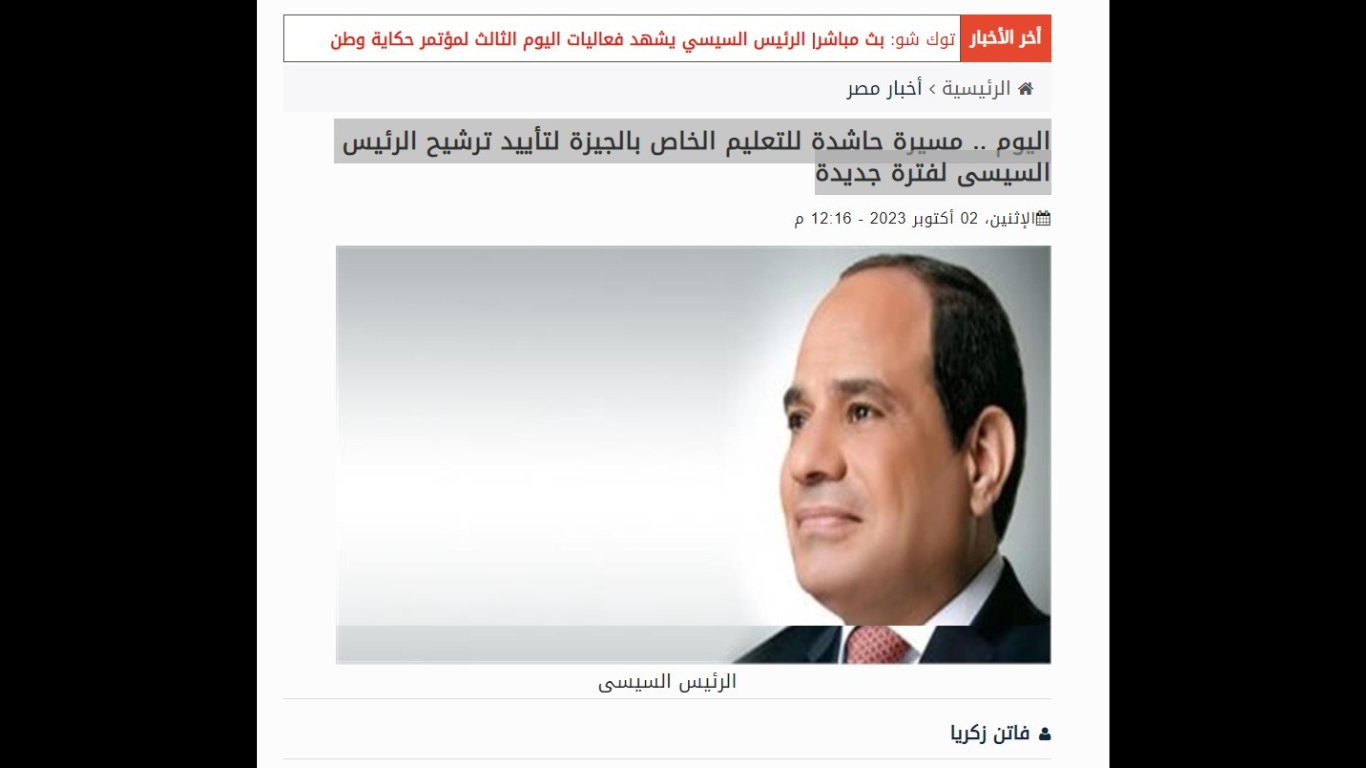
Sisi Receives a US Delegation
President Abdel Fattah el-Sisi received on Wednesday a delegation from the Democratic and Republican parties, from various committees of the US Congress, headed by Senator “Joni Ernst”.
The meeting saw an open dialogue on developments in the regional scene and the Gaza Strip, and Sisi stressed the need to work seriously towards a just and comprehensive settlement of the Palestinian cause through the establishment of an independent Palestinian state, stressing that the current priority is reaching a ceasefire, protecting civilians and the access of relief aid in sufficient quantities to confront the humanitarian tragedy facing the people of the Strip, in line with and in implementation of the relevant UN resolutions.
He also stressed Egypt’s total rejection of attempts to liquidate the Palestinian cause by displacing Palestinians from their land.
One Million Displaced Gazans on the Border With Egypt
The United Nations said in a statement last Wednesday that the number of people displaced from areas of Gaza to the city of Rafah in the south of the Strip near the Egyptian border has reached nearly one million Palestinians since the start of the continuing war waged by the Israeli occupation forces on Gaza from 7 October until now, with more than one million displaced people crammed into extremely overcrowded spaces following the intensification of hostilities in Khan Younis and Deir al-Balah and the evacuation orders issued by the occupation army.
According to the latest report of the United Nations Relief and Works Agency for Palestine Refugees (UNRWA), since the start of the war up to 1.9 million people (or more than 85 percent of the population) have been displaced across the Gaza Strip, some of them several times. Families are forced to move repeatedly in search of safety.
The Occupation’s Lawyer Implicated in the “Epstein” Network
Documents leaked last Wednesday relating to the network of American billionaire and businessman Jeffrey Epstein showed the involvement of lawyer and former Harvard University law professor Alan Dershowitz, whom the Israeli occupation authority has tasked with representing it before the International Court of Justice in the genocide case brought by South Africa, this week.
A judge in New York had begun disclosing the names of people connected to Epstein, who killed himself in his prison cell in 2019 before his trial on sex crimes. He had close ties with lawyer Dershowitz, known for his pro-occupation positions.
UN: 7.3 Million Sudanese Displaced Since the War Broke Out
The UN “Office for the Coordination of Humanitarian Affairs” said in a report that since fighting broke out between the Sudanese Armed Forces and the Rapid Support Forces last April, more than 7.3 million people have fled their homes, inside and outside Sudan.
Children account for about half of the displaced. According to the report, Sudan has the largest number of displaced people and the largest child displacement crisis in the world, noting that the total number of internally displaced people rose by an estimated 500,000 people in one month.