The war raging in Syria drove him and his family to flee his hometown in rural Damascus for Egypt in 2013, leaving behind his memories, his history and his property, which was destroyed. Bassem Saleh (43) and his family settled in Damietta Governorate, north of the Egyptian capital Cairo, where he began his journey working in the local furniture manufacturing sector.
The Syrian man in his forties suffers from chronic illnesses such as a slipped disc and asthma, which leads him to visit Egyptian public hospitals at times, though he relies on the private sector for his treatment, as he says. This comes as he, like other Egyptians and refugees, suffers from inflation, whose effects have reached the health sector, raising the prices of medicines and health services.
In a related context, the Egyptian Ministry of Health recently issued a decision requiring Egyptian citizens covered by health insurance to bear 50% of the insurance value for their grade if treatment costs reach 70% of the insurance paid, when they visit public hospitals and health units for medical services. The regulation issued by the Ministers of Health and Local Development, No. 75 of 2024, and published in the Egyptian Gazette, raised the price of morning clinic tickets from EGP 1 to EGP 10 in public hospitals and EGP 5 in health units, with each allowed to be multiplied up to five times after the approval of the competent health directorate.
The government decided to reduce the share of free treatment in public hospitals from 60% under the old regulation to 25% under the regulation that began to be applied on 4 March.
The new regulation introduced a provision specifying who is entitled to free treatment in these hospitals, limiting them to six categories: recipients of the Takaful and Karama pension, persons with disabilities holding integrated services cards, and the families of martyrs and injured members of the army and police. These categories, according to the regulation, receive treatment without any procedures. As for the remaining categories, namely those without a health insurance or healthcare scheme, emergency and accident cases requiring rapid intervention to save the patient’s life, or those whose condition is feared to worsen, the regulation requires them to obtain a recommendation from the hospital’s social research committee and the subsequent approval of its director. But following this decision, foreigners on Egyptian territory face a 100% higher tariff unless there is a ministerial decision to treat them as Egyptians. This comes at a time when refugees rely on UNHCR to help them cover the cost of some medicines, especially those with chronic diseases, as the UN Refugee Agency (UNHCR), in cooperation with Caritas Egypt, an association registered with the Ministry of Social Solidarity, provides primary health services and monthly medicines to refugees and asylum seekers in Egypt.
Bassem Saleh tells Zawia3 that the main problem lies with patients visiting public hospitals to receive a medical service or undergo surgery, whose suffering worsens after the steady increase in costs.
He cannot forget his brother having to sell his car after a traffic accident two years ago to be able to cover the costs of his treatment and the bags of platelets transfused to him after the surgeries he underwent, nor a friend being unable to admit his infant to an incubator at a hospital last August. This comes as UNHCR does not bear the costs of surgeries and expensive treatment for some rare diseases, nor does it help admit infants to incubators, covering only 70% of medicines for some chronic diseases such as diabetes and hypertension, in addition to stopping food and education grants this year for a large sector of refugees in Egypt, despite their holding the yellow card (an identification card for a refugee or asylum seeker registered with UNHCR in Egypt, as Egyptian law does not give the authorities the right to issue identity cards to refugees), as Saleh describes it.
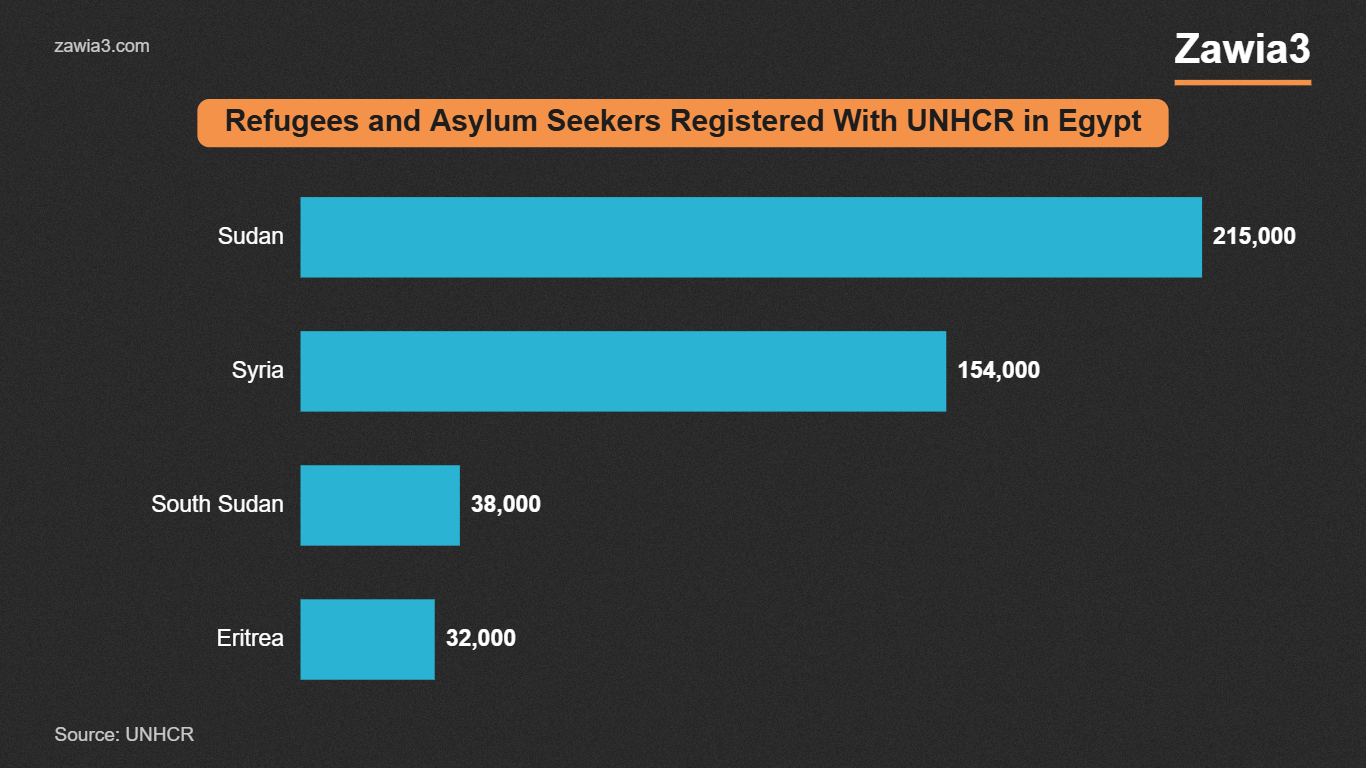
According to UNHCR, Egypt hosts 480,000 registered refugees and asylum seekers from 62 countries (an increase of about 64% over 2022), with Sudanese making up the majority (the registration of Sudanese as refugees with UNHCR has risen in recent months by about 242%, following the growing influx since the start of the clashes in Sudan in April 2023). Most refugees live in urban areas in Cairo and the governorates of the northern coast.
According to recent UNHCR data, about 459,000 refugees forced to flee the Sudanese war flowed into Egypt from mid-April 2023 until the end of last January. UNHCR is working to expand cash assistance and registration to meet the most urgent needs of the most vulnerable groups.
Between Supporters and Opponents
Fella El-Faqih, a Yemeni living in Giza Governorate, one of the Greater Cairo governorates, has held permanent residence since arriving in Egypt in 2005. She has never complained of any difference in treatment between her and Egyptians, as she visits public hospitals when she is ill.
El-Faqih gives her testimony, telling Zawia3 that on 17 March she went to the fever hospital in Giza, and no additional fees were requested from her as a foreigner. She adds: “I hope the cost of treatment for refugees will be reduced by 50%, especially since the conditions of war forced many of them to seek refuge after losing everything they owned”.
The situation is different for Syrian refugee Amer Awad (57), who packed his bags and left his hometown of Damascus in 2013 to settle in the Egyptian capital Cairo, after losing his property and home in Syria, and brought his family members to live with him.
According to the refugee in his fifties, he had to work in simple manual jobs after previously working as an employee of Syrian Airlines, and he has developed several chronic illnesses, such as heart disease, hypertension and high blood cholesterol, which require him to visit hospitals from time to time for medical follow-up.
He tells Zawia3: I rely to a large extent on UNHCR to cover the costs of my treatment, as it alone bears 70% of the costs of treating chronic diseases, in addition to small amounts of assistance provided to us by Caritas.
Awad cannot forget when he went to Al-Azhar University Hospital in August 2021 with his mother, and at that time he bore the full cost of the medical and therapeutic service, as he says.
He adds: “Before that, we used to receive medical services and be treated like Egyptians in terms of receiving free services, but things changed, and we became obliged to pay the full cost of the service”.
Commenting, Adel Diab, director of Al-Azhar University Hospital in New Damietta, told us that he treats foreign patients like Egyptians in terms of the medical services provided, even in emergencies, at Al-Azhar University hospitals. He adds: “But the protocol for dispensing blood and plasma at hospital blood banks requires cases to bring donors or replacements for the blood bags used, or to pay fees, and the instructions apply to Egyptians and foreigners alike”.
Mohamed Ezz El-Arab, professor of internal medicine and hepatology at the National Liver Institute and medical adviser to the Egyptian Centre for the Right to Medicine, explains to Zawia3 that before Decision No. 75 of 2024 issued by the Health Minister, foreigners visiting public hospitals were treated like Egyptians in emergencies, endoscopies, medical tests and radiology, while the cost of minor and major surgeries was assessed in coordination between the ministry and their consulates. Organ transplants from Egyptians to foreigners are prohibited, and if the donor is an Egyptian national married to a foreigner, at least three years must have passed since their marriage, as organ transplants are governed by Law No. 5 of 2010.
Ashraf Roxy, a lawyer specialising in asylum and migration cases, has not yet received complaints from migrants or refugees regarding the recent increase in health service prices. He adds that consulates do not provide assistance to refugees, as UNHCR works to protect the refugee from his embassy, which represents his government, in the country of asylum, citing as an example the Saudi embassy in Cairo covering the medical expenses of its nationals in Egyptian hospitals, because they are not refugees. The “Saints” church in Zamalek also provides free medical services to refugees in its clinics, as it is among the institutions that partner with UNHCR in providing services to refugees.
Health and Population Minister Khaled Abdel Ghaffar had reviewed, in his meeting with the prime minister last January, the health services the state provides to migrants and refugees in the health sector, pointing out that about nine million migrants and refugees from about 133 countries live in Egypt, representing 8.7% of Egypt’s population.
He noted that 56% of them live in five governorates: Cairo, Giza, Alexandria, Dakahlia and Damietta, that 60% of migrants have lived in Egypt for about 10 years, that 6% have lived integrated within Egyptian society for about 15 years or more, and that 37% of them work in stable jobs and established companies. The meeting was held to follow up and monitor the contributions the Egyptian state bears to care for its guests of various nationalities.
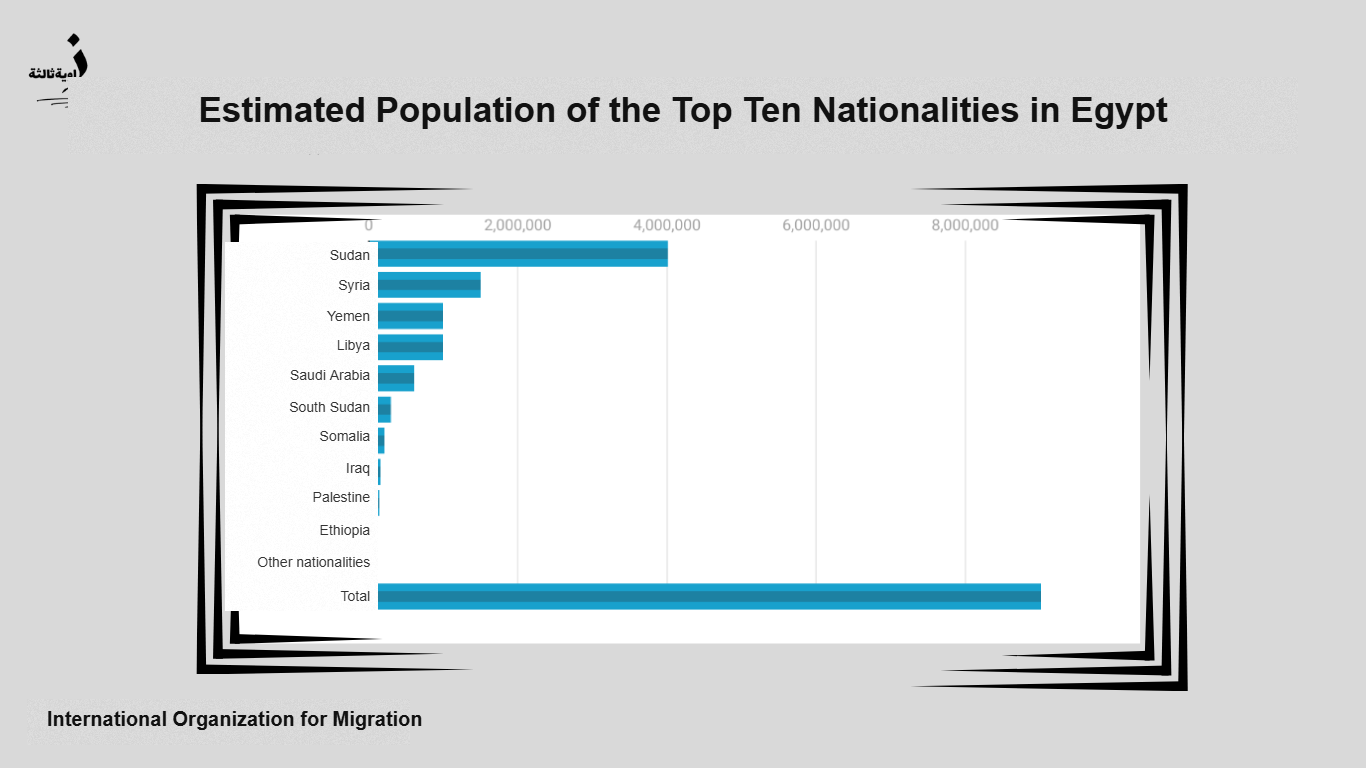
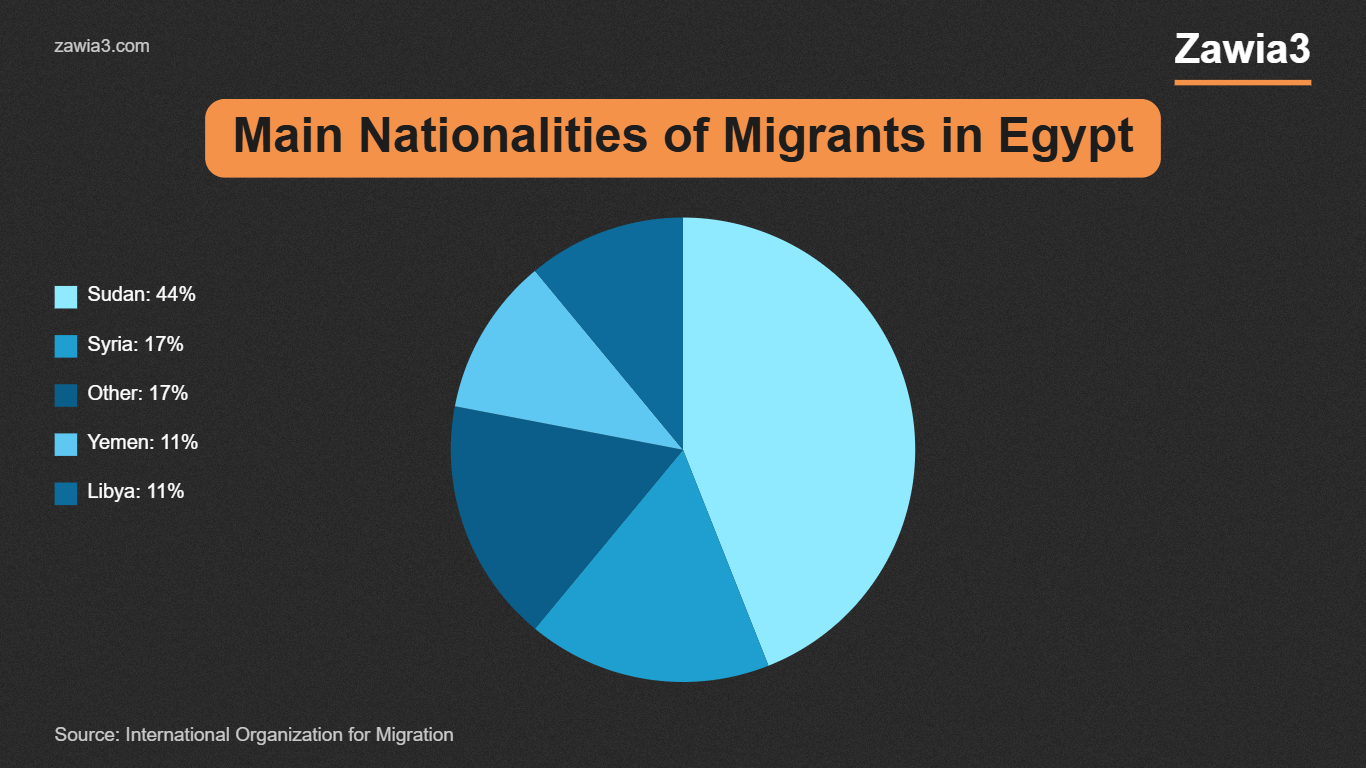
According to the report of the International Organization for Migration, 80% of migrants belong to one of four main countries: Sudan, Syria, Yemen and Libya. The number of migrants from these nationalities is estimated at about four million Sudanese, one and a half million Syrians, one million Libyans and one million Yemenis.
While the authorities in Egypt take a number of measures and decisions that they say are part of the economic reform programme and support social and health protection programmes, refugees are waiting for the Egyptian authorities to look upon them with some compassion, as they put it, in consideration of the harsh conditions they are going through and their poor economic circumstances, as the increase in the cost of medical and health services exposes them to new risks.