

Over the past five years, the Egyptian state has adopted an economic path based on developing the industrial and productive assets it owns with public funding, and then assigning their management and operation to local or foreign investors under the umbrella of “partnership and achieving operational efficiency”.
In this context, the Ministry of Public Business Sector announced in an official statement at the end of last October that its minister, Engineer Mohamed Shimy, had received the chairman of the Turkish Eroglu Holding Group to discuss opportunities for cooperation in managing and operating a number of new spinning and weaving factories on whose development the state has spent billions of pounds in recent years.
The statement explained that the meeting addressed “possible partnership models” between the Turkish group and the Holding Company for Cotton, Spinning and Weaving, noting that a technical delegation from the group had made a field visit to the Misr Spinning and Weaving Company in Mahalla El-Kubra, one of the largest and oldest factories included in the national project for developing spinning and weaving.
Observers believe that the meeting with “Eroglu” was nothing more than a new link in an escalating chain of government orientations that combine public funding and private investment, whereby the state pumps public money into modernisation and restructuring operations, and then opens the door to local or foreign investors to manage the developed assets.
The Egyptian government began developing the spinning and weaving companies at a cost of EGP 56 billion over its three phases in December 2024, and recently, the Ministry of Public Business Sector has actually begun negotiations with foreign companies to operate them. The same approach has been repeated in other sectors: from historic hotels that were rehabilitated and whose operation was then assigned to global chains, to heavy industries such as iron and steel, which once represented a pillar of national industry, before they were restructured and the state gradually lost control over them.
Development or Privatisation?
The state’s plan to assign some public factories and companies to investors from the local and foreign sectors comes after development operations that the government embarked on at a cost amounting to billions of pounds, within the framework of what it describes as “restructuring the spinning and weaving sector“. In recent years, the government spinning companies have undergone comprehensive modernisation of their facilities, machinery and infrastructure, followed by the start of actual steps to offer some of those entities for investment partnership or for operation under a joint management system.
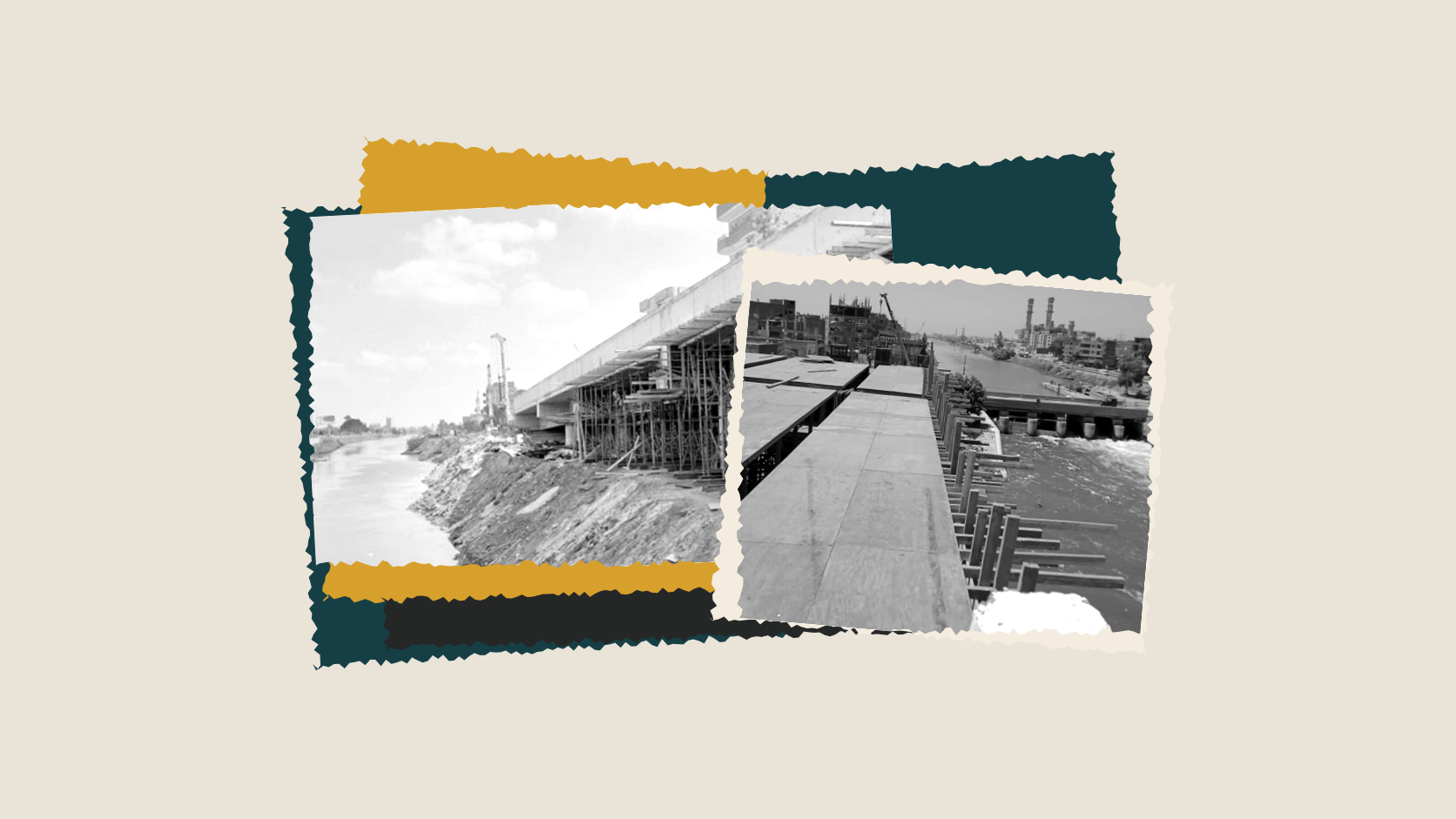
In the city of Mahalla El-Kubra, the Egyptian government opened, in July 2024, the “Ghazl 1” factory, which officials described as the largest in the Middle East, on an area of about 62,000 square metres with a production capacity of up to 30 tonnes of fine yarn a day. The construction cost of the factory reached about EGP 780 million, according to official data issued by the Ministry of Public Business Sector in December 2024, while the cost of the equipment and machinery reached about EGP 2 billion, bringing the total to about EGP 2.78 billion.
According to official data, the project is part of a comprehensive development plan covering 65 industrial sites across the country, with total investments of up to EGP 56 billion, financed through soft loans from Egyptian banks and direct government support. “Gama Construction” carried out the construction works, while “Rieter” handled the supply and installation of the equipment.
According to the Prime Minister in previous statements, the first phase included the factories (Ghazl 4 and 1), Weaving Preparation 1 and the power station, while the second includes a number of factories in Mahalla El-Kubra and other cities, namely Kafr El-Dawwar, Damietta, Mansoura, Minya and Helwan, noting that it is scheduled to be completed by mid-2025, and the third and final phase by the end of that year, or early 2026 at the latest. The Prime Minister noted that the total cost of implementing the three development phases exceeds EGP 56 billion, of which EGP 22 billion is the cost of the facilities, in addition to EUR 640 million for the cost of the machinery and equipment.
In Kafr El-Dawwar, the Misr Kafr El-Dawwar Spinning and Linen Company was rehabilitated at a cost of nearly EGP 600 million as part of the national programme for modernising the spinning and weaving industry; the works included renewing the infrastructure and machinery and restructuring the workforce. The ministry indicated that the next phase of the plan aims to attract local and foreign investors to operate and manage the factory in a way that achieves what it describes as “operational sustainability”.
From the spinning industry to the telecommunications, banking, petrochemicals, pharmaceuticals, mining, oil and gas, tourism, airports and real estate sectors, the Egyptian government is seeking to develop and prepare public sector companies in order to offer them to investors, according to what was stated at a meeting of the Presidency of the Egyptian Council of Ministers on 5 October last.
Hassan El-Barbary, a labour and economic researcher, comments on this trend that, although in recent years, and especially over the past five years, the state has spent billions of pounds on developing some factories and companies, the accelerating trend towards assigning their management or operation to investors from abroad reflects the state’s shift from the role of “producer and operator” to that of “developer and facilitator”. El-Barbary considers that this goes beyond being merely a development of production or a modernisation of equipment; rather, it comes within the framework of a disguised privatisation process that is not declared explicitly, but is instead presented under headings such as: partnership with the private sector, joint management or shared responsibility.”
El-Barbary continues, speaking to Zawia3, that the successive Ministers of Public Business Sector announced a huge development plan estimated in the billions, as it was estimated at EGP 21 billion in the first phase, and the ministry then spoke of involving investment funds and specialised banks in managing major companies such as Ghazl El-Mahalla and Kafr El-Dawwar, as part of what it called “partnership with the private sector in management and marketing”, which was stated explicitly in an official statement issued by the ministry”.
El-Barbary points out that the same approach was repeated in other sectors, such as petrochemicals, where the government offered stakes in Abu Qir Fertilizers, Alexandria Mineral Oils Company (AMOC) and MOPCO on the stock exchange as part of the “government offerings” programme. In 2023, the Ministry of Finance announced that the aim was to broaden the ownership base and attract foreign investment, an expression that has come to be repeated by senior government officials, from the Prime Minister to the ministers of investment, finance, labour and others,” El-Barbary adds. “But in practice, these offerings led to the transfer of shares of control to Gulf and Saudi investment funds”.
In the oils and soap sector, El-Barbary notes that the ministry merged Tanta Oils with Alexandria Oils on the pretext of restructuring, “but the result was dispensing with about 30% of the workforce in the two companies.” He adds: “According to data from the Ministry of Public Business Sector, about 50 companies were merged or closed during 2023, and the number of workers in the spinning and weaving sector alone was reduced. For example, the number of workers at the Ghazl El-Mahalla company, which employed more than 20,000 workers, fell by almost half”.
He continues: “The 2024 report of the Central Agency for Public Mobilisation and Statistics indicated a decrease in the losses of public business sector companies after the implementation of the development plan, but when we scrutinised the figures, we found that this decrease was achieved simply because the state merged companies and reduced the workforce, that is, it cut the wages item in the budget, and not because the companies’ performance actually improved”.
The Decline of State-Owned Companies
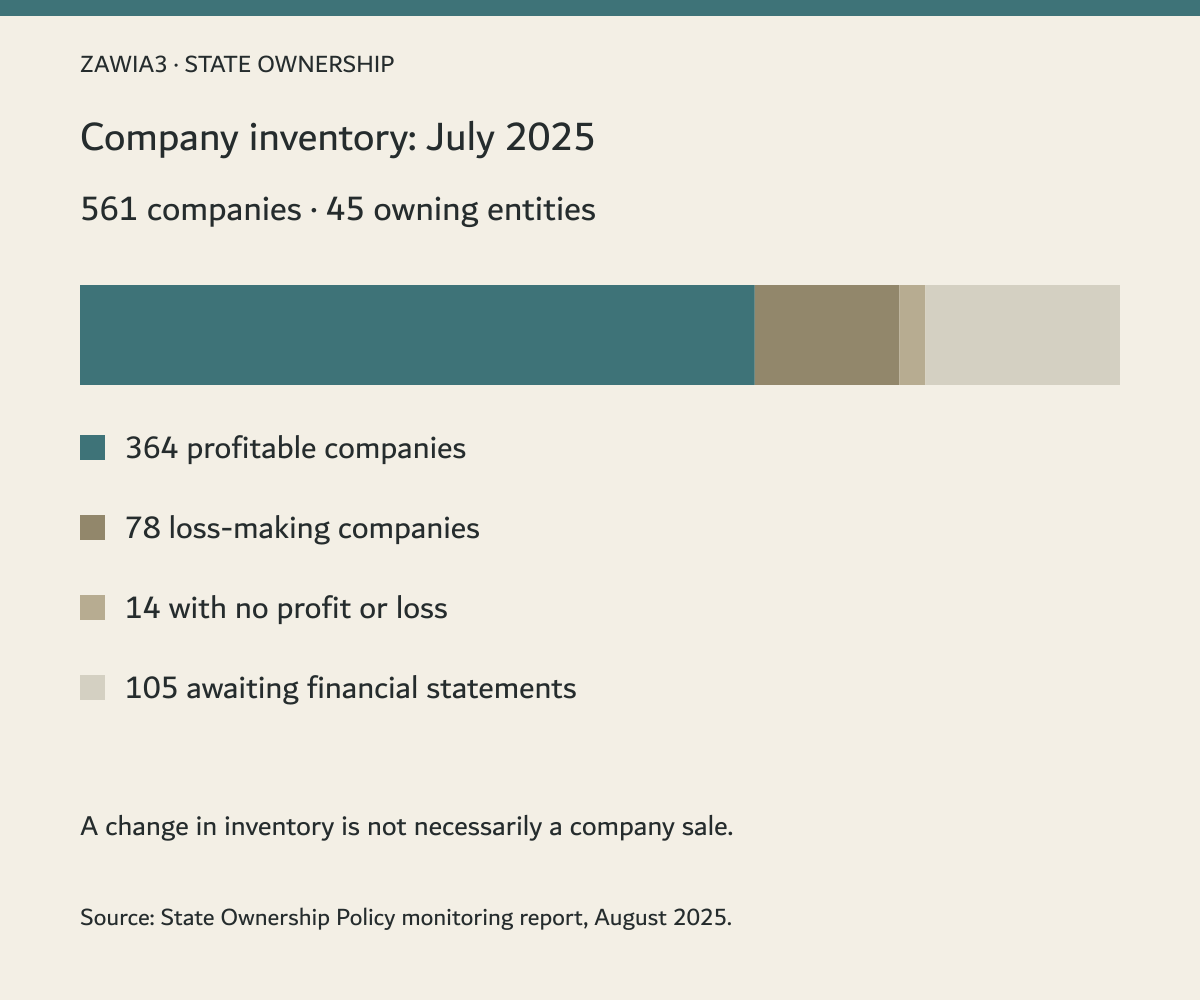
A recent report issued by the Egyptian Cabinet’s Information and Decision Support Center, entitled Monitoring the Implementation of the “State Ownership Policy”, the third report, published in August 2025, showed a notable decline in the number of state-owned companies within a single year, as it fell from 709 companies in August 2024 to 561 companies in August 2025, a decrease of about 20.9%, without the report clarifying whether this decline resulted from sales, mergers or restructuring.
The report indicated an increase in the number of entities owning these companies from 33 to 45 entities during the same period, which points to an expansion of the ownership map and a redistribution of assets. The public business sector also recorded the largest decline among the sectors, as the number of its companies fell from 317 to only 146 companies, a decrease of nearly 54%, as a result of what the report described as “mergers, transfers of affiliation and the offering of investment stakes”, while the proportion of companies making profits rose from 54% to 65%, signalling a partial improvement in the financial performance of some of the remaining entities.
In this context, Hassan El-Barbary believes that these policies may bring the government temporary financial relief, by easing the pressure on the general budget and repaying part of the debt, but in the long term they weaken national control over strategic industrial sectors, such as spinning and weaving and iron and steel. He adds: “The experience of privatising iron and steel is the best example; the state lost one of its industrial pillars”.
El-Barbary says: “The public investment that the state pumped in over the past years was not for the sake of real industrial development; rather, it paved the way for a gradual privatisation presented in new garb. It is not called privatisation now, but offerings or partnerships, yet in essence it is a transfer of control and wealth from the public sector to private capital, local and Gulf alike. This means that the state is selling in order to cover its fiscal deficit, but in return it is losing the backbone of any national economy based on industry.”
From Factories to Hotels… the IMF’s Conditions
From factories to hotels, the Egyptian government has followed the same approach of development and then assigning their operation to private companies and investors. In December 2023, Talaat Moustafa Group Holding announced, through its subsidiary “ICON”, the signing of an agreement to acquire a 39% stake, before it rose to 51% in February 2024, in a portfolio of seven historic state-owned hotels, through the Holding Company for Tourism and Hotels (EGOTH). The deal included the Marriott Mena House in Cairo, the Cataract in Aswan, the Winter Palace in Luxor, the Mövenpick Aswan, the Cecil in Alexandria, the Steigenberger Tahrir and Al-Gezira (Marriott).
Before offering these hotels for investment, the state worked on developing them; for example, the cost of developing the Marriott Mena House hotel amounted to approximately EGP 150 million. The Cataract Aswan hotel was also developed in 2008, and the development and renovation works continued for three years, at a cost of between EGP 300 million and EGP 400 million. At the time, Ali Abdel Aziz, head of the Holding Company for Tourism and Cinema, affirmed that the company owns priceless assets because they are historic and archaeological, stressing that the company would not sell the Cataract hotel in Aswan even for $10 billion.
For his part, Karim El-Omda, a professor of political economy, believes that private sector participation and the increase of its share in the economy have always been among the basic conditions of the structural reform programmes that the International Monetary Fund closely monitors, as the disbursement of new loan tranches is usually linked to practical steps such as offering stakes in government companies on the stock exchange or attracting strategic and financial investors to those entities.
He adds, speaking to Zawia3, that through this approach the government seeks to reduce its direct presence in economic activity, after experience proved that government management of the productive sectors was not successful, amid rampant bureaucracy, high rates of corruption and weak administrative efficiency, which led to accumulated losses in a number of public companies. Therefore, the prevailing trend has become involving the private sector in management and operation, especially in service sectors such as hotels, where the state focuses on the role of “administrative partner” more than on being a direct producer. He points out that the investor receives a percentage of the profits, while the larger percentage goes to the state, which owns the assets.
In this context, Mohamed Ramadan, a researcher on the economic file at the Egyptian Initiative for Personal Rights, explains that assigning the management of some factories and companies to foreign investors comes within the framework of the Egyptian government’s commitment to the conditions of the International Monetary Fund and the need to deal with the file of accumulated debts. “Involving the private sector” more broadly in the economy is one of the main clauses in the Fund’s agreements with the government.
Ramadan adds, speaking to Zawia3, that the term “involving the private sector” has become central to official economic discourse, as in practice it means the state’s gradual exit from managing a number of assets and productive sectors, and opening the field for private companies to take over these tasks, which is considered part of implementing the requirements of the International Monetary Fund.
The researcher points out that the state has already begun implementing this approach since the issuance of the “State Ownership Policy Document”, which drew up a roadmap for reducing its presence in some sectors in exchange for allowing wider space for the local and foreign private sector. However, according to Ramadan, this trend may not be the optimal or most effective option; instead of a complete exit, the government could benefit from the private sector’s expertise by integrating specialised competencies within government structures, allowing knowledge to be transferred and management to be improved without relinquishing control over national assets.
Ramadan adds that the expansion in assigning the management of public assets to private companies reflects the government’s desire to meet the requirements of the International Monetary Fund in the fastest possible ways, but this is sometimes done without sufficient study of alternative solutions that may be more sustainable and that balance economic efficiency and the national interest in the long term.
While the Egyptian government is betting on bringing in more investment on the pretext of raising efficiency and involving the private sector, some experts warn that following the conditions of the International Monetary Fund and making room for investors and the private sector in productive and industrial wealth may turn public assets into a temporary source of financial liquidity without achieving sustainable productive development. Between the discourse of “partnership” and the reality of “exit”, the questions remain: can the national economy be saved by reducing its role? Or does the real solution begin with exploiting and developing its wealth and enhancing transparency?
Editorial correction: The first version of the report stated that the number of public business sector companies fell from 317 to 146 companies, a decrease of nearly 26%; in fact, the decrease is nearly 54%, while the figure of 26% is the share of these companies in the total number of state-owned companies (561 companies) in the 2025 report.
Editorial correction: The first version of the report stated that ICON had acquired “a majority stake of 39%” and that the seven hotels included the “Vintage” hotel; in fact, the 39% stake was not a majority stake before it rose to 51% in February 2024, and the hotel in question is the Steigenberger Tahrir, according to what was published about the deal.