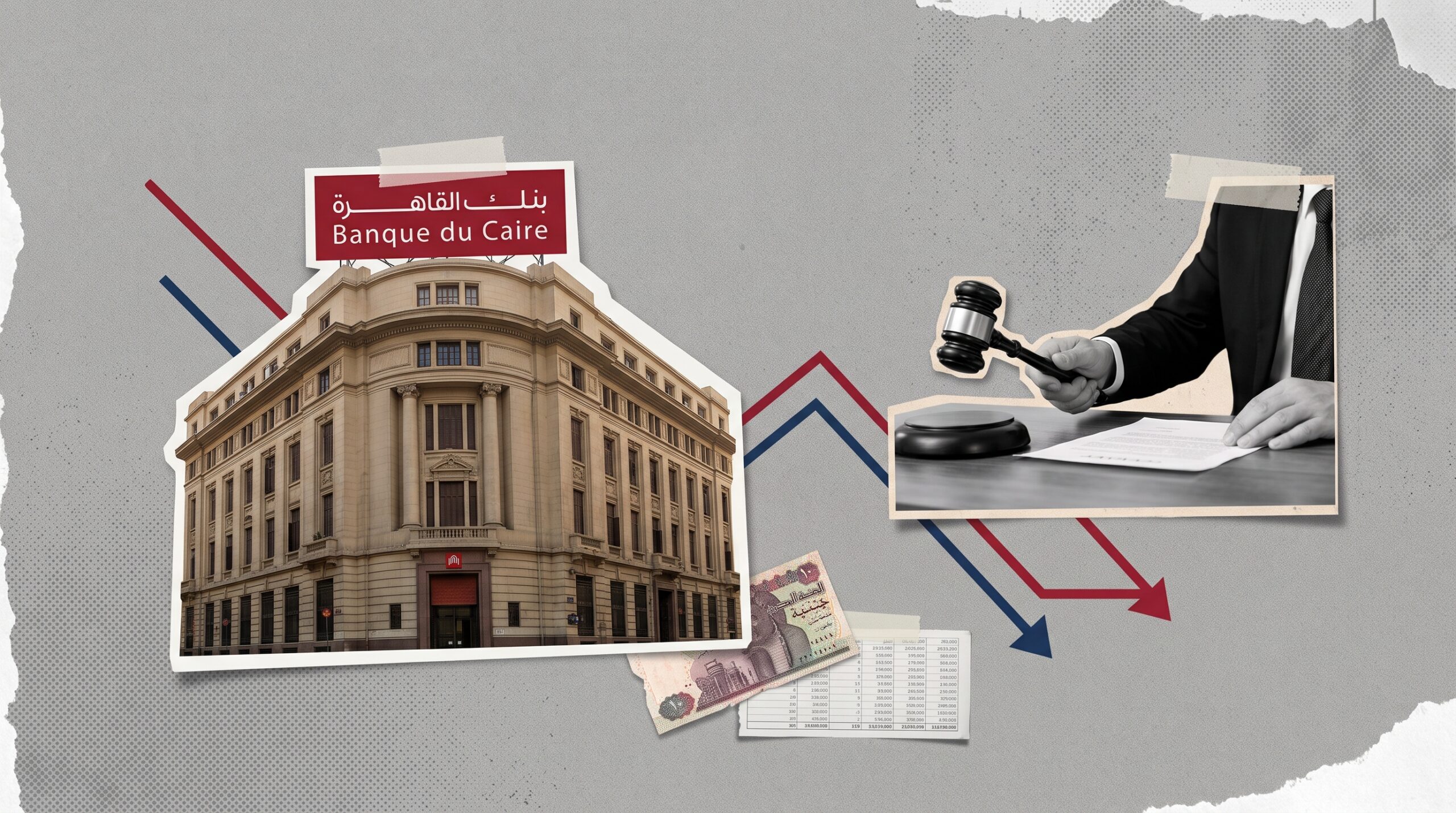
Since safeguard duties were imposed on imports of billets and steel sheet in September 2025, small and medium-sized steel rolling mills have found themselves facing an additional cost for the raw material on which they depend. These mills buy steel billets from local producers or import them, then roll them into rebar, unlike the integrated plants that produce their own billet requirements. Between protecting the local producer and ensuring the survival of the mills that buy from it, the dispute extends to jobs and to the prices of building materials, home appliances and cars.
The measures began with Ministry of Investment and Foreign Trade Decree No. 398 of 2025, which imposed on billet imports a provisional duty of 16.2% of the value including cost, insurance and freight (CIF), with a minimum of EGP 4,613 per tonne, for 200 days from 14 September 2025. Then Decree 121 of 2026 was issued with phased definitive measures: 13.12%, with a minimum of 70 dollars per tonne, from 2 April to 13 September 2026; 12%, with a minimum of 64 dollars, from 14 September 2026 to 13 September 2027; and 11%, with a minimum of 59 dollars, in the following year until 13 September 2028. The rate has thus changed since the interviews for this report were conducted in August, and its initial rate does not represent a fixed duty throughout the three years.
The ministry justifies the measures by a large and sudden increase in imports that caused harm to the domestic industry. On the other hand, rolling mills complain of rising production costs and of the difficulty of buying local billets in suitable quantities and at suitable prices. Field coverage in March 2026 spoke of operating rates falling to 10% or 15% in some cases, of idle lines, and of a threat to the jobs of thousands of workers. Estimates of the number of affected mills vary between sources; it is therefore not valid to generalise the operating rate of one mill or a group of mills to the whole sector.
According to data from the Central Agency for Public Mobilisation and Statistics carried by Al-Ahram Gate, the value of Egypt’s imports of iron and steel ores and raw materials fell by 16.4% in 2025, to about 5.7 billion dollars. In the first five months of 2026, Asharq Bloomberg cited the agency’s data as showing a 2.9% decline to 2.345 billion dollars, compared with 2.416 billion dollars in the same period of 2025; this included a 14.4% decline in iron ores and concentrates, to 596.9 million dollars from 697.2 million dollars. These are import categories broader than billets, so on their own they do not measure billet imports or the size of the shortfall available to rolling mills.
Among the most prominent billet producers in Egypt are the Ezz, Beshay, Egyptian Steel, Suez Steel and El-Marakby groups. Estimates of the number of plants and their capacities vary depending on how a plant is defined and which stage of production is being counted. In August 2026, the Industrial Development Authority offered eight licences for billet production, with total targeted capacities of 2.8 million tonnes a year: four licences with a capacity of 500,000 tonnes each and four with a capacity of 200,000 tonnes. The announcement set 9 September as the deadline for submitting bids. This is an offering of licences, not proof that eight plants were granted licences and actually began production in August.
Opponents of the duties believe that the large integrated plants, including Ezz, Suez Steel and Egyptian Steel, benefit from the higher cost of imported billets because they produce the raw material locally and have less need to import it. They warn that this may reinforce market concentration and weaken competition. These are concerns and assessments put forward by parties in the industry, and they do not mean that a monopolistic violation has been proven against any particular company.
On 27 August 2026, Al-Borsa newspaper carried manufacturers’ estimates putting annual billet production capacity at 13.7 million tonnes. But design capacity does not necessarily equal actual production or the quantities offered for sale to other mills; part of the companies’ output is consumed within their own lines. The price of the raw material is also linked to the exchange rate, energy, freight, international markets and terms of sale. A constantly changing commercial link is not suitable for establishing a single historical price for all mills; price comparisons in this report are therefore attributed to those who made them and to the period they are talking about.
The bulletin of the Arab Iron and Steel Union dated 29 August 2026 provides a time reference for international prices: the price of Russian billets ranged between 460 and 465 dollars per tonne on a free on board (FOB) basis, while the price of billets from Commonwealth of Independent States countries delivered to Turkey ranged between 500 and 505 dollars on a basis that includes cost and freight (CFR). Neither represents the price at which the raw material arrives at an Egyptian mill, since terms of delivery, insurance, duties and transport differ. The Egyptian duty rate on billets at the time was 13.12%, with a minimum of 70 dollars per tonne.
Rolling mills search for raw material
In the same context, Sameh Attia, director of the marketing and sales sector at the Al-Arabia Steel factory and the Elco Steel company, affirms that steel rolling mills that depend on importing billets bear a direct increase in the cost of one of the most important inputs in rebar production, as a result of the safeguard duties imposed on billets, which weakens their ability to compete.
He explains that there are about 23 or 24 rolling mills operating in the market, alongside a limited number of large integrated plants, noting that the imposition of safeguard duties on billets, which he estimated at about 13% to 14% at the time of the interview, together with restrictions on the sources for obtaining them, has made it difficult to meet the rolling mills’ needs in the required quantities.
He tells Zawia3: “Mills that need large quantities of billets may not be able to obtain all their requirements from the large local plants that produce the raw material, which pushes some of them to look for alternative sources, including unlicensed factories that produce billets haphazardly, which opens the door to legal violations and an informal market for the raw material”.
Attia believes that protecting the local billet industry should not come at the expense of rolling mills. In his remarks he uses the term “dumping” to demand a clear justification for the duties, considering that the lack of local billets in sufficient quantities and at competitive prices turns them from a tool for protecting industry into a factor that raises production costs. However, the measure covered by this report is legally classified as a safeguard measure to address an increase in imports and serious injury, which differs from anti-dumping, which deals with sales below normal value.
He adds: “Local billets that are not available in the required quantities or at competitive prices push mills to bear a higher cost, which may ultimately be reflected in the prices of rebar and the final product, and the repercussions may extend to some production lines stopping in investment-sector factories. What is happening in the market now is that some mills have stopped one production line out of two, and the situation may worsen amid the recession and the shortage of liquidity”.
He explains that the iron and steel market in Egypt is currently suffering from a state of recession, coinciding with weak liquidity and a decline in customers’ appetite for buying rebar, noting that consumer behaviour in the steel market is sometimes affected by price expectations; demand may fall when prices are low, while buying picks up when increases are expected.
He calls for a balance between protecting domestic industry, preserving competition and providing raw materials at fair prices, and for ensuring sufficient local billet production or providing alternative sources at competitive prices, alongside tighter oversight of the unlicensed factories that produce billets. He warns that the continuation of the informal market may lead to the circulation of raw materials that do not conform to specifications relating to chemical composition and the proportions of carbon, manganese and other elements, since they are not subject to inspection of production processes, raw materials, quality and safety, and therefore do not obtain accreditation certificates.
Different mills under a single duty
To understand the dispute, the Chamber of Metallurgical Industries, in an introductory presentation published on its website, distinguishes between three production patterns: integrated companies that start from the stages of preparing iron and steel; semi-integrated companies that melt scrap or sponge iron to produce billets and then roll them; and rolling mills that buy ready-made steel billets. But the lists of companies and capacities in this presentation are old; they include the Egyptian Iron and Steel Company, whose liquidation was decided on 11 January 2021, and it must not be treated as an inventory of the plants operating in 2026.
The historical presentation lists in the integrated category Egyptian Iron and Steel, Ezz Dekheila, Egyptian American Steel in Sadat City, Ezz Flat Steel Suez and Suez Steel, with a total capacity of nearly eight million tonnes a year. It also distinguishes between the Egyptian company’s use of local raw materials and the other companies’ reliance on imported raw materials of high specifications. This information reflects a classification and a production structure at the time the page was prepared, and is not an updated estimate of what those companies produce today.
In the semi-integrated category, the same presentation names Delta Steel, Misr Steel, El-Marakby and Egyptian Steel, with an available capacity of nearly 2.5 million tonnes a year, and mentions that Abu Zaabal Engineering Industries produces steel billets with a capacity of 60,000 tonnes without owning a rolling mill. The importance of the classification lies in explaining the differences between the stages of the industry and their costs, while these historical figures should not be combined with more recent estimates as a single statistic.
Rolling mills, for their part, come at the final stage, buying steel billets locally or importing them to turn them into rebar. The Chamber’s historical presentation lists about 28 companies with a total available capacity of nearly five million tonnes a year, compared with Attia’s estimate of about 23 or 24 mills operating in the market at the time of the interview. Existing capacities may operate at limited rates for economic and financing reasons; the count of companies or licensed capacities therefore differs from the number of operating mills and their actual output.
The Chamber of Industries defends protection
On the other hand, Eng. Mohamed Hanafy, director of the Chamber of Metallurgical Industries at the Federation of Egyptian Industries, believes that the increase in raw material costs may be reflected in the selling prices of rolled steel, but the mills that import billets, despite its higher cost due to the safeguard duties, remain able to sell their products at lower prices than the large integrated plants that produce steel starting from raw materials.
He tells Zawia3: “The imposition of the duties came after studies and discussions that continued over two or three years, with the aim of achieving a greater degree of balance in the steel market and narrowing the price gap between the mills that import billets and those that produce them locally”.
He adds that some mills were selling a tonne of steel for about EGP 34,000, while the integrated steel plants were selling it for about EGP 39,000, explaining that the difference of about EGP 5,000 did not necessarily represent a profit margin, but resulted from the lower cost of imported raw materials for some mills compared with the cost of local production.
He attributes the lower billet prices in some foreign markets compared with local prices to those countries possessing integrated production resources, including iron ore, coal, and steel production plants and equipment, which lowers their production costs and gives them a greater ability to sell at low prices, which may harm Egyptian factories if the market is left unregulated.
He believes that the aim of the duties is to narrow the price gap between the mills that import billets and the integrated plants, so that competition becomes more balanced, considering that protecting domestic industry is the main purpose of imposing safeguard duties.
He explains that the number of plants producing billets in Egypt is about five, and that their production capacity reaches about 12 million tonnes a year, while Egypt’s total rebar production is about 9 million tonnes a year. He added that local billet production is capable, in terms of production capacity, of covering the market’s needs in full, but its higher production cost compared with foreign markets pushes some mills to prefer importing it.
Asked about the extent to which the imposition of the duties has affected rebar prices, he explains that steel prices did not see a noticeable rise during the period he is talking about, as the price per tonne remained almost stable for about six months from the beginning of 2026, according to his estimate at the time of the interview, but there is a price difference between the mills that import billets and the integrated plants; some of the former sell a tonne for about EGP 34,000 or 35,000, compared with about EGP 39,000 at plants such as Suez Steel and Ezz Steel.
He attributes the decline in Egyptian steel exports to the duties imposed by the United States and the European Union on Egyptian exports, and believes that mills that depend on importing billets do not, essentially, have the ability to export to the European and American markets, because these do not readily accept the products of mills that import billets from various sources, and rely on plants with an integrated production cycle in which the stages of steel manufacturing can be traced and tested, from raw materials to the final product. This expresses his interpretation of the barriers to accessing those markets, and does not mean that every mill that relies on imported billets is legally barred from exporting to them.
On the other hand, press coverage recorded price movements during the same period; it reported an earlier increase at El-Marakby and El-Garhy of EGP 2,000 per tonne to EGP 37,500 after the provisional measures were imposed. In January 2026, coverage reported a rise in the price of Ezz from about EGP 34,200 to EGP 37,000, Suez from 33,700 to 36,500, and El-Marakby from 34,000 to 36,000, with increases ranging between EGP 2,000 and EGP 3,000 and consumer prices reaching about EGP 38,000 or EGP 38,500. These are prices tied to different dates and sales levels, not a single current price list, and the coincidence of the increase with the duties does not prove that they were its only cause.
Al-Shorouk reported on 12 May 2026, citing a document it had seen, that the value of Egyptian steel exports fell by 13% in the first quarter of the year, to 404 million dollars, compared with 463 million in the same period of 2025. The comparison reflects the value of exports in dollars, not necessarily a change in quantities by the same percentage, and on its own it is not enough to isolate the effect of the domestic duties from changes in demand, prices and external restrictions.
From factory raw materials to the prices of appliances and cars
The effects of the duties do not stop at rebar. Steel sheet goes into the manufacture of refrigerators, washing machines, gas cookers, water heaters and other appliances. Definitive Decree 120 of 2026 distinguishes between cold-rolled, galvanised and colour-coated sheet: the duty rates began on 2 April 2026 at 13.7%, 14% and 14.5% respectively, then fell from 14 September 2026 to 13%, 13.5% and 14%, with different minimums in dollars per tonne. The fact that steel sheet goes into the manufacture of an appliance does not mean that it represents the same proportion of its number of components, its weight or its cost; these are different measures.
Eng. Ashraf Helal, head of the Home and Electrical Appliances Division at the Cairo Chamber of Commerce, explains that the safeguard duties on the steel sheet used in the home and electrical appliances sector were reflected directly in the cost of sheet as a raw material, which goes into the manufacture of a large number of appliances, pointing out that the decree was initially set for 200 days, before it was later amended so that the duties would apply for three years.
He affirms that the imposition of the safeguard duties led to a rise in steel sheet prices, as some local sheet-producing factories raised their prices directly after the decree was issued, which was in turn reflected in the manufacturing cost of home and electrical appliances that depend on sheet as a basic raw material, including gas cookers, air conditioners, refrigerators, fans and washing machines. He estimates that the prices of some appliances rose by up to about 5% as a result of the higher cost of the raw material.
He tells Zawia3: “Any rise in the prices of goods has a negative effect on buying and selling, because it leads to a slowdown in the rate of capital turnover, causing losses for traders and factories, in addition to weakening consumers’ purchasing power, and it is also reflected in inflation rates in the economy, since higher production costs and final prices are ultimately passed on to the consumer”.
He points out that the effect of the decree was not limited to producers of home and electrical appliances, but also extended to some complementary steel factories that relied on importing steel sheet from abroad, affirming that these factories were also harmed by the imposition of safeguard duties on steel sheet.
Meanwhile, Counsellor Osama Abul Magd, head of the Car Dealers Association in Egypt and deputy head of the Automotive Division at the Chamber of Commerce, points out that steel goes into most industries and is considered a basic component in the car industry in particular, and therefore a rise in its cost, whether as a result of the safeguard duties or other factors such as monopolistic practices, exchange rate movements or the unavailability of foreign currency for billet importers, is ultimately reflected in the cost of final products.
He affirms that the car industry incorporates steel as one of its basic components, and therefore any movement in the price of steel is consequently reflected in car prices, noting that the market has already seen a number of increases in car prices from March up to the time of the interview.
He tells Zawia3: “Part of the steel industry in Egypt depends on importing billets and then carrying out manufacturing operations inside some factories, and the effect of the dollar exchange rate is one of the main factors affecting production costs and steel prices, especially given the repercussions of the wars and tensions that the region and the world have witnessed in the recent period”.
He adds that a car consists of more than 22,000 parts, and 50% to 70% of car components are imported from abroad, while the declared local content rate stands at about 45%, but on the ground it does not exceed 20%, noting that Egypt does not fully produce a number of key components, including the transmission (“gearbox”), the engine, the alternator and the air-conditioning compressor (“compressor”), which reflects the car industry’s continued dependence on imports. These are percentages and estimates given by Abul Magd; his remarks do not provide a single basis for measuring local content by number of parts or by their value, so they should not be added together or converted into complementary shares in a single chart.
Abul Magd links the industry’s reliance on imported inputs to the cost of importing, the availability of foreign currency and the exchange rate. Technically, a distinction should be made between billets, used mainly in long products such as rebar, and slabs, which are usually rolled into flat products and steel sheet. Talking about the effect of steel on the car industry does not mean that billets and steel sheet are a single raw material or that all their production lines follow the same path.
He believes that assessing the effect of the safeguard duties on the various industries should be done in light of the full picture of production costs, without reducing movements in the prices of steel or final products to a single decision, given the multiplicity of influencing factors, chief among them the exchange rate and the degree of reliance on imported inputs.
Protecting industry or weakening competition?
In the same context, MP Ashraf Abdel Ghani, secretary of the Economic Committee of the Senate and chairman of the board of the Egyptian Tax Experts Association, believes that the mills that do not produce billets locally and depend on importing them may be the most affected by the imposition of safeguard duties, in contrast to the large plants that produce billets and do not face the same impact borne by the mills that import the raw material.
The MP does not support the imposition of safeguard duties, which he considers may limit fair competition between the local and the imported product, which may ultimately be reflected on the consumer, stressing that preventing the entry of a low-priced imported product and giving the local product a price advantage by imposing duties on it may lead to giving the local product a more exclusive position in the market, which may allow prices to rise.
He tells Zawia3: “Fair competition means that products compete under equal conditions. If the imported product is available at a lower price, it is better to benefit from it or to work on producing the local product at the same quality and at a similar or lower price, in a way that strengthens the ability of domestic industry to compete and export”.
He points out that making use of low-cost products or inputs can help Egyptian factories produce goods at more competitive prices, enabling them to export and bring foreign currency into the country, instead of limiting competition by banning or restricting imported products, stressing the importance of preserving fair competition in a way that serves the consumer’s interest and allows him to benefit from efficient, low-priced products.
Between the goal of protecting local production and the warnings of the rolling mills and the industries that use steel sheet, the interviews reveal a dispute over what it means for supply to be sufficient and over its cost. Supporters of the measures rely on the harm caused by rising imports and the high cost of local production, while their opponents complain of the difficulty of accessing a competitive raw material and of burdens being passed on to producers and consumers. Nominal capacity alone does not settle this dispute without knowing the production available for sale, its prices and its terms.
With new billet production licences being offered, the test remains whether the announced capacities turn into available production, and whether they can provide the raw material at competitive prices without harming rolling mills or pushing them to reduce operations. The Ministry of Investment has announced that prices and the availability of raw materials will be subject to monthly monitoring and that the measures will be reviewed every three months, a commitment whose impact on the parties in the industry can be measured.
Between protecting the local producer, guaranteeing competition and ensuring the availability of raw materials, the effectiveness of the duties remains tied to the state’s ability to regulate the market, increase supply and confront monopolistic practices and the informal market. Protecting one stage of production is not enough if it pushes other stages to contract, and the consumer should not bear the bill for the safeguard measures alone.