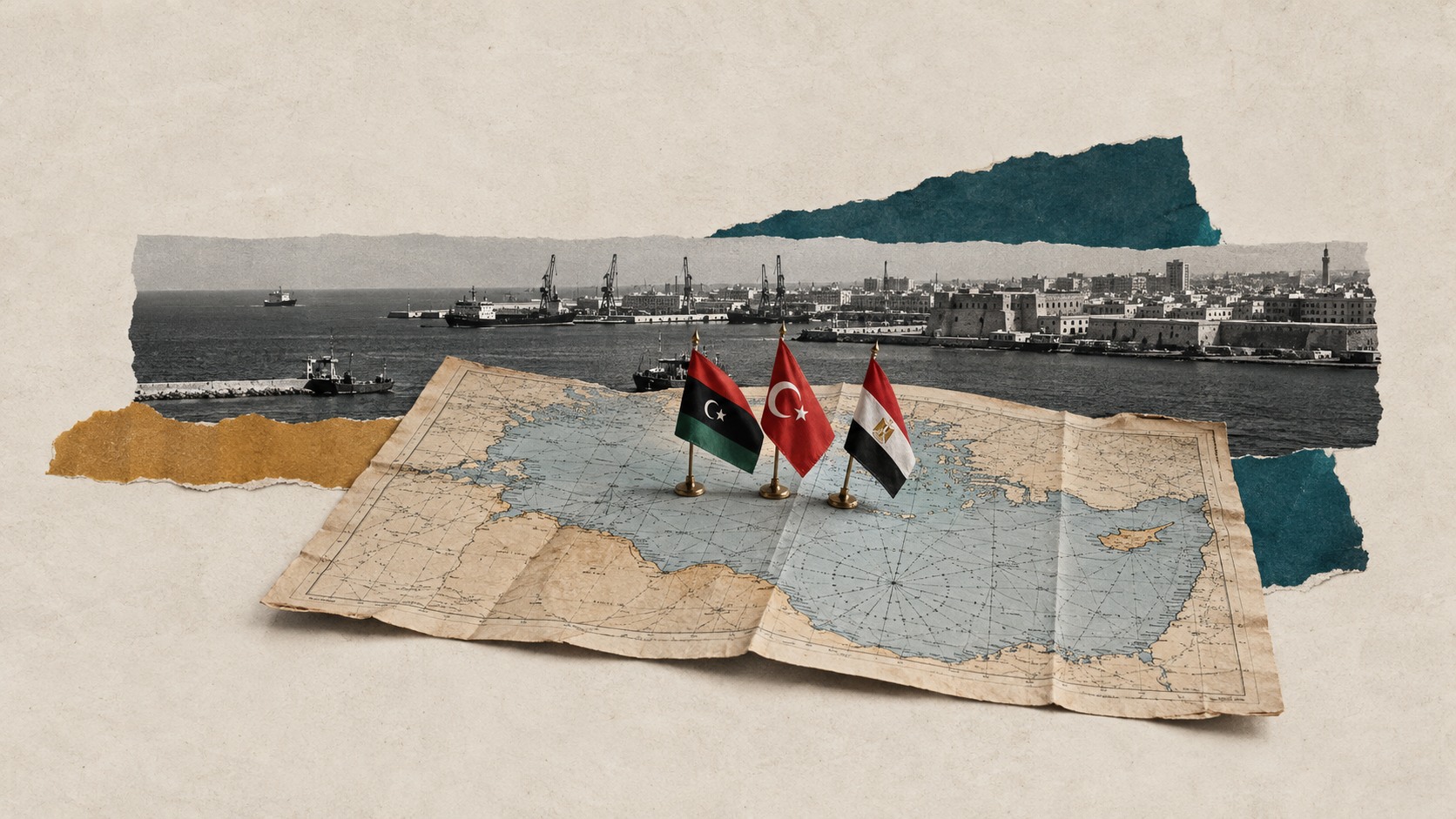

Over the past three years, Egypt’s foreign trade map has undergone radical changes amid the continuing war in the Gaza Strip, the military conflict in Sudan, Libya’s political and military divisions, and disruptions to Red Sea shipping caused by Houthi attacks, alongside the repercussions of the Russian-Ukrainian war.
Foreign trade data reveal divergent trends in trade between Egypt and countries affected by armed conflict, alongside changes in export and import volumes, rising exports of some commodities, and altered transport routes, particularly for construction materials, cement, medicines, food, wheat and natural gas.
The outbreak of war in Sudan on 15 April 2023 between the Sudanese Armed Forces, led by General Abdel Fattah al-Burhan, and the Rapid Support Forces, led by Mohamed Hamdan Dagalo, known as Hemedti, cast a shadow over trade between Cairo and Khartoum. Its value fell to around $1.2 billion in 2024, compared with $1.4 billion in 2023.
Cairo’s exports to Khartoum fell to $866.2 million in 2024, from $989 million in 2023, but rose again in 2025, reaching $957.1 million. They then totalled $577.1 million in the first half of 2026. Milling products and flour topped the list of exported goods at $218 million, followed by sugar at $84 million, while iron, steel and construction materials exports were valued at $144 million during the first eight months of 2026.
Egyptian imports from Sudan include live animals worth $129 million, oilseeds worth about $87 million, cotton worth $52 million, and pearls, precious stones and jewellery worth $17 million, according to the Central Agency for Public Mobilization and Statistics (CAPMAS). Overland trade relies on the Argeen and Qustul crossings, while pharmaceutical exports have shifted to the sea route through the Red Sea to Port Sudan.
Since the start of Israel’s genocidal war on Gaza in October 2023, Egyptian trade with Israel has grown markedly. Egyptian exports jumped from $145.3 million in 2023 to $284.2 million in 2024, while imports rose from $2.49 billion to $2.93 billion. The list of exporters included 313 companies that exported 634 different product categories since the war began, according to the United Nations’ UN COMTRADE data.
The data show that Egypt’s exports to Israel reached about $304 million in 2025. Major categories included salt, sulphur, stone and cement at $88 million; inorganic chemicals at around $28.2 million; electrical equipment at $27.1 million; plastics at about $20.4 million; and food preparations made from vegetables and fruit at around $13.9 million.
Tel Aviv imported 227,000 tonnes of agricultural products from Cairo in 2024. Egyptian agricultural exports were valued at $62 million and included 137 food products, comprising fresh, frozen and canned vegetables and fruit, and fruit juices.
Leading the lists of Egyptian entities exporting produce and food are Africano for Agricultural Crops Export, owned by businessman Essam Ahmed Diab, a Mostaqbal Watan Party MP and member of parliament’s Industry Committee; Faragalla, owned by businessman Farag Amer; and Raya Foods. According to Matsda2sh, exporting companies are owned by members of parliament, various state entities, businesspeople and Gulf sovereign wealth funds.
These companies send varied food shipments, including frozen and canned vegetables and fruit, agricultural products, juices and maize, according to the records of Israel’s Chief Rabbinate, which is responsible for kosher certification, meaning food permitted under Jewish religious law.
Egyptian exports of agricultural fertilisers and their derivatives to Israel totalled around $46.2 million from the outbreak of the Gaza war in October 2023 until May 2025. Exported quantities of fertilisers, urea and ammonia reached about 74,400 tonnes, according to the foreign trade database.
Leading the companies exporting to Tel Aviv, according to data from the occupying state’s Central Bureau of Statistics, were Misr Fertilizers Production Company (MOPCO), in which the Egyptian government controls 41.3% of shares, the Saudi sovereign wealth fund owns 24%, and the Abu Dhabi sovereign wealth fund owns 20%; Abu Qir Fertilizers, in which the Egyptian government holds 30%, Abu Dhabi’s ADQ holds 21.5%, and the Saudi sovereign wealth fund holds 20.39%; Egyptian Fertilizers Company, acquired by the UAE’s Abraaj Capital for around $1.4 billion; and Misr Chemical Industries, in which the government owns 53% and Banque Misr owns 16.36%.
On the import side, Israeli natural gas reached a record 1.003 billion cubic metres in July 2026. This trade takes place via shipping routes connecting the ports of Arish, Abu Qir, Port Said and Damietta with Ashdod and Haifa, alongside the Nitzana crossing and the East Mediterranean Gas pipeline.
Israel’s NewMed Energy was at the forefront of those imports. In August 2025, the company announced an amendment to the agreement to export natural gas from the Leviathan field to Egypt, bringing its value to around $35 billion. In April 2026, NewMed Energy signed an agreement with the Egyptian Natural Gas Holding Company (EGAS) to supply natural gas from Cyprus’s Aphrodite field to Egypt for 15 years, providing the market with around 100 billion cubic metres.
By contrast, Egyptian exports to Palestine reached around $282.8 million in the first half of 2026, while construction materials exports increased from $85 million to $153 million during the first eight months of the year, according to published official data. Traded goods include medicines and food, such as flour, sugar, rice and frozen products, alongside diesel and construction materials.
The port of Arish is a prominent shipping outlet associated with this trade, while the overland commercial route shifted after May 2024 to the Kerem Shalom crossing, according to press reports. The same reports point to the role of Sons of Sinai for Trading and Contracting, part of Ibrahim al-Organi’s group, in bringing goods in, amid reports that commercial imports are restricted to a list of 13 traders, compared with more than 2,000 importers before the war.
Libya tops the list of African countries importing from Egypt. Egyptian exports to Libya were valued at $1.5 billion in 2025 and reached $725.4 million in the first half of 2026, placing Libya third among Arab markets importing Egyptian products, after Saudi Arabia and the UAE, according to CAPMAS and the Central Bank of Libya.
Egyptian exports to Libya include iron, cement, ceramics, marble and other construction supplies, alongside food products, dairy, vegetables, fruit, plastics, machinery and electrical equipment. Egyptian imports from Libya remain limited and are concentrated in products such as scrap iron and certain petroleum and mineral products, with annual values ranging between around $50 million and $85 million in recent years.
Trade between Egypt and Syria has also undergone structural changes since the fall of Bashar al-Assad’s regime on 8 December 2024 and the start of a new phase of economic opening and reconstruction plans in Syria.
Egyptian exports account for more than 85% of total bilateral trade. Official estimates suggest that total trade between the two countries could rise to between $700 million and $800 million by the end of 2026.
Syria ranks tenth among Arab markets importing from Egypt, after Saudi Arabia, the UAE, Libya, Sudan, Algeria, Morocco, Iraq, Jordan and Lebanon, with a value of $311.7 million.
Egyptian exports to the Syrian market have grown significantly. On the logistics side, Arish port alone recorded direct shipments of goods and construction materials to Syrian ports worth around $30.2 million in 2025.
Trade flows included cement and clinker, iron, steel and aluminium, alongside ceramics, sanitary ware and marble, and a range of food and agricultural goods, including wheat flour, rice, pulses, food preparations, frozen vegetables and cooking oils, as well as expansion in pharmaceuticals, medical supplies and chemicals.
A surge in cement exports
The United Nations’ UN COMTRADE data indicate a marked expansion in some flows of Egyptian construction materials to regional markets affected by armed conflict or post-war reconstruction projects. Palestine, Israel, Libya and Syria led the principal destinations for these exports, with growth rates varying between markets.
Data from Egypt’s export council show that Egypt exported 1.9 million tonnes of three types of cement between October 2023 and May 2025.
Palestine topped the list of Egyptian cement importers after the value of exports recorded to it rose by 91%, from $70 million in the first eight months of 2025 to $133.7 million in the corresponding period of 2026.
According to press reports, Palestinian import permits were used through intermediaries to channel some shipments to the Israeli market.
A comparison of Egyptian and Israeli trade data reveals a gap between the values and quantities recorded by the two sides. Quantities in Israeli statistics rose from 52,300 tonnes, worth $4.9 million, in 2022 to 2.4 million tonnes, worth $142 million, in 2024. Yet the Building Materials Export Council tables recorded only $50.7 million over ten months of 2024, creating a customs-data gap exceeding $91 million over the year.
Egyptian Portland cement exports to Tel Aviv surged to $223.3 million during the first seventeen months of Israel’s assault on the Gaza Strip, a thirteenfold increase following the suspension of Turkish exports.
The average price of Egyptian cement exported to Israel fell from $93.6 per tonne in 2022 to $66.6 in 2023, then to $59.8 in 2024, while the selling price to domestic consumers in Egypt increased by 25.3%.
Egyptian foreign trade data for January to August 2026 reveal changes in the map of cement and construction materials exports to several markets affected by armed conflict. Total cement exports rose by 7% to $648 million, compared with $606 million in the same period of 2025.
Egyptian cement exports to Israel increased thirteenfold during the war to compensate for the Turkish ban in April 2024. The monthly average rose from $2.6 million to $20.4 million between May 2024 and February 2025.
Leading Egyptian exporting companies included Arish Cement, affiliated with the Armed Forces’ National Service Projects Organization; Sinai Cement, of which businessman Magdy Kasbagi owns around 15.2%; Sinai White Cement, acquired by the Dutch Cementi group; and Arabian Cement Company, 60% owned by Spain’s Aridos Jativa SL, with businessman Sadek Ahmed El Sewedy holding 12.5% and retired Staff Colonel Fayek Mohamed El Borini holding 10%.
Shipping relies on a network of ports and land and sea crossings. Arish port plays a prominent role in transporting cement to Israeli markets, alongside the Al-Awja/Nitzana crossing. The ports of Suez, Damietta, Abu Qir and Arish are used to export cement to multiple destinations.
Major importers include Israel’s Ciment, in which France’s Vicat group holds 67% and Magdy Kasbagi’s Reliance Logistics group holds 15.2%, as well as Heidelberg Materials Trading and its arm Hanson Israel.
Reports also indicate that Arish port’s share of Egyptian cement exports to Israel rose from 0.1% in 2021 to 30% in 2025. AD Ports Group also plays a role in operating bulk cement terminals and silos under a 15-year concession with the Suez Canal Economic Zone, with announced investment of $33 million and annual handling capacity of up to 1.5 million tonnes at Arish and West Port Said ports.
A previous Arabic Post report tracked eight cargo vessels, including NOVA CORALIA, GRIT CEMENT II, ZAYYAN K and ATHENA CEMENT, making shuttle trips between Arish port and the ports of Haifa and Ashdod.
An Al Manassa investigation revealed that cement carriers operated by Greek and Israeli companies made repeated voyages between Egyptian and Israeli ports. These were led by Greek companies such as Shinka Shipping, which operates ANGELOS K, ZAYYAN K and HAKEEM K, and San Nikolla, which operates NOVA CORALIA; and the Israeli company Milburn Line, which operates MILBURN. They also included the two “shadow fleet” carriers CEMENT 1 and CEMENT 2, which made more than 20 voyages in 2025 without their owners being listed in public databases.
Rising exports of iron and construction materials
The export surge extended beyond cement to iron, steel and construction materials, which totalled around $859 million in the first half of 2026 and $969 million in the first eight months of the year. These included exports by Ezz Steel Group of around 7 million tonnes, Suez Steel of around 3 million tonnes, Beshay Steel of 4 million tonnes, and Egyptian Steel. The main markets included Libya, Palestine, Sudan and Israel.
Amid the repercussions of Storm Daniel and the collapse of Derna’s dam, which generated extensive demand for construction materials, essential goods and reconstruction supplies, 2023 saw a surge in Egyptian exports to around $1.7 billion, while imports from Libya did not exceed $61.7 million.
In 2024, Egyptian exports remained high at around $1.621 billion, compared with imports of $78 million, bringing total trade to $1.699 billion and Egypt’s trade surplus to around $1.543 billion. This coincided with expanding reconstruction plans in Libya and contracts awarded to Egyptian companies, strengthening demand for products and materials used in construction.
Egyptian exports to Libya were valued at $1.5 billion in 2025 and reached $725.4 million in the first half of 2026, placing Libya third among Arab markets importing Egyptian products, after Saudi Arabia and the UAE, according to CAPMAS and the Central Bank of Libya.
The main goods included construction materials, cement, ceramics and marble, with a combined value of $246 million during the first eight months of 2026.
In 2025, Syria’s imports of Egyptian cement jumped by more than 1,300% to around $53.1 million, compared with $3.6 million in 2024. The Syrian market consequently accounted for more than 6% of Egypt’s total cement exports, ranking seventh worldwide among importers of Egyptian cement.
Egyptian cement exports to Syria rose to $51.6 million during the first eight months of 2026, compared with $32.4 million in the same period of 2025, an annual increase of around 60%.
This placed Syria fifth worldwide among major importers of Egyptian cement, with the value of cement exports to the Syrian market expected to exceed $100 million by the end of 2026.
Rising wheat prices and flour exports
Around four years after the Russian-Ukrainian war began on 24 February 2022, Egypt remains heavily dependent on Russia and Ukraine to meet its wheat needs. The two countries account for around 80% of Egyptian wheat imports, and shipments from Russia and Ukraine made up more than 82% of Egypt’s total imports in the first half of 2026.
Military escalation in the Black Sea region and the repercussions of the Russian-Ukrainian war have strongly affected the cost of Egyptian wheat imports. The average price rose from around $240 per tonne in 2023 to $280 in 2025, before reaching about $300 and then $315 per tonne during the summer and autumn of 2026.
Imports rose by 48% in the first half of 2026 to 7.7 million tonnes, before private-sector imports fell by 41% in July and August, according to reports linking the decline to the repercussions of attacks on Ukrainian ports.
Trade data reveal a striking paradox in Egypt’s grain trade. Egypt, one of the world’s largest wheat importers, imported around 12.5 million tonnes in 2024, while its wheat flour exports rose by 69.3% to exceed 1.1 million tonnes, benefiting from the production capacity of around 410 of its mills.
This is linked to declining milling capacity in several neighbouring countries affected by armed conflict. Major mills in Sudan, including Sayga, Khartoum and Wad Madani mills, have been damaged or shut down, while mills in the Gaza Strip have also been damaged by the genocidal war.
At the same time, Egypt’s landscape of wheat and staple commodity importers has changed radically. The Future of Egypt for Sustainable Development Agency has emerged as a major player in strategic commodity purchases through direct contracts with Russian suppliers, including a deal to supply around 1.267 million tonnes of imported wheat.
In the wheat and maize market, Mediterranean Star and Cairo 3A lead the private sector as Egypt’s largest grain importers.
Meanwhile, Middle Egypt Flour Mills, affiliated with the Holding Company for Food Industries, is among the entities financing flour shipments sent overland to Sudan.
Misr Menoufia Mills also participates, having exported 475,500 tonnes of wheat flour to Sudan, worth 191.9 million, between January and November 2024.
The map of Egyptian trade with countries affected by armed conflict reveals a reshaping of trade routes, with expanding exports of construction materials, cement, flour and food to some markets, alongside continued dependence on strategic imports, foremost among them wheat and natural gas.
While reconstruction needs in Libya and Syria, and demand for essential goods in Sudan and Palestine, create opportunities for Egyptian exports, increased trade with Israel during the Gaza war raises questions about the contradiction between political positions and economic flows.
These shifts highlight the importance of tracing shipping routes, companies’ beneficial ownership and discrepancies in customs data to identify those benefiting from the war economy, assess the domestic implications for food security, energy and prices, and evaluate the ability of Egyptian trade policies to protect economic and social interests amid continuing regional turmoil.