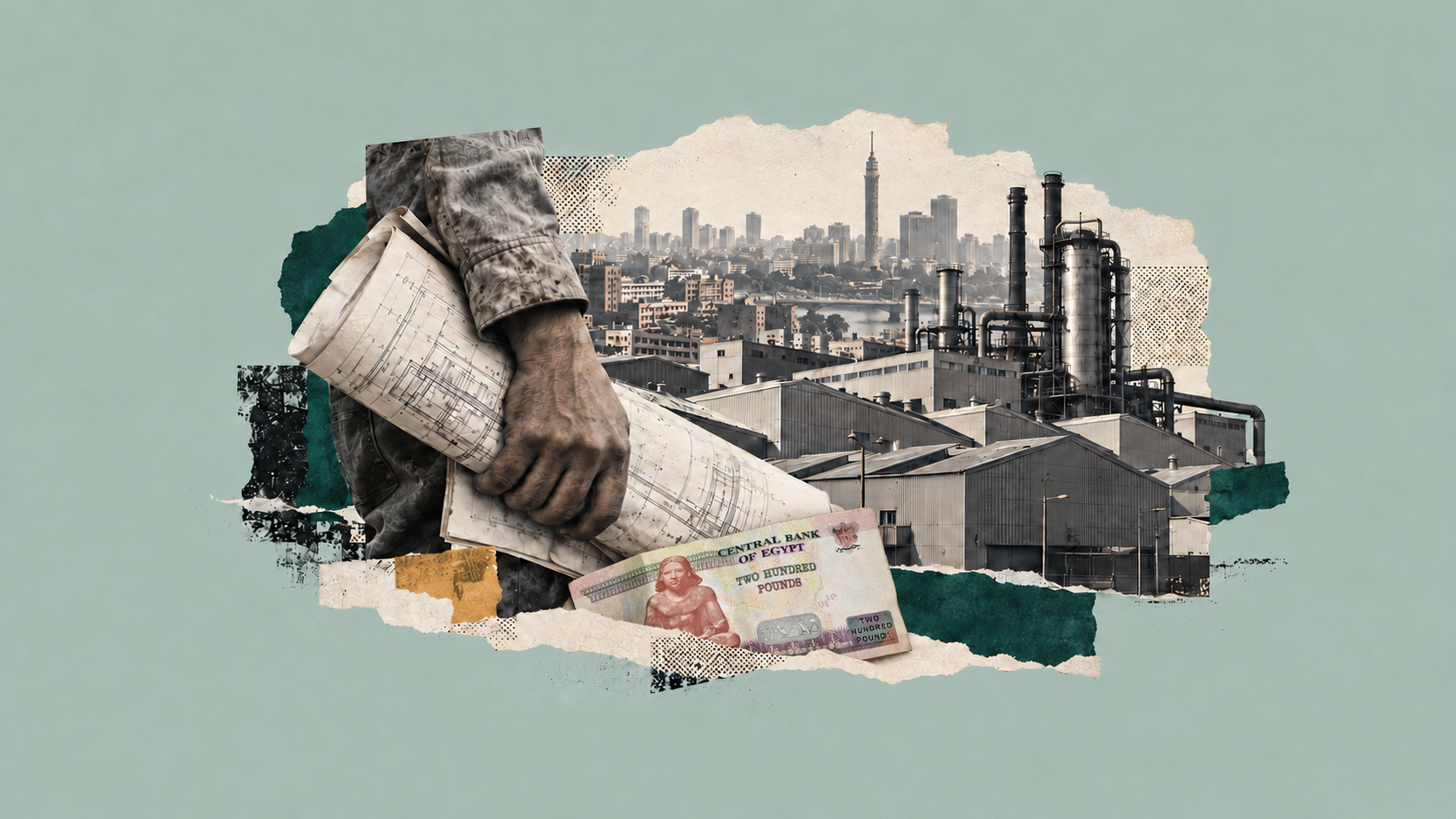
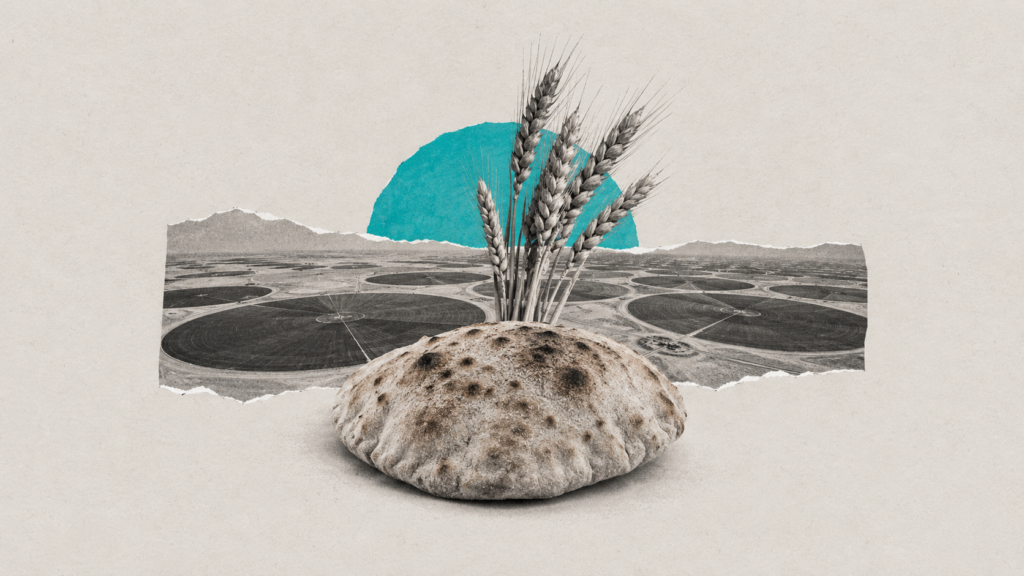
On 6 July 2026, Al Arabiya Business reported, citing a source at the Emirati company Al Dahra, that the company had increased its supply of wheat grown in Egypt to the government to 45,000 tonnes during the season, worth EGP 750 million. It also announced the reclamation of an additional 1,000 feddans within its land in Toshka, as part of a broader agricultural investment activity inside the country. These figures open a debate that goes beyond the size of the harvest to the terms of use of the land and water, and the return Egypt receives in exchange for making these resources available.
Al Dahra presents itself as one of the largest private-sector suppliers of wheat to the Egyptian government. But it has also remained a party to a controversy over the allocation and pricing of land, which included lawsuits and demands to annul its contracts in Toshka, which included a price of EGP 50 per feddan. Added to this history later was a financing agreement for supplying wheat and basic commodities to Egypt, announced in 2023 with a ceiling of up to $500 million over five years. However, bringing these facts together in a single story requires separating local production from import activity.
The company’s presence in supply has raised questions among economists about the feasibility and terms of the project, especially with the circulation of a notion that the wheat grown on Egyptian land is sold to the government in dollars. But the sources reviewed by the report do not prove that it accounts for the majority of government purchases, nor do they support applying the currency of the import agreement to the output of its Egyptian farms. They are two different activities, even when the company plays a role in both.
The company source affirmed, in the Al Arabiya Business report, that the wheat from its Egyptian farms is supplied in Egyptian pounds and at the official price. Economist Hany Tawfik also published a clarification on Facebook under the title “Right of Reply”, presenting the company’s response regarding its investments, its employment of Egyptians and its supply of wheat at the official price. Distinguishing between this response and an assessment of the terms of the investment remains necessary: correcting the information on the currency of supply does not close the debate over land, water and the public return.
As for the other agreement, it was announced by the Abu Dhabi Exports Office (ADEX) in August 2023: revolving financing worth $100 million, with a planned annual renewal for five years, for a total of up to $500 million, to facilitate the purchase of wheat and basic commodities through Al Dahra. On 26 August 2026, the company announced the signing of the implementation agreement with ADEX and the General Authority for Supply Commodities, and defined its subject as the supply of imported wheat. The value describes the ceiling of the programme, not an amount proven to have been disbursed in full, nor the price of the harvest of Egyptian land. The legitimate question remains the terms of the import financing and its relationship to the policy of increasing local production.
It Began in Toshka: EGP 50 per Feddan
The Emirati company’s expansion in Egypt was linked to the Toshka project, where 100,000 feddans were allocated to it at a price of EGP 50 per feddan, according to the facts on which the legal challenge announced in 2011 was based. In the following years, the controversy over the allocation procedures and the pricing of the land continued, before the area the company holds in the project shrank after more than 62,000 feddans were withdrawn from it. Reports quoted sources in the project as saying that the withdrawal was linked to a failure to adhere to the timetable for reclamation and cultivation, a matter that differs from establishing the outcome of the lawsuit.
The project, which the state launched in the south of the Valley during the 1990s, was one of the largest projects of agricultural and urban expansion outside the Valley and the Delta, and aimed to reclaim hundreds of thousands of feddans and move part of agricultural activity to desert areas. The state spent large investments on the project’s infrastructure, including pumping stations, water networks, canals and hydraulic structures, before assigning wide areas of it to Egyptian and Gulf investment companies.
The project relies on conveying water from Lake Nasser to the reclaimed land through a network of canals and pumping stations. With the revival of the project and the expansion of investment in it, large parts of the land came to be distributed among different companies and institutions, including companies linked to Gulf investment.
The Siyada network, in a report published in February 2020, cited a report by the Central Auditing Organisation issued in 2014 comparing a sale price of EGP 50 per feddan in some Toshka contracts with a market estimate of EGP 11,000. The report did not have an independent copy of the original oversight document, and the comparison is therefore attributed to this press account and is not presented as a current valuation of the land. Linked to it is the question of how the cost is distributed: the main infrastructure financed by the state, versus the internal reclamation, irrigation and drainage networks and pumping stations borne by the investor within its land.
In April 2011, the Egyptian Center for Economic and Social Rights announced a lawsuit challenging the contract, based on a legal opinion issued by the General Assembly of the Fatwa and Legislation Departments of the State Council on 9 February of the same year. These are a legal opinion and a judicial move to challenge the contract, and they are not in themselves a final ruling annulling the contract or proof that the entire area was recovered under a ruling. The report did not find among its sources a copy of a final ruling settling the outcome of the lawsuit.
The Center’s objection focused on the price of the land and the contracting procedures and the extent of their compliance with Tenders and Auctions Law No. 89 of 1998, and on the limits on ownership of desert land under Law 143 of 1981. It also announced the filing of complaint No. 6525 of 2011 concerning suspected squandering of public funds and facilitating their seizure. These remain the accusations of those who filed the complaint, not an established judicial conviction of officials or of the company.
In January 2020, Al-Mal newspaper reported, based on an official circular it said it had obtained, that in late 2019 the government withdrew about 62,448 feddans of the area allocated to the company in Toshka, leaving about 37,552 feddans. It quoted sources in the project as linking the decision to the delay in reclamation. A distinction must be made between this administrative measure and the outcome of the earlier litigation; moreover, the change in the Toshka area alone does not determine the total of the company’s land in other areas.
Despite the shrinking of its original area in Toshka, the company continued its activity in other areas. In a statement it issued in November 2024, it announced that its portfolio in Egypt amounts to about 67,000 feddans, of which more than 40,000 feddans are irrigated, distributed across four farms in Toshka, East Owainat and Salhia. These are data the company announces as of a specific date, not an independent inventory of its holdings or of the areas planted with wheat in the 2026 season.
The company said it has invested more than $250 million in Egypt since it began operating, in land reclamation and modern agricultural development projects, and that it has also built a solar power plant with a capacity of 20 megawatts.
The UAE Farms for Us
In February 2022, Al Bayan newspaper quoted Egypt’s then Minister of Agriculture, El-Sayed El-Quseir, as saying that Emirati investments in agricultural production in Egypt exceed $7 billion. This is a statement dating from that time, not a new statistic for 2026; nor does the total figure alone reveal how the money is distributed between buying existing assets, reclaiming or preparing new land, and financing trade.
The sources reviewed by the report do not include a recent, comprehensive official database of the areas held by Gulf companies. Masr 360, in August 2026, cited independent estimates of about 450,000 feddans for Gulf companies, of which 306,000 feddans belong to Emirati companies, with a Saudi presence in the remaining areas. But in the source these figures are not accompanied by a unified, detailed breakdown that distinguishes ownership from leasing and allocation or specifies the date of each area; they are therefore not suitable on their own for calculating a confirmed current share of Egypt’s agricultural land.
Al Dahra grows wheat, maize, sugar beet, fodder and other crops. In the November 2024 statement, it described itself as the largest private producer of wheat in Egypt over the previous three years, and said it had supplied 450,000 tonnes of wheat to government silos since it began operating, estimating the effect of this on the import bill at more than $250 million. It also announced the production of more than 300,000 tonnes of maize and sugar beet. In another post, it spoke of supplying more than 470,000 tonnes of sugar beet and maize over five years. These are company disclosures with different time frames and crops, so they are not added together as the output of a single season, and sugar beet is not to be replaced with processed sugar when describing production.
Emirati investments also include NRTC Food Holding, which acquired the Al-Hashemeya farms in Wadi El-Natrun. The company’s website puts the area of the complex at about 10,000 acres, with about 70% of it cultivated. The “acre” unit used in the source is not the Egyptian feddan, and so the area is not reported as 10,000 feddans without a declared conversion. Nor does the percentage of the cultivated area mean that the remainder is immediately available for a particular crop, and it does not on its own determine the rate of water use.
The company states that the complex contains more than two million fruit trees, and that its production capacity reaches 70,000 tonnes a year. The declared crops include citrus, mangoes, grapes, olives, dates, wheat and sugar beet, with centre-pivot irrigation systems and solar power. It is therefore not correct to say that the portfolio contains no wheat, nor to treat the maximum capacity as actual production achieved every year. This portfolio shows the diversity of investment purposes between fruit and other crops, rather than reducing it to the supply of grain.
Jenaan stands out as another example of an agricultural investor’s changing choices. In statements published in November and December 2013, the company spoke of shifting from livestock fodder to wheat in Egypt, after losses in the fodder business and at the direction of Abu Dhabi. More recent reports point to its activities in olives, dates and fodder in Minya and East Owainat, but the report has not verified a recent independent inventory of its crops and areas. The historical example shows that the decision on which crop to grow may change according to profitability and investment direction, and that the announcement of a shift in one year does not prove that it has continued in the same way to this day.
Economic researcher Mohamed Ramadan believes that assessing the role of Al Dahra in the Egyptian wheat sector requires looking at the size of its production compared with the state’s total needs, explaining that the quantities the company announces it supplies to the government remain limited compared with the volume of local consumption.
Ramadan explains to Zawia3 that the production of a single company, even if it is among the largest local suppliers, does not settle the self-sufficiency equation. To determine the size of the needs, a distinction must be made between total consumption, imports and the needs of subsidised bread; these are not interchangeable figures for the same indicator. The US Department of Agriculture report issued in March 2026 estimated Egyptian consumption at about 20.3 million tonnes in the 2026/2027 marketing year, which is much broader than the needs of the subsidised bread system alone.
He adds that the presence of foreign investment companies growing wheat in Egypt can be positive from an economic standpoint, if the activity is genuinely directed towards producing a strategic crop that the state needs, but the more important issue, in his view, concerns how limited water resources are used, and which crops are grown with this water.
Ramadan says that Egypt faces a growing crisis in water resources, as the per capita share of water has fallen below the water poverty line, alongside population growth and almost fixed available water resources, which makes setting priorities for the use of water in agriculture an economic and strategic issue of great importance.
He points out that the assessment of agricultural investments should not be limited to the area of land controlled by companies or the volume of production, but must include the nature of the crops grown, their water consumption, and the economic and social return they generate.
Ramadan draws attention to the extent of the areas belonging to Al Dahra in regions such as Toshka, and raises a question about the crops grown on the rest of the land alongside wheat, and how much water each of them consumes. But wheat productivity cannot be deduced by dividing its quantities by all of the company’s declared land; the portfolio includes different crops and regions, and may include uncultivated land or multiple crop rotations. The answer requires data on the wheat area itself, its season, its production and its water consumption.
He adds that the matter is not limited to Al Dahra, but extends to a number of other Gulf agricultural investments, noting that part of this land may be used to grow export-oriented crops such as alfalfa, which consumes large quantities of water, something that is linked, in his assessment, to the investor’s calculations of economic profitability.
He explains that wheat is not among the crops with great appeal to the investor when the aim is export, compared with other crops that achieve a higher return in foreign markets, which may explain the orientation of some agricultural investments towards export crops instead of strategic crops.
Ramadan says that this issue reveals a wider problem in the model of agricultural investment in Egypt, namely reconciling the goal of attracting investment with achieving food security goals, adding that the state needs to set clearer policies on the type of crops it aims to grow on new land, especially in light of water scarcity.
Where Are the Self-Sufficiency Pledges?
Egypt is among the world’s largest importers of wheat, but estimating the import bill requires specifying the year, the quantities, the prices and the scope of the data, and a dollar range cannot be fixed as a permanent annual bill. On 5 May 2026, Minister of Agriculture Alaa Farouk told Reuters that the government aims for self-sufficiency in the wheat used to produce subsidised bread by 2028. The report stated that the draft 2026/2027 budget estimates the needs of this system at about 8.6 million tonnes. This target concerns subsidised bread, and does not mean ending imports of all the wheat used in Egypt.
According to Reuters, the 2028 date comes after an earlier target of 2027 announced by the head of the Mostakbal Misr Agency, Bahaa El-Ghannam, in May 2025. The postponement of the date concerns the comparison between the two statements and their dates, so it is not correct to project it onto an older news item as though it had known in advance of the more recent announcement. Likewise, the scope of the target, that is, the wheat for the subsidised bread system, should be preserved when speaking of either date.
The grain procurement system underwent a change in late 2024, with a major role in government imports moving to the Mostakbal Misr Agency for Sustainable Development. But this does not mean that all of the country’s imports became governmental, nor that the General Authority for Supply Commodities disappeared from the contracts. Al Dahra’s announcement in August 2026 still names the Authority as a purchasing party in the imported wheat agreement, which requires distinguishing between the management of purchasing, the contracting entity and the private sector.
Import figures differ according to the date of the estimate and the reference period. Al Arabiya Business reported on 30 December 2025 about 13.2 million tonnes for that year, compared with about 14.2 million tonnes in 2024. By contrast, US Department of Agriculture reports use marketing years that span two years; in its update of 28 September 2026, it estimated imports for the 2026/2027 marketing year at about 12 million tonnes. A calendar-year figure and a marketing-year figure cannot be treated as though they formed a consistent series, nor can the seasonal forecast be described as a complete final result.
In an earlier interview published by Zawia3 on 4 February 2026, Dr Nader Noureddine, former adviser to the Minister of Supply, said that the Mostakbal Misr Agency supervises the import of wheat allocated to the ration and subsidised bread system, estimating this share at about five million tonnes annually, compared with more than 7.5 million tonnes covered by the private sector for the needs of the market. These estimates are reported in their time context and are not presented as a new customs tally or an inventory of every existing contract.
Zawia3’s earlier report had examined the Mostakbal Misr Agency as a government entity established by Presidential Decree 591 of 2022, headed by Bahaa El-Ghannam, and its role in land reclamation, importing commodities, food production and other projects. The discussion here relates to the expansion of its role, the mechanisms of purchasing and supply, and the transparency of data, and not to an assumption that a single private company or government body controls all the wheat consumed in the country.
Why Don’t We Grow Our Own Wheat?
Dr Khaled Ayyad, a professor at the Agricultural Research Center, tells Zawia3 that wheat cultivation in Egypt is technically capable of achieving high levels of local production, noting that expanding the cultivation of strategic crops, foremost among them wheat, should be a fundamental part of the state’s agricultural and food policy.
He explains that foreign investments in the agricultural sector can be beneficial if they are tied to clear conditions that ensure agricultural land is directed towards the crops the state needs, considering that assigning areas of land to investment companies is not a problem in itself, as long as there is a clear commitment to supply local production to the state and meet part of the Egyptian market’s needs.
He points out that there are precedents of foreign investment in Egypt’s agricultural sector that achieved positive results, especially in the cultivation of citrus and crops intended for export, and that contributed to raising the quality of Egyptian produce and strengthening its competitiveness in global markets. But he stressed the need for land-use contracts to include conditions linked to food security, so that the investor’s role is not limited to export production while the state remains dependent on importing strategic crops that can be produced locally.
Ayyad draws attention to Egypt’s experiences in raising wheat production, and believes that reaching higher levels of self-sufficiency is possible, and that the obstacle is not only technical or agricultural, but is linked to market, import and procurement policies. His remarks included an assessment that Egypt had previously come close to self-sufficiency, but without specifying a year or a statistical series that would allow this comparison to be established; it is therefore presented as his assessment of the potential and the experience, not as a settled historical fact about the country’s total consumption.
He explains that the state has agricultural potential that allows wheat production to be expanded, in addition to the existence of varieties that can tolerate high levels of salinity, which opens the way to using new areas of land, affirming that generalising these experiments and expanding the cultivation of varieties suited to Egyptian conditions can support the goal of self-sufficiency.
The feasibility of expansion remains linked to the quantities of water available, the cost of energy, reclamation and storage, and the productivity of the varieties under the actual conditions of each region. The possibility of growing a salt-tolerant variety does not mean that resource constraints are lifted, and raising production does not automatically guarantee that the state will buy the crop at the required price and quantity throughout the year.
With regard to major agricultural projects, including the Toshka project, the agricultural research professor believes that investments that obtain land equipped with infrastructure on which the state has spent billions of pounds should be linked to a direct return for Egypt’s food security, especially when it comes to a strategic crop such as wheat.
He adds: “If the state gives the investor the land on the basis of growing wheat, it is logical that the main aim should be to contribute to covering the needs of the local market, and then to direct the surplus to export, and not for the state to continue importing wheat at the same time.”
Economic researcher Mohamed Ramadan affirms that the debate on self-sufficiency in wheat is more complex than reducing it to the question of whether or not a particular company grows wheat and supplies it to the government, noting that wheat is “a commodity that goes beyond economics to politics”, given its link to food security, market stability and the state’s ability to provide bread.
He explains that the wheat problem is also linked to the prevailing economic and agricultural pattern, and to how government policies deal with small farmers, noting that a large part of Egypt’s wheat production does not enter the government procurement system, but is kept by farmers for household consumption or storage, within what he described as “subsistence farming” or the production of family needs.
Ramadan points out that the small farmer may find himself facing a trade-off between growing wheat for local consumption and growing other crops, especially export crops, noting that the rising costs of production inputs, including fertilisers, further complicate this equation.
He adds that the state cannot deal with the wheat crisis in isolation from these factors, considering that reaching higher levels of self-sufficiency requires reconsidering a wide range of agricultural and economic policies, and not only increasing the areas farmed by large investment companies.
Is Imported Wheat Safe?
Dr Khaled Ayyad warns that continued reliance on importing wheat, despite the possibility of increasing local production, imposes additional burdens on the import bill, especially as wheat is bought in foreign currency, noting that achieving self-sufficiency in wheat would ease the pressure on the state’s dollar resources.
Regarding the quality of imported wheat, Ayyad stresses the importance of strengthening the capacities of oversight bodies and specialised laboratories in inspecting imported shipments, affirming that detecting certain pests, fungi and mycotoxins cannot rely on visual inspection alone, but requires equipped laboratories and specialised personnel capable of carrying out the necessary tests.
He explains that the existence of an effective and independent oversight system is a key element in protecting the local market, especially when dealing with large shipments of imported wheat, noting that the state needs to possess the technical and institutional capacity to reject any shipment that does not meet the required health standards and specifications, regardless of its source.
This is a call to strengthen oversight, not proof that imported wheat in general, or any particular shipment, is unsafe. The report does not present the results of an analysis of a specific shipment that would justify a judgement on it; judging conformity requires samples, tests and published specifications, not the country of origin or the impression of imports alone.
Ayyad affirms that achieving self-sufficiency in wheat should not be viewed only as an agricultural goal, but as a decision linked to the state’s food and economic security, adding that Egypt, in terms of resources and agricultural expertise, has potential that allows it to increase its production of basic crops.
He points out that the problem lies in the need to strike a balance between attracting foreign investment and protecting the state’s economic and food interests, explaining that the foreign investor is part of economic activity, pumping money into the market and creating opportunities for work, production and export, and that dealing with agricultural investments therefore requires an integrated vision that is not limited to a single crop or a particular sector.
He stresses that what is needed is to set clear conditions for the use of agricultural land, so that investments achieve multiple goals at the same time, including supporting food security, increasing production, raising the quality of agricultural products and boosting exports, instead of investments turning into a means of increasing dependence on abroad for strategic commodities, affirming that Egypt has great agricultural assets, and that reaching self-sufficiency in wheat remains an agriculturally achievable goal, but one that requires clear and stable policies linking land allocation, local production, the procurement system, imports and food quality control.
In conclusion, foreign investment in agriculture is not a problem in itself; rather, it can be a lever for production, technology, exports and job creation. But the value of any agricultural investment is measured not only by the money it has pumped in or the crops it has produced, but also by what it adds to Egypt’s ability to secure its food, and by how it uses resources that cannot be replaced, foremost among them land and water.
While the government aims to secure locally the wheat needed for subsidised bread by 2028, the most important question remains open: if the state invests in land reclamation, bears the cost of infrastructure and faces water pressures, how do contracts and policies set a clear balance between the investor’s profitability and the food needs of Egyptians? The answer requires data that can be reviewed and declared conditions whose implementation can be measured, while separating the increase in local production, the financing of imports and ensuring food safety.