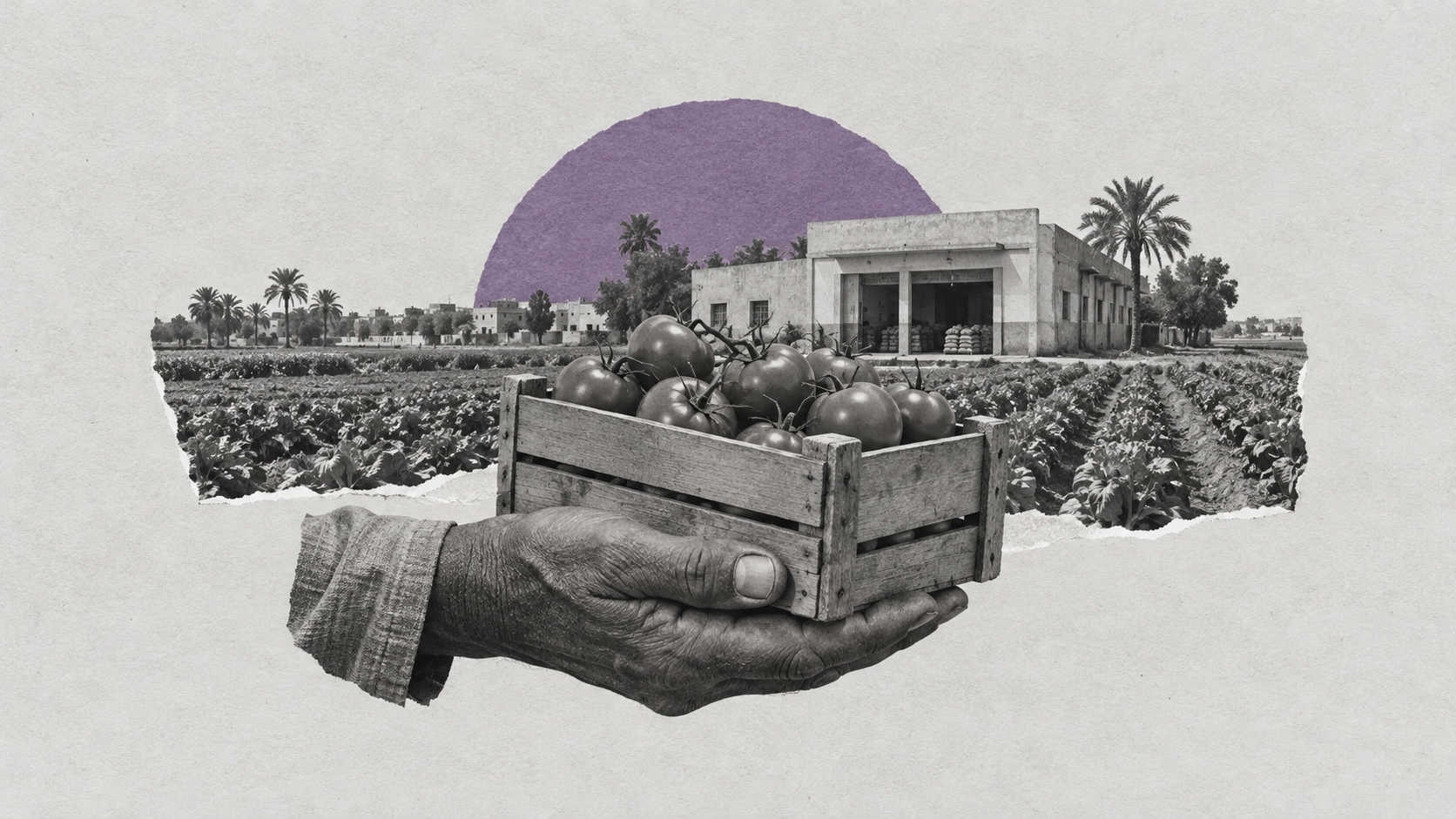


Egypt’s Health Ministry was preparing to offer around 40 health facilities to private operators in the coming months, according to government-source reporting published by Al Manassa in June 2025. The proposed concessions included existing hospitals in several governorates and hospitals under construction in new cities.
The plan has generated concern among medical professionals and patients. The government presents private participation as a way to improve quality, attract investment and ease pressure on the budget. Critics fear higher charges and reduced access to free or subsidised treatment, particularly for low-income households.
The legal framework is Law 87 of 2024, published in the Official Gazette on 23 June 2024 and effective the following day. It permits concessions for constructing, managing, operating and developing public health facilities. A concession transfers specified operating responsibilities for a period; it does not in itself amount to selling the hospital.
The law allows terms of three to fifteen years and provides for facilities and equipment to return to the state at the end, subject to its provisions. It excludes primary-care units and family-health centres. Blood and plasma activities remain governed by their separate legislation except where they form complementary services.
Operators must provide a share of services to beneficiaries of state-funded treatment and health-insurance schemes at state-set prices, but the law does not specify a single fixed percentage. Cabinet decisions set concession conditions and oversight arrangements. These safeguards exist in the text; the debate concerns whether their detail and enforcement will adequately protect patients.
Rights lawyer Khaled Ali challenged decisions concerning private-sector participation before the administrative courts, raising constitutional objections. The litigation sought to stop and annul relevant decisions and questioned the law’s compatibility with the right to health. That is different from saying the administrative court itself can directly repeal a statute.
Who will treat people who cannot afford to pay?
The debate comes after a period in which the government reported substantial expansion in coverage and activity. A December 2024 Cabinet media summary said the number of people insured rose from 54 million in 2014 to 70 million in 2024, an increase of 29.6%. This refers to health insurance more broadly, not solely the newer universal health-insurance system.
The same summary reported 2,700 hospitals in 2024, compared with 1,673 in 2014. Over ten years, it said, 33.9 million state-funded treatment decisions benefited 20.4 million people at a cost of EGP 114.2 billion. It also reported 218 million services under presidential health initiatives and 94 million beneficiaries across more than 3,527 units.
Officials cited 16.4 million people screened under the chronic-disease and kidney-disease initiative, and 2.5 million cases served through the waiting-list programme. Those are cumulative programme figures, not all activity within the June 2023–January 2024 period cited for the first phase of “100 Days of Health”, which delivered roughly 60 million services.
Counts of services, visits, treatment decisions and people measure different things. They cannot be added together as though each represents a different patient or an equivalent measure of continuing access.
The figures sit alongside persistent financial vulnerability. CAPMAS’s published poverty series rose from 27.8% in 2015 to 32.5% in 2017/18, before declining to 29.7% in 2019/20. Subsequent estimates cited in public debate—including figures above 32% and forecasts exceeding 36%—use different periods or methods and should not be treated as a single verified official annual series.
Inflation and reduced purchasing power nevertheless form an important part of the concern raised by health advocates: a household already struggling with everyday costs has little capacity to absorb a new treatment bill.
The universal health-insurance rollout has also drawn criticism over its pace and effectiveness. The original report cited roughly three million services for more than 870,000 beneficiaries during the first quarter of the 2024/25 financial year across the first-phase governorates of Port Said, Luxor, Ismailia, South Sinai, Aswan and Suez. Those quarterly activity figures should not be confused with the total number registered in the system.
The first phase had 5.4 million registered people according to the government’s December 2024 account. Different references to people insured, registered or receiving care at a particular time therefore need to be kept separate.
Critics argue that large campaign totals do not resolve shortages of staff, deteriorating infrastructure or differences in quality between governorates. Campaigns can expand screening and treatment, but their reach does not by itself establish the availability of dependable everyday care.
The original report also cited 664 government hospitals and 88,597 government beds in 2021. These older figures relate to a defined public-sector category and should not be presented as a current total covering every public, university and private facility.
University hospitals likewise remain important providers. Figures cited in the report described an increase from 88 hospitals in 2014 to 125 in 2023 and more than 24.5 million patient services in 2023/24. Hospital definitions and reporting periods must be consistent before comparing these totals with other branches of the system.
For public-health advocates, the central issue is whether operating contracts preserve accessible treatment in practice—not simply whether the number of hospitals or recorded services has increased.
Underfunding and the limits of reform
Mohamed Hassan Khalil, a cardiology consultant and coordinator of the Right to Health campaign, says hopes raised by the 2014 Constitution have not been met. Article 18 requires government health spending of at least 3% of gross national product, with gradual increases towards international levels. The constitutional denominator is gross national product, rather than gross domestic product.
Khalil argues that actual funding remains well below what the system needs. He cites a health-spending share of around 1.7% of GDP in the years following the Constitution, followed by renewed pressure after the 2016 economic programme agreed with the International Monetary Fund.
He puts the allocation in the 2024/25 draft budget at 1.17% of GDP. This is his reading of a particular budget measure; it should not be equated without qualification with every official calculation of constitutional health spending. Classification, the agencies included and the denominator affect the comparison.
Khalil advocates substantially higher public expenditure, citing a target of roughly 6% of GDP or 15% of the budget. These percentages are not automatically equivalent, and the report does not establish a single universally applicable WHO requirement at those levels.
He also criticises Egypt’s dependence on direct household payments. His interview cites an out-of-pocket share of around 71%, compared with a global figure of 19%, but does not identify the year or dataset for that comparison. His underlying concern is that illness can push families further into poverty when payment falls directly on patients.
On capacity, Khalil contrasts a historical figure of 22 beds per 10,000 people in the 1960s with 8.1 in the category he describes, and a global comparison of 29. Differences in coverage and statistical years mean these should not be treated as an independently verified, like-for-like series.
He says staffing is similarly inadequate and attributes medical emigration to low pay, difficult working conditions, limited training and weak job security. Estimates cited in the report place Egyptian doctors abroad at 120,000–150,000, but a directly comparable count of doctors actively practising at home and abroad was not supplied. The estimates nonetheless illustrate the scale of the concern raised by medical advocates.
New laws, new costs?
Khalil identifies Universal Health Insurance Law 2 of 2018 as a major reform, while arguing that implementation has fallen short of expectations. He says the new scheme covered fewer than 4.5 million people at the end of 2023, roughly 4.2% of the population, against official ambitions for nationwide coverage. That is an earlier snapshot than the government’s end-2024 registration figure.
He objects to contributions and co-payments that households may face, including contributions linked to dependent spouses and children. He also questions the distribution of obligations between households, employers and the state. The scheme includes state support for eligible people unable to pay; the dispute concerns how well that protection reaches those who need it.
Taxes and fees on tobacco and vehicle licensing are among the revenue sources he mentions. Khalil argues that additional payments should be judged against the quality and reliability of the services delivered.
He sees the 2024 concessions law as another step towards profit-driven provision. Although parliament considered the measure in May, it was promulgated in June. Private operators may manage facilities for up to fifteen years, while the share of services reserved for publicly funded patients is left to more detailed arrangements.
Khalil warns that transferring management does not, by itself, solve inadequate public funding, ageing infrastructure or staff shortages. Without effective safeguards, he fears it will deepen unequal access.
He acknowledges gains in maternal and child health and the expansion of early detection, including the “100 Million Healthy Lives” campaign. Nevertheless, he regards campaigns as insufficient substitutes for a sustainable system that reliably finances treatment.
For Khalil, Egypt’s medical history and capacity make a stronger public commitment possible. He calls for the state to retain primary responsibility for financing and securing treatment, with constitutional health rights guiding policy rather than profitability alone.
The pressures identified in the report extend beyond ownership or management arrangements. Medical staff leave for better conditions, facilities struggle to meet demand and fiscal constraints encourage the government to seek investment that does not fall entirely on the treasury. Those conditions explain the attraction of partnerships while also making the terms of those partnerships consequential for poorer patients.
Investment does not settle the question of access
Private and foreign investment in Egyptian health care predates the 2024 law. The examples cited in the report should not all be treated as acquisitions of public hospitals or as results of the new concessions framework.
A 2020 announcement by Denmark’s development-finance institution described an investment in Humania, a hospital company sponsored by Bait Al Batterjee Medical and operating under the Saudi German brand. Its plans covered Cairo, Alexandria and Casablanca, with IFC and Proparco among the equity partners.
Separately, British development-finance institution CDC invested in Alfa Medical Group. The original article’s link to Alfa should not be read as evidence that Humania and Alfa were the same investment. It also cited announced cooperation involving Concord and Egypt’s sovereign wealth fund; announced funds or commitments are not necessarily completed investments.
Supporters of private participation argue that capital, management expertise and technology can improve capacity and quality. Critics ask who will be able to afford the resulting services, and how public obligations will be enforced when operators have commercial incentives.
Health-policy researcher Karim Tarek tells Zawia3 that his objection is not simply to private management as a principle. It is to what he sees as insufficient transparency and enforceable guarantees for patients.
He says reports of more than 40 hospitals being offered under three-to-fifteen-year arrangements raise two principal concerns. The first is how patients receiving state-funded or insured treatment will continue obtaining care after management changes.
The law does require a share of services at state-set prices and provides for oversight. Tarek questions whether the public has enough information about the actual contracts, monitoring arrangements and remedies when operators fail to meet their obligations. His claim of inadequate guarantees should therefore be distinguished from a claim that the legislation contains no safeguards at all.
The second concern is employment. The statute requires continued employment of at least 25% of a facility’s workers, where they agree, while preserving their financial and employment rights. Tarek fears substantial displacement among the remainder. That minimum is not evidence that 75% have already been dismissed, nor does it establish an unconditional power to dismiss them without other legal protections.
He cites complaints surrounding the transition at the former Hermel oncology hospital, including reported delays in medicines and treatment. These reports concern patients’ experiences and remain subject to the responses of the institutions involved. Contemporary reporting also recorded the incoming management’s position that it was not responsible for events before taking over in June 2025.
For Tarek, the missing information is practical: which hospitals are involved, how many publicly funded patients they serve, what services must continue and who will be accountable if access deteriorates.
He argues that without those details, it is difficult to assess near-term effects, while a meaningful assessment of longer-term social and economic consequences requires time and evidence. The debate is therefore about the conditions of access and accountability as much as about who manages the buildings.