
Just days after the Egyptian government began enforcing the new Labor Law No. 14 of 2025, promoted as a step toward protecting workers’ rights, the country witnessed a tragic incident: a baby girl, not yet four months old, lost her life after her mother, Doaa Mohamed—a worker at “Nile Linen Group” for textiles and home furnishings in Alexandria—was prevented from leaving the workplace to take her sick child to the hospital.
The company’s management refused to grant her leave, or even a short permission slip, and she was held inside the factory for three continuous hours, trying to secure authorization to exit through the company gate.
This harrowing incident exposed the harsh conditions endured by many workers in factories and companies, where some pay with their lives as a result of unfair regulations, weak government oversight of employers, and the absence of an effective role for independent unions in protecting their rights, according to labor and human rights organizations and experts in the field. Under such circumstances, the workplace turns into a source of pressure and danger instead of a safe environment that guarantees dignity and basic rights.
Doaa Mohamed had returned to her job just ten days after finishing her maternity leave, only to discover that her infant had contracted a stomach infection requiring hospitalization. She tried to obtain leave by calling the company’s management, but her request was denied. This forced her to bring her child along to work, fearing a financial deduction that could reach 2,000 pounds ($40) if she missed two consecutive days, according to eyewitnesses who spoke to Zawia3.
HCWW Workers in Egypt: Exploitation and Wages Below Minimum Wage

From Cost of Living Allowances to “Discipline Incentives”: A New Tool of Pressure
One worker, who preferred not to disclose his name for fear of jeopardizing his job and personal safety, told Zawia3 that what happened to Doaa and her infant was not an exception but rather a recurring policy within the company toward workers.
He explained that the 2,000 pounds ($40) deducted by management in case of absence for medical reasons—whether with or without permission—was originally paid as a “cost of living allowance.” The company, however, reclassified it under the heading of “discipline incentives,” using it as a tool of pressure and bargaining to prevent workers from taking leave, even sick leave.
According to the source, the company also counts these incentives as part of the legally mandated minimum wage. If a worker is absent—even with a medical certificate—they are deprived of this allowance as well as other benefits such as holiday bonuses and food packages distributed before Ramadan. Moreover, the company imposes restrictive and excessive conditions for obtaining leave, forcing many to work despite severe health conditions.
These practices triggered outrage among employees, who launched a strike demanding: “accountability for those responsible for the infant’s death, adjustments and increases in wages, elimination of unlawful conditions attached to what is labeled as the ‘cost of living allowance’ included in the minimum wage, cancellation of the complicated procedures for obtaining leave, and guarantees for workers’ right to emergency leave when necessary.”
The workers also called for wages to be paid regularly no later than the 5th of each month, and for overtime pay to be provided to tailoring workers who are required to work an additional half-hour daily beyond the maximum hours stipulated by law. They further demanded a risk allowance equivalent to seven days’ wages for workers in the automatic section of the tailoring plant. After four days of striking, the company announced it would meet the workers’ demands, leading them to end the strike and return to work.
Commenting on the incident, the Center for Trade Union and Workers’ Services (CTUWS) described it as revealing the “bitter reality” endured by employees at the company, where legal violations intersect with harsh human circumstances, turning the workplace into a site of oppression and suffering rather than a place that safeguards dignity and rights.
The center urged the Ministry of Labor to quickly dispatch inspectors to the company headquarters, listen to workers’ complaints, and document management’s violations of the law, whether concerning the calculation of the minimum wage or the denial of workers’ right to leave. It also called on the ministry to compel the company to enter genuine negotiations with the workers’ union committee to address current conditions and safeguard labor rights.
For its part, the New Woman Foundation stated in a press release that “this tragedy revealed a flagrant violation of workers’ rights,” stressing that what happened was not merely a labor dispute but a clear violation of the rights to life, decent work, and fair pay—fundamental rights guaranteed by the Egyptian Constitution and international conventions.
Magdy El-Badawi, deputy head of the Egyptian Trade Union Federation, told Zawia3 that the Ministry of Manpower had formed a committee to investigate the death of the infant at the hands of her mother inside the company. He added that the federation was awaiting the committee’s findings before taking the necessary legal measures.
El-Badawi stressed that company and factory regulations may not contradict the labor law, and any regulation that does so is invalid. He noted, however, that some employers enforce unfair rules, such as deducting large sums from wages for absences, describing such practices as illegal and inhumane. He added: “It is impermissible to tie absence penalties to what is called the cost-of-living allowance.”
The deputy federation head criticized the company’s negligence in the latest incident, explaining that the labor law obliges employers to provide childcare facilities for female employees and to grant nursing breaks as well as an additional hour of rest daily. “When the infant became ill, an ambulance should have been called immediately. Failing to do so is a grave error for which the company and the daycare management bear responsibility,” he said.
On complaints documented by Zawia3 from some workers regarding difficulties in obtaining sick or compassionate leave in cases such as death, El-Badawi said Egyptian law provides multiple types of leave—including annual, emergency, medical, and official holidays. He argued that workers’ experiences of being denied leave stem from the obstinacy of certain employers rather than deficiencies in the law or its enforcement.
El-Badawi maintained that the problem lies not in the law itself, insisting that the abuses some workers face in factories and companies are individual cases caused by employers. He emphasized that the federation handles such issues daily with the Ministry of Manpower, either through complaints filed against employers or through negotiation sessions. He noted that workplace inspections fall under the ministry’s mandate, while the federation plays a mediating role, conveying workers’ complaints to relevant authorities.
In contrast, Mona Ezzat, a researcher in economic and social affairs, told Zawia3 that the denial of Doaa’s request for emergency leave “constitutes a violation of a fundamental right guaranteed by the law,” whether under the old or the new law that took effect this September. She explained that the legal purpose of such leave is precisely to address emergencies such as illness, death, or sudden need for medical care.
Ezzat added that the incident was not only a legal violation but also “a total absence of humanity and rights.” She said management should have considered the worker’s and her infant’s situation even in the absence of sufficient leave credits. She described the case as a “double violation: legal and humanitarian.”
However, Ezzat rejected El-Badawi’s characterization of the problem as isolated, arguing instead that such violations relating to leave and workers’ rights are recurrent across many companies. These include restrictions on emergency or medical leave, denial of basic rights such as workplace medical care, and refusal to recognize occupational injuries.
She pointed out that Egyptian law and international labor standards guarantee workers’ rights to medical care and health protection, but the real crisis lies in the absence of sustained government oversight and the tendency to treat each incident as an isolated case without recording or holding violators accountable.
This is not the first time Nile Linen has been accused of violating workers’ rights; the company has a record of abuses, including threats of dismissal and actual arbitrary terminations. Yet the state treats each case as if closing a file without memory or follow-up, she said, encouraging companies to repeat violations without fear of punishment.
Ezzat emphasized the need for “official records documenting violations” and for activating punitive provisions in the labor law against companies with repeated offenses. She noted that such companies often benefit from state privileges such as tax exemptions and discounted land, adding: “These advantages must not come at the expense of workers’ rights.”
She also called for creating a work environment that allows for collective bargaining and dialogue between companies and workers through their unions, stressing that the absence of such balance leaves workers as the weakest link, enabling employers to disregard their legal and human rights.
In 2024, the number of workers in Egypt’s industrial sector reached about 3.946 million, representing roughly 13.2% of the country’s total labor force. Official data showed that the sector witnessed notable growth of 5.4% compared to 2023.
Escalating Labor Protests in Egypt: Closing Doors to Peaceful Negotiations
A Bitter Reality and Recurrent Incidents
The tragedy of Doaa Mohamed’s infant daughter does not appear to be an isolated case. Union and human rights reports reveal that similar incidents are recurrent, with workers in factories and companies often subjected to long working hours in unsafe environments, leading to frequent workplace accidents and injuries, and in some cases, loss of life.
In July, worker Mostafa El-Kilani died and three of his colleagues were injured inside the new Ghazl 1 factory, part of Misr Spinning and Weaving Company in Mahalla El-Kubra, due to a suffocation incident whose cause has not yet been disclosed by management, according to the Center for Trade Union and Workers’ Services. This incident was preceded by a similar one in February, when worker Ayman Abu El-Fadl died from injuries sustained in an explosion at the factory’s new power station, while three other workers were also injured in the same accident. These are only some among many similar cases.
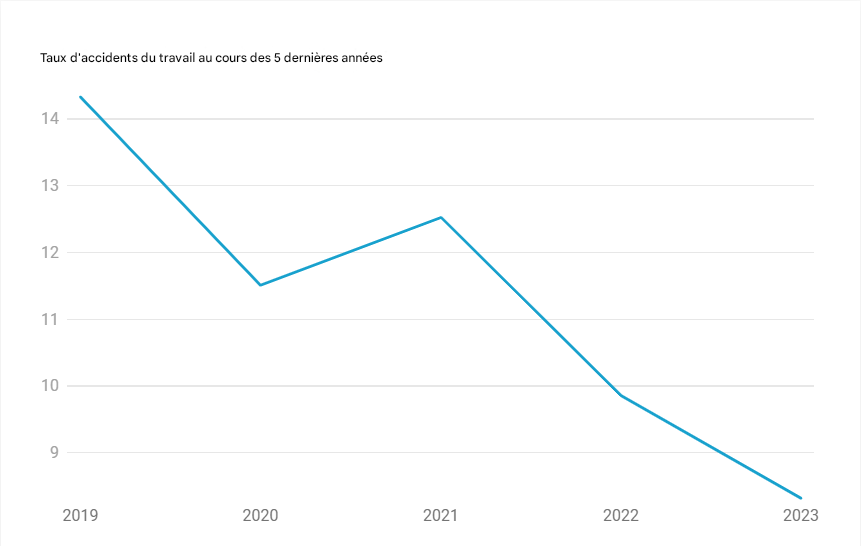
Egypt’s labor market records thousands of worker injuries each year. Despite this, workplace injuries have declined over the past five years, reaching 8,317 cases in 2023 compared to 9,857 in 2022. By contrast, 2019 witnessed a significant spike, with 14,331 injuries recorded, according to statistics from the Central Agency for Public Mobilization and Statistics (CAPMAS).
Commenting on the rise in workplace injuries, Wafaa Ashry, a member of the Bread and Freedom Party under the umbrella of Social Justice Front, told Zawia3 that working conditions in Egyptian factories and companies remain “harsh and inhumane.” She explained that poor work environments mean “factories without sufficient ventilation, leaving workers suffocated by dust or chemicals, or production lines operating for long hours daily without adequate rest periods.”
Ashry added that low wages compound the crisis, as they do not cover basic living costs, forcing many workers to take on second jobs after their regular shifts. This, she said, results in “total exhaustion of body and mind, deprivation of sleep and family life.” She pointed out that such conditions lead to chronic illnesses, recurrent workplace accidents, and the deterioration of workers’ mental health, as they come to feel like mere “tools of production.”
She proposed practical solutions, including: activating the occupational safety and health apparatus through serious periodic inspections and shutting down non-compliant factories until they correct their conditions; establishing childcare facilities within factories or subsidizing nearby nurseries; imposing a minimum wage tied to inflation; and legally allowing independent unions to represent workers at the negotiating table.
Ashry attributed the failure to implement such measures to economic policies pursued since the 1990s, which prioritize “attracting investment at any cost.” This, she argued, has meant “granting businessmen greater flexibility and overlooking workers’ rights in order to maximize company profits.” She also noted that security services treat any labor mobilization as a political threat, creating a climate of fear that stifles organizing efforts.
Labor lawyer Wael Ghali, speaking to Zawia3, said that the core problem in Egypt’s work environment lies in the absence of oversight by labor offices and social insurance bodies, pointing out that many establishments face no real monitoring.
Although laws guarantee workers various forms of leave—including medical, annual, emergency, and maternity leave—Ghali explained that enforcement on the ground remains weak. He added that many workers are deprived of their entitled leave, forcing them to file lawsuits, commonly known as “leave balance cases,” after the end of their service, to claim financial compensation for the leave days they were unable to take.
A State Powerless Against Employer Abuses
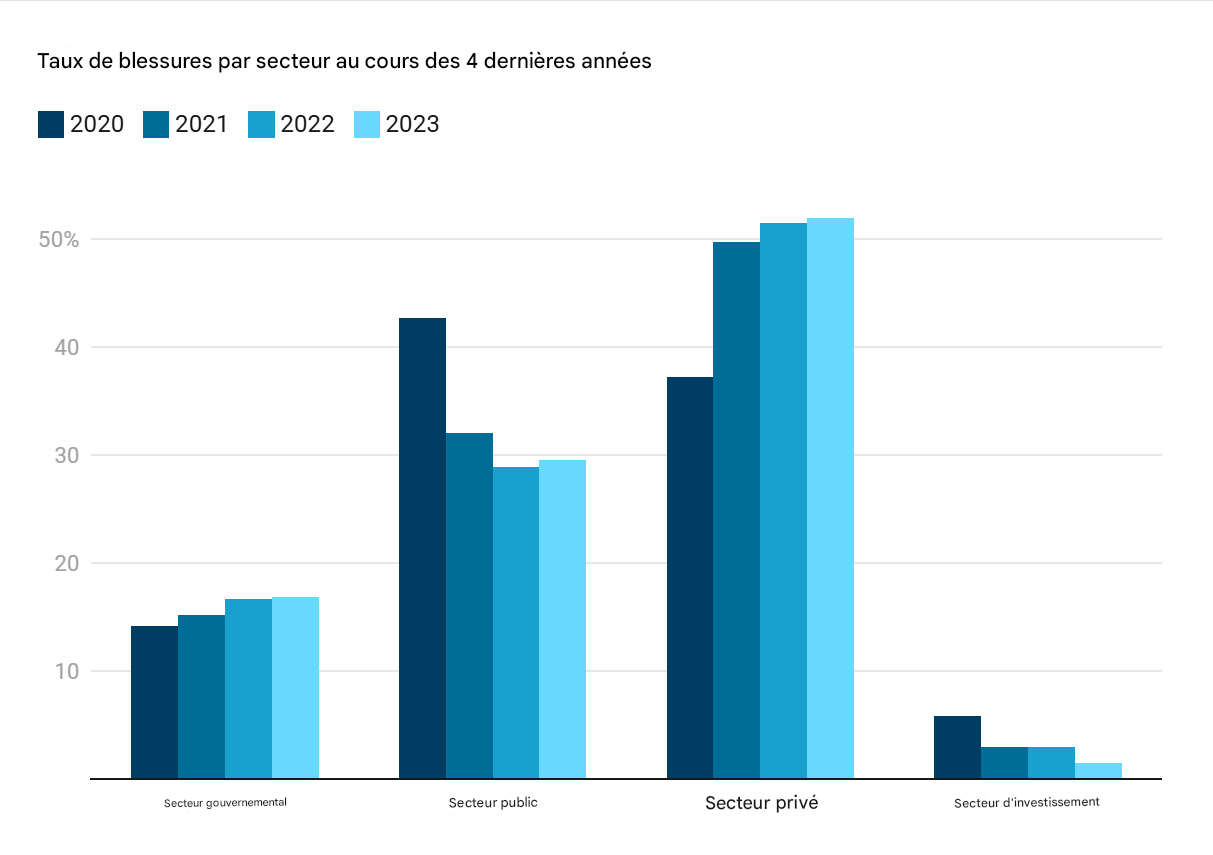
Despite the noticeable decline in workplace injuries in Egypt over the past two years, the manufacturing sector has consistently topped injury rates among workers compared to other fields over the last four years, underscoring the persistent risks faced by those employed in this sector relative to other economic activities. Manufacturing refers to industries that transform raw materials into finished or semi-finished products, such as textile and spinning factories.
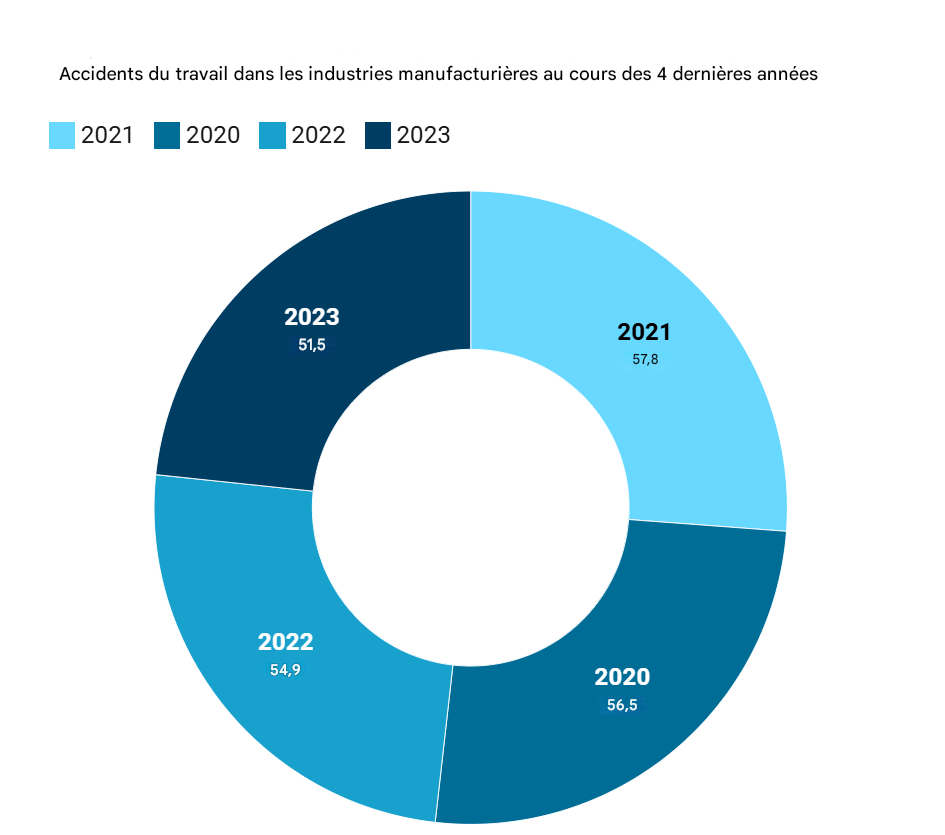
During the same period, the private sector recorded the highest share of workplace injuries, accounting for 52% of all work-related injuries in Egypt.
Sabry Barakat, a lawyer and consultant with the International Labour Organization, told Zawia3 that the infant’s death was a “blatant case of unjustified and unacceptable administrative abuse.” He stressed that the Ministry of Manpower and relevant administrative authorities are obligated to intervene and penalize the company, as what happened was “a clear violation of the law.”
Barakat explained that although the labor law grants workers the right to emergency leave, internal regulations in many companies—particularly in the business and private sectors—impose hefty fines for absences of even one or two days, describing this practice as “contrary to both the old and new legislation alike.”
The ILO consultant added that labor unions have repeatedly demanded amendments to these “illegal” regulations, but their efforts have failed due to weak social solidarity, the absence of strong unions capable of exerting pressure, and “government oversight that is too modest to match the scale of responsibility.”
He pointed out that the number of labor inspectors in Egypt has declined significantly in recent years, at a time when the state should be strengthening supervision of labor relations. He remarked: “Even if they wanted to fulfill their role, they cannot due to their limited numbers and weak resources. This is the state’s responsibility, not that of individuals.”
In Barakat’s view, what happened to the worker is not an isolated case but rather “a reflection of labor relations in Egypt as a whole,” noting that more than 60% of labor regulations in the private sector violate the law, especially in free zones and investment areas. He added: “Employers act arrogantly toward the state, always raising the slogan: if you don’t like it, we’ll shut down and leave.”
He concluded that “these conditions are not limited to a single case but recur daily in tragedies involving female factory workers, child laborers in quarries, and thousands of girls facing harsh and dangerous conditions. Political, economic, and social circumstances all converge against these workers, leaving them victims of administrative abuse, lack of oversight, and state weakness.”
The death of the infant at Nile Linen exposed the severe flaws in Egypt’s labor relations, where legal violations intersect with harsh human circumstances to create a pressured and unsafe work environment, according to experts, legal professionals, and workers’ testimonies. They emphasized that legislation alone is not enough to protect workers’ rights; effective oversight, strict enforcement of the law, and strong unions capable of defending those rights are equally essential. Recurrent incidents indicate that the absence of government monitoring and weak union solidarity allow companies to exploit workers, preventing them from accessing their legal and constitutional rights.