
Fifteen days in which I have tried to recover my pen, my mind and my feelings in order to write what you are reading now. The feeling of nostalgia for journalistic work, for writing, made me feel I was waking up, especially when one of my colleagues asked me to take part in this new journalistic experience, “Zawia3”, which I understood from its editorial to be funded by “a dream of change in the prevailing journalistic pattern”, and to be trying to be an angle not affiliated with any political agenda. I started working in journalism during the January revolution, and despite the years I spent writing, I stopped, unable to gather the words I should share in my first article after the break. Eight years in exile, and 12 years since the dream of bread, freedom and social justice, for all those who believed in the dream and in the right to make it real, and who paid prices for it through death, injury, detention or exile… or through surrender to forced oppression, whether material or moral. I find myself, and those with whom I share the dream and the hope, very small in the face of dreams that need a great deal of ability, belief, sacrifice and tools. I find myself laden with the burdens and weights of January: what came before it and what came after.
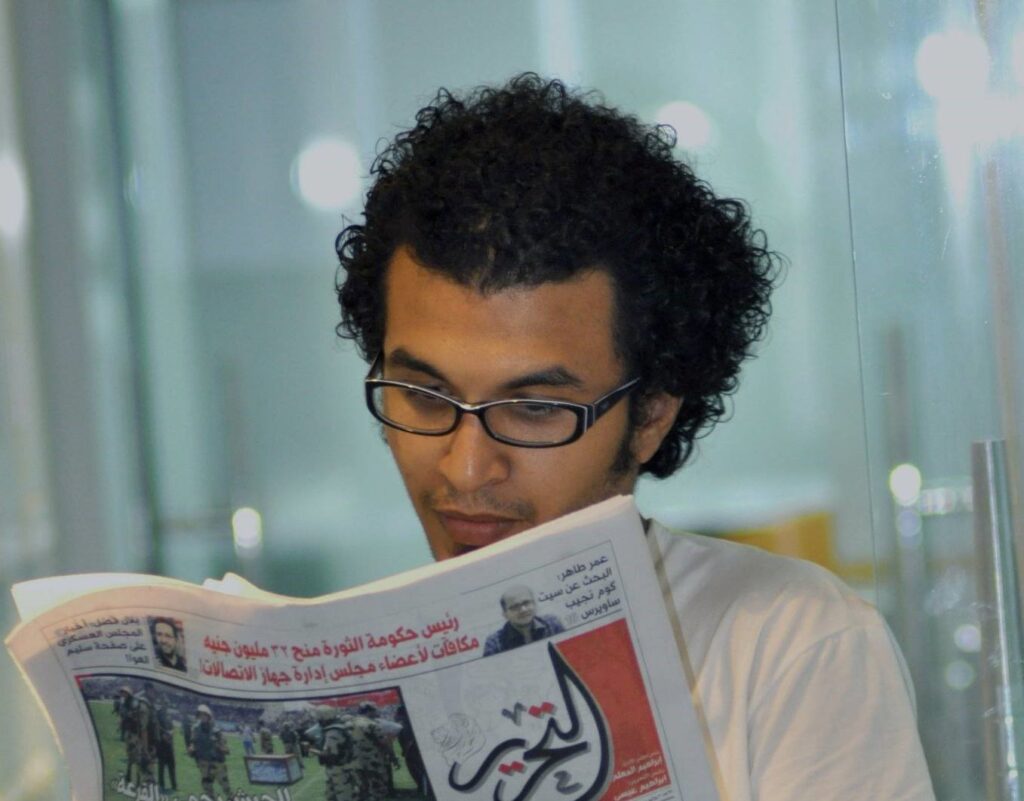
I believed at that time that I had the ability to bring about change through writing, following up, publishing and analysing what was happening on the Egyptian street. What I wrote then came to a little more or less than 150 news reports and investigations, published in newspapers that were considered “opposition” or “independent”, which have now ended up under the security control of the state and the intelligence services or National Security, such as “Al-Dostour” and “Al-Watan”, or closed, such as “Al-Tahrir”, and other newspapers that were, at the very least, blocked. My main driver then, as a young man, was solidarity and engagement with dozens of causes, rights and dreams, trying to present and achieve them and to defend, with their owners, their legitimacy, protection and necessity. I wrote about students, workers, privatisation, detainees and the revolution; I sided with what is right, and took part with my pen and myself alongside my peers, friends and colleagues who believed in the same dream until they saw its light in January 2011. Now my friends “Ahmed Douma” and “Sherif El-Rouby”, and hundreds and thousands of others whom I know and do not know, languish in the prisons of the homeland they believed deserves better.
My role has dwindled since I left Egypt for exile, and has been limited to blogging on social media, shedding light on my detained colleagues and on human rights and constitutional violations, in the hope that my voice might make a difference at some moment or time. Now I am working on a philosophical and literary theorisation of my experience in exile, and studying cinema, in an attempt at documentation, at least, and at activism and change through means suited to my current situation.
We do not lack passion… rather, pain and weakness overcome us. We lack the ability to confront the nightmare because we are parts of it, aching from wounds that are still bleeding, whether in exile, in detention or in the homeland, and it still squeezes us, testing how far we can be subdued so that it can continue… but soon, gradually, we wake up and resist again with what we have, moments before losing hope.
The January 2011 revolution was a pivotal moment in the country’s history, heralding the end of 30 years of dictatorship under Hosni Mubarak and the beginning of a new era of political change. However, 12 years later, it is clear that the goals of the revolution have not yet been fully achieved. The current regime has failed to deliver on its promises of economic prosperity, and has instead overseen unprecedented human rights violations and the elimination of the political opposition. This has led to growing discontent among Egyptians and raised the question of whether Egypt is on the brink of another uprising. Twelve years have passed since the January revolution that led to the fall of Hosni Mubarak’s regime. The regime has tightened its grip on power, and activists and dissidents currently face severe repression and human rights violations that are “unprecedented”, as many international and local reports have described them.
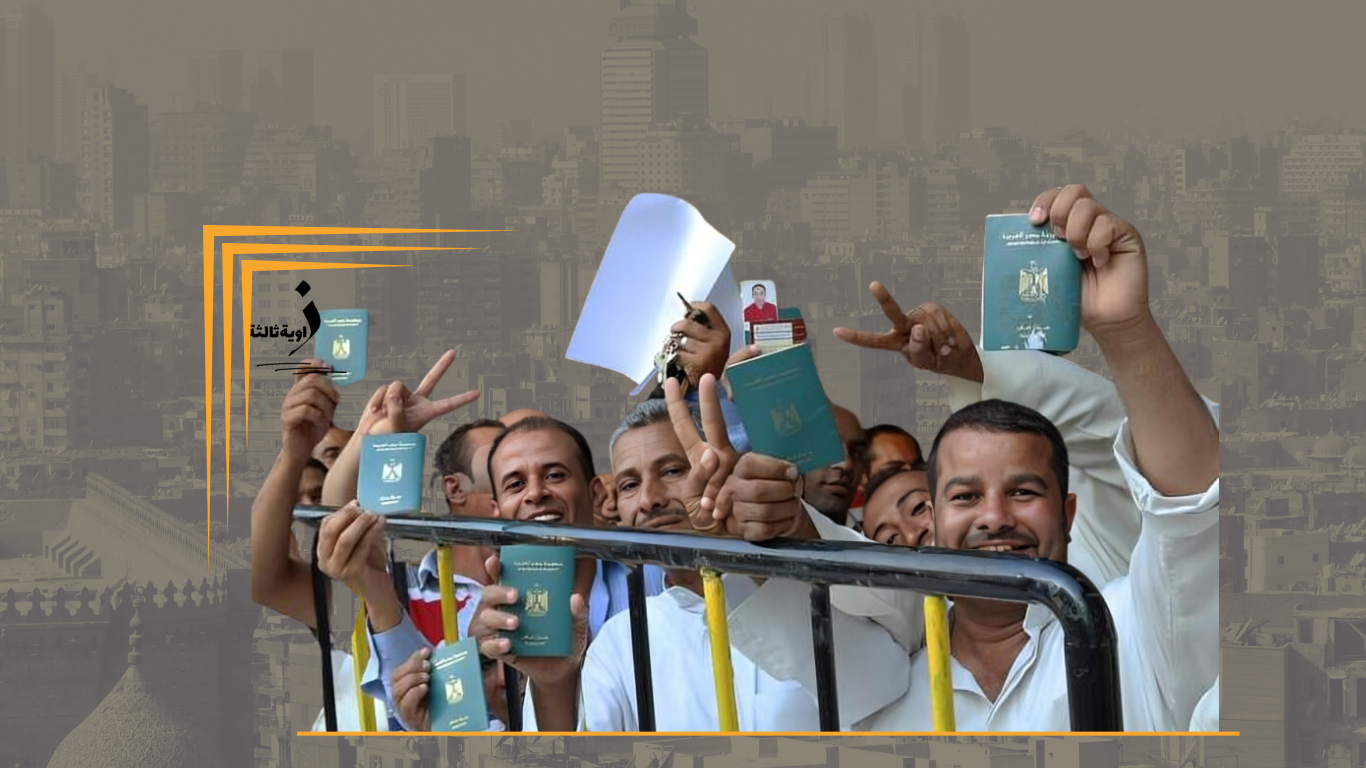
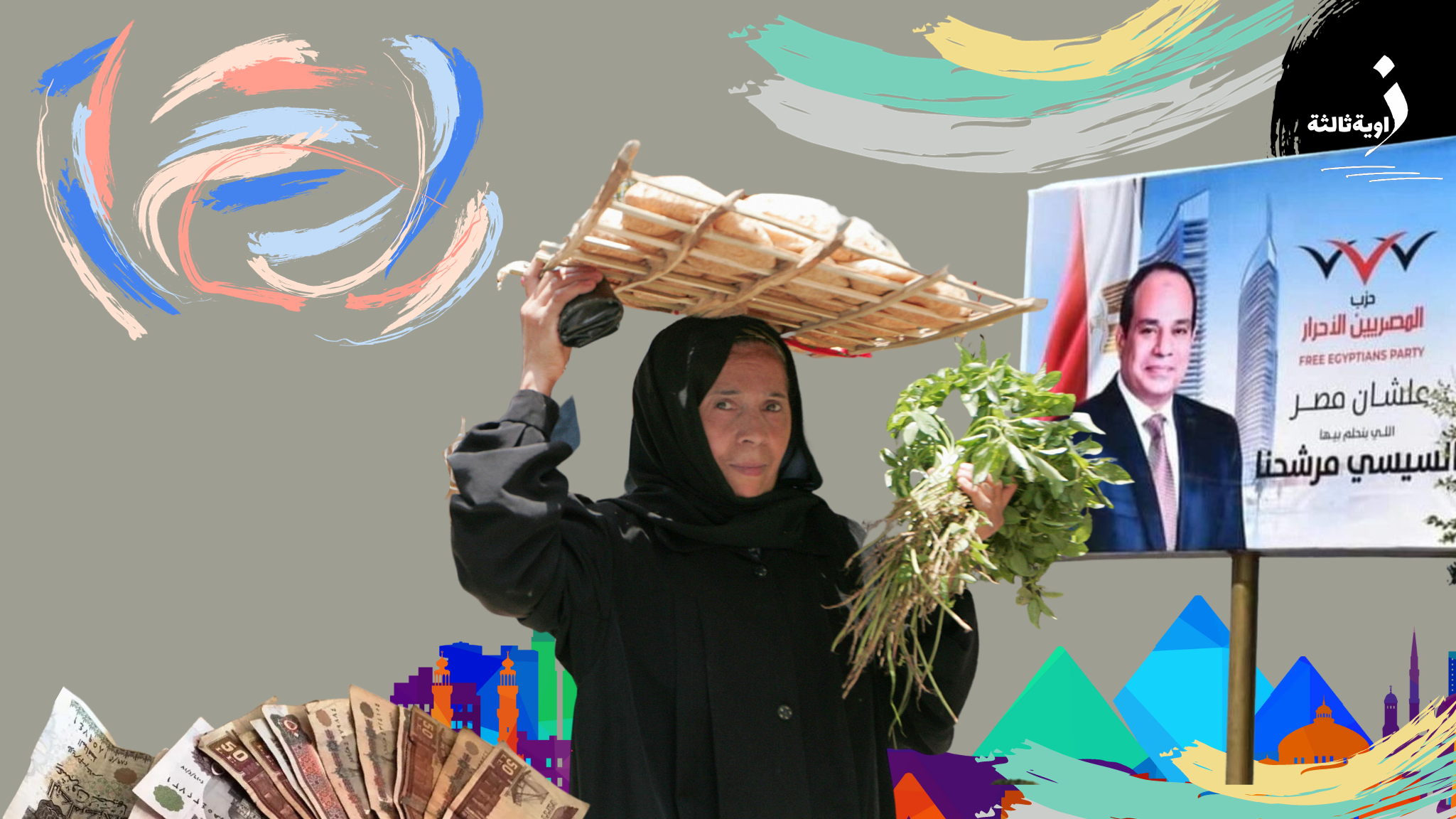
One of the main factors that led to the 2011 revolution was widespread poverty and economic inequality in Egypt. Despite promises to address these issues, the current regime has failed to deliver on its promises of economic prosperity. In fact, the country is currently facing an unprecedented economic crisis, with inflation rising to record levels and the currency collapsing, with economic forecasts of bigger collapses to come, with subsidy cuts that have left Egyptian citizens utterly exhausted and in unparalleled misery, and with the daily rise in the prices of basic goods, if they are available at all. This has led to growing discontent among a population struggling to make ends meet, and to catastrophic scenarios for which Egyptians prepare with anticipation, panic and jokes when they can, and with prayer and an urgent desire to travel at any price, hoping for a lifeboat from the flood that is drowning them.
Another key factor that contributed to the 2011 revolution was the lack of political freedom and the repression of opposition voices. The current regime, led by Sisi as the successor to the ousted Mubarak, has continued this trend, eliminating the political opposition, repressing civil society organisations and abusing everyone, but this time without limits. Activists and journalists have been arrested and tortured on a wide scale, while the media have been taken over or shut down. This has led to a lack of diversity in the political scene other than the single voice supporting Sisi, and to the absence of any real representation of the Egyptian people and their pain, rights, aspirations and suffering, whether in the representative councils and parliament or in the media.
The regime has also failed to address corruption, which was a major catalyst for the 2011 revolution. Instead, corruption has continued to thrive under Sisi’s regime, with billions of dollars of foreign aid directed to vanity projects that benefit the army and wealthy elites, rather than being used to meet the needs of the population. Now it faces anger, and a real threat to its ambitions of survival, not only from Egyptians but also from Gulf and international funders who see that what it offers is not enough, and that their investments in its dreams result in more economic collapse and the loss of their money. This is currently pushing it to announce the sale of assets on a wider scale to provide guarantees to creditors and the International Monetary Fund, and to beg for more support or time to stay in power, fearing a fate whose end it no longer knows, but which it clearly realises will certainly be tragic.
Despite these challenges, it is important to note that in Egypt there are still individuals, activists, journalists, politicians, artists, professionals, trade unionists, students, workers, organisations, dedicated people and civil society organisations working to achieve the goals of the 2011 revolution. Building networks and alliances between these groups can help increase their influence and impact, and ultimately lead to real change in Egypt. However, to achieve this, it is crucial that the international community recognise the ongoing struggle for freedom and democracy in Egypt and provide support and solidarity to those working towards this goal.
The security situation is one of the main challenges facing journalists and activists in Egypt, and even ordinary individuals. The government has increased its surveillance and repression of activists and civil society, with activists being arrested and detained on fabricated charges. The authorities also use various methods to silence and intimidate them, such as torture, enforced disappearance and extrajudicial killing. This has created a climate of fear and forced many activists to flee the country or go into hiding.
The other major challenge is the economic situation. Egypt’s economic crisis has led to widespread poverty and unemployment, and many Egyptians, whether activists or not, have lost their jobs or have been unable to find work because of their activism, making it difficult for them to support themselves and their families.
Despite these challenges, many activists in Egypt continue to work to bring about change. They use various tactics to raise awareness and mobilise people, such as social media campaigns, blogging and legal activism. Many of them also work to provide support to victims of repression and human rights violations, such as prisoners of conscience and the families of the forcibly disappeared.
But they also badly need to be empowered by being provided with security and protection, and with training in digital security and in how to protect themselves from surveillance and arrest, in addition to legal support and representation for their defence and help in finding the support needed to defend themselves against fabricated charges. They also need knowledge-based and practical support, and help in finding job opportunities to cover their basic needs, continue their work and ease the economic challenges they face. Many of them and their families, if not all, also need real, urgent and continuous psychological support.
Finally, building networks and alliances between activists at home and abroad, young people, and those who share the cause and the interest among the masses of Egyptians of all spectrums, together with civil society organisations, can help increase their influence and impact. This can be achieved through regular meetings and cooperation, where activists can exchange information and resources, develop strategies and tactics together, learn from past mistakes and come to terms with acknowledging them. It is also important to note that the security and protection of activists must be at the top of the priorities of these efforts. This can include providing digital security training, offering legal and psychological support, and creating safe spaces for activists to organise and meet, by creating real spaces to benefit from difference and differences through complementarity, rejecting division and attempting general national solidarity to create an alternative system capable of radical replacement and change, as the chant went in January and before it: “One national movement”.
The vast majority of young people in Egypt now need a great deal of knowledge-based support, in the absence of the role of state education. In my estimation, it has become incumbent on everyone who has the ability or the knowledge to share what they have with as many as they can of the young people languishing under the nightmare in Egypt, in the hope that they will find a light at the end of the tunnel.
In conclusion, the past 12 years since the Egyptian revolution have been marked by repression and hardship. Yet, despite the challenges, there are still ways, and the dream still has a day to come true… perhaps from “a third angle”, Zawia3.
Opinion articles do not necessarily reflect the views of Zawia3.