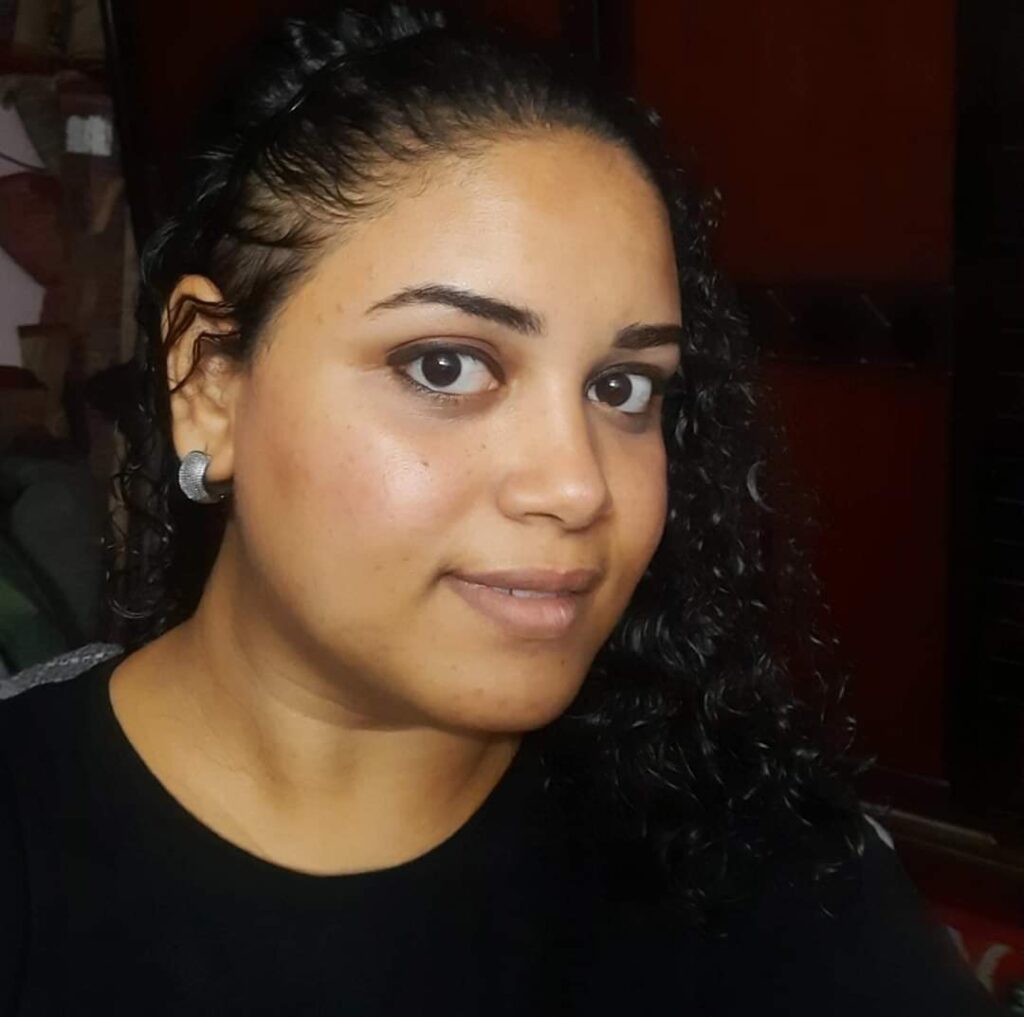


Human rights lawyer Mamdouh Gamal obtained a judicial rehabilitation ruling on 20 April 2023, a judgment that should have restored his status as a citizen and reinstated all the rights he lost due to his previous conviction. Yet he was surprised to find that his data had not been updated in the National Election Authority’s records, despite repeated attempts to submit a request to have his name re-registered in the electoral rolls. As a result, he remains deprived of exercising his constitutional and legal rights to run for office or vote—a situation that encapsulates an ongoing crisis faced by dozens whose grounds for political disenfranchisement have expired without their rights being genuinely reinstated.
He told Zawia3: “I was shocked that the National Election Authority did not update its database, despite my repeated attempts to submit a request to register my name in the electoral rolls. This means that, until now, I am still deprived of exercising my constitutional and legal rights, whether to run for office or to vote.”
Judicial rehabilitation removes the legal consequences of a conviction by force of law. It is a mechanism that grants a convicted person the opportunity to eliminate, in the future, the effects of the judgment issued against them, thereby restoring the status and reputation affected by that judgment and recovering all political and civil rights that were temporarily suspended during the period of conviction.
Gamal had been imprisoned several years earlier in the case known publicly as the “Shura Council Events.” He was arrested in 2013 at the age of eighteen, along with a large group of protesters who staged a demonstration outside the Shura Council under the slogan “No to Military Trials,” in opposition to a constitutional provision allowing civilians to be tried before military courts, which had been drafted by the Committee of Fifty tasked with preparing the constitution after the events of 30 June 2013. Gamal received a three-year prison sentence on charges of “unlawful assembly, protesting without a permit, and obstructing traffic”—marking one of the first practical applications of the protest law issued that same year.
While Law No. 45 of 2014 regulating the exercise of political rights stipulates that individuals convicted in felony cases or crimes involving moral turpitude are barred from voting or running for office until their rehabilitation is granted, the reality reveals that the consequences of convictions in politically charged cases extend beyond the completion of the sentence. Released political detainees face undeclared restrictions that prevent their names from being added to electoral rolls or from participating in any political process, even after meeting all requirements to regain their civil rights.
Although Article (87) of the Egyptian Constitution affirms that participation in political life is a fundamental right that may not be restricted except by law, practical implementation reveals a clear gap between constitutional provisions and actual practices—particularly regarding the right of former political detainees to exercise their rights after release.
Zawia3 documented ten cases of individuals who were deprived of their political rights despite not falling within the categories excluded under the law. Among them were individuals who had already obtained judicial rehabilitation rulings but remained effectively barred from voting or standing for election. Testimonies collected for this report indicate that the situation is no different for those who completed their sentences or those who received presidential pardons—the result is the same: exclusion from candidacy and voting. This raises a pressing question about how legal provisions are being interpreted and to what extent relevant authorities comply with the law in practice.
“No Place for Opposition”: How Egypt’s Election Laws Are Being Used to Block Candidates

Failure to Implement the Law
Despite receiving a presidential pardon in September 2015, Gamal remained barred from exercising his political rights. This pushed him to file a lawsuit and eventually obtain a judicial rehabilitation ruling in 2023. Yet he was surprised to find that even this was not enough to have his name reinstated in the voter database as a citizen entitled to full political and civil rights.
Gamal continues recounting his journey to reclaim his political rights and tells Zawia3: “According to the law, judicial rehabilitation should take effect once the ruling is delivered to the National Election Authority. But the Authority refused to give me any document or reference number confirming receipt of the request, which forced me to file a case before the Administrative Court to assert my right. The representative of the administrative body contested the lawsuit on the grounds that I had not followed the correct procedure, arguing—according to their interpretation—that the request must be submitted to a committee formed by the president of the primary court in the applicant’s district of residence.”
He continues: “Based on this interpretation, I decided to submit the request to the president of the primary court in my district. I first went to South Cairo Court, then to South Giza Court. But the surprise was that the clerks had no knowledge of the procedures related to this type of request—as if they were encountering it for the first time. I could not find any official authorized to receive the documents or explain the required steps, and I was not allowed to formally record that I had submitted the request.”
The human rights lawyer adds that the crisis is not limited to administrative hurdles, but also stems from the absence of the committee mandated by Articles (19) and (20) of the Political Rights Law. This committee is the body responsible for reviewing the voter registry and examining requests for deletion or rehabilitation.
He explains: “We searched extensively and could not find any decision issued by the National Election Authority establishing this committee, despite the law obliging it to do so. This means that citizens who no longer have any legal grounds preventing them from exercising their political rights—whether due to completion of their sentence or a judicial rehabilitation ruling—still have no official authority to which they can turn to reclaim those rights.” He notes that in addition to his personal case, he obtained two other judicial rehabilitation rulings for clients in similar situations, yet neither ruling has been implemented to date.
Article 19 of the Political Rights Law stipulates: “Any person whose name has been unjustifiably omitted from the voter database, or for whom an error occurred in the data of their registration, or who has acquired the conditions required for voting or lost the impediments after the preparation of the database, may request the registration of their name or the correction of their registration data.
Any voter whose name is registered in the voter database may request the registration of the name of someone whose registration was unjustifiably omitted, or the deletion of someone unjustifiably registered, or the correction of registration data. These requests shall be submitted in writing throughout the year to the committee referred to in Article (20) of this law, recorded in a special register in the order received, and receipts shall be issued to applicants.”
Article 20 of the same law stipulates: “A committee shall be established to examine the requests referred to in the previous article. It shall be formed by a decision issued by the High Elections Committee and chaired by the president of the primary court of the governorate, with two judges from the primary courts selected by the Supreme Judicial Council as members. The committee’s secretariat shall be staffed by a representative of the Ministry of Interior selected by the Minister. The committee shall issue a decision on the request within one week from the date of submission and notify the concerned parties within three days of its issuance. The executive regulations shall define the procedures for submitting, registering, reviewing, adjudicating, and announcing the request.”
Presidential Pardon Does Not Mean Restored Rights
Human rights lawyer Suzan Nada explains to Zawia3 that the Political Rights Law does not include protest or assembly cases among the categories temporarily deprived of political rights. This means that denying individuals convicted in such cases the right to vote or run for office constitutes an “encroachment on the text of the law.”
Law No. 45 of 2014 regulating the exercise of political rights, as amended by Law No. 92 of 2015, lists only ten categories temporarily barred from exercising political rights. Two of these categories apply only for a defined period: persons under guardianship during the period of the guardianship, and individuals diagnosed with a psychological or mental disorder during their compulsory confinement in a mental health facility.
In addition, temporary deprivation applies to those convicted in final judgments of crimes such as tax evasion, “corrupting political life” as defined in Decree-Law No. 344 of 1952, confiscation of assets, or dismissal from public service for crimes involving moral turpitude or breach of trust. It also applies to anyone convicted in a final felony judgment or sentenced to imprisonment for crimes such as theft, fraud, breach of trust, bribery, forgery, offenses related to public funds, indecent assault, or moral corruption. Under the law, individuals regain their rights if they receive judicial rehabilitation or if the sentence is suspended by a court ruling.
As for Ahmed Samir, known as Abu Samra, his case differs from that of Mamdouh Gamal, but the struggle to reclaim his political rights after leaving prison through a presidential pardon mirrors several similar cases—including Gamal’s—where both face the same outcome: the absence of actual implementation of court rulings that restore their status and political rights.
Samir recounts to Zawia3 that he was arrested multiple times, the first in March 2013 during what became known as the “Mokattam Events,” and again in June 2014 in the case known publicly as the “Ittihadiya Palace Events.” The case included several prominent activists who participated in a peaceful protest organized on the International Day of Solidarity with Detainees, calling for the release of political prisoners one week after the current president took office.
Samir says: “We were arrested in the Heliopolis area near the Ittihadiya Palace. There were 24 of us, including seven women. We were sentenced to three years in prison, three years of probation, and a ten-thousand-pound fine. After appeal, the Heliopolis Misdemeanor Court reduced the sentence to two years in prison and two years of probation. Then we were released through a presidential pardon on 23 September 2015, under the decision that also included those convicted in the Shura Council case.”
He continues: “In 2022, I filed a lawsuit requesting the expungement of my criminal record in both cases and judicial rehabilitation. I obtained a court ruling in my favor, but the Ministry of Interior refused to implement it or remove the cases from the database.” He notes that this refusal has prevented any subsequent steps, including executing the rehabilitation ruling needed to restore his right to vote and run for office.
Samir had been arrested after taking part in a protest alongside more than twenty activists who organized a demonstration in June 2013 calling for the repeal of the Law Regulating the Right to Public Meetings, Processions and Peaceful Demonstrations—which required prior authorization from the Ministry of Interior. As protesters approached the Ittihadiya Palace, security forces fired tear gas canisters and then arrested those later convicted, during the dispersal operation. In September 2015, President Abdel Fattah al-Sisi issued a decree granting a presidential pardon to individuals convicted in both the Shura Council and Ittihadiya Palace cases.
For her part, human rights lawyer Suzan Nada explains that “judicial rehabilitation is one of the rights guaranteed by law to any citizen who has completed their sentence or received a presidential pardon. It is meant to restore a person’s legal and social standing and enable them to fully exercise their political and civil rights.”
This right is rooted in Articles 536–540 of the Code of Criminal Procedure No. 150 of 1950, which define two types of rehabilitation: judicial rehabilitation granted by a criminal court after verifying the good conduct of the convicted person and the expiration of the legal period, and legal rehabilitation, which occurs automatically after many years without a new conviction, Nada says.
She adds that the purpose of rehabilitation is not merely to erase the conviction from records but to “affirm a person’s right to begin again.” Yet in practice, Egypt faces significant obstacles to implementing rehabilitation judgments, including the absence of a clear mechanism for enforcing these rulings, conflicting mandates among relevant authorities, and the failure to activate the committee stipulated in the Political Rights Law to examine requests for reinstatement in the voter database. As a result, many individuals whose grounds for disenfranchisement have expired remain unable to regain their rights in practice.
Between Completing the Sentence and Continued Exclusion
Mamdouh Gamal tells us that “the right to vote and run for office is one of the fundamental rights enshrined in international and regional instruments, as a core pillar of democracy and public participation.”
He explains that Article (25) of the International Covenant on Civil and Political Rights guarantees every citizen, without discrimination or unreasonable restrictions, the right to vote, to be elected, and to take part in the conduct of public affairs. The UN Human Rights Committee, in its General Comment No. 25, stressed that depriving individuals of this right must be justified, necessary, and proportionate to the nature of the offense. It should never be imposed automatically or indefinitely, and must instead be assessed on a case-by-case basis.
The human rights lawyer adds that these instruments oblige state parties, including Egypt—which ratified the ICCPR in 1982—to harmonize their national legislation with these principles. This means that criminal judgments or past penalties should not be used as tools to politically exclude individuals after they have completed their sentences or received legal pardon, so long as they meet the conditions of judicial rehabilitation, which erases all legal consequences of the conviction and restores full civil and political rights.
For his part, politician Ahmed Maher, founder of the April 6 Youth Movement, states: “The charge I was convicted of was ‘protesting without a permit,’ which is a misdemeanor, not a felony. I was sentenced to three years in prison followed by three years of probation, all of which ended in 2020.”
Maher tells Zawia3 that this charge, according to the Political Rights Law, is not among the offenses involving moral turpitude or dishonesty that warrant political disenfranchisement. Yet his name still does not appear in the voter registry.
The founder of April 6 was released in January 2017 after completing his three-year sentence, handed down by the Abdeen Misdemeanor Court and upheld by the Court of Cassation. The sentence followed Maher’s surrender to Egyptian authorities on 30 November 2013, after a warrant was issued for his arrest on charges of violating the protest law. Maher says he contacted the National Election Authority multiple times requesting that his name be removed from the ban lists, but received no response. This prompted him to file a formal request for judicial rehabilitation more than three years after completing his sentence. He is still awaiting a decision on the case, which has been circulating in the courts for nearly a year.
Maher continues: “What’s happening to me is not an individual case, but part of a broader trend aimed at excluding or obstructing the political participation of members of the civilian opposition,” pointing to the case of former MP Haitham El-Hariri, who was barred from running by the National Election Authority on the grounds that he did not complete military service.
Between the exclusion of candidates Haitham El-Hariri and Mohamed Abdel Halim, both members of the Socialist Popular Alliance Party, from running in the elections, and the continued disenfranchisement of individuals who have already obtained judicial rehabilitation, the gap between legal texts and actual implementation becomes unmistakably clear—depriving a segment of citizens of one of the most basic rights of public participation.
While the Egyptian Constitution and law affirm that political participation is an inherent right that may only be restricted by a reasoned judicial decision, actual practice reveals an expanding circle of political exclusion. It now encompasses even those who have received final judicial rehabilitation rulings, which should fully restore their civil and political rights.
The cases documented in this report point to a recurring pattern of administrative and legal obstruction preventing individuals from being reinstated in the voter registry. This effectively strips judicial rehabilitation of its meaning and leaves its rulings without practical effect—perpetuating an unjustified denial of political rights in clear violation of the constitution and the law.