

The suffering of the Zidan family, along with thousands of other families in the neighborhoods of El-Matariya, Dakahlia, continues due to the repeated water shortages throughout the summer months.
The crisis is especially severe in the “Al-Jisr Al-Waqi” neighborhood, locally known as “El-Bar El-Thani,” and the “Behind the Railway” area, where residents face extreme difficulty in securing enough water for drinking, cooking, personal hygiene, and cleaning homes and clothes.
Residents are forced to fill containers from a limited number of taps in homes in “Al-Jisr Al-Waqi,” which still receive water from the main line coming from El-Matariya. They then carry the water over long distances due to the lack of water in the sub-lines branching from this main line.
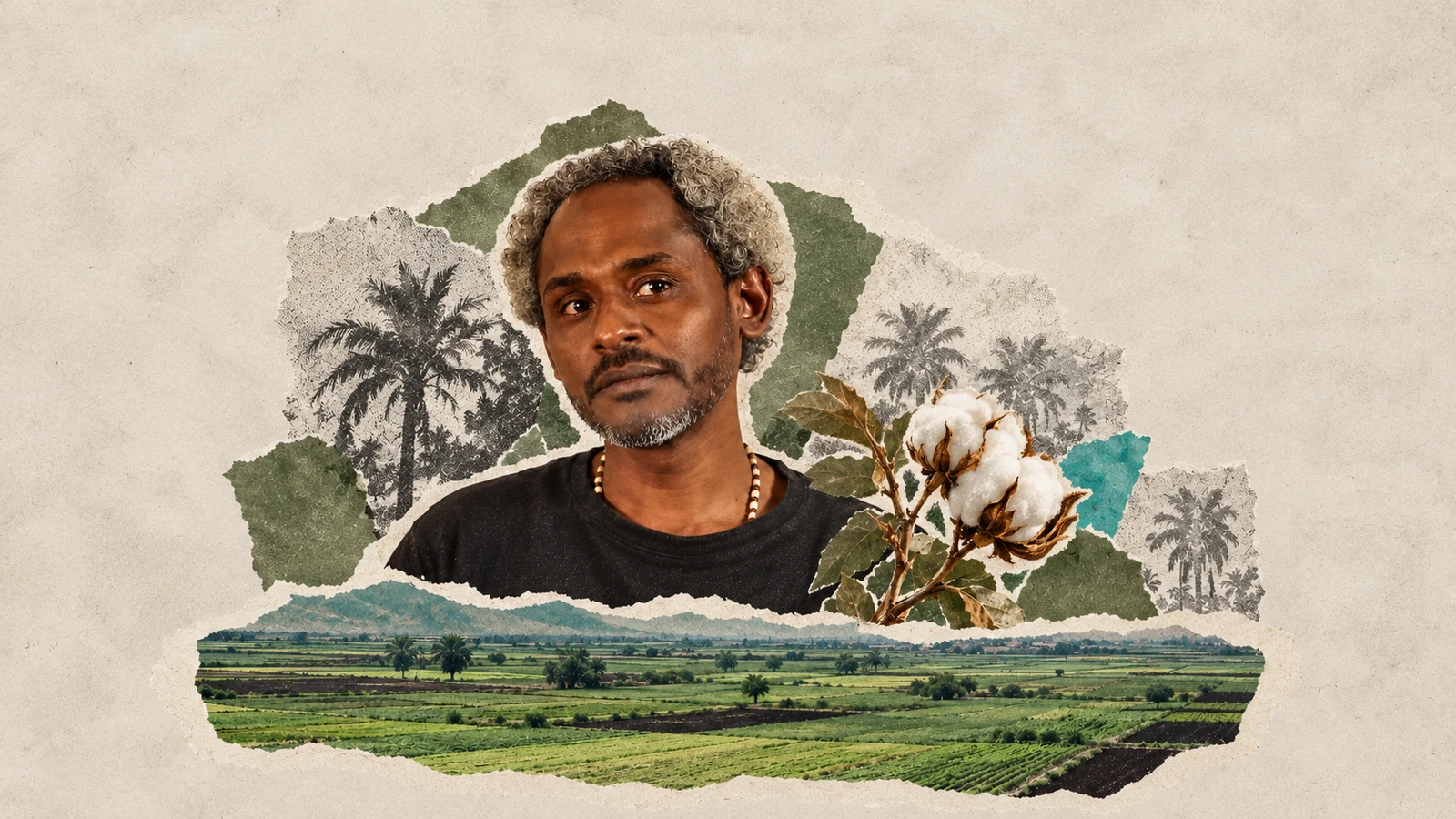
Said tells “Zawia3” that the crisis has been ongoing for years, but it reached its peak last year when the water supply was cut for four months, from June to September. He adds that this year, the water shortage has lasted for two months, with no water reaching the neighborhood, neither day nor night, except for the main line parallel to El-Matariya city. He notes that some residents have been without water for over two months, forcing them to send their children to get water from neighbors who still have it.
He continues: “Two entire neighborhoods suffer from this problem, including El-Bar El-Thani, which houses around seventy to eighty thousand people. The water is cut off every year at the beginning of summer. We have repeatedly filed complaints to the water company, but to no avail. The repeated response from the company is that the pressure is low or that the water that reaches the neighborhood is very weak, without any solutions being provided.”
Said believes that local authorities classify “Al-Jisr Al-Waqi” as an informal area, which, according to him, explains the neglect it faces. He adds that the land on which the neighborhood was built was seized around forty or fifty years ago and was later sold to citizens, amid the absence of government housing projects in El-Matariya.
He confirms that residents have water and electricity meters, pay taxes, and have legalized their status, but the governorate does not provide streetlights or basic services to a neighborhood with over 70,000 residents. He concludes by saying that the residents resorted to parliamentary representatives, but the dire conditions they live in remain unchanged.

The Matariya Center is located in the Dakahlia Governorate and includes several villages administratively, with a single local unit in the village of El-Asafra, which includes the villages of Al-Dahyer and Awlad Sabour, in addition to approximately 35 smaller towns and hamlets. The center has an estimated population of 203,851 people, with 165,470 residing in the city itself, according to estimates from July 2024.
The city of Matariya faces frequent interruptions in its drinking water supply or reduced water pressure due to maintenance work or changes to the water network. On April 6th, the Drinking Water and Sanitation Company in Dakahlia announced the implementation of works to change the course of the water lines for the Al-Jamaliya and Matariya pumping stations, which required stopping the Matariya water facility in Al-Manzala. The company stated in its announcement that water would be cut from 8:00 AM to 2:00 PM in several areas, including Al-Manzala and its villages, such as Al-Firusat, Al-Amira, Al-Jadida, Al-Tawil, Al-Azeezah, and Al-Nasaymah, with a noticeable decrease in water pressure in Matariya and its suburbs during the same period.
In August of the previous year, the company announced the replacement of a valve for a 600-mm pipeline connecting the Al-Jamaliya station to Matariya, as part of efforts to improve the drinking water level in the city. The company explained that the number of operating units was reduced from six to four during the work, leading to a significant decrease in water pressure within the local unit of El-Asafra and the entire city of Matariya. The company confirmed that the water pressure would return to normal levels once the work was completed.

Villages Deprived of Drinking Water
Madiha Al-Shawa, a resident of the Hassouna Abdel Fattah area in the “Jisr Al-Waqi” neighborhood of Matariya, confirmed to “Zawia3” that the drinking water has been cut off from her area for four years, despite residents consistently paying water consumption bills to the local council.
She says, “We have submitted over ten complaints to Eng. Mohamed Hassan, the former chairman of the Drinking Water and Sanitation Company in Dakahlia, but to no avail. We are forced to buy a water tanker weekly for 650 pounds to fill our tanks, and we also buy bottled water for drinking.”
According to testimonies from several residents who spoke to “Zawia3,” the water shortage during the summer months or the contaminated water that reaches homes is not limited to the neighborhoods in the Matariya Center, but extends to surrounding villages. In some of these villages, drinking water does not reach the majority of homes throughout the year, and this has been the case for over four years.
One of the most notable areas affected is the village of “El-Asafra,” which belongs to the Matariya Center, with a population of approximately 19,015 people according to 2006 statistics. Another affected village is “El-Gamala” in the Manzala Center, with an estimated population of 2,048 people as per the same year.
In this context, Ghada Salim, a resident of the village of El-Gamala, told “Zawia3” that drinking water is completely cut off in both summer and winter, and only five homes in the village receive it. She adds that the water that reaches these homes is contaminated and has an unpleasant taste, similar to sewage water, as she describes it.
She points out that there have been calls among residents to organize a protest on the road, demanding the extension of a water line connected to the Salam Canal, which passes through the village and feeds the “Bar Al-Thani” area in the city of Matariya.
She continues, “Many residents have submitted complaints, but to no avail. What is happening is a real tragedy. Last year, two brothers died while trying to fetch water from the Salam Canal, which many residents rely on for their needs. Some buy water for cooking, while others come from all over the village to the five homes that have access to water, to fill their drinking water bottles, as it is the only source available to them.”
For his part, Islam Khairy Nour El-Din, the head of the Matariya Lawyers’ Syndicate and assistant secretary-general of the North Dakahlia Bar Association, explained that the water shortage issue in Matariya started in one area, “Bar Al-Thani,” but has now spread to include four areas without water. This crisis has lasted for months without sufficient parliamentary action to solve it. However, recently, on July 13, the executive authorities, represented by the head of the city council and the Holding Company for Drinking Water, took action. They promised that a specific valve in one of the stations would be opened and that there would be a new development in solving the crisis within a few days.
He says to “Zawia3”: “The water shortage crisis has been ongoing for six to eight months. It started in an area we have called ‘Bar Al-Thani’ and has now extended to three or four other areas that are currently suffering from complete water cuts. The problem is not seasonal and is not limited to the summer. This may happen during the summer in specific areas, such as ‘Bar Al-Thani,’ which was originally agricultural land and was built on haphazardly before and after the January revolution. It is under the General Authority for Reconstruction and Agricultural Development, and utilities were only recently introduced to it.”
Don’t miss: Egypt Faces Worsening Water Crisis Amid Frequent Outages and Price Hikes
Daily Financial Burdens
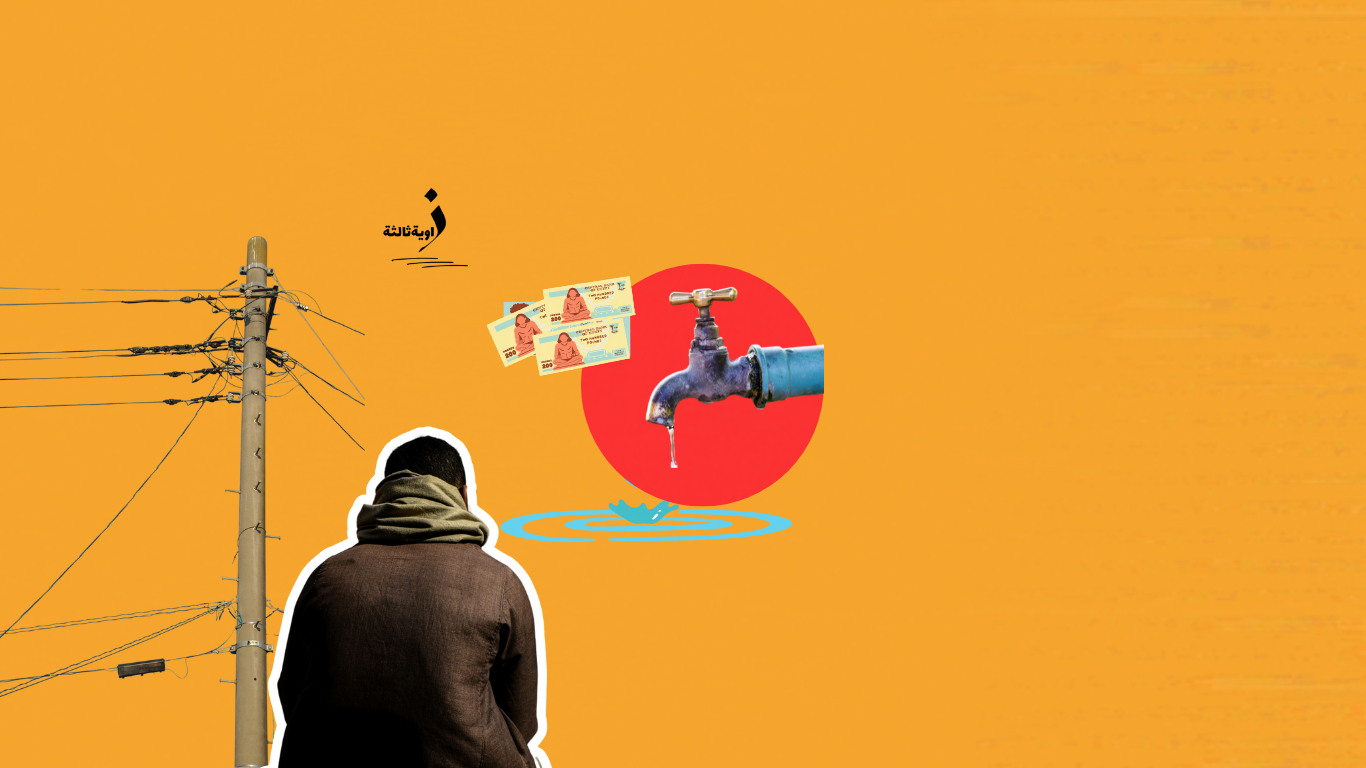
The same suffering is experienced by Yasmeen Mohammed, along with her husband and children, who live in the Koubri Hamza Al-Rais area, in the “El-Gisr El-Waqi” or “El-Barr El-Tani” district, for the past month and a half due to the interruption of drinking water. Since before the last Eid Al-Adha, her family has been forced to endure daily financial burdens that weigh heavily on them throughout the summer to purchase water for drinking, cooking, personal hygiene, and cleaning, from street vendors who transport plastic water tanks on tricycles (“Trosikl”), at a cost of 200 EGP ($4).
Yasmeen tells “Zawia3” that an engineer from the Holding Company for Water and Wastewater visited them and informed them about the need to install a new water line connected to the main line. As a result, the company extended a main line to some houses, and the rest of the residents were supposed to get connections from this line at a cost of 30,000 EGP ($600) divided among every 5 homes in the area. Company staff assured them that the water would be of good quality, but when the line was installed, some residents had to pay extra to install new water meters, while others were required to pay “settlement fees” to approve the connection. Some were also forced to pay for the repair of their sewage systems, in addition to the 30,000 EGP ($600).
She says to “Zawia3”: “Once the line was installed, we were surprised to find black water flowing from our taps, which is unfit for human use. We filed complaints, but the company cut off our water completely. Should we spend our money on our children’s education or on our living expenses, or on buying water? This is really unbearable. We complain repeatedly, but no one listens to us. This is clear injustice.”
She explains that only a few homes in El-Gisr El-Waqi area receive water, while the majority doesn’t, especially during the summer. After the installation of the new line, the Koubri Hamza El-Rais area is now completely without water. Nevertheless, the water company forces them to pay bills every three to four months. When they inform the collector that water doesn’t come, they are told that there is increased pressure on the water supply. She adds: “We have a water pump (motor); we have to run the pump all night and wake up every hour hoping that the water would come, but it never does. We are living as if we are in a desert.”
This testimony by Yasmeen intersects with that of Sid, who lives on Salah El-Din Street in the Al-Aqabiyeen district. He and other residents of Matariya Center, who suffer from the annual water cut during the summer, demand that the government build a dedicated water station for Matariya. However, he reveals that parliamentarians informed the residents of the approval of this proposal and the site selection several years ago, but nothing has changed, and residents continue to suffer.
He explains that the Matariya area receives its share of water from the Al-Jamaliya and Al-Manzala stations, and with the increase in population in Matariya and surrounding areas, this share has become insufficient to meet the needs of the entire area. The main supply line is weak and unable to accommodate such a large population. He notes that some lines are out of water for the entire summer, while other lines never receive any water, and some lines run continuously without interruption.
He tells “Zawia3”: “This is clear injustice. How can an entire street in Matariya be without water, while the adjacent street has constant water supply? When we complain to the city council or the water company, they promise us that the water will come tomorrow. When tomorrow comes, they say it will come the day after tomorrow! When we ask them, ‘Where will you get the water from?’ they tell us, ‘You can come to get a water tanker for free.’ But when we ask them to deliver it to our area, they ask us to bring a truck at our own expense to transport the water to our homes, even though the cost of renting a truck is between 300 and 400 EGP ($6 to $8) per trip. Is it reasonable to rent a truck every two days? Should I spend on my family’s needs or on transporting water?”
“Zawia3” has documented around 130 complaints from residents of Matariya Center in Dakahlia, regarding water cut-offs or water contamination with sewage. The residents reported water cuts since Eid Al-Adha in some areas and for about a month and a half in others. The most affected areas include: El-Barr El-Tani (El-Gisr El-Waqi), behind the railway (Al-Aqabiyeen), Al-Daliya, Al-Mithal, and Al-Masattahat. The residents also complained of water cuts throughout the summer in streets such as: Al-Jamal, Al-Zaher Baybars, Salah El-Din, Mostajad, Jwad Hosny, Nagib Sarhan, Street 20, Street 23, Saad Zaghoul, Al-Ghazali, Hajj Aisha, Wail El-Rais, Bedea Al-Sayad, Nagib Sarhan, Abu El-Naga Institute Street, Al-Swalah, Suleiman, Barakat, the Commercial Street, the Hospital, and Al-Fath Mosque. In the Al-Gisr El-Waqi Housing in Al-Aqabiyeen and around the Koubri El-Rais area and the area behind Koubri Mariam, in Ezbet Hassouna Abdel Fattah, and Al-Saadni area, residents have reported water arriving contaminated with sewage.
Don’t miss: North Sinai’s Thirst: A Deepening Water Crisis
Official Promises to Solve the Crisis
Representative Magdy El-Ameer, a member of the House of Representatives for the Manzala and Matariya centers and the Manzala section in Dakahlia, and a member of the Future of the Nation Party, told “Zawia3” that the residents affected by the water cuts live in informal areas. With the rising population density, water and sanitation problems have worsened in these areas, especially as water pressure generally weakens in the summer. When water reaches distant areas, it takes longer, which is why the same problem is faced every year during the summer in the Matariya Center. He considered that water shortages are common in marginalized areas.
The representative says, “The residents have already submitted complaints to us as parliamentarians and to the concerned authorities, and work is currently underway to resolve the issue. Recently, new water pumps were installed, and the residents hope for the construction of a water station for Matariya. We are working towards achieving that. We have submitted proposals in this regard, and there is another station under construction currently, but these things take time, and there is no problem without a solution.”
Regarding the water cuts in the villages of El-Asafra in Matariya and El-Gamala in Manzala, Representative Magdy El-Ameer clarified that both villages are on the same water line, which should serve the affected areas in Matariya. He pointed out that the solution will be at the source level, as both villages share the same water source, and if the problem is solved at the source, the solution will cover everyone.
He added: “We were discussing this issue all day yesterday, and we are doing our best. The residents have every right to get their rights, no matter the circumstances. We hope that the new pumps will be installed and the necessary transfers will be made, and we are striving to solve this problem as soon as possible.”
While “Zawia3” tried to contact Engineer Khaled Hussein Nasser, the chairman and managing director of the Dakahlia Drinking Water and Sanitation Company, for a phone interview about the crisis, due to his unavailability, his office manager responded to our call and explained that the company had received complaints from citizens regarding water cuts and had immediately forwarded them to Engineer Mohamed Hassan, the director of the Matariya Drinking Water and Sanitation Area, who took measures to attempt to solve the crisis. He promised that water would be restored to some of the affected areas starting Monday, July 14, with the rest of the areas following, attributing the cuts to increased pressure on the water network during the summer and holiday periods, which coincides with those areas being located on the outskirts of the water supply network running from the Manzala water station to Matariya. Meanwhile, the villages of Matariya and Manzala are supposed to receive water on a rotating basis, where water reaches each village on specific days of the week and is cut off on others due to the location on the outskirts of the network. He confirmed that the establishment of a new water station within Matariya City requires a substantial budget, and the company is waiting for official approvals for this project, which takes time.
Engineer Mohamed Hassan, director of the Matariya Drinking Water and Sanitation Area, attributed the water shortage in some areas to increased water consumption during the summer, which decreases and returns to normal levels after August. He further explained that the “Bar Al-Thani” and “Behind the Railway” neighborhoods were originally areas built haphazardly with rapid population growth, as well as faults in some water pipes leading to certain houses or malfunctioning water pumps. He assured that the problem would be solved as soon as possible.
He tells “Zawia3”: “We have been on the ground for 48 hours working on resolving the issue, and my office is open for complaints and receiving reports from citizens because water is a right for everyone, and I understand their human suffering due to the water cuts. However, we haven’t stopped pumping, but high consumption leads to a drop in pressure. We send plumbing technicians for house pipe maintenance and malfunctioning motors, and we send water trucks to the affected areas, but they cannot access narrow alleys and streets in the popular areas.”
He adds: “The water comes from the station pure and meets the specifications, and we do not overlook any report or complaint regarding changes in water color, taste, or smell. Once a report is received, we send technicians to the site of the report and take samples that we send to the laboratories. The issue is usually related to the internal water pipes of the house that made the complaint.”
Regarding El-Gamala village, the official explains that the water line supplying the village is 60 cm in diameter and branches into two parts, one of which reaches the first half of the village and receives water normally. However, the second half does not receive water, suggesting that the problem lies with the pipes in some of the village houses that hinder the pumping process during the summer. He denied the claims of residents that only five houses in the village have access to water year-round.
When asked about the water crisis in some neighborhoods and areas of Matariya Center, Dr. Ahmed Anwar El-Adl, Deputy Governor of Dakahlia, stated in a statement to “Zawia3” that there was supposed to be a process of improving the water lines leading from Manzala to Matariya and expanding them five or six years ago to accommodate the growing population in these neighborhoods, but this did not happen. He confirmed that the Holding Company for Drinking Water and the executive authorities in the governorate are currently cooperating to find a solution to this problem to restore water to normal levels as soon as possible.
Despite the promises of MPs and officials’ statements, the water shortage crisis in the neighborhoods of Matariya Center and the surrounding villages of Dakahlia remains a daily tragedy for thousands of families, undermining their dignity and depriving them of their basic human rights, as guaranteed by the Egyptian constitution, which states in Article 79 that “every citizen has the right to adequate and healthy food, and clean water,” and in Article 46 that “everyone has the right to a healthy and safe environment.”
While the relevant authorities talk about ongoing projects or pumps being installed, the residents of “Bar Al-Thani,” “Behind the Railway,” “El-Asafra,” “El-Gamala,” and others continue to await a permanent solution to end their human suffering and financial drain as quickly as possible and ensure that the crisis is not repeated in the coming years.