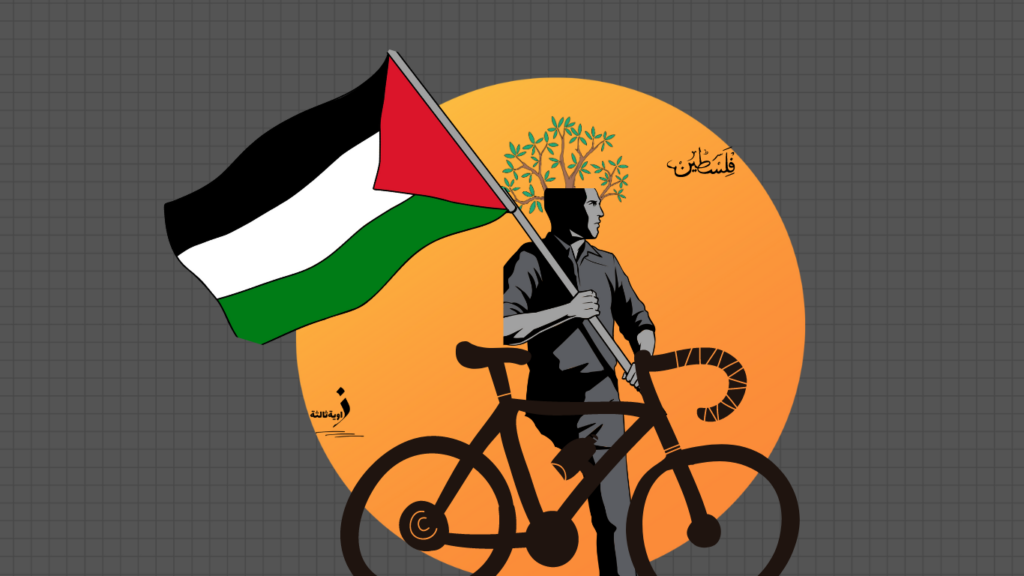

On 30 March 2018, Hazem Suleiman (Palestinian, 26) was standing on the eastern border of the Gaza Strip when he decided to take part in a peaceful Palestinian movement called the Great March of Return, on the 42nd anniversary of Palestinian Land Day, the day Palestinians mark every year with symbolic celebrations expressing their attachment to their national identity and their land. With chants, banners and Palestinian flags, Hazem and his colleagues were standing in protest at former US President “Donald Trump’s” decision to recognise Jerusalem as the capital of the Israeli occupation, when an occupation sniper shot both his legs with “explosive” bullets, a special type of bullet designed to fragment inside victims’ bodies in order to cause the greatest possible damage inside them, and which is internationally prohibited; the occupation army used it excessively during the Great March of Return, according to a report by the Euro-Mediterranean Human Rights Monitor.
“Indescribable pain and feeling that I went through every minute and every second between being moved from the border to the ambulance and then to the hospital. After 17 days I came out of the coma,” Hazem says.
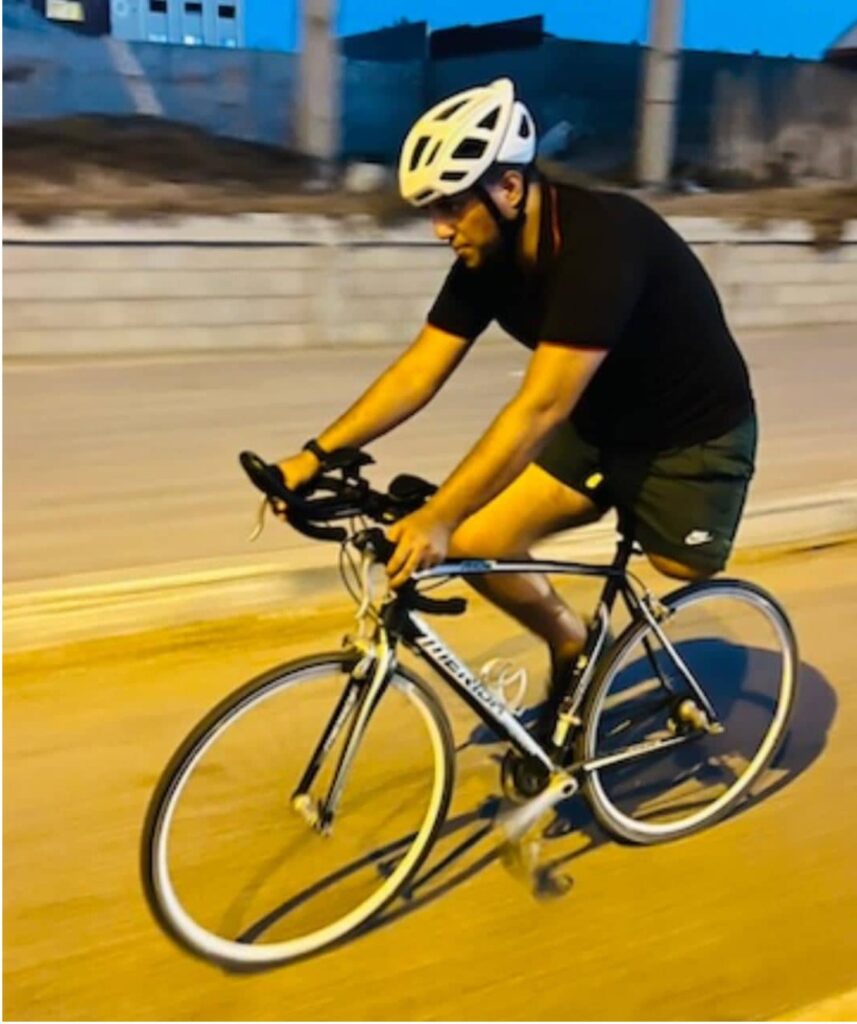
After many attempts over three years, which Hazem spent moving between Palestine, Egypt and Jordan, an Egyptian doctor managed to save his right leg, but the attempts with the other failed, and his left leg was amputated completely.
A few months ago, Hazem and his team, the “Sunbirds”, were training to take part in the 2024 Paralympic Games, due to be held in Paris, when they were caught by surprise by the war that began on 7 October, which has claimed more than 29,000 martyrs and wounded more than 69,000, according to the latest statement by the Palestinian Ministry of Health.
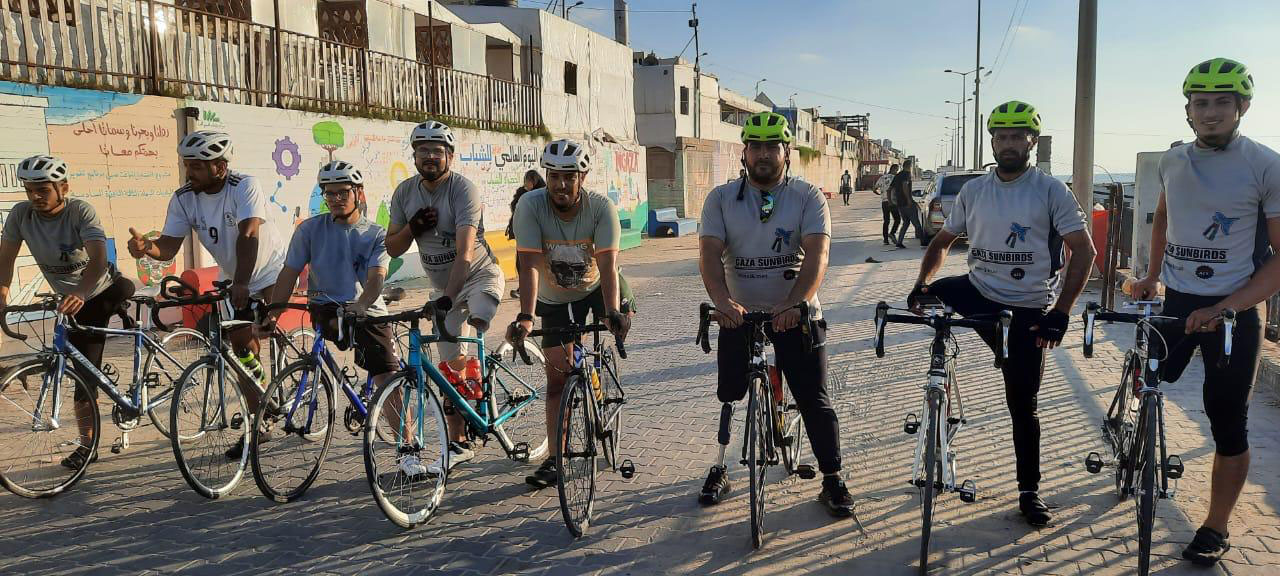
After his injury, Hazem joined the Gaza Sunbirds, a professional cycling team made up of people who lost limbs during previous wars in the Strip or in one of the demonstrations of the Great March of Return, which began in 2018 and continued for more than a year.
The team supports amputees by offering lessons to beginner and intermediate cyclists at all levels, covering all their needs, including transport, nutrition, equipment and training, and the team also works to provide the opportunity for rehabilitation through sport.
Before the war, the athletes would cover long distances by bicycle along Salah al-Din Street, the main highway between Rafah and Gaza, a distance of about 35 kilometres, as a form of training, in preparation for taking part in the Olympics and also to strengthen their muscles, according to Hazem.
On 9 October, two days after the start of Operation Al-Aqsa Flood, launched by the Palestinian resistance factions led by Hamas, the Israeli occupation imposed a total siege on the Gaza Strip, with severe restrictions imposed on food, medicine, fuel and electricity, which many human rights organisations considered a violation of international law that may amount to a “war crime”.
Distributing Aid Instead of the Olympics
With the humanitarian catastrophe the Strip lives through every day, the Sunbirds team took on the responsibility of providing help, especially as the food crisis worsened. “The idea of aid started without planning; it started from the ground, from the people, and from the genocide being practised daily against the Strip,” Karim says.
Karim, the Gaza Sunbirds’ international coach, adds in his conversation with Zawia3 that at first they bought 300 kilos of bread and distributed it, and then began to expand.
Karim Ali (24) is one of the Palestinian diaspora and has lived in London since birth; his family was one of the 750,000 Palestinians forced to leave their cities and villages and forcibly displaced outside Palestine in 1948, in what is known as the “Nakba“.
In 2020, Karim co-founded the Gaza Sunbirds alongside Alaa Al-Dali, a professional cyclist in Gaza. Karim says: “I was 19 when I got to know Alaa through social media. The team was Alaa’s dream from the beginning, from the time of his injury. We drew up the team’s plan in 2020 and started, and we have managed to hold on for five years until now”.
“I had a dream of being a champion with both legs. After my leg was amputated, I am determined to be a champion for Palestine with one. We ride to show the world our resilience, to bring hope back to the homeland and to inspire people through our stories. We ride for freedom.” These are some of the words Alaa Al-Dali wrote in his profile on the team’s website.
According to Karim, Alaa lost his right leg in one of the Great March of Return demonstrations at the beginning of 2018, like Hazem.
A United Nations report stated that 156 people had limbs amputated during the Great March of Return, which lasted more than a year, as a result of the Israeli occupation army’s use of live ammunition fired by snipers, while more than 214 Palestinians, including children, were killed and more than 36,000 people were injured, according to the report. The Palestinian Central Bureau of Statistics estimates the number of persons with disabilities in Palestine at about 115,000, including about 58,000 persons with disabilities living in the Gaza Strip, according to the statement the bureau issued on the International Day of Persons with Disabilities.
With the start of the war, Karim, who lives in London, in coordination with the rest of the team members, launched the “Athletes for Palestine” campaign to raise donations to help people in the Gaza Strip. About 70 athletes from around the world joined the campaign, many of whom took part in organising various events and initiatives to raise donations for the Sunbirds team, according to Karim.
On 6 January, the team launched its second major campaign, the “Global Cycling Rides”. Karim says: “We called for the ride to be similar to the Great March of Return, but on bicycles. The idea was that cyclists around the world would go out in processions raising the Palestinian flag, and indeed more than 65 rides were organised in the name of the Sunbirds team in 65 cities in more than 12 countries around the world, through which many donations were raised for aid in Gaza”.
From 19 October to December, the Sunbirds in Gaza helped raise about USD 60,000 and distributed about 26 tonnes of food parcels and 7,900 hot meals, in addition to 500 packages of “maternity care” supplies and hygiene supplies.
Hazem says: “When the food crisis began to worsen, we started buying bread and distributing it by bicycle to the displaced, then we started a system of food parcels and distributed them, and we used to buy calves and provide hot meals in more than one place in the Strip”, adding that they worked from six in the morning every day, starting by distributing the share for Nuseirat and the central area by car, while the Rafah share was distributed by bicycle.
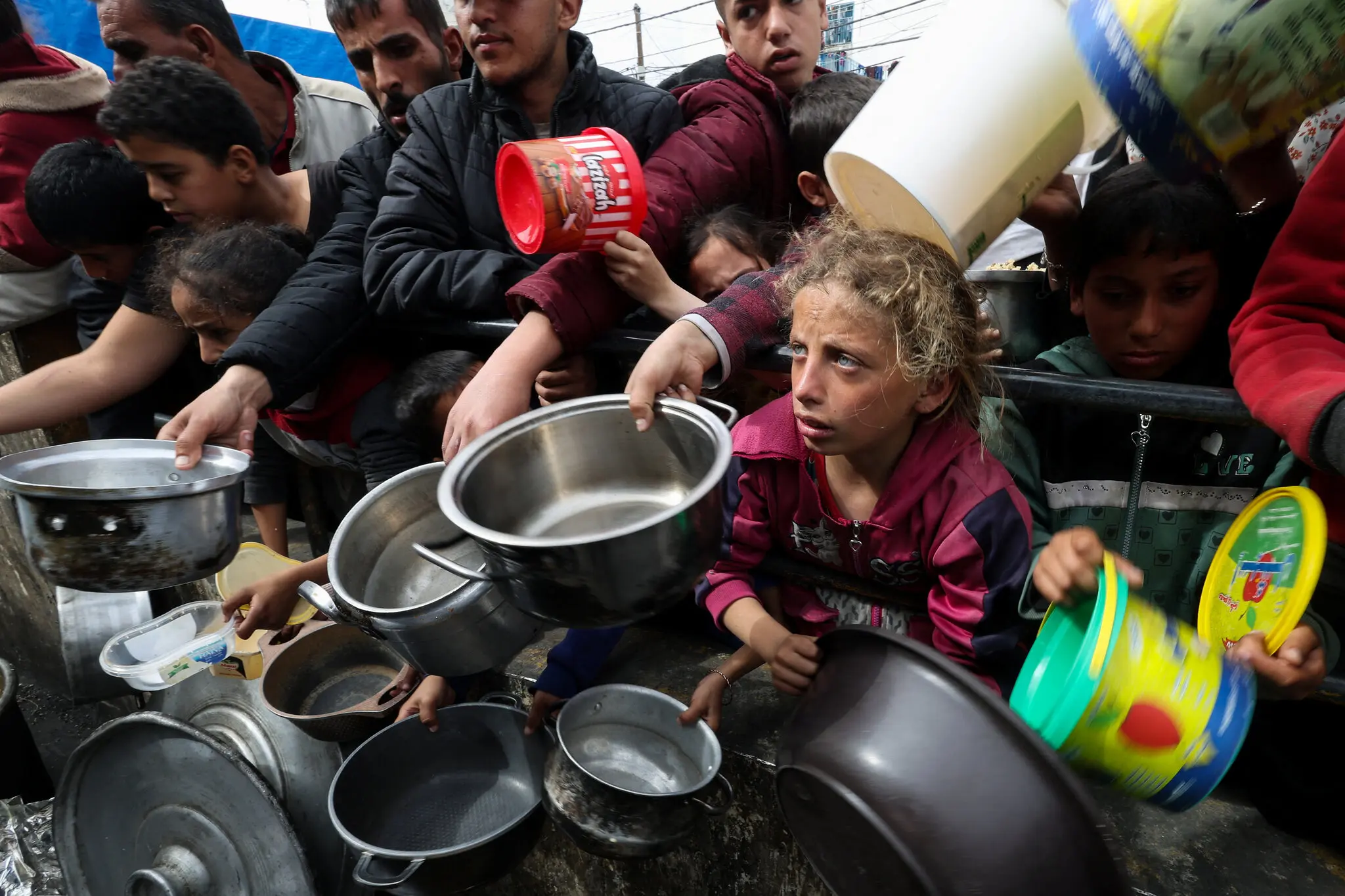
According to the United Nations, the entire population of Gaza, about 2.2 million people, is suffering from crisis or worse levels of acute food insecurity, and the report issued in December showed that 26% of the population (about 577,000 people) had exhausted their food supplies and were facing catastrophic hunger. The report also said there is a risk of famine in Gaza within the next six months. Meanwhile, UNICEF said on 21 February that death threatens 600,000 children in Rafah, in the south of the Gaza Strip, who are living without food or medicine and in extremely dangerous conditions in the city’s camps.
Mona Salem, a clinical nutrition specialist, says in her interview with Zawia3 that in such conditions, children, pregnant women, breastfeeding women, the elderly and people with chronic diseases are the groups most affected by food shortages and malnutrition. She pointed out that undernutrition in childhood greatly affects the child’s health and leads to major health problems in the short and long term, including stunted or abnormal growth. She added that in the case of the mother (pregnant or breastfeeding), malnutrition most often leads to anaemia of chronic disease (anaemia), which results from a lack of iron stores in the body.
Hazem describes the life of Gazans under the war, saying: “For the first time we are living in such conditions; they cannot be described in sentences or in a picture. Fathers wake up every day trying to get bread and water, gather firewood to heat their tents, then go back to searching for food, which has become scarce, and if they find it, it is at an exorbitant price”.
“At the start of the war, we used to distribute parcels and meals from Rafah to Nuseirat to Gaza. After things worsened and the checkpoint was set up in Gaza, we started distributing in Nuseirat, the central area and Khan Younis. After the displacement to Khan Younis, distributing the shares overland became a great danger to us, because the occupation forces monitor and target citizens, or because of more injuries among our team; so we focused more on distributing in the city of Rafah, especially after the large numbers who were displaced there”.
The UN Emergency Relief Coordinator said in his briefing to the Security Council on 12 January that 85 per cent of the Gaza Strip’s total population, 1.9 million civilians, had been forcibly displaced amid Israeli military operations, and that Rafah, whose population before the crisis did not exceed 300,000, has now become home to about one and a half million people.
Hazem remembers the hardest situations the team went through while distributing supplies, when a “fire belt” began in the Bani Suheila area, the eastern area of the city of Khan Younis, where he and the rest of the group were preparing hot meals for distribution: “We were preparing food in the morning when a fire belt began. Continuous, violent and random shelling among the residential blocks, but as fate would have it, we came out safely”.
At the start of the war, as the violent Israeli bombardment pushed deeper into the Strip, the headquarters of the Sunbirds team was destroyed. The team took its name from the Palestine sunbird, which itself has not escaped the occupation’s brutality, as Israeli environmental scientists are making strenuous efforts to erase its Palestinian name and replace it with “the orange bird”, according to the Palestinian Information Center.
Hazem says: “Our bicycles, our helmets and all the team’s belongings were destroyed at the headquarters, which was on the seashore, and we lost contact with two team members who stayed in Gaza; we have known nothing about them since the war began”.
Hazem tells us that his biggest dream now is for the war to stop as soon as possible, and to be able one day to have an advanced prosthetic limb fitted. Hazem has undergone five surgeries since his injury, the last of them just one month before the war began, in September.