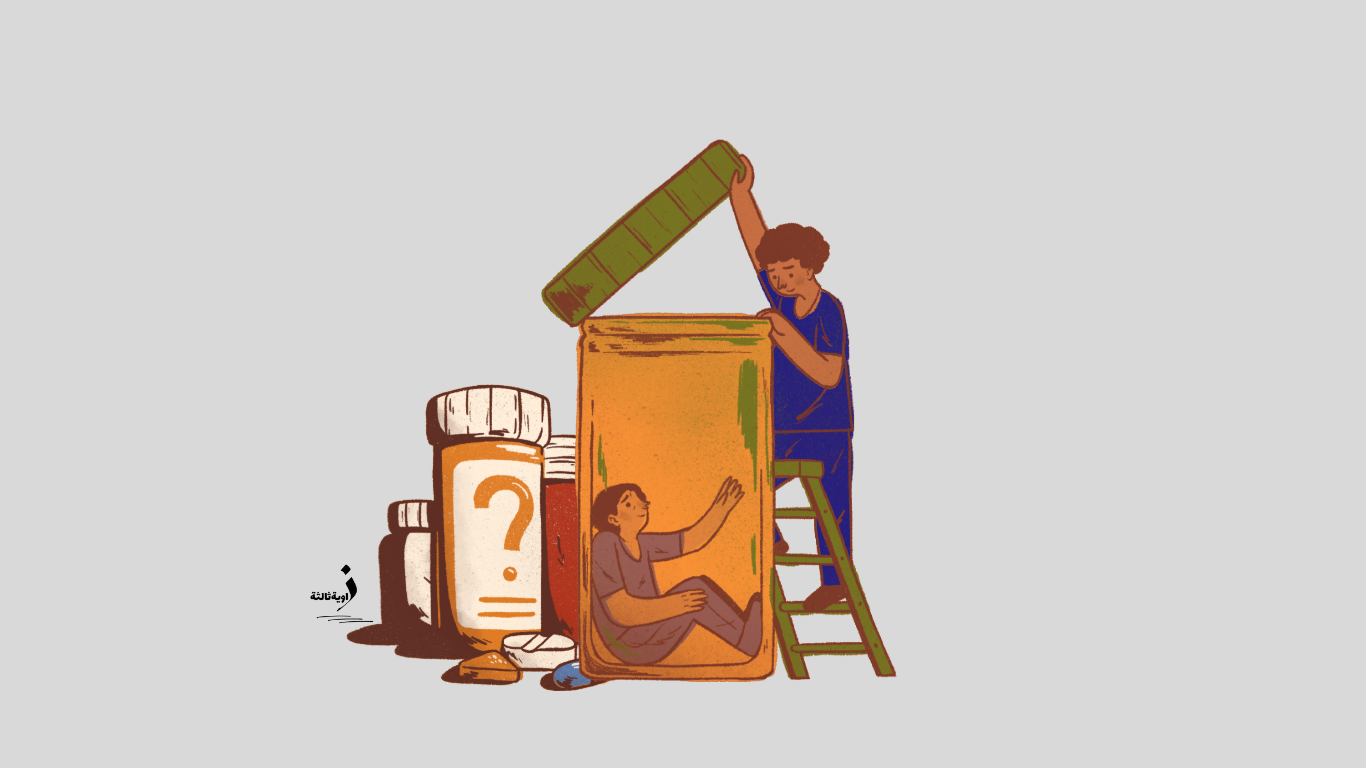


In the eleventh issue of “Deleted Lines,” we examine tense intersections between public policy and fundamental rights in Egypt. From prisons to psychiatric hospitals and from parliament to the streets, developments intensify: litigation against rising treatment costs, parliamentary action on medicine shortages, and rights campaigns for women workers, agricultural labourers and people threatened with displacement. We also follow the Criminal Procedure Law, Badr prison violations and detention of Sumud Flotilla activists, amid demands for release, treatment and education. In the background are the meat affordability crisis, environmental challenges and enforced disappearances without answers.
EIPR: Badr Prison Beautifies Repression
A new Egyptian Initiative for Personal Rights report said Badr Prison Complex, opened in mid-2022, does not represent a genuine transformation in detention conditions. Isolation, denial of communication and lack of independent oversight continue despite official presentation as a technologically advanced model prison.
Published in September 2025 as “Propaganda and Reality: Badr Prison in Light of Law and Human Rights Standards,” the report documents conditions from mid-2022 to mid-2025 through testimonies of prisoners, relatives and lawyers.
The complex’s three main facilities operate within a tightly sealed security structure, including cell and corridor cameras, continuous artificial lighting and near-total denial of natural light or open air. Books and newspapers are barred, detainees constantly monitored and direct interaction with staff absent.
Some detainees transferred from Scorpion and Tora prisons more than two years earlier had still not seen relatives or counsel when the report was written, despite being in pretrial detention without judgments prohibiting visits.
It recorded hunger strikes in Badr 2 and 3 against lack of exercise, healthcare and external contact. Testimonies said management neither responded nor allowed formal complaints or lawyer meetings, deepening isolation and insecurity.
It documented deaths without announced investigations, including university student Anas El-Sayed Mohamed in Badr 3 in May 2023 after declining health and unanswered family requests for hospital transfer. Emad Hassan remained in solitary confinement for months despite severe illness without necessary care. Other unnamed cases involved hunger strikes or deterioration through neglect.
EIPR said prosecutors had not opened independent investigations by publication, and no independent rights organisation or media outlet had been permitted to visit or directly verify conditions.
The report said prosecutors had conducted no unannounced visits since opening. The National Council for Human Rights visited once in 2022, arranged beforehand with the Interior Ministry, without detailed public findings or recommendations.
The Interior Ministry also failed to respond to dozens of family complaints over visitation bans, medical care and inhumane detention.
Modern architecture and technology, the report concluded, do not indicate improved treatment or respect for rights, but serve as a facade concealing violations in a more closed, harder-to-monitor environment.
EIPR called for independent judicial investigations into deaths and violations, prison regulation amendments guaranteeing visits, care and complaints, access for independent rights groups and media, and an end to using prisons politically to market an image contrary to reality.
Egyptian Front: The Executive Controls Parliamentary Legislation
The Egyptian Front for Human Rights said in a new report that the outgoing 2020–2025 parliament entrenched executive dominance over legislation and largely abandoned oversight. Its Human Rights Committee neglected core responsibilities for secondary matters outside fundamental freedoms.
Parliament passed 879 laws. MPs initiated just sixteen, and only thirteen involved joint government-MP sponsorship, usually by members of the state-backed Mostaqbal Watan Party. Most others came solely from government. Although the Constitution permits MP bills, parliamentary rules prioritise government bills, marginalising independent initiatives.
Most enacted legislation was authoritarian and directly violated rights: the Criminal Procedure Law approved in April 2025, amended counterterrorism law, public facilities protection law normalising military involvement in internal security and military trials of civilians, employee dismissal laws based on security indications and an epidemics law criminalising information during health emergencies.
The Human Rights Committee, chaired by Mostaqbal Watan MP Tarek Radwan, proposed no legislation strengthening freedoms or correcting these laws and showed little opposition. It supported the asylum law despite conflicts with international instruments and the Criminal Procedure Law legalising security exceptions through ordinary legislation.
The report criticised oversight tools as unused or confined to local services rather than accountability. The committee conducted only one prison visit in five years, coordinated with the Interior Ministry, casting doubt on its seriousness.
Instead of legislative and oversight duties, it pursued general media and awareness activities and meetings with official and media bodies to counter “foreign allegations,” without clear documents or positions on torture, case recycling, disappearance and repression of expression.
The committee did not engage with more than 343 recommendations received in Egypt’s latest UN Universal Periodic Review. The Front urged comprehensive legislative review, real oversight, institutionalised committee involvement in freedom-related laws and published monitoring and legislative plans implementing international recommendations.
Parliamentary Action on Egypt’s Medicine Crisis
MPs submitted new questions to the Prime Minister and Health Minister on rising prices and shortages, and called for tighter controls on dispensing children’s medicines without prescriptions.
MP Samira El-Gazzar questioned continuing increases despite a stable dollar, noting a nearly three-year crisis affecting chronic illness patients. Around one hundred companies seek price rises of 10–30% for five hundred products, threatening winter availability. She criticised slow registration and analysis of new medicines and the Pharmacists Syndicate’s absent market oversight.
MP Khaled Tantawy backed Drug Authority warnings about non-prescription cough and cold medicines for children, stressing risks and side effects. He called for enforcement of prescription-only antibiotics, stronger monitoring and awareness to correct parental misconceptions.
Lawsuit to Halt Rising Treatment Costs in Psychiatric Hospitals
The Egyptian Center for Economic and Social Rights filed a lawsuit before Cairo’s Administrative Court challenging Health Minister Decision No. 220 of 2025 raising care, treatment and accommodation charges in psychiatric hospitals, on behalf of affected patients, guardians and psychiatric professionals.
It sought suspension, cancellation of new prices and restoration of previous rates, saying burdens exceed families’ means, conflict with constitutional and international human rights obligations and threaten dignified, humane psychiatric treatment.
Egyptian Sumud Flotilla Activists Arrested
On 30 September, security forces arrested at least three people, including two preparatory committee members, outside the flotilla’s Cairo headquarters amid a heavy security presence. Their detention location remained unknown, according to its official page.
The committee declared a continuous meeting inside headquarters to consult political, rights and popular groups until release and determine next steps.
The previous evening, it had posted footage of members chanting outside headquarters as aid arrived from governorates.
Logistics officer Ahmed Maher told Zawia3 that usual intermediaries were contacted to negotiate release but responses cited “protesting” as the reason. He said chants expressed Palestine solidarity only during donation unloading, without an organised demonstration or solidarity rally.
He said authorities had not disclosed their whereabouts: no promises had been made, and negotiations extended even to how donations would be delivered.
77% of Egyptians Face Disasters without Warning
A Zawia3 investigation found major gaps in early warning for natural disasters. Millions in remote villages and informal areas receive no warning despite earthquake, disease, flood and heatwave monitoring in some governorates. Reliance on media, social networks and personal calls exposes a wide urban-rural climate justice gap.
Farmers including Khalaf Aziz and Essam Ouda said absent warnings cause substantial crop and land losses. Official initiatives remain limited or confined to seasonal weather bulletins without clear prevention or response guidance. Partial improvements in agricultural, earthquake and flood warning systems still face funding, staffing and communication gaps.
Readiness differs between governorates. Some authorities coordinate through meteorological centres, agricultural extension officers and local operations rooms, while ordinary citizens remain outside direct warning networks. The investigation calls for a comprehensive central system reaching everyone, trained local staff, stronger technical infrastructure and public awareness of response before disasters occur.
عندما تضرب كارثة… من يُنذر الفقراء؟ 77% من المصريين يواجهون الكوارث بلا إنذار
Controversy over Leasing Outpatient Clinics in Public Hospitals
The Health Ministry offered clinics in Mabarret Misr El-Qadima, Mabarret El-Maadi and Heliopolis hospitals for lease through a formal tender. It said young doctors could rent licensed evening clinics, with tests and operations performed in the hospital for integrated services. Available specialties include internal medicine, surgery, orthopaedics and paediatrics.
Right to Medicine Association head Mahmoud Fouad criticised the decision as reducing government public-health expenditure, following higher examination fees, reduced medicine provision and rising insurance and drug costs.
He told Zawia3 an accelerating shift erodes free treatment recognised in successive constitutions, including current Article 18. Measures include higher admission fees, dispensing only one medicine, higher insurance service and drug prices and increased state-funded treatment costs. Already inadequate allocations are compounded by additional patient charges and repeated renewal of treatment authorisations. He said the concession law permits foreign investors to operate Egyptian hospitals for the first time, with forty offered, including profitable historic Agouza and Alexandria’s Sharq El-Madina hospitals.
He questioned sale or rental of profitable hospitals, including Sheikh Zayed Specialized Hospital’s bone marrow unit, among the region’s best and highly profitable, also offered for investment. Evening clinic leases, he said, will add costs for patients and exhaust public equipment at citizens’ expense.
Egypt Faces a Food Security Challenge
Social media in July circulated footage of an older woman kissing Giza’s governor’s hand and pleading for meat. It provoked public anger and, despite officials’ attention, exposed millions’ fragile purchasing power amid rising essential prices.
For a report on meat prices, Zawia3 surveyed one hundred people across governorates, mostly university-educated and aged 25–40. Eighty-nine percent reported declining purchasing power; 96% identified rising prices as the main reason. Forty-three percent ate meat only monthly, 73% bought smaller quantities and 79% said inability to buy meat affected their dignity.
CAPMAS data put poverty at 29.7% in mid-2024, while unofficial estimates suggest invisible poverty beyond the official figure, reflected in difficulty securing animal protein.
عندما تصبح اللحوم ترفًا طبقيًا.. مصر تواجه تحدي الأمن الغذائي
El-Sisi Returns the Criminal Procedure Bill to Parliament
After weeks of debate, the president decided to return the bill amid extensive political and rights objections. The presidency said controversial articles would be reviewed to strengthen constitutional guarantees, especially home inviolability and alternatives to pretrial detention.
EIPR called for amendments based on separation of powers, equality between prosecution and defence, presumption of innocence and trial within a reasonable time.
The Cairo Foundation for Development and Law stressed addressing women’s rights as victims, complainants and defendants, enabling direct initiation of proceedings, considering pregnant and nursing women and protecting sexual violence case privacy. It called for confidential data, psychological and legal support and balance between investigative powers and defence guarantees.
Lawyer Ahmed Mokhtar told Zawia3 the decision was positive and realistic but eight amended articles were insufficient: the entire law needs review. Its current form would inevitably cause a crisis because constitutional and rights flaws threaten defence and home protections and expose it to Constitutional Court challenges. The opportunity should include over fifty disputed articles for which rights organisations and legal initiatives had proposed alternatives.
Foundation director and rights lawyer Entesar El-Saeed welcomed the return but stressed comprehensive, serious review to enable effective access to justice for women.
She told Zawia3 that modern rights protection requires clear sexual violence provisions, victim confidentiality and protection. The law must reflect the Constitution and guarantee equality and nondiscrimination so women do not remain justice’s weakest link.
جلسة برلمانية طارئة: الإجراءات الجنائية يعود للمناقشة بأمر الرئيس
Administrative Court Grants Mohamed Adel the Right to Sit Examinations
The Administrative Court accepted a rights initiative’s challenge to the decision barring activist Mohamed Adel from postgraduate examinations at Mansoura University, a step enabling prisoners to continue education.
Adel, imprisoned for more than eleven years in political cases, went on hunger strike the preceding year over examination restrictions. The initiative said the judgment reinforces constitutional and legal education rights and correctional centres’ duty to facilitate them.
Calls to Disclose Ahmed Hassan’s Fate after Six Years of Disappearance
Local and international rights organisations renewed demands for student Ahmed Hassan Mostafa’s whereabouts. He turned 25 in early September, more than six years after arrest in April 2019 while studying law. The Interior Ministry still refuses to implement a 2020 court order to disclose his location. His family has received no official information; organisations regard continued disappearance as a flagrant rule-of-law violation and an ongoing enforced disappearance crime.
Concern over Lawyer Hoda Abdel Moneim’s Health
Rights groups expressed grave concern over Hoda Abdel Moneim, 66, held in pretrial detention since November 2018 despite life-threatening chronic illnesses. She suffered two heart attacks in August and narrowing of brain arteries leaving her unable to move. Repeated family requests for medical release remain unanswered.
Touson Resident Opposing Displacement Detained on Terrorism Charges
Security forces arrested Abdallah Mohamed El-Sayed, 29, at work in Alexandria on 11 September. State Security Prosecution charged him with joining and financing a terrorist group and publishing false news, ordering fifteen days’ pretrial detention. Lawyers denied allegations, saying he exercised constitutional expression rights during Touson residents’ protests against displacement for the new ring road.
Ahmed Douma Summoned for the Fifth Time in a Year
On Monday, State Security Prosecution released activist Ahmed Douma on EGP 50,000 bail after a Thursday summons in a new case, his fifth within a year, with a hearing set for Monday, 29 September. His Facebook announcement described continuing prosecutions over posts on domestic and regional conditions. He had been released in April on EGP 10,000 bail in a false-news case.
إشارات متضاربة.. بين العفو عن علاء عبد الفتاح وحبس إسماعيل الإسكندراني
Constitutional Challenge to the Drug-Use Dismissal Law
In the first such challenge, cassation lawyer and labour rights defender Mostafa Zaki contested Law No. 73 of 2021, known as the drug-use dismissal law, following permission from Alexandria Appeals Court in August 2025. Grounds include denial of workers’ defence, automatic dismissal beyond judicial oversight, disproportionate treatment of occasional use and addiction, and violation of social protection by dismissal rather than treatment.
Zaki told Zawia3 that 50,000–100,000 workers may be affected, creating a broad social crisis. Some were dismissed because health prevented timely testing, medication affected results or they were receiving treatment supervised by the addiction treatment fund. They received no opportunity to explain or appeal, with employers and judges subject to a uniform mechanism ignoring differences.
New Labour Law No. 14 of 2025 offers some remedies by requiring testing at two designated hospitals, investigation and court review, partially changing Law 73’s mechanism. Zaki says fundamental resolution requires amending the law itself with graduated penalties, more accurate tests and consideration of illness and employment history.
He warned the current law is a time bomb: lost livelihoods may drive thousands, especially people recovering from addiction, into collapse and dangerous behaviour. Media and public pressure for urgent amendments is a necessity.
Urgent Appeals for the Red Sea and Zamalek’s Historic El-Zohriya Garden
Hurghada fishers and residents reported serious marine threats from large vessels using destructive fishing near Giftun and Makadi, reducing stocks and harming livelihoods and tourism. Egyptian Fishing Federation head Mohamed Qaddah said shark nets threaten biodiversity and urged GPS/MMS tracking of all vessels and monitoring of prohibited zones.
The Egyptian Foundation for Environmental Rights appealed to halt development of historic El-Zohriya Garden pending comprehensive environmental assessment and heritage protection, offering an alternative design following international maintenance methods.
Environmental lawyer and foundation director Ahmed El-Saeedy said it submitted an urgent complaint to the Prime Minister seeking suspension of all current development plans.
He told Zawia3 specialist engineers had prepared a scientific alternative to restore and preserve natural resources and rare heritage trees, providing practical development without environmental damage or constitutional and legal violations.
He said announced plans had no scientific basis and adoption of the alternative could protect environmental and heritage value while achieving sustainable development.
Egyptian Social Democratic MP Samira El-Gazzar submitted a question for referral to the Prime Minister about an alleged plan to clear trees and greenery for restaurants, entertainment venues, a hotel, exhibitions and theatre. She said construction in the garden or along the Nile violates constitutional and citizens’ rights. She urged reassessment protecting environmental and heritage character, adherence to National Organization for Urban Harmony requirements, a joint monitoring committee and questioning of the Prime Minister.
Women Judges on the State Council Bench: A Historic Step Awaiting Completion
Feminist organisations welcomed the first intake of women judges as a historic victory after more than 75 years of struggle, from Dr Aisha Rateb’s 1949 lawsuit to “The Bench Is Her Right.” Bint El-Nil stressed constitutional entitlement rather than a gift; the Centre for Egyptian Women’s Legal Assistance called it the fruit of generations of activists and rights defenders.
Around 48 of 207 appointees by presidential decree were women. Full equality requires a clear plan to increase representation consistent with the National Strategy for Women’s Empowerment 2030. Organisations sought exceptional intakes and activation of provisions allowing women lawyers to enter the judiciary, saying women on the bench improve understanding of gender dimensions and begin changing conditions for women and marginalised groups.
Lawsuit to Increase Maximum Maintenance Payments to Divorced Women
The Egyptian Center for Economic and Social Rights said the Administrative Court referred a case seeking a higher ceiling for Nasser Social Bank maintenance payments to divorced women and children to the State Commissioners Authority on 2 August, setting 15 November for consideration.
A claimant awarded EGP 1,000 monthly received only EGP 500 under a 2004 ministerial decision unchanged for twenty years despite inflation and increased bank resources. The centre said the low ceiling violates constitutional and international guarantees of maintenance and dignified lives.
A Community Campaign on Vaginal and Caesarean Birth in Egypt
Edraak for Development and Equality launched “Not Every Caesarean Is Necessary” with feminist organisations to discuss rates almost five times normal levels, often without genuine medical reasons. It promotes informed choice and awareness of risks and procedures. The Safe Medical Care for Women initiative welcomed Health Ministry measures against medically unjustified caesareans and urged extending the professional code to all hospitals for safe care protecting privacy and dignity.
Rights Groups Demand Protection for Women Agricultural Workers and Labour Rights
Rights and union groups offered condolences after the Menoufia regional road crash killed nineteen women agricultural workers and injured others travelling to low-paid work in unsafe vehicles. They said it exposed precarious conditions despite the unified 2025 Labour Law. They urged inspections, agricultural minimum wages, improved rural roads and women’s ability to organise and defend rights.
The New Woman Foundation expressed solidarity with striking Nile Linen Group workers in Alexandria over delayed pay and denial of women’s legal rights. Workers demanded minimum wages, legal hours, risk allowances and occupational safety. The foundation called violations an infringement of constitutional and international rights, urging urgent ministry intervention and accountability.