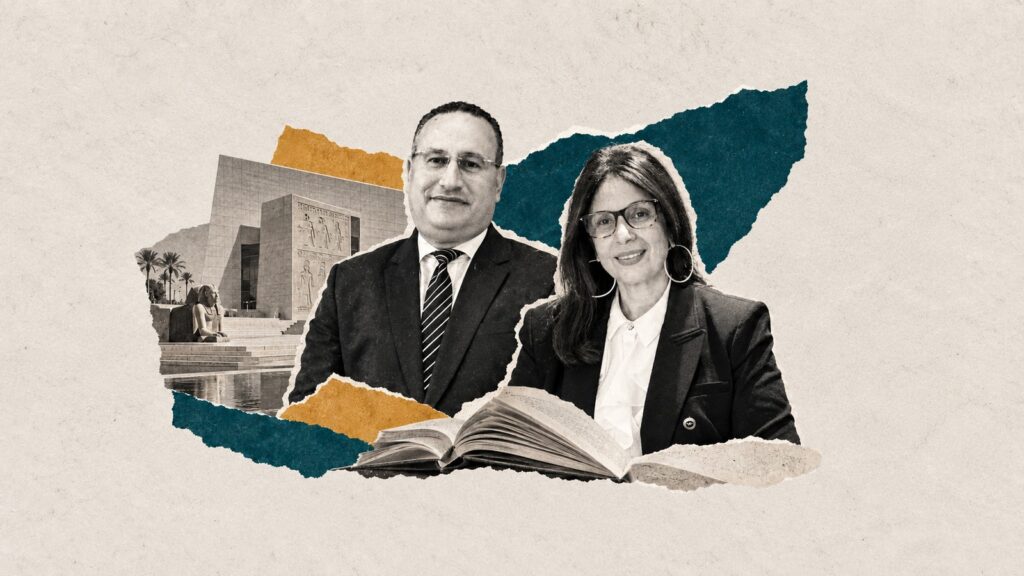
On 16 October 2026, Egypt’s Ministry of Culture completed 101 days without a minister, according to Zawia3’s calculations. On 7 July, Prime Minister Mostafa Madbouly assigned Minister of Higher Education and Scientific Research Abdelaziz Konsowa the duties of acting culture minister, ‘temporarily until a new minister is appointed’, after accepting Minister Jihan Zaki’s resignation. At the time of writing, no appointment decree had been issued, and the ministry’s official bulletins continued to describe Konsowa as ‘acting minister’.
During this period, one minister ran two ministries. Konsowa chaired the Supreme Council of Culture session that voted on the State Awards, approved the October celebrations programme, and sponsored the usual festivals. In September, he issued a decision requiring the heads of the ministry’s sectors to refrain from giving interviews to the media, days after an interview in which the head of the Fine Arts Sector, Mahmoud Hamed, discussed inadequately protected museum storage facilities and biennials postponed for lack of funding.
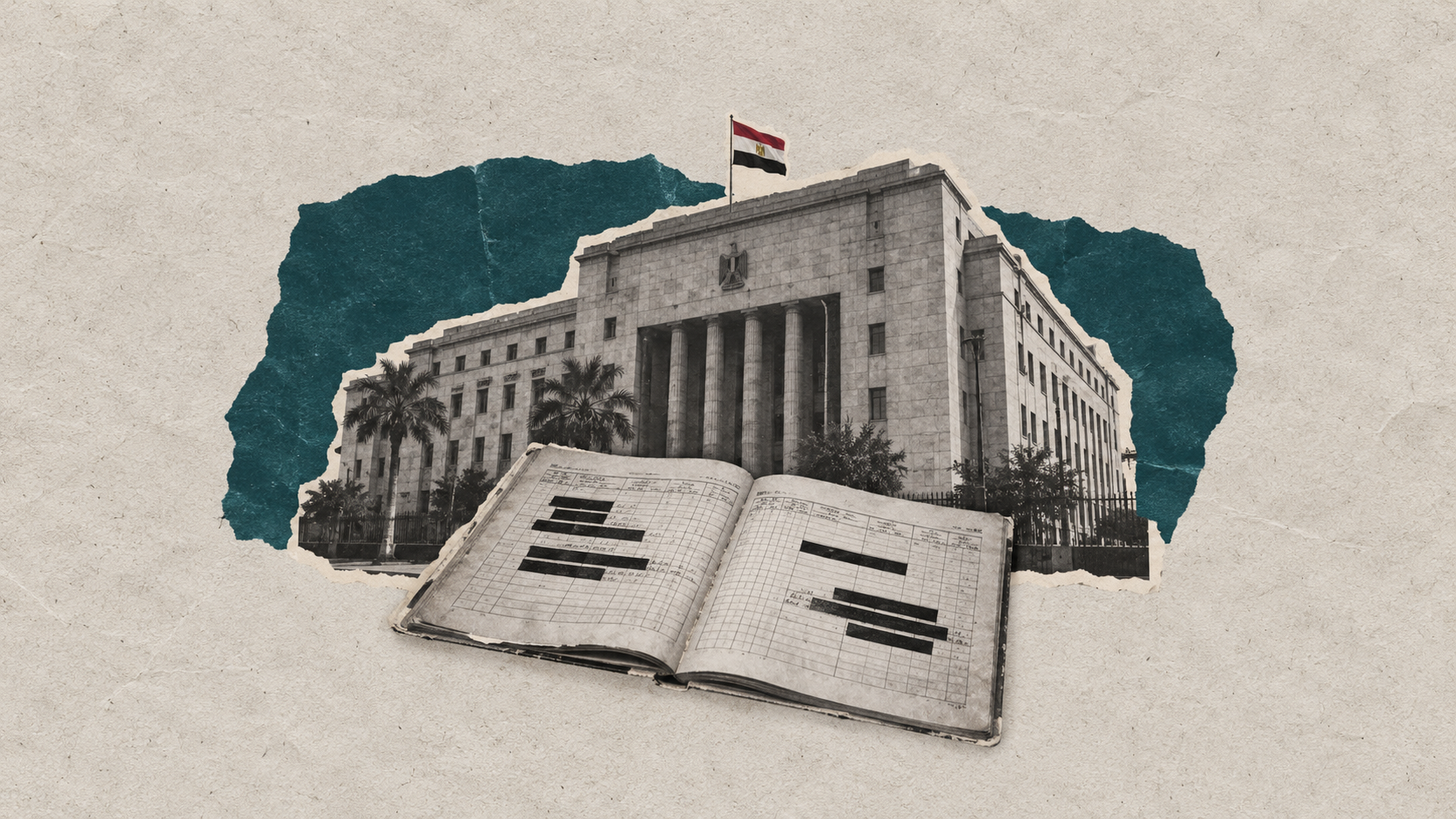
Between events that continued and matters that stalled, this report traces what happened inside the ministry after its minister’s departure following a court ruling: vacant positions, projects dependent on budgets, and the decision that prevented those who know the details from speaking.
A Book’s Journey from the Book Authority to the Court of Cassation
The story began on 27 January 2024, when writer and Al-Ahram journalist Suhair Abdel Hamid was invited to a discussion of Jihan Zaki’s book at the Cairo International Book Fair. There, according to her account, she discovered that parts of her research had appeared in someone else’s book. Zaki’s book, titled ‘Coco Chanel and Qut al-Qulub: Braids of Formation and Accusations of Betrayal’, was published in 2022 by the General Egyptian Book Organization, the Culture Ministry’s principal publishing arm. It traced the lives of French fashion designer Coco Chanel and Egyptian writer Qut al-Qulub al-Demerdashiyya, who came from an aristocratic background, as part of a series called ‘Duos’. Abdel Hamid accused the future minister of copying more than 50% of her own book, ‘The Assassination of Qut al-Qulub al-Demerdashiyya: Lady of the Palace’.
Abdel Hamid filed her lawsuit before the Economic Court, which appointed a three-member committee of intellectual property experts. According to the case documents, the committee concluded that there had been unjustified verbatim copying. On 9 July 2025, the court ordered Zaki to pay the plaintiff EGP 100,000 ($2,070) in compensation, withdraw the book from the market, and cease making it available for sale or circulation, as stated in the case records. In September 2025, Zaki filed two appeals before the Court of Cassation, arguing that the material in her book constituted ‘permissible quotation’. She denied the allegation, maintaining that the passages formed part of a comparative study and that their source had been acknowledged.
Between the initial ruling and the final judgment, Zaki moved from a seat in the House of Representatives to a ministerial post. On 10 February 2026, the professor of ancient Egyptian civilization and former director of the Egyptian Academy of Arts in Rome was appointed culture minister in Mostafa Madbouly’s third government, succeeding Ahmed Fouad Hanno, who had taken office in July 2024. The appointment provoked controversy because of the Economic Court ruling. At a government press conference, Minister of State for Information Diaa Rashwan responded that the cabinet would consider, once a final judgment had been issued, whether the minister’s remaining in office was consistent with the law. Madbouly, for his part, described the case as purely personal and still before the courts.
On Monday, 6 July 2026, the Court of Cassation rejected both appeals, following the Cassation Prosecution’s recommendation that they be dismissed, making the judgment final and irrevocable. Zaki submitted her resignation the following day. The prime minister’s office said she had resigned ‘to spare the government embarrassment in this personal case’ and would pursue the legal procedures still available to her, including petitions for reconsideration of the judgments. Madbouly accepted the resignation immediately, and Zaki left office less than five months after taking the constitutional oath. Suhair Abdel Hamid told Asharq Al-Awsat that her dispute was with Jihan Zaki, not with the minister, and that her aim was to protect her creative work.
A Desalination Engineer at the Head of Two Ministries
Abdelaziz Konsowa entered government in the same February 2026 reshuffle that brought Jihan Zaki into office, succeeding Mohamed Ayman Ashour as higher education minister. According to his official biography, he is a professor of environmental engineering at Alexandria University’s Faculty of Engineering. He progressed from dean of the faculty to governor of Alexandria, then president of the university, and specialized in water treatment and desalination using nanotechnology and membranes. His biography lists no previous post in a cultural institution, apart from membership of the Bibliotheca Alexandrina’s Board of Trustees.
He was assigned the culture portfolio while in Uzbekistan for the first Forum of Islamic Civilization. A ministry source told Asharq Al-Awsat that official correspondence requiring the minister’s approval would be presented to him on his return, and that the outgoing minister had left no documents requiring an urgent signature. Adel Hassan, director of the National Centre for Theatre, Music and Folk Arts, told the same newspaper that work was proceeding regularly. Critic Tarek El-Shennawy, a member of the ministry’s festivals committee, said the higher education minister would face additional burdens because he was running two ministries with numerous sectors. He added that the usual practice in such cases was for the acting minister to choose an undersecretary to manage affairs.
At his first meeting with ministry leaders and heads of its agencies, on Sunday, 12 July, Konsowa asked each sector to present a future vision and an implementation plan tied to a specific timetable. He directed them to intensify cultural outreach convoys to border governorates in cooperation with universities, pay attention to university theatre and digitization, and prepare early for the Cairo International Book Fair and the School Theatre Festival scheduled for November.
On 27 July, he chaired the Supreme Council of Culture session to vote on the State Awards, in what Youm7 described as an exceptional situation: he attended in a dual capacity, cast his vote as council chair, managed the ballot and announced the results, while the heads of cultural agencies who sit on the council have no voting rights. At the council’s seventy-eighth meeting, he said that the Culture Ministry ‘does not work alone’ when it comes to creating an Egyptian collective consciousness, and called for its integration with higher education and other state ministries.
This approach continued into October. On 12 October, at the press conference for the seventh State Award for Young Creators, Konsowa announced that the state was preparing ‘integrated pathways’ to support creative talent and fund young people’s projects, particularly in higher education, to be announced within weeks. He cited students’ ideas and prototypes in technology and innovation as examples, before adding that this attention would extend to art, literature and music through ‘additional pathways’ for which he gave no timetable.
One Interview and an Order for Silence
In September 2026, Konsowa issued a decision requiring all heads of Culture Ministry sectors to refrain from giving interviews to media representatives. The decision followed an interview conducted by journalist Tarek Abdel Aziz for Akhbar Al-Youm, a state-owned national newspaper, with Dr Mahmoud Hamed, head of the Fine Arts Sector. According to what he published about the interview, Hamed discussed museum storage facilities lacking the environmental safeguards needed to protect artworks from damage; the cost of renovating Helwan’s Wax Museum, exceeding EGP 400 million ($8.28 million) because of the deterioration of its statues and the need to restore the museum and its surroundings; and an inventory of closed museums and efforts to reopen them.
According to Veto, the interview also covered two other issues: conflicting roles at the General Fine Arts Exhibition, where the exhibition commissioner and members of the selection committee display their own work in the same exhibition; and a funding crisis that had repeatedly postponed the Alexandria Biennale and the Graphic Triennale because the necessary budgets had not been provided. The newspaper said publication of the interview caused confusion inside the ministry, after which the decision was issued.
The Wax Museum discussed by Hamed has been closed since 2009. It contains 116 statues and 26 scenes recounting Egypt’s history from the Eighteenth Dynasty to the July 1952 Revolution. In late 2025, former sector head Walid Qanoush said the closure was due to civil protection concerns and a lack of funding, and that a revival project was under study. Months after those statements, public discussion of the project’s actual cost preceded the ban.
Veto noted an irony in the timing of the decision: on the same day, Education Minister Mohamed Abdel Latif and Minister of State for Information Diaa Rashwan invited a large number of journalists and intellectuals to an open discussion on the future of education. The newspaper recalled that the Culture Ministry had, in earlier periods, been among the ministries most open to the media, since the media were its means of reaching the public. Yet the acting minister had not, according to the same coverage, invited journalists and writers to a comparable discussion of higher education or culture.
The decision did not remove sector heads’ names from newspapers; it changed the way they appeared. Weeks later, Mahmoud Hamed himself appeared in official statements about the return of the Small Artworks Salon after an absence of almost twenty years, and the opening of a retrospective of the late artist Saeed Hedaya at the Gezira Art Centre, both under Konsowa’s patronage. Discussion of events remained available through statements. Discussion of storage facilities, budgets and closed museums, however, was absent from the official statements Zawia3 reviewed after the decision.
The Largest Book Fair, Run by an Organization Without a Chair
The General Egyptian Book Organization, which published the outgoing minister’s book, has operated without an appointed chair since the resignation of Ahmed Bahy El-Din El-Assassi in August 2025, around fourteen months ago according to Zawia3’s calculations. Vice-chair Khaled Abu El-Leil managed its affairs for ten months until his secondment ended on 3 June 2026. He then left his office for the last time without a renewal decision. That same day, the ministry temporarily entrusted its management to two executive officials: Mohamed Ezzat, director-general of the technical office, and engineer Haitham Younis, head of the Central Administration for Exhibitions, with the latter holding delegated financial and administrative powers.
For months, newspapers circulated names of candidates for the post, including former organization chairs Ahmed Megahed and Haitham El-Hag Ali, Higher Institute of Art Criticism dean Shawkat El-Masry, and screenwriter Abdel Rahim Kamal. They were later joined by former National Library head Sherif Shaheen and poet Ahmed El-Shahawy, editor-in-chief of Ibdaa magazine. Jihan Zaki did not resolve the matter during her five months in office, despite making changes in other sectors, most recently appointing Reda El-Wakil head of the Cairo Opera House in late June. Nor was it resolved during the hundred days that followed.
Instead, the acting minister stepped into the chair himself. On 16 September, Konsowa issued a decision forming the supreme committee for the fifty-eighth Cairo International Book Fair under his chairmanship. A decision also appointed Haitham Younis, ‘delegated the powers of the organization’s chair’, to run the fair as executive director. Described by the Egyptian press as the largest cultural event in the Middle East and Africa, the fair is scheduled for 20 January to 2 February 2027 at the Egypt International Exhibition Centre in the Fifth Settlement, with Qatar as guest of honour. Publisher registration closes on 31 October. Thus the ministry’s most important event is managed through delegated authority at the organization and acting leadership at the ministry.
The vacancy at the Book Organization is not an exception in the ministry’s recent record. In February 2025, Youm7 identified cultural positions without leadership, most notably the National Cinema Centre and the censorship authority for artistic works, which remained without a head for around three months after Khaled Abdel Galil’s term ended in December 2024, before screenwriter Abdel Rahim Kamal was seconded as an assistant minister responsible for it. The newspaper reported at the time that the absence of a censorship chief had halted approvals for artistic works and left administrative matters pending.
A Budget Defended by One Minister and Implemented by Another
The 2026/2027 fiscal year began on 1 July, six days before the minister’s resignation. Proposed investment for the Culture Ministry in this year’s plan totals EGP 1.77 billion ($36.6 million). On 12 May 2026, the House of Representatives’ Media, Culture and Antiquities Committee, chaired by MP Soraya El-Badawy, discussed the ministry’s draft budget. The session revealed a wide gap between what was requested and what was available. General Authority for Cultural Palaces chair Hisham Atwa said that an earlier EGP 250 million ($5.18 million) request for palace maintenance had received only EGP 5 million ($103,500), or 2% of the amount requested, according to Zawia3’s calculations. El-Badawy said the authority’s maintenance allocation the previous year was EGP 33 million ($683,000), while committee secretary MP Doha Assi pointed to seven cultural palaces that were not operating.
According to Atwa, the authority has around 600 cultural sites across the governorates, where remuneration for an individual trainer does not exceed EGP 100 ($2.07). He called for the activities allocation to be raised to EGP 42 million ($870,000). In June, Doha Assi announced the committee’s recommendation to increase the authority’s budget by around EGP 500 million ($10.35 million) for construction, restoration and civil protection requirements, saying that this would not be enough to complete the accumulated work. The minister who had promised MPs to activate the authority’s role left weeks later, and implementation of the budget passed to a minister running it in an acting capacity.
Theatre activity had already faltered in several regions. On 21 April 2026, Atwa announced the disbursement of production budgets for theatrical performances in all regions, particularly the East Delta and southern Upper Egypt, and the completion of projects that had stopped, while ‘ensuring no conflict’ with the cabinet’s spending rationalization plan. In the fine arts sector, the ministry repeatedly postponed the Alexandria Biennale and Graphic Triennale for lack of funding, as the sector head said in the interview preceding the order for silence.
Meanwhile, the question of rented cultural houses, the ministry’s smallest outlets in villages and neighbourhoods, remains unresolved between the ministry and the courts. On 5 March 2025, the board of the General Authority for Cultural Palaces decided to remove staff from rented cultural houses and libraries slated for closure. Then-culture minister Ahmed Fouad Hanno approved the decision eight days later. On 2 February 2026, the State Commissioners Authority recommended annulling the decision in case No. 58055 of judicial year 79, describing cultural houses as ‘centres of cultural enlightenment’ and culture as a constitutional right. When Atwa took over the authority in April 2026, the press listed a review of rented cultural houses among his priorities. Official statements published since July reveal no new decision on the matter, whether to cancel or implement it.
Fourteen Ministers in Fifteen Years
Ministerial turnover did not begin with Jihan Zaki. Farouk Hosny held the culture portfolio for 23 years until January 2011. His successor, Gaber Asfour, resigned ten days after taking office in February 2011, after Egyptian and Arab intellectuals condemned his acceptance of a post in a government formed at the height of protests against Hosni Mubarak’s regime. Since then, thirteen ministers had held the portfolio by February 2026, according to a tally by Al-Araby Al-Jadeed, making Jihan Zaki the fourteenth. Fourteen ministers in around fifteen and a half years means an average of approximately thirteen months per minister, according to Zawia3’s calculations, compared with more than two decades for a single minister before them.
The departure of Zaki’s predecessor, Ahmed Fouad Hanno, came as a surprise after a year and seven months in office, just days after the close of a Cairo Book Fair edition described as its most successful. Al-Araby Al-Jadeed explained the repeated turnover by noting that the ministry is neither a sovereign portfolio, nor one providing direct services, nor an economic ministry with an immediate impact, making its leadership replaceable at little political cost. It argued that successive changes had left insufficient time to build long-term cultural policies or assess previous experience.
The present moment differs from that record in one respect. This time, the ministry is not passing from one minister to another; it remains without a fully appointed minister, while its largest publishing organization operates without a chair and its sector heads are barred from speaking. The July assignment decree described the acting appointment only as ‘temporary’, without specifying an end date.
Deadlines That Will Not Wait for a Minister
In two weeks, publisher registration for the Cairo International Book Fair closes; in less than three months, the fair opens its doors. Between those dates, the School Theatre Festival takes place in November, while the ‘integrated pathways’ Konsowa promised within weeks are awaited. Almost a third of the fiscal year whose budget the former minister and her officials discussed before MPs has elapsed, according to Zawia3’s calculations. Yet published official statements provide no clarity on the fate of the EGP 500 million recommendation for cultural palaces, no new date for the Alexandria Biennale, and no decision on rented cultural houses.
In the interview preceding the order for silence, the head of the Fine Arts Sector presented figures about a museum closed for seventeen years and storage facilities that do not protect artworks from damage. After the decision, the figures remained the same, but those speaking about them fell silent.
Zawia3 sent written questions to the Culture Ministry’s media office concerning the issues raised in this report and had received no response by publication time. The report will be updated as soon as the ministry’s response arrives.