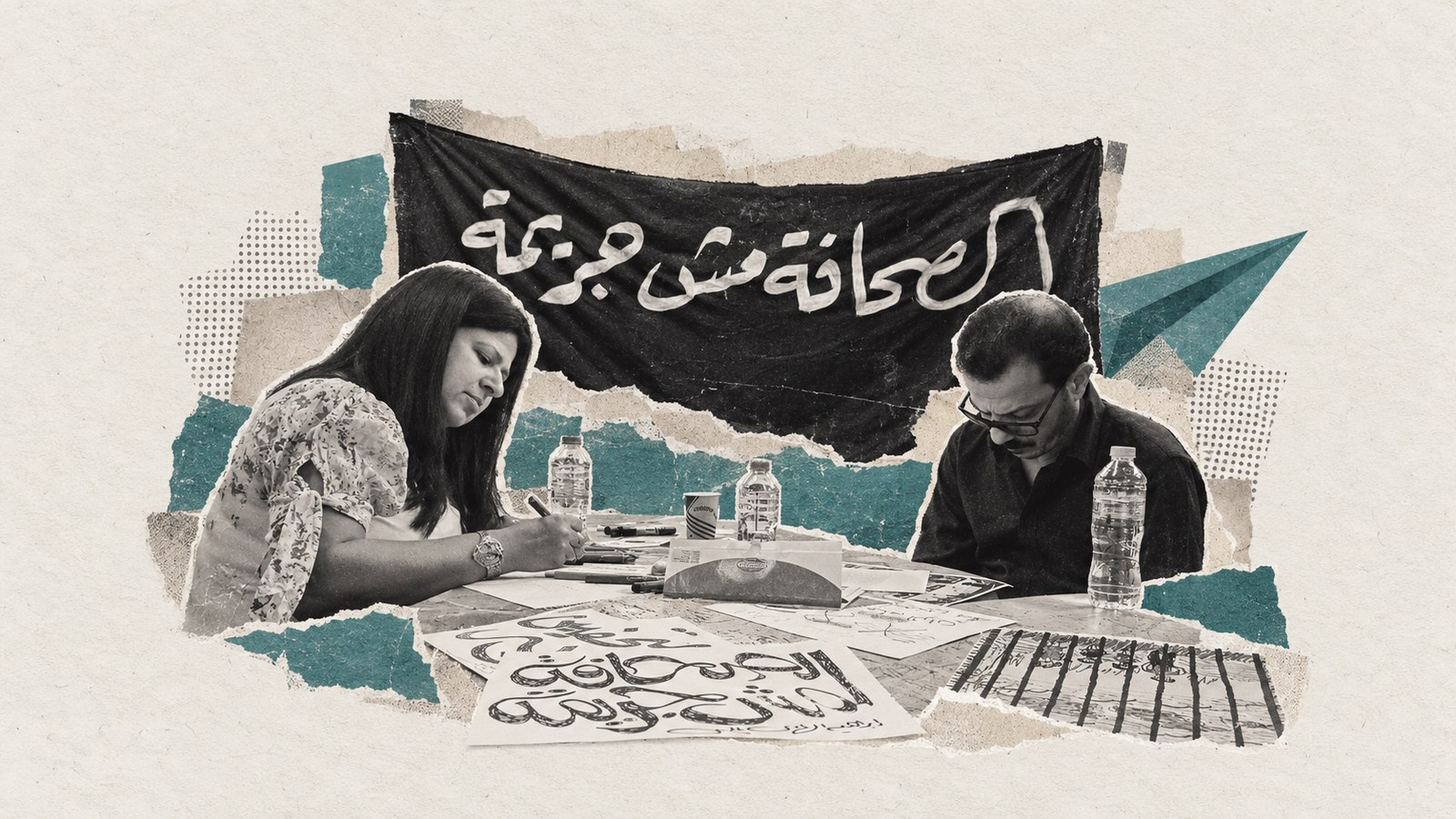


Egyptian opposition figures and human rights defenders are facing security pursuits that extend beyond the country’s borders. In its second annual report, titled “Wherever They Go: Transnational Repression and the Targeting of Egyptians Abroad,” the Egyptian Human Rights Forum documents what it describes as the Egyptian authorities’ adoption of multiple patterns of transnational repression against opponents and defenders residing outside Egypt.
The report indicates that these practices include depriving targeted individuals of official documents and consular services, revoking the nationality of some, and pursuing them judicially through what it describes as fabricated charges and in absentia rulings, in addition to placing their names on terrorism lists. It also records widespread digital harassment, ranging from online surveillance and device hacking to smear campaigns and incitement through media outlets and online platforms.
The report defines transnational repression as “a set of actions and measures carried out by the Egyptian authorities outside their territory, or whose repressive effects extend beyond it, aimed at silencing or punishing individuals located in other countries or those connected to them inside Egypt because of their political or human rights activities or opinions.”
According to the report, these practices contradict Egypt’s obligations, as well as those of host countries, under international human rights law, particularly the International Covenant on Civil and Political Rights, the Convention against Torture, and the 1951 Refugee Convention, in addition to other relevant international agreements.
From Defense to Defendants: The Forced Exile of Egyptian Human Rights Lawyers
Fragile Legal Status Abroad
The report relies on a methodology combining quantitative and qualitative documentation, based on a survey of 34 Egyptian men and women residing abroad, in addition to the creation of a cumulative database of documented cases. Approximately two-thirds of participants, around 66 percent, reported being deprived of passports, official documents, or essential consular services, leaving a number of them in fragile legal situations in their countries of residence.
In parallel, the report documented 84 individual cases across at least 17 countries and geographic locations, allowing for an in-depth analysis of recurring patterns of transnational repression. These patterns include consular denial of identification documents, revocation of nationality, misuse of international security cooperation mechanisms, digital surveillance, and proxy punishment through the targeting of family members.
The data show that approximately 82 percent of victims are male, compared to 18 percent female, and that the majority are active in political, human rights, or media work. The findings also reveal notable geographic concentration: Turkey topped the list of countries most frequently appearing in the database, followed by Egypt, then the United Kingdom and several European and Gulf states. This reflects the link between repression patterns and political migration routes, as well as centers of Egyptian media and human rights activism abroad.
In terms of the nature of violations, deprivation of consular services and identification documents ranks as the most common pattern, followed by in absentia prosecutions and security threats, then digital harassment and media smear campaigns.
In this context, SamarElhussieny, Executive Director of the Egyptian Human Rights Forum, highlights that the report represents the first attempt in the region to create a documented database of transnational repression practices carried out by the Egyptian authorities, following the cessation of similar global indicators by Freedom House.
In remarks to Zawia3, she explains that the report focuses on “invisible victims,” including families of activists inside Egypt who are used as hostages, children born abroad without documentation, and women exposed to insecurity outside Egypt due to threats and security pursuit. She also notes the emergence of new patterns since last August, such as the use of diplomatic missions to target protesters in Amsterdam, London, and New York, and the mobilization of state-affiliated groups to pursue opposition figures and disperse gatherings in Europe. Elhussieny describes this as part of the state’s strategy to export the concept of “honorable citizens.”
On September 8, 2025, several human rights organizations condemned what they described as the unprecedented use of Egyptian diplomatic missions as tools of transnational repression against peaceful protesters abroad. This followed the leak of an audio recording attributed to Foreign Minister Badr Abdel Aaty, which included direct instructions to embassy staff urging them to forcibly detain protesters and hand them over to police, in what was described as a flagrant violation of international diplomatic law principles.
According to the organizations, these directives translated into actual assaults in several countries, including the Netherlands, the United States, and the United Kingdom. Incidents were recorded of verbal abuse, threats, and physical assault against protesters in front of embassies or inside diplomatic mission premises. In some cases, protesters were forcibly dragged into diplomatic buildings and handed over to local police. The organizations also documented incitement of pro-government groups to intimidate activists and attack them near protest sites.
The organizations added that these practices are accompanied by a broader retaliatory campaign against opposition figures abroad and their families inside Egypt. This has included the arrest of relatives of journalists and activists, enforced disappearances, the targeting of journalists with spyware, and the denial of documents and consular services to Egyptians residing abroad and their family members, including children.
They warned that this shift toward using diplomatic missions as operational centers for repression, and the escalation from harassment to physical assaults on foreign soil, signals a more dangerous phase of transnational repression that requires urgent and coordinated international action to halt it and hold those responsible accountable.
Targeting Families
The report also reveals that the families of opposition figures and human rights defenders inside Egypt have not been spared. They have been subjected to detention and threats as a means of blackmail to pressure their relatives abroad, in what it describes as a clear form of proxy punishment. The report further points to repeated attempts by the Egyptian authorities to forcibly return activists from other countries through the issuance of international arrest warrants and bilateral security cooperation with certain Arab and foreign governments.
The database confirms that the targeting of families inside Egypt constitutes a recurring structural element in a large number of documented cases, rather than isolated individual incidents. Approximately 72 percent of respondents reported that members of their families inside Egypt had been subjected to security summonses, harassment, or travel bans due to their relatives’ activities abroad.
According to SamarElhussieny, Executive Director of the Egyptian Human Rights Forum, the crisis of deprivation of identification documents directly affects individuals’ ability to manage their property and inheritances inside Egypt. The targeting of families also includes the arrest of relatives, repeated home raids, surveillance, and forcing family members to report on the movements of their relatives abroad.
In a previous report, Human Rights Watch documented a wide-ranging campaign of arrests, home raids, interrogations, and travel bans targeting relatives of Egyptian opposition figures residing abroad.
The documented cases between 2016 and 2019 included 28 journalists and political and human rights activists whose family members were subjected to harassment, detention, or extrajudicial prosecution, including accusations against some children of “joining terrorist groups” or spreading “false news.”
Anxiety, Fear, and Tension: The Psychological Impact of Targeting
The report highlights the profound psychological and social impact of these practices. Testimonies and data obtained by the Egyptian Human Rights Forum indicate the spread of chronic anxiety, insomnia, and constant fear of arrest or deportation, even in countries presumed to provide legal protection. With approximately 72 percent of participants reporting that their families inside Egypt had been subjected to pressure or security summonses, feelings of guilt and helplessness have intensified among many exiles, while self-censorship and avoidance of public appearances or participation in public events have expanded.
The report also documented that nearly a quarter of participants experienced digital harassment, leading to declining trust in electronic communication and the contraction of social support networks. The impact extends to children in cases of document deprivation or delayed birth registration, negatively affecting their right to education, healthcare, and legal stability. This produces what the report describes as a condition of “unsafe exile,” where fear becomes a daily element reshaping individual behavior, professional choices, and social relationships.
The term transnational digital repression refers to the use of digital technologies by states to monitor and target opposition figures, human rights activists, and journalists residing abroad or in diaspora communities. This form of repression aims to silence dissenting voices and control political and social behavior even beyond state borders. It includes methods such as spying on electronic devices, monitoring through social media platforms, sending digital threats, and conducting online smear campaigns.
According to studies conducted by The Citizen Lab, this form of repression has deep psychological and social effects on victims, including chronic anxiety, psychological stress, insomnia, emotional exhaustion, and depression. It also undermines their sense of security, limits their ability to engage in human rights and political activities, and at times leads to social isolation and self-censorship out of fear for their own safety or that of their families.
The report by the Egyptian Human Rights Forum concludes with a set of practical recommendations addressed to relevant parties. With respect to the Egyptian authorities, it recommends the establishment of an independent national body or mechanism with broad powers and diverse representation to monitor and assess cases of transnational repression, particularly arbitrary deprivation of consular services and identification documents, provide advice to the government, and conduct periodic and impartial risk assessments. The report also calls for ending the misuse of judicial and security cooperation mechanisms, whether through INTERPOL or the Council of Arab Interior Ministers, and ensuring that activists are not pursued for political reasons.
It further recommends ending punitive consular practices that deprive citizens of passports or essential documents, adopting a transparent and non-discriminatory policy for their renewal, reviewing terrorism lists and removing individuals listed on political grounds, guaranteeing the right to appeal and independent judicial review, and halting the targeting of families and relatives of any opposition figure abroad, considering it a form of internationally prohibited collective punishment. The report calls for involving civil society in the formulation of human rights policies, ensuring effective compliance with the Convention against Torture and the International Covenant on Civil and Political Rights, guaranteeing the immediate release of all individuals arbitrarily detained due to the activities of relatives abroad, and investigating cases of retaliatory detention.
The report also includes several recommendations addressed to host states and relevant entities, including the establishment of dedicated national contact points to receive reports of transnational repression and coordinate police and legal responses; enhancing training for police and prosecutors on the nature and risks of transnational repression and ensuring sensitive and prompt handling of complaints; and activating targeted sanctions, such as the U.S. Magnitsky system or its European counterpart, against Egyptian officials or entities involved in acts of intimidation or threats beyond national borders. These and other recommendations aim to end the state of repression and pursuit experienced by Egyptians in forced exile and by their families inside the country.