“Birth defects in some newborns, the spread of asthma, polluted air that stings the nose, animals that do not resemble their counterparts in other areas, whose teeth fall out because of polluted dust settling on the pastures”: this is how Mohamed Arjdal, an environmental and human rights activist, describes the daily suffering of the residents of villages in El Jadida province (western Morocco).
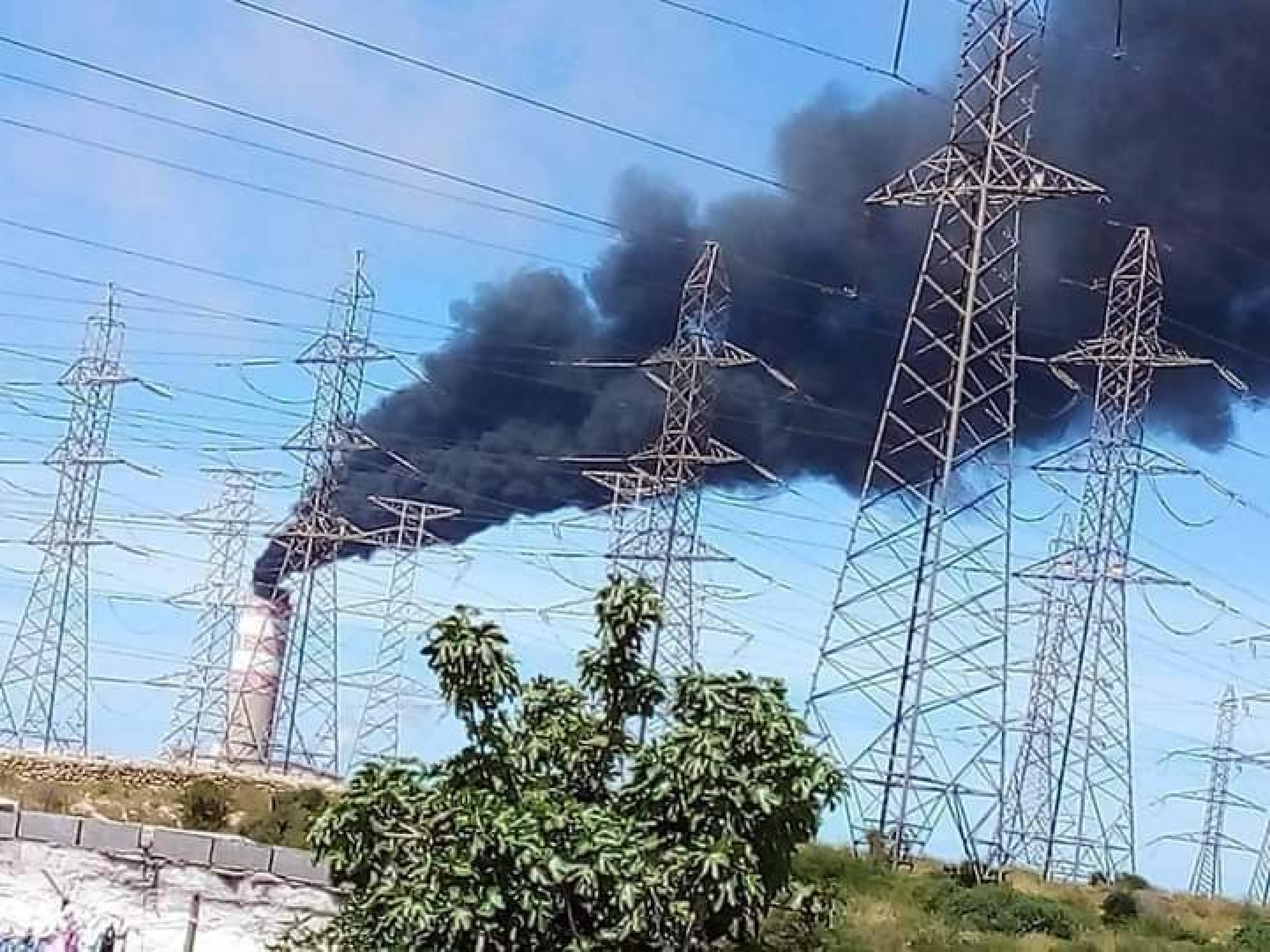
The Jorf Lasfar thermal power plant, which specialises in generating electricity, produces sulphur dioxide emissions as a result of burning millions of tonnes of coal every year.
What the environmental activist said was also confirmed by “Jalal”, a resident of a village neighbouring the company’s site, no more than 500 metres away, who noted that medical committees visit the neighbouring villages and prepare reports on the effects of environmental pollution from sulphur dioxide emissions on citizens’ health, without disclosing their content.
On the other hand, in its answer to a question from the author of this investigation about the accusations against it, the Moroccan company “TAQA”, which operates the coal-fired Jorf Lasfar plant, the largest in the Africa and Middle East region, says that the procedures it adopts and the equipment it uses allow strict compliance with air emission limits, and that its environmental performance is reviewed by independent oversight bodies.
In this report, we look at the activity of the Abu Dhabi National Energy Company (TAQA), the first private electricity producer in Morocco (meeting 40% of local demand), which burns 5.5 million tonnes of coal a year to produce about 15,000 gigawatts of electricity a year, according to a statement by the company’s management to the author of the report. This comes amid accusations that the company is polluting Morocco’s air, which has placed the country on the list of the 25 countries that emitted the largest amount of sulphur dioxide from human activities in 2018 and 2019, according to a NASA report.
“TAQA Morocco” is owned by the “Abu Dhabi National Energy Company”, which holds about 85% of the total shares listed on the Casablanca Stock Exchange.
The board of directors of the Abu Dhabi National Energy Company “TAQA” is chaired by the UAE government’s Minister of Investment, Mohamed Hassan Alsuwaidi, who is the chief executive of “ADQ”, a company holding stakes in about 90 companies, including the Abu Dhabi energy company.
“TAQA Morocco” revenues rose in the first half of 2023 by 26% year on year to reach 7.44 billion dirhams ($744 million at the time of publishing the report), while the company’s net profit in the first half of 2023 amounted to 458 million dirhams ($45.8 million at the time of publishing the report), down 24.3% year on year.
Only Morocco and India!
Coal still dominates the energy mix in Morocco (Jorf Lasfar) and India (Neyveli) in the company’s business, according to its latest report, published on its website in 2022.
So what is the Moroccan thermal plant’s contribution to sulphur dioxide emissions in the world?
In August 2019, a Greenpeace report said that Morocco ranks twenty-fifth on the list of countries causing the most sulphur dioxide pollution; in 2018 Morocco produced about 216 kilotonnes of emissions of this gas, while India ranks first in the world, producing about 4,586 kilotonnes of emissions a year.
The bad ranking of the world’s biggest sulphur dioxide pollution hotspots puts the “Neyveli” power plant in India in 11th place internationally; it is a coal-fired plant also operated by the Emirati company “TAQA”.
The same report explained that, according to data collected by NASA satellites, the Jorf Lasfar thermal plant, operated by the Emirati company, produced 113,000 tonnes of sulphur dioxide in 2018, more than half of what Morocco produced of the polluting gas that year.
Sulphur dioxide (SO2) is an air-polluting gas produced by burning fossil fuels, and it poses a danger to the human respiratory system, according to the United Nations Environment Programme, which states that air pollution is the most pressing environmental health crisis in the world and is responsible for more than 6.5 million deaths a year.
Financial Profit
The Jorf Lasfar thermal plant consumes 5.5 million tonnes of coal a year to generate energy. Notably, the rise in the price of fuel oil pushed the company to replace it with coal.
Human rights and environmental activist Mohamed Arjdal, head of the El Jadida branch of the Moroccan Association for Human Rights, believes that money has become the decisive and determining factor in taking a range of decisions, without regard for the safety of human health.
Arjdal says: “Unfortunately, coal is resorted to because of the financial cost, and therefore the company seeks to cut expenses to achieve higher profits at the expense of residents’ health, without taking into account the dangers to which the environment is exposed.”
According to the Emirati company’s financial results for 2022, its financial performance in the power generation and water desalination sector achieved a 12% increase in revenues, reaching 13.8 billion UAE dirhams in 2022. The company says this “is mainly attributable to the increase in pass-through coal fuel revenues in Morocco by 1.9 billion UAE dirhams”.
The company, however, has another view, as if throwing the ball into the court of those who set the contours of energy policy in the kingdom. We asked its management why it clings to coal to run the thermal plant, and the answer was brief but clear: “We do not make decisions about the national energy mix; rather, we serve it in the best conditions of safety, cost and sustainability.”
During 2022, the company managed, in coordination with the government, to secure coal supplies from global markets at $170 per tonne, compared with a reference price of $290, which helped reduce the cost of electricity production compared with other countries, according to a company statement on its 2022 financial results.
Expressing Intentions
Expo City Dubai is hosting the “Conference of the Parties” to the United Nations Framework Convention on Climate Change (COP28), scheduled from 30 November 2023 to 12 December 2023. After more than 26 years of the Emirati company producing electricity from coal only, its officials came out in March 2023 at a press conference to unveil a new strategy up to 2030 that seeks to diversify its activities in renewable energies.
Abdelmajid Iraqui Houssaini, chairman and chief executive of the company, said the new strategy aims to add 1,000 megawatts of electricity production capacity from renewable sources, with an investment of $1.6 billion, helping to reduce the carbon footprint by 25%.
The chairman explained that “since its beginning in 1997, the company has produced electricity from coal only, and in 2023 we seek to transform into a platform for generating energy from coal, gas and renewable energies to reduce the carbon footprint”, noting that “the company will also explore the opportunities available in the field of green hydrogen”.
Human rights and environmental activist Mohamed Arjdal commented: “The talk now about renewable energy and the use of other environmentally friendly production techniques is for external consumption only, and to polish the company’s image.”
A Pioneering Role
The Emirati company, in its response to the questions of the author of the report seeking comment on accusations of “polluting the air with sulphur dioxide, causing great tragedies”, says that “the Jorf Lasfar plant is the main supplier of electricity in Morocco, which gives it an important role in managing its resources responsibly”.
The company explained that since its beginning “the plant’s management has been fully aware of its responsibility, and anticipated technological choices that respect the environment and comply with the strictest standards”.
The company defended its measures and stressed that “the thermal plant meets World Bank standards and operates production equipment in a manner consistent with the governing legal regulations”.
On the other hand, environmental activist Mohamed Arjdal says: “There are many dangers threatening the residents living near the thermal plant, and coal residues are disposed of by burying them, which poses a danger to the ‘water table’ (groundwater)”, expressing his astonishment at what he described as the total silence of the responsible authorities towards the pollution caused by the thermal complex.
The Contradiction
While Morocco enjoys a good reputation abroad in the field of energy, as it is building renewable energy projects, including the world’s largest concentrated solar power plants in the south of the country in the Ouarzazate region, this rosy image fades with the clinging to coal to produce electricity at the largest coal-fired thermal plant in the Africa and Middle East region.
This comes at a time when renewable energy represents 43% of Morocco’s installed power generation capacity as of mid-June 2022, according to official data, while thermal energy still makes up more than half of installed power generation capacity (about 57%), and the country aims to reach 52% renewable energy by 2030.
This report was produced with the support of ARIJ.