

Last May, thousands of citizens in Damietta, Dakahlia and Kafr El-Sheikh found themselves unable to sell their flats, register their contracts or complete the reconciliation files for their homes, after the Real Estate Registration and Notarisation Authority issued a decision halting all transactions on between 420 and 441,000 feddans spread across the three governorates, including strategic areas such as Ras El-Bar, New Damietta, Damietta Port and Lake Burullus. Its repercussions extended to affect settled legal ownership, the file of reconciliation over building violations and the development projects under way there.
The decision rests on a historical endowment deed dating, according to the official account, to the year 1008 AH, under which the Endowments Authority claims ownership of those lands as a charitable endowment dating back to the Ottoman era. However, the Supreme Administrative Court concluded in June 2025 that there was no historical or survey basis for this deed, and a government committee reached the same conclusion in 2001 in 106 pages. It is a dispute that had kept being settled in court in favour of residents since the 1980s, before being reopened today by a single administrative decision, while parliamentary and legal moves rejecting the decision and questioning its historical and legal basis are escalating.
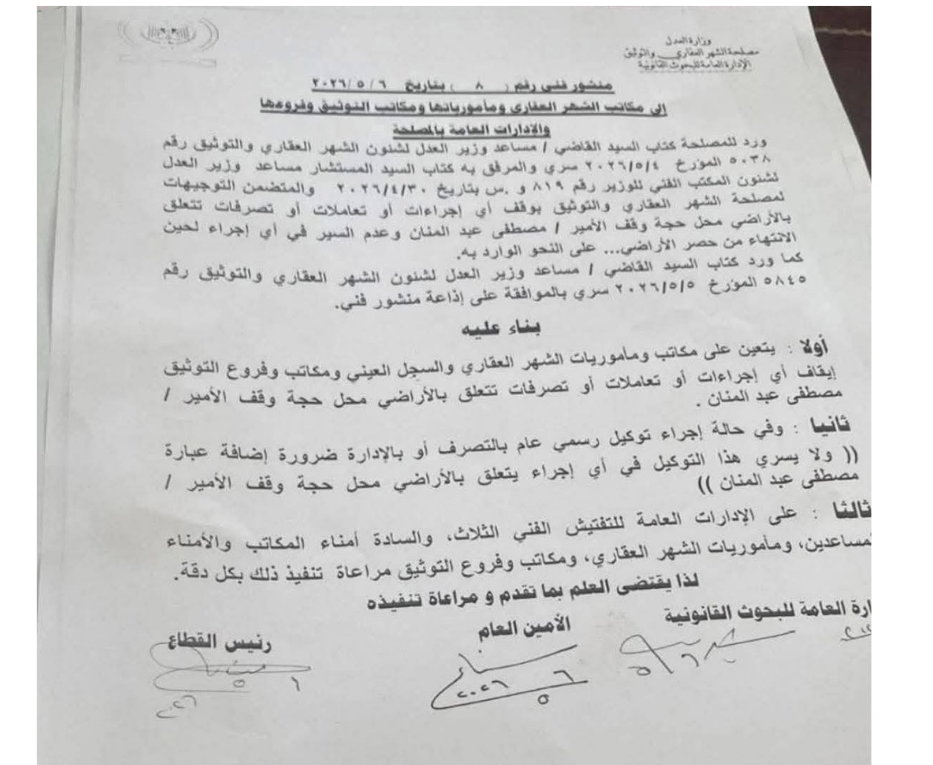
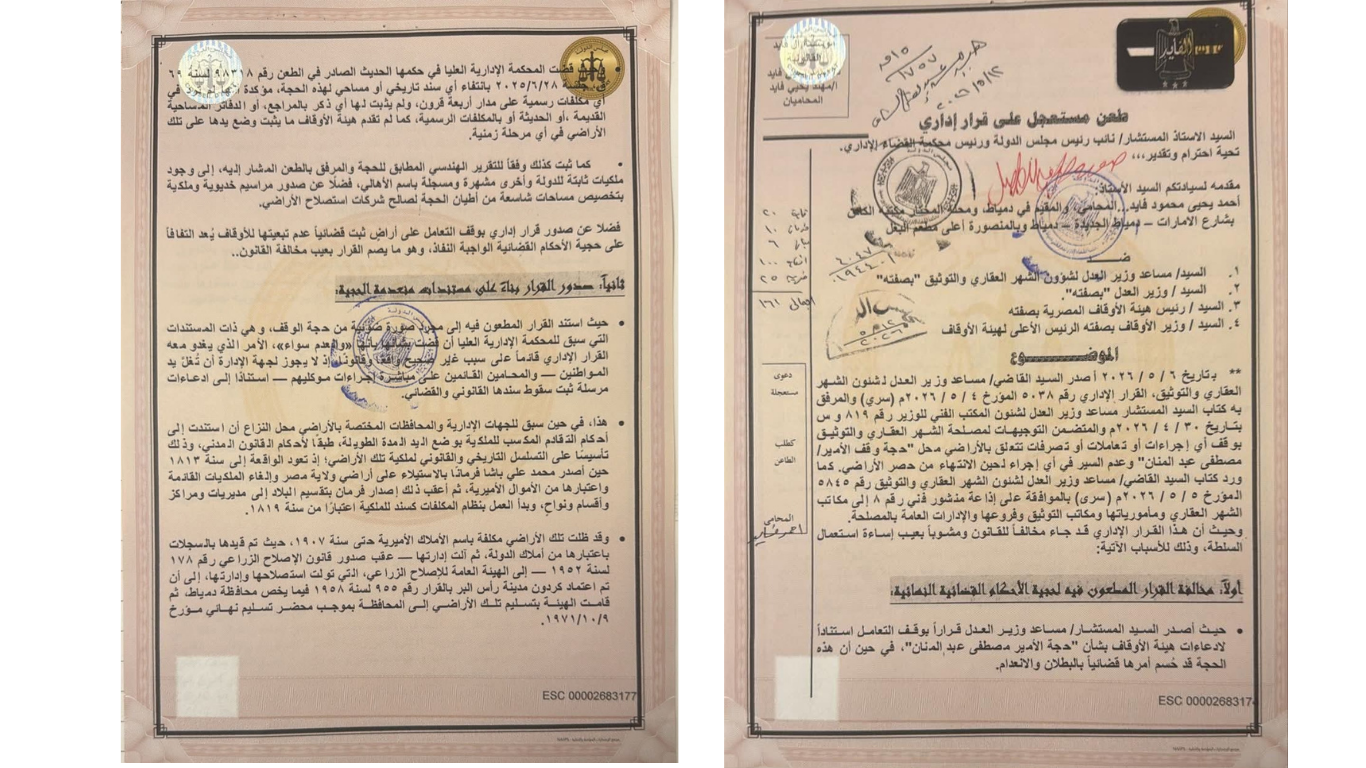
In a swift legal move, lawyer Dr Ahmed Yehia Fayed filed an urgent legal challenge before the Administrative Court in Ras El-Bar against the minister of justice, the head of the Endowments Authority, the minister of endowments and the assistant minister of justice for real estate registration affairs, demanding the suspension and annulment of Administrative Decision No. 5038 of 2026 and Technical Circular No. 8, issued regarding the halt of transactions on the lands covered by the “endowment deed of Prince Mostafa Abdel Mannan” in the governorates of Damietta, Dakahlia and Kafr El-Sheikh.
According to the challenge, the decision violated final court rulings, citing the Supreme Administrative Court ruling issued in June 2025, which concluded that there was no historical or survey basis for the endowment deed and that it did not appear in official records, land-tax registers or survey ledgers over centuries, in addition to the absence of proof that the Endowments Authority held possession of those lands.
It also pointed to the existence of established ownership by the state and by residents, registered and recorded, and of lands previously allocated by khedival and royal decrees. The appellant argued that the decision relied on a photocopy of a deed that the court had previously deemed “as good as non-existent”, which deprives the decision of its legal grounds, reviewing the historical sequence of ownership of the lands, which came under the Amiri properties from the reign of Muhammad Ali, then under agrarian reform, before parts of them were handed over to Damietta Governorate, and pointing to a letter issued by the Endowments Authority in 1995 stating that the ban on dispositions of the disputed lands had been lifted. He considered that reimposing the ban after more than thirty years constitutes an abuse of power.
Fayed believes that the decision has caused widespread paralysis in registration, notarisation and real estate activity and has harmed the rights of citizens and lawyers, in addition to the vagueness of the scope of the lands covered by the ban and the absence of a clear time limit for it, demanding the urgent suspension of the decision because of the irreparable damage it entails, and then its final annulment, with all the legal consequences that follow.
The court is scheduled to hold the first hearing of the challenge on 13 June next, while Fayed stresses that the decision has caused complete paralysis in buying, selling and property registration, the suspension of sale and management powers of attorney and of the certification of dates on lease contracts, as well as a halt to reconciliations over building violations, in Damietta, Kafr El-Sheikh and Dakahlia, warning of wide social and legal repercussions as a result of casting doubt on ownership settled for many years.
He tells Zawia3: “The timing of reviving the endowment deed raises questions, especially given previous court rulings and technical committees that concluded that the Endowments’ claims regarding the endowment were invalid. The dispute was raised more than once since the 1980s, and the rulings went against the Endowments Authority, before the file was reopened again years later.” He explains that “the Endowments Authority has submitted only photocopies of the deed, without a certified official original, while some reports concluded that the lands on which the endowment was supposedly based no longer exist geographically as a result of changes to the coastline over centuries”.
A document of doubtful authenticity
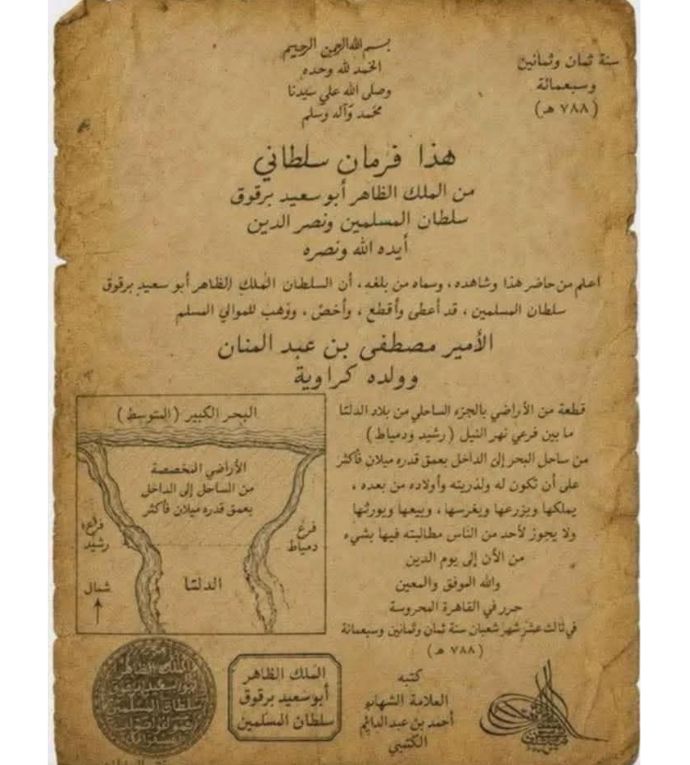
The official account in the dispute rests on a copy of a historical endowment deed dating to the year 1008 AH, registered at the Sharia court in Mahalla El-Kubra and attributed to Prince Mostafa Abdel Mannan, one of the princes of the Ottoman state. The Endowments regard it as a legal title to ownership of the lands as a charitable endowment, while some question the authenticity of the deed, citing the absence of the official original and the reliance on photocopies only, as well as the absence of clear references to the deed in historical records and surveys over centuries, the lack of a survey basis and the absence of proof that the authority held possession of the disputed lands.
Dr Asmaa Hassanein, a researcher in modern history and Islamic civilisation, believes that the circulating document raises serious doubts about its authenticity, because the chronology given in the document is historically illogical: it links him with Sultan al-Zahir Barquq, even though the latter belongs to the Mamluk era and died in 801 AH, while historical sources indicate that Mostafa Abdel Mannan lived in the Ottoman era and was born, according to some accounts, in 1027 AH, that is, more than two centuries after Barquq’s death.
She explains to Zawia3 that the historical sources that dealt with the figure of Prince Mostafa Abdel Mannan, including the writings of “Al-Hamawi”, state that he was one of the notables of Damascus and lived there all his life, and that he was buried next to his father in Damascus, which raises additional questions about his connection to vast lands inside Egypt in the way currently circulated. She points out that the appearance of the document and its circulation at this time, coinciding with the parliamentary controversy and the briefing requests submitted regarding the endowment, reinforces the doubts raised about it, especially since it was not historically circulated or relied upon during previous decades in disputes over land.
Asmaa stresses that any final resolution of this case requires a precise scholarly review of the document by specialists in history, documents and manuscripts, alongside legal and judicial examination, to verify its authenticity and its consistency with known historical facts.
According to a legal source familiar with the case, who preferred not to be named, the Ministry of Endowments claims that 90 % of the land of Damietta Governorate belongs to it, even though 99 % of the land of Ras El-Bar, El-Senaniya, Kafr El-Battikh and Kafr Saad has been transferred into citizens’ ownership under registered contracts and sales from the Amiri Properties Department. The judiciary has previously rejected lawsuits filed by the Endowments and confirmed residents’ ownership: numerous rulings were issued against the Endowments in the areas of Ras El-Bar, El-Senaniya, Kafr El-Battikh and Kafr Saad, on the grounds that there is no land-tax registration in the name of the Al-Mannan endowment and that the Endowments never took possession of any land in these areas at any time, and that the endowment deed’s landmarks and boundaries are obliterated.
The legal expert confirms that a final and conclusive ruling was issued in 1997 against the Endowments in the lawsuit filed by the New Urban Communities Authority against the minister of endowments and the chairman of the board of the Endowments Authority, in which the court barred the Endowments from interfering with the entire area subject to the lawsuit, which includes the whole of Ras El-Bar, El-Senaniya and Kafr El-Battikh as far as Gamasa. This ruling was upheld by the Court of Appeal and the Court of Cassation. Several letters were also issued by the Endowments to the Real Estate Registration Authority in 1995 to lift the Al-Mannan endowment ban from sales and registered contracts issued by government bodies.
He points out that in 1999 the legislative committee of the Cabinet instructed the Experts Authority at the Ministry of Justice to form a committee of experts to examine the Endowments’ problem with the governorates of Damietta, Dakahlia and Kafr El-Sheikh, and the committee of experts concluded the following: the Endowments did not submit the original deed or the original engineering report applying it; there is no land-tax registration in the name of that endowment; this deed is not plotted on modern or old survey references; and the Endowments did not submit anything proving the registration of this deed, or proving their possession or their dealings with those in possession or the registered holders, at any period of time.
Protecting ownership
Dr Abbas El-Zafarany, former dean of the Faculty of Urban and Regional Planning at Cairo University, believes that dealing with the file of the Prince Mostafa Abdel Mannan endowment must start from protecting the rights of citizens and settled legal situations, so that priority is given to not harming individuals whose legal status has been settled for many years, whether through official contracts or through possession, which Egyptian law recognised in earlier periods.
He tells Zawia3: “The Ministry of Endowments, according to the provisions of the law, is the trustee of the endowment and not its real owner. The ministry’s original function is to manage endowments and carry out the conditions of the endowers for the benefit of the beneficiaries or the purposes allocated to them, not to treat them as property belonging to the ministry itself”.
He stresses that any talk of recovering lands or contesting citizens over them must take into account whether or not there are beneficiaries of the endowment, explaining that if there are holders of proven rights or heirs entitled to the endowment, a legal formula must be sought that balances their rights with the rights of the current citizens living on the land or holding it for decades; but if there are no clear beneficiaries, the settled legal situations of people must not be harmed.
He points out that the ownership or possession of a large part of the disputed lands has passed on over many years, whether through possession or through allocations and contracts with government bodies, which has created settled legal and social positions that cannot suddenly be ignored through administrative decisions, warning that ignoring these considerations may lead to injustice against broad segments of citizens.
He considers that the Endowments Authority’s intervention in some urban and development projects may sometimes obstruct development, citing previous cases that saw disputes between the Endowments and executive bodies over lands that had been developed or reused to serve residents and the community.
He believes that the current crisis reveals a broader problem related to the nature of the management of the endowments file in Egypt and the limits of the Ministry of Endowments’ role as a supervisory and managing body, not a direct owner, stressing that resolving the dispute requires a precise legal and historical review that takes into account the rights of the original beneficiaries, if any, and at the same time preserves urban and social stability and the rights of citizens who have lived on these lands for generations.
Meanwhile, Ibrahim Ezz El-Din, policy director at Diwan Al-Omran, considers that what is happening reflects administrative confusion and a lack of transparency in making information on public policies available in Egypt, explaining that the Real Estate Registration Authority’s circular on halting transactions on the lands has caused anxiety and confusion among owners and opened the door to the spread of rumours and fears about the possibility of losing ownership or being unable to dispose of property in the future.
He tells Zawia3: “The picture is still not entirely clear regarding the project, especially given an existing dispute between the endowments and housing authorities over the ownership of the land on which the housing project stands”, pointing out that the legal principle presumes that owners are not affected by any administrative or legal dispute over land ownership, as long as their contracts have been settled for years and their ownership status exists lawfully, stressing that protecting these settled legal positions is one of the principles that the law is supposed to guarantee, even if the ownership or affiliation of assets moves between different state bodies.
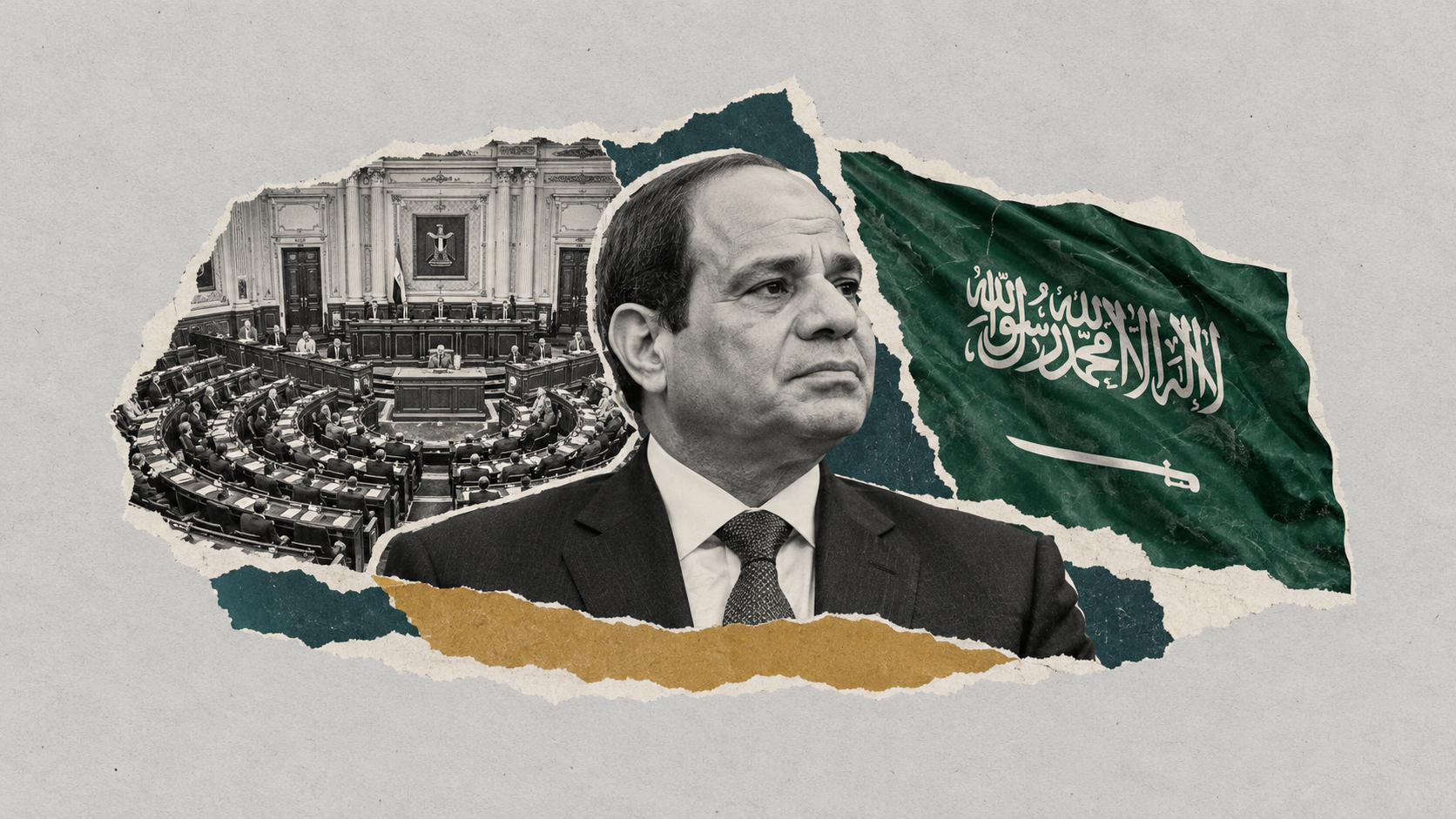
The crisis comes in a broader context related to the inventory and documentation of the Endowments Authority’s assets and maximising their economic benefit: on 16 May last, President Abdel Fattah El-Sisi directed the continuation of the inventory and documentation of all the properties and assets of the Endowments Authority in order to maximise their investment through optimal use, with the aim of supporting the national economy and ensuring the maximum return for the endowment in a way that serves its religious and social purposes.
The directives focused on creating survey and digital maps and an integrated database of all assets and properties to arrive at an accurate inventory and prevent encroachments, and on offering promising investment opportunities in cooperation with major specialised companies and real estate developers to raise the economic value of the authority’s assets, in addition to using the assets in line with the state’s comprehensive development projects, such as developing areas of historic Cairo and turning them into attractive heritage sites.
Parliamentary moves
For his part, MP Diaa El-Din Dawoud, a member of the Constitutional and Legislative Affairs Committee of the House of Representatives, submitted in mid-May an urgent statement to the Speaker of the House of Representatives under Article 134 of the Constitution regarding the crisis.
He explained that the decision was based on correspondence issued by the Ministry of Justice on halting any procedures until the inventory of the lands is completed, considering that this constitutes an assault on ownership and usufruct rights and a suspension of the laws on reconciliation over building violations and on legalising possession, as well as damaging the principle of the rule of law. He pointed out that the dispute has been going on for more than 30 years and was settled through official technical reports in 2001 that confirmed the ownership of the state and residents on the basis of historical records, survey work and official documents.
He warned of serious effects of the decision, including paralysis of real estate registration services, the suspension of tens of thousands of reconciliation requests, a halt to utility connections and shop licences, and the freezing of major projects and investments in the three governorates, threatening social and economic stability, and demanded the immediate cancellation of the circular, an end to the Endowments Authority’s disputes with citizens and governorates, and the restoration of legal discipline to the file.
Dawoud stresses that the crisis poses a direct threat to the settled legal positions of citizens, and that the current dispute squanders the binding force of the previous court rulings issued on it, considering that this endowment has no established legal existence because the Endowments Authority has not exercised, over about 400 years, any manifestation of ownership, management or collection of revenue on the disputed lands.
He tells Zawia3: “The state exercised its full right to sell, dispose of and use those lands over many decades, both before and after the July 1952 Revolution, and the modern survey maps and the Egyptian cadastral survey since 1906, then the maps of modern Egypt in 1932, entrenched the existing ownership situation”.
He adds: “The technical circular issued by the Real Estate Registration Authority has had wide negative effects, most notably the suspension of more than 50,000 requests for reconciliation over building violations, which obstructs the application of Law No. 168 of 2025, as well as the suspension of procedures to legalise the status of those in possession under Law No. 164 of 2025”.
Dawoud points out that the repercussions of the decision have extended to complete paralysis in buying, selling and renting and the obstruction of company incorporation and the completion of sales, warning that the crisis may threaten settled economic and social positions and expose citizens to legal and social risks, as well as threatening social peace and stability in the governorates concerned.
The Egyptian MP says that “a government report prepared in 2001, in 106 pages, by a committee of experts from the Experts Authority concluded that the disputed deed has no legal effect against the state or individuals, considering that this report had previously settled similar disputes in favour of citizens and governorates.”
Dawoud does not expect the state to allow an assault on individuals’ private property or on state property in the governorates of Damietta, Dakahlia and Kafr El-Sheikh, considering it likely that a national committee will be formed to review the endowment deed and its legal and historical validity, and whether the Endowments Authority has exercised any form of actual management over those lands.
In a related context, 19 MPs announced their solidarity with the affected residents in the governorates of Damietta, Dakahlia and Kafr El-Sheikh against what they described as the flimsy arguments of the Ministry of Endowments in its claims about the Al-Mannan endowment. A number of them submitted parliamentary briefing requests addressed to the Speaker of the House of Representatives and the ministers of justice and endowments, calling for the immediate cancellation of the technical circular. They considered the decision a threat to the stability of private and public ownership that leads to widespread paralysis in real estate activity and related services, and demanded that the file be referred to the competent parliamentary committees and that representatives of the ministries of justice, endowments and local development be summoned to discuss the legal and administrative grounds on which the decision was based.
For his part, MP Abdel Moneim Imam, deputy chair of the Plan and Budget Committee of the Egyptian House of Representatives, stresses that the decision to halt transactions on the lands linked to the Prince Mostafa Abdel Mannan endowment has caused complete paralysis in buying and selling, warning that its repercussions are not limited to the property market but extend to casting doubt on ownership settled for many years, with the tragic social and legal dimensions this entails.
He explains that parliamentary objections focused on the timing of reviving the endowment deed and the question marks it raised, especially given previous rulings and committees that concluded that some of the claims relating to the endowment itself were invalid, pointing out that these judicial and administrative precedents required the file to be dealt with differently, instead of suspending transactions on such a wide expanse of land.
He tells Zawia3: “The picture is still incomplete regarding the background to the decision, which requires a full presentation of the details, documents and survey history of the disputed lands so that the situation can be assessed accurately, while the absence of this information opens the door to more controversy and confusion”.
He explains that parliament has requested that representatives of the ministries of justice and endowments attend the House of Representatives to discuss the crisis jointly and to examine the legal and administrative grounds on which the decision was built, given the widespread controversy it has stirred in the affected governorates, pointing out that there are unused endowments whose use could be reorganised through legal mechanisms, such as substitution or other procedures that guarantee the preservation of the nature of the endowment and the direction of its revenues to the purposes set by the endower.
In the same context, MP Irene Saeed, head of the parliamentary bloc of the Reform and Development Party, submitted an urgent briefing request to the prime minister and the ministers of endowments, justice and local development regarding the crisis, questioning the endowment deed dating to the year 1600 CE, even though it was deposited at the National Archives for the first time in February 2026.
She stressed that the decision caused widespread administrative and real estate paralysis, including the suspension of more than 50,000 reconciliation requests and the halting of licences, notarisation and utility connections, in addition to the freezing of projects and investments worth hundreds of millions, among them the development of the Ras El-Bar spit and the El-Senaniya Corniche.
Irene explains that the decision has caused widespread legal and social confusion, especially since the deed on which the Endowments Authority relies is not an official original but a copy that was recently recorded at the National Archives a few months ago, even though survey maps and property ownership in the three governorates have been settled for many decades.
She tells Zawia3: “Citizens have built settled legal positions on these lands and properties over many years, under constitutional protection of private and public property, and the decision has created confusion among residents and investors, after citizens became unable to sell, buy or complete the legal procedures relating to their properties, despite legal situations that have been settled for years”.
She points to complete paralysis in Damietta, Kafr El-Sheikh and Dakahlia as a result of the halt on disposing of properties and land, as well as the suspension of files for reconciliation over building violations and the legalisation of status, questioning the constitutionality of the decision, especially given acquired rights and existing legal positions protected by the constitution and the law.
Irene continues: “Endowment lands in Egypt are historically known, proven by official deeds and passed down through generations, and the appearance in 2026 of a deed concerning the ownership of about 7% of the area of agricultural land in Egypt raises many question marks”, considering that the matter requires a comprehensive legal and historical review before taking decisions that affect millions of citizens and existing development projects.
She shows that the crisis does not concern property ownership alone but also extends to the development projects under way in the three governorates, especially in areas such as Damietta and New Mansoura, which are witnessing major urban and investment expansion, asking about their fate.
As a result of the parliamentary moves, Minister of Endowments Osama Al-Azhari held a meeting with the governors of Damietta, Dakahlia and Kafr El-Sheikh and the head of the National Centre for Planning State Land Uses to discuss the crisis on 25 May last. According to a statement issued by the ministry, the meeting affirmed that the rights of holders of settled legal positions within the scope of the endowment would not be infringed, with a directive to resume reconciliation procedures over building violations urgently to ease the burden on citizens, while it was decided to compensate the Endowments Authority with alternative land from state land, in a way that strikes a balance between the rights of residents and the preservation of endowment funds.
But the crisis is still escalating, especially after statements by Dr Osama Raslan, spokesperson for the Ministry of Endowments, at the end of May last, in which he affirmed that the deed is proven and that the Endowments Authority possesses it, with a copy kept at the National Library and Archives, announcing that a judicial committee formed by presidential decree to rule on disputes between government bodies had issued repeated recommendations in favour of the Endowments Authority after it submitted its original documents. He refused to recognise the circulating court rulings on the invalidity of the deed, considering that they were issued as a result of challenges against copies of the documents without examining the original.
Between previous court rulings casting doubt on the endowment’s title and parliamentary and legal moves demanding the cancellation of the decision, the crisis of the “Prince Mostafa Abdel Mannan endowment” remains open to complex legal and political possibilities, going beyond a mere property dispute to a test of the state’s ability to balance protecting endowment funds with guaranteeing the stability of private ownership and of legal positions established for decades.